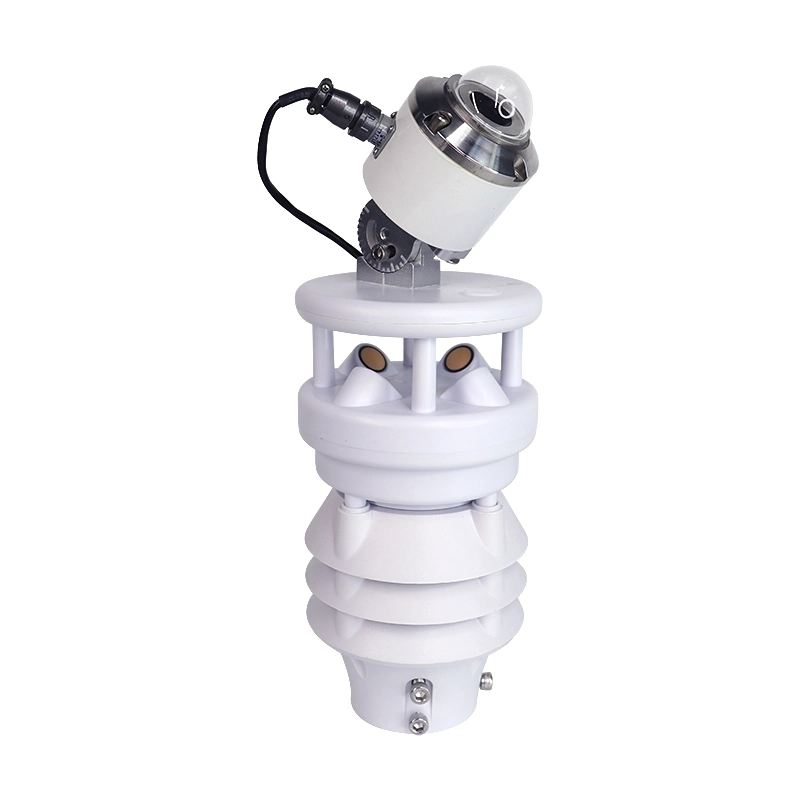
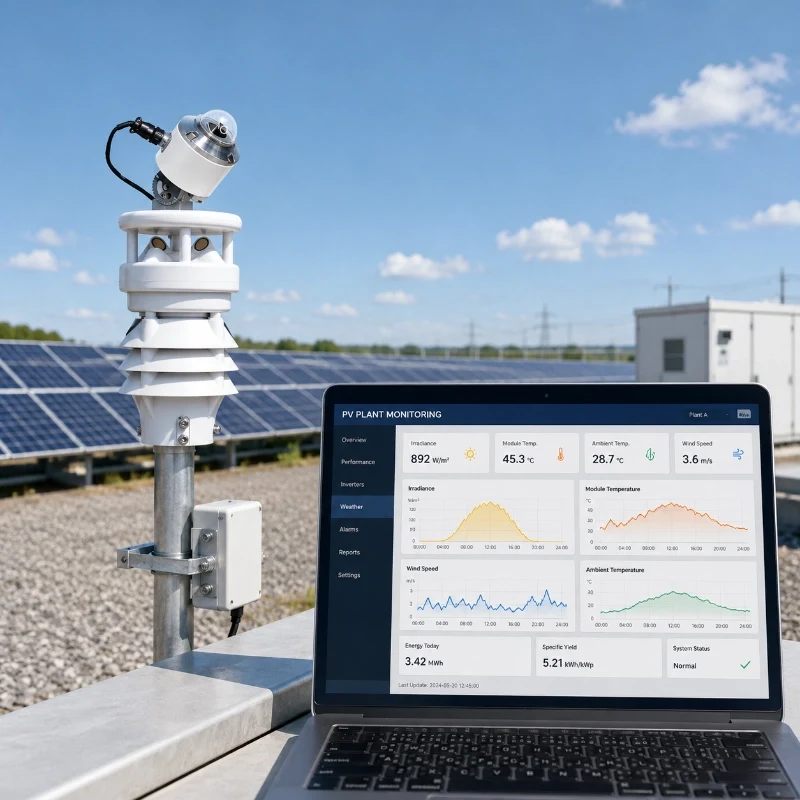
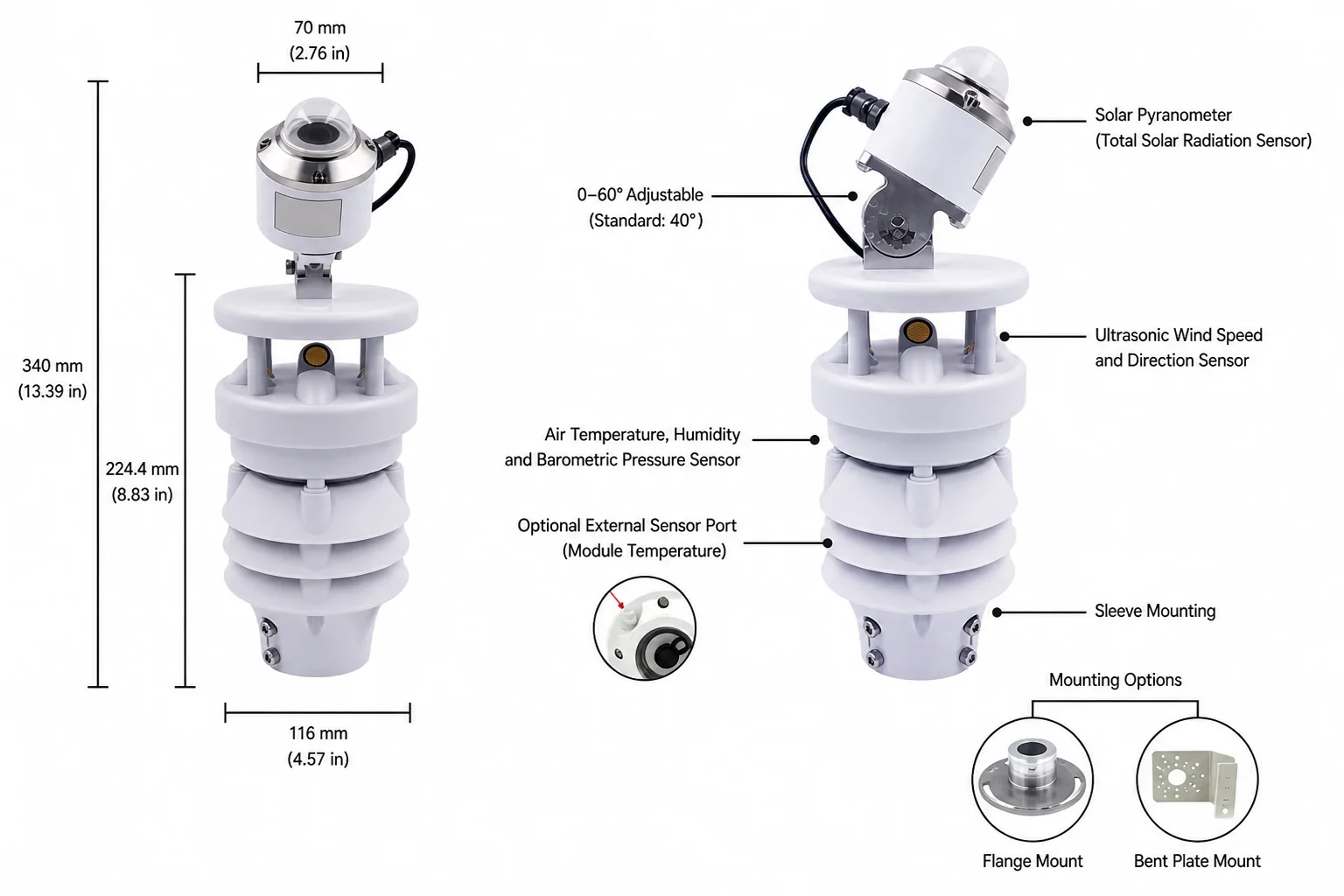
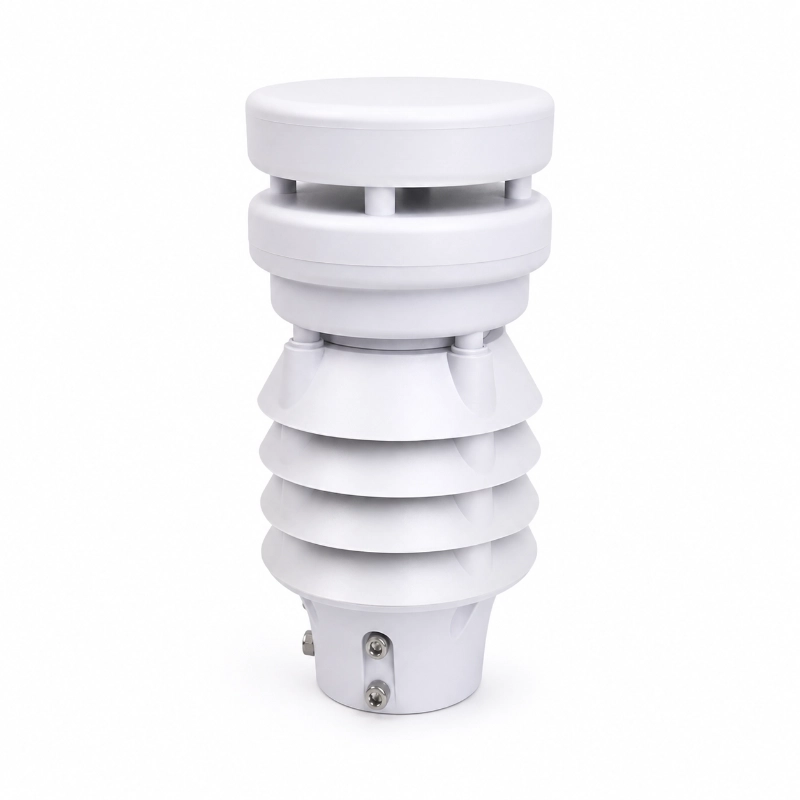
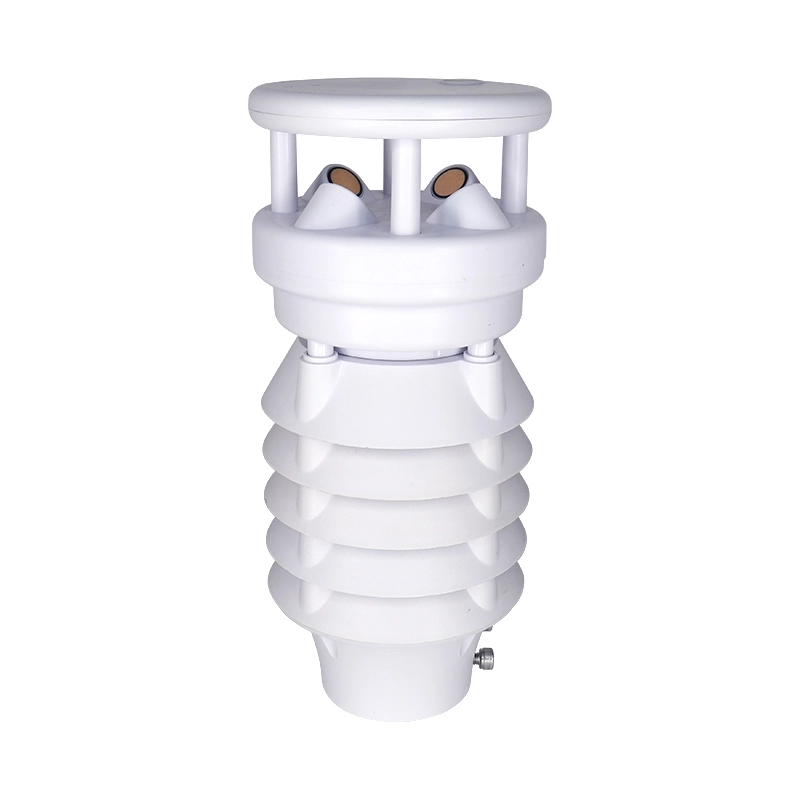
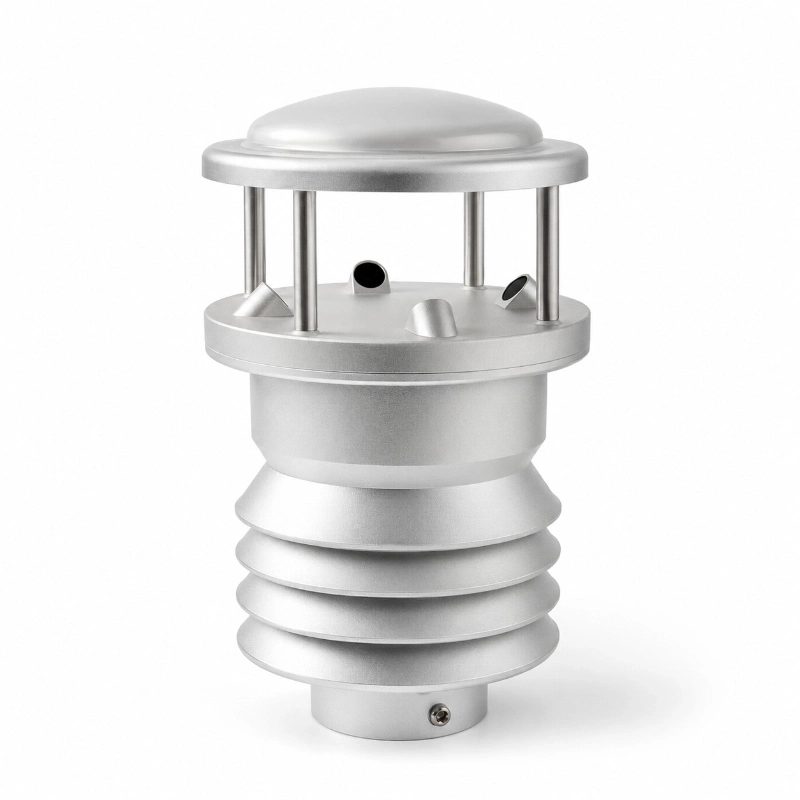
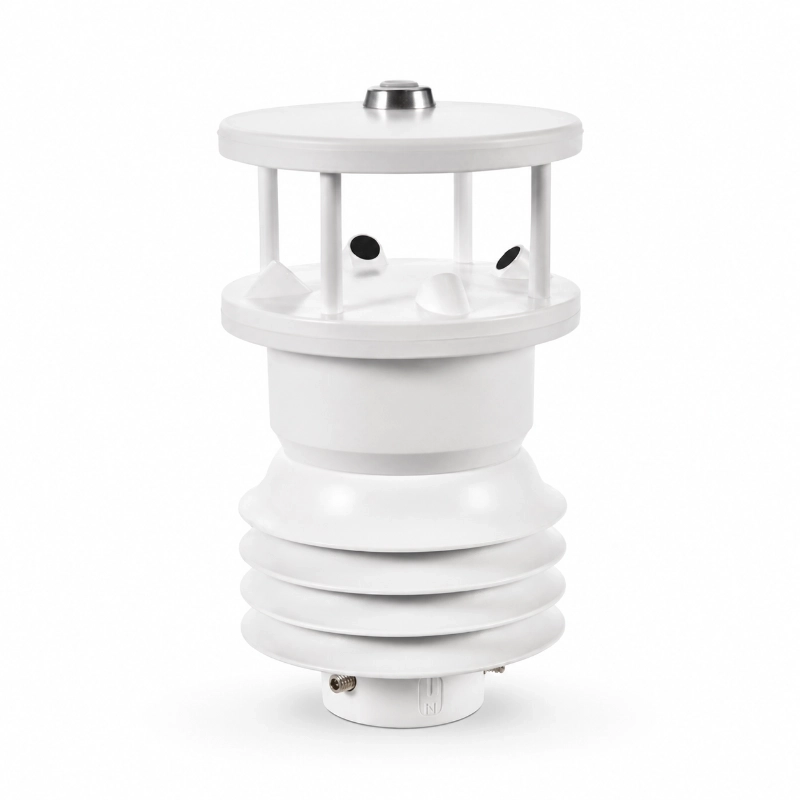
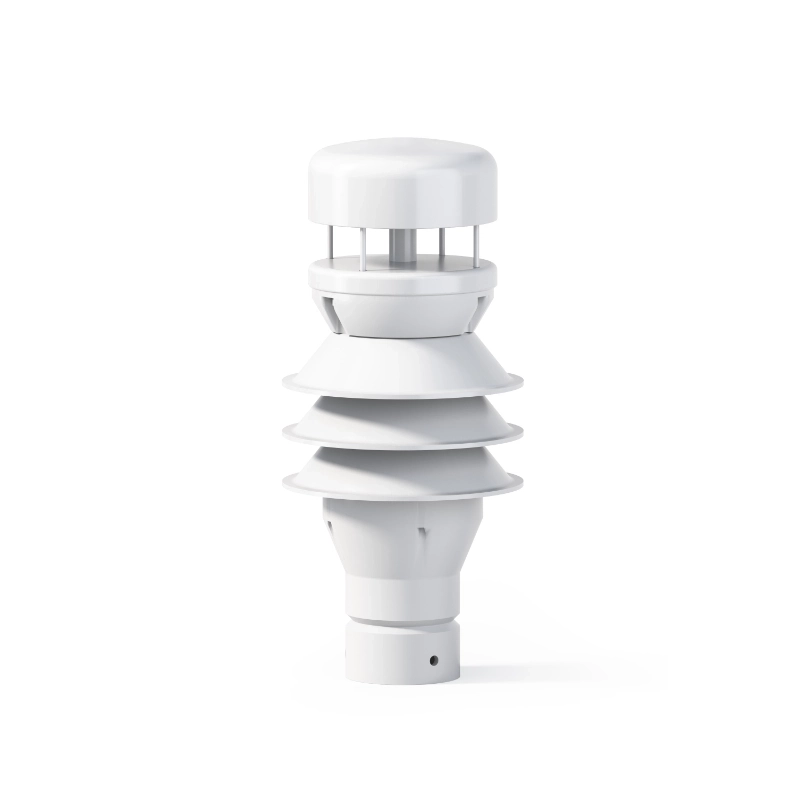
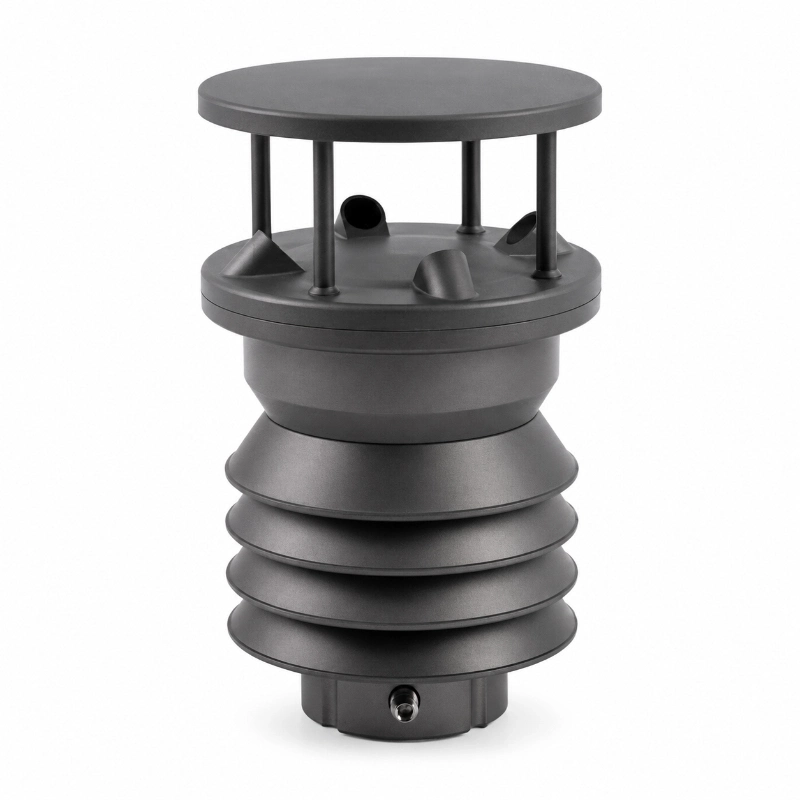
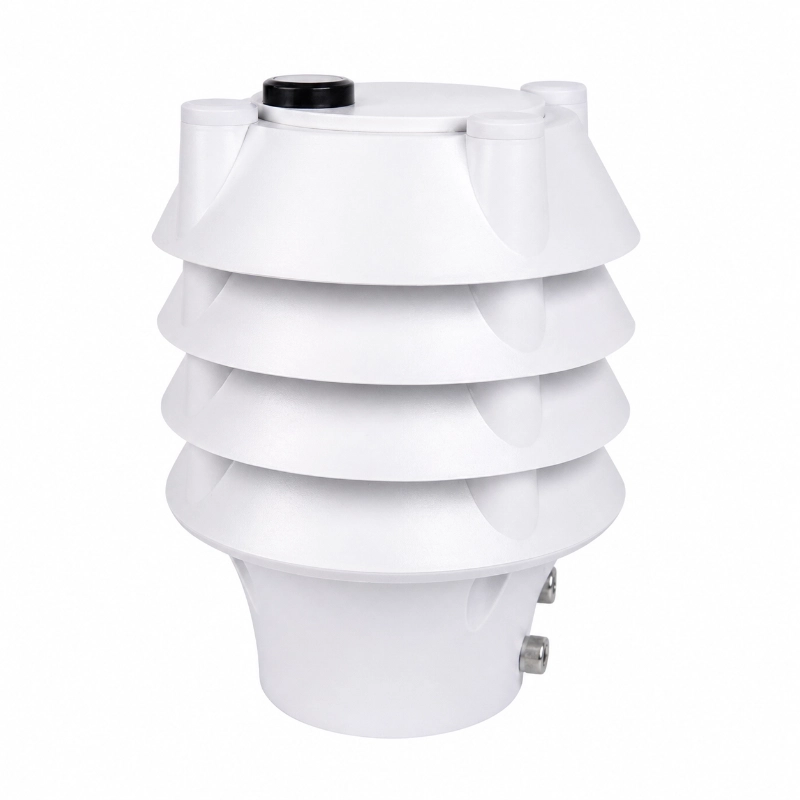
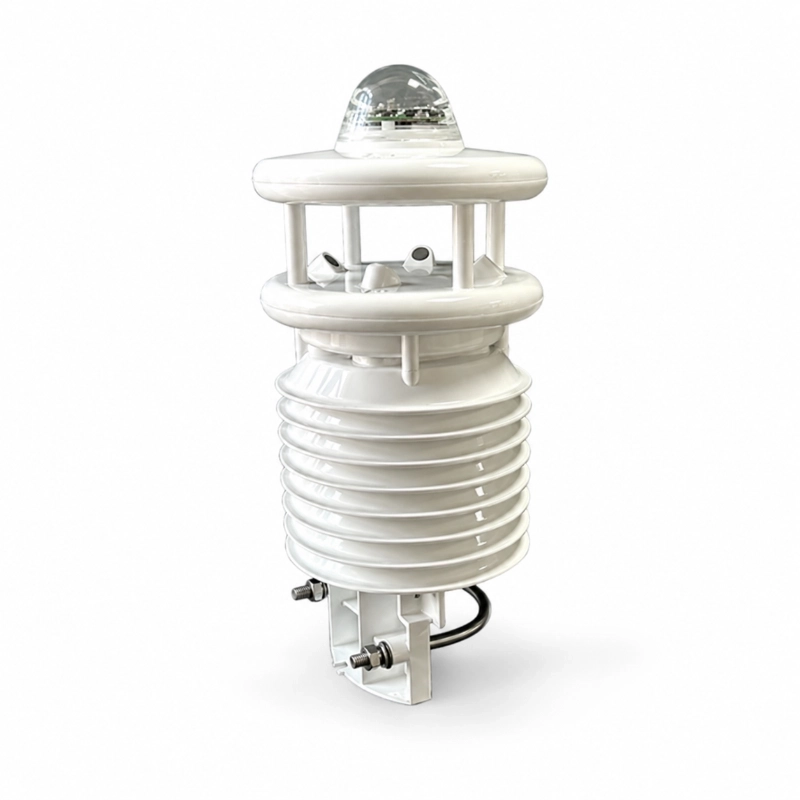
The JW-XF500S-CWB(YN22) Solar PV Weather Station is an integrated environmental monitoring device developed for photovoltaic power plants, solar farms and renewable energy monitoring systems.
It measures solar irradiance, ambient temperature, relative humidity, PV module temperature, wind speed, wind direction, barometric pressure and accumulated solar radiation in one compact outdoor unit.
With standard RS485 Modbus RTU communication, the station can be connected to PV inverters, data loggers, RTUs, monitoring cabinets, SCADA systems and third-party energy management platforms. Its compact structure helps reduce field wiring, installation time and maintenance requirements at solar power plant monitoring points.
What Is a Solar PV Weather Station?
A solar PV weather station is a monitoring device installed at a photovoltaic project site to measure the environmental conditions that affect solar power generation.
Unlike a general-purpose weather station, a PV weather station normally focuses on parameters directly related to photovoltaic performance, including:
Solar irradiance
PV module temperature
Ambient temperature
Relative humidity
Wind speed
Wind direction
Barometric pressure
Accumulated solar radiation
These measurements provide an environmental reference for comparing available solar energy with actual power output.
By combining the station data with inverter or plant generation data, operators can better identify whether a reduction in output is caused by changing weather, high module temperature, shading, dust accumulation, equipment faults or other operating conditions.
Why Solar Power Plants Need On-Site Weather Monitoring
Public weather data is usually collected some distance away from the solar plant. It may not represent the irradiance, temperature, wind or microclimate conditions at the actual PV array.
On-site monitoring provides more relevant environmental data for the installed modules.
Solar Irradiance Reference
Solar irradiance is one of the most important inputs for evaluating expected PV power generation. Measuring irradiance at the project site allows operators to compare the available solar resource with the electrical energy produced by the plant.
Wind, humidity and temperature conditions can affect equipment operation, module cooling and maintenance safety. Continuous environmental data gives O&M teams more context when investigating unexpected changes in plant output.
Performance Ratio Evaluation
When weather station data is combined with inverter generation data, it can support performance ratio analysis, expected-versus-actual generation comparison and long-term plant performance assessment.
The standard thermopile pyranometer measures total solar radiation over a range of 0–2000 W/m².
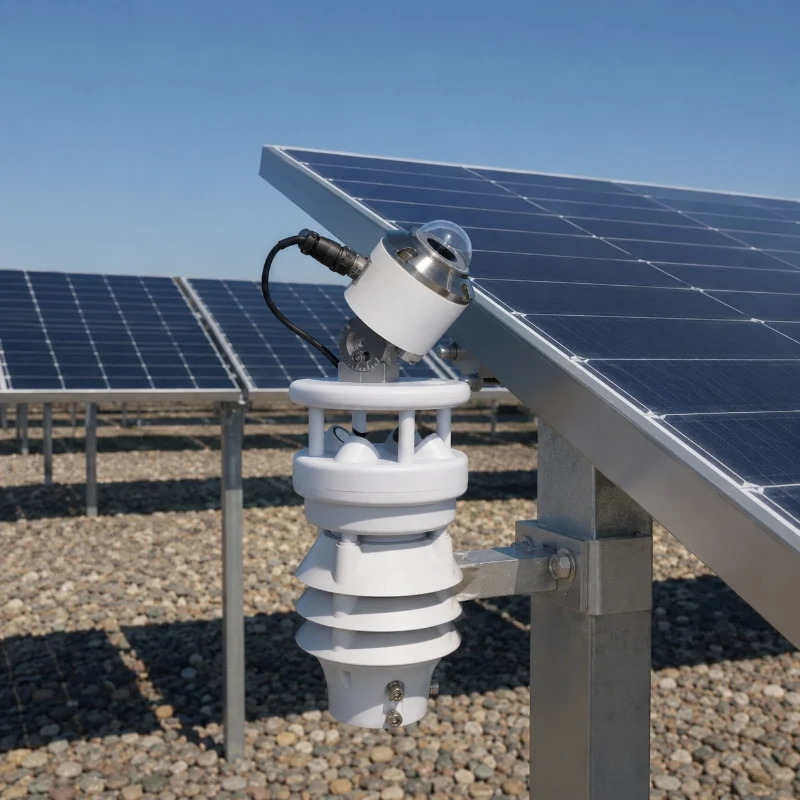
The pyranometer can be mounted according to the required measurement plane. For PV performance monitoring, the sensor is often installed in the same plane and orientation as the PV modules to provide plane-of-array irradiance data.
Optional Class A, Class B and Class C pyranometer configurations are available for projects with different accuracy, budget and technical requirements.
Ambient Temperature and Relative Humidity
Ambient temperature and humidity data help operators understand local weather conditions around the PV array. These measurements can be used together with module temperature, irradiance and power output data for performance analysis.
PV Module Temperature
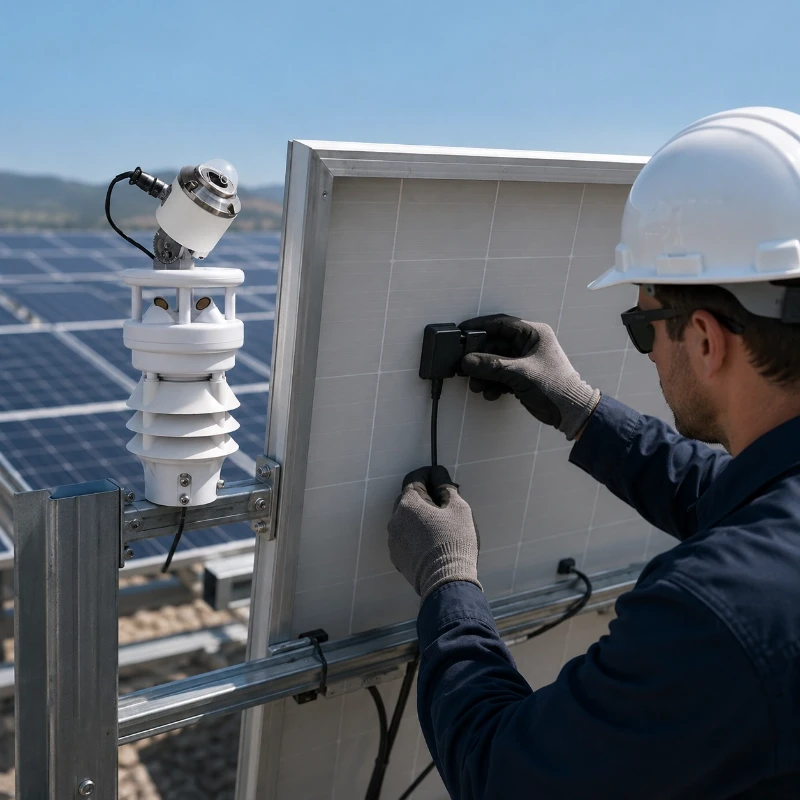
The module temperature probe is installed on the rear surface of a representative photovoltaic module.
This measurement helps operators evaluate thermal losses, identify abnormal heating and compare PV performance under different irradiance and temperature conditions.
Wind Speed and Wind Direction
The integrated ultrasonic wind sensor measures wind speed and direction without mechanical cups or vanes.
The absence of moving parts helps reduce wear and routine maintenance requirements, especially at remote or dusty solar power plant sites.
Barometric Pressure
Barometric pressure provides additional meteorological context for environmental monitoring, local weather analysis and renewable energy research applications.
Accumulated Solar Radiation
Accumulated radiation data can be used to evaluate daily or period-based solar energy availability and compare solar resource conditions with generated electrical energy.
Technical Specifications
Item
Specification
Product Type
Integrated Solar PV Weather Station
Application
Solar PV power plant environmental monitoring
Ambient Temperature
-40°C to 85°C
Temperature Accuracy
±0.3°C at 25°C
Relative Humidity
0 to 100%RH
Humidity Accuracy
±3%RH from 10 to 90%RH non condensing
Module Temperature
-20°C to +80°C
Module Temperature Accuracy
≤ ±0.2°C
Wind Speed
0 to 60 m/s
Wind Direction
0 to 359.9°
Barometric Pressure
500 to 1100 hPa
Solar Irradiance
0 to 2000 W/m²
Solar Irradiance Accuracy
≤ ±3%
Accumulated Radiation
0 to 65 MJ
Output Signal
RS485 Modbus RTU
Optional Output
SDI 12
Power Supply
DC 12–24V
Working Temperature
-40°C to 80°C
Pyranometer Angle
0–60° adjustable
Protection Rating
IP65
Cable
3 m standard 10 m optional
Mounting
Sleeve mounting optional adapters available
Technical specifications may vary according to sensor configuration and project requirements. Contact JW-IoT to confirm the final model, sensor class, communication interface, cable length and installation accessories before ordering.
RS485 Modbus Integration
The standard RS485 Modbus RTU interface allows the solar PV weather station to communicate with common industrial and photovoltaic monitoring equipment.
Typical connection targets include:
PV inverters
Solar plant data loggers
Remote terminal units
PLC control systems
SCADA platforms
Energy management systems
Industrial IoT gateways
Local monitoring cabinets
Third-party cloud platforms
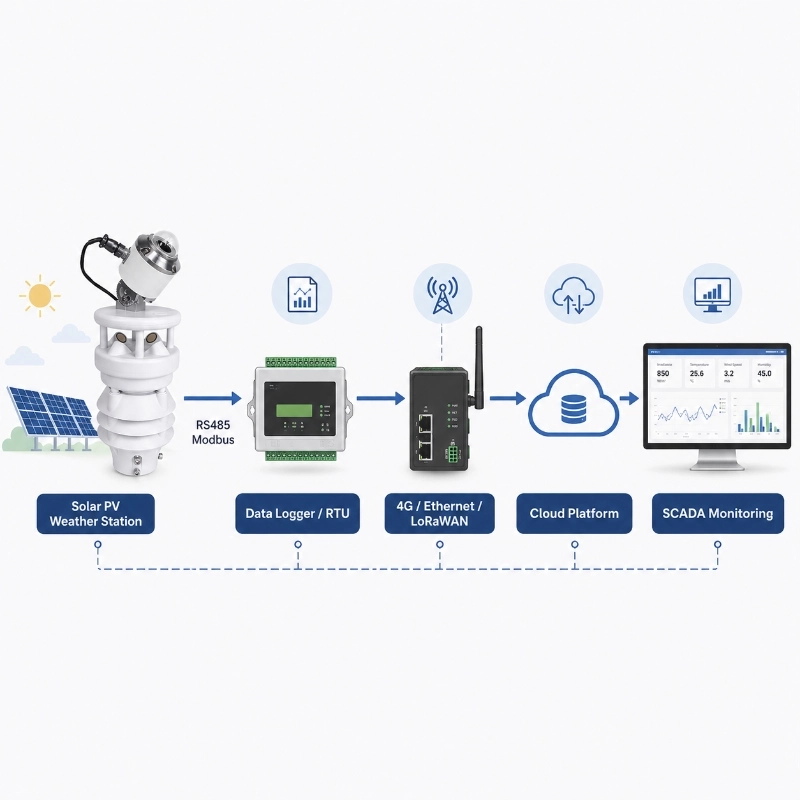
A typical system architecture is:
Solar PV Weather Station → RS485 Modbus → Data Logger or RTU → 4G, Ethernet or LoRaWAN Gateway → Cloud Platform or SCADA System
JW-IoT can provide communication protocol information and support data integration according to the monitoring platform used in the project.
For projects requiring remote transmission, the station can be combined with JW-IoT communication devices to support 4G LTE, LoRaWAN, Ethernet, MQTT, HTTP or API-based data exchange.
Typical Applications
Utility-Scale Solar Power Plants
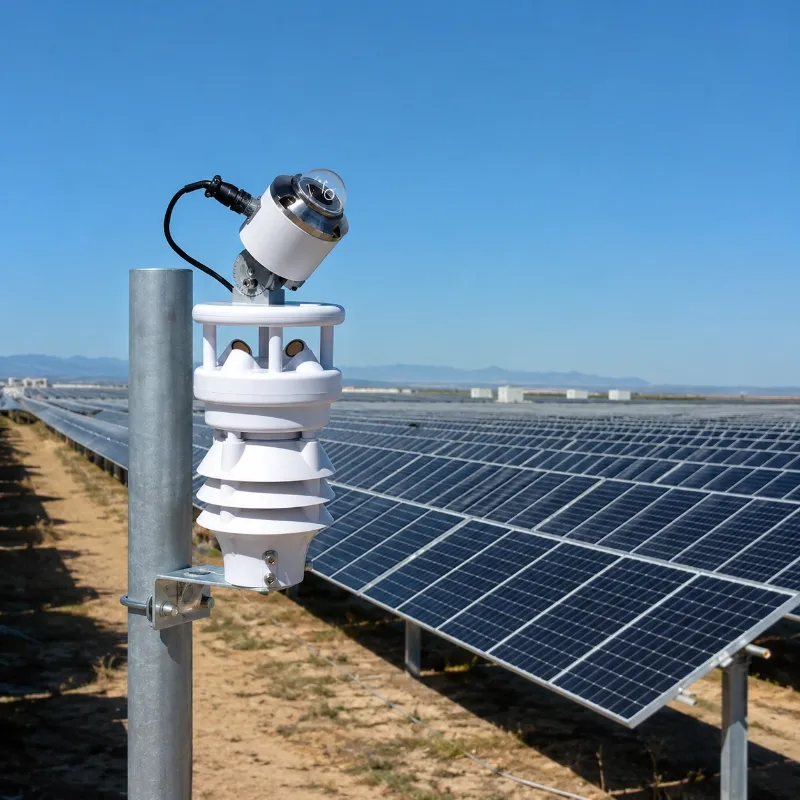
The station can be installed at representative points across a large photovoltaic plant to collect local irradiance and meteorological data for plant performance analysis.
Projects with significant terrain or microclimate differences may require multiple monitoring points.
Distributed PV Power Stations
Compact construction and RS485 communication make the station suitable for distributed photovoltaic projects where weather data must be integrated into an inverter, local controller or monitoring cabinet.
Commercial and Industrial Rooftop PV
The unit can be used for rooftop solar systems on factories, warehouses, office buildings and commercial facilities.
O&M teams can use irradiance, module temperature and weather data to support:
Expected-versus-actual output comparison
Low-generation investigation
Module temperature analysis
Dust or shading loss identification
Maintenance planning
Weather-related safety decisions
Long-term performance trend evaluation
Renewable Energy Research
The station can also provide environmental data for photovoltaic research, module testing, solar resource studies and renewable energy demonstration projects.
Installation Recommendations
Correct installation is essential for obtaining representative and comparable PV monitoring data.
Select a Representative Location
Install the station where nearby buildings, trees, poles, modules or other structures will not create abnormal shading or airflow obstruction.
The selected location should represent the operating conditions of the monitored PV array.
Align the Irradiance Sensor Correctly
For plane-of-array irradiance measurement, the pyranometer should normally be aligned with the tilt and azimuth of the photovoltaic modules.
The adjustable mounting plate supports an angle range from 0° to 60°.
Install the Module Temperature Sensor Properly
Attach the module temperature probe firmly to the rear surface of a representative module.
Avoid installing the probe near the module frame, junction box or an area with unusual shading unless the project specification requires it.
Keep the Pyranometer Surface Clean
Dust, bird droppings, snow or other contamination on the sensor dome can affect irradiance measurements.
Include pyranometer inspection and cleaning in the solar plant maintenance schedule.
Protect Communication Cables
Route RS485 and power cables through protected conduits where possible. Use suitable grounding, shielding and surge protection according to the electrical design and site conditions.
The standard configuration is suitable for solar power plant projects requiring compact multi-parameter monitoring and RS485 Modbus integration.
Depending on the project, JW-IoT can support:
Class A, Class B or Class C pyranometer
EKO MS-series pyranometer
Kipp & Zonen CMP-series pyranometer
Additional PV module temperature points
Extended communication cable
SDI-12 output
Data logger or RTU
4G LTE communication
LoRaWAN communication
Ethernet connection
Solar-powered monitoring cabinet
Cloud monitoring platform
API or third-party system integration
Customized mounting bracket
OEM and white-label service
The final sensor configuration should be selected according to the plant size, monitoring objective, required accuracy, local conditions and system integration requirements.
How to Select a PV Weather Station
Before requesting a quotation, confirm the following project information:
Solar plant type and installed capacity
Utility-scale, distributed or rooftop installation
Required meteorological parameters
Pyranometer accuracy or class requirement
Plane-of-array or horizontal irradiance measurement
Number of module temperature monitoring points
RS485, SDI-12, 4G, LoRaWAN or Ethernet communication
Connection to an inverter, RTU, data logger or SCADA platform
Available power supply
Required cable length
Pole or rooftop mounting conditions
Local operating temperature and environmental conditions
Need for cloud platform, API or private deployment
OEM or white-label requirements
Providing this information helps JW-IoT recommend an appropriate sensor, communication and installation configuration.
Request a Solar PV Weather Station Configuration
Send JW-IoT your solar plant capacity, required parameters, irradiance sensor class, communication method, installation conditions and platform requirements.
Our team will help configure a suitable solar PV weather station, data acquisition and communication solution for your project.
It is used to monitor solar irradiance, PV module temperature and local meteorological conditions at photovoltaic power plants. The data supports power generation analysis, environmental monitoring, plant operation and maintenance.
Q
2. What parameters can the station measure?
A
The standard configuration measures solar irradiance, accumulated radiation, ambient temperature, relative humidity, module temperature, wind speed, wind direction and barometric pressure.
Q
3. Is the station suitable for utility-scale solar farms?
A
Yes. It can be installed at representative monitoring locations in utility-scale photovoltaic power plants. Large or geographically diverse sites may require multiple stations or additional irradiance monitoring points.
Q
4. Can it be used for rooftop photovoltaic systems?
A
Yes. Its compact structure and RS485 Modbus output make it suitable for commercial rooftops, industrial buildings and distributed solar power systems.
Q
5. Does the PV weather station support RS485 Modbus RTU?
A
Yes. RS485 Modbus RTU is the standard communication interface. It can be integrated with compatible inverters, RTUs, data loggers, PLCs, SCADA systems and IoT gateways.
Q
6. Can the pyranometer angle be adjusted?
A
Yes. The mounting plate supports adjustment from 0° to 60°. This allows the irradiance sensor to be aligned with the PV module plane when plane-of-array irradiance measurement is required.
Q
7. What is the difference between ambient temperature and module temperature?
A
Ambient temperature represents the surrounding air temperature. Module temperature measures the operating temperature of the photovoltaic panel itself. Module temperature is particularly important because it directly influences PV conversion efficiency.
Q
8. Can JW-IoT provide a higher-accuracy pyranometer?
A
Yes. JW-IoT can provide different pyranometer configurations, including optional Class A, Class B and Class C models, according to project accuracy and budget requirements.
Q
9. How many PV weather stations are needed for one solar plant?
A
The required number depends on plant capacity, terrain, array layout, microclimate variation and the project monitoring standard. A compact site may use one representative station, while a large or geographically complex plant may require multiple monitoring points.
 +86 13520127780
  info@jingelway.com