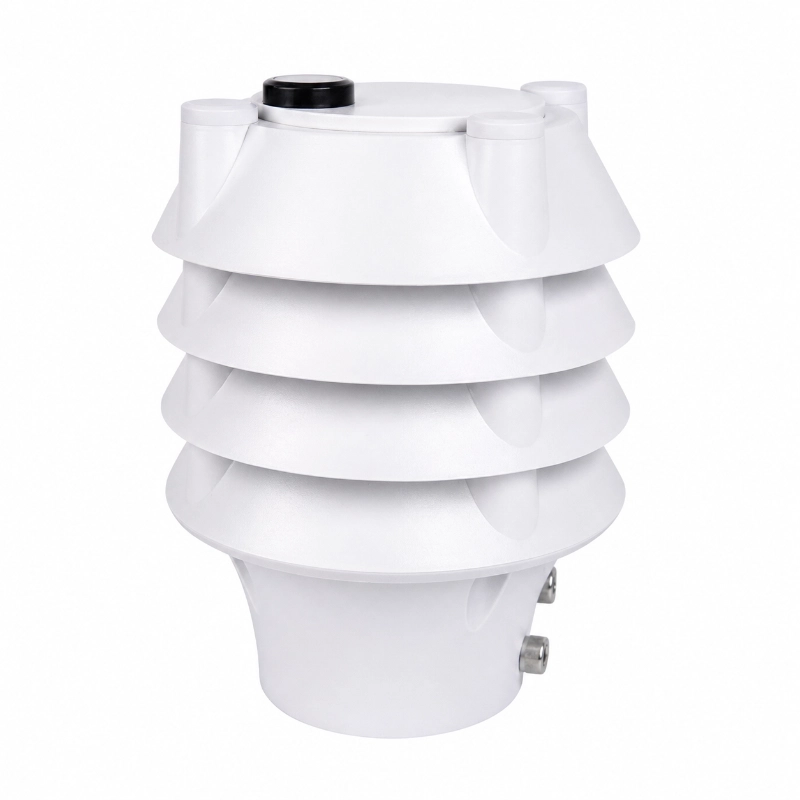
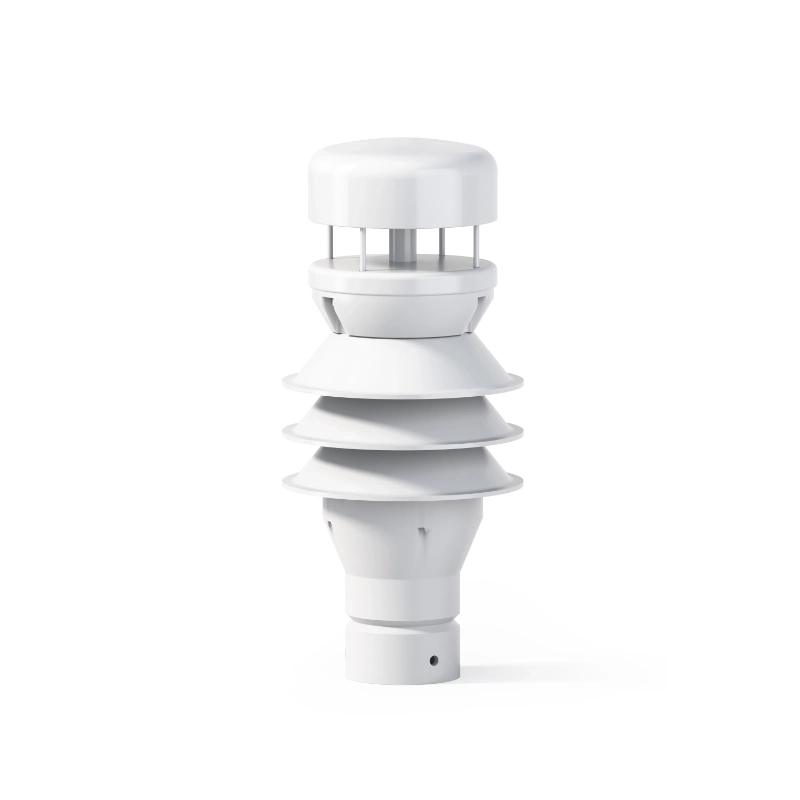
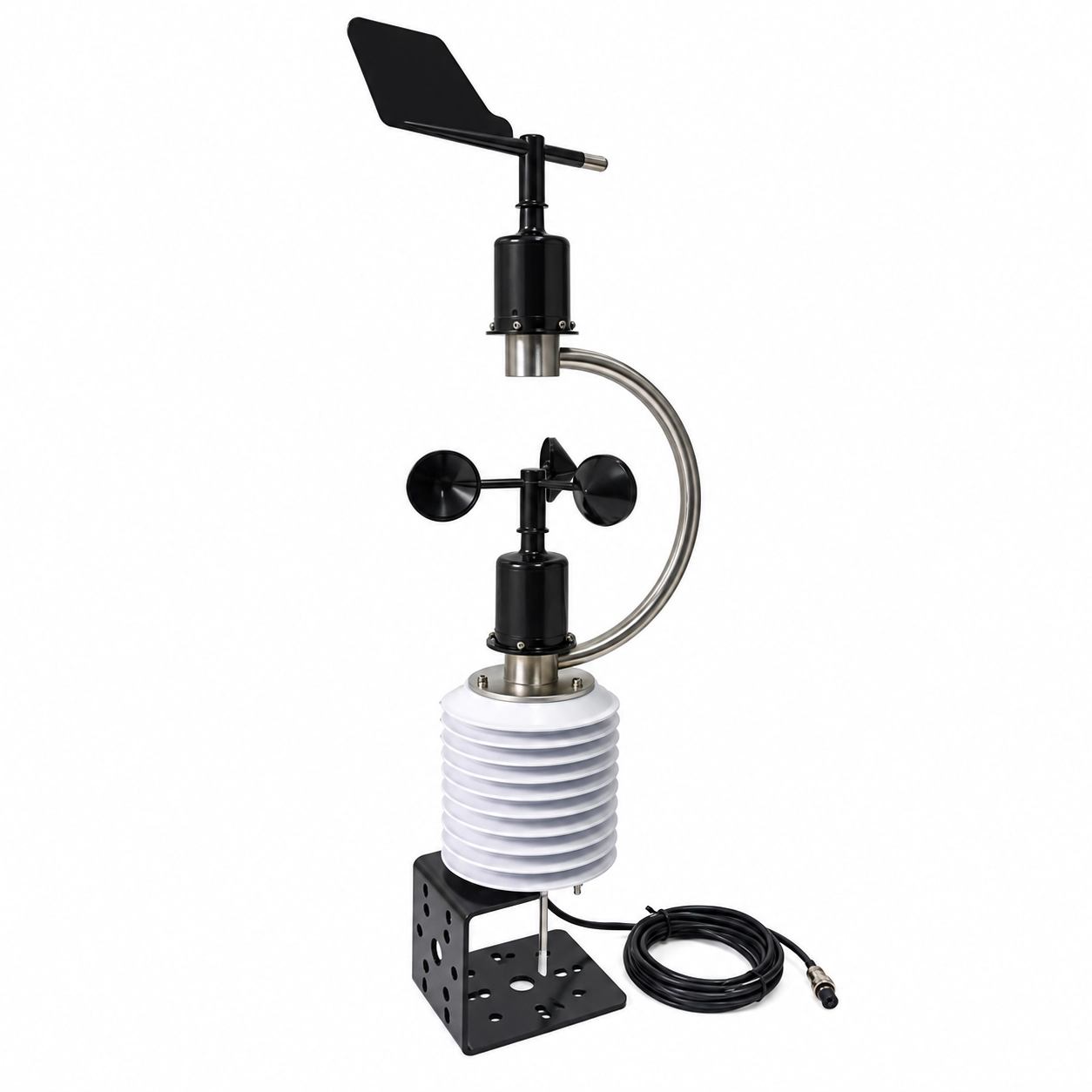
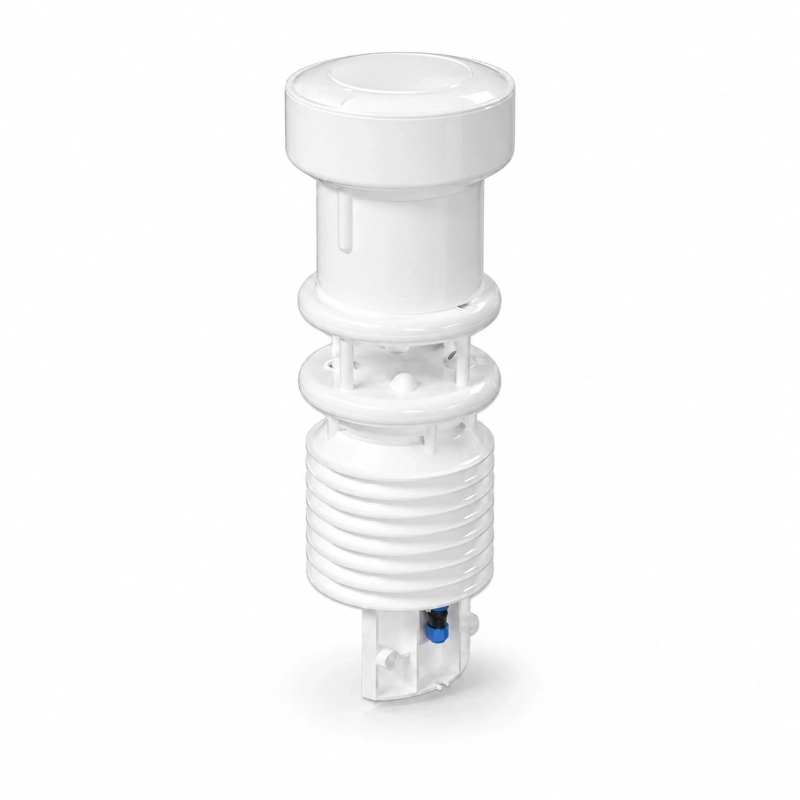
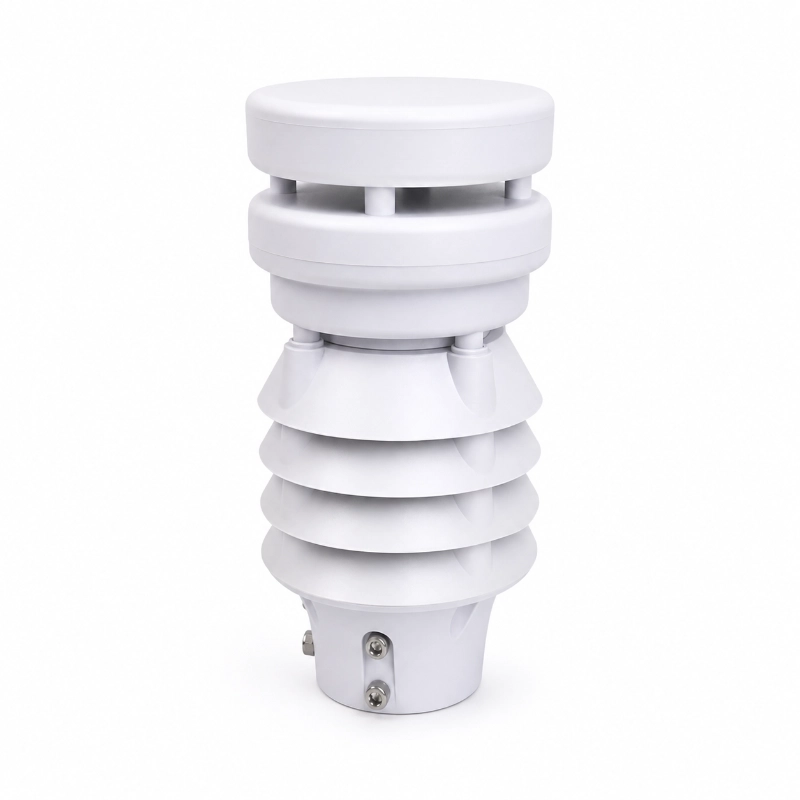
Six-in-One Environmental Sensor for Smart City Air Quality Monitoring
Key Features
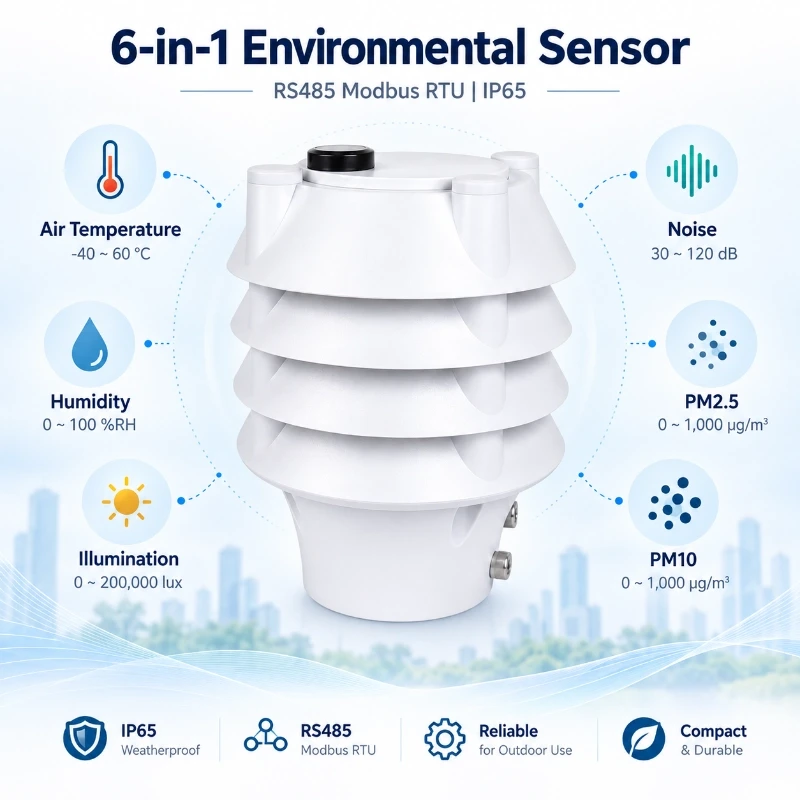
Six in one air quality monitoring: Measures air temperature, relative humidity, light intensity, environmental noise, PM2.5 and PM10 in one compact sensor.
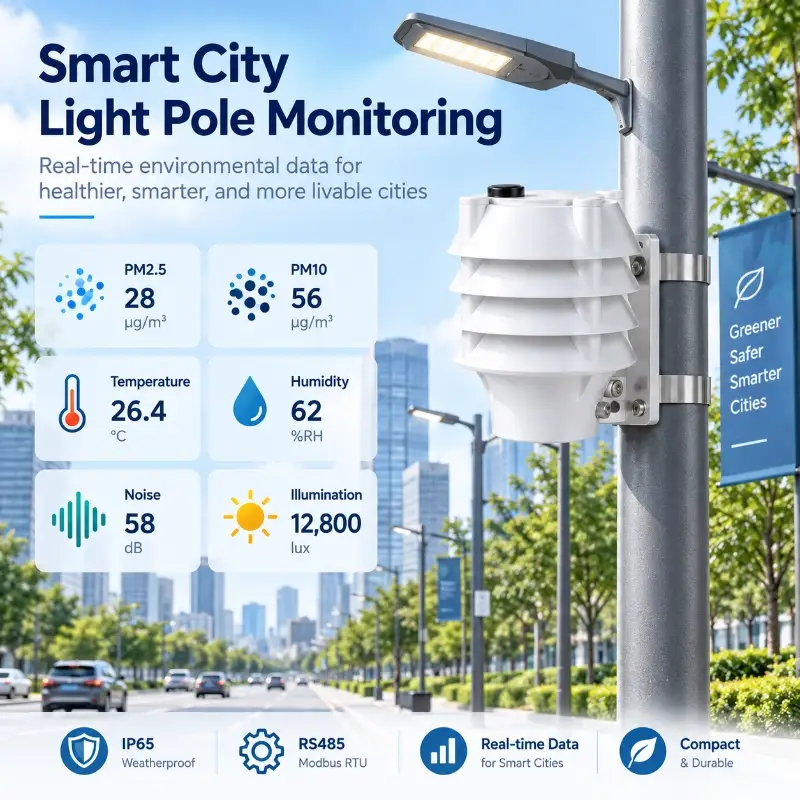
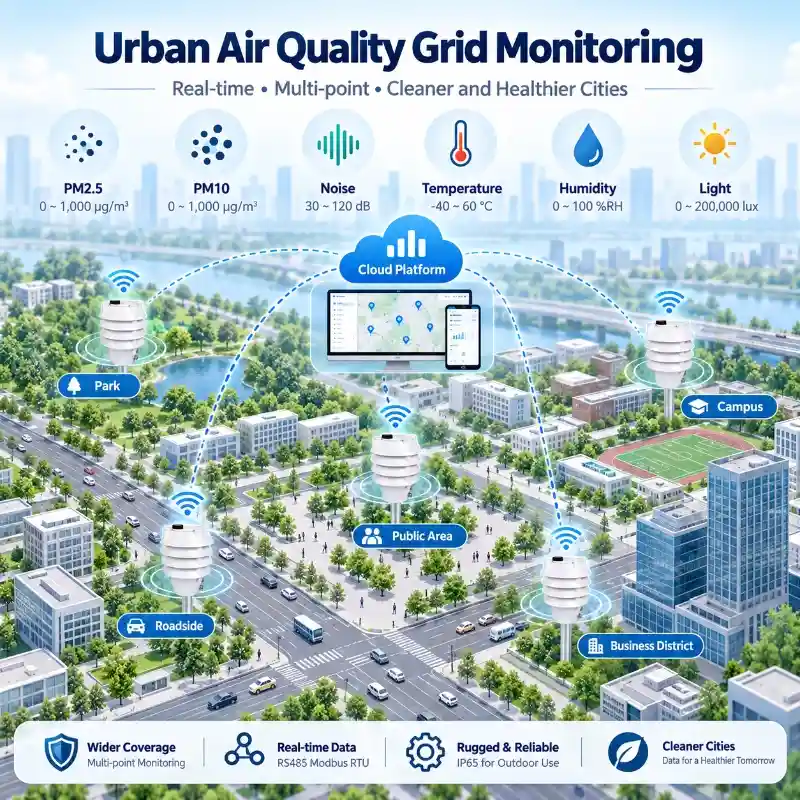
Designed for smart city light poles: Ideal for intelligent light poles, urban environmental grids, parks, campuses, scenic areas and public space monitoring.
PM2.5 and PM10 particulate monitoring: Uses laser scattering technology to continuously calculate suspended particle concentration in ambient air.
Noise and light monitoring included: Combines A weighted environmental noise measurement with 0 to 100 KLux light intensity monitoring for comfort and public space evaluation.
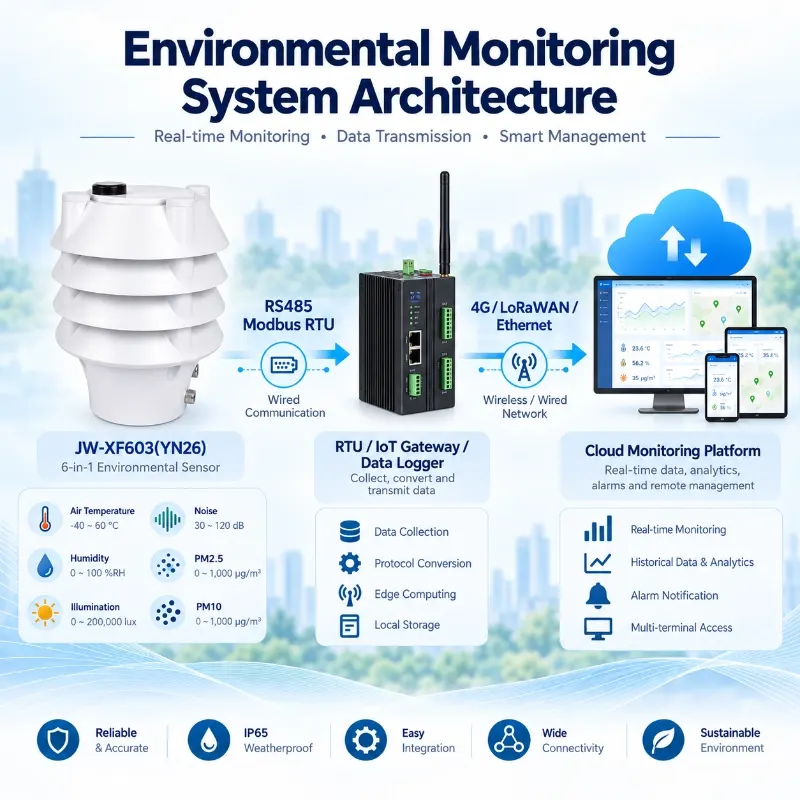
RS485 Modbus RTU output: Standard RS485 interface supports Modbus RTU communication for easy integration with IoT gateways, RTUs, data loggers and cloud platforms.
Compact outdoor structure: The small integrated design reduces installation space, wiring complexity and deployment cost for distributed monitoring points.
Radiation shield for accurate sensing: Temperature and humidity sensors are installed inside a three layer outdoor radiation shield to reduce solar radiation influence.
IP65 protection for outdoor use: Suitable for long term installation in outdoor urban, park, roadside and scenic area environments.
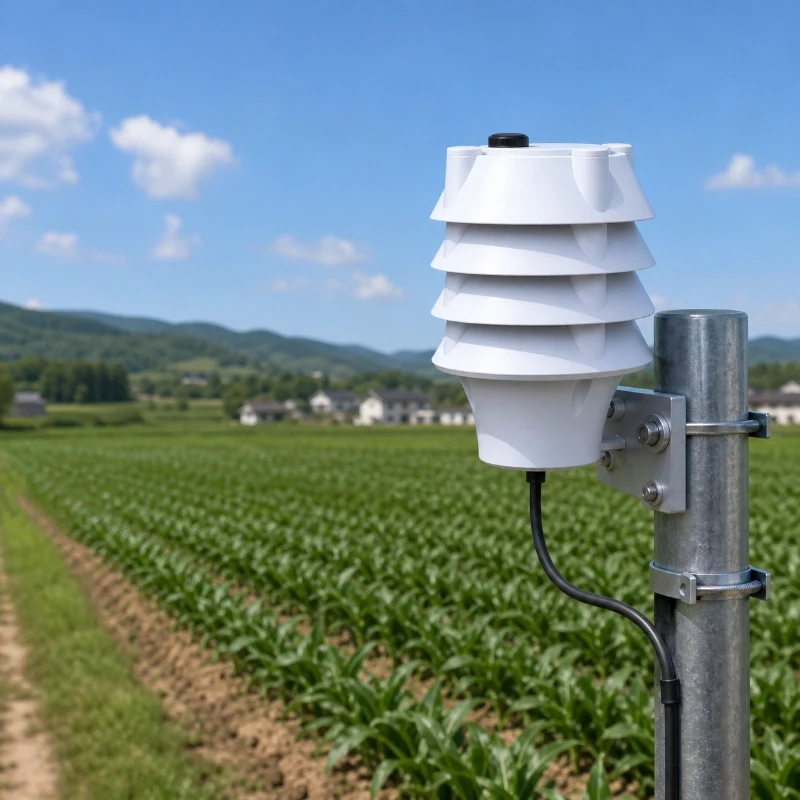
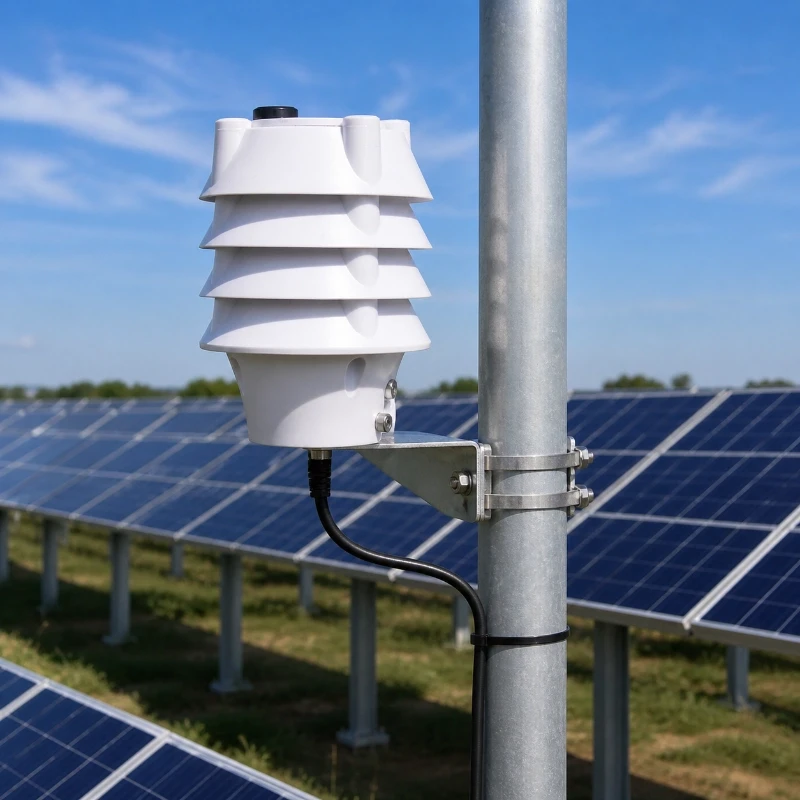
Flexible mounting options: Standard sleeve mounting is supported, with optional flange mounting or bent plate mounting for different installation requirements.
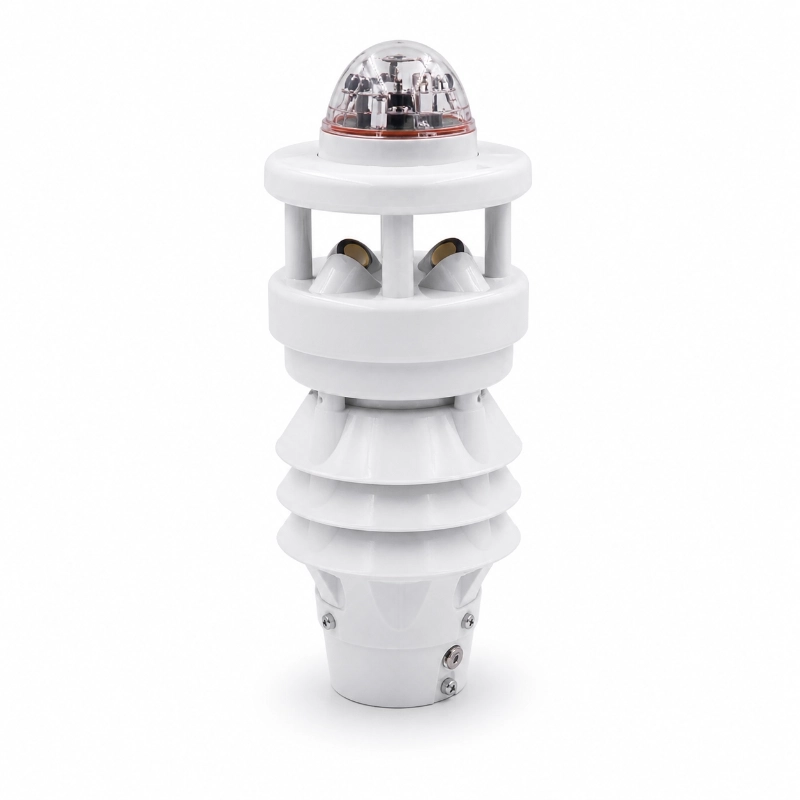
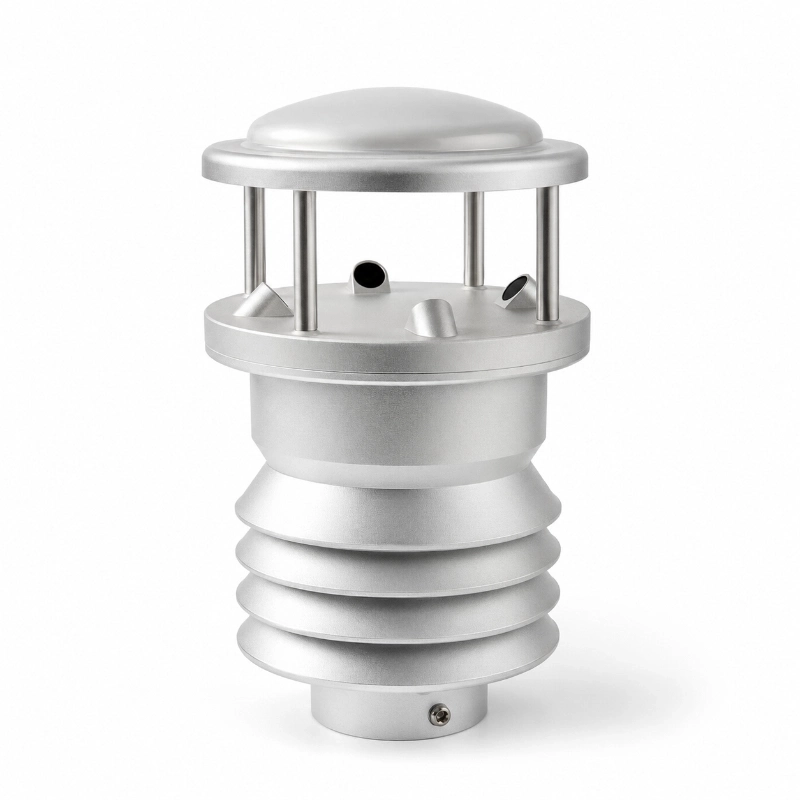
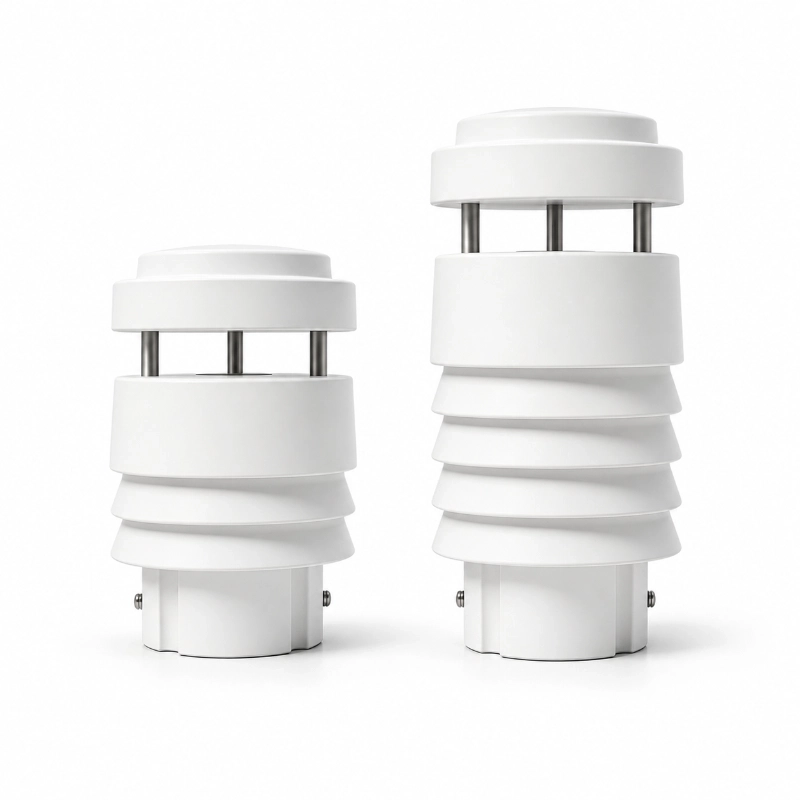
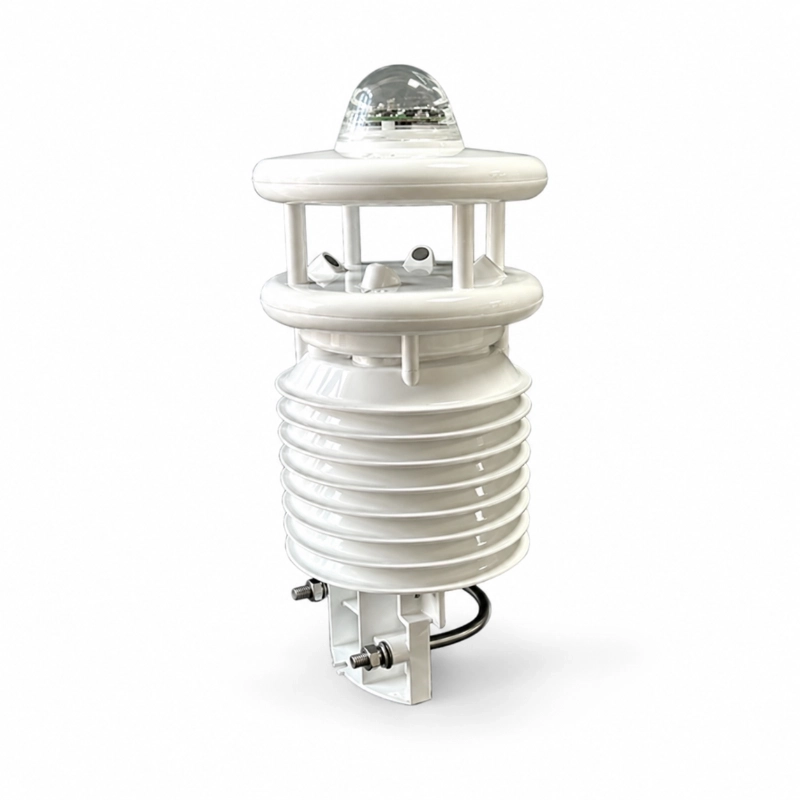
The JW-XF603(YN26) Air Quality Sensor is a compact six-in-one environmental monitoring device designed for distributed smart city and outdoor IoT monitoring projects.
It integrates six environmental parameters in one compact sensor:
Air temperature
Relative humidity
Illumination
Environmental noise
PM2.5
PM10
With RS485 Modbus RTU communication, IP65 protection and a no-moving-parts design, the sensor is suitable for smart city light poles, urban environmental monitoring networks, ecological parks, scenic areas, campuses, roadside monitoring points and office or public-space comfort monitoring.
For projects requiring multiple monitoring points across a city or site, the JW-XF603 can be integrated into a broader urban environmental monitoring system.
What Does the JW-XF603 Environmental Sensor Measure?
The JW-XF603 measures six environmental parameters from one compact device.
Monitoring Parameter
Function
Air Temperature
Measures outdoor air temperature
Relative Humidity
Measures ambient humidity
Illumination
Measures local light intensity
Noise
Measures environmental noise
PM2.5
Measures fine particulate matter
PM10
Measures inhalable particulate matter
This combination makes the sensor suitable for projects where both air quality information and urban environmental comfort data need to be collected from the same monitoring point.
Product Overview
Smart city environmental monitoring often requires measurements to be collected from many different locations rather than from a single centralized station.
For example, environmental conditions may vary between:
Main roads
Residential areas
Parks
Campuses
Scenic areas
Public facilities
Smart street light poles
Installing separate sensors for temperature, humidity, particulate matter, noise and illumination at every monitoring point can increase system complexity.
The JW-XF603 is designed to simplify this type of distributed monitoring.
By integrating six environmental variables into one compact sensing device, it allows system integrators to deploy a denser environmental monitoring network with fewer separate sensing components.
When multiple JW-XF603 sensors are deployed across roads, parks, campuses and smart light poles, they can become part of a distributed urban environmental monitoring system.
Technical Specifications
Monitoring Parameter
Measuring Range
Accuracy
Resolution
Sampling Frequency
Air Temperature
-40°C to 85°C
±0.3°C @ 25°C
0.01°C
1 Hz
Air Humidity
0 to 100%RH
±3%RH 10% to 80%RH non condensing
0.01%RH
1 Hz
Illumination
0 to 100 KLux
±3% or ±1% F.S
10 Lux
1 Hz
Noise
30 to 130 dB
±1.5 dB
0.1 dB
1 Hz
PM2.5
0 to 500 μg/m³ expandable to 1000 μg/m³
±10 plus 10% μg/m³
1 μg/m³
1 Hz
PM10
0 to 500 μg/m³ expandable to 1000 μg/m³
±10 plus 10% μg/m³
1 μg/m³
1 Hz
Operating Temperature
-40°C to 80°C
Output Signal
Standard RS485 interface Modbus RTU
Optional Output
Customizable SDI 12 module optional
Maximum Output Frequency
Passive mode 1 s active mode 1 min
Power Supply
DC9 to 24V
Protection Rating
IP65
Mounting Method
Standard sleeve mounting optional flange mounting or bent plate mounting
Cable
3 m cable optional 10 m communication cable
Notes
1.The air temperature and humidity sensors are integrated and installed inside a three layer outdoor radiation shield. The shield uses a special PC fiber material ratio and an internal thermal insulation coating to minimize the influence of solar radiation. The no moving parts design helps ensure long term measurement accuracy.
2.The noise module uses a high precision electret microphone and A weighting method to measure environmental noise. It features compact size high accuracy and high sensitivity.
3.The PM2.5 and PM10 particulate matter module is based on the laser scattering principle. It continuously collects and calculates the number of suspended particles of different sizes per unit air volume to obtain particulate concentration distribution.
4.The illumination sensor uses high grade optical components with a 400 to 1100 nm wavelength range and optical filters for measurement.
5.XF PcSoft V1.0 is upper computer reading software developed for XF series compact weather stations.
Sensor Design and Measurement Principles
Temperature and Humidity Module
The air temperature and humidity sensors are installed inside a three-layer outdoor radiation shield.
The radiation shield uses a special PC fiber material ratio combined with an internal thermal insulation coating to minimize the influence of solar radiation on the measurements.
The no-moving-parts design supports long-term outdoor measurement without rotating mechanical components.
Noise Module
The noise module uses a high-precision electret microphone.
Environmental noise is measured using an A-weighting method.
The module is designed for compact installation while providing environmental noise data from the same location as the other integrated measurements.
PM2.5 and PM10 Module
The particulate matter sensing module is based on the laser scattering principle.
It continuously collects and calculates suspended particles of different sizes per unit air volume and then derives particulate concentration distribution.
This enables simultaneous monitoring of PM2.5 and PM10.
Illumination Module
The illumination sensor uses high-grade optical components together with optical filters.
The optical measurement wavelength range is:
400 to 1100 nm
This allows the JW-XF603 to include local illumination information as part of the complete environmental dataset.
Smart City Light Pole Environmental Monitoring
Smart street lighting infrastructure can provide convenient installation points for distributed environmental monitoring sensors.
The JW-XF603 can be installed on:
Smart light poles
Lamp posts
Monitoring brackets
Roadside structures
At each monitoring point, the sensor can collect:
PM2.5
PM10
Temperature
Humidity
Noise
Illumination
By deploying multiple sensors across different streets or districts, cities and system integrators can build distributed urban environmental sensing networks.
The objective is not limited to a single air quality reading.
Multiple monitoring points can provide more localized environmental information across different roads, parks and public areas.
Urban Air Quality Grid Monitoring
Environmental conditions can vary between different parts of the same city.
A distributed urban monitoring network may therefore use multiple environmental sensors instead of relying only on a small number of centralized monitoring stations.
The JW-XF603 is suitable for use in urban environmental grids where sensors are deployed at multiple locations.
Potential monitoring points include:
Roads
Parks
Public squares
Campuses
Residential surroundings
Smart street poles
Scenic areas
When connected through gateways, RTUs or other communication equipment, these distributed sensors can form part of an urban environmental monitoring system.
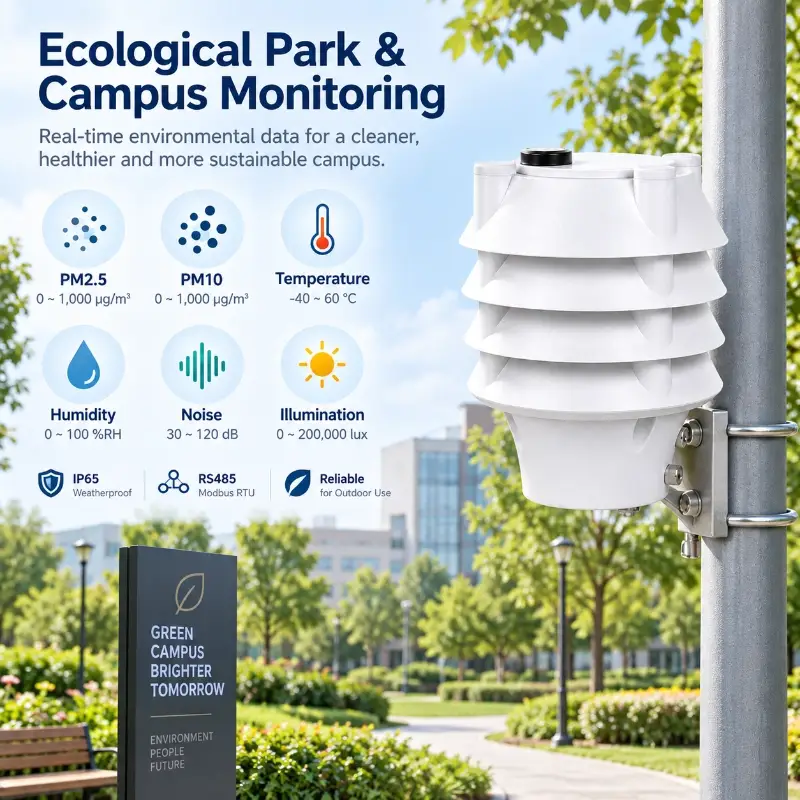
Ecological Park Environmental Monitoring
Ecological parks and green public spaces may require continuous monitoring of both air quality and environmental comfort conditions.
The JW-XF603 can provide:
PM2.5 data
PM10 data
Temperature
Humidity
Environmental noise
Illumination
This combination allows several environmental conditions to be monitored from one sensing unit.
It can be installed on suitable poles or monitoring brackets according to the site design.
Scenic Area Environmental Monitoring
Scenic areas may require environmental monitoring equipment that can collect several parameters without requiring a large number of separate sensors.
The compact JW-XF603 can be used to monitor:
Air particulate conditions
Local temperature and humidity
Environmental noise
Illumination
The compact structure is suitable for distributed environmental monitoring points in scenic and public areas.
Campus Environmental Monitoring
Campuses can contain different environmental zones, such as:
Roads
Playgrounds
Teaching areas
Green spaces
Residential areas
Public squares
Deploying environmental sensors at multiple locations can provide localized data for each area.
The JW-XF603 allows temperature, humidity, illumination, noise, PM2.5 and PM10 to be measured using the same sensing unit.
Roadside Micro-Environment Monitoring
Roadside conditions may differ from nearby parks or residential areas.
The JW-XF603 can be installed on suitable roadside structures to monitor particulate matter, noise and other environmental variables from a single location.
Its integrated architecture makes it suitable for projects that require multiple roadside environmental monitoring points.
Office Comfort and Public Space Monitoring
The sensor can also be used for environmental monitoring around office areas and public spaces.
Temperature, humidity, illumination and noise provide information related to general environmental comfort, while PM2.5 and PM10 provide particulate monitoring data.
This combination allows one sensor to support several monitoring objectives within the same environmental IoT system.
How the JW-XF603 Connects to an IoT Monitoring System
A typical environmental monitoring architecture may include:
The sensor itself provides RS485 Modbus RTU communication.
Depending on the project architecture, a compatible data acquisition or communication device can then transmit the environmental data to a local or remote monitoring system.
For city-wide deployment, environmental sensors can be combined with:
A traditional environmental monitoring installation may require separate devices for:
Temperature
Humidity
PM2.5
PM10
Noise
Illumination
This increases the number of cables, brackets and data interfaces at each monitoring site.
An integrated six-in-one sensor provides these parameters in one housing.
For multi-point deployment, this can help simplify:
Equipment configuration
Installation
Cabling
Data collection
Field maintenance
System integration
The advantage becomes more significant when dozens or hundreds of environmental monitoring points need to be deployed within the same project.
Typical Application Scenarios
The JW-XF603 is suitable for:
Smart city light pole monitoring
Urban air quality grid monitoring
PM2.5 outdoor monitoring
PM10 outdoor monitoring
Ecological park environmental monitoring
Scenic area air quality monitoring
Office comfort monitoring
Public space environmental monitoring
Campus environmental monitoring
Roadside micro-environment monitoring
Outdoor IoT environmental monitoring systems
How to Select an Environmental Sensor for a Smart City Project
Before selecting an environmental monitoring sensor, system designers should first define the actual monitoring objectives.
1. Confirm the Required Parameters
If the project needs:
Temperature
Humidity
Illumination
Noise
PM2.5
PM10
the JW-XF603 provides all six parameters in one compact unit.
If the project requires other variables not listed in this product specification, additional sensors should be selected according to the application.
2. Confirm the Installation Environment
Determine whether the sensor will be installed on:
A smart light pole
Roadside structure
Park monitoring pole
Campus monitoring point
Scenic-area bracket
Public-space monitoring structure
Mounting requirements should be confirmed before installation.
3. Confirm the Data Acquisition Interface
The standard output is:
RS485 Modbus RTU
Before deployment, confirm compatibility with the intended:
Gateway
RTU
PLC
Data logger
Monitoring terminal
4. Confirm the Communication Architecture
The sensor provides the environmental measurements and RS485 interface.
If data needs to be transmitted over long distances or uploaded to a cloud platform, the complete system may require additional communication equipment.
Depending on the project, this can include:
4G communication
LoRaWAN communication
IoT gateways
RTUs
Cloud monitoring platforms
Mounting Options
The standard product supports:
Sleeve mounting
Optional mounting configurations include:
Flange mounting
Bent plate mounting
Installation hardware should be selected according to the actual pole, bracket or project structure.
Cable Options
The standard configuration includes:
3 m cable
An optional:
10 m communication cable
is also available according to project requirements.
Build a Distributed Smart City Environmental Monitoring Network
For many smart city projects, the objective is not simply to install one environmental sensor.
The larger challenge is building a distributed monitoring network that can collect comparable environmental data from many locations.
The JW-XF603 can act as one of the environmental sensing nodes in this architecture.
 +86 13520127780
 info@jingelway.com