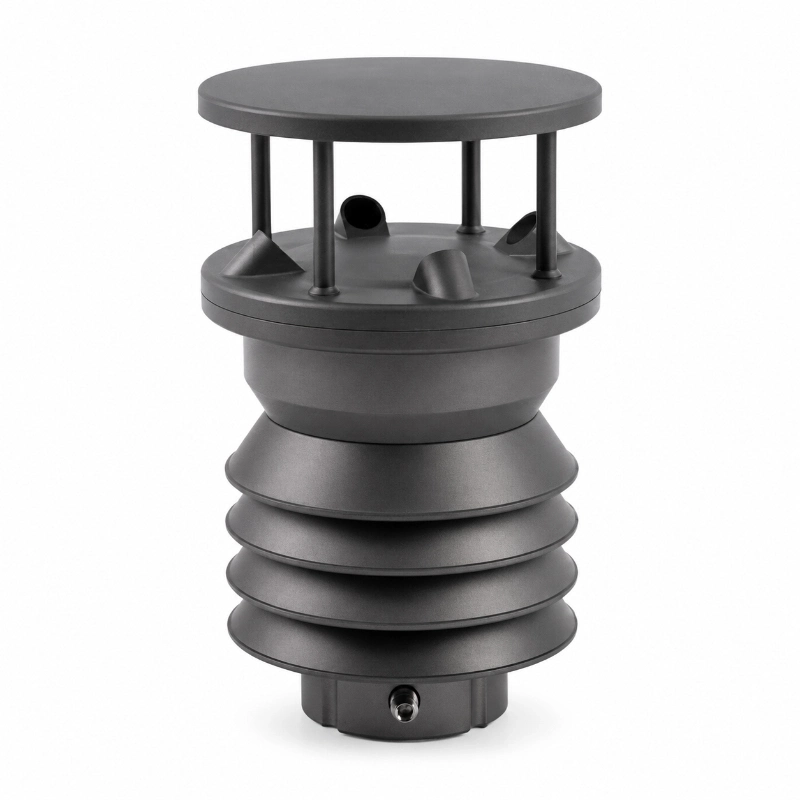
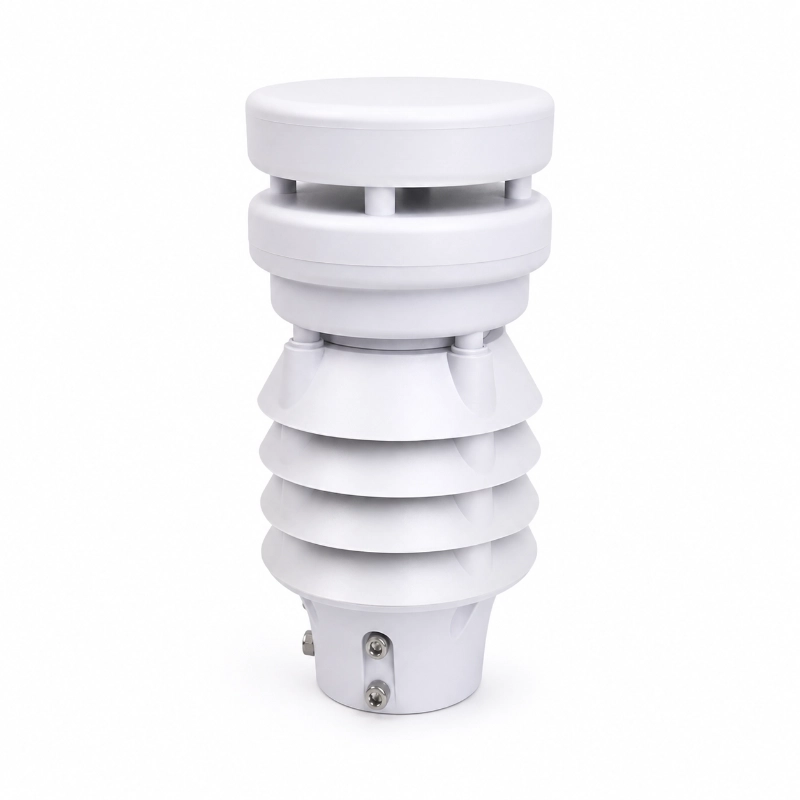
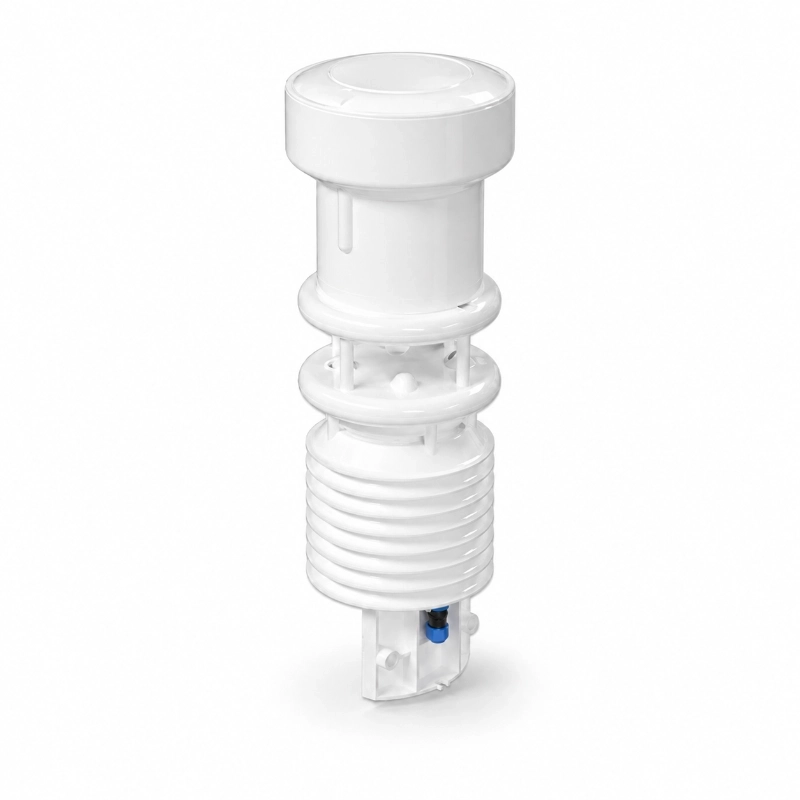
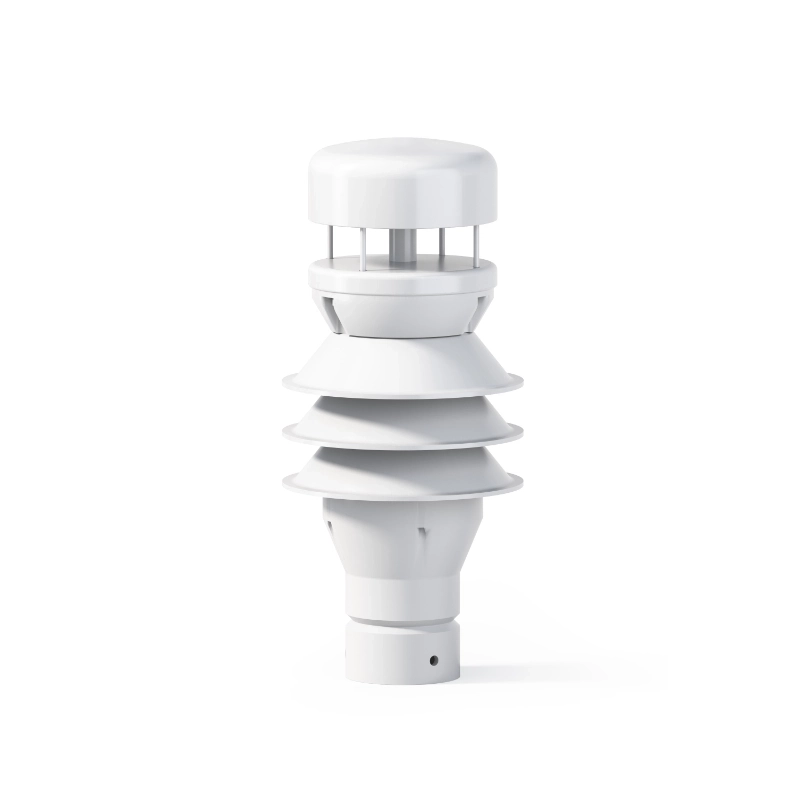
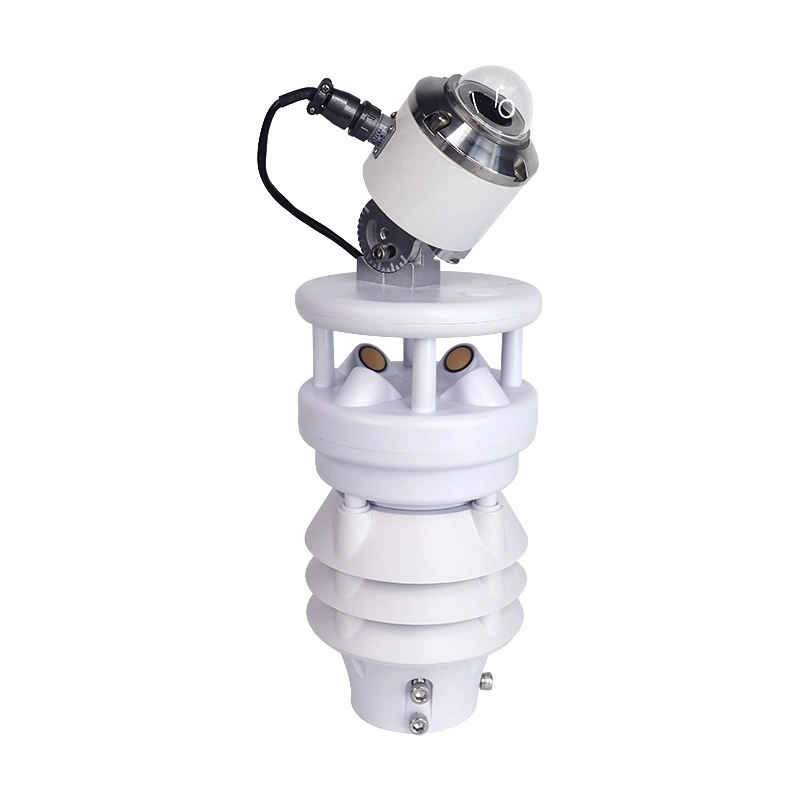
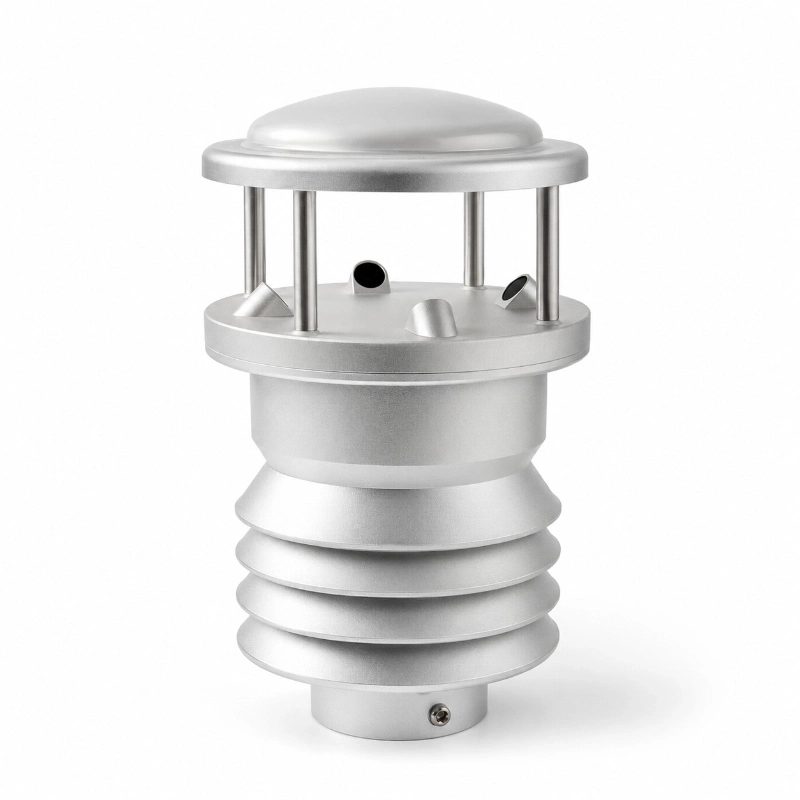
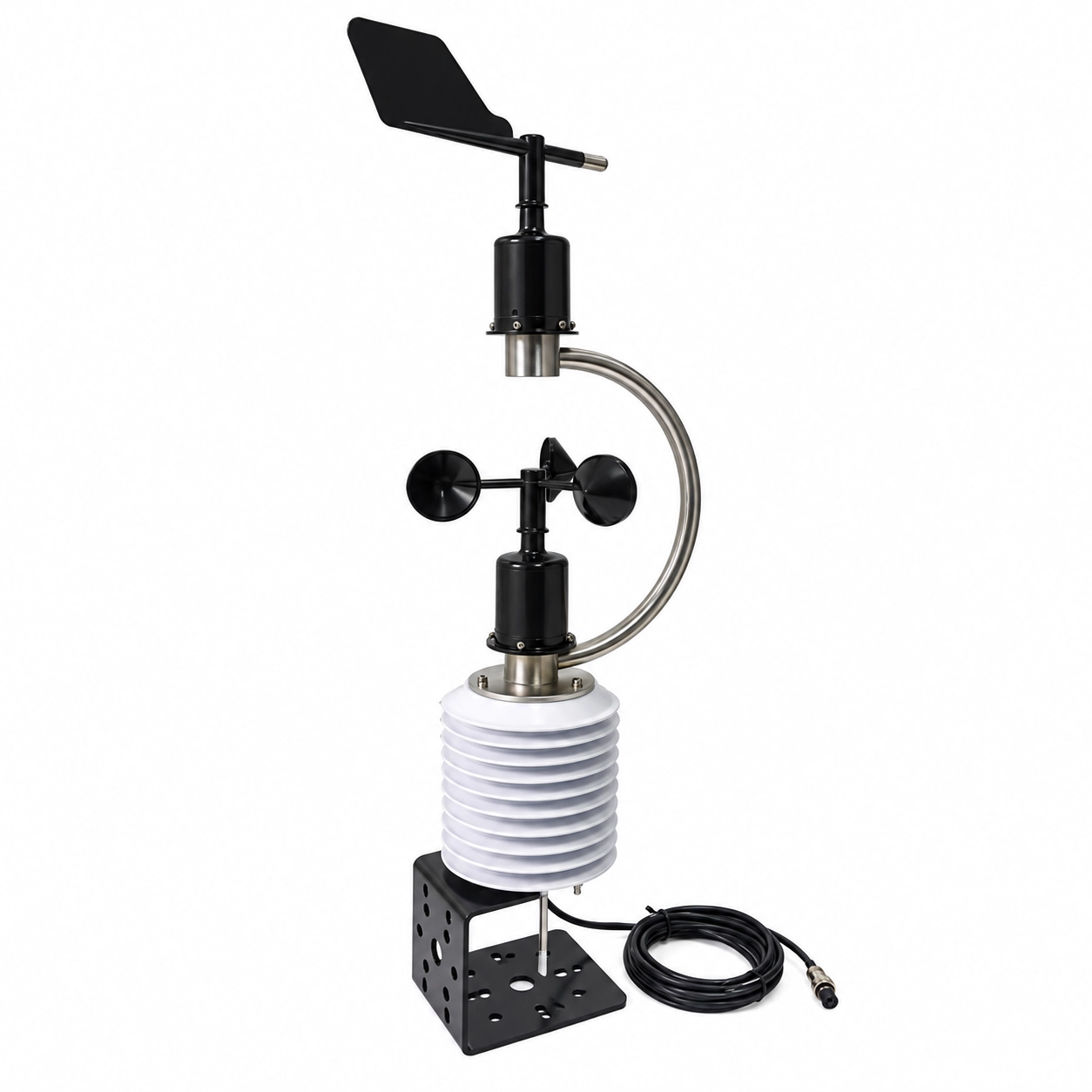
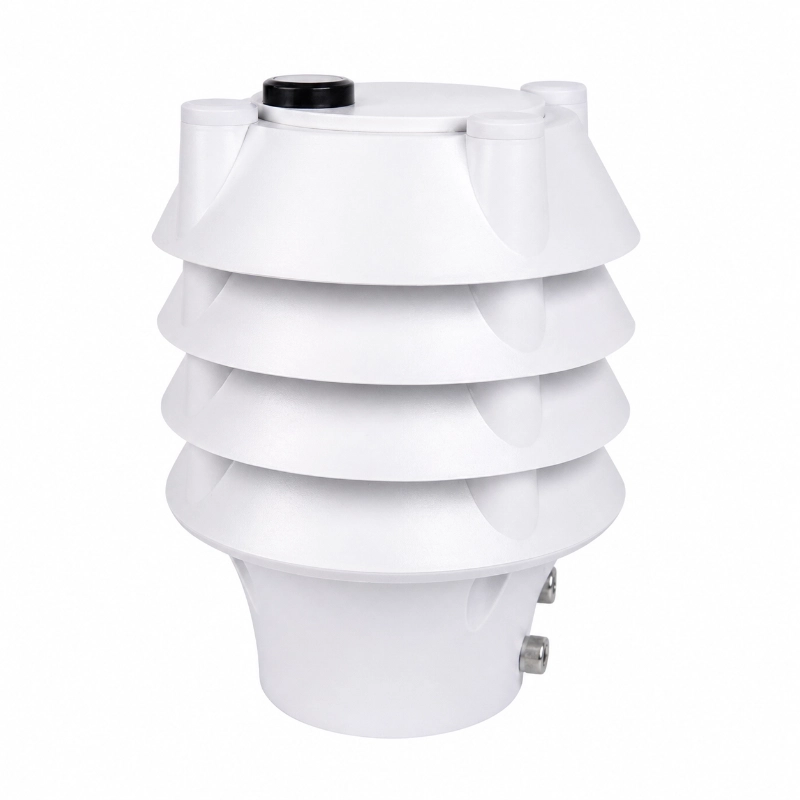
JW-IWS500H(SW06)micro weather station is a compact all-in-one meteorological sensor designed for accurate outdoor environmental monitoring. It measures wind speed, wind direction, ambient temperature, relative humidity, and atmospheric pressure in one integrated device. With RS485 digital output, IP66 protection, aluminum housing, and strong corrosion resistance, it is suitable for power systems, solar PV plants, smart agriculture, smart cities, transportation, and industrial environmental monitoring projects.
Product Overview
JW-IWS500H(SW06) compact micro weather station integrates five key weather parameters into a single sensor body, helping users reduce installation complexity and improve data collection efficiency. It is designed for outdoor applications where stable performance, high integration, and long-term reliability are required.
The sensor uses a durable aluminum housing with special surface treatment, providing strong resistance to corrosion, wind-blown sand, and harsh weather conditions. Its compact structure makes it easy to install on poles, monitoring stations, solar PV plants, road weather systems, and smart city infrastructure.
With standard RS485 half-duplex or full-duplex output, the device can be connected to data loggers, RTUs, IoT gateways, PLC systems, and cloud monitoring platforms. It is suitable for both standalone weather monitoring and integrated industrial IoT systems.
Technical Specifications
Parameter
Specification
Product Type
Integrated Micro Weather Station
Measured Parameters
Wind Speed, Wind Direction, Temperature, Humidity, Air Pressure
Size
118 mm × 193 mm
Weight
1.12 kg
Working Temperature
-40°C to +85°C / -55°C to +85°C optional
Working Voltage
8–30 VDC
Power Consumption
12 VDC max 120 VA with heating / 12 VDC max 0.18 VA during operation
Electrical Connection
8-pin aviation connector
Housing Material
Aluminum
Protection Grade
IP66
Corrosion Resistance
C5-M
Surge Protection Level
Level 4
Baud Rate
1200–57600
Output Signal
RS485 half-duplex / full-duplex
Measurement Parameters
Wind Speed
Item
Specification
Range
0–50 m/s, 0–75 m/s optional
Accuracy
0.2 m/s at 0–10 m/s, ±2% above 10 m/s
Resolution
0.1 m/s
Wind Direction
Item
Specification
Range
0–360°
Accuracy
±2°
Resolution
1°
Ambient Temperature
Item
Specification
Range
-40°C to +85°C / -55°C to +85°C optional
Accuracy
±0.2°C
Resolution
0.1°C
Relative Humidity
Item
Specification
Range
100% RH at 0–80°C
Accuracy
±2% RH
Resolution
1% RH
Atmospheric Pressure
Item
Specification
Range
200–1200 hPa
Accuracy
±0.5 hPa at -10°C to +50°C
Resolution
0.1 hPa
Environmental and Reliability Tests
The micro weather station is designed for outdoor industrial use and has been tested according to multiple environmental and reliability standards.
Test Item
Reference Standard
Electrostatic Discharge Test
GB/T 17626.2-2006
Surge Immunity Test
GB/T 17626.5-2008
Fast Transient Burst Test
GB/T 17626.4-2008
Conducted Disturbance Immunity Test
GB/T 17626.6-2008
IP Protection Test
GB 4208-2008
Wind Tunnel Test
JJG 0001-1992
Vibration Test
GB 5170.14-85
High and Low Temperature Storage Test
GB/T 2423.2-2008, GB/T 2423.1-2008
High and Low Temperature Operation Test
GB/T 2423.2-2008, GB/T 2423.1-2008
Salt Spray Test
ISO 6270-1:1998, ISO 7253:2001, ISO 12944-6:1998
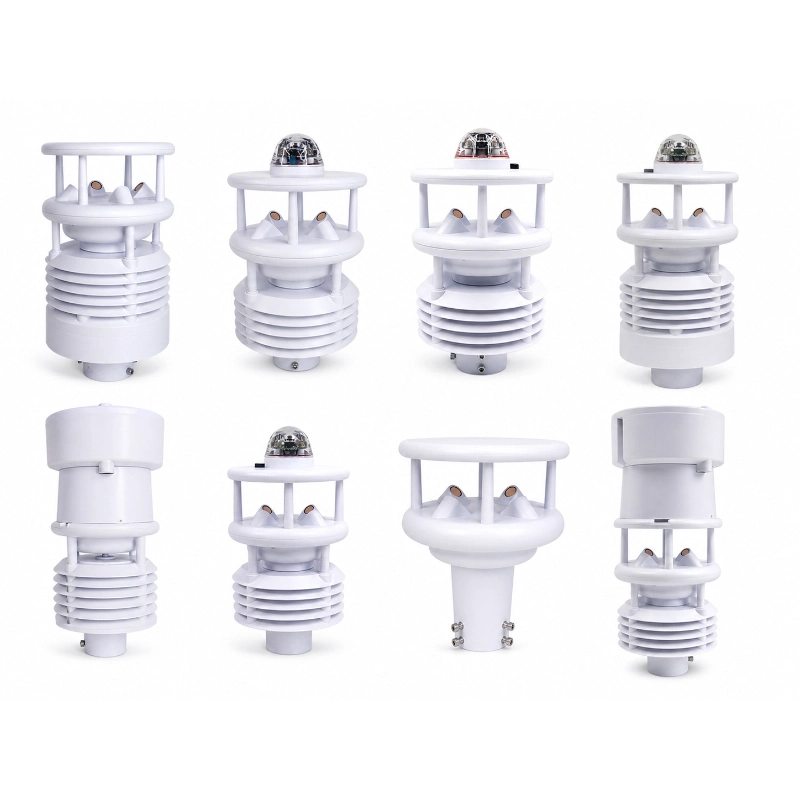
Multiple compact weather sensors can be deployed across a site and connected to one cloud platform through a centralized meteorological monitoring system.
Typical Applications
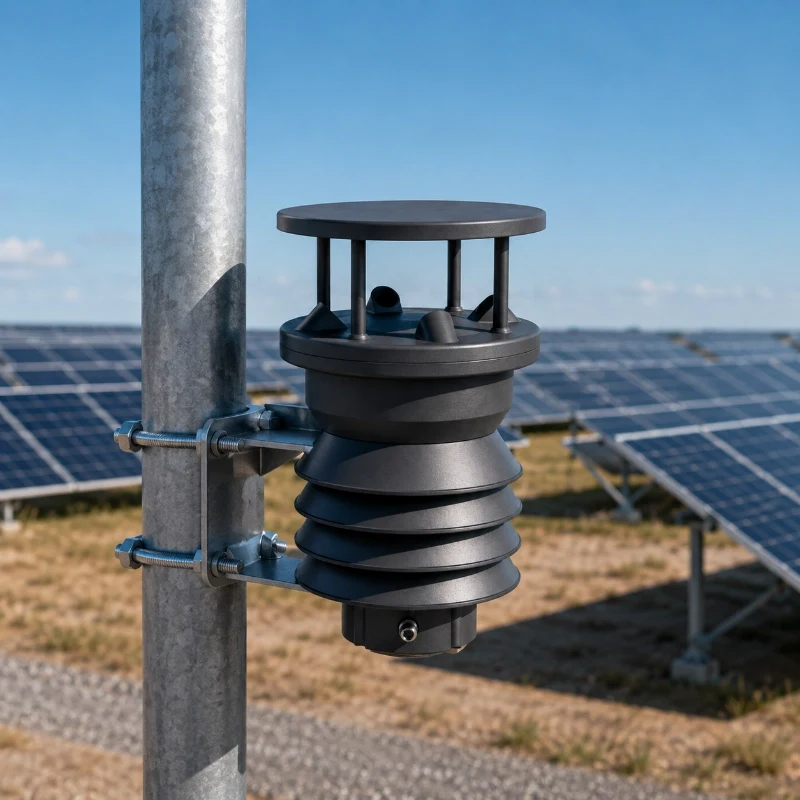
Solar PV Plant Monitoring: The micro weather station can be installed near PV arrays to monitor wind, temperature, humidity, and air pressure. These environmental parameters help improve solar plant performance analysis, operation safety, and equipment protection.
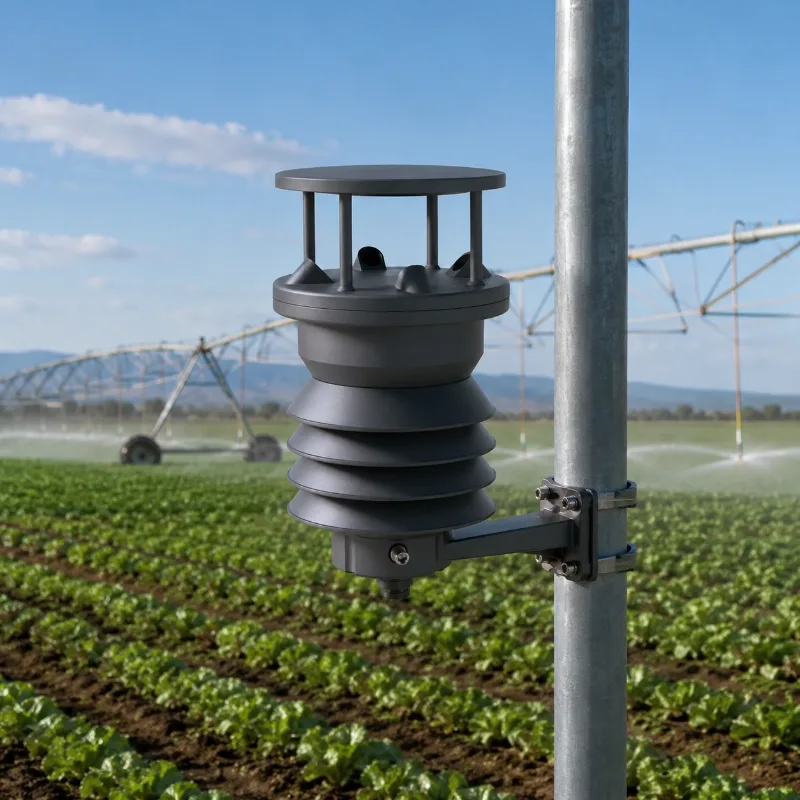
Smart Agriculture: For smart farms, greenhouses, and irrigation systems, the sensor provides real-time weather data to support irrigation decisions, climate monitoring, and agricultural automation.
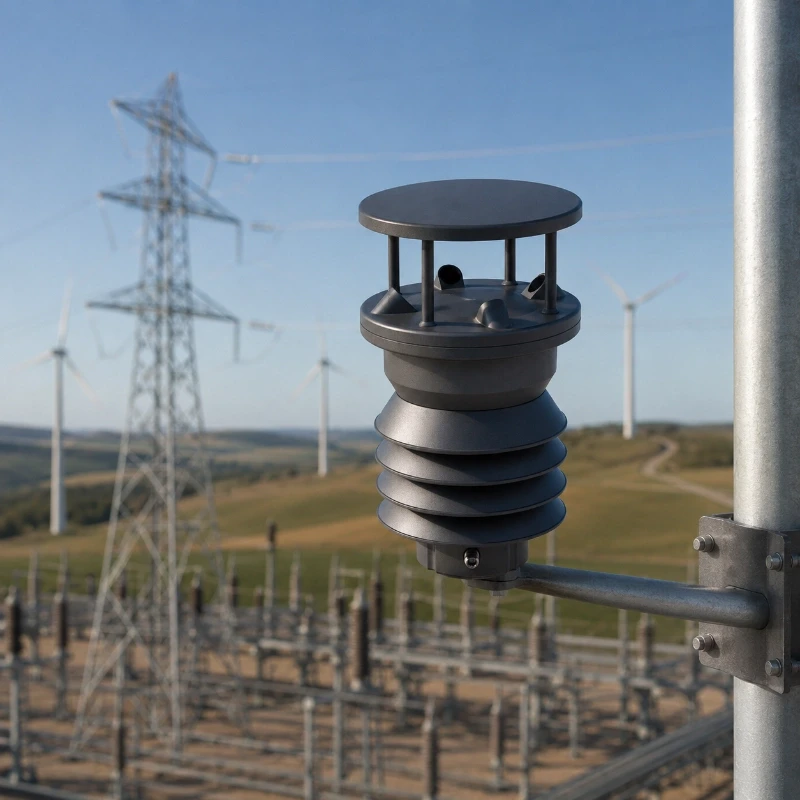
Power and Transmission Systems: It is suitable for wind farms, substations, transmission lines, and power grid monitoring systems where wind and environmental data are important for operational safety.
Smart City and Street Light Systems: The compact design makes it suitable for smart poles, urban environmental monitoring, road weather monitoring, and city-level IoT infrastructure.
Transportation Weather Monitoring: The sensor can be used along railways, highways, bridges, and traffic monitoring points to provide localized meteorological data for safety management.
Environmental and Industrial Monitoring: It can be integrated into environmental monitoring stations, industrial parks, construction sites, and outdoor equipment monitoring systems.
What Is a Micro Weather Station?
A micro weather station is a compact meteorological monitoring device that integrates multiple weather sensors into one unit. Compared with traditional weather stations that use separate wind sensors, temperature sensors, humidity sensors, and pressure sensors, a micro weather station reduces wiring, installation space, and maintenance workload.
It is especially suitable for IoT projects where multiple monitoring points need to be deployed quickly and cost-effectively.
Why Use an Integrated Weather Sensor?
An integrated weather sensor helps simplify field deployment. In many industrial IoT projects, installation difficulty, wiring errors, and maintenance cost can affect long-term system performance. By integrating several weather parameters into one compact device, users can collect reliable environmental data with fewer components.
This is useful for solar PV monitoring, smart agriculture, wind farms, transportation weather monitoring, and smart city projects.
Why RS485 Output Matters?
RS485 is widely used in industrial monitoring systems because it supports stable long-distance communication and strong anti-interference performance. A micro weather station with RS485 output can be connected to data loggers, RTUs, PLCs, IoT gateways, and cloud platforms.
For outdoor applications, RS485 communication is often preferred because it works well in industrial environments with electrical noise, long cables, and multiple devices.
How Weather Data Supports Better Decisions?
Real-time weather data can help users understand field conditions more accurately. For example, wind speed data can support safety management, temperature and humidity data can support agricultural climate control, and air pressure data can help improve environmental monitoring accuracy.
In solar PV plants, weather data can also support performance analysis and operation planning.
FAQ
Q
1. What parameters can this micro weather station measure?
A
This micro weather station can measure wind speed, wind direction, ambient temperature, relative humidity, and atmospheric pressure in one compact device.
Q
2. Does the sensor support RS485 communication?
A
Yes. The sensor supports RS485 digital output and can be connected to data loggers, RTUs, gateways, PLC systems, and cloud monitoring platforms.
Q
3. Is this micro weather station suitable for outdoor use?
A
Yes. It uses an aluminum housing, IP66 protection, and C5-M corrosion resistance, making it suitable for long-term outdoor environmental monitoring.
Q
4. Can it be used in cold regions?
A
Yes. The device supports optional heating, making it suitable for cold, icy, or low-temperature environments.
Q
5. What is the wind speed measurement range?
A
The standard wind speed range is 0–50 m/s, and 0–75 m/s is optional depending on project requirements.
Q
6. Can JW-IoT integrate this weather station with an IoT platform?
A
Yes. JW-IoT can integrate the RS485 micro weather station with data loggers, IoT gateways, and cloud-based monitoring platforms.
Q
7. Can JW-IoT provide this sensor for solar PV monitoring projects?
A
Yes. JW-IoT can provide this micro weather station for solar PV plants, rooftop solar projects, and industrial PV monitoring systems where weather data is required.
Q
8. What applications is this product suitable for?
A
It is suitable for power systems, solar PV plants, agriculture, smart cities, environmental monitoring, railways, highways, and industrial IoT projects.
Q
9. Does JW-IoT support customization for project applications?
A
Yes. JW-IoT can support customized configuration, communication integration, and project-based weather monitoring solutions according to user requirements.
 +86 13520127780
  info@jingelway.com