+86 13520127780
  info@jingelway.com








PV Module Temperature Sensors for Solar Plant Monitoring
Release time: 2026-06-23
Introduction
Solar PV plants are often evaluated by how much sunlight they receive. However, irradiance is only one part of the performance equation. In real operating conditions, solar panel temperature has a direct impact on power output, efficiency, performance ratio, and long-term equipment reliability.
This is why a PV module temperature sensor is an important part of professional PV plant monitoring. By measuring the actual temperature of the solar panel backsheet or module surface, operators can better understand how heat affects power generation and whether the PV system is performing as expected.
For utility-scale solar farms, rooftop PV systems, floating solar plants, and desert PV projects, module temperature monitoring helps convert raw environmental data into useful performance insight.
What Is a PV Module Temperature Sensor?
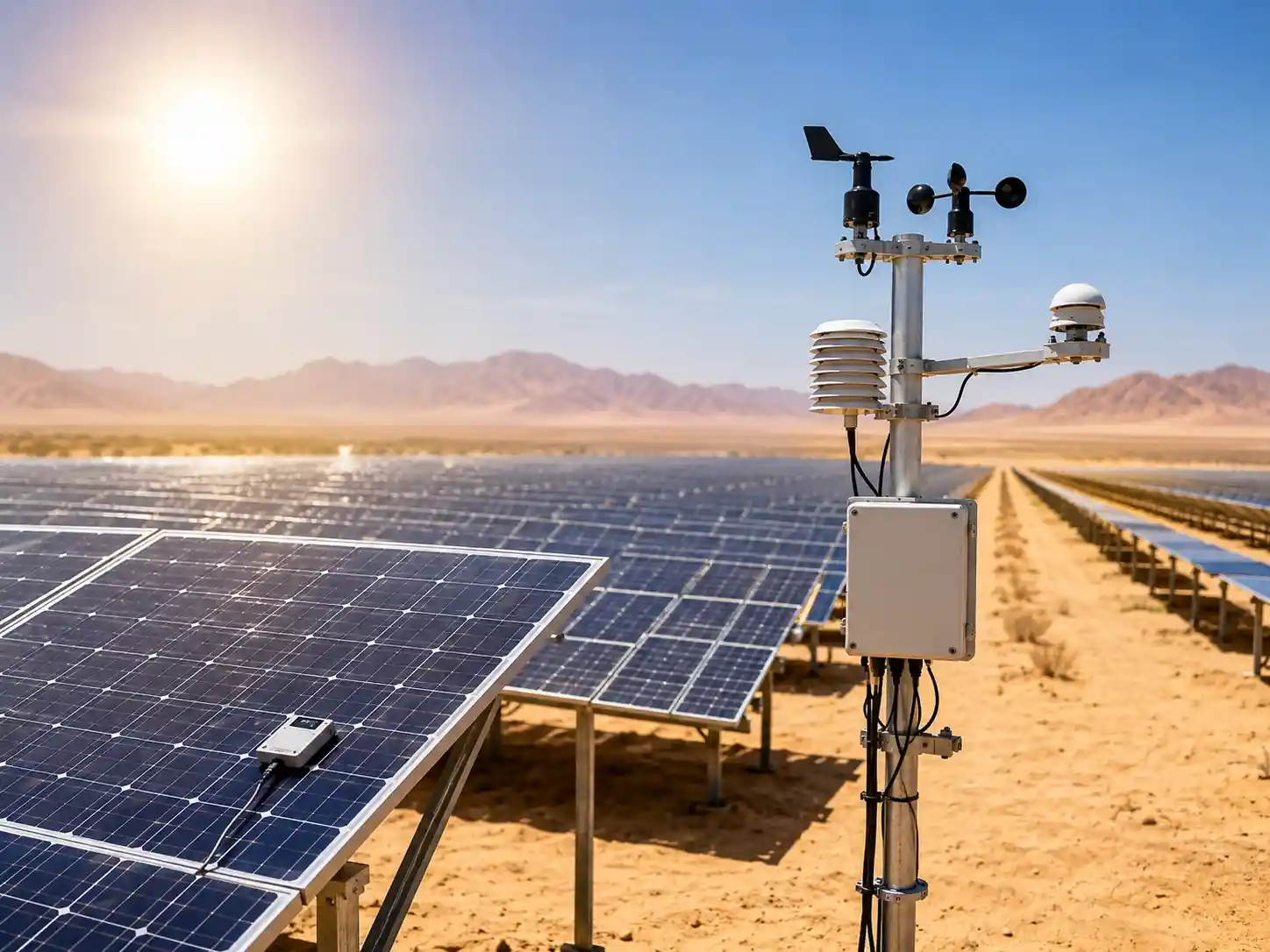
A PV module temperature sensor is a monitoring device used to measure the operating temperature of a solar PV panel. It is usually installed on the back side of a representative PV module, where it can closely reflect the real thermal condition of the panel during operation.
Unlike ambient air temperature sensors, which measure the surrounding air, a module temperature sensor measures the temperature of the solar panel itself. This is important because the panel temperature can be much higher than the air temperature, especially under strong solar irradiance, low wind conditions, or hot climate environments.
A typical PV module temperature sensor can be connected to:
- PV weather stations
- Solar irradiance monitoring systems
- Data loggers
- RTU devices
- SCADA systems
- IoT gateways
- Cloud-based PV monitoring platforms
In a complete PV monitoring system, the module temperature sensor is often used together with a solar irradiance sensor for PV monitoring, wind speed sensor, ambient temperature and humidity sensor, and data acquisition equipment.
Why Solar Panel Temperature Affects Output?
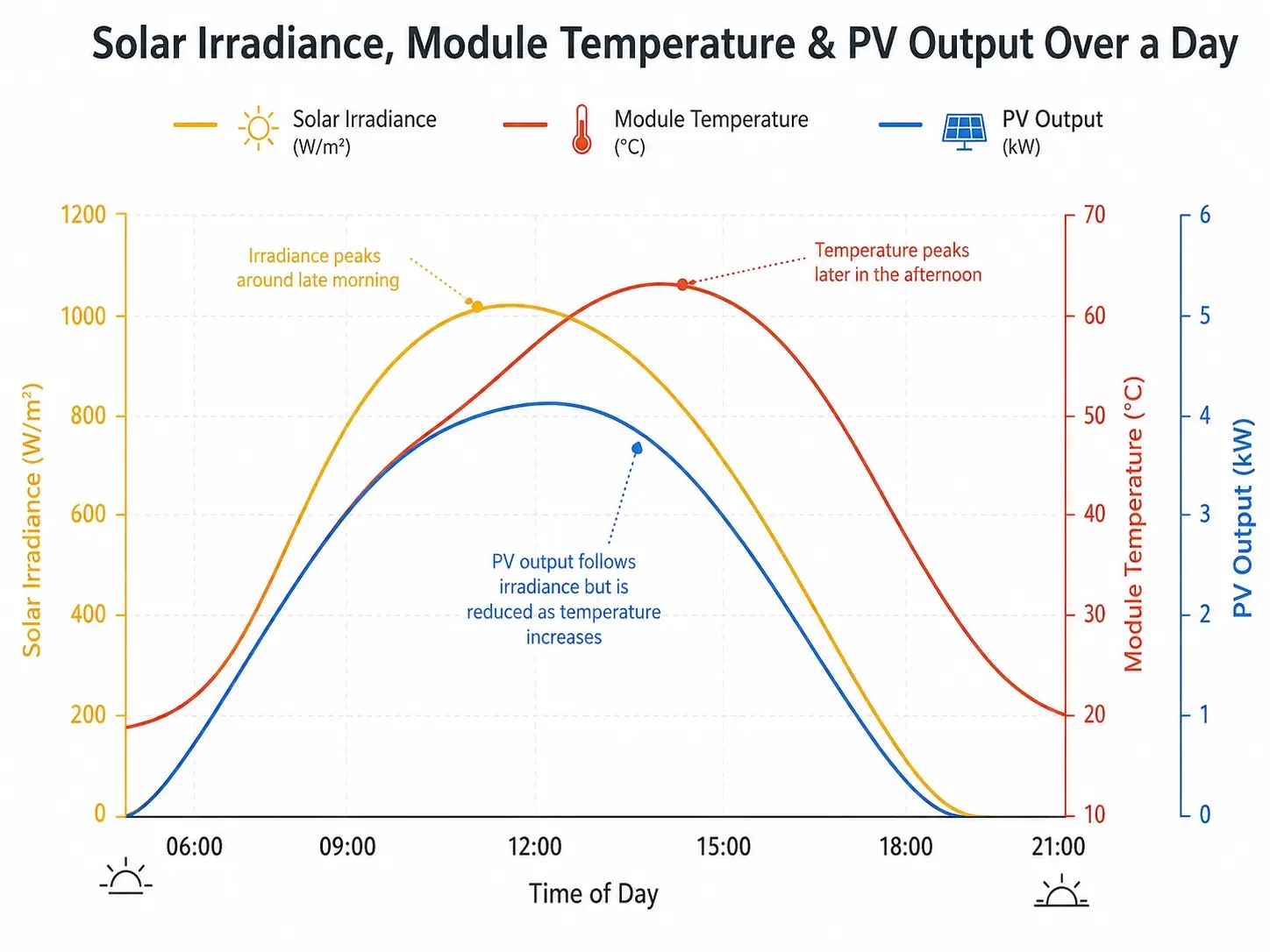
Solar panels generate electricity from sunlight, but higher module temperature usually reduces electrical efficiency. As PV modules heat up, their voltage output tends to decrease, which can lead to lower power generation even when solar irradiance remains strong.
This means that two solar plants receiving similar sunlight may produce different power output if their module temperatures are different.
Common causes of high solar panel temperature include:
- Strong solar radiation
- Hot desert or tropical climate
- Poor air circulation around panels
- Low wind speed
- Dust accumulation and soiling
- Rooftop heat reflection
- Dense installation layout
- Aging or abnormal module behavior
Without module temperature monitoring, it is difficult to determine whether reduced output is caused by low irradiance, high temperature, inverter issues, shading, soiling, or equipment faults.
A solar panel temperature sensor helps operators identify the thermal factor behind performance changes and supports more accurate PV plant monitoring.
How Module Temperature Supports PR Calculation?
Performance Ratio, often called PR, is a key indicator used to evaluate how efficiently a PV plant converts available solar energy into electrical output. To calculate and interpret PR accurately, operators need reliable data from irradiance sensors, power meters, and environmental sensors.
Module temperature is especially important because PV module efficiency changes with temperature. When the panel becomes hotter, actual output may decrease even if sunlight conditions are good.
By integrating module temperature data into PR calculation, operators can:
- Separate temperature-related losses from other performance losses
- Compare actual output with expected output under real field conditions
- Identify abnormal performance decline
- Improve solar plant performance analysis
- Support long-term O&M decision-making
- Evaluate cleaning, cooling, or layout optimization strategies
For example, if irradiance is high but energy output is lower than expected, module temperature data can help confirm whether the loss is caused by heat. If temperature is normal, the operator may need to investigate soiling, inverter efficiency, wiring loss, shading, or module degradation.
For broader PV performance analysis, JW-IoT provides an IoT-based Solar PV Monitoring System that supports real-time monitoring of solar radiation, weather conditions, PV module performance, and power generation data.
Installation Position and Mounting Method
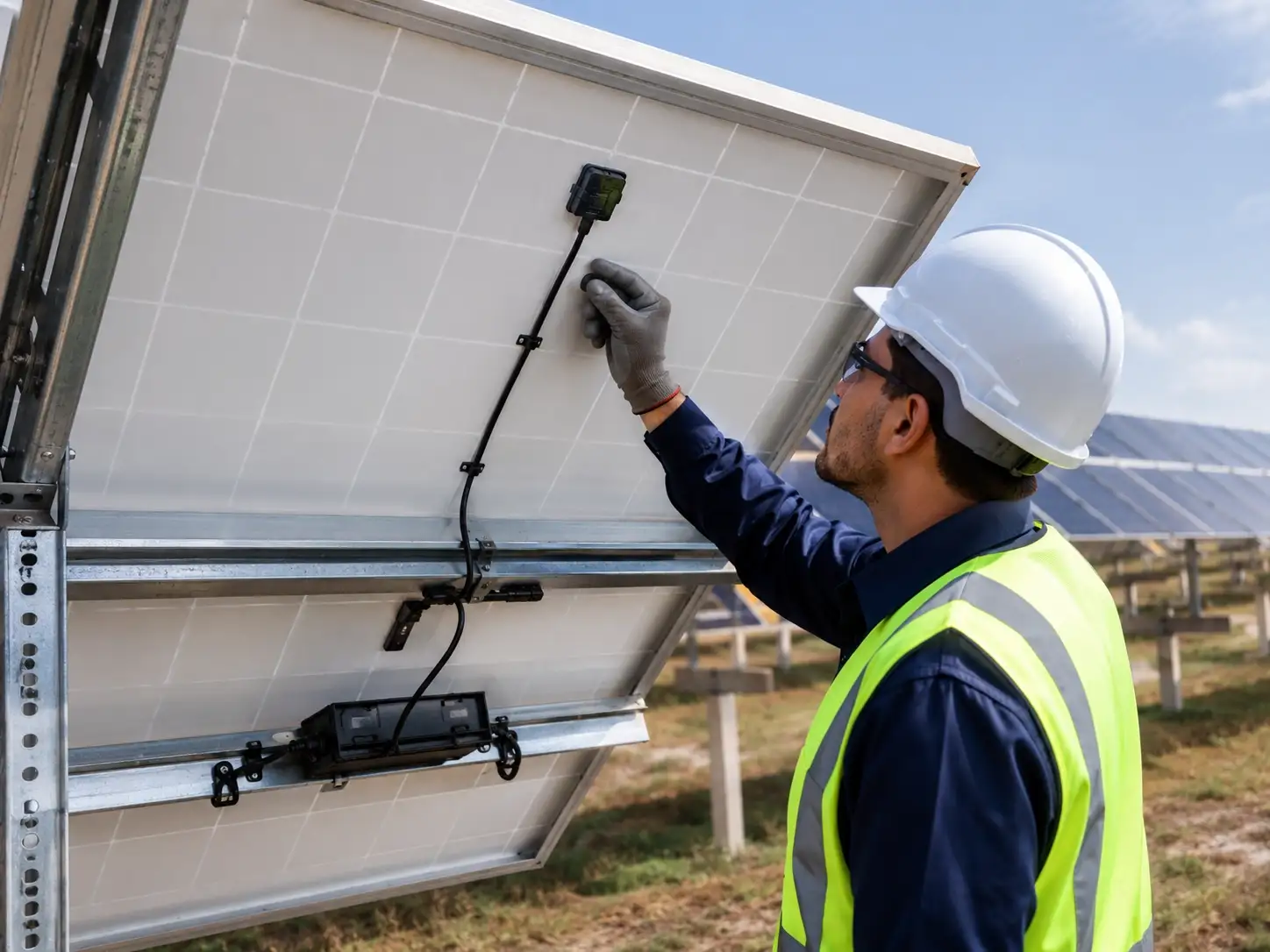
Correct installation is critical for accurate module temperature monitoring. In most PV projects, the sensor should be installed on the backsheet of a representative PV module.
Recommended Installation Position
The sensor is usually placed:
- On the rear side of the PV module
- Near the center area of the module
- Away from frame edges
- Away from junction boxes
- Away from shaded or damaged areas
- On a module that represents the normal operating condition of the array
For large solar farms, multiple sensors may be installed across different PV zones to reflect temperature differences caused by terrain, wind exposure, layout, or module orientation.
Mounting Method
Common mounting methods include:
- Adhesive thermal pad
- High-temperature resistant tape
- Mechanical fixing clip
- Surface-mounted probe
- Integrated PV weather station installation kit
The sensor should have good contact with the module backsheet to ensure accurate temperature response. Loose mounting, air gaps, or poor thermal contact may cause inaccurate readings.
Installation Tips
For reliable module temperature monitoring:
- Install the sensor firmly on the backsheet surface
- Avoid direct exposure to rain impact where possible
- Protect cable routing from UV damage and pulling force
- Use waterproof connectors for outdoor deployment
- Keep wiring neat and separated from high-voltage PV cables
- Record the installation position for future maintenance
A professional PV Weather Monitoring Station can integrate module temperature, irradiance, wind, humidity, and data logging functions into one field monitoring system.
Applications in Hot Climate Regions
High-temperature environments make module temperature monitoring even more important. In desert, tropical, rooftop, and floating solar projects, heat-related performance loss can become a major factor in daily energy generation.
Desert Solar PV Plants
Desert PV plants often face strong solar irradiance, high ambient temperature, dust, and large temperature differences between day and night. A PV module temperature sensor helps operators understand how extreme heat affects generation efficiency and supports soiling loss analysis when combined with irradiance and dust monitoring data.
Rooftop Solar Systems
Rooftop PV systems may experience higher module temperatures because of heat reflected from building surfaces and limited airflow under the panels. Module temperature monitoring helps evaluate thermal stress and supports performance comparison between different rooftop zones.
Floating Solar Plants
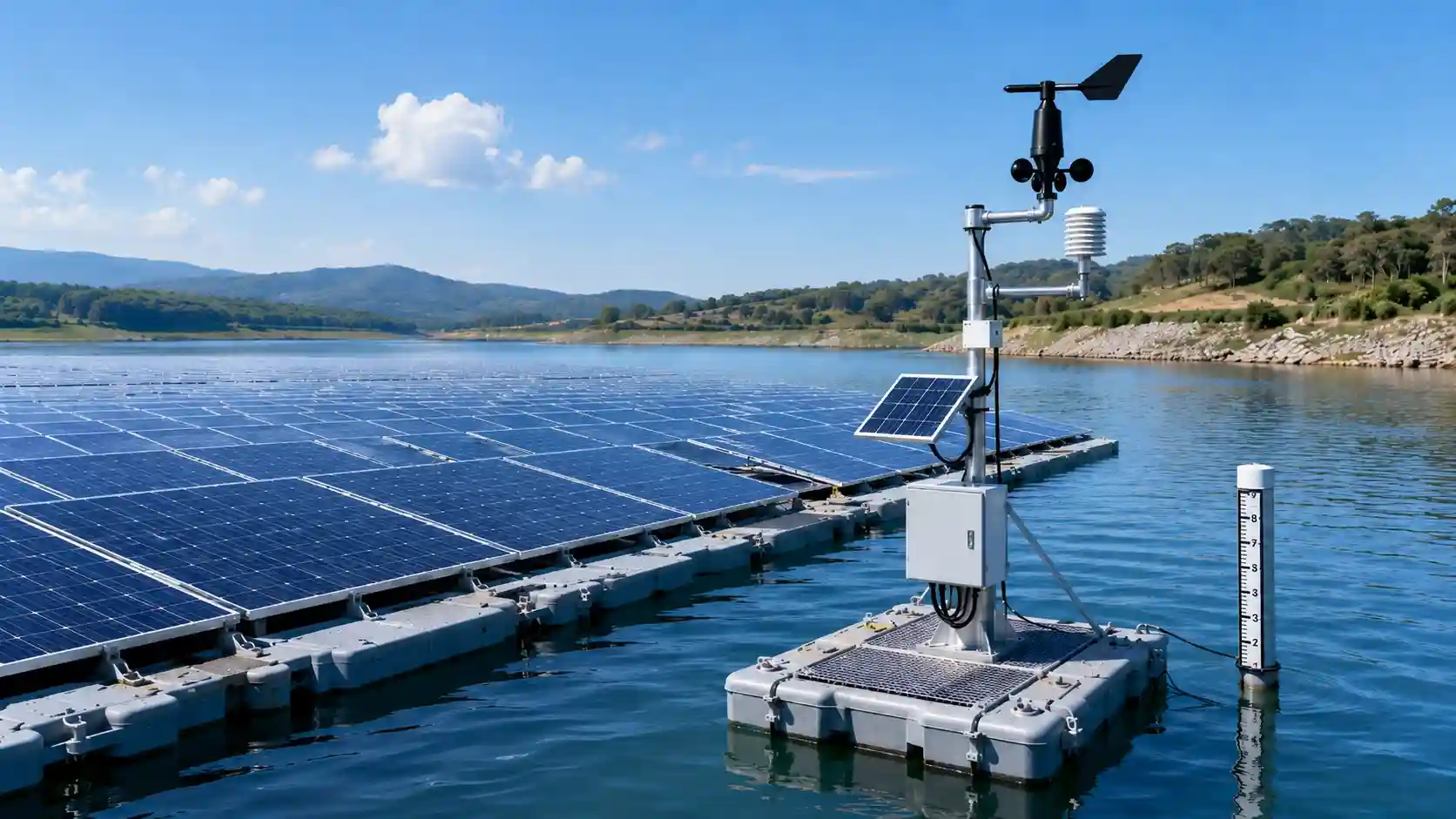
Floating solar projects may have different thermal behavior compared with land-based systems because of water surface cooling, humidity, wind, and reflection effects. In floating PV applications, module temperature data can help compare environmental conditions and power generation performance across different floating zones.
For floating solar projects, JW-IoT also provides a Floating Solar Monitoring Station Solution designed for real-time solar irradiance, module temperature, weather, and water surface monitoring.
Industrial and Commercial PV Projects
For industrial parks and commercial rooftops, module temperature sensors support energy yield analysis, O&M reporting, and system performance verification. When combined with cloud monitoring, the data can help asset owners evaluate whether the PV system is operating normally.
How to Integrate Temperature Sensors with Data Loggers?
A module temperature sensor is most valuable when it is connected to a data acquisition and monitoring system. The sensor can transmit data to a local data logger, RTU, gateway, or PV weather station, then send the data to a cloud platform or SCADA system.
Common Integration Methods
PV module temperature sensors can support different signal outputs depending on project requirements, such as:
- RS485 Modbus
- 4–20mA analog output
- 0–5V or 0–10V output
- SDI-12 output
- Customized industrial signal interfaces
For modern PV plants, RS485 Modbus is widely used because it allows stable digital communication and easy integration with data loggers and IoT gateways.
Typical Data Flow
A common system architecture may include:
PV Module Temperature Sensor → Data Logger / RTU → 4G / LoRaWAN / Ethernet Gateway → Cloud Platform → PV Performance Analysis
This structure allows the operator to collect temperature data together with irradiance, wind speed, ambient temperature, humidity, rainfall, inverter output, and energy generation data.
JW-IoT PV monitoring solutions can integrate sensors, data acquisition units, communication gateways, and cloud platforms for centralized PV plant monitoring.
Key Benefits of Module Temperature Monitoring
A PV module temperature sensor provides practical value throughout the PV plant lifecycle, from commissioning to daily operation and long-term performance evaluation.
1. More Accurate PV Performance Analysis
Module temperature data helps explain output changes under different weather and operating conditions.
2. Better PR Calculation
Temperature data supports more reliable PR calculation and helps separate heat-related loss from other system losses.
3. Faster Fault Identification
Abnormal module temperature may indicate shading, hot spots, poor ventilation, installation issues, or equipment problems.
4. Improved O&M Decisions
Operators can use temperature trends to support cleaning plans, inspection schedules, and performance optimization.
5. Better Data for Hot Climate Projects
In desert, tropical, and rooftop PV systems, module temperature monitoring is essential for understanding real operating conditions.
6. Easier Integration with PV Weather Stations
The sensor can be integrated with irradiance sensors, weather stations, data loggers, and cloud monitoring platforms.
Recommended Monitoring Parameters for PV Plants
For a complete PV plant monitoring system, module temperature should not be measured alone. It should be combined with other environmental and performance parameters.
Recommended parameters include:
| Monitoring Parameter | Purpose |
| Solar irradiance | Measures available sunlight |
| PV module temperature | Measures panel operating temperature |
| Ambient temperature | Measures surrounding air temperature |
| Relative humidity | Supports environmental analysis |
| Wind speed and direction | Helps explain cooling and safety conditions |
| Rainfall | Supports cleaning and weather impact analysis |
| Dust or soiling data | Supports cleaning decisions in dusty regions |
| Power generation data | Supports PR calculation and output analysis |
| Data logger status | Ensures reliable field data collection |
For more background on PV station monitoring, you can also read JW-IoT’s article: How Solar PV Monitoring Stations Improve Power Plant Performance.
FAQ
1. What is a PV module temperature sensor used for?
A PV module temperature sensor is used to measure the operating temperature of a solar panel. It helps operators understand how panel temperature affects output, efficiency, and PV plant performance.
2. Why is module temperature important for PR calculation?
Module temperature affects PV module efficiency. By including temperature data in PR calculation, operators can better distinguish heat-related power loss from other performance issues.
3. Where should a solar panel temperature sensor be installed?
It is usually installed on the back side of a representative PV module, close to the center of the backsheet and away from the frame, junction box, or shaded areas.
4. Can JW-IoT module temperature monitoring be integrated with PV weather stations?
Yes. JW-IoT can integrate module temperature sensors with solar irradiance sensors, PV weather stations, data loggers, IoT gateways, and cloud-based monitoring platforms.
5. Is module temperature monitoring necessary for rooftop solar systems?
Yes. Rooftop PV systems often experience higher panel temperatures due to heat reflection and limited airflow. Module temperature monitoring helps improve performance analysis.
6. What signal output can a PV module temperature sensor support?
Depending on the configuration, the sensor can support RS485 Modbus, 4–20mA, voltage output, SDI-12, or other industrial signal interfaces.
7. How many module temperature sensors does a solar plant need?
The quantity depends on plant size, layout, terrain, module orientation, and monitoring accuracy requirements. Large PV plants usually need multiple monitoring points across different zones.
8. Can JW-IoT provide a complete PV plant monitoring solution?
Yes. JW-IoT provides PV monitoring solutions that can include irradiance sensors, module temperature sensors, weather monitoring devices, data loggers, gateways, and cloud platforms.
9. Is module temperature monitoring useful in desert solar projects?
Yes. Desert solar plants often face high temperature, strong irradiance, and dust accumulation. Module temperature monitoring helps evaluate heat-related losses and supports better O&M decisions.
Conclusion
A PV module temperature sensor is a small but essential part of professional solar PV plant monitoring. It helps operators understand the real thermal condition of solar panels, improve PR calculation, identify performance losses, and support smarter O&M decisions.
For hot climate regions, rooftop systems, floating solar plants, and utility-scale PV projects, module temperature data provides a clearer view of how environmental conditions affect power generation.
When combined with irradiance sensors, PV weather stations, data loggers, IoT gateways, and cloud platforms, module temperature monitoring becomes a key part of reliable PV performance analysis.
Need a PV module temperature sensor or a complete PV monitoring solution for your project? Contact JW-IoT to request a module temperature sensor quote and get a suitable monitoring configuration for your solar plant.