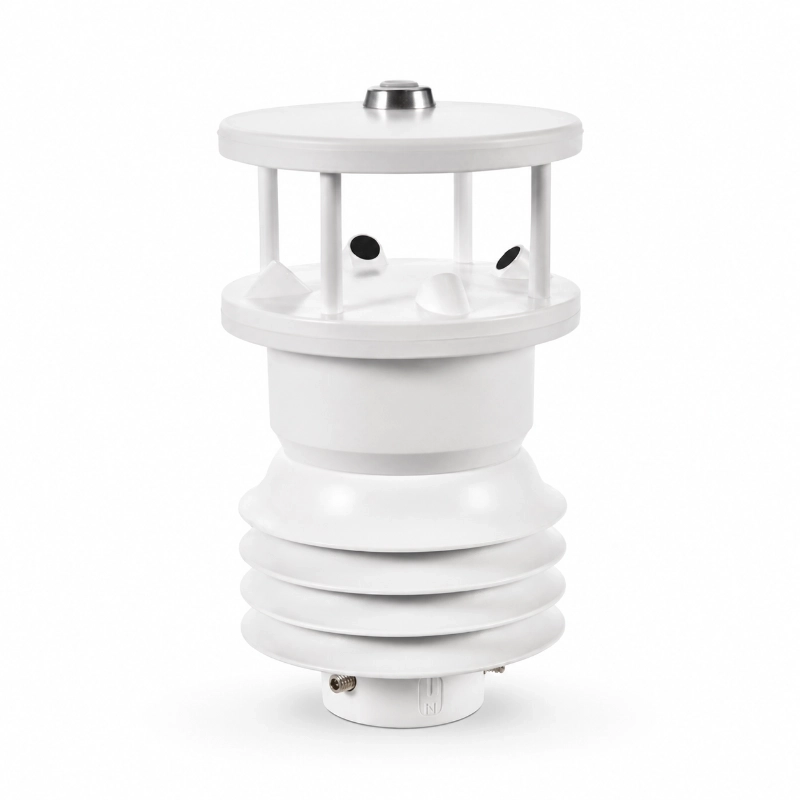
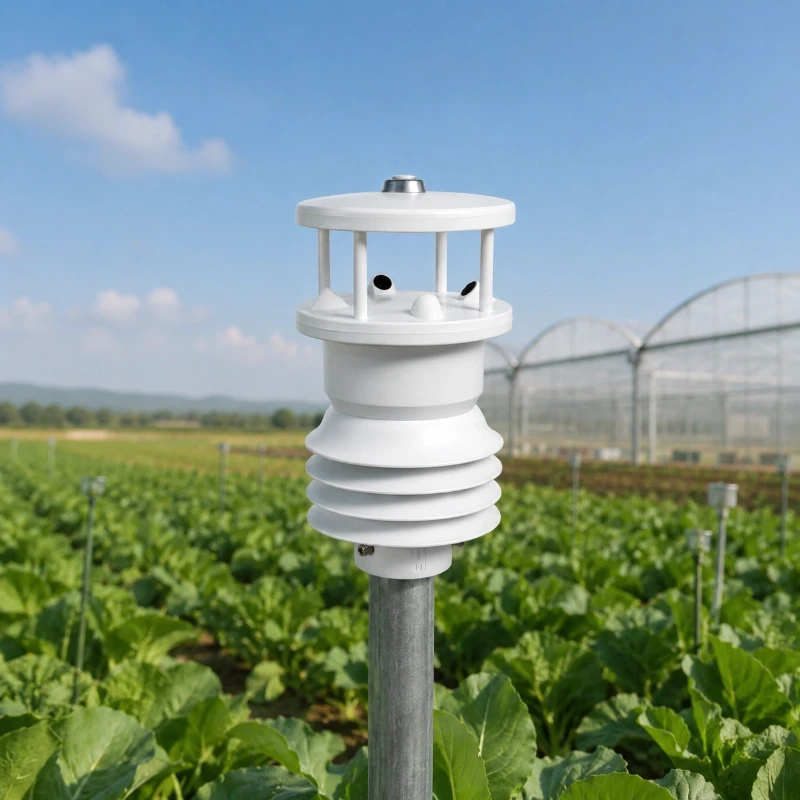
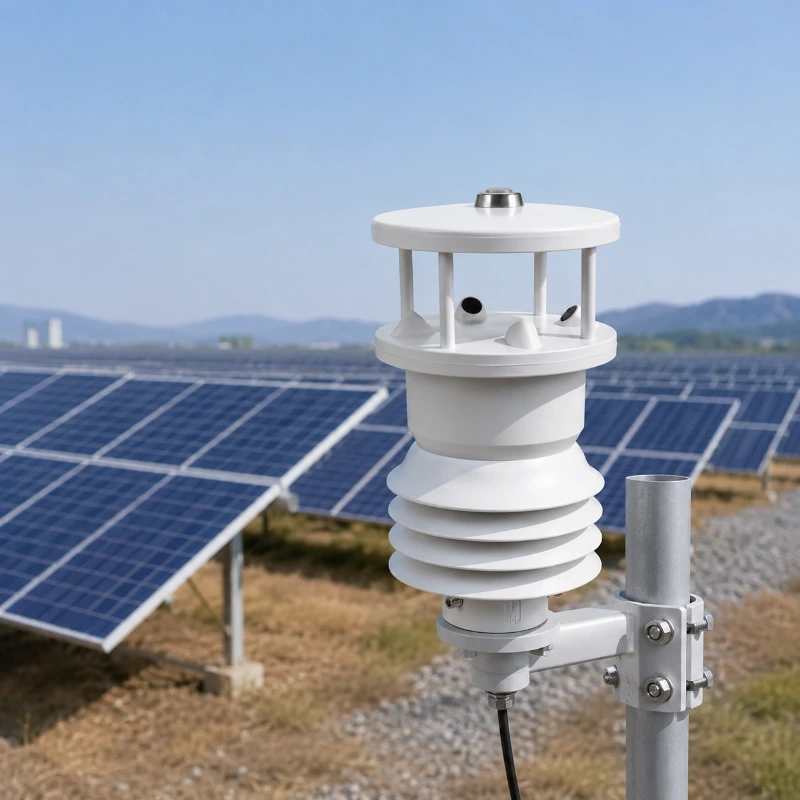
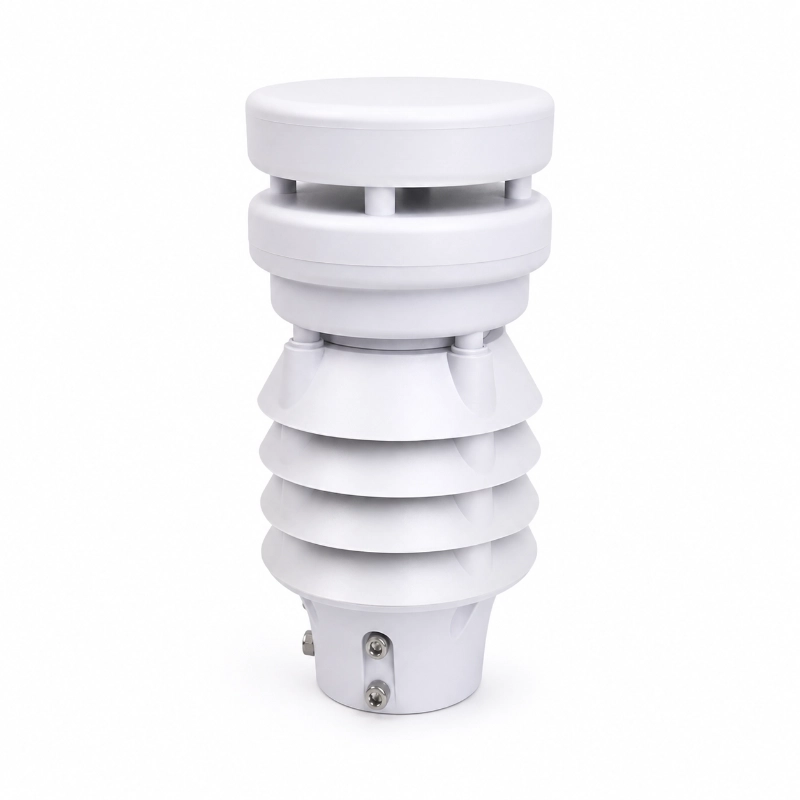
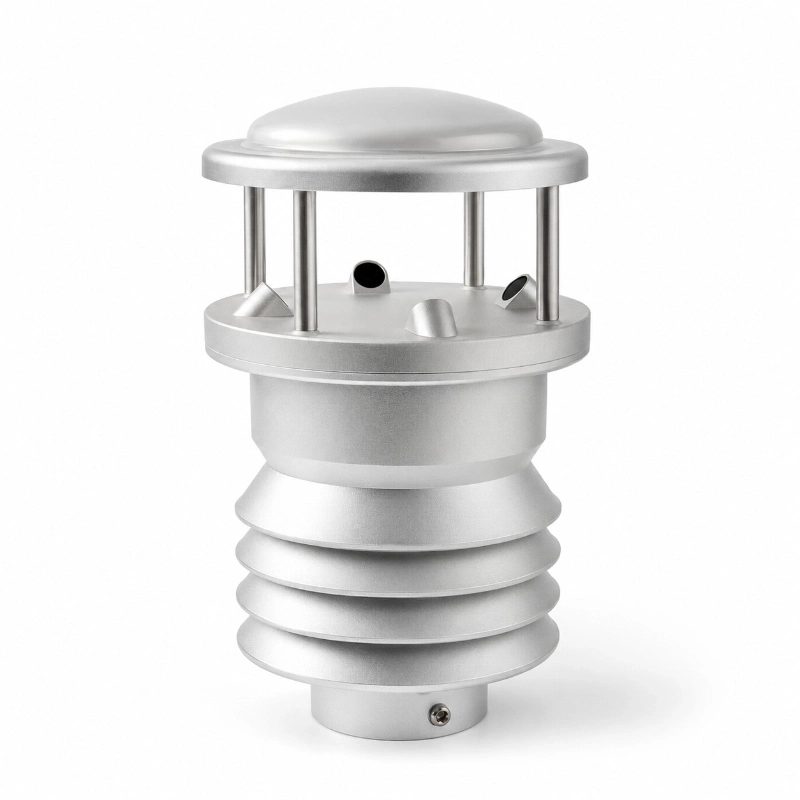
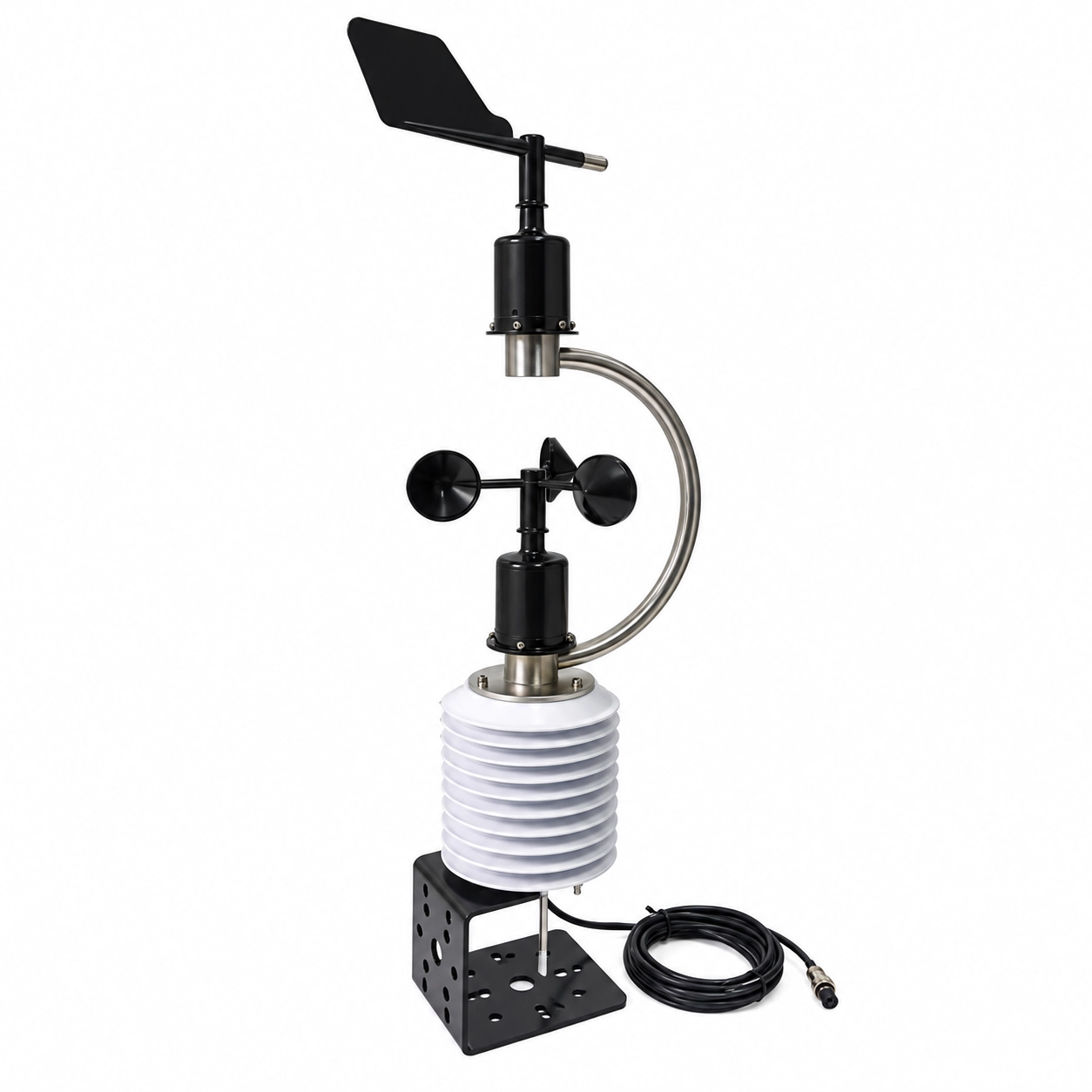
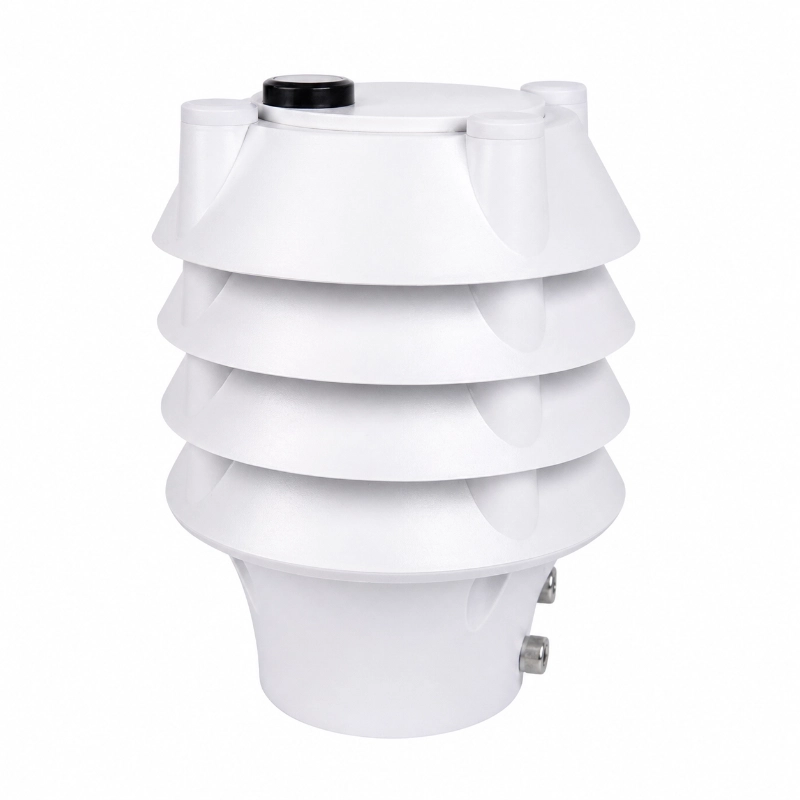
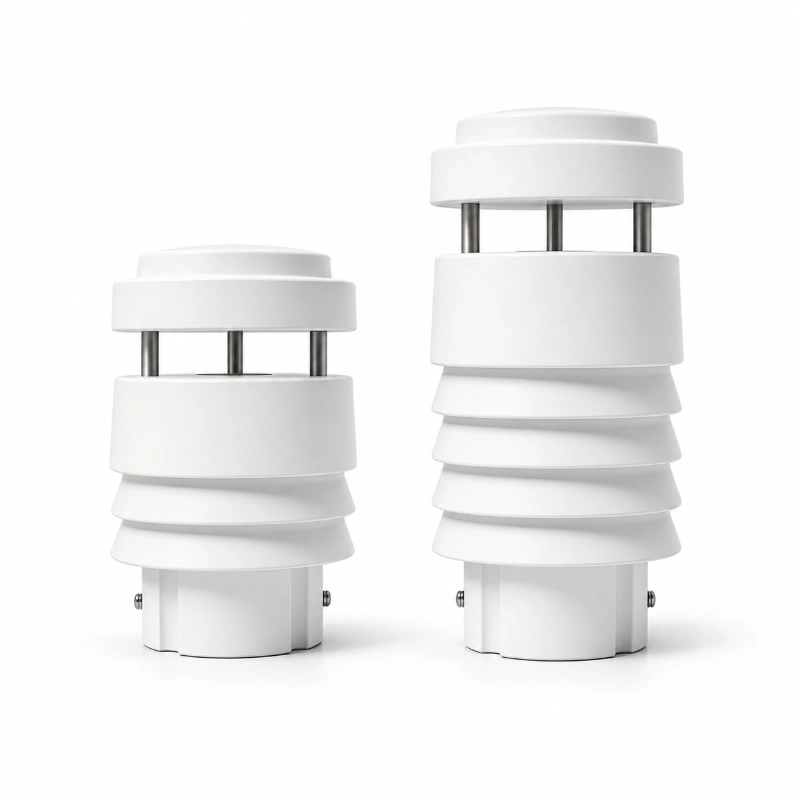
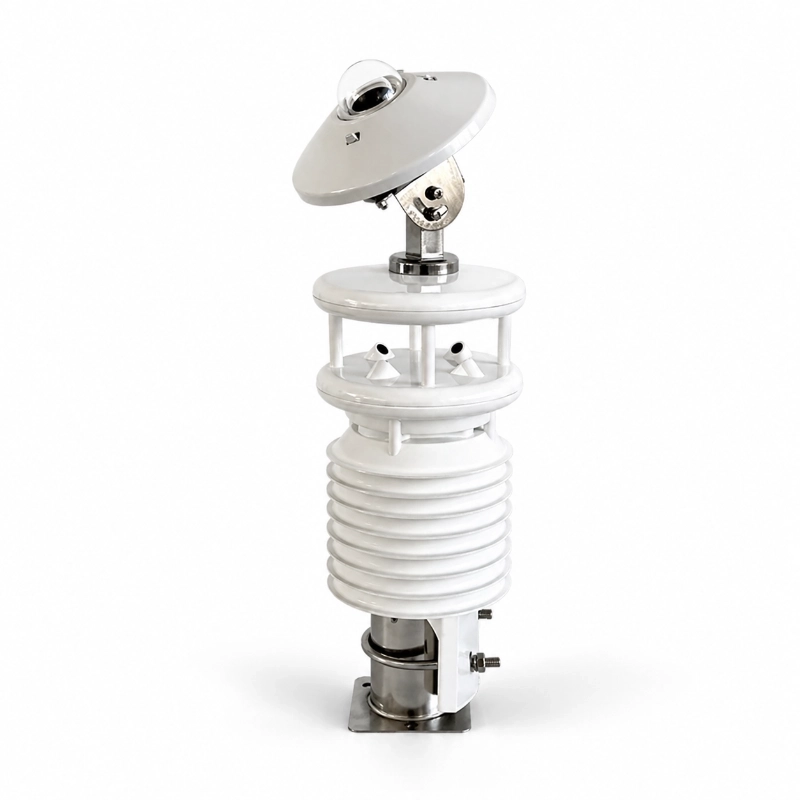
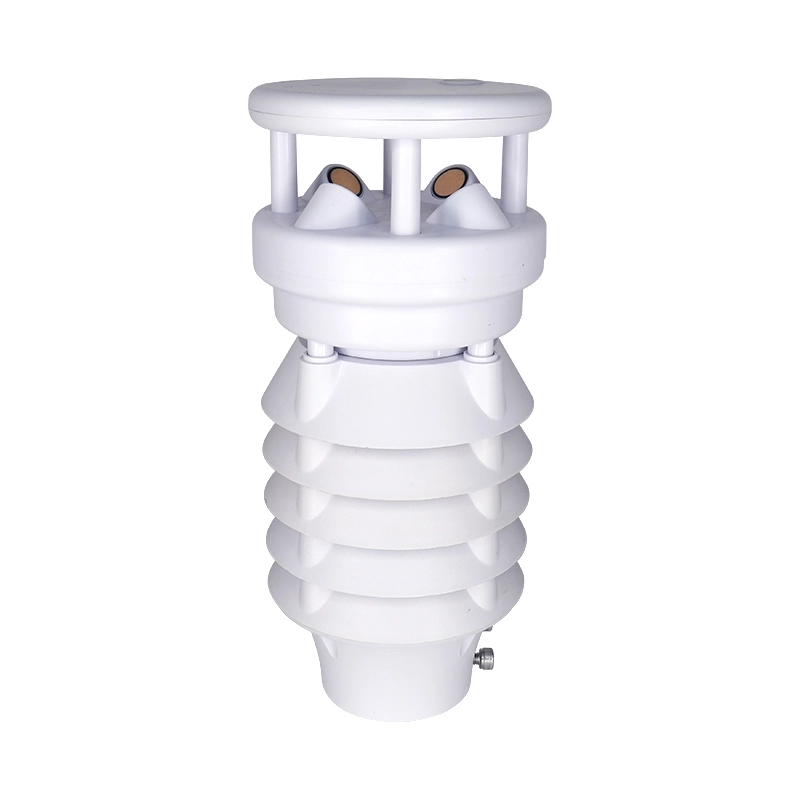
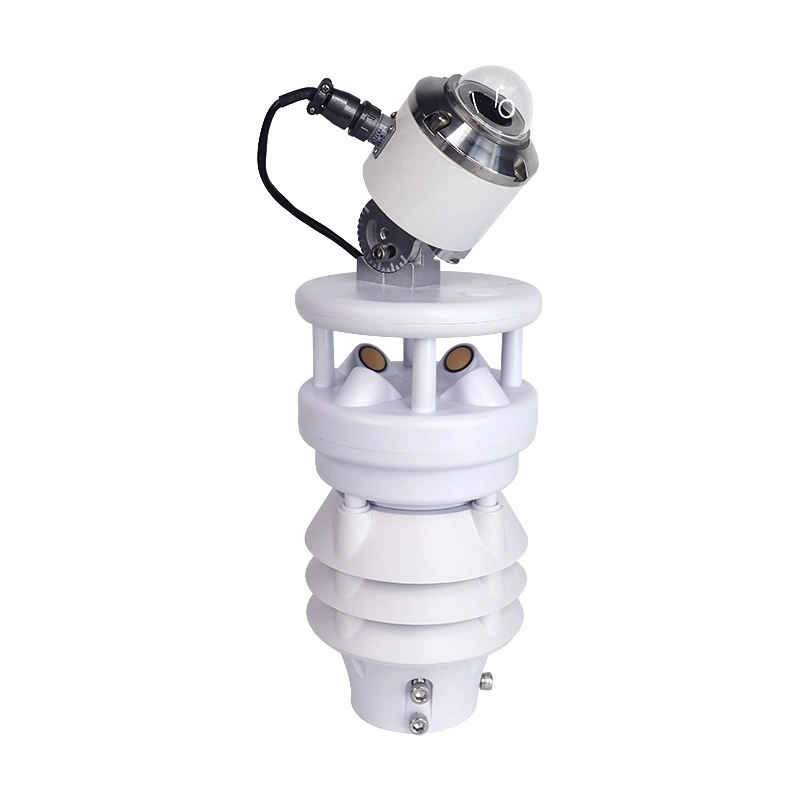
JW-IWS1200(SW01) all in one weather sensor integrates wind speed, wind direction, temperature, humidity, air pressure, rainfall, solar radiation, illuminance, UV, noise, PM2.5 and PM10 measurement in one compact device. With RS485 output, wide voltage power supply and IP66 protection, it is suitable for smart city, solar PV, agriculture, environmental monitoring and power infrastructure applications.
Product Overview
JW-IWS1200(SW01) all in one weather sensor is a highly integrated micro weather station designed for real-time environmental data collection. It combines twelve meteorological and environmental parameters into one compact sensor body, helping users reduce installation complexity, wiring cost and maintenance workload.
The sensor supports standard RS485 communication and can be connected to data loggers, RTU devices, IoT gateways, SCADA systems or cloud monitoring platforms. Its compact plastic enclosure, modular structure and IP66 protection make it suitable for outdoor deployment in complex environments such as solar power plants, smart light poles, substations, agricultural fields, coastal areas and mobile monitoring systems.
For projects that require stable meteorological data, easy installation and multi-parameter monitoring in limited space, this integrated weather sensor provides a practical solution for both fixed and mobile applications.
Technical Specifications
Item
Specification
Model
SW1200
Product Type
All in One Weather Sensor
Dimensions
140mm × 149mm
Weight
1.08kg
Working Temperature
-40°C to +85°C or -55°C to +85°C
Power Supply
DC8–30V
Power Consumption
12VDC max 0.72VA
Electrical Connection
6-pin aviation connector
Housing Material
Plastic
Protection Grade
IP66
Surge Protection
Level 4
Baud Rate
1200–57600
Output Signal
RS485 half duplex or full duplex
Measurement Parameters
Parameter
Range
Accuracy
Resolution
Wind Speed
0–50m/s standard 0–75m/s optional
±0.2m/s at 0–10m/s ±2% above 10m/s
0.1m/s
Wind Direction
0–360°
±2°
1°
Air Temperature
-40°C to +85°C or -55°C to +85°C
±0.2°C
0.1°C
Relative Humidity
0–100%RH
±2%RH
1%RH
Air Pressure
200–1200hPa
±0.5hPa
0.1hPa
Rainfall Intensity
0–24mm/min
0.5mm/min
0.01mm/min
Solar Radiation
0–2000W/m²
Sensitivity ≥7µV/W·m²
1W/m²
Response Time
95% response within ≤20s
—
—
Nonlinearity
<2%
—
—
Annual Stability
≤2%
—
—
Illuminance
0–200000 lux
±3%
1 lux
UV Index
0–15 level
1 level
1 level
Noise
30–130dB
±1.5dB
0.1dB
PM2.5
0–1000µg/m³
±10%
1µg/m³
PM10
0–1000µg/m³
±10%
1µg/m³
When combined with data logging, wireless communication, power supply, and cloud software, the all-in-one sensor becomes the field sensing layer of a complete weather monitoring station.
Output and Communication
JW-IWS1200(SW01) integrated weather sensor uses standard RS485 communication, making it suitable for industrial and IoT monitoring systems. It can be connected with:
Weather data loggers
RTU and PLC systems
4G IoT gateways
LoRaWAN gateways through RS485 nodes
Solar PV monitoring platforms
Smart city management platforms
Environmental monitoring systems
SCADA or industrial automation systems
RS485 communication is widely used in outdoor monitoring projects because it supports stable data transmission, anti-interference performance and multi-device networking.
Typical Applications
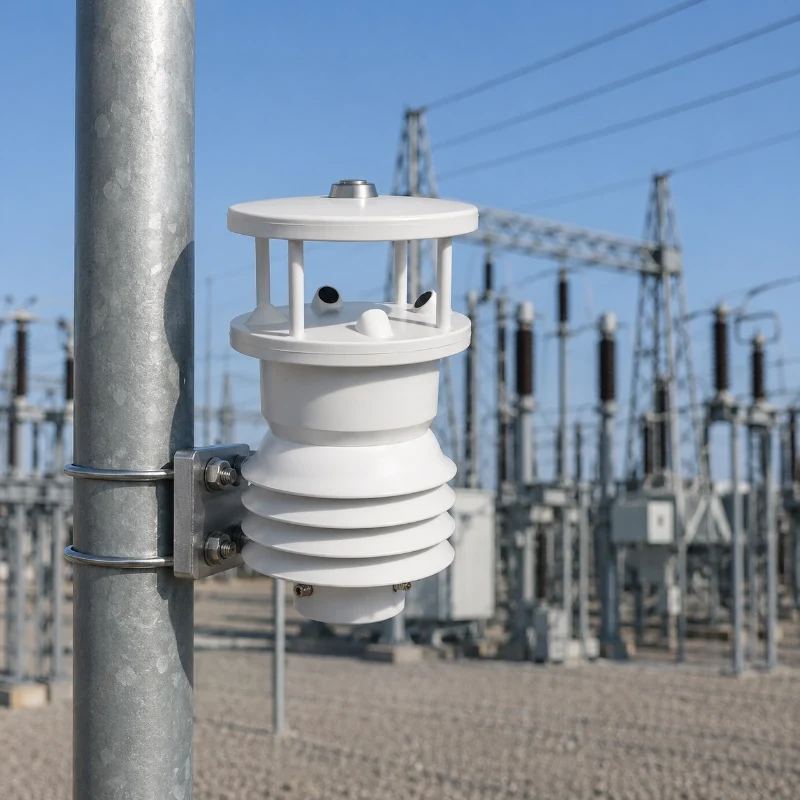
Power Infrastructure Monitoring: The sensor can be installed near power transmission lines, substations and outdoor electrical facilities to monitor wind, rainfall, temperature, humidity and environmental conditions that may affect equipment safety.
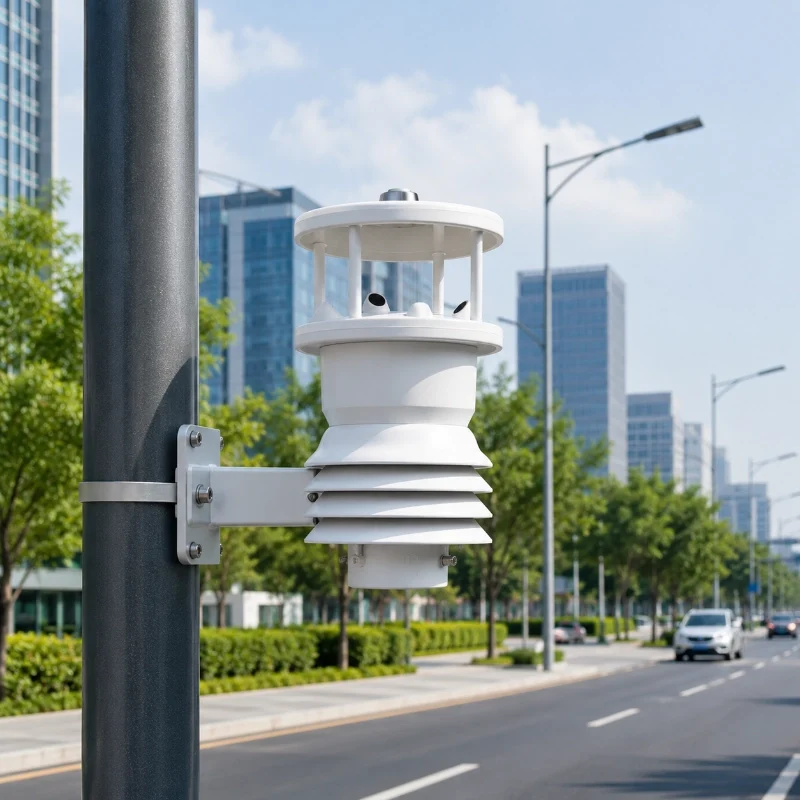
Smart City Monitoring: The compact design makes it suitable for smart light poles, roadside environmental monitoring stations and urban microclimate monitoring systems.
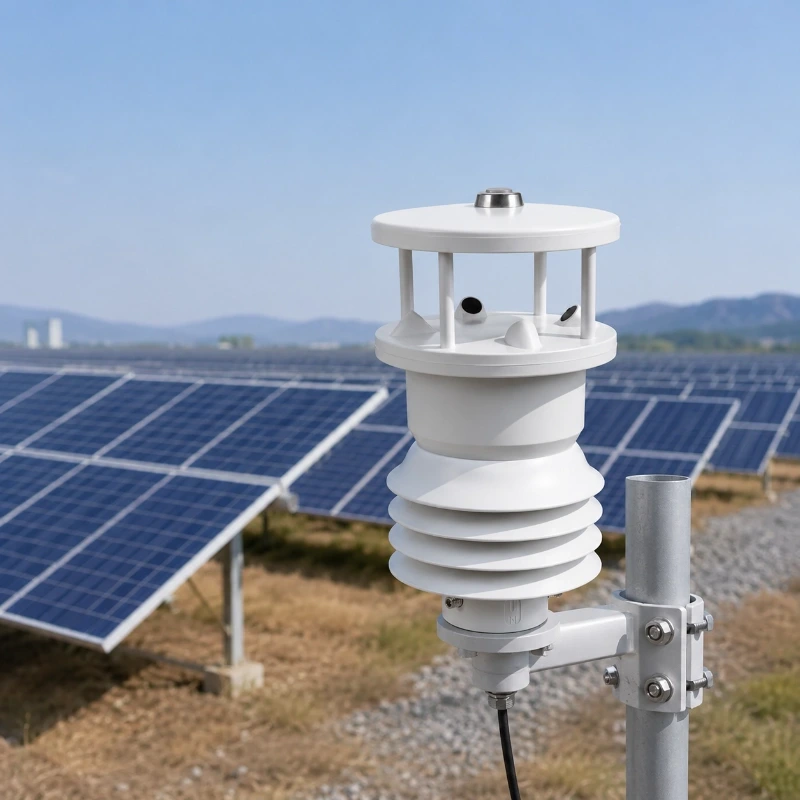
Solar PV Plant Monitoring: Solar radiation, ambient temperature, wind speed, rainfall and dust-related environmental data help PV operators evaluate power generation conditions and support PV performance analysis.
Smart Agriculture: The sensor can be used in farms, greenhouses and irrigation projects to monitor local weather conditions and support irrigation scheduling, crop protection and climate risk assessment.
Environmental Monitoring: With PM2.5, PM10, noise, UV and illuminance monitoring, the sensor is suitable for urban environmental monitoring, industrial park monitoring and public outdoor air quality projects.
Mobile and Marine Applications: With optional GPS and electronic compass integration, the sensor can be used for vehicle-mounted monitoring, ships and offshore floating platforms.
What Is an All in One Weather Sensor?
An all in one weather sensor is a compact device that integrates multiple meteorological sensors into one housing. Compared with a traditional split weather station, it reduces installation space, cabling complexity and maintenance workload.
Traditional weather stations often require separate sensors for wind, rainfall, radiation, temperature and humidity. An integrated weather sensor combines these measurements into a single unit, making it especially useful for IoT projects, smart cities, solar monitoring systems and remote environmental stations.
Why Multi Parameter Weather Monitoring Matters?
Weather conditions are not controlled by one single factor. For example, solar power generation is affected by solar radiation, temperature, wind speed, dust, rainfall and cloud cover. Agricultural decisions may depend on temperature, humidity, rainfall, radiation and UV conditions.
By collecting multiple parameters at the same location, users can build a more complete understanding of the local microclimate. This helps improve decision-making in PV performance monitoring, irrigation control, environmental compliance and infrastructure safety.
Why RS485 Is Commonly Used in Weather Sensors?
RS485 is widely used in industrial field monitoring because it offers stable transmission, strong anti-interference capability and long-distance communication. In many outdoor projects, sensors may need to work near power equipment, solar inverters, motors or communication cabinets. These environments may create electrical noise.
Compared with short-distance consumer interfaces, RS485 is more suitable for professional weather stations, smart agriculture systems, PV monitoring systems and industrial automation projects.
Integrated Weather Sensor vs Traditional Weather Station
Comparison Item
All in One Weather Sensor
Traditional Split Weather Station
Installation
Simple and compact
Requires multiple sensors and brackets
Wiring
Less wiring
More cables and junction boxes
Maintenance
Easier maintenance
More points to inspect
Space Requirement
Small footprint
Larger installation area
Parameter Expansion
Integrated multi-parameter design
Flexible but more complex
Best Use Case
IoT projects, smart poles, PV plants, farms
Professional meteorological stations
How to Select the Right Weather Sensor?
When selecting an integrated weather sensor, users should consider the following factors:
First, confirm which parameters are required. For PV projects, solar radiation, wind speed, rainfall and temperature are usually important. For smart city projects, PM2.5, PM10, noise and UV may also be required.
Second, check the communication protocol. RS485 is suitable for wired industrial projects, while LoRaWAN, 4G or NB-IoT can be added through gateways for wireless cloud monitoring.
Third, consider the installation environment. Outdoor applications should pay attention to protection grade, working temperature range, surge protection and mounting structure.
Finally, confirm whether the sensor can be integrated with the existing platform or data acquisition system.
Installation Recommendations
Install the sensor in an open location without nearby obstructions
Avoid installation close to walls, tall buildings or large metal structures
Keep the sensor level and stable during installation
For wind measurement, avoid turbulence caused by trees, roofs or equipment cabinets
For solar radiation and illuminance monitoring, avoid shadow from poles or PV modules
For PM2.5 and PM10 monitoring, ensure enough airflow around the sensor
Use waterproof connectors and proper grounding in outdoor projects
Connect the RS485 cable according to the wiring definition and system requirements
FAQ
Q
1. What parameters can this all in one weather sensor measure?
A
It can measure wind speed, wind direction, temperature, humidity, air pressure, rainfall, solar radiation, illuminance, UV, noise, PM2.5 and PM10 in one integrated device.
Q
2. Does this weather sensor support RS485 communication?
A
Yes. The sensor supports standard RS485 output, which is suitable for connection with data loggers, RTU devices, gateways, controllers and monitoring platforms.
Q
3. Can JW-IoT provide this sensor for smart city projects?
A
Yes. JW-IoT can provide this integrated weather sensor for smart light poles, urban environmental monitoring, roadside monitoring and city microclimate monitoring systems.
Q
4. Is this sensor suitable for solar PV monitoring?
A
Yes. It can monitor solar radiation, wind speed, rainfall, temperature and other environmental data, which helps support PV performance analysis and power plant operation.
Q
5. Can the sensor be used in agricultural monitoring?
A
Yes. It is suitable for farms, greenhouses, irrigation projects and agricultural weather monitoring systems that require real-time local climate data.
Q
6. What is the protection grade of this weather sensor?
A
The sensor adopts an IP66 protection design, making it suitable for outdoor monitoring environments.
Q
7. Can JW-IoT integrate this sensor with an IoT gateway?
A
Yes. JW-IoT can integrate the RS485 weather sensor with 4G, LoRaWAN or other IoT gateways for remote cloud-based monitoring.
Q
8. What power supply does the sensor require?
A
The sensor supports DC8–30V wide voltage power supply, which is convenient for field deployment and integration with outdoor power systems.
Q
9. Can JW-IoT support customized weather monitoring solutions?
A
Yes. JW-IoT can provide customized weather monitoring solutions based on project requirements, including sensor selection, gateway integration, platform connection and application scenario design.
 +86 13520127780
  info@jingelway.com