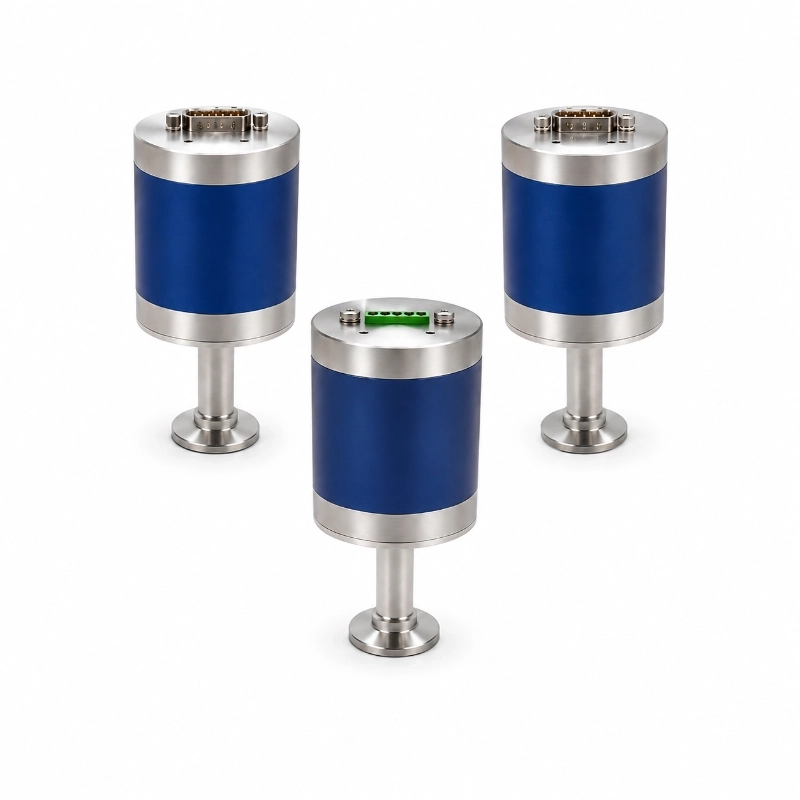
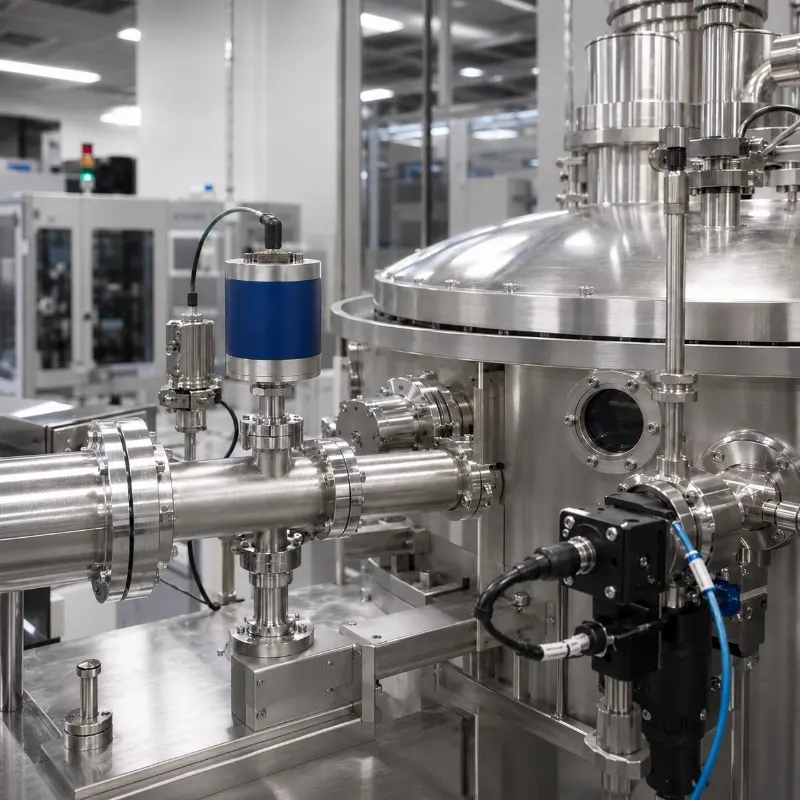
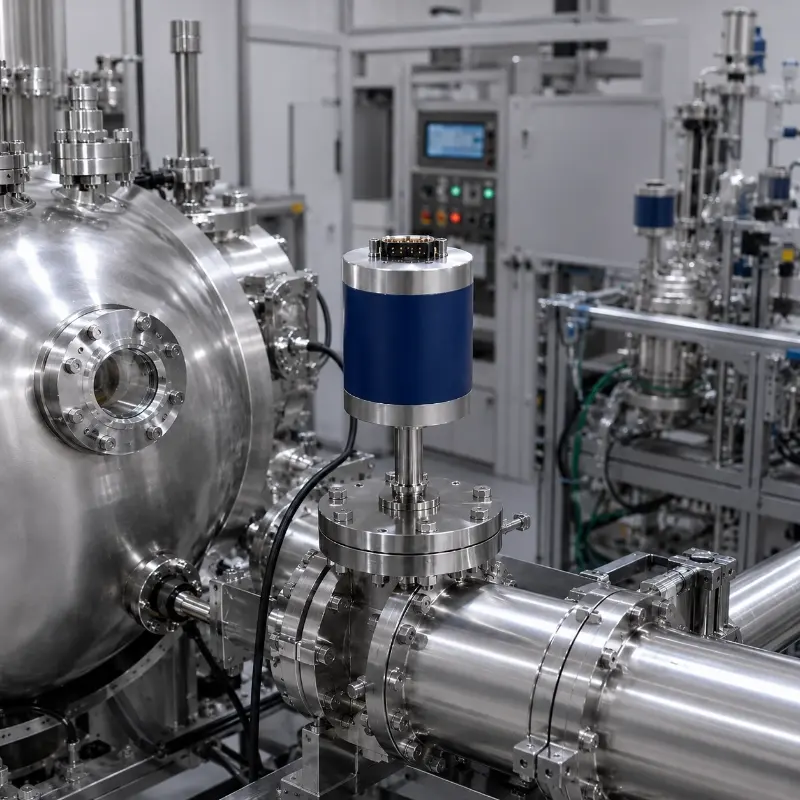
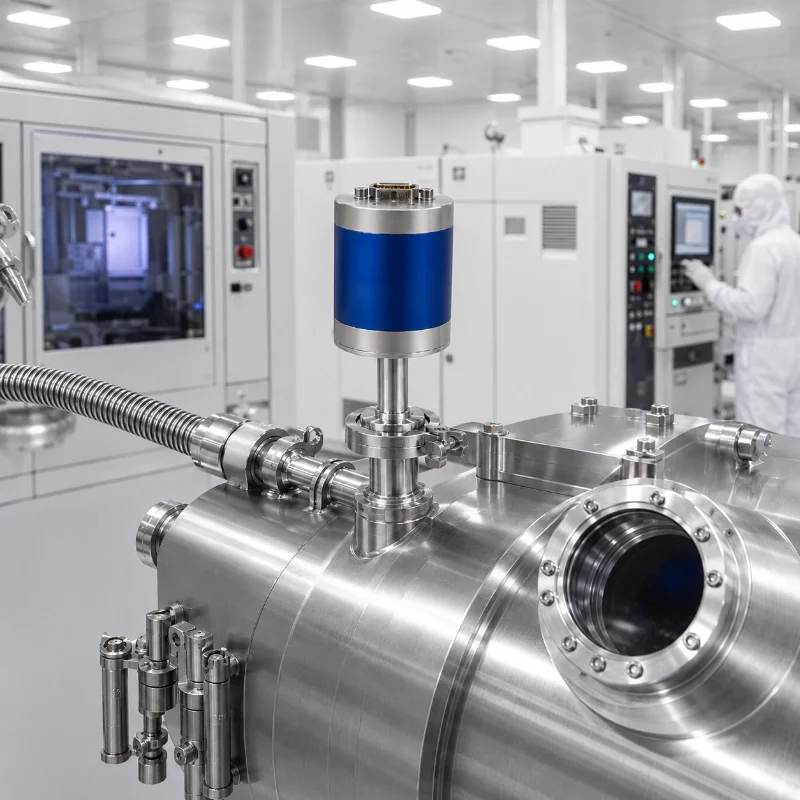
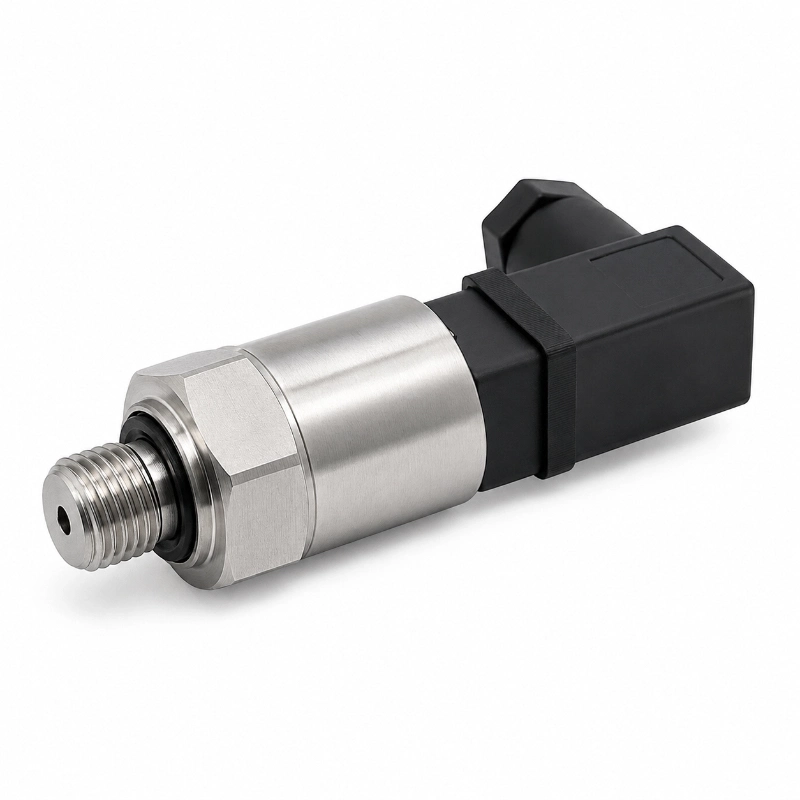
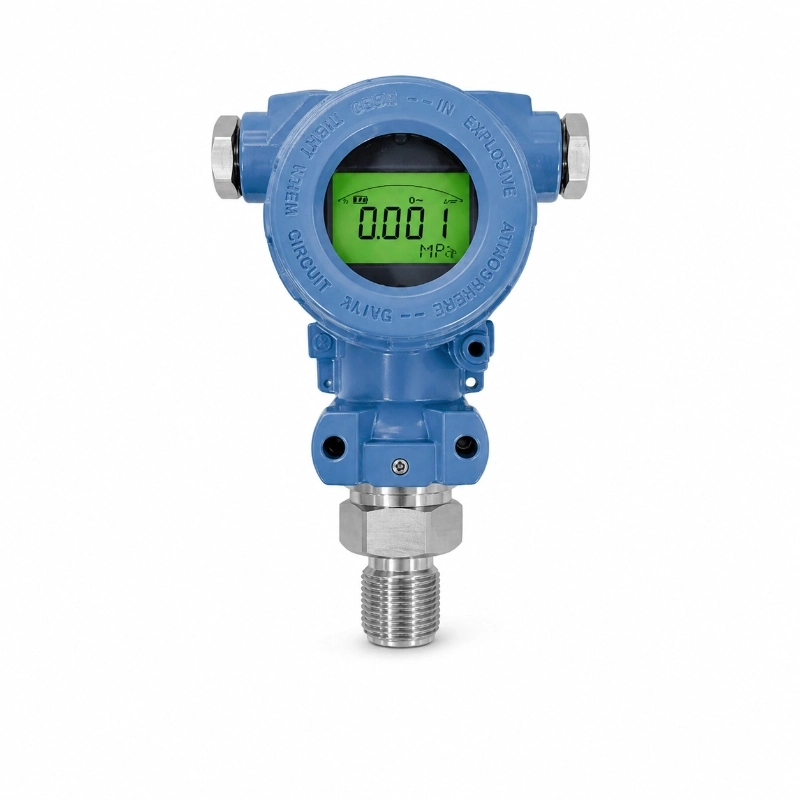
The JW-VM01(JY11) Capacitive Vacuum Pressure Gauge is designed for accurate low-vacuum pressure measurement in industrial process equipment and scientific vacuum systems.
Based on a metal capacitive sensing principle, the gauge converts diaphragm deformation caused by pressure changes into a stable electrical output. Multiple full-scale ranges are available from 0–1 Torr to 0–1000 Torr, while the 0–10 Torr configuration is suitable for applications requiring precise monitoring and control of low vacuum pressure.
With a nickel alloy sensing diaphragm, 304 stainless steel housing, standard voltage output and a response time of ≤20 ms, the sensor can be integrated into vacuum equipment, controllers and data acquisition systems. It is part of JW-IoT’s broader Industrial Automatic Sensors portfolio for pressure, level, flow and process monitoring.
What Is a Capacitive Vacuum Pressure Gauge?
A capacitive vacuum pressure gauge measures pressure by detecting the movement of a flexible diaphragm.
Inside the JW-VM01(JY11), a nickel alloy diaphragm is positioned between electrode structures. When the pressure applied to the diaphragm changes, the diaphragm deforms and the distance between the diaphragm and the electrode changes.
This produces a corresponding change in capacitance.
The internal electronics then perform signal conditioning, amplification, linearization and anti-interference processing before converting the measurement into a standard voltage output.
This measurement principle is widely used for applications where stable and repeatable low-pressure measurement is required.
JW-VM01(JY11) Capacitive Vacuum Gauge Working Principle
The measurement process can be summarized in four steps:
1. Pressure Acts on the Diaphragm
Process gas enters through the vacuum connection and applies pressure to the nickel alloy sensing diaphragm.
2. Diaphragm Position Changes
As the pressure changes, the diaphragm deforms accordingly.
3. Capacitance Changes
The displacement changes the distance between the diaphragm and electrode, producing a measurable change in capacitance.
4. Electrical Signal Is Generated
The internal electronics condition and linearize the signal and convert it into a standard 0–10 VDC or 0–5 VDC output.
The resulting voltage signal can then be used by a controller, data acquisition system or other compatible process monitoring equipment.
Technical Specifications
Parameter
Specification
Product Type
Metal capacitive vacuum pressure gauge
Model
JW-VM01(JY11)
Measuring Range
0–1 Torr / 0–10 Torr / 0–100 Torr / 0–1000 Torr
Power Supply
15–30 VDC
Output Signal
0–10 VDC / 0–5 VDC
Accuracy
0.2%FS / 0.5%FS / 1.0%FS at 25°C
Compensation Temperature
0–50°C
Media Temperature
-20–80°C
Storage Temperature
-40–85°C
Temperature Drift
≤0.04%FS/°C
Stability
0.5%FS/year
Response Time
≤20 ms
Measuring Medium
Gas compatible with nickel alloy
Housing Material
304SS
Diaphragm Material
Nickel alloy
Current Consumption
≤10 mA
Output Load
>10 kΩ
Electrical Connection
According to selected configuration
Process Connection
According to selected configuration
Typical 0–10 Torr Configuration
For applications requiring a 0 to 10 Torr capacitive vacuum gauge, a typical JW-VM01 configuration is:
Item
Configuration
Product Model
WM01 metal capacitive vacuum pressure gauge
Range
0 to 10 Torr
Output
0 to 10 VDC
Power Supply
15 to 30 VDC
Process Connection
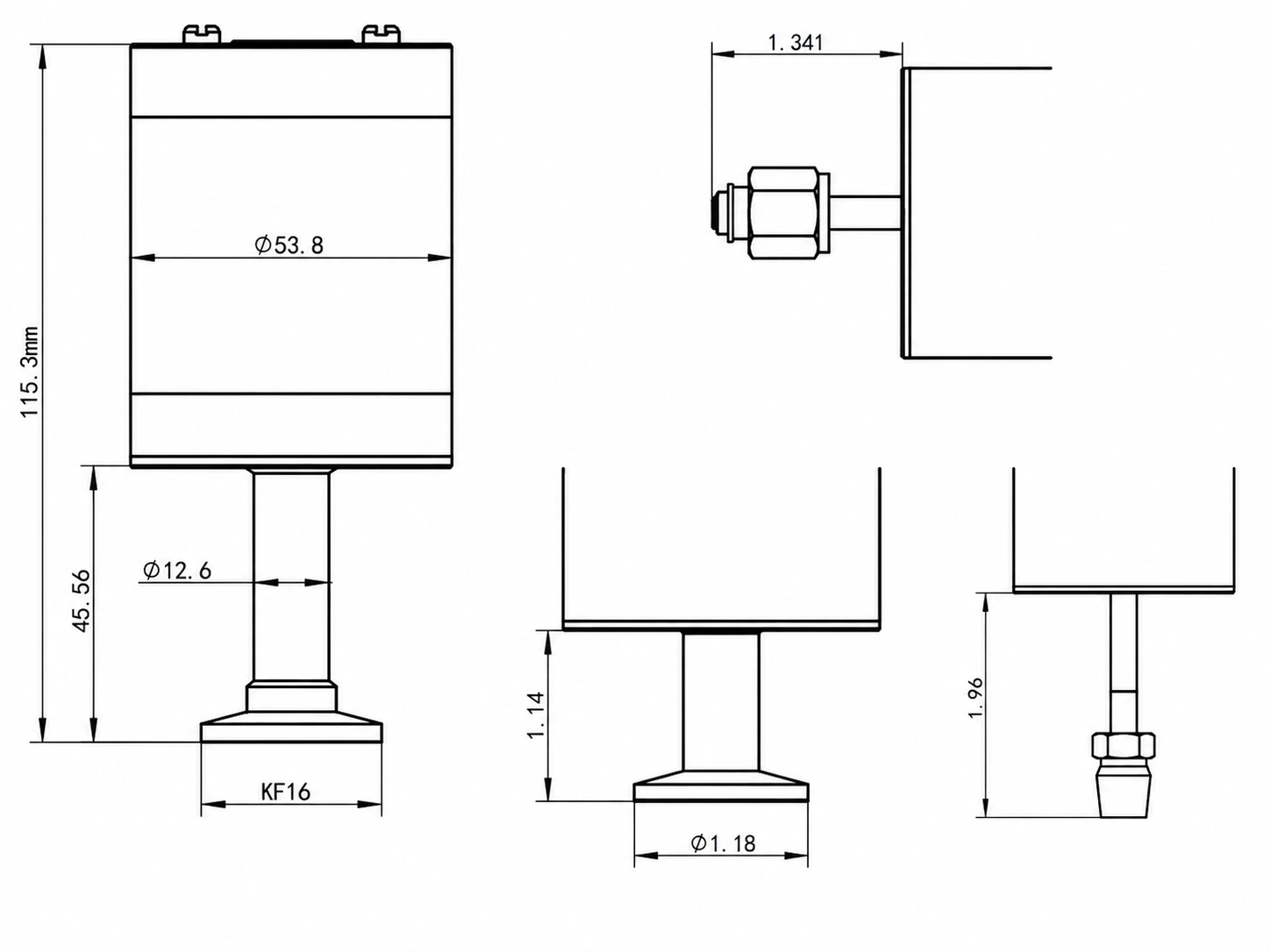
KF16
Electrical Connector
DB 15
The exact configuration should be confirmed according to the required measurement range, output and mechanical connection before ordering.
Why Use a 0–10 Torr Capacitive Vacuum Gauge?
Vacuum systems often require more than simply detecting whether vacuum is present.
In process equipment, the pressure level may need to be continuously measured so that operators or controllers can monitor how the chamber behaves during evacuation, gas introduction or process operation.
A 0–10 Torr vacuum pressure gauge provides a defined full-scale measurement range for these low-pressure applications.
The JW-VM01 converts the measured pressure into a continuous voltage signal, allowing the pressure information to be used by downstream monitoring or control equipment.
Typical applications include:
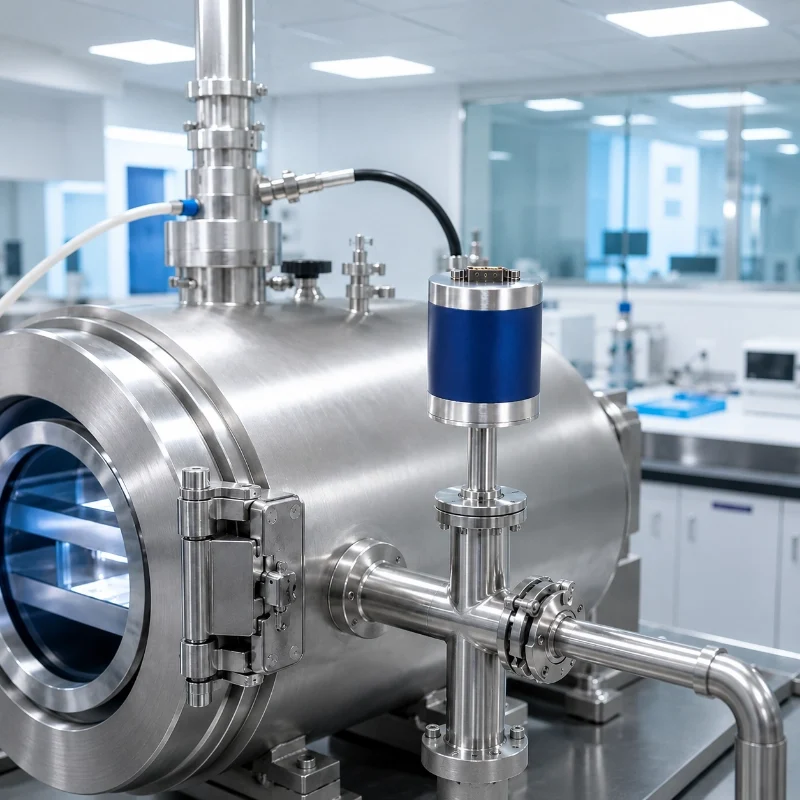
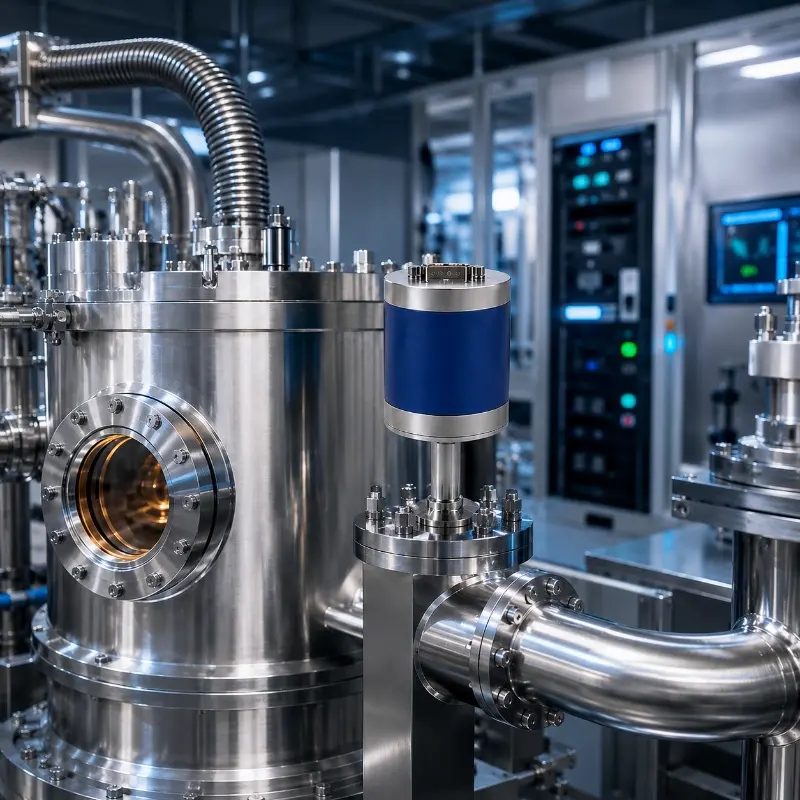
Process chamber vacuum monitoring
Vacuum equipment control
Low-pressure gas process monitoring
Vacuum coating systems
Laboratory vacuum equipment
Plasma processing systems
Semiconductor Process Chamber Monitoring
Semiconductor manufacturing and related vacuum processes use controlled chamber environments during different stages of production.
The JW-VM01 capacitive vacuum gauge can be used as a pressure sensing component in compatible process chambers where the required vacuum range falls within the available sensor configurations.
Available full-scale ranges include:
1 Torr
10 Torr
100 Torr
1000 Torr
This allows the gauge range to be selected according to the required process pressure.
The 0–10 Torr version is particularly relevant where a dedicated low-pressure measurement range is required.
PECVD Vacuum Pressure Measurement
PECVD—plasma-enhanced chemical vapor deposition—uses controlled process conditions inside a vacuum chamber.For general background on vacuum pressure measurement and calibration, engineers can also refer to the NIST Pressure and Vacuum Metrology resources.
Pressure is one of the parameters that may need to be measured during system operation.
The JW-VM01 provides a continuous voltage output representing the measured vacuum pressure, allowing it to be connected to compatible control or data acquisition equipment.
When selecting a gauge for PECVD equipment, engineers should confirm:
Required full-scale pressure range
Required measurement accuracy
Process gas compatibility
Process connection
Electrical connector
Required output voltage
Gas compatibility must be evaluated against the nickel alloy diaphragm material before use.
Vacuum Coating Equipment
Vacuum coating equipment requires pressure monitoring during chamber evacuation and process operation.
A capacitive vacuum pressure gauge can be used as part of the pressure monitoring system where its measuring range and material compatibility meet the application requirements.
For the JW-VM01, available ranges extend from 0–1 Torr to 0–1000 Torr, providing different options for vacuum equipment manufacturers and system integrators.
Its standard voltage output makes it suitable for connection to compatible monitoring and control electronics.
Plasma Sterilization Equipment
Vacuum conditions are also used in some plasma sterilization equipment.
The JW-VM01 can provide continuous pressure measurement for compatible vacuum sections of such systems.
Its ≤20 ms response time allows pressure changes to be reflected quickly in the output signal.
However, users should select the gauge according to the actual operating pressure range and confirm that the process gas is compatible with the nickel alloy sensing diaphragm.
Laboratory Vacuum Systems
Research laboratories and test systems may require continuous pressure measurement for vacuum chambers, experimental equipment or process development platforms.
The compact electrical output architecture of the JW-VM01 allows it to act as a pressure sensing element within a larger measurement system.
Depending on the application, engineers can select among:
0–1 Torr
0–10 Torr
0–100 Torr
0–1000 Torr
The selected full-scale range should match the expected working pressure as closely as practical.
Industrial Vacuum Process Control
Industrial vacuum systems often combine several components, such as:
Within this architecture, the JW-VM01 provides the pressure measurement signal. For projects requiring sensors to be integrated into a wider factory monitoring architecture, explore JW-IoT’s Industrial IoT Monitoring solutions.
Its 0–10 V or 0–5 V voltage output can be connected to compatible controllers or data acquisition hardware.
The sensor itself measures pressure; any automatic control logic, alarm functions or remote communication depend on the external controller or monitoring system used with the gauge.
Choosing the Correct Measuring Range
Correct range selection is important when specifying a capacitive vacuum gauge.
The JW-VM01 is available with four listed ranges:
0–1 Torr
For applications where the required measurement is concentrated within a lower full-scale pressure range.
0–10 Torr
A key configuration for low-vacuum process monitoring and the primary configuration represented on this product page.
0–100 Torr
For processes operating over a broader pressure range.
0–1000 Torr
For applications requiring measurement across a substantially higher full-scale pressure range.
Selecting the correct range should be based on the expected process pressure rather than automatically choosing the widest possible range.
Output Signal Options
The JW-VM01 supports two standard voltage output options:
0–10 VDC
0–5 VDC
Before ordering, users should check which analog input range is supported by their controller or acquisition system.
The output load requirement is:
>10 kΩ
The sensor supply voltage is:
15–30 VDC
Current consumption is:
≤10 mA
These specifications should be considered when designing the power and signal interface.
Material Compatibility
The sensor housing is manufactured from 304 stainless steel, while the pressure-sensitive diaphragm is made from a nickel alloy.
According to the current product specification, the measuring medium should be:
Gas compatible with nickel alloy.
This point is important for vacuum systems using special process gases.
The gauge should therefore not be selected only according to pressure range. The compatibility between the actual process medium and the wetted sensing material should also be confirmed before installation.
For corrosive or special gases, provide the gas composition or application information to JW-IoT before final model selection.
Temperature Considerations
The specified temperature parameters are:
Compensation temperature: 0–50°C
Media temperature: -20–80°C
Storage temperature: -40–85°C
Temperature drift: ≤0.04%FS/°C
For precision measurement applications, operating temperature should therefore be considered as part of the overall system design.
Typical System Integration
A typical integration can include:
Vacuum Chamber ↓ JW-VM01 Capacitive Vacuum Pressure Gauge ↓ 0–10 V / 0–5 V Analog Signal ↓ Controller or Data Acquisition System ↓ Process Monitoring / Control
The JW-VM01 functions as the pressure sensing component within this architecture.
For projects involving sensors, data acquisition and intelligent industrial monitoring, visit Industrial IoT Monitoring.
Applications
The JW-VM01 capacitive vacuum pressure gauge can be considered for compatible applications including:
Semiconductor processing chambers
PECVD process equipment
Plasma sterilizers
Vacuum coating equipment
Industrial vacuum systems
Laboratory vacuum systems
Low-vacuum process monitoring
Nuclear industry vacuum systems
Vacuum control equipment
Final selection should always consider pressure range, accuracy requirement, media compatibility, connection type and system interface.
How to Select the Correct JW-VM01 Configuration
When requesting a quotation or technical recommendation, it is helpful to provide the following information:
Required pressure range For example: 0–10 Torr.
Required output 0–10 V or 0–5 V.
Required accuracy Confirm the accuracy option required for the project.
Process gas or medium Especially important when special or potentially corrosive gases are used.
Process connection Confirm the required vacuum connection.
Electrical connection Confirm the connector required by the equipment.
Operating temperature Provide the expected media and ambient conditions where relevant.
Providing this information helps avoid selecting a gauge based only on pressure range.
JW-IoT Industrial Pressure and Vacuum Measurement
JW-IoT supplies industrial sensing products for pressure, vacuum and process monitoring applications.
For projects involving a broader industrial measurement system, related product categories include:
Industrial Automatic Sensors
High Accuracy Pressure Transmitters
Industrial Pressure Transmitters
Capacitive Differential Pressure Transmitters
Industrial IoT Monitoring
For a new project, provide the measurement range, process conditions, required signal and connection requirements so that the appropriate sensor configuration can be evaluated.
Request a Vacuum Gauge Configuration
If you are selecting a capacitive vacuum pressure gauge for semiconductor equipment, PECVD, vacuum coating, plasma processing, laboratory vacuum systems or industrial vacuum control, send JW-IoT your required:
Pressure range + output + accuracy + process gas + process connection + electrical connection
JW-IoT can then evaluate the appropriate JW-VM01(JY11) configuration for the project.
Explore: Industrial Automatic Sensors Solution: Industrial IoT Monitoring Contact JW-IoT: Send your vacuum measurement requirements for model selection and project support.
FAQ
Q
1. What is a capacitive vacuum pressure gauge used for?
A
A capacitive vacuum pressure gauge is used to measure low vacuum pressure in process systems such as semiconductor chambers, PECVD equipment, plasma sterilizers, vacuum coating machines, and industrial vacuum control systems.
Q
2. What pressure ranges are available for this vacuum gauge?
A
Available ranges include 0 to 1 Torr, 0 to 10 Torr, 0 to 100 Torr, and 0 to 1000 Torr. The 0 to 10 Torr version is commonly used for precise low vacuum process monitoring.
Q
3. What output signals does this vacuum pressure gauge support?
A
The gauge supports standard voltage output options including 0 to 10 VDC and 0 to 5 VDC, making it suitable for PLC, controller, and data acquisition system integration.
Q
4. Can JW-IoT provide this capacitive vacuum gauge for OEM projects?
A
Yes. JW-IoT can support OEM and project-based supply for capacitive vacuum pressure gauges, including range selection, output configuration, process connection, and application matching.
Q
5. Is the sensor suitable for corrosive gas environments?
A
The measuring medium should be gas compatible with nickel alloy. For corrosive or special process gases, material compatibility should be confirmed before selection.
Q
6. What is the response time of this vacuum gauge?
A
The response time is ≤20 ms, which allows fast vacuum pressure monitoring and process control.
Q
7. Does JW-IoT support integration with monitoring systems?
A
Yes. JW-IoT can provide sensor selection support and help match the vacuum gauge with data acquisition systems, controllers, or industrial monitoring platforms.
Q
8. What materials are used in the gauge?
A
The housing is made of 304 stainless steel, and the diaphragm is made of nickel alloy for stable vacuum sensing performance.
Q
9. Why choose JW-IoT for vacuum pressure measurement products?
A
JW-IoT provides industrial sensing products and solution support for process monitoring, automation, and IoT-based data collection, helping customers select suitable sensors for reliable system integration.
 +86 13520127780
 info@jingelway.com