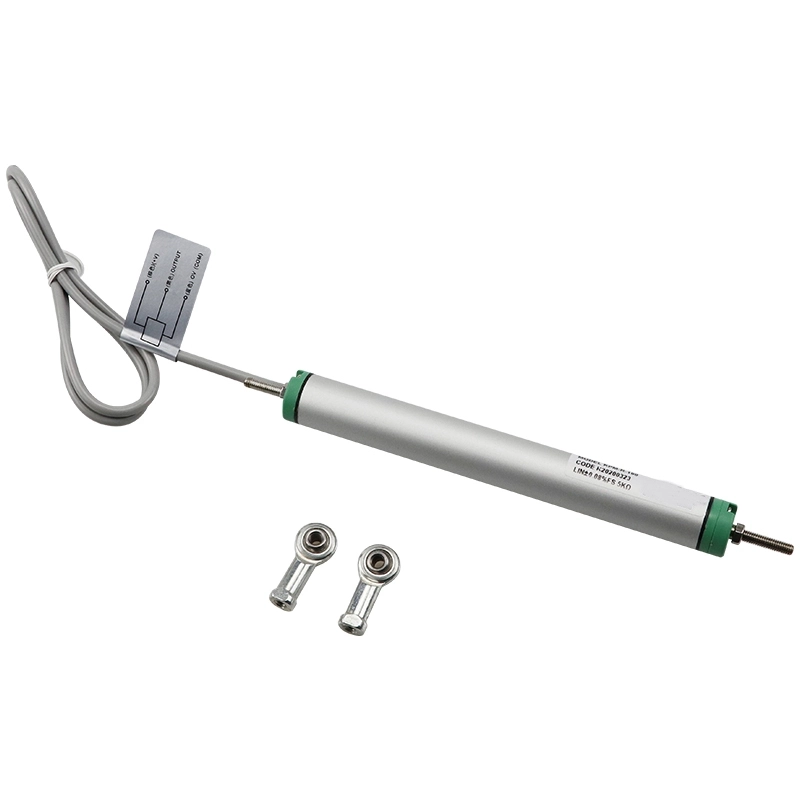
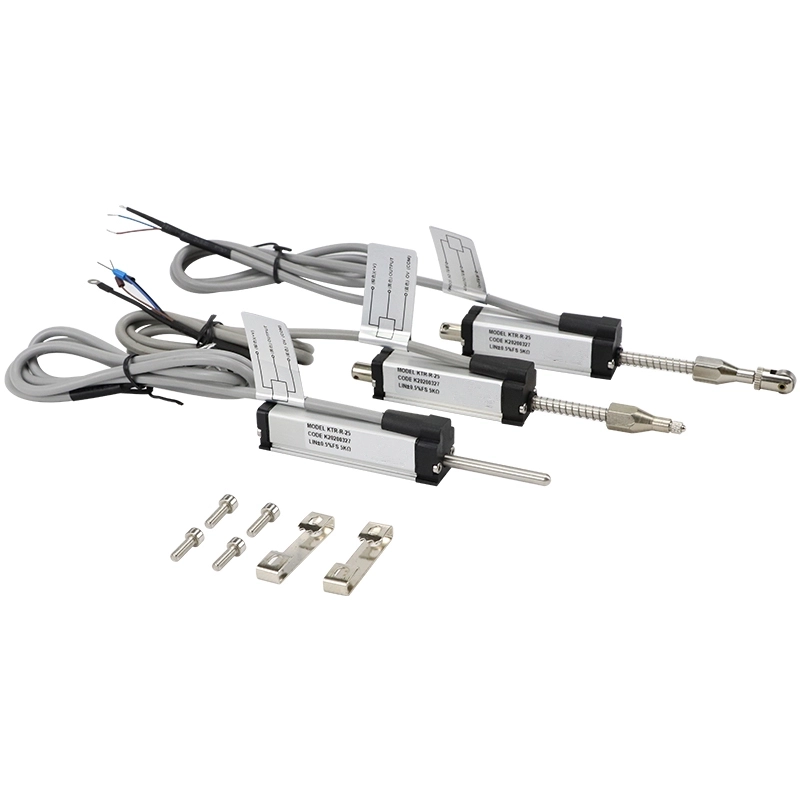
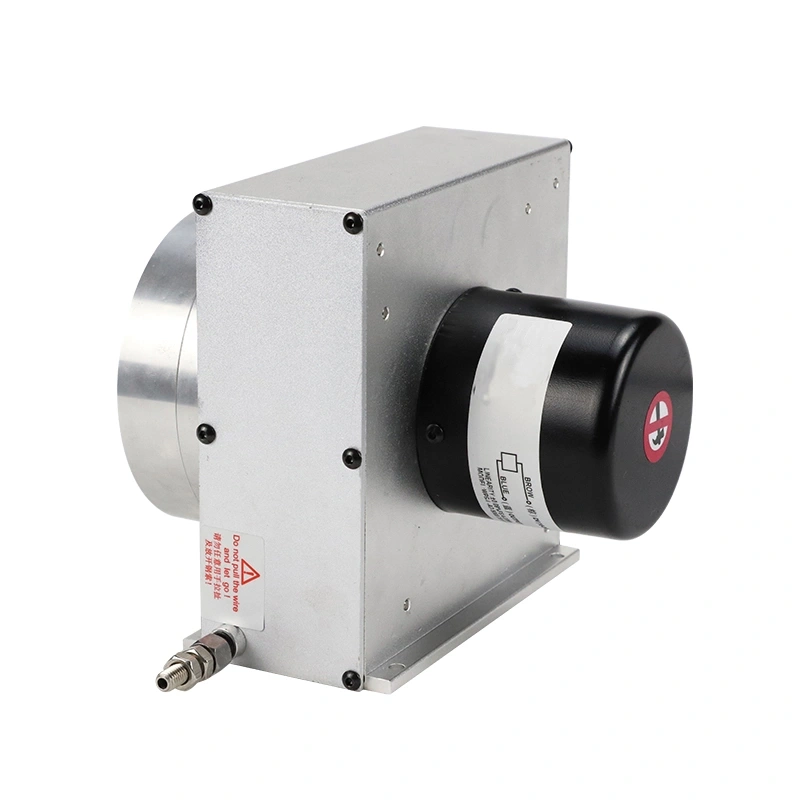
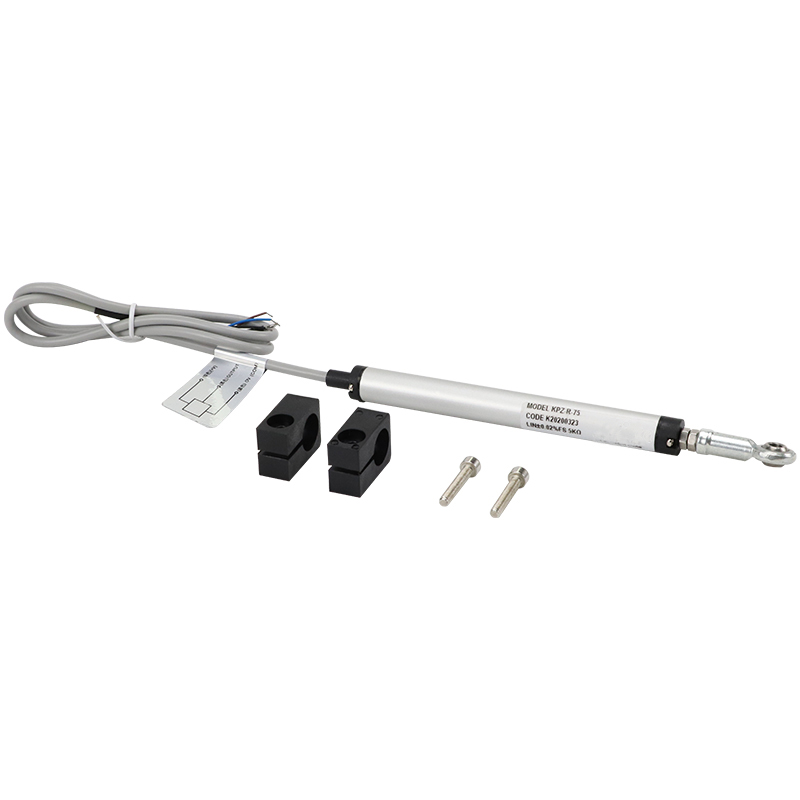
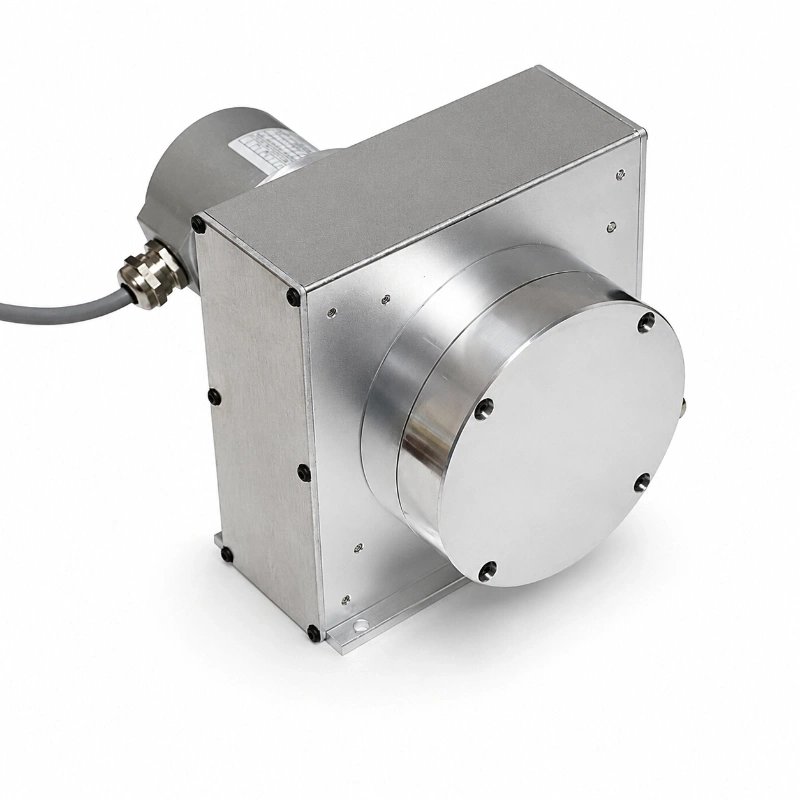
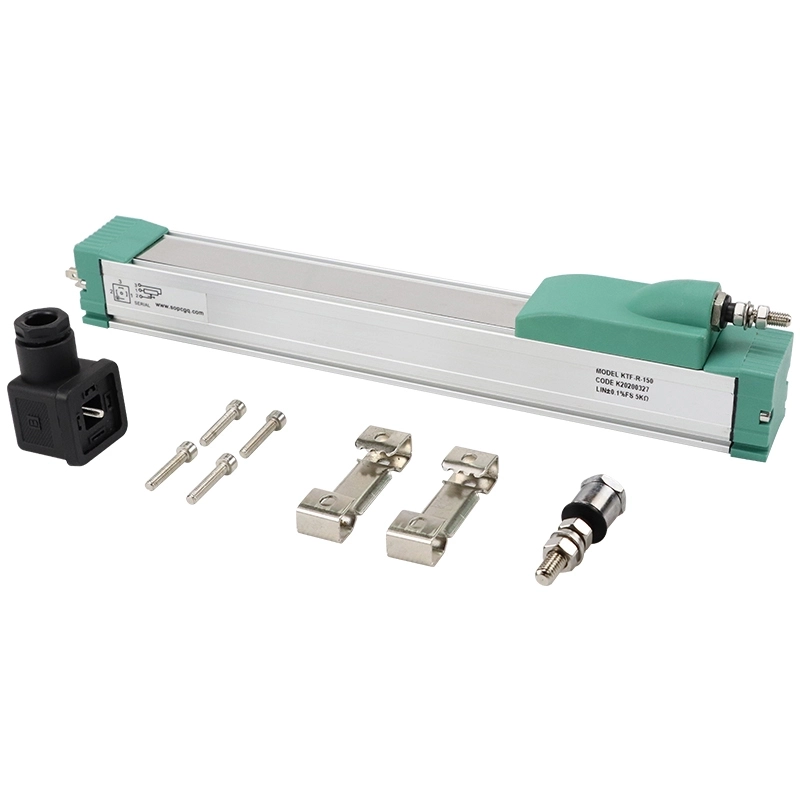
The JW-KPM(S06) KPM Linear Position Sensor is a rod-type industrial displacement transducer designed to measure linear movement and provide continuous position feedback.
With measuring strokes from 25 mm to 300 mm, the sensor uses a conductive plastic resistance element to convert mechanical movement into a proportional electrical signal.
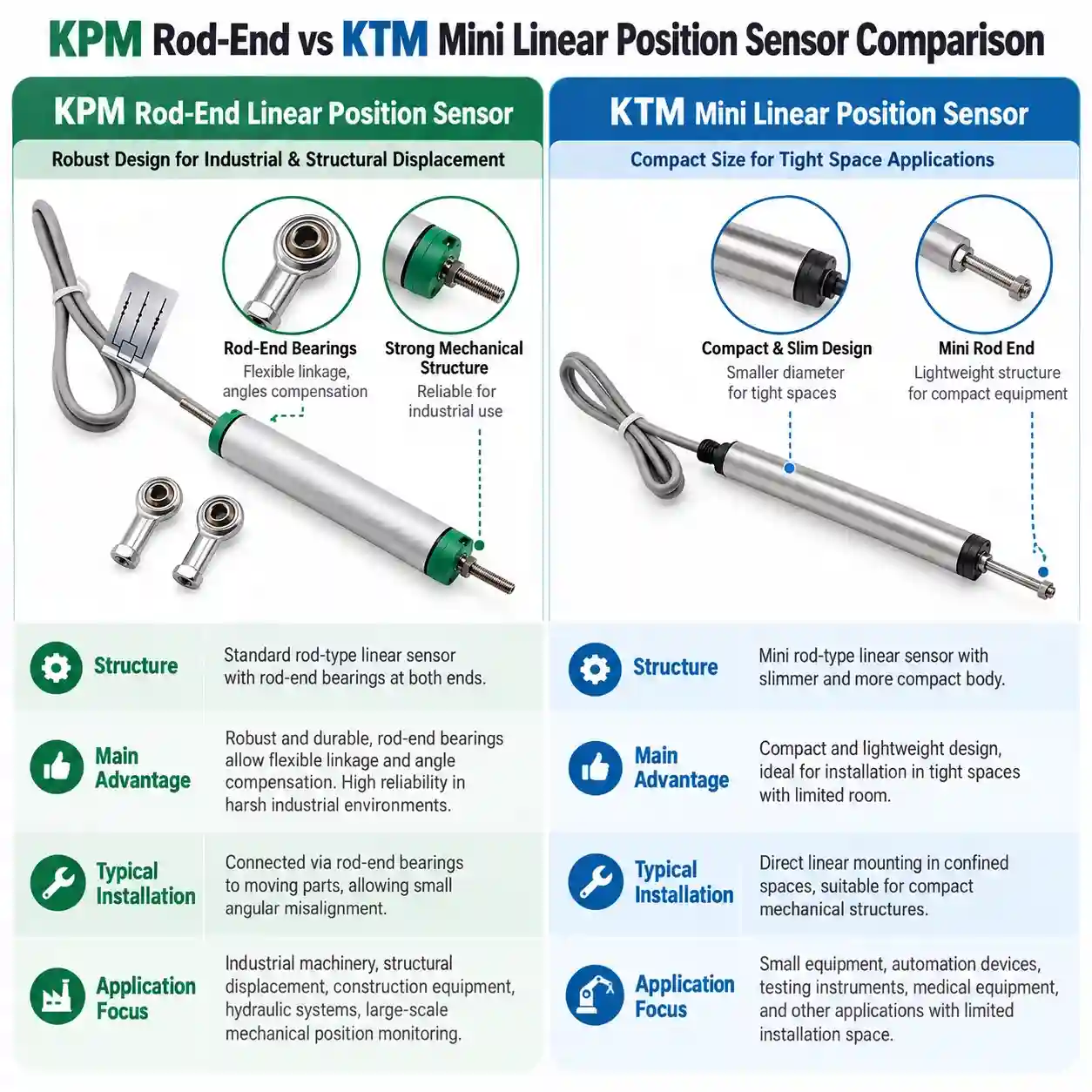
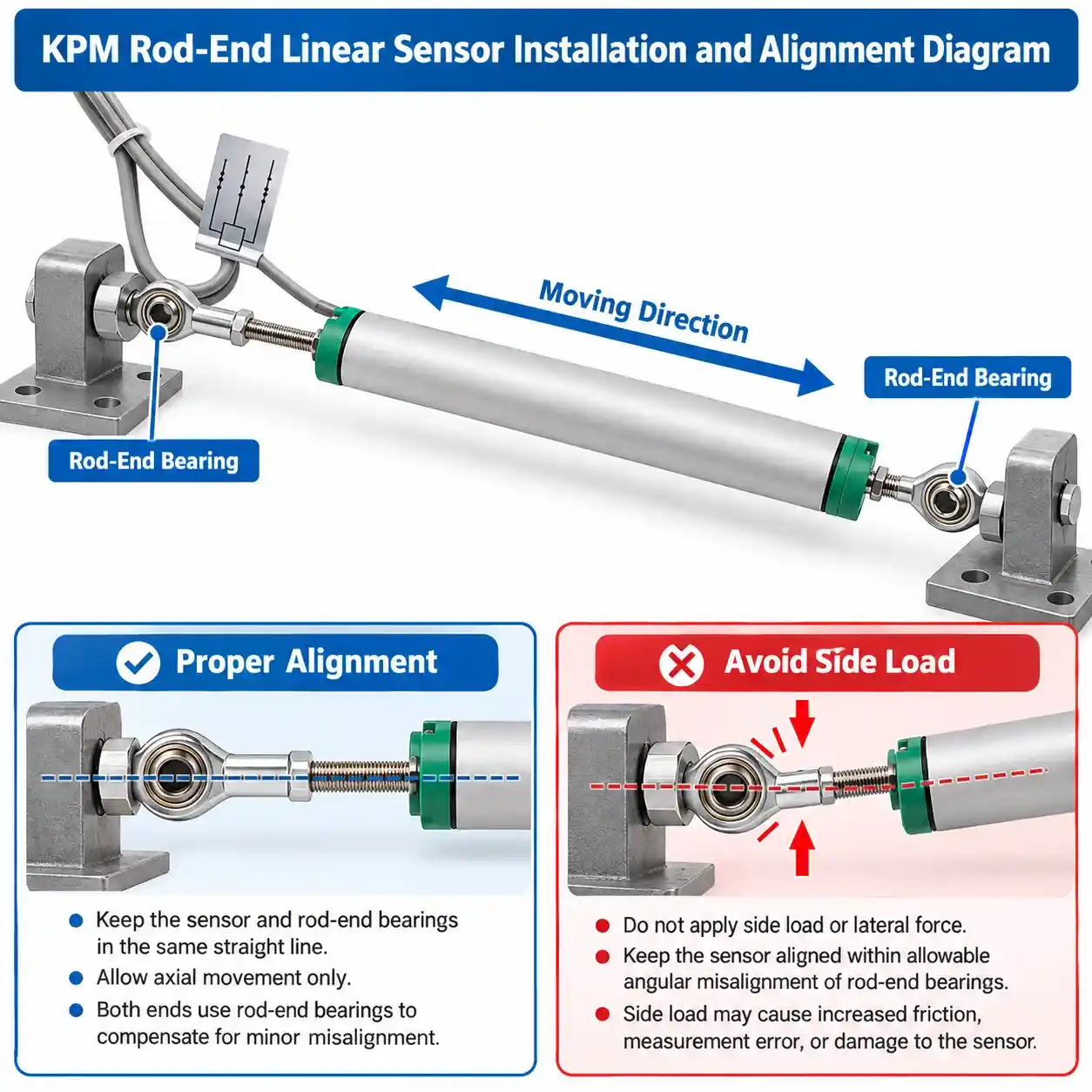
Unlike compact linear potentiometers designed mainly for restricted mounting spaces, the KPM series features rod-end bearings at both ends, allowing suitable mechanical connections where moderate angular movement or alignment variation may occur.
The sensor is particularly relevant to:
Prestressed jack displacement measurement
Bridge and structural movement monitoring
Shock absorber and suspension testing
Ceramic manufacturing equipment
Industrial actuator position feedback
Mechanical testing systems
The KPM series is intended for applications where reliable mechanical coupling and continuous linear displacement measurement are required.
2. How Does a KPM Linear Position Sensor Work?
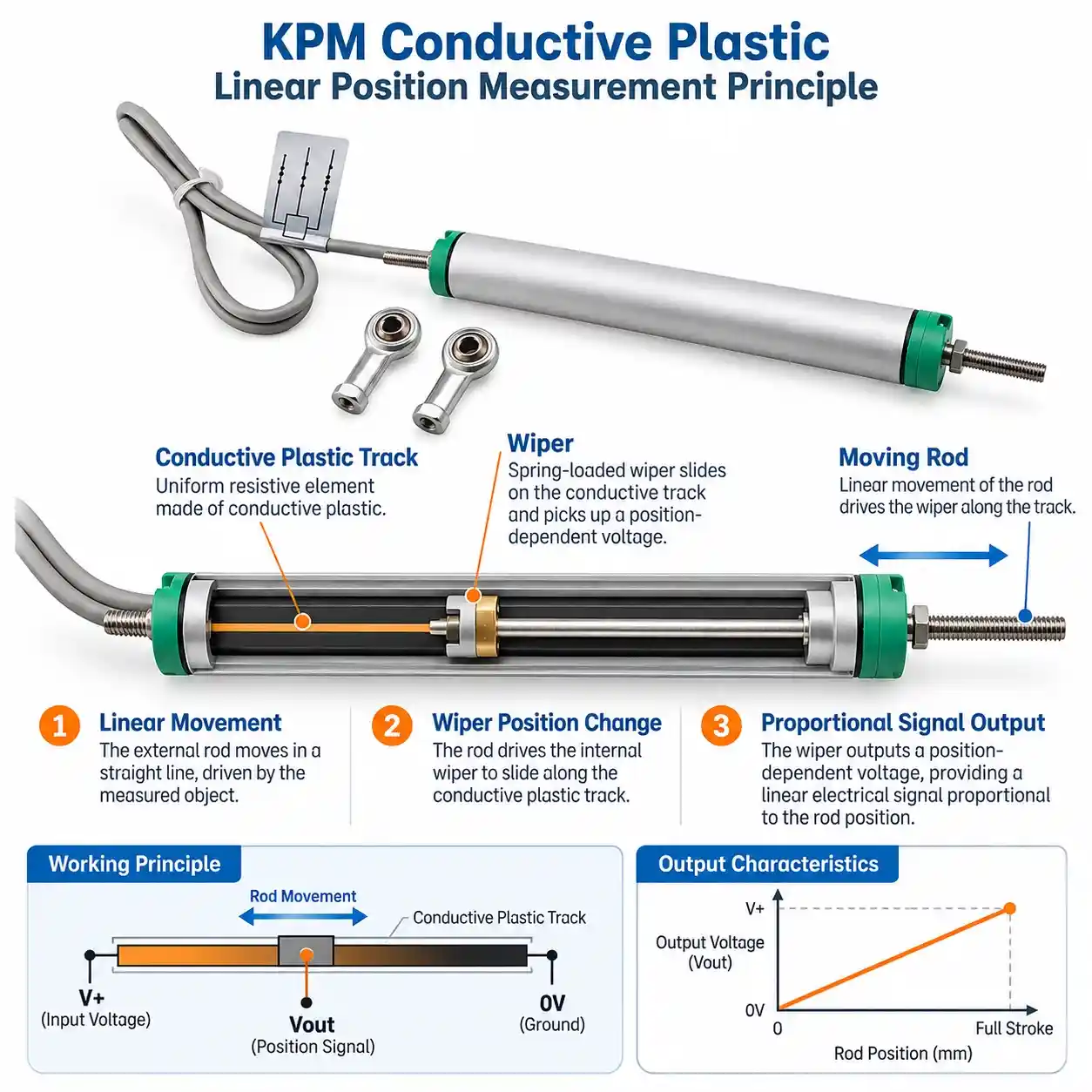
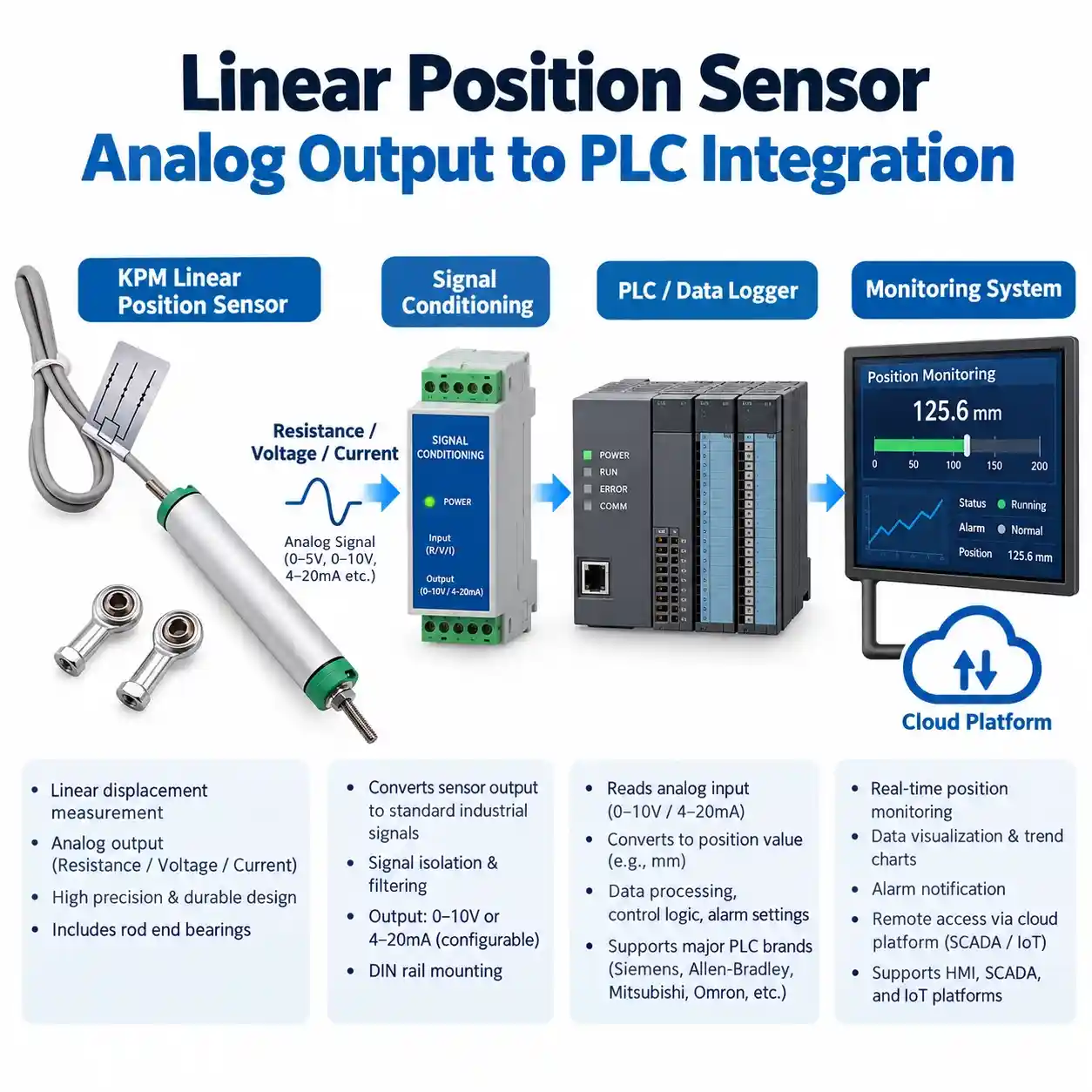
The JW-KPM(S06) uses a conductive plastic potentiometric sensing element.
As the connected mechanical component moves, the sensor rod follows the displacement.
The internal sliding contact changes position along the resistance element, producing a position-related electrical signal.
Measurement process:
Mechanical Movement → Rod Displacement → Resistance Change → Signal Conditioning → PLC / Data Acquisition System
The sensor measures the relative movement between its two mechanical connection points.
Unlike a non-contact laser or ultrasonic distance sensor, the KPM requires direct mechanical linkage with the moving structure.
Benefits of Rod-End Bearings
The rod-end bearing design helps accommodate angular movement between connected components.
This mechanical arrangement can be useful in testing equipment, hydraulic mechanisms and structural displacement measurement.
The specified ±12.5° angular accommodation does not eliminate the need to avoid excessive side loads, overtravel or unsuitable installation geometry.
3. Technical Specifications
Parameter
Specification
Product Model
JW-KPM(S06)
Series
KPM
Sensor Type
Rod-Type Linear Potentiometer
Measuring Stroke
25–300 mm
Sensing Principle
Conductive Plastic Potentiometric
Linearity
0.05%–0.3% FS
Listed Resolution
Better than 0.01 mm
Service Life
Up to 30 Million Operations
Mechanical Connection
Rod-End Bearings
Angular Accommodation
±12.5°
Output
Potentiometric Resistance
Optional Outputs
Voltage / Current via suitable modules
Wiring Options
2-Wire / 3-Wire
Electrical Connection
Cable / Plug Options
Protection Rating
IP65
Warranty
1 Year
Technical Note: Linearity, resolution and absolute measurement accuracy are different specifications. Actual performance depends on stroke selection, mechanical installation and electrical configuration.
4. KPM Rod-End Linear Sensor vs KTM Mini Linear Sensor
The JW-KPM and JW-KTM sensors share overlapping measuring ranges but are designed for different installation requirements.
Feature
KPM Linear Position Sensor
KTM Mini Linear Sensor
Stroke
25–300 mm
25–300 mm
Measurement
Potentiometric
Potentiometric
Main Advantage
Rod-end connection
Compact installation
Mechanical Design
Rod-end bearings
Miniature rod-type structure
Selection Priority
Linkage and movement accommodation
Limited mounting space
Typical Applications
Testing and structural movement
Compact machinery and automation
Choose the KPM series where mechanical linkage design and angular movement accommodation are important.
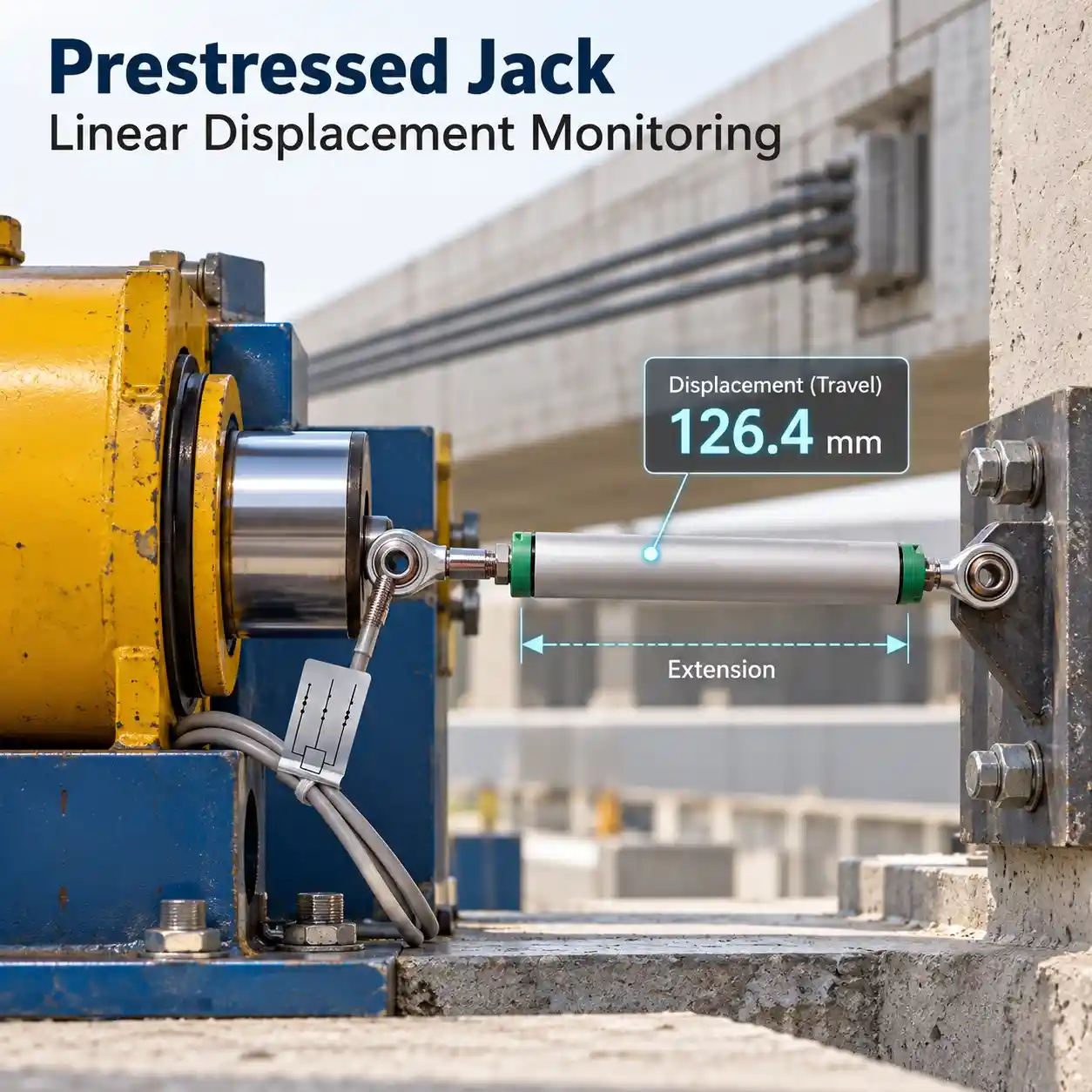
Prestressed jack testing requires measurement of mechanical extension during controlled loading operations.
A rod-end linear position sensor can be used to measure jack extension when the mounting arrangement and required measuring stroke are compatible.
The rod-end joints help accommodate appropriate angular movement within the mechanical linkage.
5.2 Bridge and Structural Movement Monitoring
Structural inspection and testing may require measurement of relative displacement between two mechanical points.
Potential measurement applications include:
Bridge expansion joint movement
Structural relative displacement
Mechanical joint movement
Controlled structural load testing
The KPM sensor can provide displacement feedback where its environmental protection, mounting arrangement and measurement performance meet project requirements.
Long-term outdoor deployment may require additional environmental protection.
Mechanical connection: Rod-end dimensions and installation geometry.
Motion conditions: Expected operating speed, vibration and angular movement.
Output signal: Resistance, voltage or current.
Operating environment: Temperature, moisture, dust and mechanical exposure.
Mounting dimensions: Available body length and extension clearance.
JW-IoT can assist with configuration selection based on project requirements.
10. Request Technical Specifications and Quotation
Looking for a KPM rod-end linear position sensor for prestress testing, structural monitoring or industrial displacement measurement?
JW-IoT can support product selection based on measuring stroke, mechanical connection, output requirements and application conditions.
Contact JW-IoT to request technical specifications, configuration information and a quotation.
FAQ
Q
1. What is a rod-end linear position sensor?
A
It is a contact-type position sensor that measures relative linear movement between mechanically connected points. Rod-end bearings support suitable linkage arrangements.
Q
2. What is the measuring range of JW-KPM(S06)?
A
The product page specifies measuring strokes from 25 mm to 300 mm. Other KPM series stroke options should be confirmed separately.
Q
3. Can the KPM sensor measure hydraulic actuator displacement?
A
Yes, where the sensor stroke, external mounting arrangement, linkage geometry and environmental conditions are compatible with the hydraulic equipment.
Q
4. Is the KPM sensor suitable for bridge displacement monitoring?
A
It can be considered for appropriate structural relative movement applications. Long-term outdoor monitoring requires assessment of environmental protection, measurement performance and installation conditions.
Q
5. What is the difference between KPM and KTM linear sensors?
A
The KPM emphasizes rod-end mechanical connections and angular accommodation. The KTM is positioned as a compact sensor for machinery with limited installation space.
Q
6. Does the sensor provide 4–20mA output?
A
A suitable optional signal-conditioning configuration may provide current output. The selected module and its electrical requirements should be confirmed before ordering.
 +86 13520127780
  info@jingelway.com