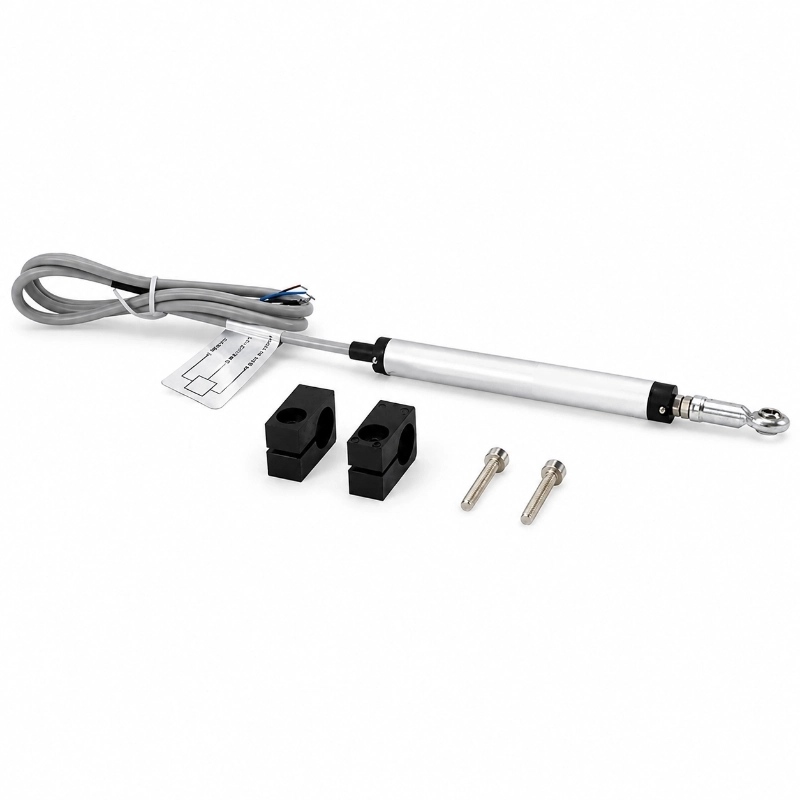
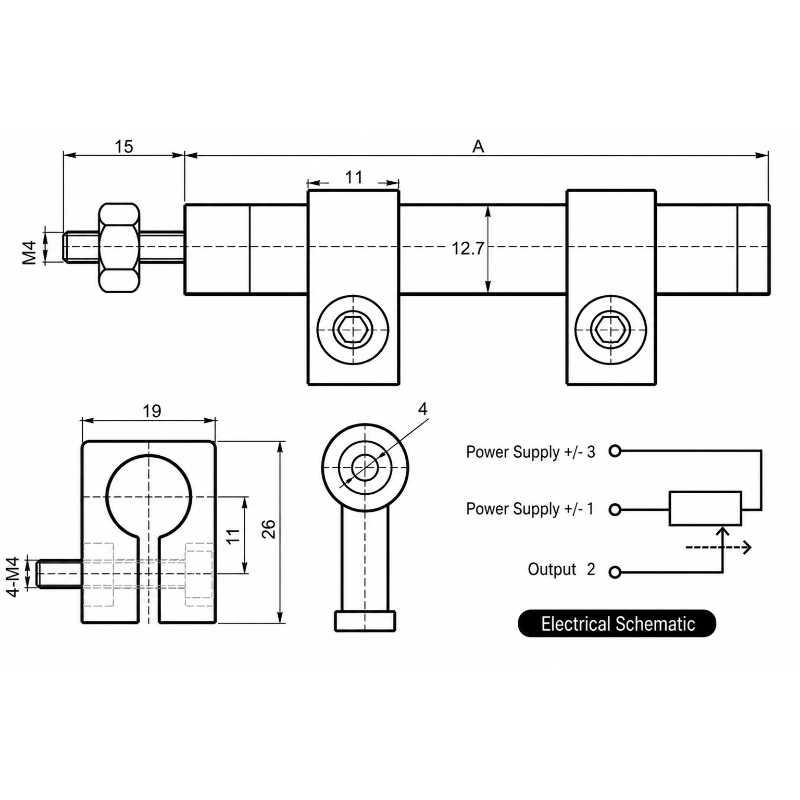
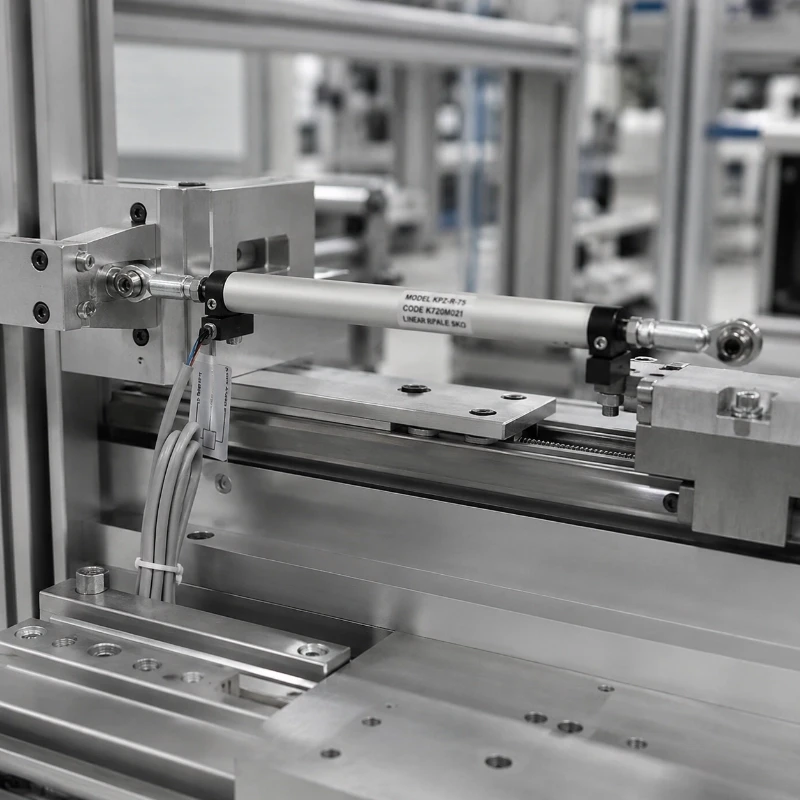
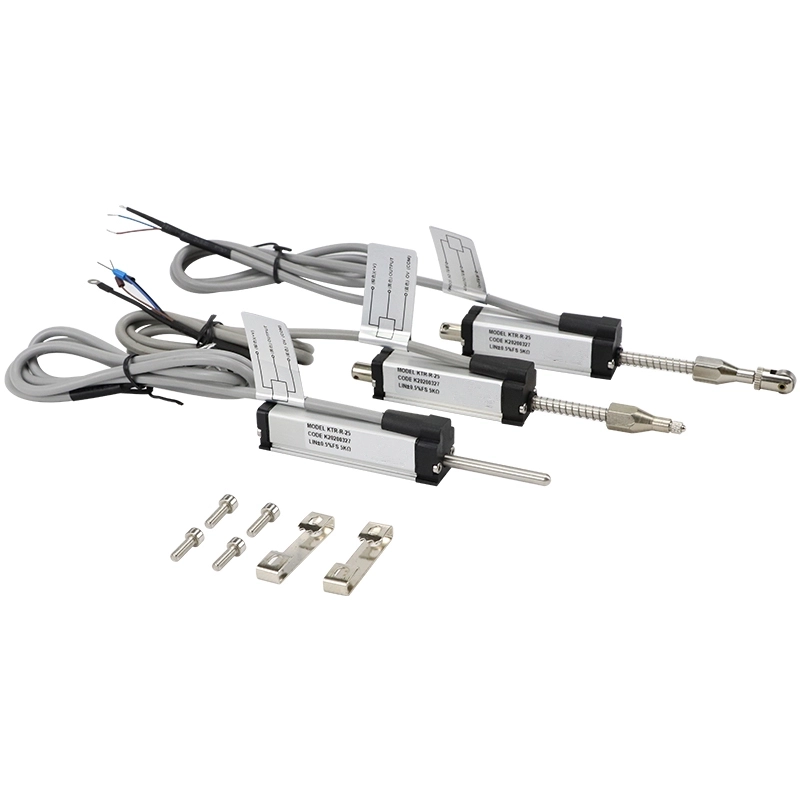
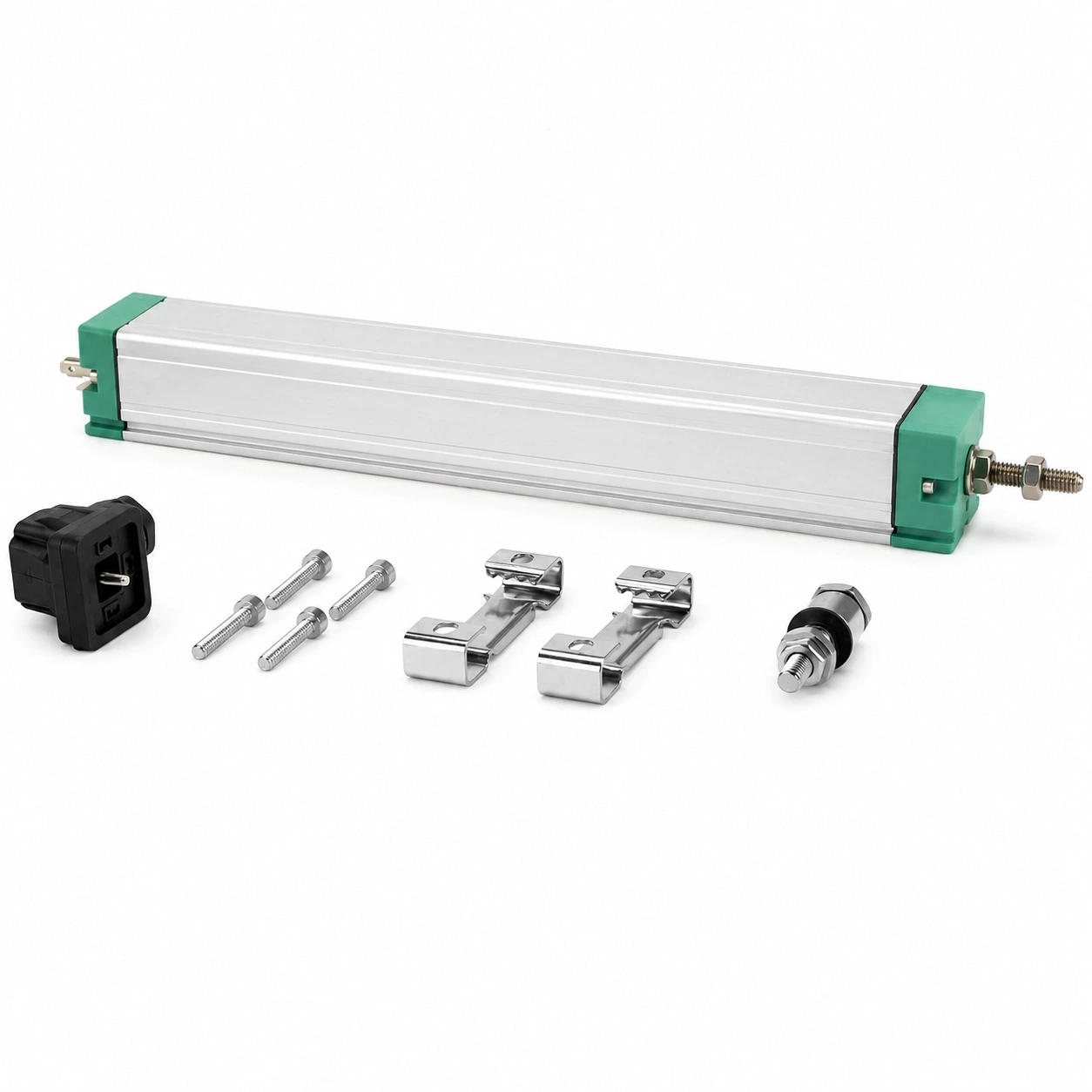
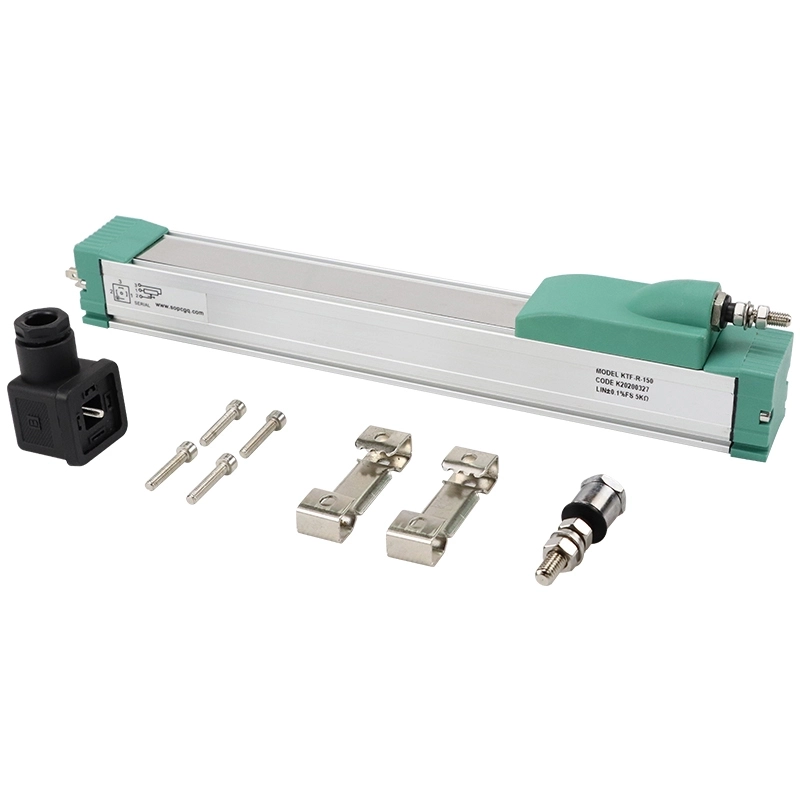
JW-KPZ(S07) KPZ Mini Linear Displacement Sensor with 10-100mm measuring range is designed for accurate measurement of linear movement, position change and small displacement applications.
The sensor converts mechanical displacement into electrical signals through:
Resistance output
Analog voltage output
Analog current output (depending on configuration)
With a compact structure and reliable measurement performance, this miniature displacement sensor is suitable for applications requiring:
Small stroke measurement
Precision position feedback
Mechanical displacement testing
Structural movement monitoring
Industrial equipment measurement
Compared with long-range displacement sensors, the 10-100mm model is optimized for applications where:
Installation space is limited
Movement range is relatively small
Stable measurement output is required
Integration with existing controllers is needed
JW-IoT provides different displacement measurement solutions including:
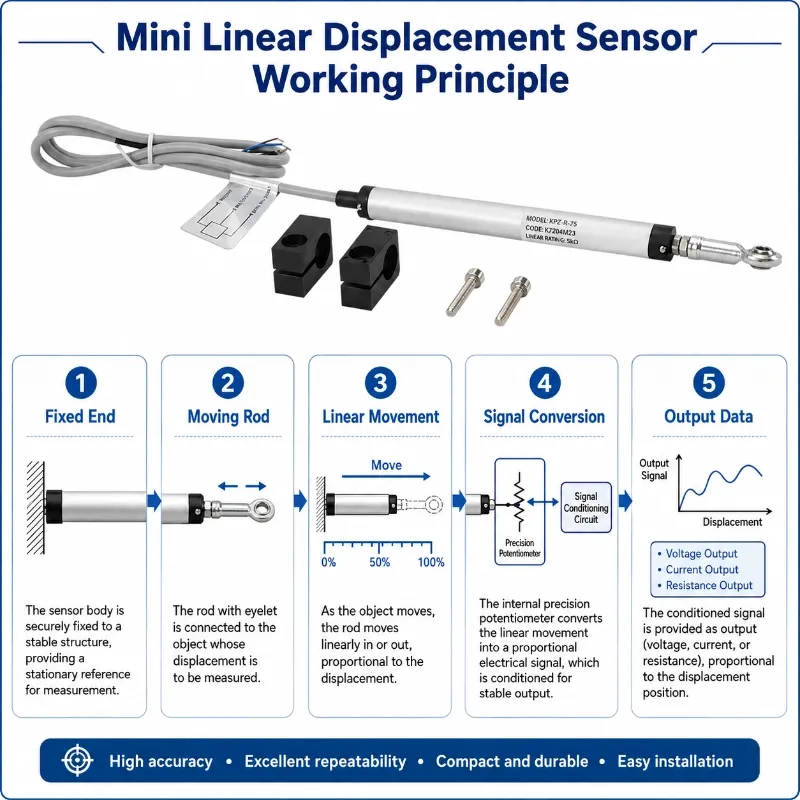
A mini linear displacement sensor is a precision measurement device used to detect the movement distance of an object along a straight line.
When the sensing rod moves according to the displacement of the target object, the sensor converts this mechanical movement into an electrical output signal.
Depending on the selected model, the output can be:
Resistance signal
Analog voltage signal
Analog current signal
The output signal can then be collected by:
PLC
Data acquisition equipment
Industrial controller
Measurement instruments
Why Choose a 10-100mm Linear Displacement Sensor?
Small displacement measurement requires a different approach from large movement monitoring.
A 10-100mm sensor range is suitable when:
Expected movement is limited
Higher measurement sensitivity is required
Installation space is restricted
Mechanical integration needs to be compact
Typical applications include:
Precision machinery
Testing equipment
Structural joints
Laboratory instruments
Automated equipment
Compared with larger displacement sensors, the 10-100mm model provides:
Compact Installation
The miniature structure allows installation in:
Narrow mechanical spaces
Test equipment
Compact monitoring points
Accurate Short-Range Measurement
Selecting an appropriate measurement range improves:
Resolution
Measurement stability
Data reliability
Easy System Integration
The sensor can be connected with:
Data acquisition systems
PLC controllers
Remote monitoring platforms
Working Principle of Mini Linear Displacement Sensor
The working process includes:
Mechanical Movement
↓
Displacement Detection
↓
Resistance or Analog Signal Conversion
↓
Measurement System
The sensor provides continuous displacement data for position monitoring and deformation analysis.
Technical Specifications
Item
Specification
Product Type
Linear Displacement Sensor
Measuring Stroke
10–100 mm
Linearity Accuracy
0.05%–0.3% FS
Resolution
Better than 0.01 mm
Output Configuration
Configurable voltage and current modules
Wiring Options
2 wire 3 wire
Resistance Output
5 kΩ 10 kΩ
Current Output
4–20 mA
Voltage Output
0–5 V 0–10 V
Environmental Suitability
Suitable for harsh environments including humidity oil contamination and dust
Linearity
Excellent linearity
Service Life
Long service life
Warranty
1 year
Applications
Precision Industrial Automation
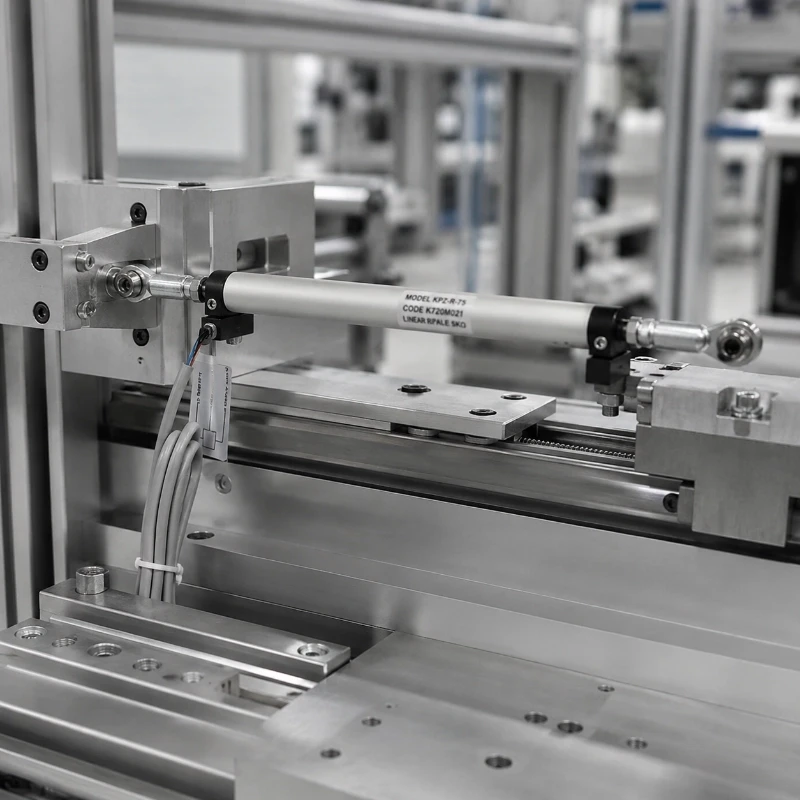
Small linear movements are common in automated equipment.
The sensor can support:
Machine position feedback
Actuator monitoring
Equipment adjustment
Production testing
Applications include:
Manufacturing equipment
Assembly machines
Test benches
Mechanical systems
Structural Deformation Monitoring
Although designed for small displacement measurement, the sensor can also support engineering monitoring where movement ranges are limited.
Applications include:
Expansion joint monitoring
Structural connection movement
Laboratory structural testing
Bridge Joint Movement Monitoring
Bridge expansion joints experience repeated movement caused by:
Temperature changes
Traffic loading
Structural aging
A compact linear displacement sensor can monitor:
Joint opening
Relative movement
Long-term displacement trends
Laboratory and Research Applications
Precision displacement measurement is important in:
Material testing
Mechanical experiments
Structural research
Calibration systems
The compact size makes the sensor suitable where installation space is limited.
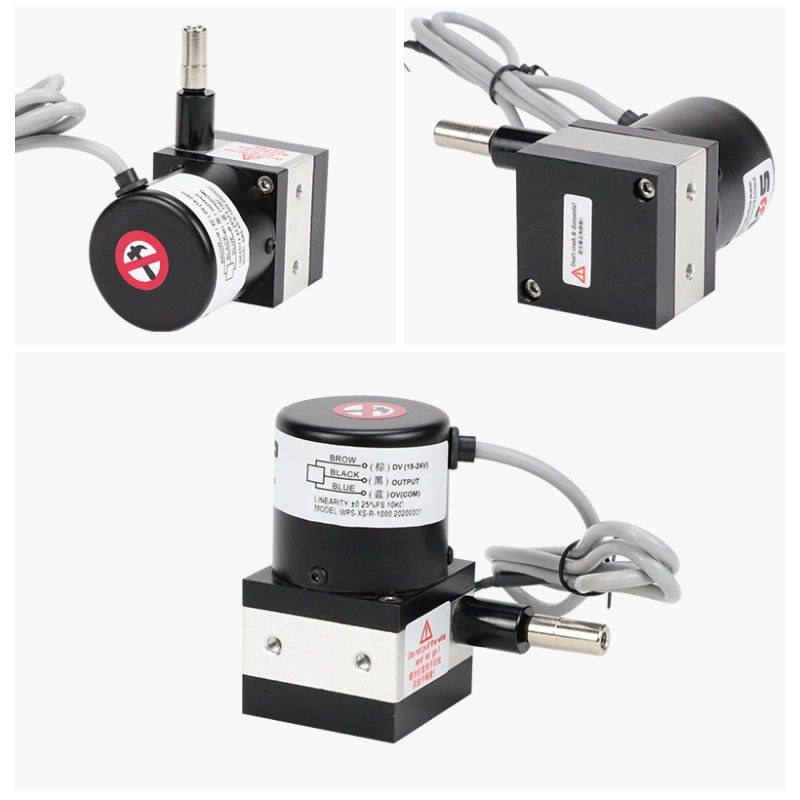
Mini Linear Displacement Sensor vs Draw-Wire Sensor
Comparison
Mini Linear Sensor
Draw-Wire Sensor
Measurement range
10-100mm
Longer movement ranges
Installation
Direct mechanical mounting
Cable-based measurement
Best for
Precision small movement
Large deformation
Typical users
Automation and testing
Civil engineering projects
Mini Linear Displacement Sensor vs 25-300mm Sensor
Comparison
10-100mm Model
25-300mm Model
Measurement range
10-100mm
25-300mm
Application
Small movement measurement
Medium displacement monitoring
Installation
Compact spaces
Engineering structures
Focus
Precision and sensitivity
Longer travel distance
Choose the 10-100mm model when the expected displacement is relatively small.
Choose the 25-300mm model when larger movement measurement is required.
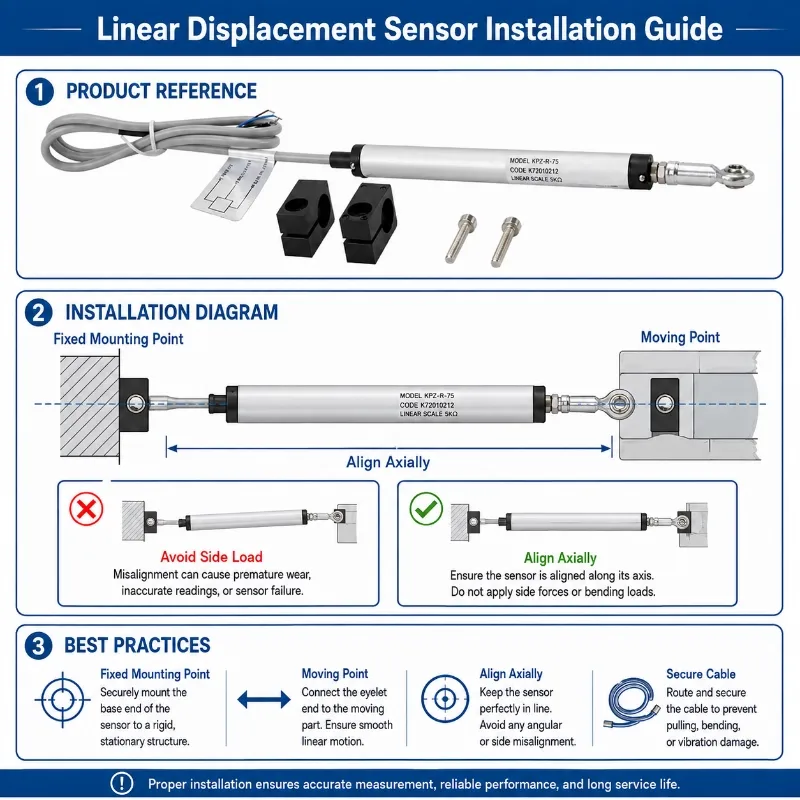
Installation Guidelines
Confirm Measurement Direction
The sensor should be installed along the actual movement direction.
Avoid:
Side loading
Angular force
Mechanical interference
Select Correct Range
The sensor range should cover:
Expected movement
Safety margin
Operating conditions
Protect Outdoor Installations
For engineering applications:
Recommend:
Cable protection
Waterproof connectors
Stable mounting brackets
Signal Integration Architecture
Mini Linear Displacement Sensor

↓

Resistance / Analog Output

↓

Signal Conditioning Module

↓

PLC / Data Acquisition System

↓

Monitoring Software
Request Mini Linear Displacement Sensor Quote
JW-IoT provides miniature displacement sensors and customized monitoring solutions for:
1. What is the KPZ mini linear displacement sensor used for?
A
The KPZ sensor is used for short stroke linear position measurement in compact machinery, plastic injection machines, automation fixtures, hydraulic devices, and industrial control systems.
Q
2. What measuring stroke is available for the KPZ sensor?
A
The KPZ series supports effective measuring lengths from 10mm to 300mm, with 2mm buffer stroke at both ends.
Q
3. Is KPZ suitable for narrow installation spaces?
A
Yes. KPZ is a miniature pull rod type displacement sensor, making it suitable for compact machines and limited mounting spaces.
Q
4. Can JW-IoT supply KPZ sensors for injection molding machines?
A
Yes. JW-IoT can supply KPZ mini linear displacement sensors for injection molding machines, plastic machinery, rubber machinery, and compact automation projects.
Q
5. What protection grade does the KPZ sensor have?
A
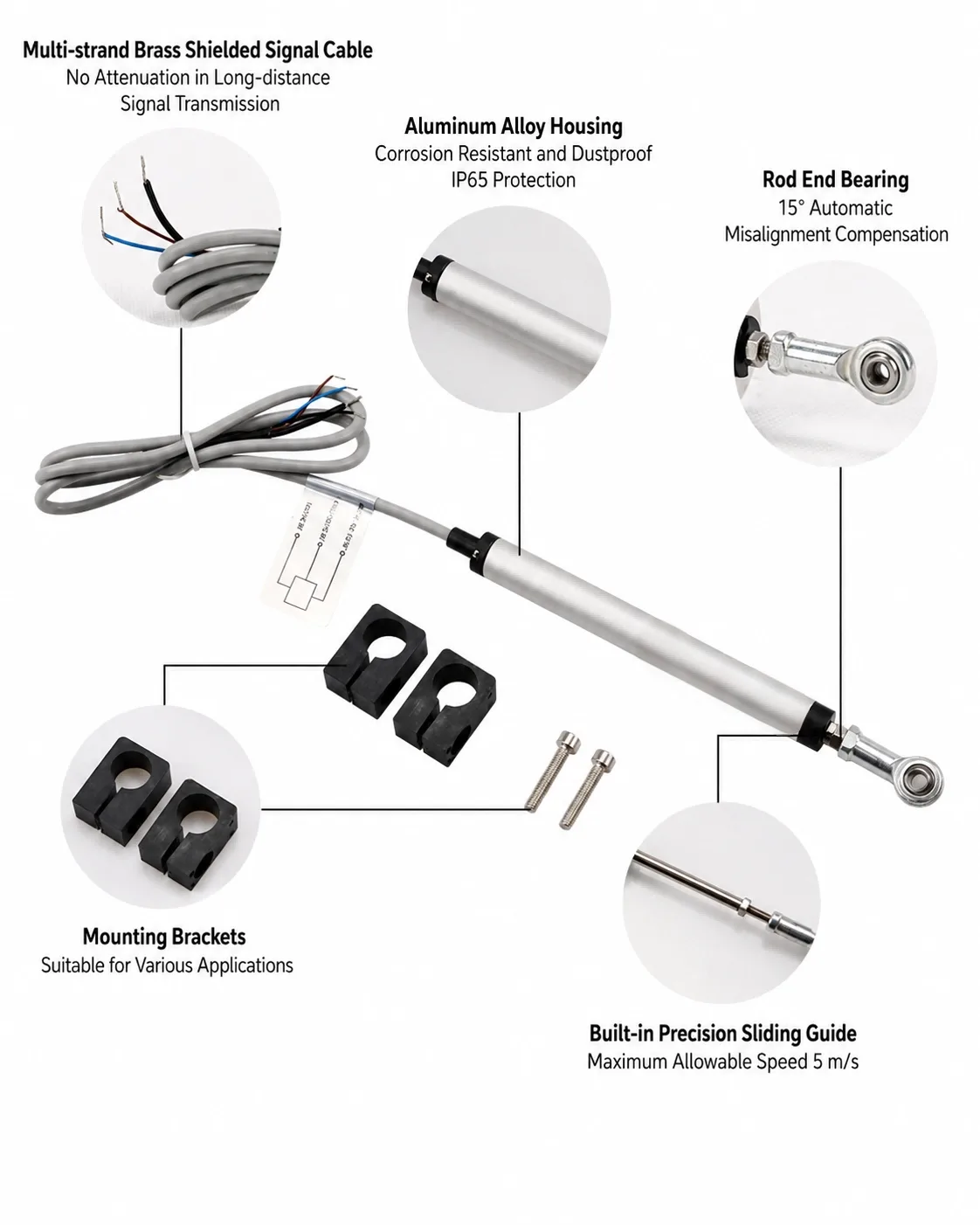
The KPZ sensor provides IP65 protection, suitable for common industrial environments with dust, oil mist, and light moisture.
Q
6. What is the maximum operating speed?
A
The KPZ series supports movement speeds up to 5m/s, making it suitable for dynamic industrial position feedback.
Q
7. Can JW-IoT help select the correct stroke and output type?
A
Yes. JW-IoT can help match the proper KPZ stroke length, output signal, wiring method, and installation structure according to the machine design.
Q
8. What output does the KPZ sensor provide?
A
The KPZ sensor provides analog position feedback based on linear movement, suitable for PLCs, controllers, and data acquisition systems.
Q
9. Why choose JW-IoT for compact displacement sensing solutions?
A
JW-IoT provides mini linear displacement sensors, application matching, and integration support for customers who need reliable position feedback in compact industrial equipment.
 +86 13520127780
  info@jingelway.com