HomeProductsRadiation SensorsClass A Pyranometer Solar Radiation Sensor with RS485 Output for PV Monitoring
  • class-a-pyranometer-solar-radiation-sensor-rs485
  • class-a-pyranometer-pv-power-plant-monitoring
  • pyranometer-installation-guide-for-pv-monitoring

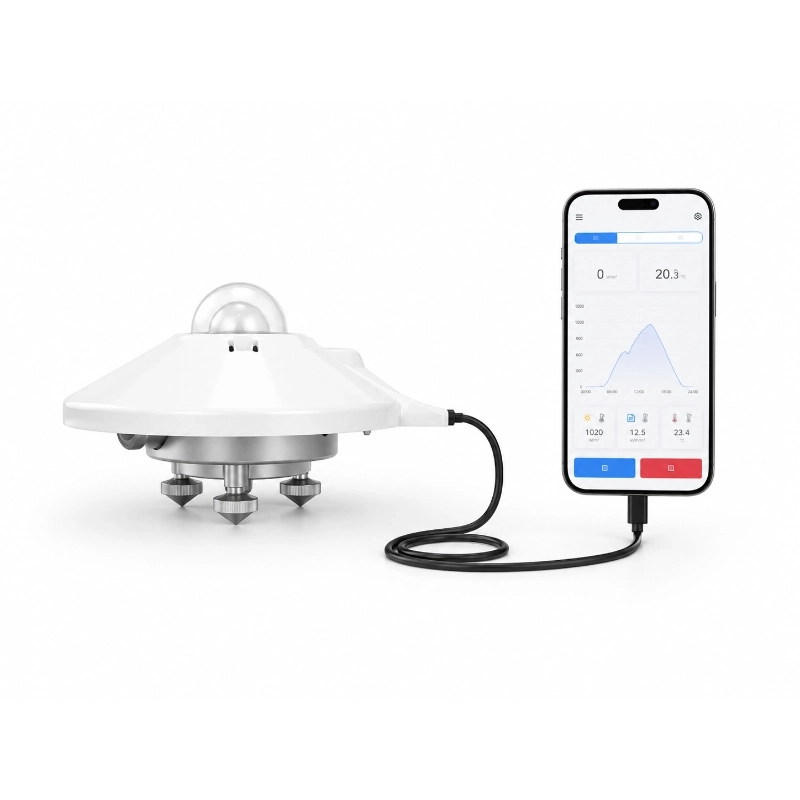
Class A Pyranometer Solar Radiation Sensor with RS485 Output for PV Monitoring

Key Features

  • Class A solar radiation measurement for professional meteorological and PV monitoring applications
  • Fast response performance for more accurate irradiance data under changing sunlight and cloud conditions
  • Low internal resistance design to improve signal response and measurement stability
  • Built in RS485 output module for direct integration into existing RS485 communication networks
  • Multiple output options including 0–20mV, 4–20mA and RS485
  • Wide spectral range from 285 to 2800 nm for broad solar radiation monitoring
  • Double layer high precision glass cover improves light transmission and sensor sensitivity
  • Imported light absorbing coating helps reduce reflection and improve measurement accuracy
  • Advanced MEMS and thermopile processing technology for compact structure, consistency and reliability
  • Outdoor rated structure suitable for PV plants, rooftops, solar farms and weather stations
  • Wide operating temperature range from -40°C to 80°C for harsh field environments
  • Low maintenance design with integrated output module and stable mechanical structure

Product Description

Precision Solar Irradiance Measurement for PV Plants and Professional Weather Stations

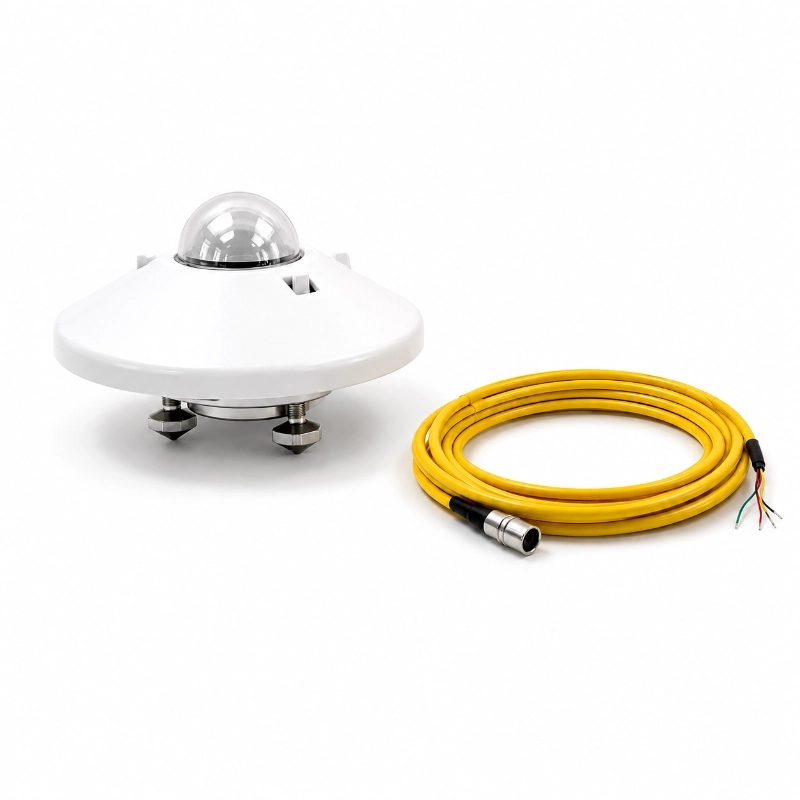
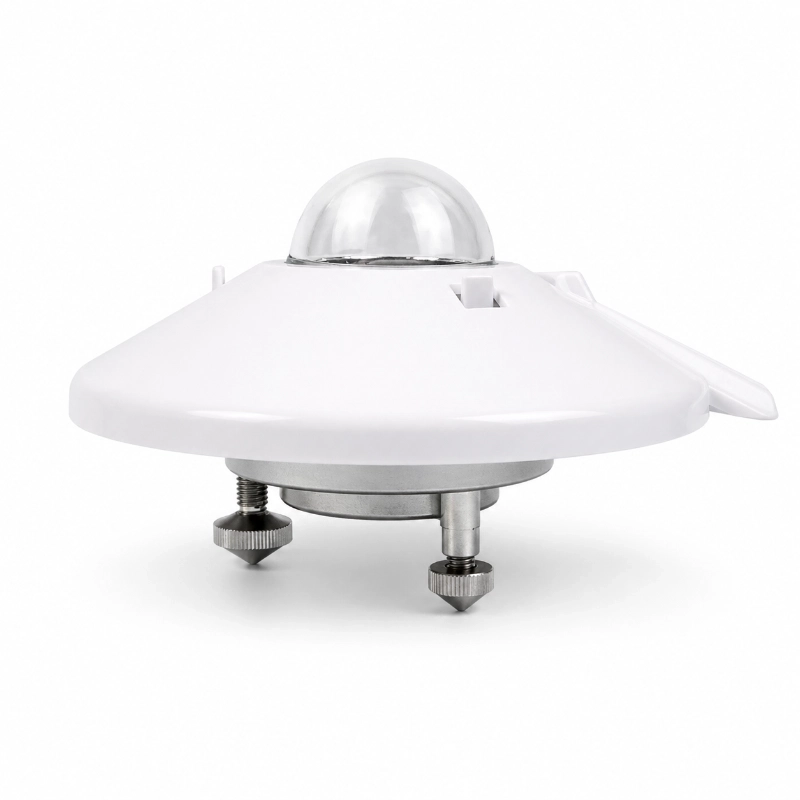
The JW-TBQ-2H(LC25) Class A Pyranometer is designed for accurate measurement of global solar irradiance in photovoltaic power plants, PV weather stations, solar resource monitoring systems and professional meteorological applications.

For solar power projects, irradiance data is one of the most important reference inputs for evaluating whether a PV system is producing the power it should under the available sunlight.

Compared with basic photoelectric irradiance sensors, a Class A thermopile pyranometer is designed for applications where higher measurement quality, broad-spectrum solar radiation measurement and long-term reference data are required.

Why Choose JW-TBQ-2H(LC25)?

  • Class A pyranometer for professional solar monitoring
  • Measures global solar irradiance
  • Suitable for utility-scale and commercial PV plants
  • RS485 output for digital system integration
  • Designed for outdoor long-term monitoring
  • Suitable for PV weather stations and meteorological stations
  • Wide operating temperature range
  • Supports integration with data loggers, PLCs and monitoring platforms
  • Available for project-based PV monitoring system configuration

Need a pyranometer for your PV project?

Send us your required quantity, installation location, communication interface and monitoring-system requirements.

Request a Quote
Ask for Technical Datasheet
Get PV Monitoring Configuration Support

What Does This Class A Pyranometer Measure?

The JW-TBQ-2H(LC25) measures global solar irradiance received by the sensor surface.

Global irradiance includes the solar radiation reaching the measurement plane from both direct and diffuse components of sunlight.

The measured irradiance value is typically expressed in:

W/m²

For photovoltaic projects, this irradiance value can be compared with:

  • PV module output
  • Inverter power
  • Module temperature
  • Ambient temperature
  • Historical generation data

This makes the pyranometer an important reference sensor for evaluating PV plant performance.

Why Accurate Irradiance Measurement Matters in PV Plants

A PV plant may show lower-than-expected power output for many reasons:

  • Cloud cover
  • Module temperature
  • Soiling
  • Shading
  • Inverter limitations
  • Module degradation
  • Electrical faults
  • Sensor or system problems

Power-generation data alone cannot tell operators whether lower production is caused by insufficient sunlight or a problem within the PV system.

A high-quality pyranometer provides the irradiance reference needed to answer that question.

For example:

High irradiance + low PV output
may indicate a performance or equipment issue.

Low irradiance + low PV output
may simply reflect current weather conditions.

This is why irradiance measurement is commonly integrated with PV power and temperature data for performance assessment.

Related reading:

Why Accurate Irradiance Measurement Is Critical for PV Plants

Technical Specifications

Parameter Class A Version Class B Version Class C Version
Spectral Range 285–2800 nm 285–2800 nm 285–2800 nm
Sensitivity 7–14 μV/W/m² 7–14 μV/W/m² 7–14 μV/W/m²
Response Time <5 s <10 s <15 s
Internal Resistance 10–30 Ω 10–50 Ω 10–50 Ω
Zero Offset A <12 W/m² <15 W/m² <15 W/m²
Zero Offset B <4 W/m² <5 W/m² <5 W/m²
Operating Temperature -40°C to 80°C -40°C to 80°C -40°C to 80°C
Directional Response <20 W/m² <20 W/m² <20 W/m²
Annual Stability <1% <2% <3%
Output Options 0–20mV 4–20mA RS485 0–20mV 4–20mA RS485 0–20mV 4–20mA RS485

Typical Applications

1. Utility-Scale Solar PV Power Plants

Large PV plants require reliable reference irradiance data to evaluate generation performance.

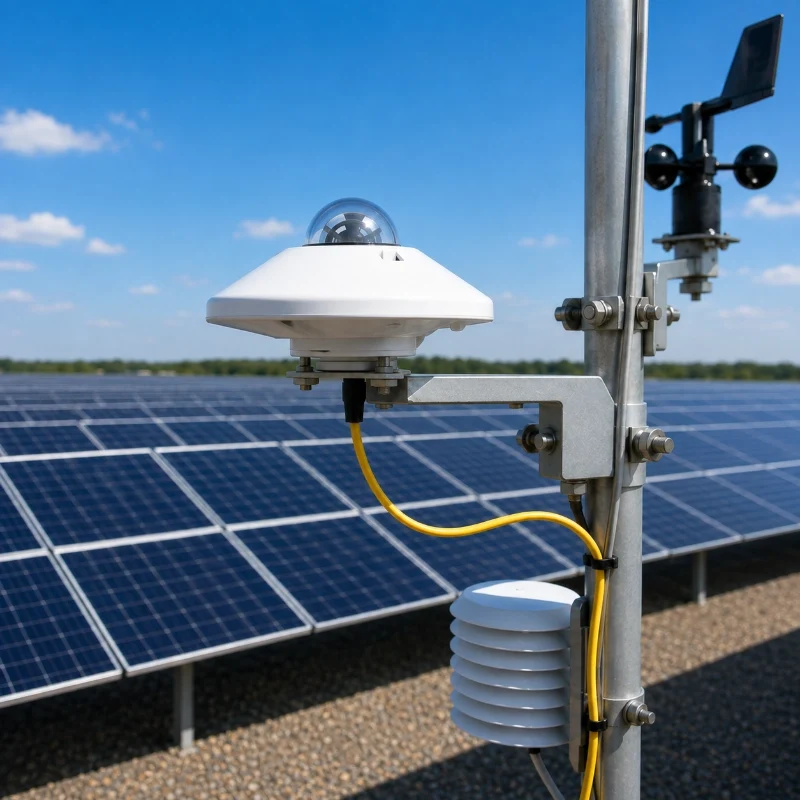
A typical monitoring point may include:

  • Class A pyranometer
  • PV module temperature sensor
  • Ambient temperature and humidity sensor
  • Wind speed and direction sensor
  • Rainfall sensor
  • Data logger
  • Monitoring platform

The irradiance value can then be compared with PV output to identify abnormal production conditions.

For a complete system configuration, see:

Solar PV Weather Station for Power Plant Monitoring

2. Plane-of-Array Irradiance Monitoring

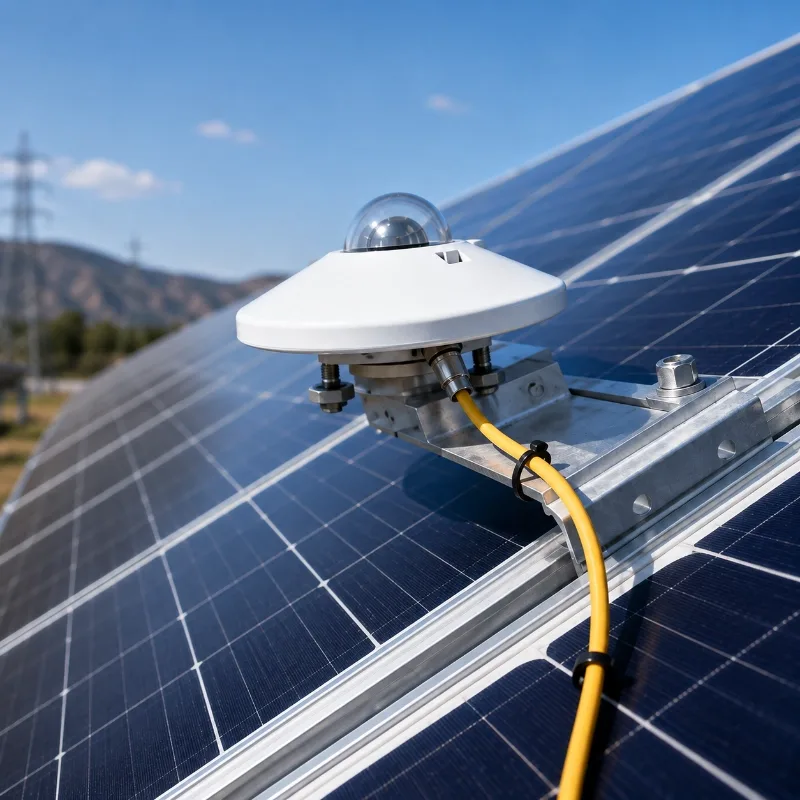
For PV performance analysis, the pyranometer can be mounted at an angle aligned with the PV module plane.

This allows measurement of the solar irradiance received approximately in the same orientation as the PV array.

Plane-of-array irradiance data can support:

  • Performance-ratio analysis
  • Generation comparison
  • Array performance evaluation
  • Solar resource monitoring

The mounting angle should match the project monitoring objective and engineering design.

3. PV Weather Stations

A pyranometer rarely operates alone in a professional PV monitoring system.

A complete PV weather station may combine irradiance with:

  • Module temperature
  • Ambient temperature
  • Relative humidity
  • Wind speed
  • Wind direction
  • Rainfall
  • Atmospheric pressure

Combining these parameters gives operators more context for understanding changes in PV production.

View Solar PV Weather Station Solution

4. Solar Resource Assessment

Long-term irradiance measurements can support solar energy studies and project evaluation.

Possible applications include:

  • Preliminary solar site studies
  • Solar resource comparison
  • Long-term irradiance monitoring
  • Renewable-energy research

For projects requiring a high-quality irradiance reference, a thermopile pyranometer may be more suitable than a basic silicon irradiance sensor.

5. Meteorological and Research Stations

The JW-TBQ-2H(LC25) can also be used in professional meteorological and environmental radiation-monitoring projects.

Applications include:

  • Meteorological stations
  • Environmental research
  • Climate observation
  • Universities
  • Scientific monitoring networks

JW-IoT provides a broader range of radiation measurement instruments for solar radiation, net radiation, UV, PAR and spectral monitoring.

View Radiation Sensors

Class A Pyranometer vs Silicon Irradiance Sensor

Choosing the right irradiance sensor depends on the purpose of the measurement.

Comparison Class A Pyranometer Silicon Irradiance Sensor
Measurement Principle Thermopile-type professional irradiance measurement Silicon-based solar response
Primary Purpose Reference solar irradiance measurement PV-oriented irradiance monitoring
Spectrum Broad solar radiation measurement Silicon spectral response
Typical Application PV reference station, meteorology, research PV performance monitoring
Accuracy Requirement Higher Application-dependent
Cost Level Higher Typically lower
Best Choice When Reference-quality irradiance data is important PV response tracking and cost efficiency are priorities

A silicon irradiance sensor may be suitable when the project focuses primarily on tracking PV-module-like solar response.

A Class A pyranometer is generally the better choice when the project requires a professional broadband solar irradiance reference.

Related product:

Silicon Irradiance Sensor for PV Performance Monitoring

Class A vs Class B Pyranometer

Not every project requires the same measurement class.

Requirement Class A Class B
Professional PV reference monitoring Excellent choice Suitable for many projects
Meteorological measurement Strong choice Suitable
Budget sensitivity Higher investment More economical
Performance requirement Higher Medium/high
Long-term reference data Preferred for demanding projects Proje

For projects where budget is more important than the highest measurement class, a Class B pyranometer may be a practical alternative.

View Class B Pyranometer

Why Choose a Thermopile Pyranometer for PV Monitoring?

A thermopile pyranometer responds to a broad portion of incoming solar radiation and is widely used when high-quality broadband irradiance measurement is required.

For PV operators, this is valuable because the pyranometer acts as an independent solar-resource reference rather than simply reproducing the spectral response of a PV cell.

This makes it particularly useful for:

  • Reference weather stations
  • Performance-ratio calculation
  • Long-term trend analysis
  • Comparing different PV technologies
  • Solar resource monitoring

How the Pyranometer Fits Into a PV Monitoring System

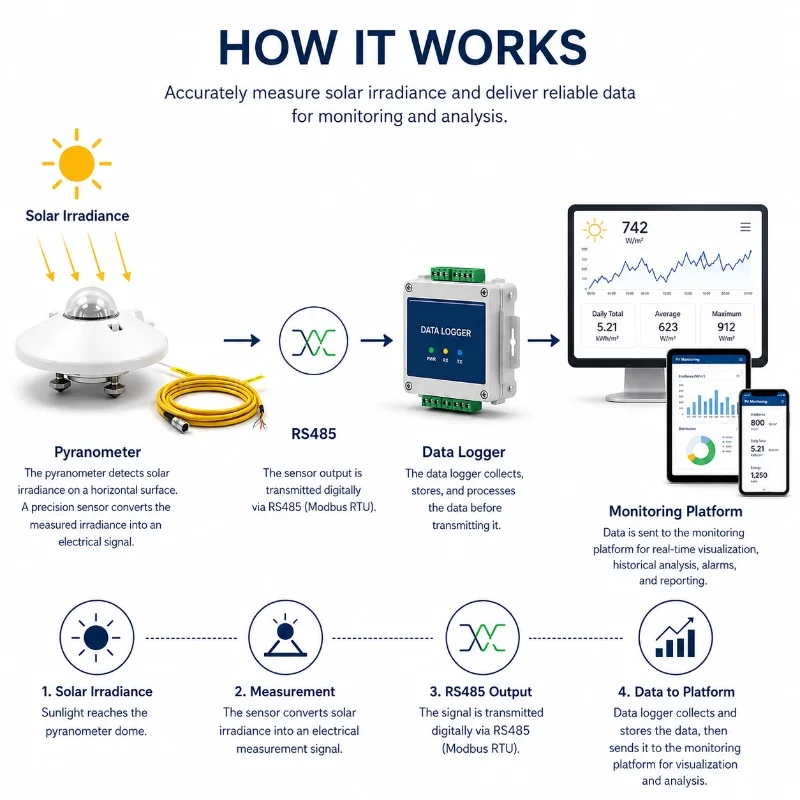
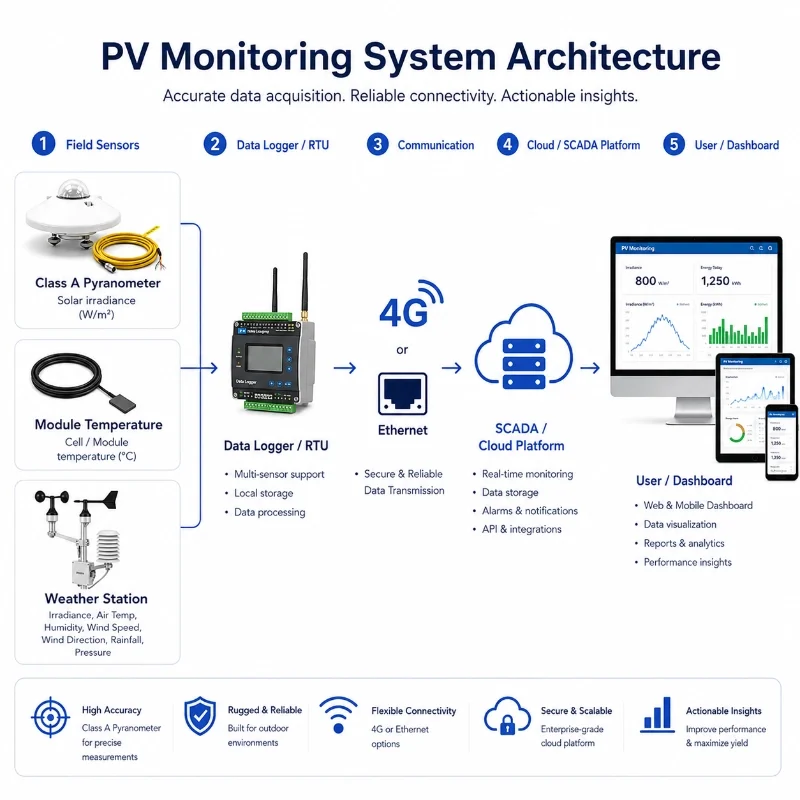
A professional PV monitoring architecture may follow:

Solar Irradiance

JW-TBQ-2H(LC25) Class A Pyranometer
↓ RS485
PV Data Logger / RTU

4G / Ethernet / Other Backhaul

SCADA / EMS / Cloud Platform

Performance Analysis

Additional sensors can provide:

  • Module temperature
  • Ambient weather
  • Wind conditions
  • Rainfall
  • Soiling information

Together, these datasets help operators distinguish weather-related production changes from actual system-performance problems.

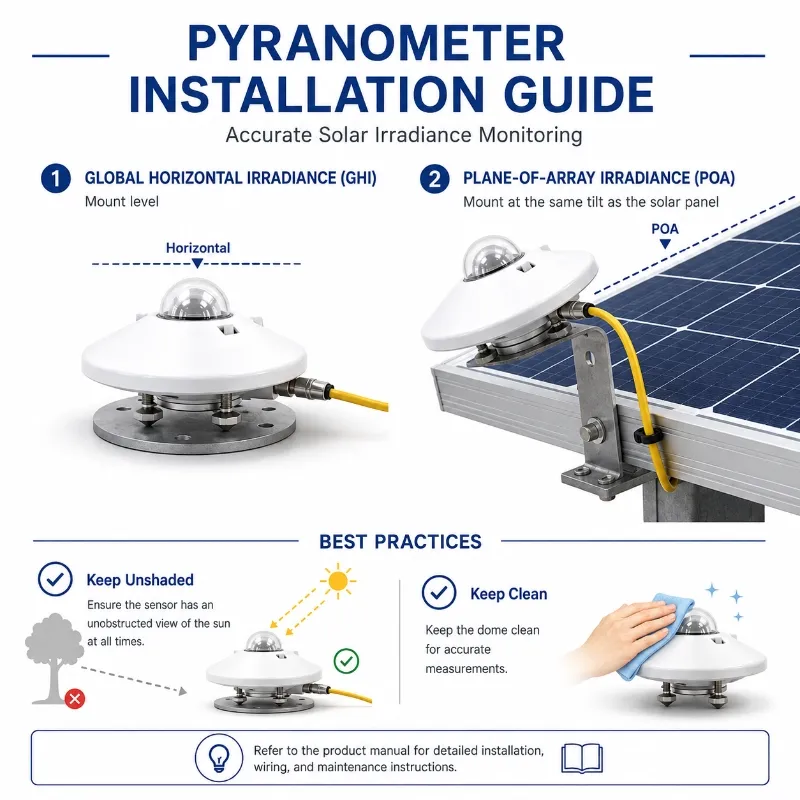
Pyranometer Installation Guidelines

Correct installation is essential because even a high-quality sensor can produce poor data if it is installed incorrectly.

Keep the Sensor Unshaded

Install the pyranometer where nearby objects will not block the solar field of view.

Avoid shading from:

  • PV structures
  • Poles
  • Buildings
  • Antennas
  • Trees
  • Weather-station components

Level the Pyranometer for Horizontal Irradiance

For global horizontal irradiance measurement, the sensing surface should be installed horizontally and properly leveled.

Check the level again after:

  • Installation
  • Maintenance
  • Strong weather events
  • Structural adjustment

Align With the PV Array for POA Measurement

For plane-of-array measurement, install the pyranometer in the same tilt orientation as the monitored PV modules.

The objective is to measure the irradiance incident on the array plane.

Keep the Optical Dome Clean

Dust, bird droppings, pollen and other contamination can reduce the amount of solar radiation reaching the sensing surface.

Establish a maintenance schedule based on site conditions.

Desert and dusty PV plants may require more frequent inspection.

Avoid Nearby Heat Sources

Install away from equipment that can introduce abnormal local thermal conditions whenever possible.

Protect the Communication Cable

For outdoor RS485 installations:

  • Use suitable outdoor cable
  • Protect cable routes
  • Avoid unnecessary cable loops
  • Maintain proper grounding and shielding
  • Consider surge protection where required

How to Choose a Pyranometer for a PV Project

Before requesting a quotation, confirm these five project requirements.

1. Measurement Purpose

Do you need:

  • GHI?
  • POA irradiance?
  • Reference meteorological data?
  • PV performance monitoring?

2. Required Accuracy Class

Determine whether the project specification requires:

  • Class A
  • Class B
  • Basic solar irradiance sensor

3. Communication Interface

Confirm whether your acquisition system requires:

  • RS485
  • Analog signal
  • Other interface

4. Number of Monitoring Points

Provide:

  • PV plant capacity
  • Array distribution
  • Number of weather stations
  • Number of pyranometers per station

5. Integration Requirement

Tell us whether the pyranometer will connect to:

  • Existing SCADA
  • Third-party data logger
  • PLC
  • JW-IoT monitoring system
  • Customer cloud platform

This information allows us to recommend the most suitable configuration.

Need Help Selecting the Right Pyranometer?

For faster technical evaluation, send us:

  • Project country
  • PV plant capacity
  • GHI or POA requirement
  • Required accuracy class
  • Quantity
  • Communication interface
  • Existing data logger or SCADA model

JW-IoT can recommend a suitable pyranometer and PV weather monitoring configuration.

Request a Quote

Contact JW-IoT

Send your project requirements and our team will provide product selection and quotation support.

FAQ

  • Q

    1. What is a Class A pyranometer?

    A

    A Class A pyranometer is a high-performance solar radiation instrument designed for applications requiring more demanding measurement performance than lower pyranometer classes.
    It is commonly selected for professional PV monitoring, meteorology and solar research.

  • Q

    2. What does the JW-TBQ-2H(LC25) measure?

    A

    It measures global solar irradiance received by its sensing surface and provides the measurement for monitoring and data-acquisition systems.

  • Q

    3. Is this pyranometer suitable for PV power plants?

    A

    Yes. The JW-TBQ-2H(LC25) is intended for professional solar irradiance measurement and is suitable for PV weather stations and solar power plant monitoring.

  • Q

    4. Can I use it for plane-of-array irradiance?

    A

    Yes. It can be installed at the same inclination as the PV array when the project requires plane-of-array irradiance measurement.

  • Q

    5. What output does the sensor provide?

    A

    This product page configuration provides 0–20mV / 4–20mA / RS485 output, making it suitable for integration with digital data loggers, PLCs and PV monitoring systems.

  • Q

    6. What is the difference between a pyranometer and a silicon irradiance sensor?

    A

    A thermopile pyranometer provides broadband solar irradiance measurement, while a silicon irradiance sensor has a spectral response closer to silicon PV technology.
    The best choice depends on the monitoring objective.

  • Q

    7. Should I choose Class A or Class B?

    A

    Choose Class A when measurement performance and reference-quality data are a higher priority.
    Class B can be considered when the project requires professional irradiance monitoring but has tighter budget constraints.

  • Q

    8. How often should the pyranometer be cleaned?

    A

    Cleaning frequency depends on local conditions.

    Dusty, desert, industrial or high-pollen environments generally require more frequent inspection than clean locations.

  • Q

    9. Can JW-IoT provide a complete PV weather station?

    A

    Yes. JW-IoT can configure PV monitoring systems combining irradiance, module temperature and meteorological sensors.

WhatsApp

Leave a message!

Leave a message!