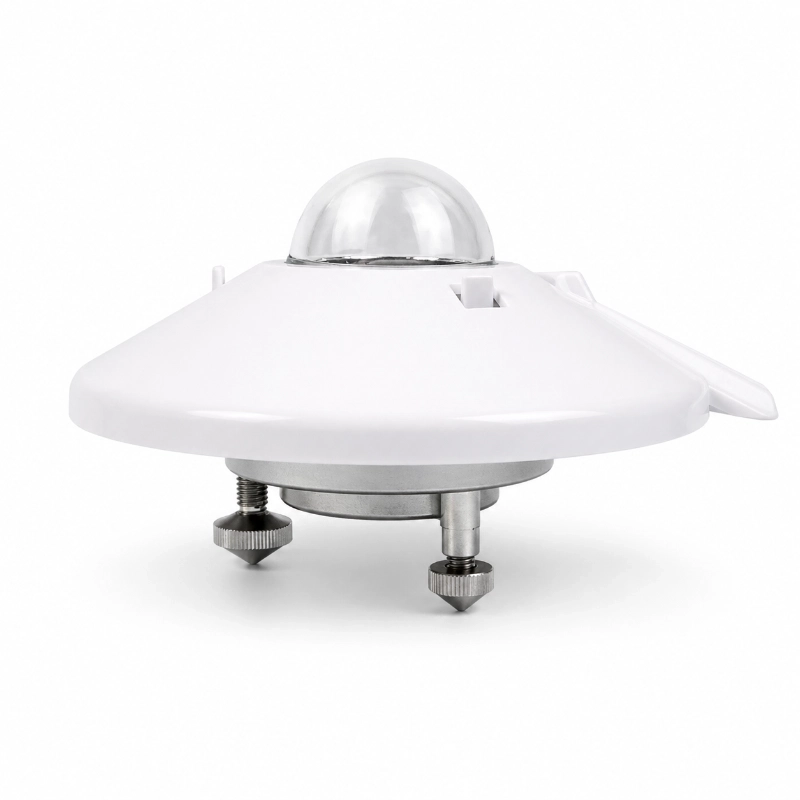
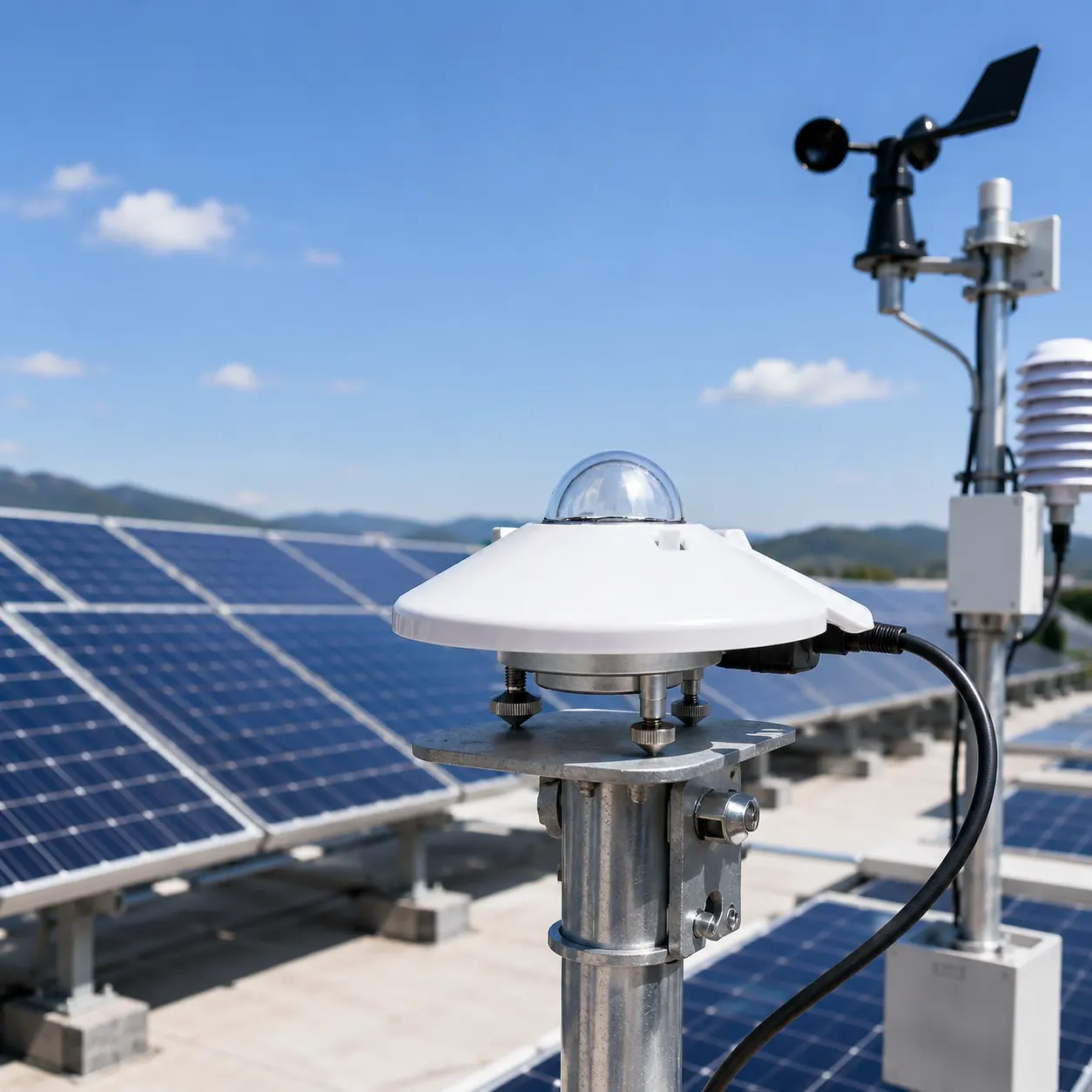
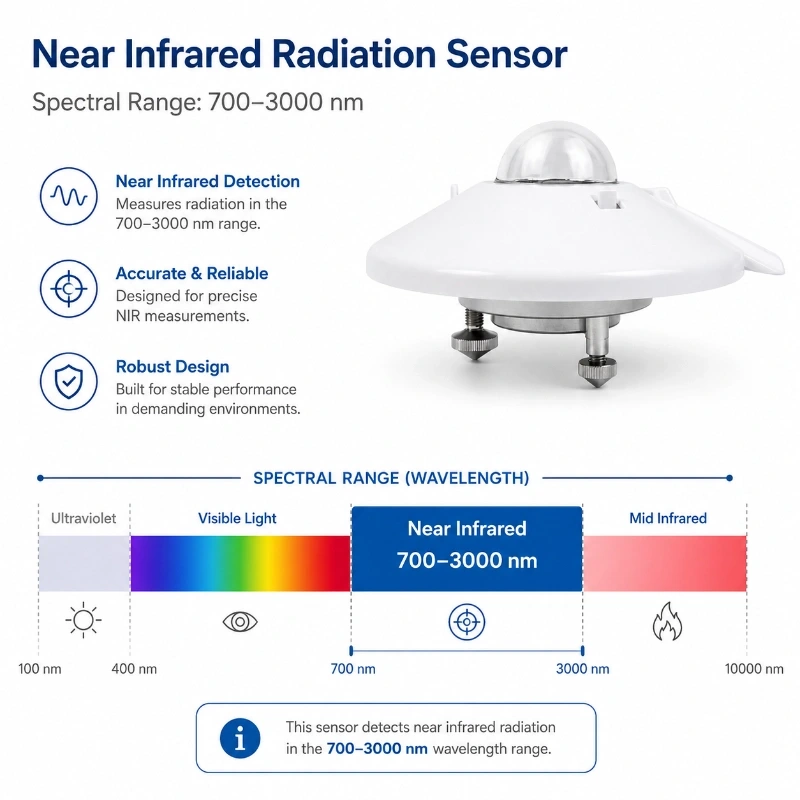
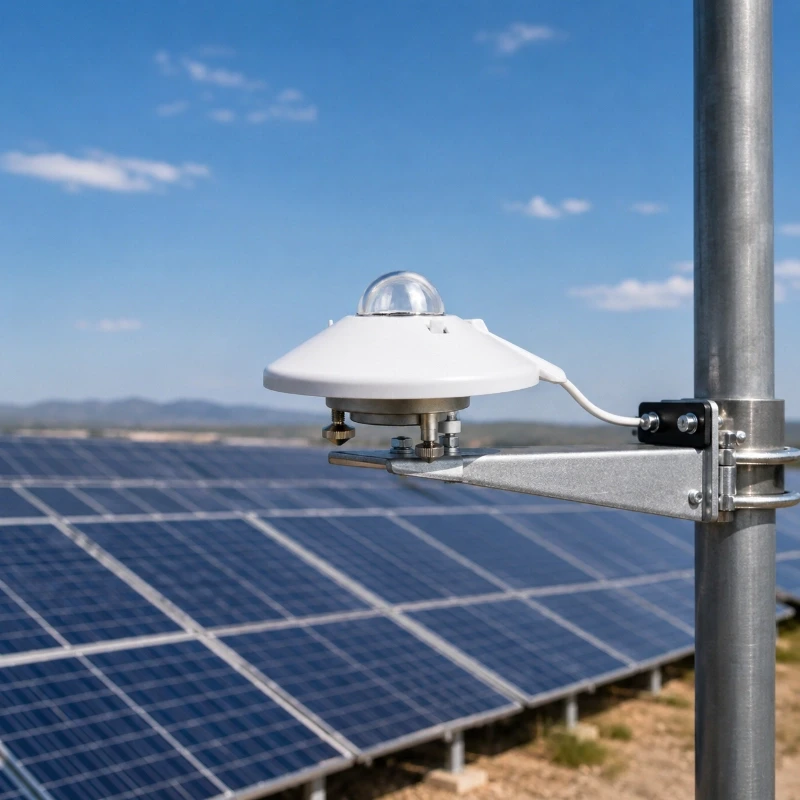
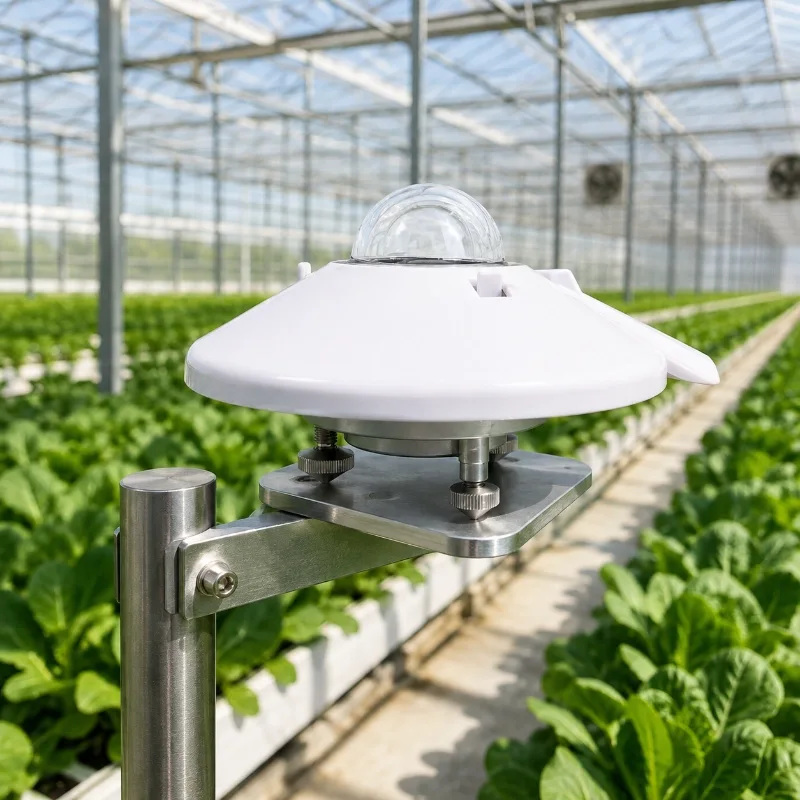
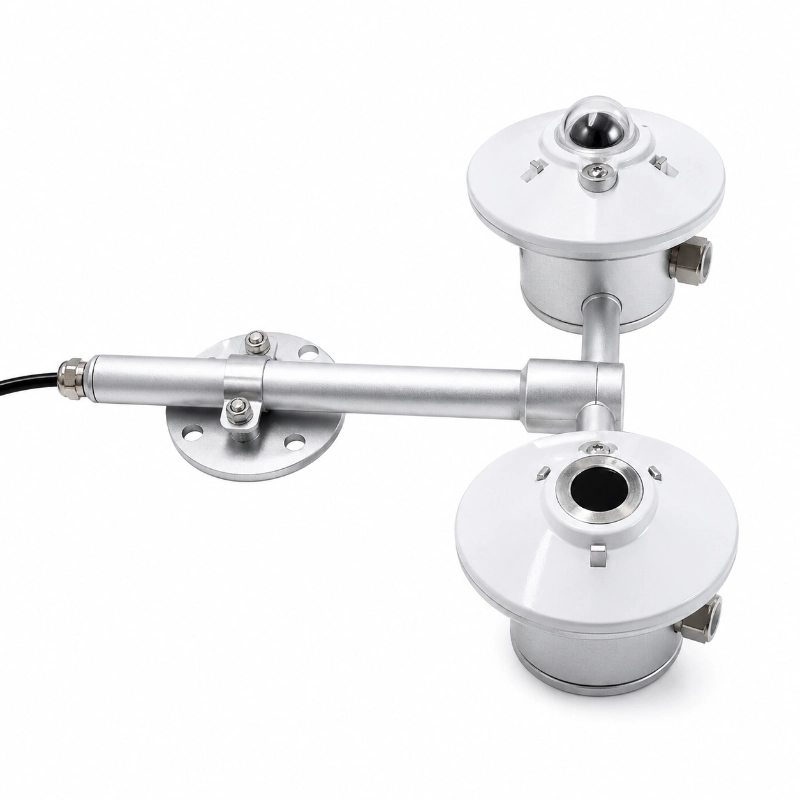
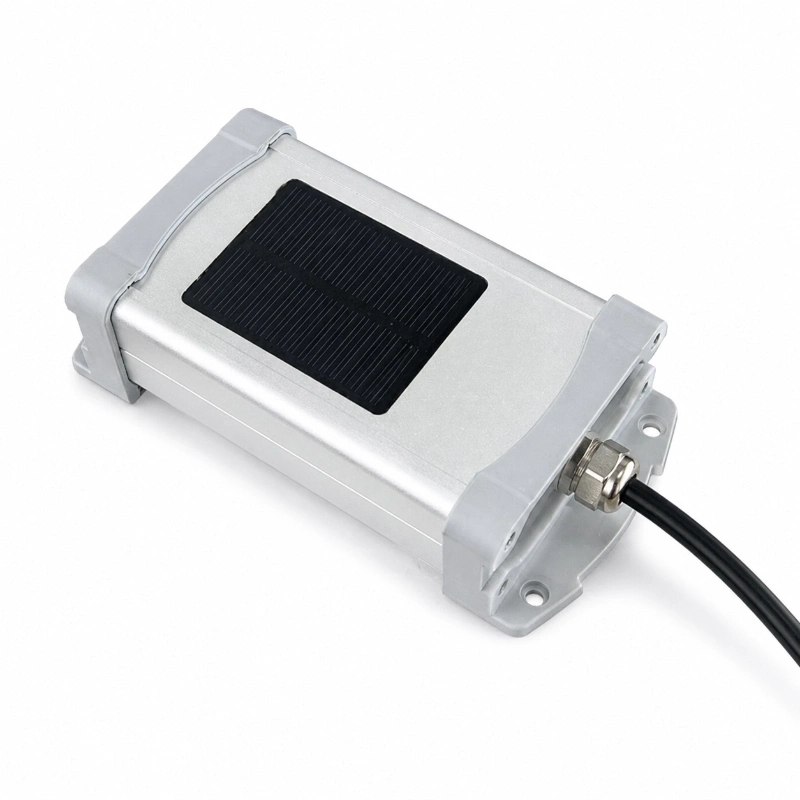
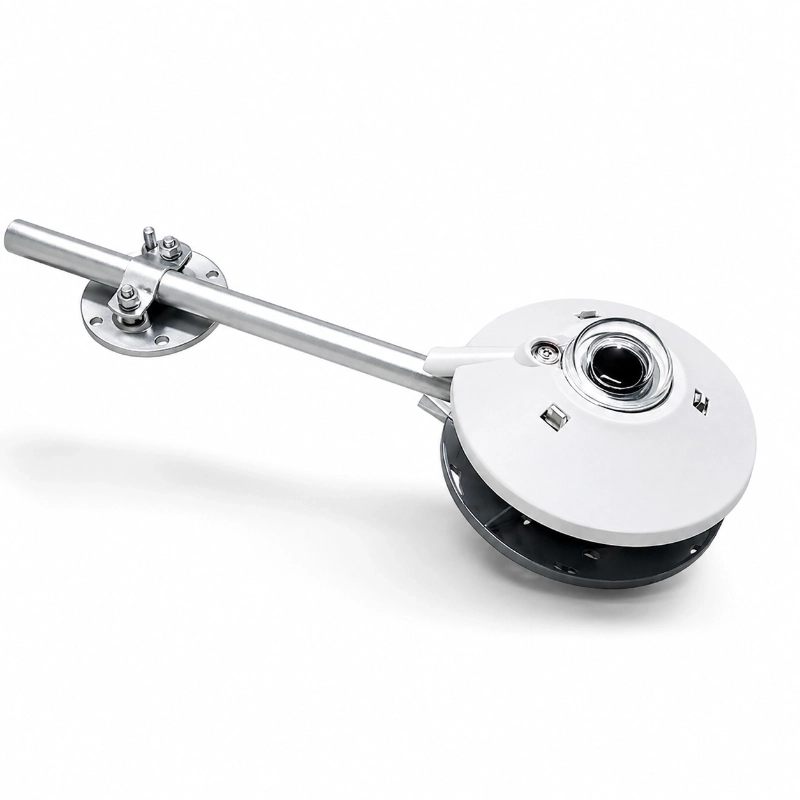
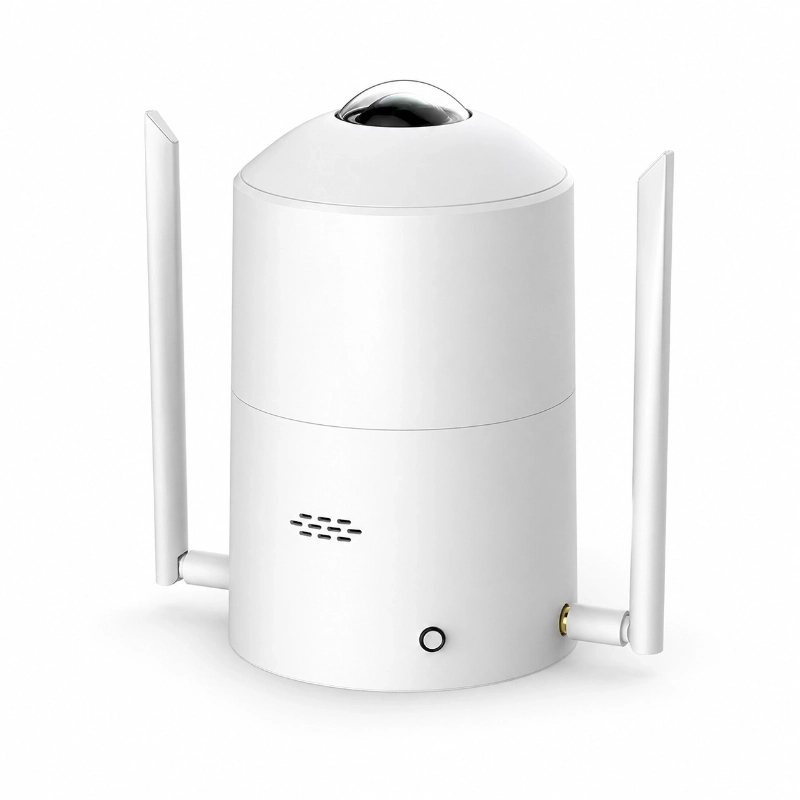
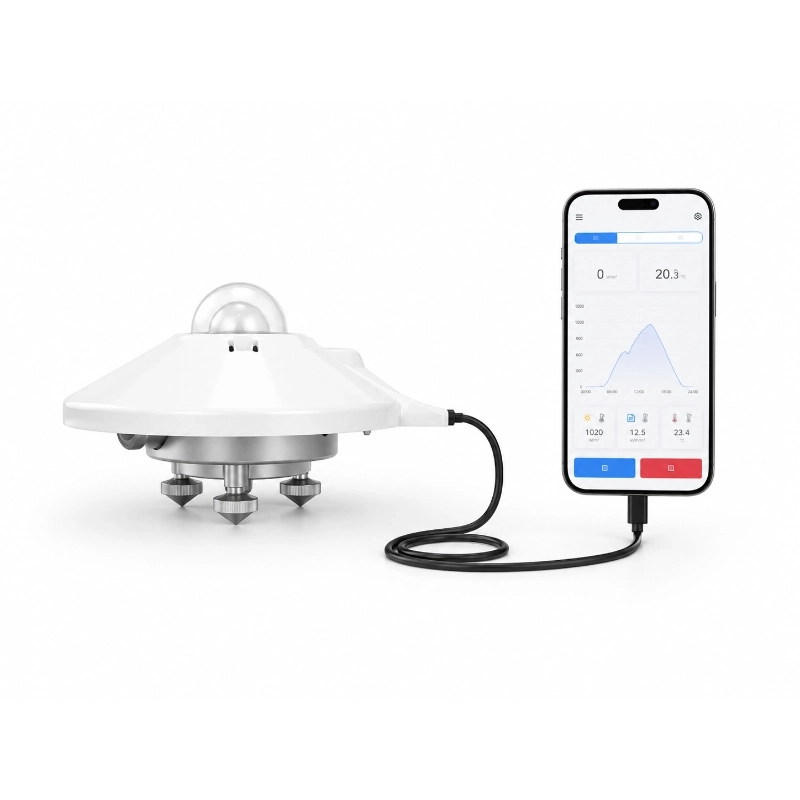
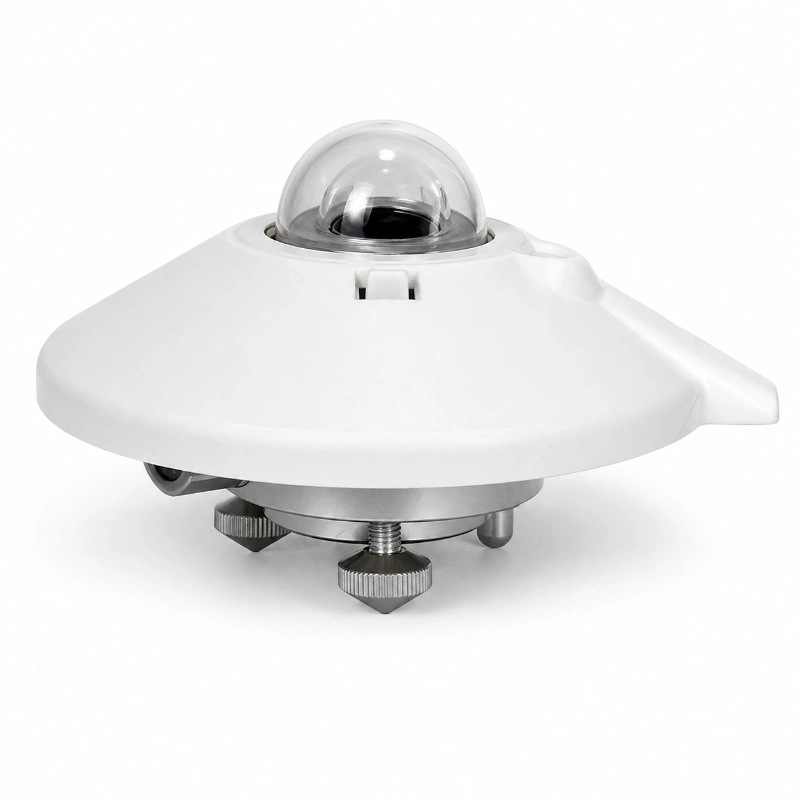
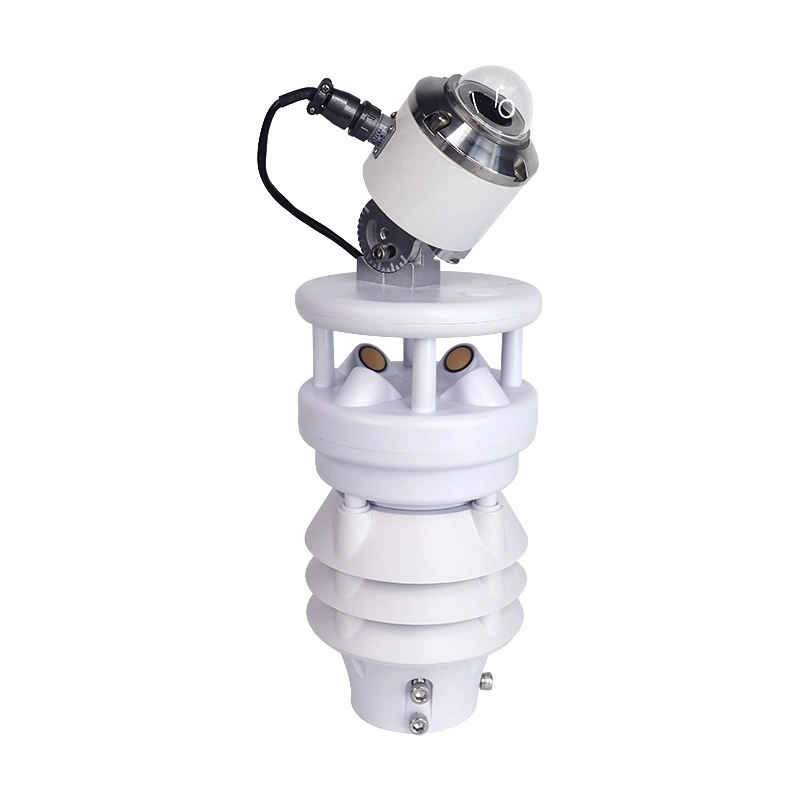
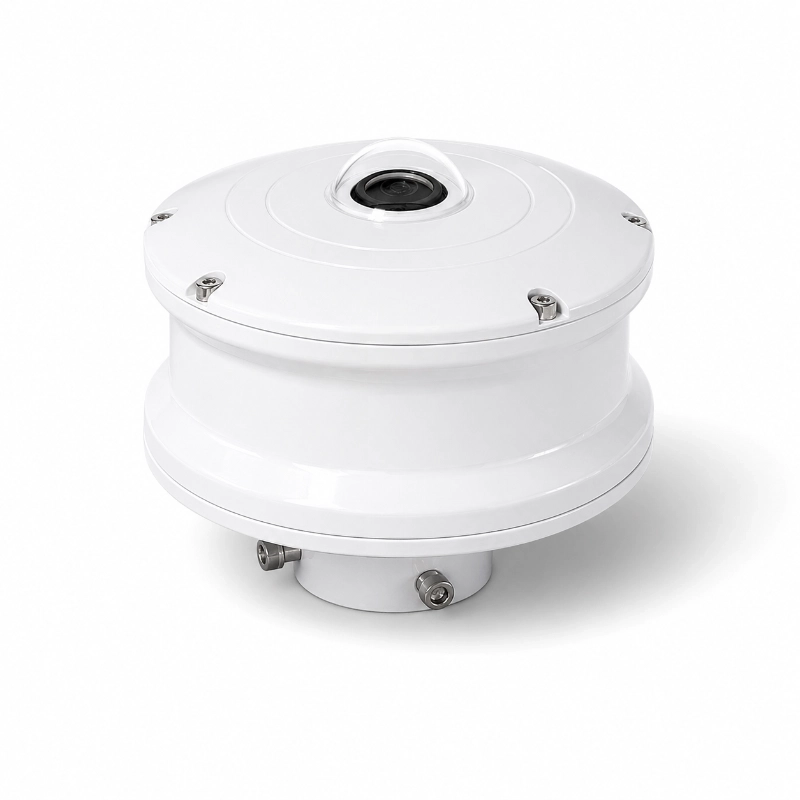
JW-TBQ-JHW(LC46) Near Infrared Radiation Sensor is designed to measure optical radiation within the 700–3000 nm wavelength range.
Unlike conventional broadband solar radiation sensors, which measure radiation across a wider part of the solar spectrum, this sensor focuses specifically on the near infrared spectral region.
It is intended for applications where researchers and engineers need wavelength-specific radiation information rather than total broadband solar irradiance.
Typical applications include:
Near infrared solar radiation monitoring
Solar spectral research
Agricultural and plant-radiation studies
Environmental radiation monitoring
Surface-energy research
Optical and material research
Meteorological and scientific observation
For projects requiring dedicated NIR measurement, JW-TBQ-JHW(LC46) provides a focused solution for monitoring radiation between 700 nm and 3000 nm.
Product Overview
JW-TBQ-JHW(LC46) is a near infrared radiation sensor developed for projects where total solar radiation measurement alone is not sufficient.
A conventional pyranometer or broadband solar radiation sensor provides information about overall solar irradiance.
A near infrared sensor provides a different type of information.
It isolates the 700–3000 nm portion of incoming optical radiation, allowing users to observe changes specifically within the near infrared region.
This distinction is important in projects involving:
Spectral solar-energy distribution
Plant and vegetation radiation studies
Environmental energy exchange
Optical experiments
Material-radiation interaction
Comparative radiation research
The sensor is therefore best understood as a spectral-region radiation instrument, not as a replacement for all other solar radiation sensors.
Technical Specifications
Parameter
Specification
Product Type
Near Infrared Radiation Sensor
Spectral Range
700–3000nm
Sensitivity
7–14μV/W·m⁻²
Response Time
≤10s
Internal Resistance
10–30Ω
Stability
±5%
Zenith Angle Response
0°–70° deviation within ±3%
Zenith Angle Response
70°–80° deviation within ±7%
Operating Environment
-50°C to 50°C
Relative Humidity
90% RH at 40°C
Output configuration and data-acquisition requirements should be confirmed according to the actual project and monitoring system.
What Does a 700–3000 nm Near Infrared Sensor Measure?
Near infrared radiation occupies the spectral region beyond visible red light.
JW-TBQ-JHW(LC46) measures radiation within:
700 nm → 3000 nm
This means the sensor does not measure the complete solar spectrum.
Instead, it focuses on a defined spectral band.
That makes it useful when the monitoring objective is to answer questions such as:
How is near infrared radiation changing over time?
What proportion of radiation is present in the NIR region?
How do environmental conditions affect near infrared energy?
How does NIR radiation vary relative to PAR or broadband solar radiation?
How does vegetation or a surface respond to near infrared radiation?
Why Measure Near Infrared Radiation Separately?
Solar radiation contains several spectral regions.
These are commonly grouped into:
Ultraviolet radiation
Visible radiation
Near infrared radiation
A broadband radiation instrument combines much of this incoming energy into one overall irradiance measurement.
That is useful when the project needs total solar-energy information.
However, some research projects require more detail.
In those cases, measuring the near infrared region separately can provide information that broadband irradiance alone cannot show.
Near infrared data may be useful in:
Solar-spectrum studies
Surface energy research
Plant and vegetation experiments
Environmental radiation monitoring
Optical research
Comparative spectral analysis
Near Infrared Radiation Sensor vs Solar Radiation Sensor
A near infrared sensor and a broadband solar radiation sensor do not perform the same task.
Comparison
Near Infrared Radiation Sensor
Broadband Solar Radiation Sensor
Primary Measurement
Near infrared radiation
Broad solar irradiance
Spectral Range
700–3000 nm
Depends on sensor design
Main Objective
Wavelength-region-specific measurement
Overall solar-energy measurement
Typical Use
Research and spectral analysis
Weather, solar and environmental monitoring
Best Choice When
NIR data is required
Total irradiance is required
A project that needs total solar irradiance should generally use a broadband radiation sensor.
A project that needs the 700–3000 nm spectral region specifically should consider the JW-TBQ-JHW(LC46).
Some research projects are interested in the way materials interact with different regions of the optical spectrum.
A near infrared radiation sensor can be used in experiments involving:
Surface radiation exposure
Reflective materials
Optical response
Environmental material studies
Comparative radiation measurements
The exact suitability depends on the experimental design and required measurement method.
For laboratory or specialized scientific use, confirm the measurement objective and sensor configuration before ordering.
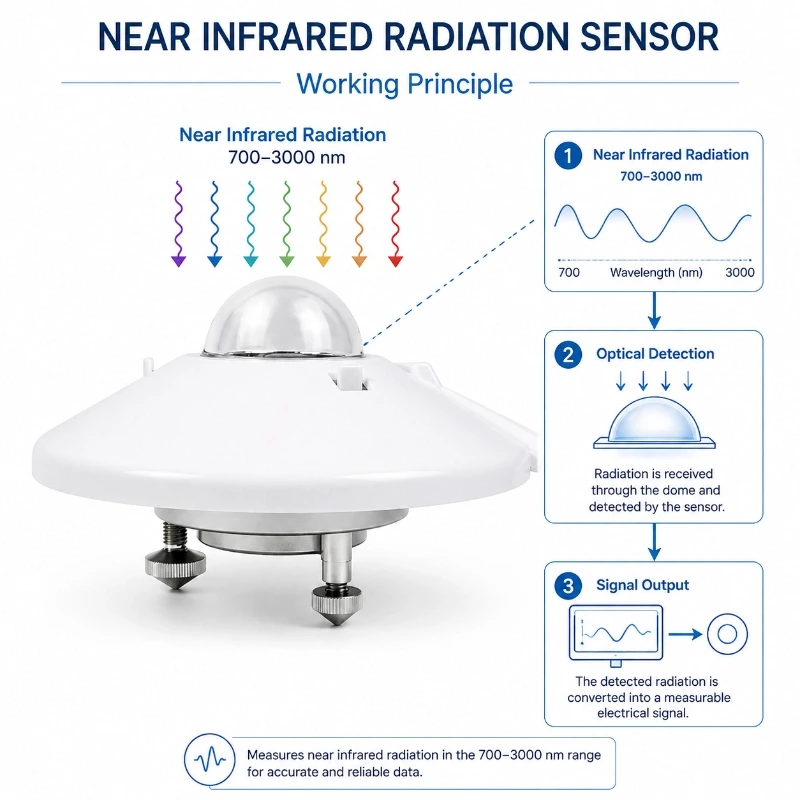
How Does the Near Infrared Radiation Sensor Work?
The sensor receives incoming near infrared radiation through its optical sensing structure.
The radiation energy is detected by the sensing element and converted into an electrical signal.
The basic measurement process can be summarized as:
Near Infrared Radiation
↓
Optical Detection
↓
Energy Conversion
↓
Electrical Signal
↓
Data Acquisition
The resulting signal can then be recorded and analysed by the connected measurement system.
The data-acquisition architecture should be selected according to the actual output configuration of the sensor.
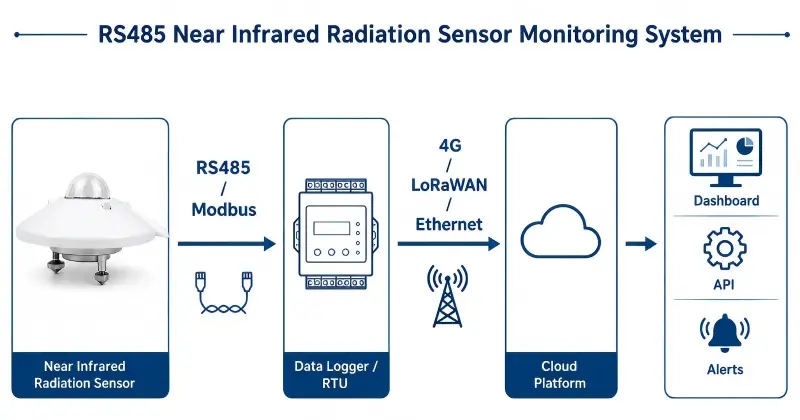
Typical Monitoring System Architecture
A typical monitoring system may include:
JW-TBQ-JHW(LC46) Near Infrared Radiation Sensor
↓
Signal Acquisition / Data Logger
↓
Local or Remote Data Collection System
↓
Research Database / Monitoring Platform
Near infrared data may also be collected together with other radiation or meteorological measurements.
The communication method shown in a system diagram should always be configured according to the actual sensor output and project data-acquisition equipment.
How to Select a Near Infrared Radiation Sensor
Before selecting an NIR radiation sensor, first define the purpose of the measurement.
1. Confirm the Required Wavelength Range
JW-TBQ-JHW(LC46) covers:
700–3000 nm
If your project requires visible radiation, PAR, UV or another spectral range, a different sensor may be required.
2. Determine Whether You Need Spectral-Region Data or Total Solar Radiation
Choose a near infrared sensor if the project specifically requires NIR measurements.
Choose a broadband solar radiation sensor if the main requirement is total solar irradiance.
3. Define the Application
Typical application categories include:
Scientific research
Solar radiation studies
Agricultural experiments
Environmental monitoring
Meteorological observation
Optical research
4. Confirm the Data Acquisition Method
Before ordering, determine:
Required output signal
Data logger type
Sampling frequency
Monitoring duration
Local or remote data storage
Integration requirements
This ensures the sensor can be properly matched with the measurement system.
Installation Guidelines
Correct installation is important for reliable radiation measurements.
1. Install in an Open Location
Avoid locations affected by unnecessary shading from:
Buildings
Trees
Poles
Towers
Other sensors
The sensing area should have appropriate exposure to the radiation being measured.
2. Avoid Unwanted Reflections
Nearby highly reflective surfaces may influence radiation measurements.
Consider the surrounding environment when selecting the installation location.
3. Keep the Sensor Correctly Oriented
The sensor should be installed according to the required measurement orientation.
Incorrect tilt may affect the measured radiation response.
4. Keep the Optical Surface Clean
Dust, water stains and other contamination can influence optical measurements.
Inspect and clean the sensing surface according to the environmental conditions of the installation site.
5. Check Installation Regularly
For long-term outdoor monitoring, periodically inspect:
Sensor level and orientation
Surface cleanliness
Cable condition
Mounting stability
Data continuity
When Should You Use This Sensor?
JW-TBQ-JHW(LC46) is appropriate when the main question is:
“How much radiation is present specifically within the 700–3000 nm near infrared region?”
It may be suitable for:
Research stations
Universities
Solar research laboratories
Agricultural research institutes
Meteorological observation projects
Environmental monitoring programs
Scientific field experiments
It is not intended to replace every broadband solar radiation sensor or PAR sensor.
Instead, it provides a dedicated measurement channel for the near infrared portion of the radiation spectrum.
Related Radiation Monitoring Products
JW-IoT provides multiple sensor types for different radiation measurement objectives.
These include:
Solar radiation sensors
Net radiation sensors
PAR sensors
UV radiation sensors
Near infrared radiation sensors
Multi-component radiation monitoring systems
Request a Near Infrared Radiation Sensor Configuration
Selecting the correct radiation sensor depends on the spectral region and research objective.
Please send JW-IoT:
Required wavelength range
Measurement purpose
Application
Installation environment
Required output
Data acquisition method
Quantity
Our team can help determine whether a near infrared sensor, broadband solar radiation sensor, PAR sensor or another radiation instrument is more appropriate for the project.
1. What does this near infrared radiation sensor measure?
A
It measures near infrared radiation intensity within the 700 to 3000nm wavelength range.
Q
2. What is the response time of the sensor?
A
The response time is ≤10 seconds, allowing users to monitor near infrared radiation changes quickly.
Q
3. What applications is this sensor suitable for?
A
It is suitable for meteorological monitoring, environmental monitoring, solar energy research, agricultural monitoring, industrial process control, and scientific studies.
Q
4.Can JW-IoT Automation provide this sensor for outdoor weather stations?
A
Yes. JW-IoT Automation can provide this near infrared radiation sensor for outdoor weather stations and integrated environmental monitoring systems.
Q
5. What is the sensitivity of the sensor?
A
The sensitivity is 7 to 14μV/W·m⁻², supporting stable radiation signal acquisition.
Q
6.What is the working temperature range?
A
The sensor can operate from -50°C to 50°C, making it suitable for field monitoring applications.
Q
7. Why choose JW-IoT Automation near infrared radiation sensor?
A
JW-IoT Automation near infrared radiation sensor offers fast response, stable performance, high precision optical structure, and reliable field monitoring capability.
Q
8. Can this sensor be used for solar energy monitoring?
A
Yes. It can be used for solar radiation analysis, photovoltaic station monitoring, and near infrared radiation research.
Q
9. Does JW-IoT Automation support system integration for radiation monitoring projects?
A
Yes. JW-IoT Automation can support sensor selection, data acquisition connection, and complete radiation monitoring system integration.
Q
10. Is the sensor suitable for long-term environmental monitoring?
A
Yes. Its stable thermopile sensing design, high precision glass cover, and robust field performance make it suitable for long-term outdoor deployment.
 +86 13520127780
  info@jingelway.com