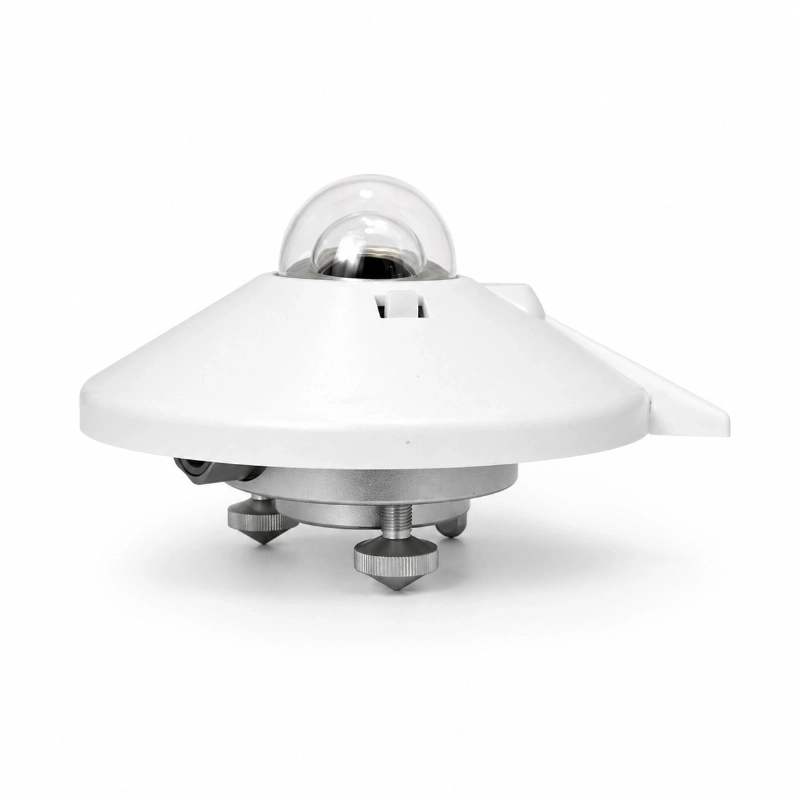
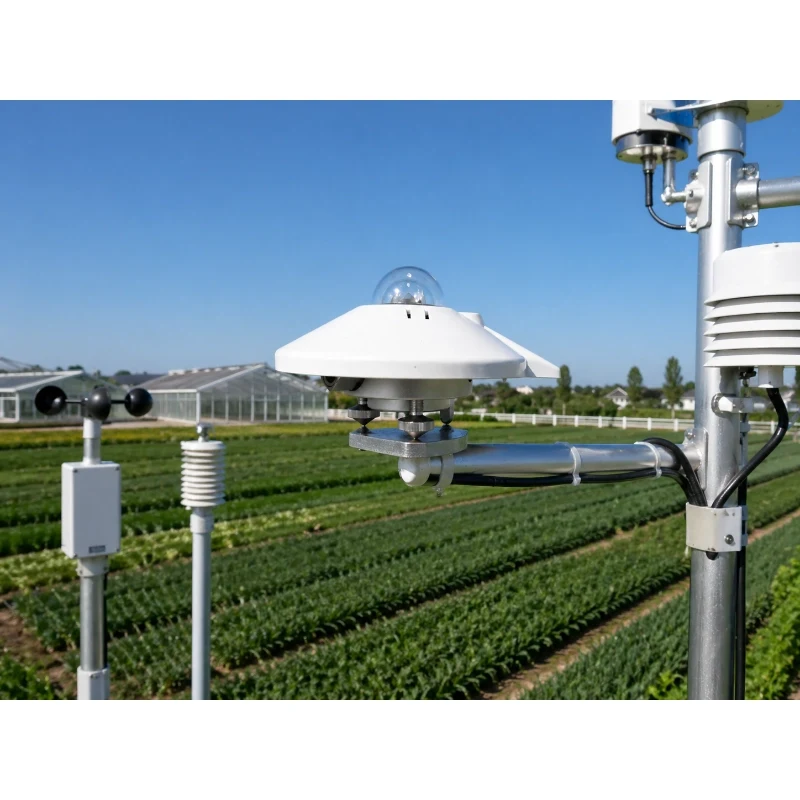
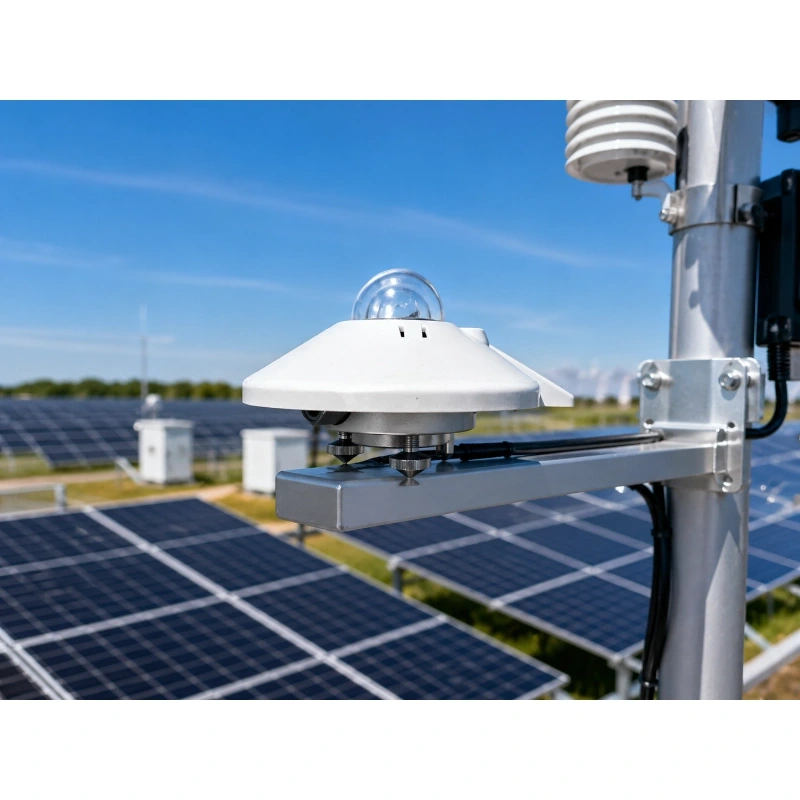
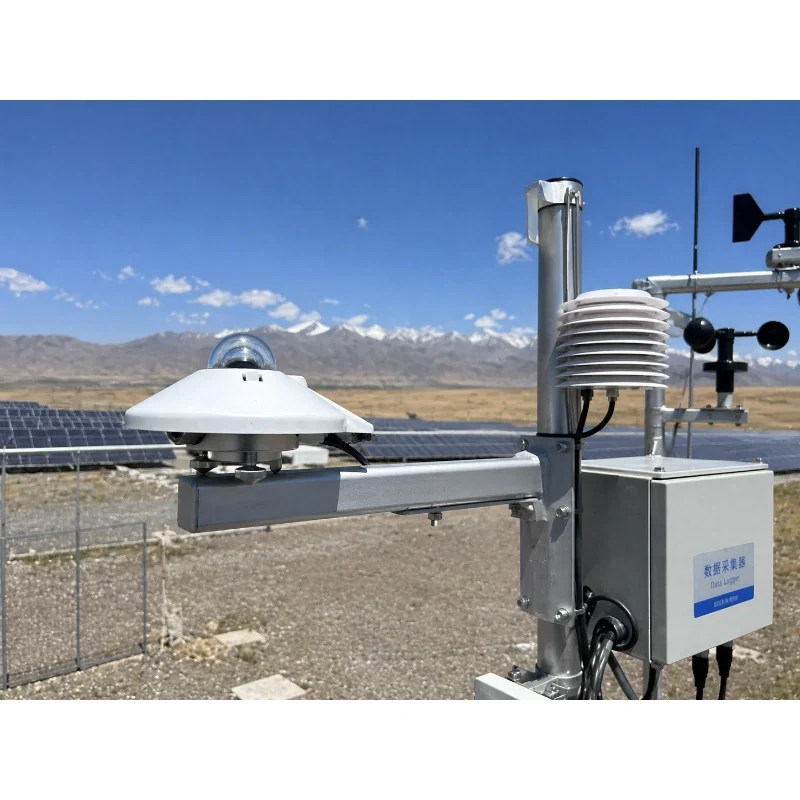
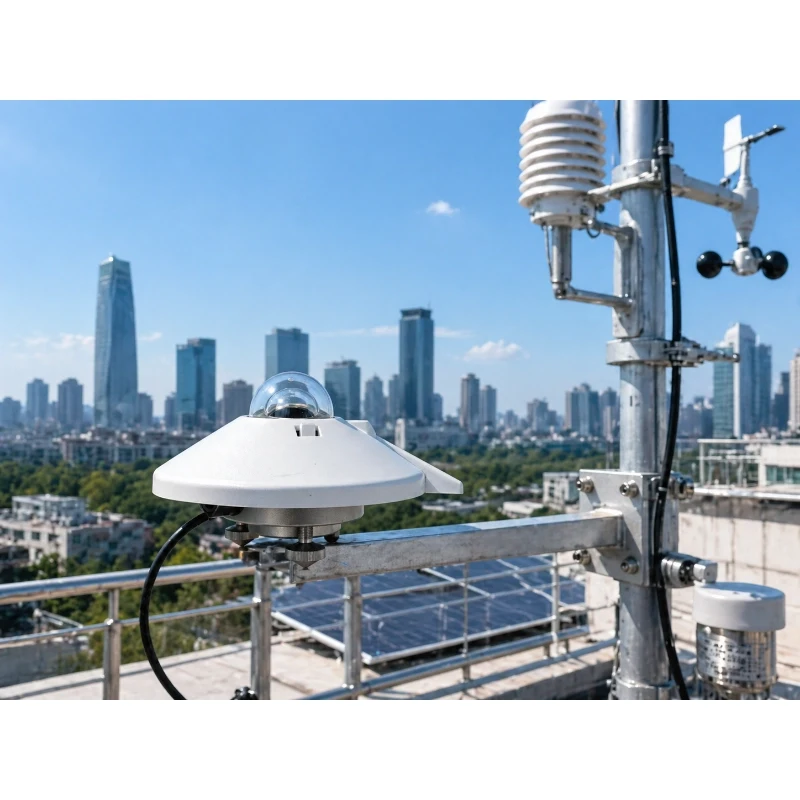
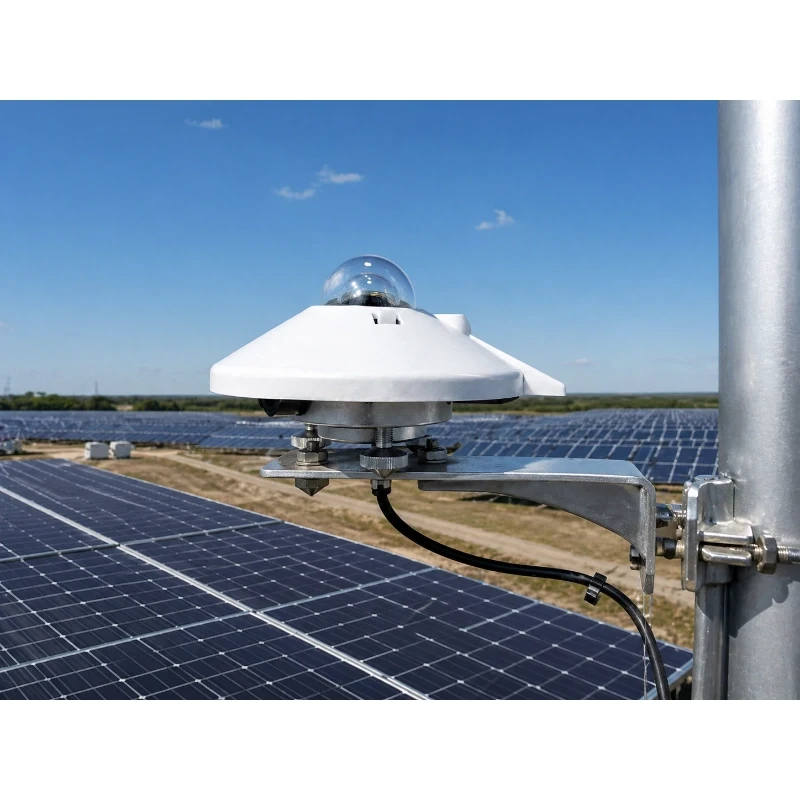
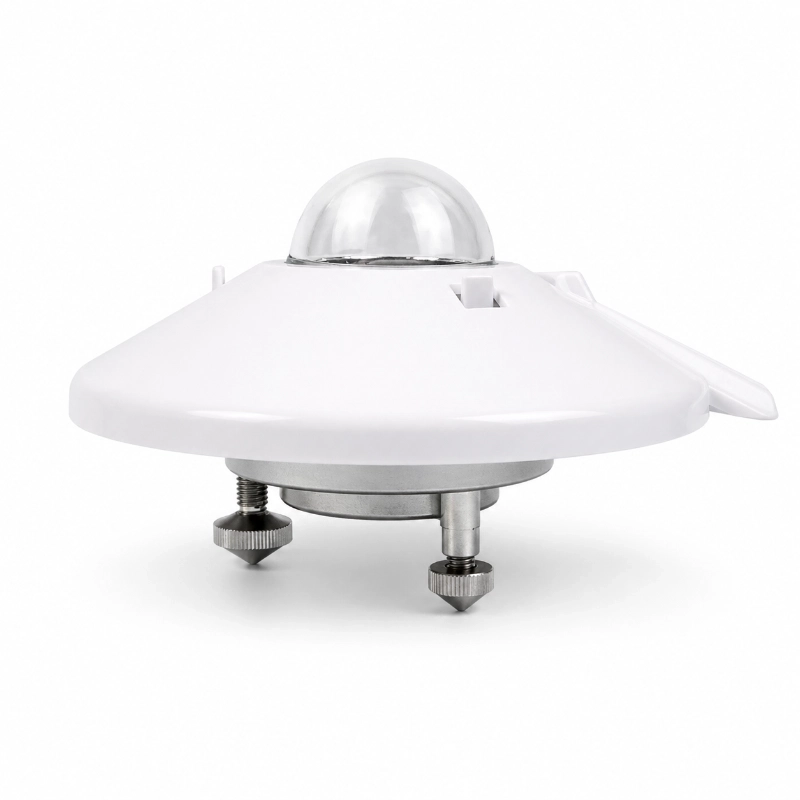
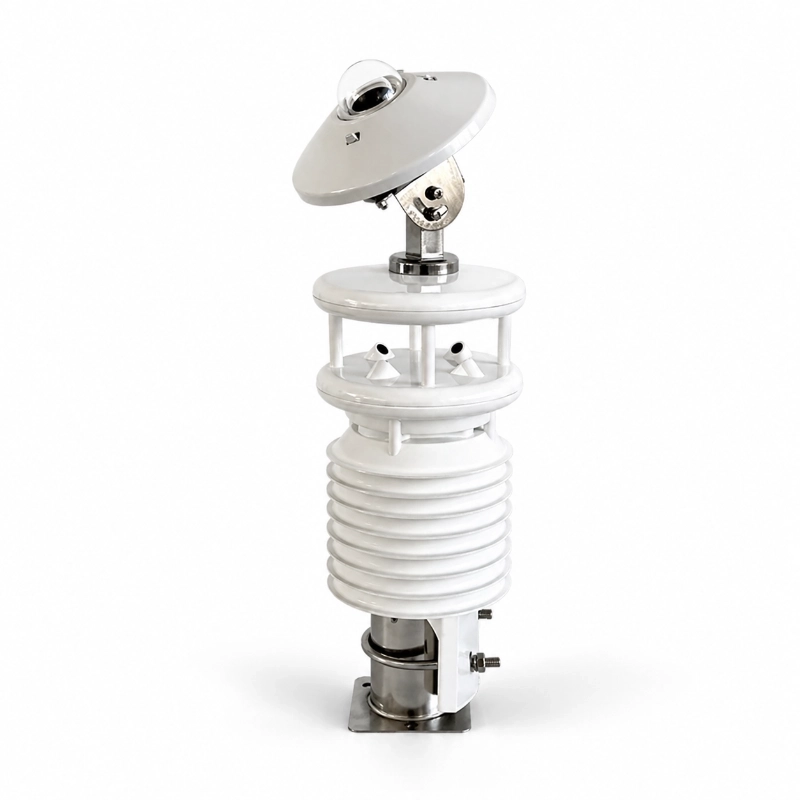
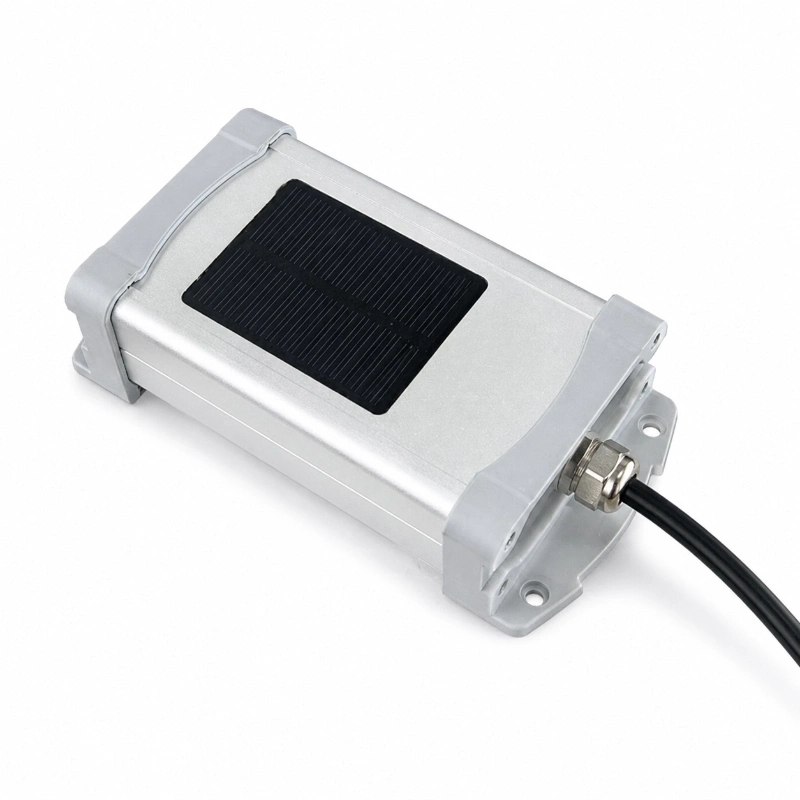
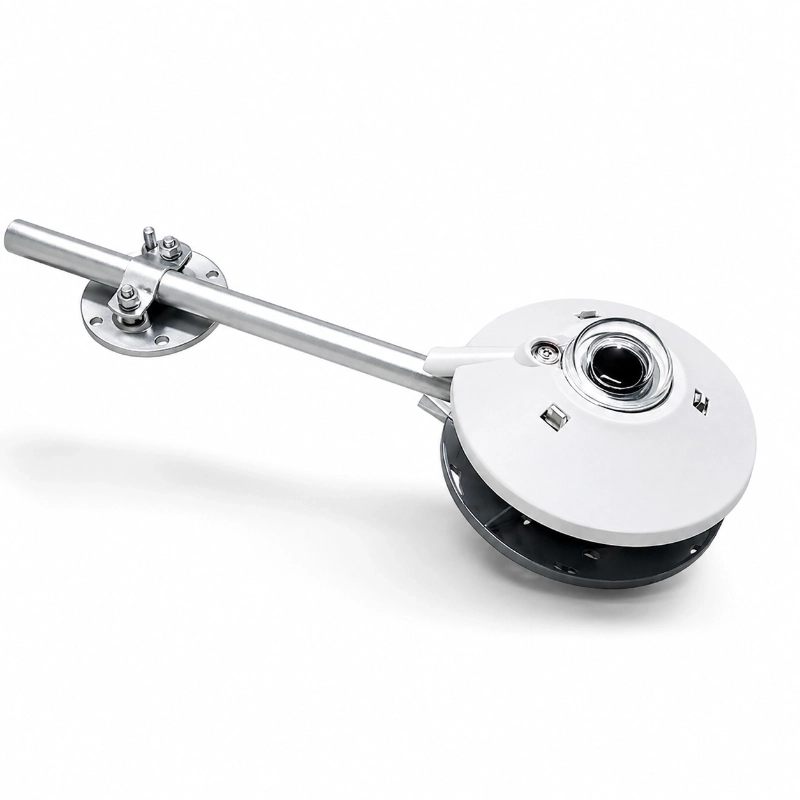
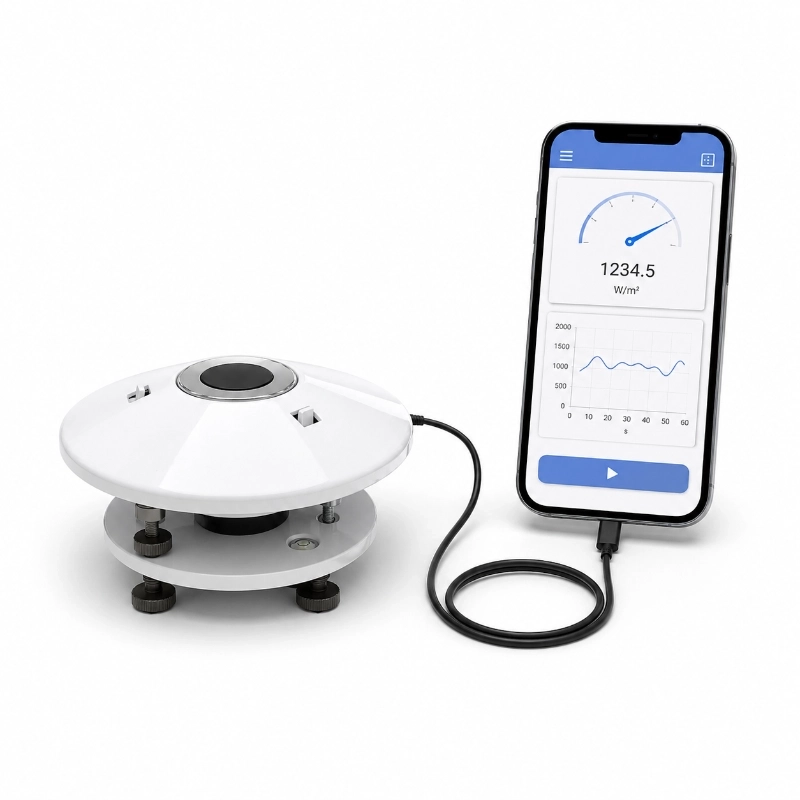
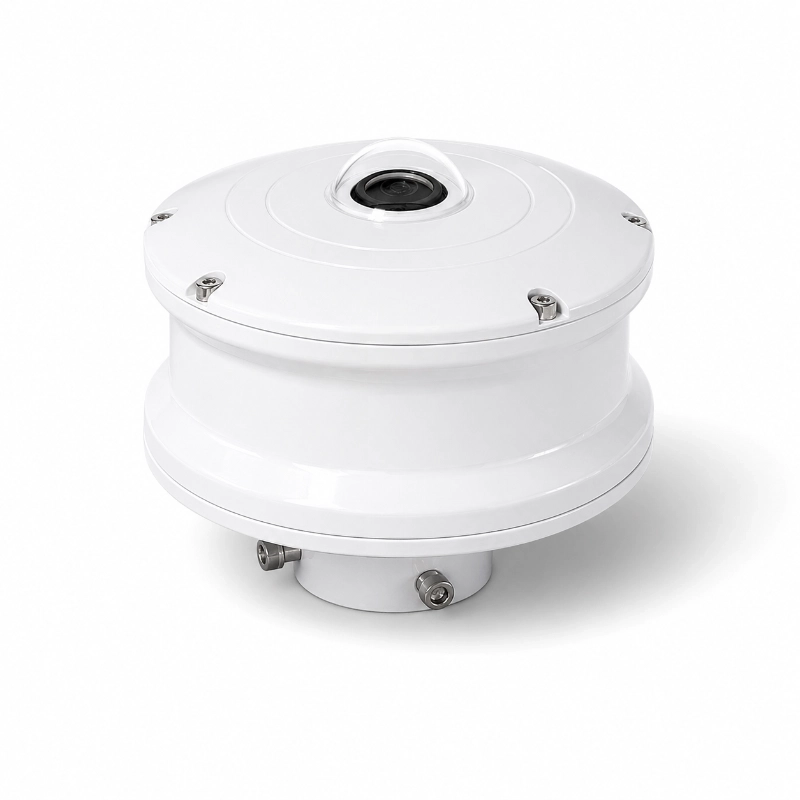
JW-TBQ-2L(LC17) Total Solar Radiation Sensor is a Class B pyranometer designed to measure total shortwave solar radiation on a horizontal surface, including direct and diffuse radiation. With fast response, low internal resistance, optional 0-20mV 4-20mA or RS485 output, and reliable outdoor performance, it is ideal for solar energy assessment, meteorological observation, agricultural field testing, and PV power station monitoring.
2. Product Overview
JW-TBQ-2L(LC17)Total Solar Radiation Sensor is a high-performance Class B pyranometer developed for accurate measurement of the total solar radiation received on a horizontal plane. It measures the sum of direct solar radiation and diffuse radiation, providing dependable shortwave radiation data for professional outdoor applications.
Designed for solar resource assessment, environmental monitoring, climate research, meteorological stations, agricultural test fields, and solar power plants, this sensor combines fast response, stable output, and durable outdoor construction. With advanced thermopile sensing technology, a double-layer high-precision glass cover, imported high-absorption coating, and optional digital communication, it delivers reliable solar radiation data in demanding environments.
Parameter
Specification
Product Model
JW-TBQ-2L(LC17)
Product Type
Total Solar Radiation Sensor
Classification
Class B
Measurement Principle
Thermopile
Spectral Range
285 to 2800 nm
Sensitivity
7 to 14 μV per W m²
Response Time 95%
Less than 11 s
Internal Resistance
10 to 50 Ω
Zero Offset A
Less than 15 W m²
Zero Offset B
Less than 5 W m²
Operating Temperature
-40°C to 80°C
Directional Response
Less than 20 W m²
Annual Stability
Less than 2%
Output Options
0-20mV 4-20mA RS485
RS485 Feature
Built-in output odule available
Cover Type
Double-layer high-precision glass cover
Surface Treatment
Imported high-absorption coating
Typical Use
Solar monitoring meteorology agriculture research
3. Output Options and Communication
The Total Solar Radiation Sensor supports multiple output options to meet different project requirements:
0-20mV output for standard analog signal acquisition
4-20mA output for industrial control and long-distance transmission
RS485 output for digital communication and easy integration into monitoring networks
The RS485 version features a built-in communication module, allowing the sensor to connect directly to an existing RS485 communication system without requiring an additional external converter. This helps reduce installation cost, simplify deployment, and improve system scalability.
4. Application Scenarios
Accurate Solar Radiation Measurement: This sensor provides precise measurement of global solar radiation, helping users analyze solar resources, monitor climate conditions, and improve energy system performance.
Fast Response for Better Data Quality: With a response time of less than 11 seconds, the sensor can quickly capture solar radiation changes, making it suitable for dynamic environmental conditions.
Flexible Output Options: The sensor supports multiple output methods, including 0-20mV, 4-20mA, and RS485, allowing easy integration into weather stations, solar monitoring systems, PLCs, and data loggers.
Durable Outdoor Design: Its high-quality glass cover, robust housing materials, and wide operating temperature range make it suitable for continuous outdoor deployment.
FAQ
Q
1. What does a total solar radiation sensor measure?
A
A total solar radiation sensor measures the total shortwave solar radiation received on a horizontal surface, including both direct sunlight and diffuse sky radiation.
Q
2. Is this product a pyranometer?
A
Yes. This product is a Class B pyranometer designed for accurate outdoor solar radiation measurement.
Q
3. What output options are available?
A
The sensor supports 0-20mV, 4-20mA, and RS485 output options, depending on the selected version.
Q
4. Can JW-IoT provide an RS485 version of this sensor?
A
Yes. JW-IoT offers a version with a built-in RS485 output module, making system integration easier and eliminating the need for an external converter.
Q
5. What applications is this sensor suitable for?
A
It is suitable for solar energy monitoring, PV power stations, meteorological observation, environmental monitoring, agricultural test fields, and scientific research.
Q
6. What is the spectral range of the sensor?
A
The spectral range is 285 to 2800 nm, which is suitable for measuring shortwave solar radiation.
Q
7. How fast is the sensor response?
A
The response time is less than 11 seconds at 95%, making it suitable for accurate and timely monitoring.
Q
8. Why choose a JW-IoT total solar radiation sensor?
A
A JW-IoT total solar radiation sensor combines fast response, stable performance, flexible outputs, and reliable outdoor durability for solar and meteorological applications.
Q
9. Does the sensor support outdoor use in harsh weather?
A
Yes. The sensor is designed for outdoor environments and supports an operating temperature range of -40°C to 80°C.
Q
10. Does JW-IoT support solar monitoring and weather station applications?
A
Yes. JW-IoT solar radiation sensors are well suited for solar power plants, weather stations, agricultural fields, and environmental monitoring systems.
Q
11. What is the advantage of the RS485 version?
A
The RS485 version allows digital communication, easier networking, reduced interference, and simplified integration into industrial and monitoring systems.
Q
12. Can JW-IoT solar radiation sensors be used in PV power stations?
A
Yes. JW-IoT solar radiation sensors are a good choice for PV power stations, solar resource assessment projects, and long-term solar performance monitoring.
 +86 13520127780
  info@jingelway.com