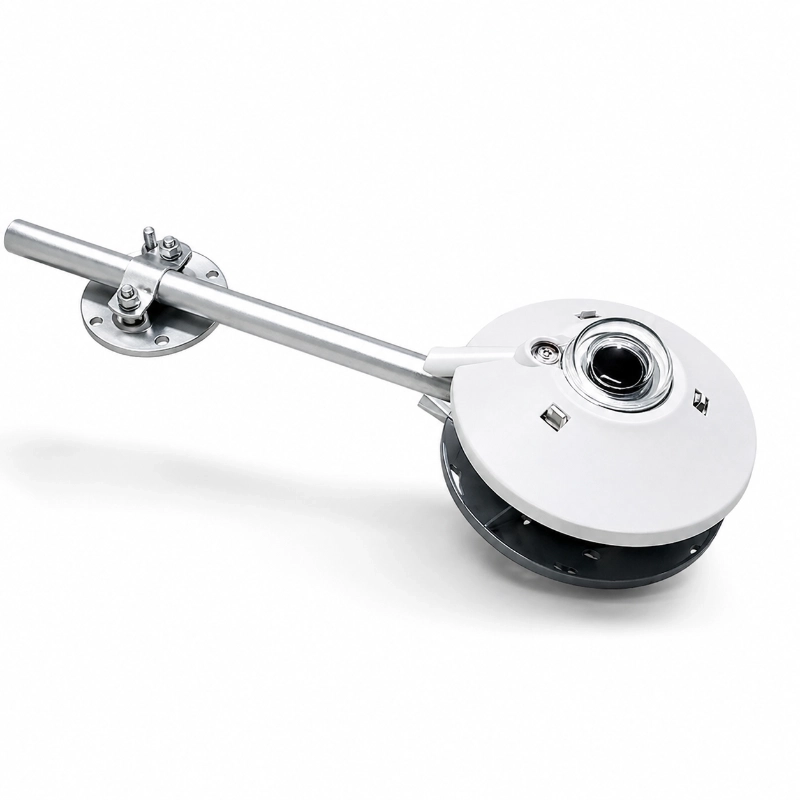
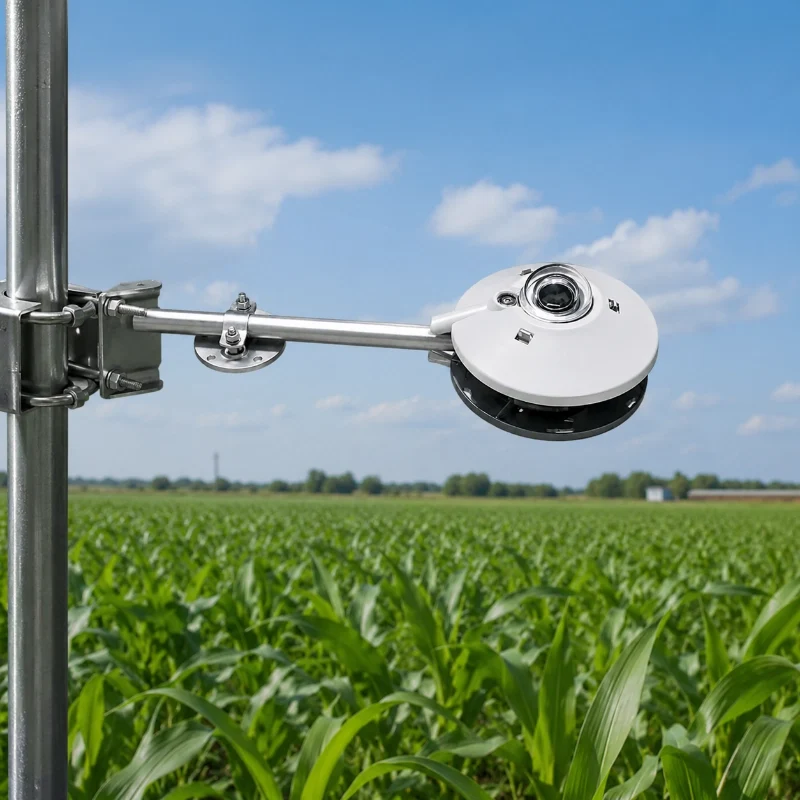
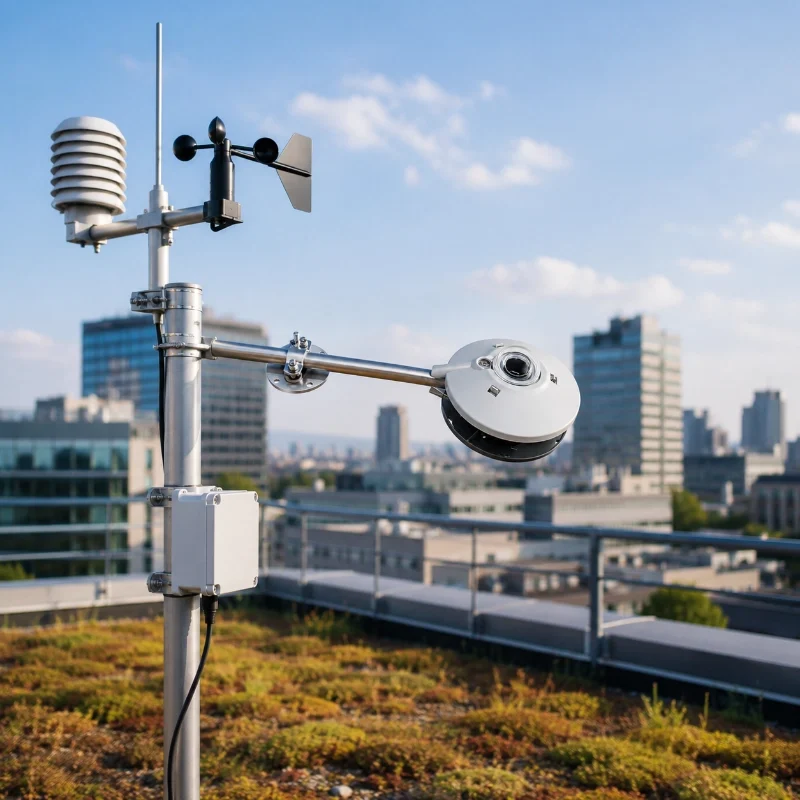
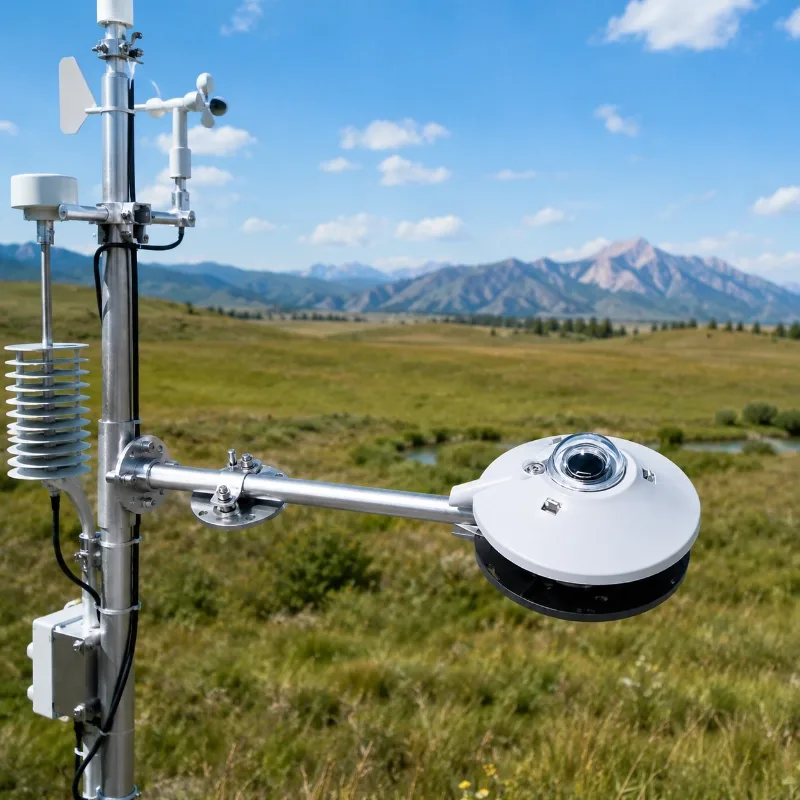
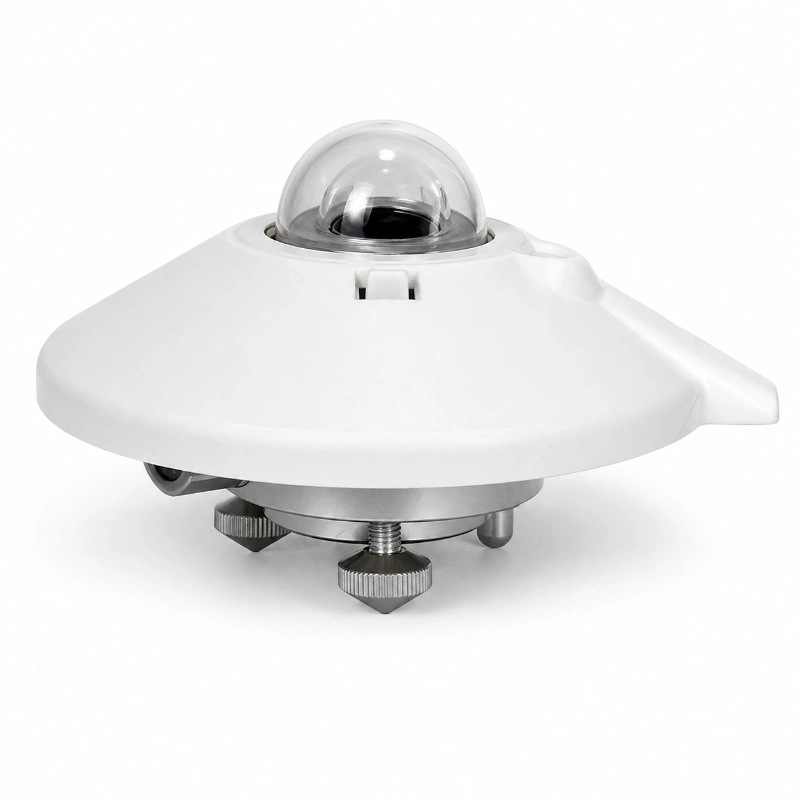
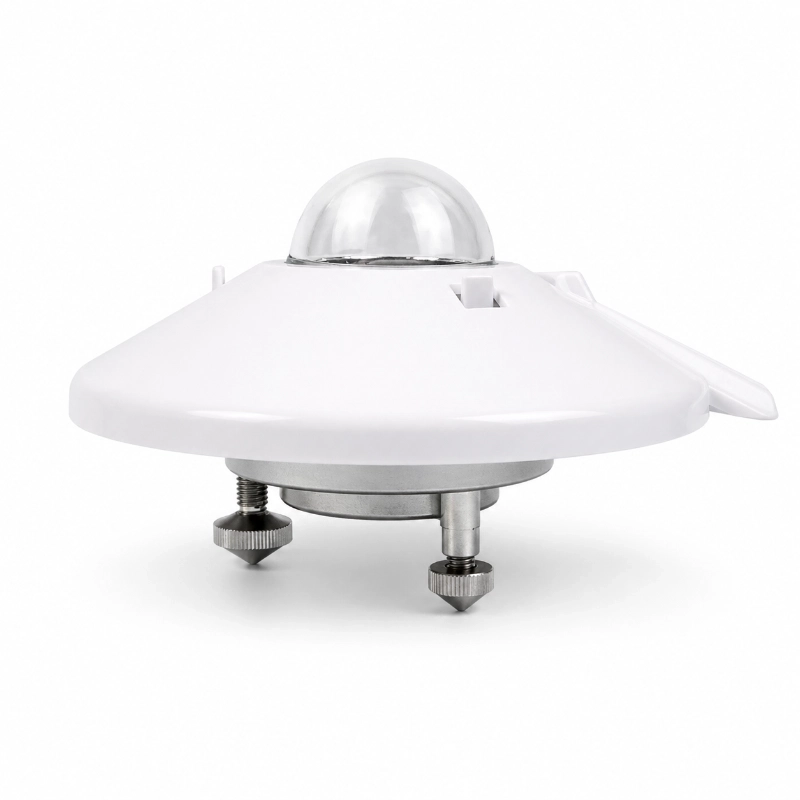
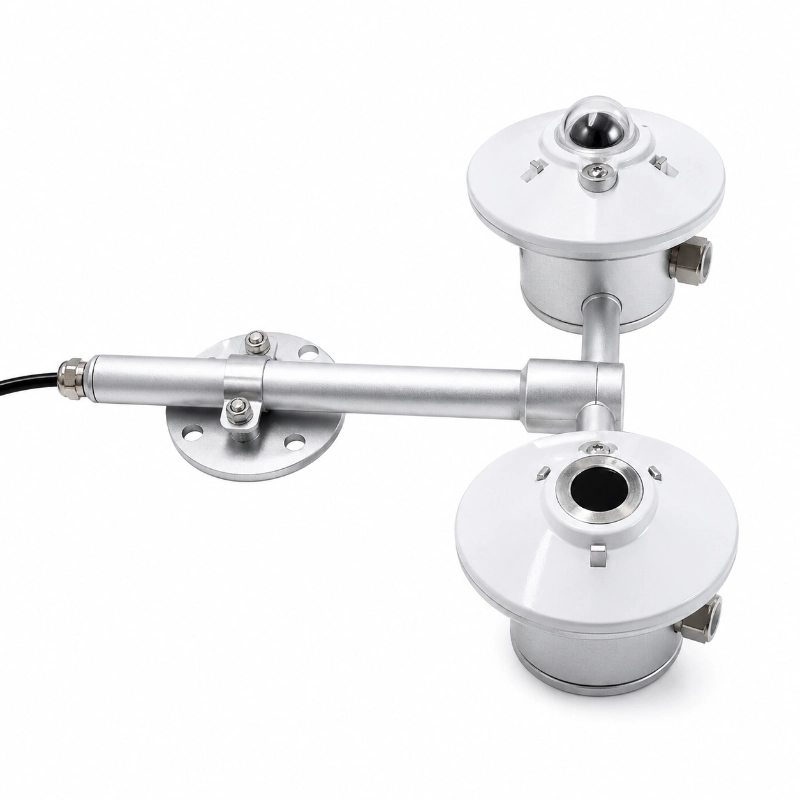
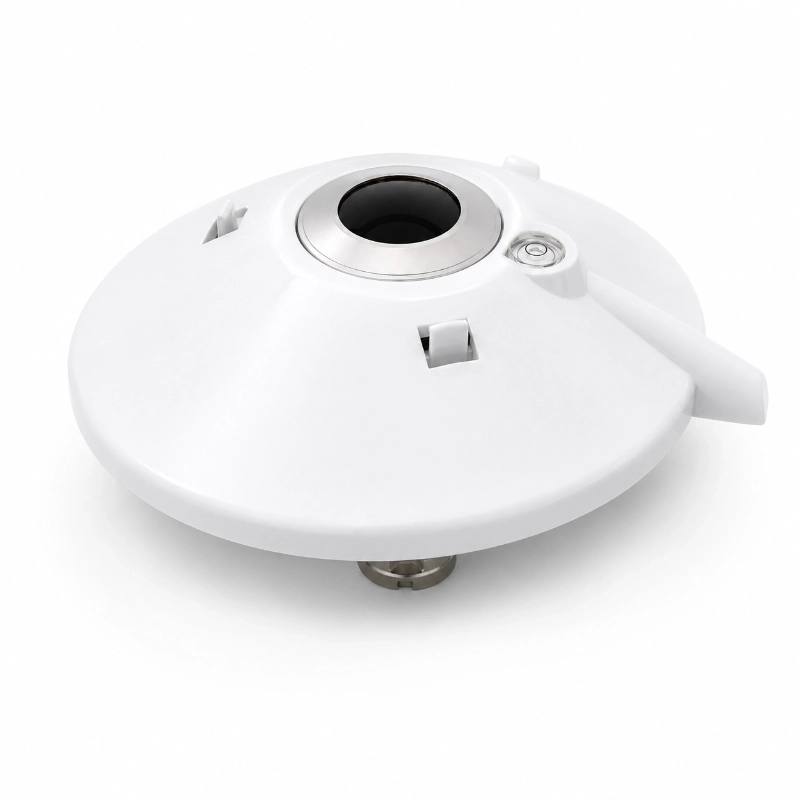
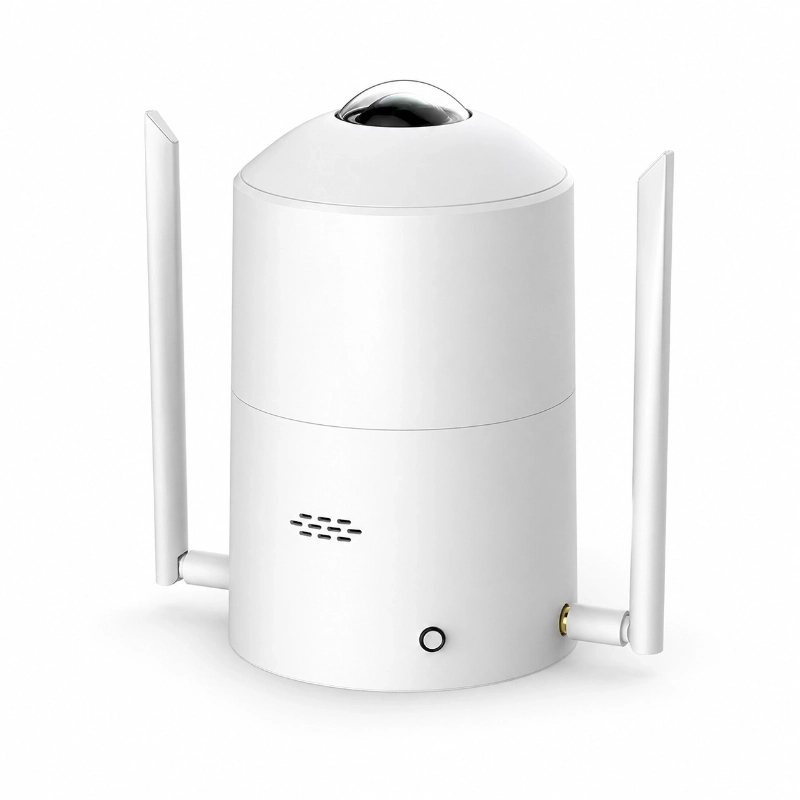
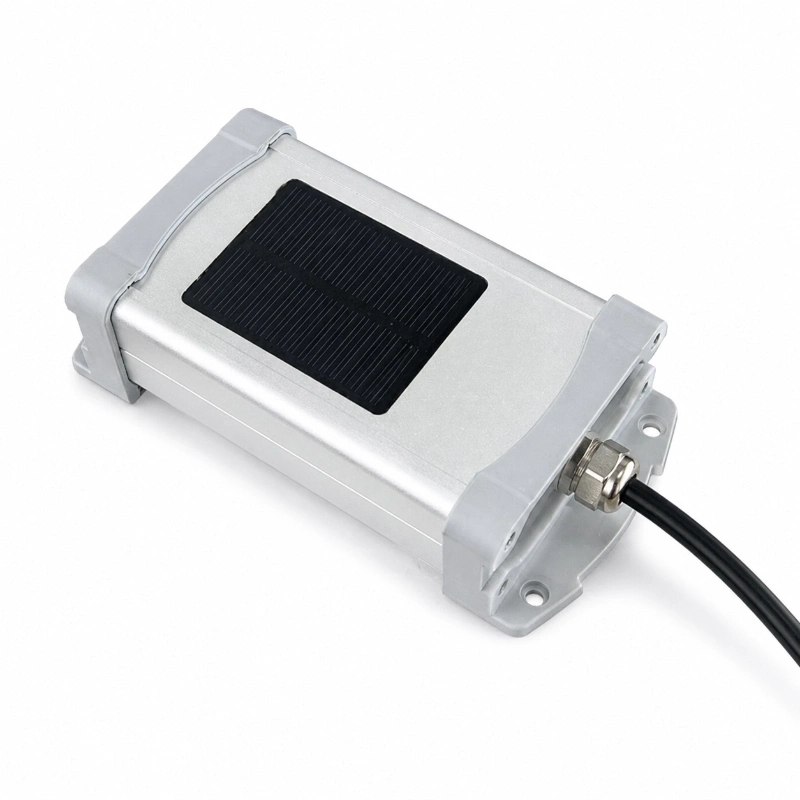
The JW-TBB-1L(LC26) Net Radiation Sensor is a thermopile instrument designed to measure the balance between radiation received by a surface and radiation leaving that surface.
It measures both upward and downward radiation across a broad spectral response of 0.28–50 μm, allowing researchers to determine net radiation for applications such as:
Surface energy balance studies
Evapotranspiration research
Agricultural climate monitoring
Irrigation research
Hydrological observation
Ecological monitoring
Meteorological research
An optional integrated RS485 output module allows the sensor to connect directly to compatible data loggers, RTUs, weather station controllers and environmental monitoring systems.
Unlike a conventional pyranometer that mainly measures incoming solar irradiance, the JW-TBB-1L(LC26) measures the difference between incoming and outgoing radiation, providing the radiation balance required for land-surface and atmosphere-energy studies.
For additional radiation monitoring products, browse:
Net radiation describes the balance between radiation arriving at a monitored surface and radiation leaving it.
The JW-TBB-1L(LC26) measures radiation from two directions.
Its upper sensing surface receives radiation from the sky, while its lower sensing surface observes radiation leaving or being reflected by the monitored surface.
The monitored surface may include:
Bare soil
Crop canopy
Grassland
Water
Wetland
Forest surface
Urban surface
Other research surfaces
The difference between the two directional measurements is reported as net radiation.
This measurement is especially important when the objective is not simply to know how much solar radiation is arriving, but to understand how much radiation energy remains available at the surface.
What Is Net Radiation?
In general terms:
Net Radiation = Incoming Radiation − Outgoing Radiation
Incoming radiation may include:
Direct and diffuse shortwave solar radiation
Downward longwave radiation from the atmosphere and clouds
Outgoing radiation may include:
Reflected shortwave solar radiation
Longwave thermal radiation emitted by the monitored surface
During sunny daytime conditions, net radiation is often positive because incoming radiation exceeds outgoing radiation.
At night, net radiation may become negative because solar input disappears while the surface continues to emit longwave thermal radiation.
Actual net radiation depends on factors such as:
Local weather conditions
Solar elevation
Cloud cover
Surface temperature
Surface reflectivity
Vegetation
Soil moisture
Why Measure Net Radiation?
Net radiation helps researchers and monitoring-system operators determine how much radiant energy is available at the land, crop or water surface.
This energy influences:
Evaporation
Plant transpiration
Soil heat flux
Surface temperature
Atmospheric heat exchange
Crop water demand
Local microclimate
Ecosystem energy balance
Unlike a standard solar radiation sensor that measures only radiation arriving from above, a net radiation sensor considers radiation exchange in both directions.
This makes it particularly useful for agricultural water studies, evapotranspiration research and surface energy balance analysis.
How the JW-TBB-1L(LC26) Works
The JW-TBB-1L(LC26) uses thermopile sensing technology.
Radiation absorbed by the upper and lower sensing surfaces produces a temperature difference within the sensor.
The thermopile converts this temperature difference into an electrical signal.
The polarity and magnitude of the signal represent the direction and amount of net radiation.
In general:
Incoming radiation greater than outgoing radiation → positive net radiation
Outgoing radiation greater than incoming radiation → negative net radiation
The raw sensor sensitivity is specified as:
7–14 μV/(W/m²)
When the optional RS485 version is selected, the internal signal-conversion module converts the sensor output into digital measurement data for transmission to a compatible receiving system.
Technical Specifications
Parameter
Specification
Product type
Net radiation sensor
Model
JW-TBB-1L(LC26)
Measurement parameter
Net radiation
Measurement direction
Upward and downward radiation
Sensing principle
Thermopile
Spectral response
0.28–50 μm
Sensitivity
7–14 μV/(W/m²)
Response time
≤1 minute at 99%
Dual-surface sensitivity deviation
≤10%
Internal resistance
150 Ω
Approximate weight
1.0 kg
Digital output option
Integrated RS485 optional
Typical installation
Outdoor mounting arm or weather station bracket
Main applications
Agriculture, climate, meteorology and environmental research
Specifications may vary according to the selected output and project configuration. Confirm the power supply, communication protocol, cable length, register map, connector type and mounting accessories before ordering.
Optional RS485 Output and System Integration
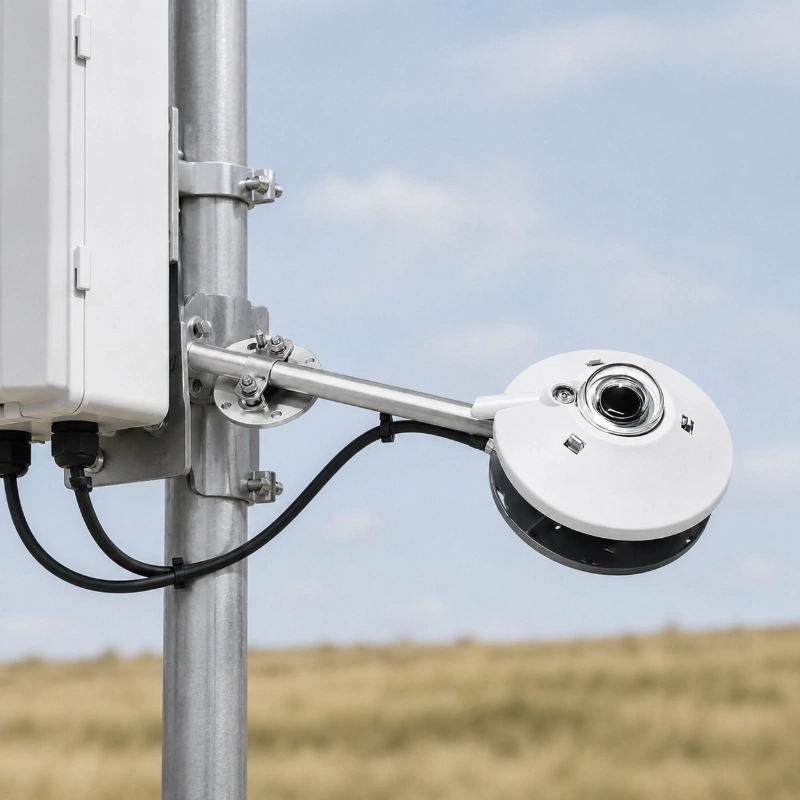
The JW-TBB-1L(LC26) can be configured with an integrated RS485 output module.
This option converts the sensor signal into digital data that can be transmitted directly to compatible monitoring equipment.
The RS485 version may be integrated with:
Weather station data loggers
Agricultural monitoring controllers
Environmental RTUs
Industrial data acquisition units
IoT gateways
PLC-based systems
Research data acquisition systems
The integrated digital-output option can reduce the need for separate external signal conversion.
Before ordering an RS485 version, confirm:
Required communication protocol
Register map
Baud rate
Device address
Data format
Power supply
Cable length
Data logger model
Required sampling interval
For multi-sensor projects, the complete communication architecture should be designed according to the receiving system and field-network requirements.
Main Applications
1. Agricultural Weather Stations
Net radiation data can help researchers understand the radiation energy available above a crop canopy.
The sensor can be used together with measurements such as:
Air temperature
Relative humidity
Wind speed
Rainfall
Soil moisture
Soil heat flux
Typical research applications include:
Crop microclimate monitoring
Field energy-balance observation
Crop water-use studies
Irrigation research
Drought-response experiments
Agricultural meteorology
2. Evapotranspiration Research
Net radiation is an important component in many evapotranspiration and surface-energy studies.
It represents a major radiation-energy input associated with:
Soil evaporation
Water-surface evaporation
Plant transpiration
For research-grade evapotranspiration studies, net radiation is normally evaluated together with other parameters such as:
Air temperature
Relative humidity
Wind speed
Atmospheric pressure
Soil heat flux
Crop or surface characteristics
The JW-TBB-1L(LC26) provides the net radiation measurement component.
It does not independently calculate complete evapotranspiration.
3. Irrigation Research
Net radiation can help researchers study how available surface energy changes under different weather and crop conditions.
Possible applications include:
Irrigation scheduling research
Comparison of irrigation treatments
Soil-water balance studies
Crop stress experiments
Water-use efficiency studies
Precision-agriculture research
For operational irrigation management, net radiation should normally be combined with other environmental and soil measurements.
4. Climate and Microclimate Monitoring
The sensor can be used to observe radiation-energy exchange between the atmosphere and the monitored surface.
Possible research environments include:
Agricultural fields
Grasslands
Forest research sites
Wetlands
Deserts
Urban surfaces
Green roofs
Watersheds
Coastal observation sites
Long-term datasets can support comparison of seasonal and environmental changes in surface radiation balance.
5. Surface Energy Balance Studies
The surface energy balance describes how available energy is distributed among different heat-transfer processes.
Depending on the research method, these can include:
Sensible heat flux
Latent heat flux
Soil heat flux
Heat storage
Other local energy exchanges
The net radiation sensor provides the radiation component required for this type of analysis.
6. Hydrological and Ecological Research
Net radiation influences evaporation, surface temperature and energy exchange between land, vegetation, water and the atmosphere.
Possible applications include:
Watershed research
Wetland monitoring
Lake and reservoir studies
Forest hydrology
Ecosystem energy-balance studies
Land-atmosphere interaction research
Long-term climate observation
Net Radiation Sensor vs Pyranometer
A net radiation sensor and a pyranometer measure different radiation parameters.
Comparison
Net Radiation Sensor
Pyranometer
Main Measurement
Difference between incoming and outgoing radiation
Incoming global solar irradiance
Measurement Direction
Upper and lower surfaces
Primarily upward-facing
Radiation Coverage
Shortwave and longwave net balance
Mainly shortwave solar radiation
Main Application
Energy balance and evapotranspiration research
Solar resource, PV and meteorological monitoring
Can Readings Be Negative?
Yes
Normally not in standard global irradiance measurement
Main Output
Net radiation in W/m簡
Solar irradiance in W/m簡
Choose a pyranometer when the project primarily needs global solar irradiance.
Choose a net radiation sensor when the project needs to understand total radiation gain and loss at a monitored surface.
For high-quality global solar irradiance measurement, see:
Correct installation is essential for representative net-radiation measurements.
1. Select a Representative Surface
Install the sensor above a surface that represents the research area.
Avoid installation close to objects such as:
Buildings
Walls
Trees
Poles
Large instruments
Reflective metal surfaces
Artificial heat sources
Irrigation equipment that may spray the sensor
Nearby objects can produce shading, obstruction or unwanted reflections.
2. Keep Both Sensing Surfaces Clear
The upper sensing surface should have a clear view of the sky.
The lower sensing surface should have an unobstructed view of the monitored surface.
Do not install a wide mounting plate directly under the sensor if it blocks the lower field of view.
3. Mount the Sensor Level
For standard surface net-radiation monitoring, install the sensor horizontally unless the research protocol requires another orientation.
Check the sensor position using the available leveling arrangement or suitable mounting structure.
4. Minimize Support-Arm Interference
Use a support arm that minimizes:
Shadowing
Reflection
Obstruction of the lower field of view
The mounting structure should interfere as little as possible with the radiation environment being measured.
5. Select an Appropriate Installation Height
Installation height should match the research objective and monitored surface.
As the sensor is mounted higher, the lower sensing surface observes a larger area.
For heterogeneous surfaces or uneven crop canopies, mounting too close may reduce spatial representativeness.
Use a consistent installation method for long-term or comparative studies.
Operation and Maintenance
Recommended maintenance includes:
Clean the upper and lower sensing surfaces
Remove dust, pollen, water stains and other contamination
Avoid scratching the sensing surfaces
Check that the sensor remains level
Inspect mounting hardware
Check cable insulation and connectors
Confirm that the support structure has not moved
Prevent vegetation from obstructing the lower field of view
Check RS485 communication when applicable
Review data for unexpected offsets or flat readings
Follow the required calibration or verification schedule
Inspection frequency should be increased in dusty, agricultural, coastal or polluted environments.
Typical Monitoring System
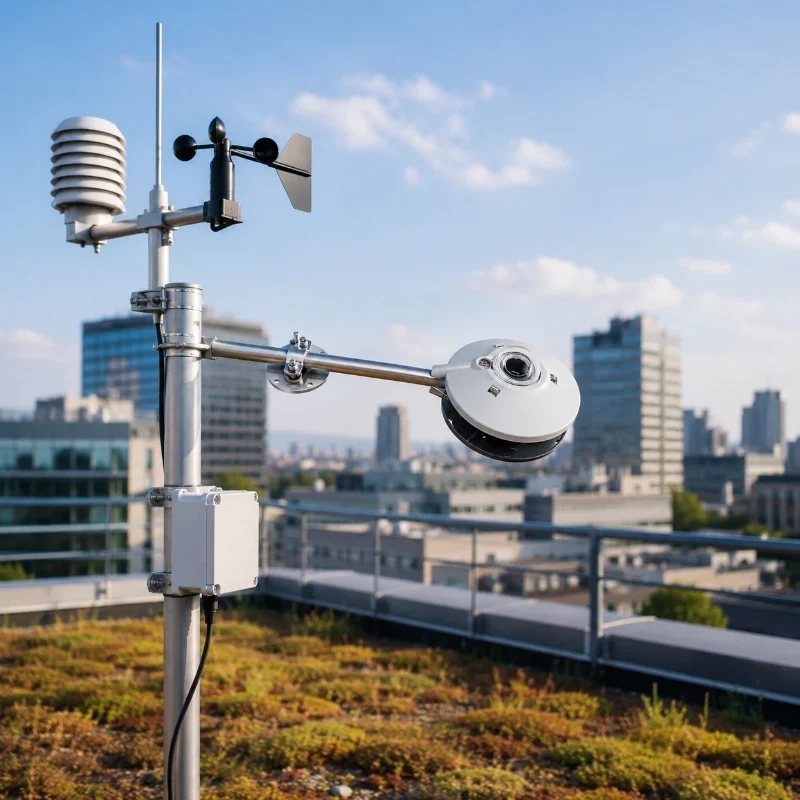
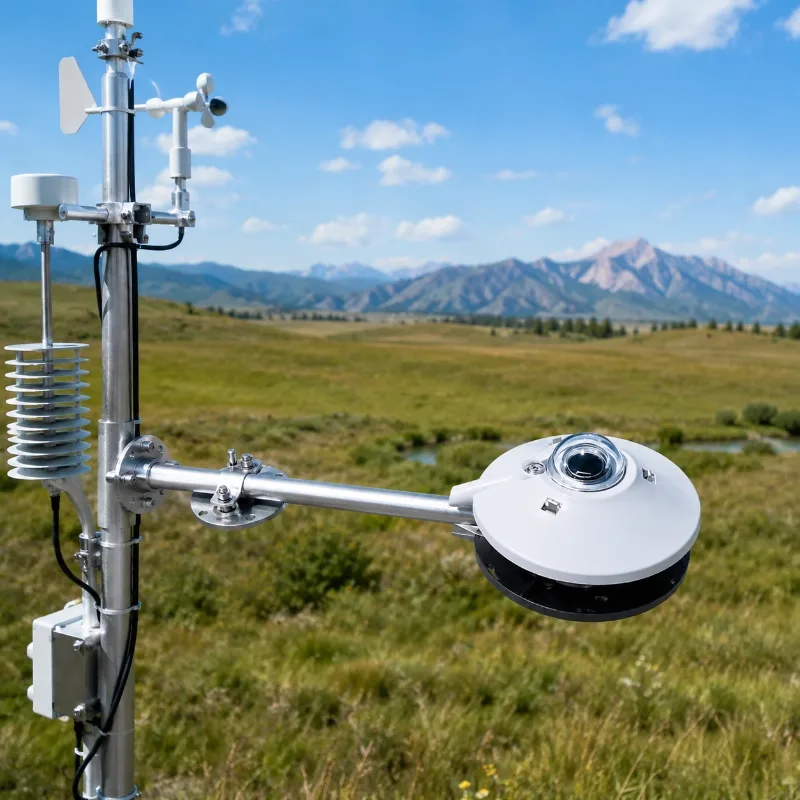
A research monitoring station may combine the JW-TBB-1L(LC26) with:
Air temperature and humidity sensors
Wind speed and direction sensors
Rain gauge
Atmospheric pressure sensor
Soil temperature sensor
Soil moisture sensor
Soil heat flux sensor
Surface temperature sensor
Data logger or RTU
The final configuration should be selected according to:
Research method
Site conditions
Sampling interval
Communication requirement
Power availability
Data-acquisition system
Request a Net Radiation Sensor Configuration
Choosing a radiation sensor should begin with the measurement objective.
If your project requires:
Combined incoming and outgoing radiation
Surface energy balance data
Evapotranspiration research
Crop-energy studies
Climate or ecological monitoring
Optional RS485 system integration
the JW-TBB-1L(LC26) Net Radiation Sensor may be suitable.
Contact JW-IoT with your application, installation environment, output requirement, data logger and quantity for configuration support and quotation.
FAQ
Q
1. What does a net radiation sensor measure?
A
A net radiation sensor measures the difference between incoming and outgoing radiation at the surface. This value is important for understanding surface energy balance, crop conditions, and environmental change.
Q
2. What is the TBB-1L Net Radiation Sensor used for?
A
The TBB-1L Net Radiation Sensor is used in agriculture, meteorology, environmental science, climate research, irrigation management, and solar resource assessment.
Q
3. Does this sensor support RS485 output?
A
Yes. The sensor can be configured with an integrated RS485 output module, allowing direct connection to RS485 communication systems without an external converter.
Q
4. Can JW-IoT provide this net radiation sensor for complete weather station projects?
A
Yes. JW-IoT can provide this net radiation sensor as part of a complete weather station solution, including data loggers, communication modules, mounting accessories, and platform integration.
Q
5. Why is net radiation important in agricultural monitoring?
A
Net radiation is a key parameter in evapotranspiration calculation and irrigation management. It helps users understand the energy available at the crop surface and supports more precise water management decisions.
Q
6. What is the sensitivity range of this net radiation sensor?
A
The sensor has a sensitivity range of 7 to 14 μV W m², making it suitable for precise field measurement and long term radiation observation.
Q
7. Can JW-IoT support RS485 integration for this product?
A
Yes. JW-IoT can support customers with RS485 integration guidance, compatible data acquisition solutions, and customized monitoring system design.
Q
8. Is this sensor suitable for long term outdoor installation?
A
Yes. The sensor is designed for outdoor monitoring and is suitable for continuous deployment in agricultural weather stations, research fields, and environmental monitoring systems.
Q
9. What are the main applications of this sensor?
A
Main applications include agricultural weather stations, irrigation studies, climate model research, environmental science, solar resource analysis, and surface energy balance measurement.
Q
10. Does JW-IoT offer OEM or customization service for net radiation sensors?
A
Yes. JW-IoT supports OEM and project based customization, including communication options, system matching, installation accessories, and integrated solution support.
Q
11. What makes this sensor different from ordinary radiation sensors?
A
Unlike standard radiation sensors that only measure a single radiation parameter, a net radiation sensor measures the balance between incoming and outgoing radiation, making it more useful for energy balance and environmental studies.
Q
12. Can JW-IoT provide a full monitoring solution using this sensor?
A
Yes. JW-IoT can provide a complete solution including the net radiation sensor, weather station mast, solar power supply, data logger, communication module, and cloud monitoring platform.
 +86 13520127780
  info@jingelway.com