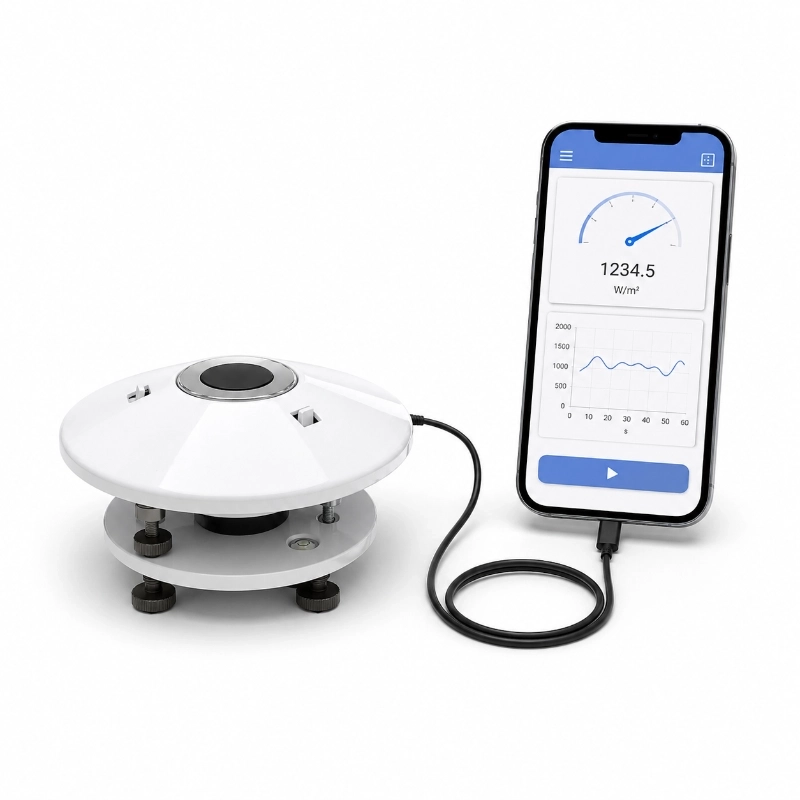
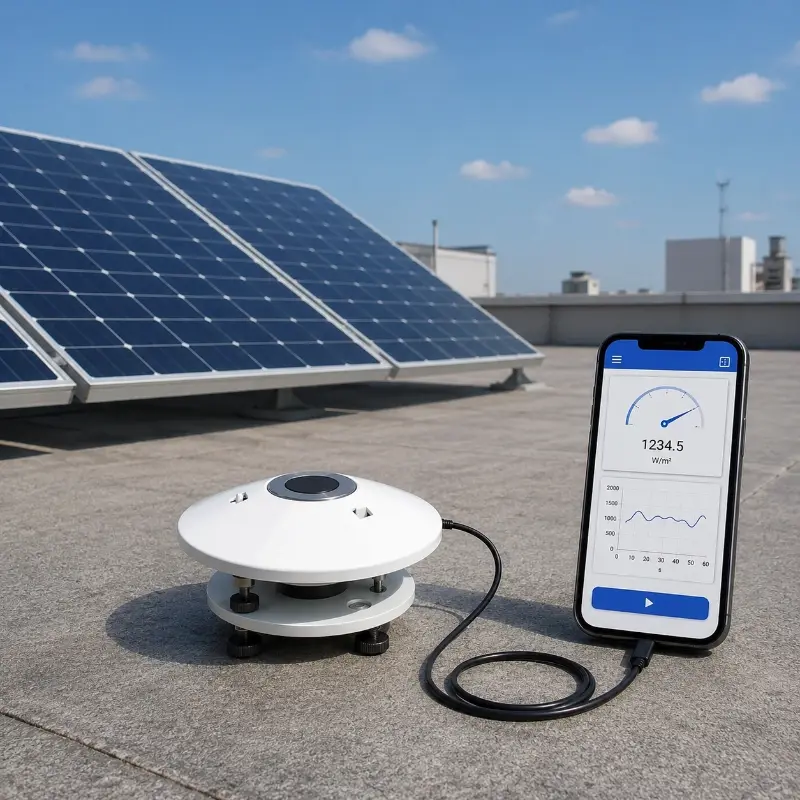
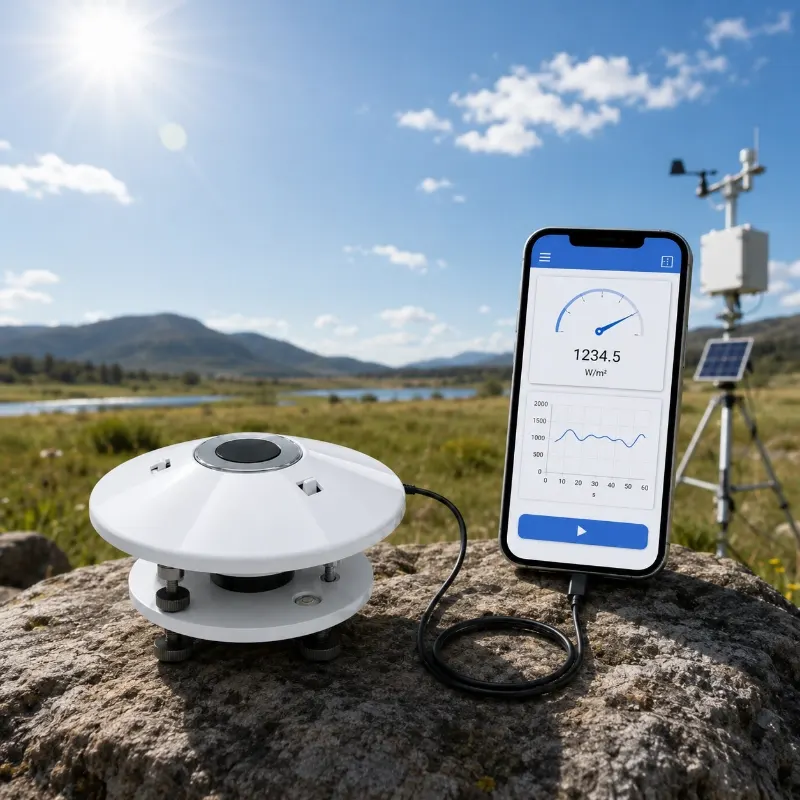
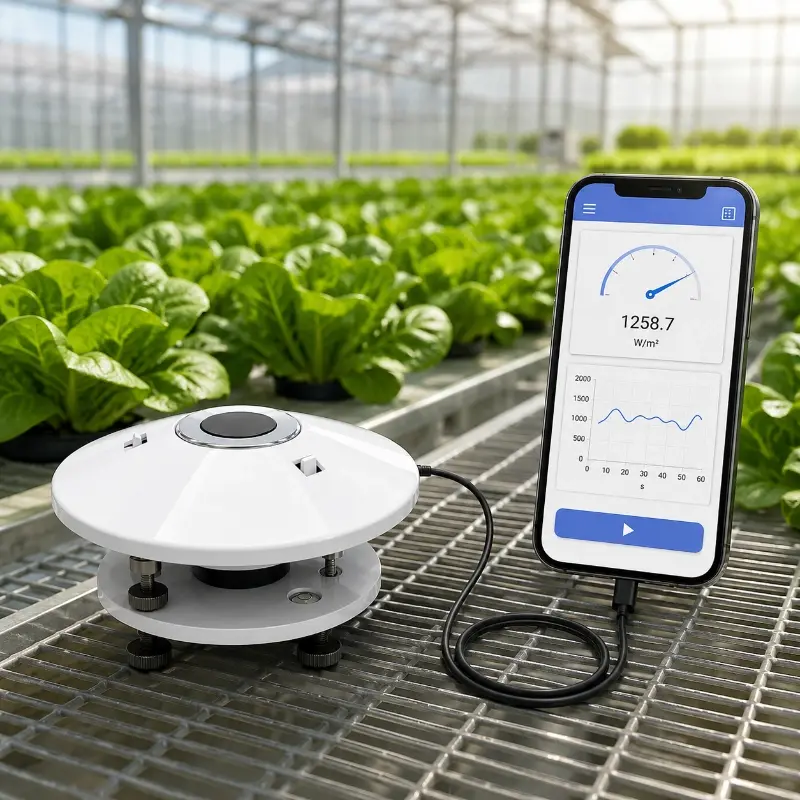
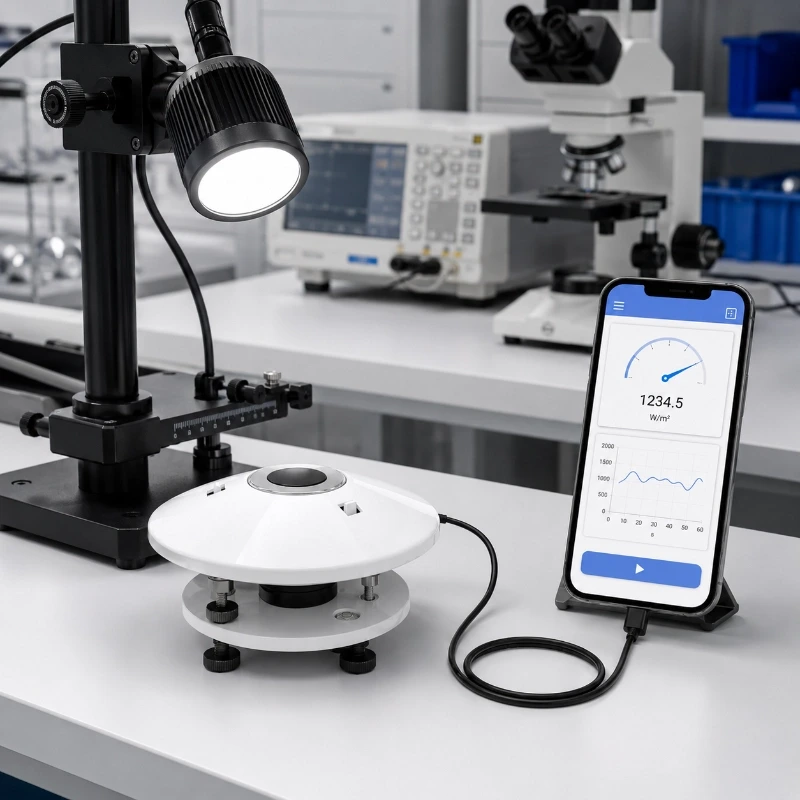
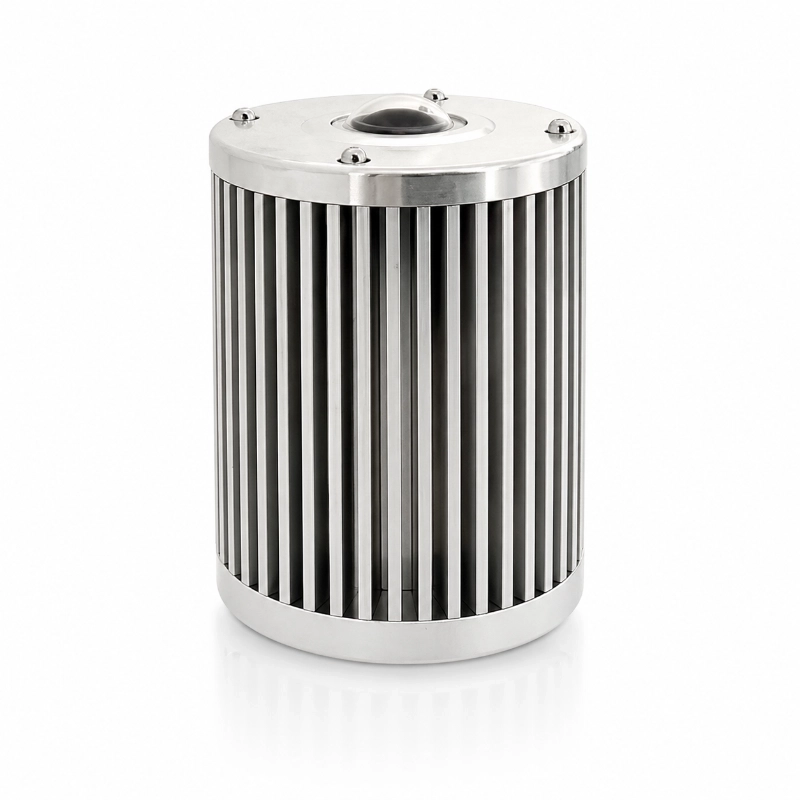
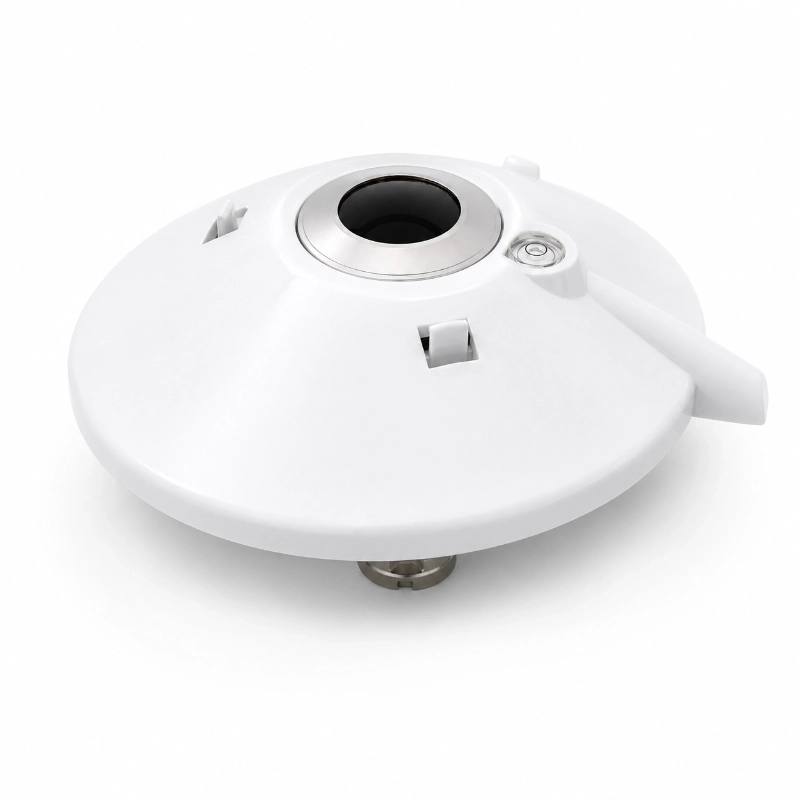
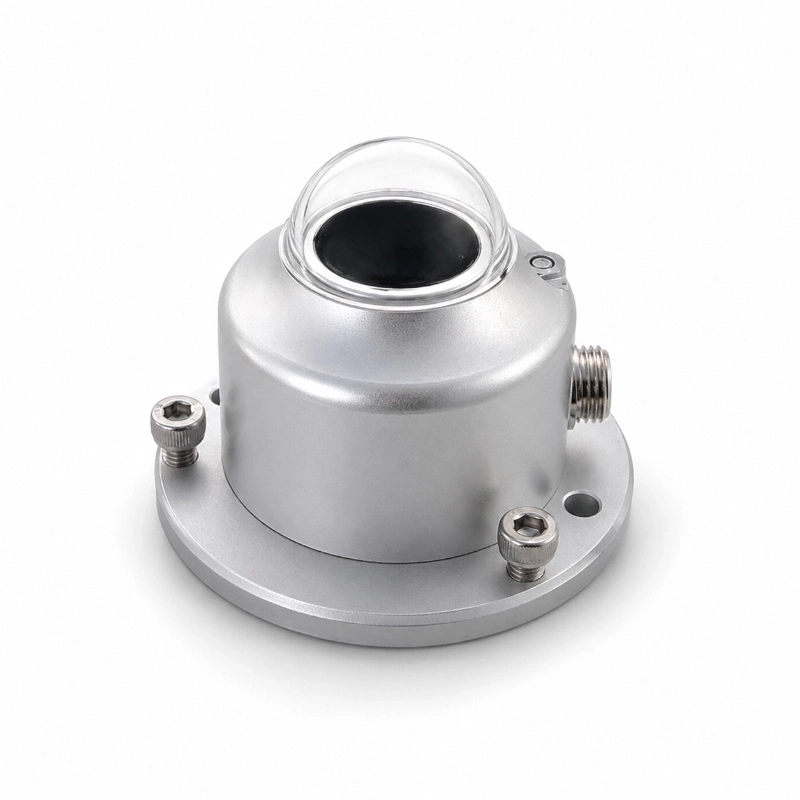
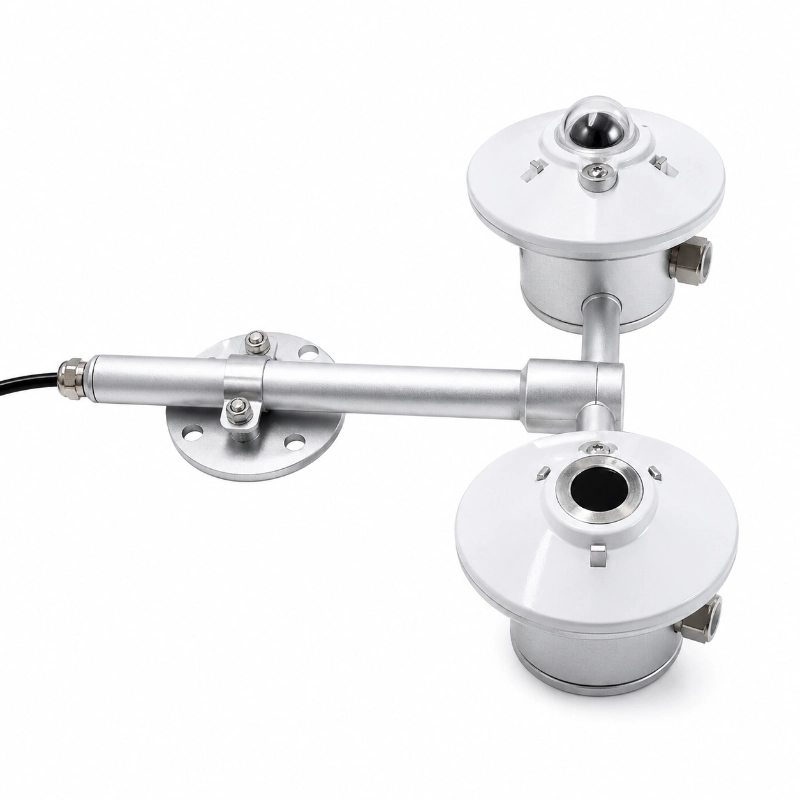
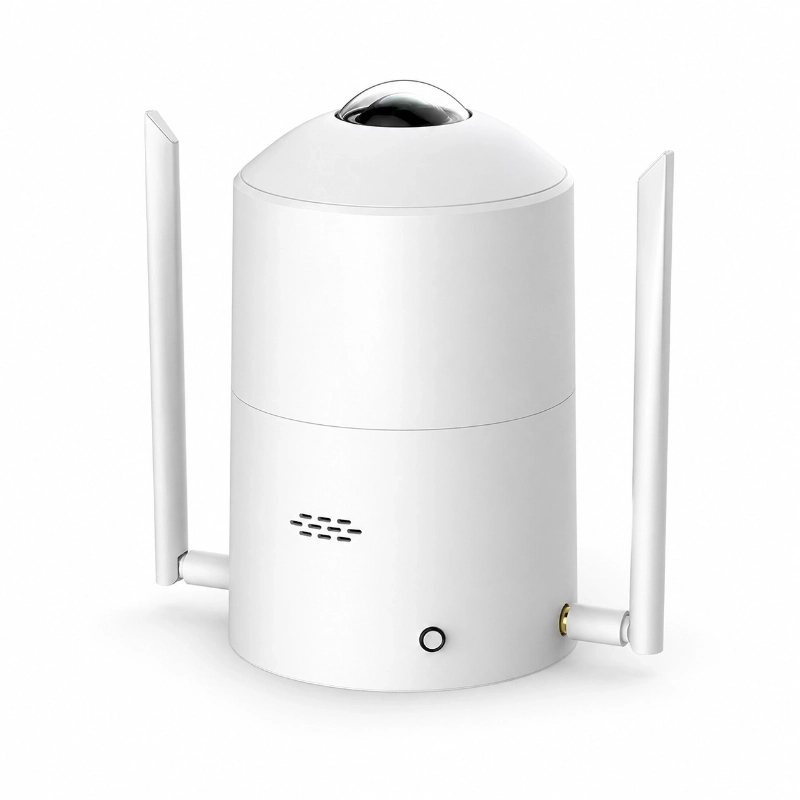
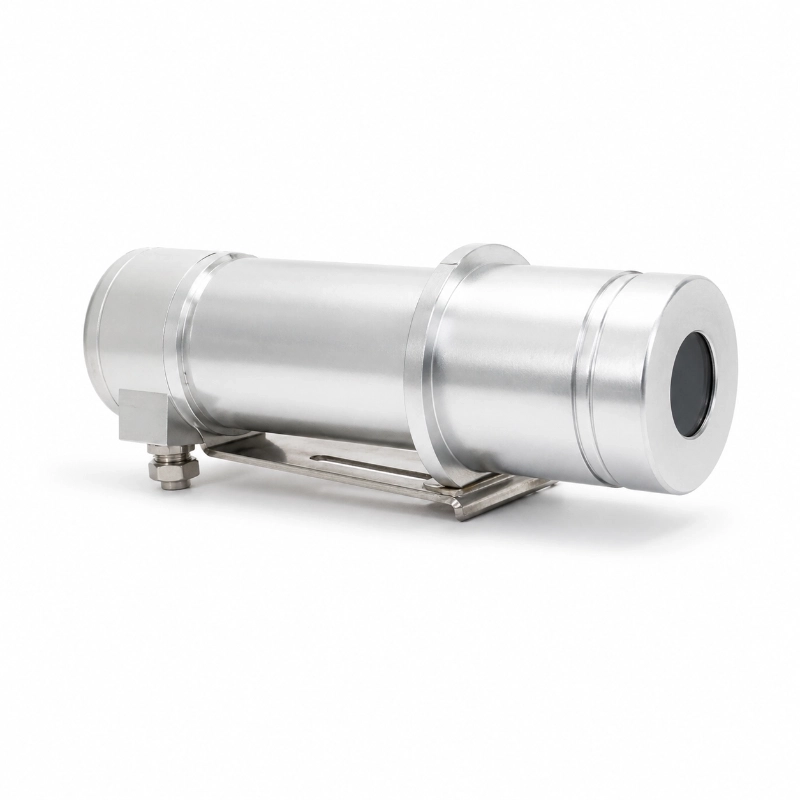
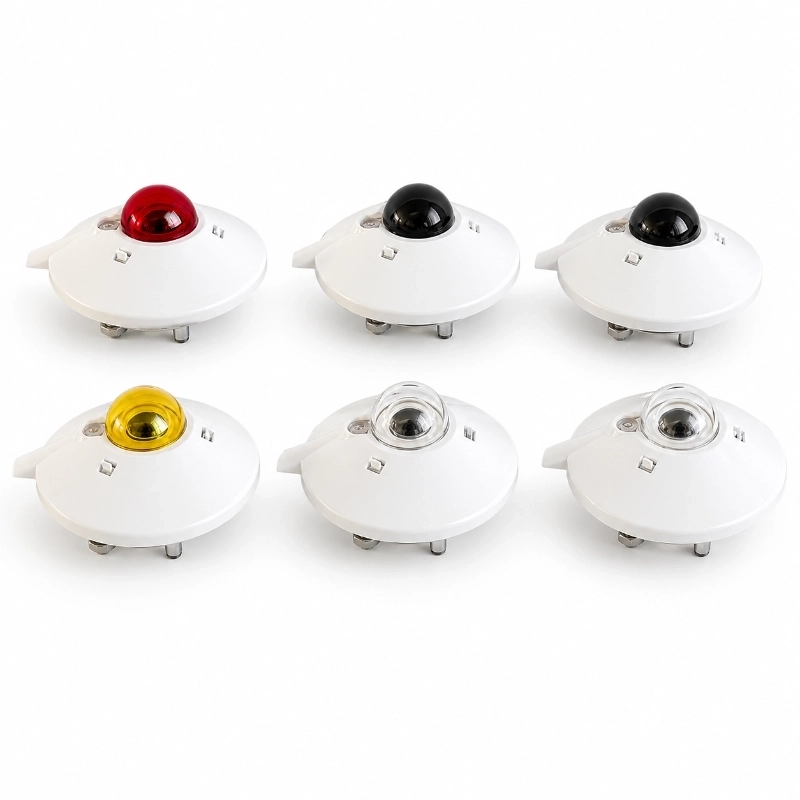
The JW-TBLH(LC24) Handheld Photoelectric Irradiance Meter is a portable instrument for measuring irradiance from sunlight and artificial light sources. It covers a broad spectral range from 285 to 2800 nm and measures irradiance from 0 to 2000 W/m².
Instead of requiring a separate handheld display unit, the meter connects to a smartphone app for real-time readings, data storage, location-linked measurement records and one-click data export. This makes it suitable for field surveys, photovoltaic testing, environmental studies, laboratory experiments and industrial light-source inspection.
For permanent monitoring projects, optional 0–20 mV, 4–20 mA and RS485 outputs allow the irradiance sensor to be connected to data loggers, RTUs and monitoring systems.
Inquire Now or contact JW-IoT through WhatsApp to discuss specifications, output options, OEM services or project requirements.
Product Overview
The JW-TBLH(LC24) is designed for professionals who need to measure optical irradiance at different locations without carrying a conventional sensor-and-host instrument set.
The sensing element converts incoming optical radiation into an electrical signal using the photoelectric effect. The signal is processed and displayed through the mobile app, allowing the user to view the current irradiance value and save the measurement together with relevant field information.
Its 285–2800 nm spectral range covers ultraviolet, visible and near-infrared portions of optical radiation. This broad response makes the instrument useful for general broadband irradiance assessment where the user needs to evaluate the combined radiation level from natural sunlight or an artificial light source.
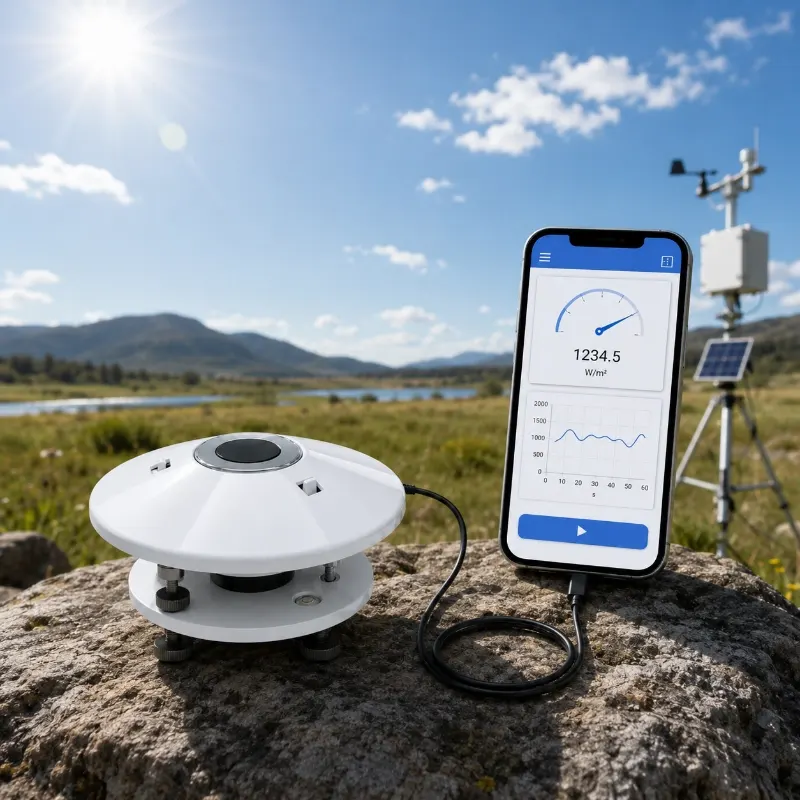
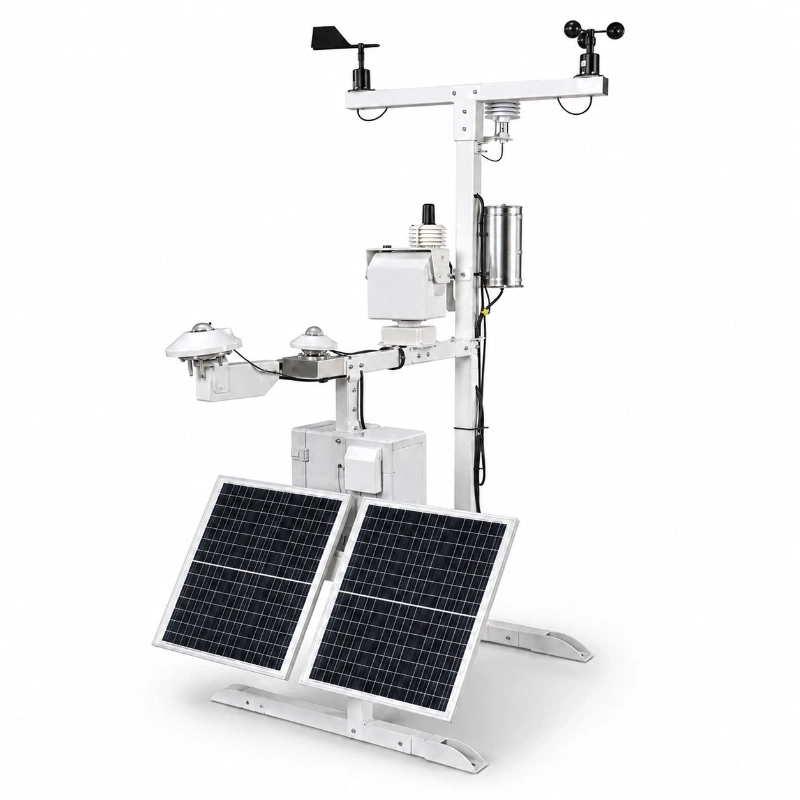
The meter is suitable for temporary inspections and measurement campaigns. When analog or RS485 output is selected, it can also serve as an irradiance sensing component in a fixed data acquisition or IoT monitoring system.
JW-IoT also supplies other radiation sensors for ultraviolet radiation, total solar radiation, photovoltaic monitoring and environmental observation.
Why Use a Mobile App Irradiance Meter?
Traditional portable irradiance measurement usually requires a sensor, a dedicated handheld host and desktop software for exporting records. This increases the amount of equipment that technicians must carry and can make field data management less efficient.
The JW-TBLH(LC24) uses a smartphone as the measurement display and data-management interface. This provides several practical advantages:
Real-Time Digital Display
Measurement values can be viewed directly through the mobile app, making it easier to inspect changing irradiance conditions during field testing.
Portable Field Operation
The phone-based design reduces the need for an additional display host and simplifies transportation between measurement locations.
Measurement Data Storage
Field readings can be stored on the mobile phone, helping technicians retain a record of measurements for later review.
Location-Linked Records
Location information can be associated with measurement data through the app. This is useful when comparing irradiance at multiple photovoltaic modules, greenhouses, experimental plots or outdoor survey points.
One-Click Data Export
Stored data can be exported for reporting, project documentation or further analysis without first connecting the instrument to separate desktop software.
Technical Specifications
Parameter
Specification
Model No.
JW-TBLH(LC24)
Product Type
Handheld Photoelectric Irradiance Meter
Measurement Principle
Photoelectric Effect
Measurement Object
Light Source Irradiance
Spectral Range
285 to 2800 nm
Sensitivity
7 to 14 μV per W/m²
Measurement Range
0 to 2000 W/m²
Response Time
<15 s
Operating Response Time
≤12 s
Internal Resistance
10 to 30 Ω
Zero Offset A
<15 W/m²
Zero Offset B
<5 W/m²
Directional Response
<20 W/m²
Stability
<3%
Measurement Accuracy
≤5%
Operating Temperature
-40°C to 80°C
Signal Output
0–20 mV, 4–20 mA, RS485
Data Display
Smartphone App
Data Storage
Mobile Phone Storage
Data Export
One Click Export
Location Information
Supported through App
Use Mode
Portable Field Measurement
Specifications may vary according to the selected configuration. Please confirm the required output, app compatibility, cable length and accessories before ordering.
How the Photoelectric Irradiance Meter Works
The meter operates according to the photoelectric effect.
When optical radiation reaches the sensing element, part of the radiation energy is converted into an electrical signal. The strength of this signal changes according to the irradiance reaching the sensor.
The instrument processes the electrical signal and converts it into an irradiance reading expressed in watts per square metre, or W/m². The result is then displayed through the smartphone app or transmitted through the selected analog or RS485 output.
Because the instrument covers a broad spectral range, its readings represent the response of the sensor across the supported wavelength band. The results should therefore be interpreted according to the sensor spectral response rather than treated as a wavelength-specific measurement.
The JW-TBLH(LC24) can support different measurement workflows according to the selected configuration.
Smartphone App Measurement
The app-based configuration is intended for portable field inspections. It supports:
Real-time irradiance display
Measurement record storage
Location-linked records
One-click data export
Field data sharing
Multi-point inspection workflows
0–20 mV Output
The millivolt output can be used with compatible high-resolution data acquisition devices. The input range and conversion relationship must be configured correctly in the receiving device.
4–20 mA Output
The current output is suitable for industrial data acquisition where the sensor must transmit a signal over a wired connection. It can be connected to compatible PLCs, RTUs and data loggers.
RS485 Output
The RS485 version can be integrated into environmental monitoring stations, industrial monitoring systems and other multi-sensor data acquisition networks.
Before ordering, specify whether the product will be used primarily as a portable app-based instrument or as part of a fixed monitoring system.
Main Applications
Photovoltaic Module Testing
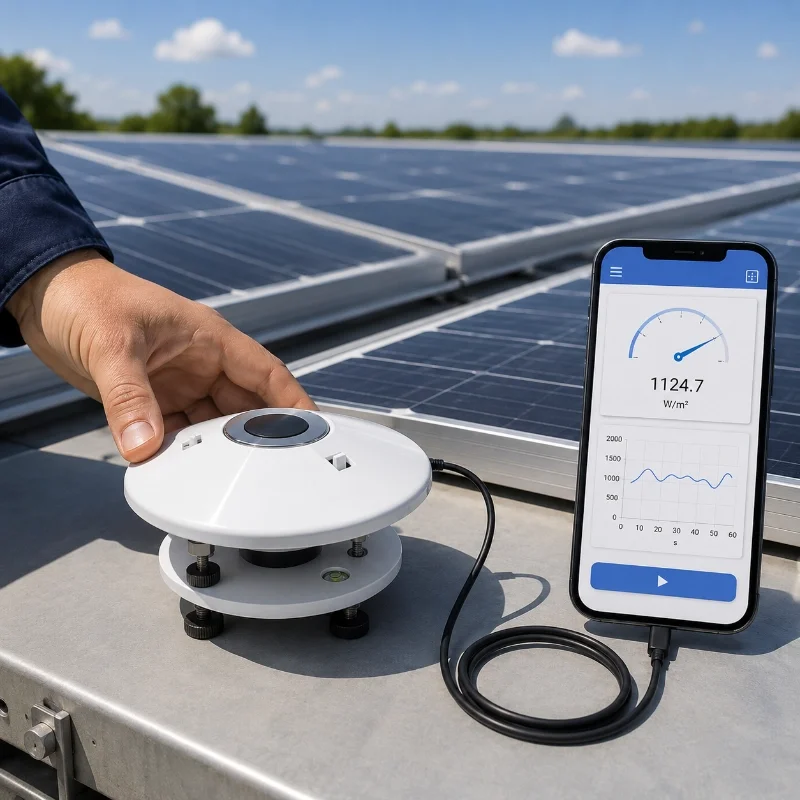
The handheld irradiance meter can be used to measure incoming solar radiation during photovoltaic module inspections and field performance checks.
Technicians can record irradiance at different module locations and compare the results with module power, voltage or current data. Location-linked records are particularly useful when inspecting multiple arrays or test points.
The portable design allows users to collect irradiance measurements at different candidate locations during preliminary solar resource surveys.
It can support:
Comparison of multiple installation locations
Temporary rooftop irradiance inspection
Outdoor solar exposure assessment
Field verification during PV project commissioning
Comparison of shaded and unshaded areas
A handheld measurement campaign provides a snapshot of conditions during the inspection period. It does not replace a long-term calibrated solar resource monitoring station.
Environmental and Meteorological Research
The instrument can support temporary radiation measurements in environmental observation, climate research and outdoor scientific studies.
Light availability can vary significantly between different positions inside a greenhouse. Structural shading, covering material, crop canopy density, supplemental lighting and time of day can all affect the radiation reaching the crop.
The handheld irradiance meter can be used to compare:
Different greenhouse zones
Upper and lower crop canopy positions
Shaded and unshaded areas
Supplemental lighting locations
Light conditions before and after changing greenhouse covers
For crop photosynthesis studies, users should determine whether broadband irradiance or photosynthetically active radiation is the required measurement parameter.
Artificial Light Source Inspection
The product can be used for comparative testing of artificial light sources whose radiation falls within the supported spectral range.
Typical uses include:
Industrial lighting inspection
Laboratory light-source comparison
Light-aging test verification
Optical experiment monitoring
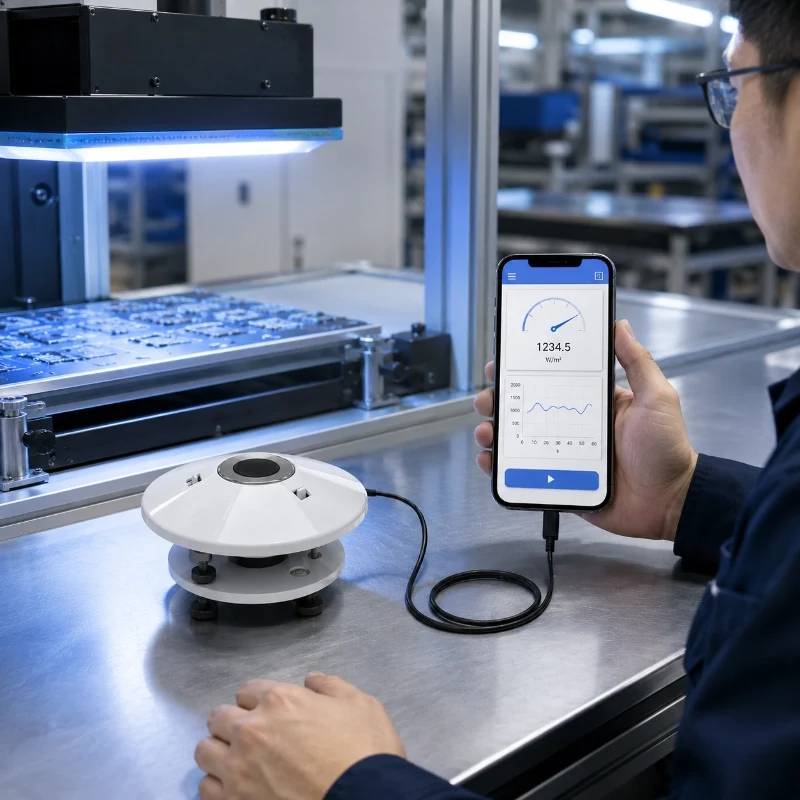
Production-line light intensity inspection
Equipment commissioning
The suitability of the meter depends on the spectral characteristics and intensity of the light source.
Optical and Laboratory Research
Researchers can use the instrument for temporary irradiance measurements in optical experiments, material exposure studies and comparative radiation testing.
For scientifically traceable measurements, the user should confirm calibration requirements, measurement geometry, spectral compatibility and uncertainty before testing.
Aerospace and Satellite-Related Studies
The broad spectral response and portable format may support selected optical radiation studies, equipment verification and research measurements related to aerospace or satellite applications.
The exact suitability should be evaluated according to the wavelength range, expected irradiance, required accuracy and environmental conditions of the project.
Industrial Quality Control
The meter can help verify whether a production or testing process is receiving a consistent level of optical radiation.
Possible applications include:
Light-curing process inspection
Optical equipment testing
Radiation source comparison
Production equipment commissioning
Preventive maintenance inspections
Multi-point light uniformity checks
Medical and Laboratory Equipment Inspection
The instrument may support radiation-related inspection of compatible light-based equipment. However, it should not be treated as a substitute for a regulated medical calibration instrument unless the required certification, calibration and measurement standard have been confirmed.
How to Use the Handheld Irradiance Meter
Step 1: Confirm the Measurement Requirement
Determine whether the project requires broadband irradiance, ultraviolet irradiance, total solar radiation or photovoltaic reference-cell measurement.
Step 2: Connect the Sensor
Connect the irradiance sensor to the compatible smartphone interface or selected measurement module according to the supplied instructions.
Step 3: Open the Mobile App
Launch the app and confirm that the sensor is connected and that a valid measurement value is displayed.
Step 4: Position the Sensor
Place the sensing surface at the required measurement point and orientation.
For solar measurements, avoid shading the sensor with your body, phone, cable or nearby equipment. For comparative measurements, use the same orientation and positioning method at every point.
Step 5: Allow the Reading to Stabilize
Keep the sensor stationary and wait for the reading to stabilize before saving the result.
Step 6: Save the Measurement
Record the reading together with the measurement time, test point, orientation and relevant site conditions. Use the location function when measurements are taken at multiple outdoor points.
Step 7: Export the Data
Export the stored records through the app for reporting, comparison or further analysis.
Recommended Field Measurement Practices
Measurement quality depends not only on the sensor but also on how the test is performed.
For more repeatable results:
Keep the sensing surface clean.
Avoid touching or scratching the optical sensing area.
Maintain the same sensor orientation during comparative measurements.
Do not shade the sensor while taking a reading.
Avoid reflections from nearby glass, metal or bright surfaces unless reflected radiation is part of the measurement.
Record the date, time, location and weather conditions.
Allow the reading to stabilize before saving it.
Use the same measurement duration at every test point.
Check whether the light source exceeds the specified measurement range.
Confirm calibration requirements before critical tests.
Store the instrument in a clean and dry protective case after use.
Handheld Meter or Fixed Irradiance Sensor?
The correct product depends on whether the project requires temporary inspection or continuous monitoring.
A handheld photoelectric irradiance meter and a pyranometer may both display readings in W/m², but they are designed for different measurement purposes.
Handheld Photoelectric Irradiance Meter
This product is primarily intended for portable inspections, comparative field measurements and app-based data collection. Its compact design makes it convenient for measuring multiple locations.
Pyranometer
A pyranometer is generally intended for meteorological solar radiation measurement and long-term outdoor monitoring. Higher-class pyranometers are designed according to more demanding performance criteria involving directional response, temperature response, stability and calibration.
Choose a pyranometer when the project requires standards-based solar radiation monitoring, bankable PV performance data or long-term meteorological observations.
Choose the handheld photoelectric irradiance meter when portability, multi-point inspection and fast field data collection are the main priorities.
Difference Between Broadband and Silicon Irradiance Measurement
The JW-TBLH(LC24) has a broad 285–2800 nm spectral response. It is intended to measure radiation over a wide wavelength range.
A silicon irradiance sensor has a response that is closer to the spectral characteristics of crystalline silicon photovoltaic modules. It is therefore commonly used for PV performance ratio analysis and plane-of-array monitoring.
For general broadband field measurements, the handheld photoelectric meter may be suitable. For continuous photovoltaic performance monitoring, a silicon irradiance sensor is normally the more application-specific choice.
Selecting the Correct Irradiance Meter
Before requesting a quotation, consider the following questions:
What light source will be measured?
Is the required measurement broadband, UV-specific or PV-specific?
What is the expected maximum irradiance?
Is the instrument needed for temporary inspection or continuous monitoring?
Is a smartphone app required?
Should the data include location information?
Is one-click export required?
Is an analog or RS485 output needed?
What measurement accuracy and calibration documentation are required?
Will the product be used outdoors, in a laboratory or inside industrial equipment?
Providing this information helps JW-IoT recommend the most suitable sensor, output and accessory configuration.
Why Choose JW-IoT?
JW-IoT supplies sensors and monitoring solutions for solar energy, environmental monitoring, smart agriculture, water management and industrial IoT projects.
Project support can include:
Product model selection
Sensor and output configuration
RS485 and analog signal integration
Data logger and RTU matching
App-based portable measurement solutions
OEM and private-label supply
Customized cables and accessories
Project documentation
Remote technical support
Multi-sensor monitoring system design
For distributors, integrators and project contractors, JW-IoT can discuss customized branding, communication requirements, packaging and system-level integration.
Ordering Information
Please provide the following details when requesting a quotation:
Intended application
Light source to be measured
Required spectral range
Expected irradiance range
Portable app measurement or fixed installation
Required output signal
Smartphone operating system
Required cable length
Calibration or documentation requirements
Order quantity
OEM or private-label requirements
Delivery destination
Contact JW-IoT for product selection, quotation and project integration support.
FAQ
Q
1. What does the handheld photoelectric irradiance meter measure?
A
It measures irradiance from natural or artificial light sources and displays the result in W/m². The JW-TBLH(LC24) supports a spectral range of 285–2800 nm and a measurement range of 0–2000 W/m².
Q
2. Can the meter be used for solar irradiance measurement?
A
Yes. It can be used for portable solar irradiance inspections, PV module testing, rooftop surveys and comparison of different outdoor measurement locations. Long-term PV or meteorological monitoring may require a fixed silicon irradiance sensor or pyranometer.
Q
3. Does the irradiance meter require a separate handheld display?
A
The app-based configuration uses a compatible smartphone for real-time display, data storage and export, reducing the need for a separate handheld display host.
Q
4. Can measurement records include location information?
A
Yes. The mobile app can associate measurement records with location information, which helps users manage data from multiple outdoor or project measurement points.
Q
5. Can the data be exported from the mobile app?
A
Yes. Stored measurement records can be exported through the app for reporting, sharing and further analysis.
Q
6. What output signals are available?
A
Depending on the selected configuration, the product can support 0–20 mV, 4–20 mA or RS485 output. Confirm the required output when requesting a quotation.
Q
7. Can it be integrated with a data logger or RTU?
A
Yes. The RS485 or analog-output version can be connected to compatible data loggers, RTUs, PLCs and environmental monitoring systems.
Q
8. Is this product the same as a Class A pyranometer?
A
No. This handheld instrument is optimized for portable field measurement and multi-point inspection. A Class A pyranometer is intended for higher-grade, long-term solar radiation monitoring. The correct choice depends on the project’s accuracy, standard and deployment requirements.
Q
9. Does JW-IoT provide OEM or private-label services?
A
Yes. JW-IoT can discuss OEM branding, private-label packaging, output configuration, cable customization and project-based supply for distributors and system integrators.
 +86 13520127780
  info@jingelway.com