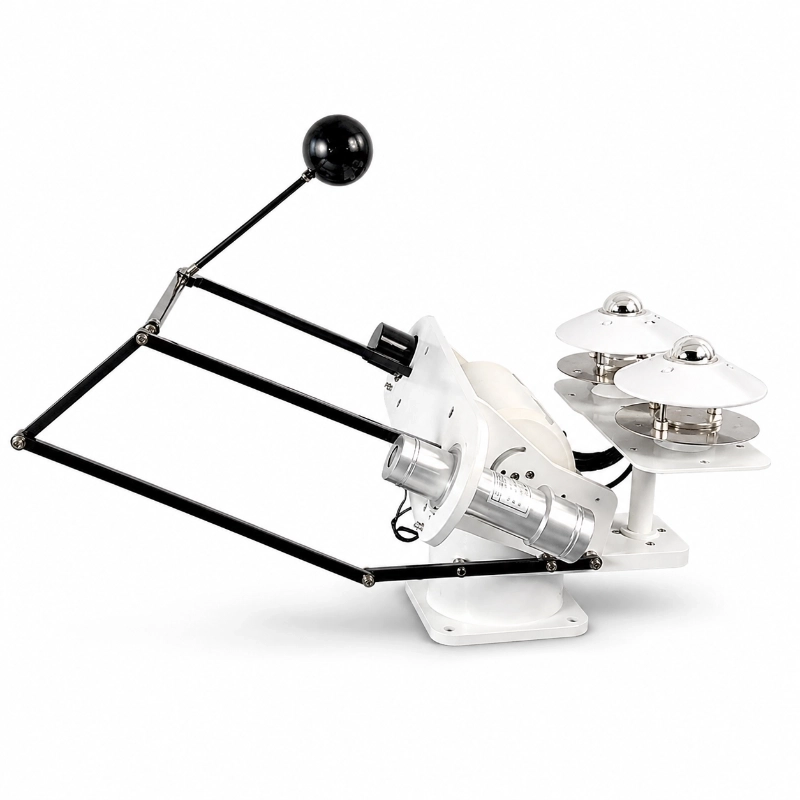
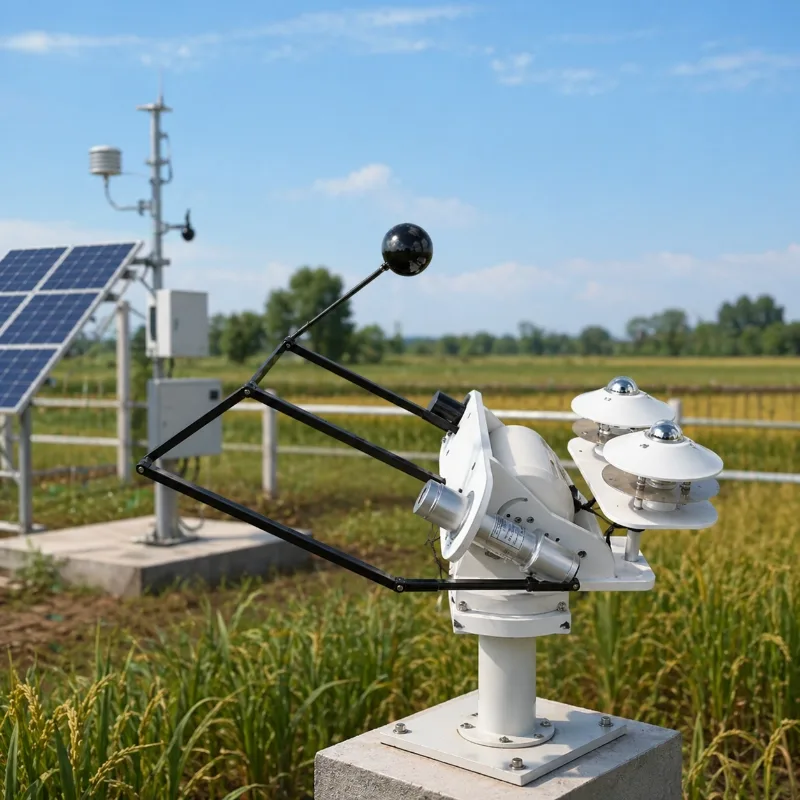
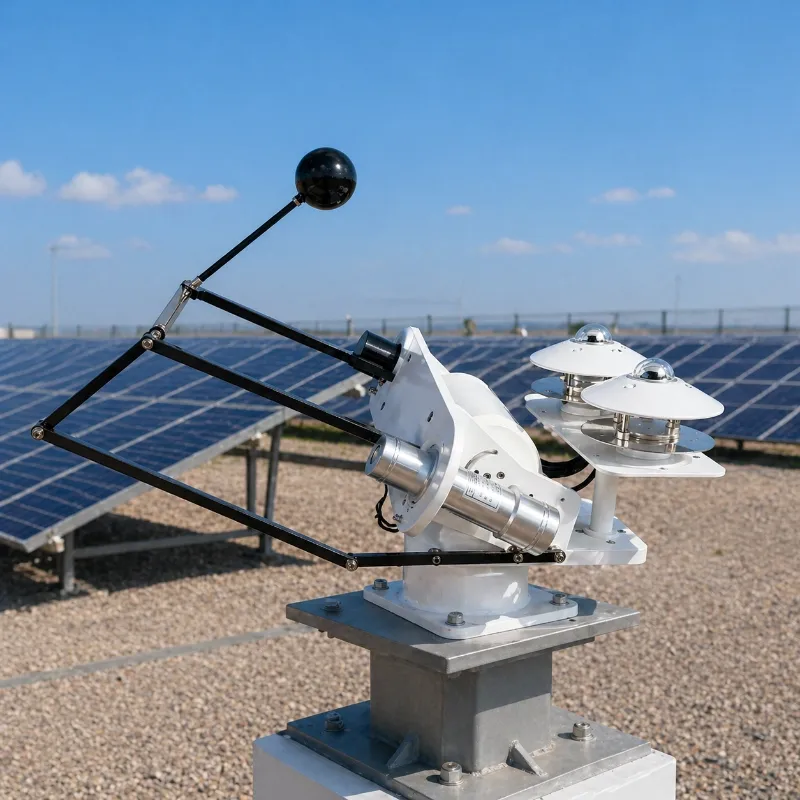
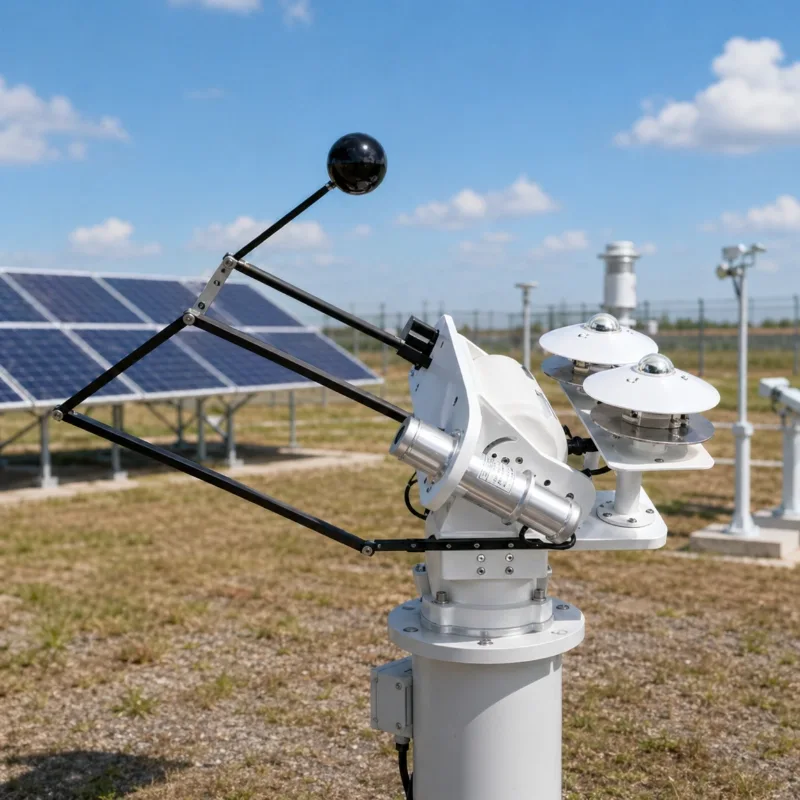
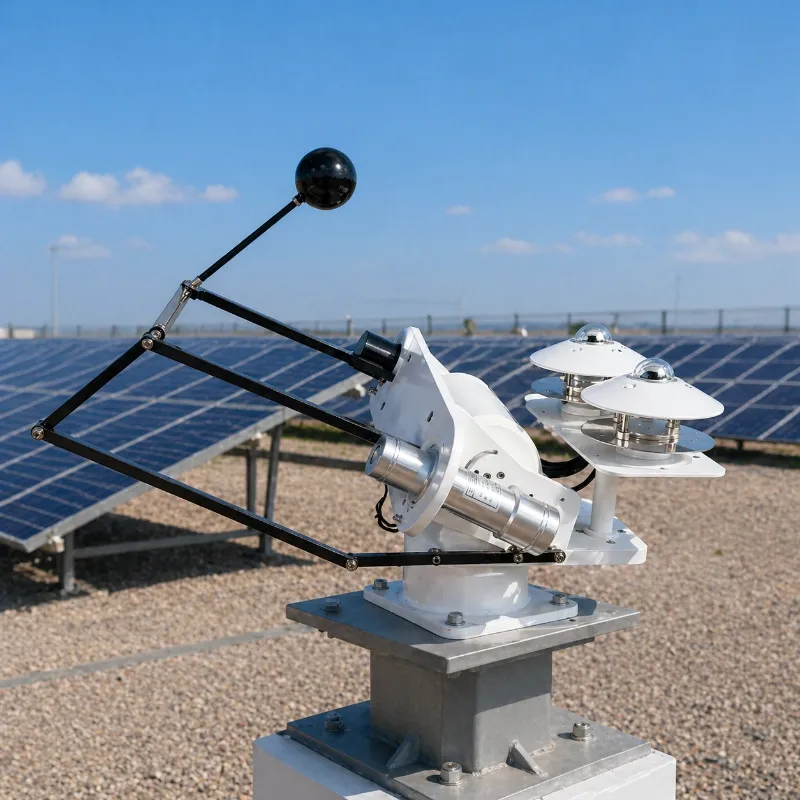
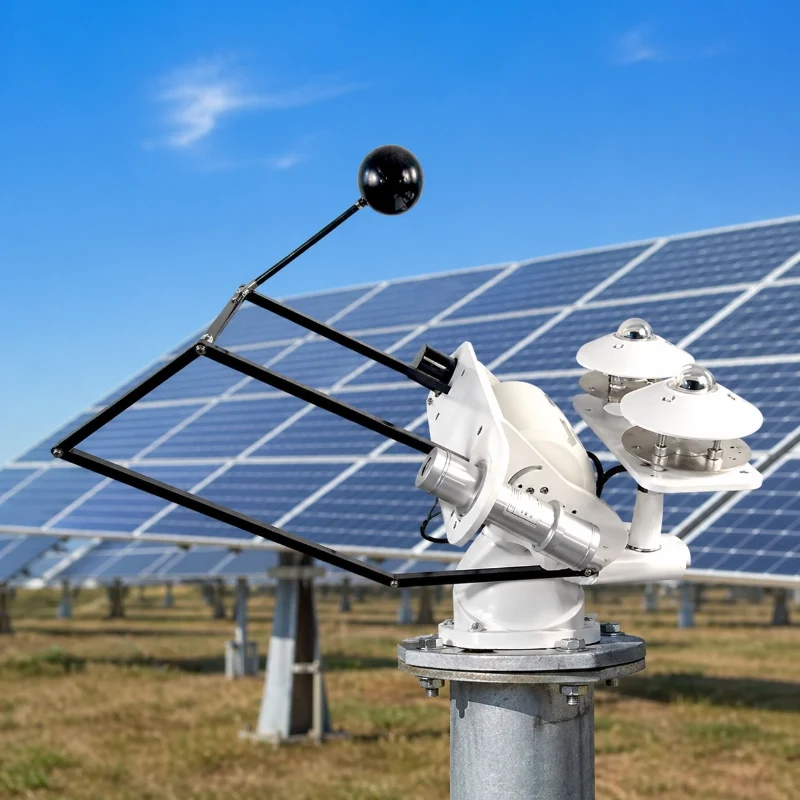
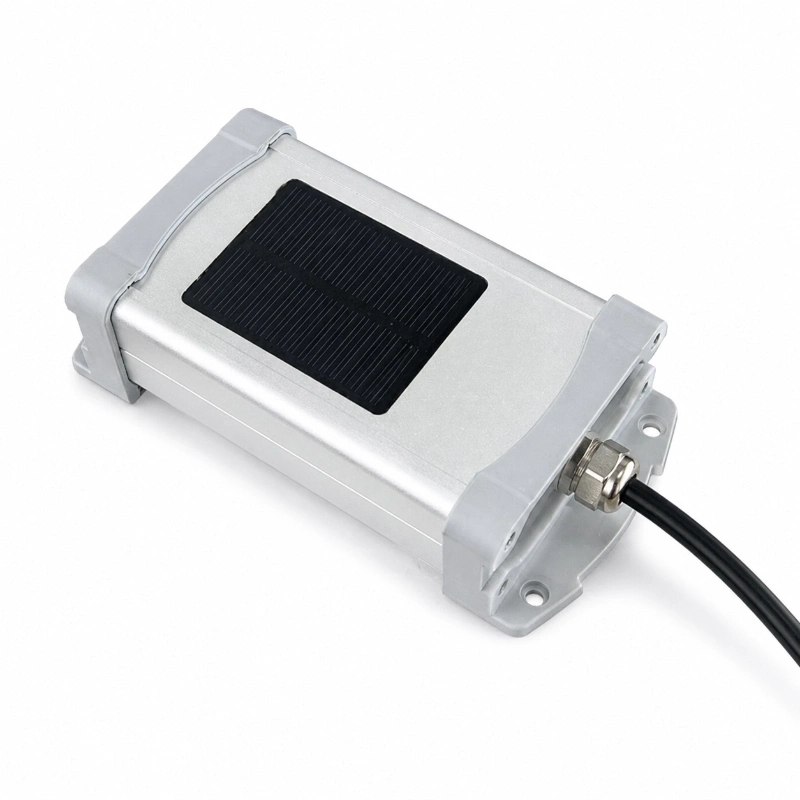
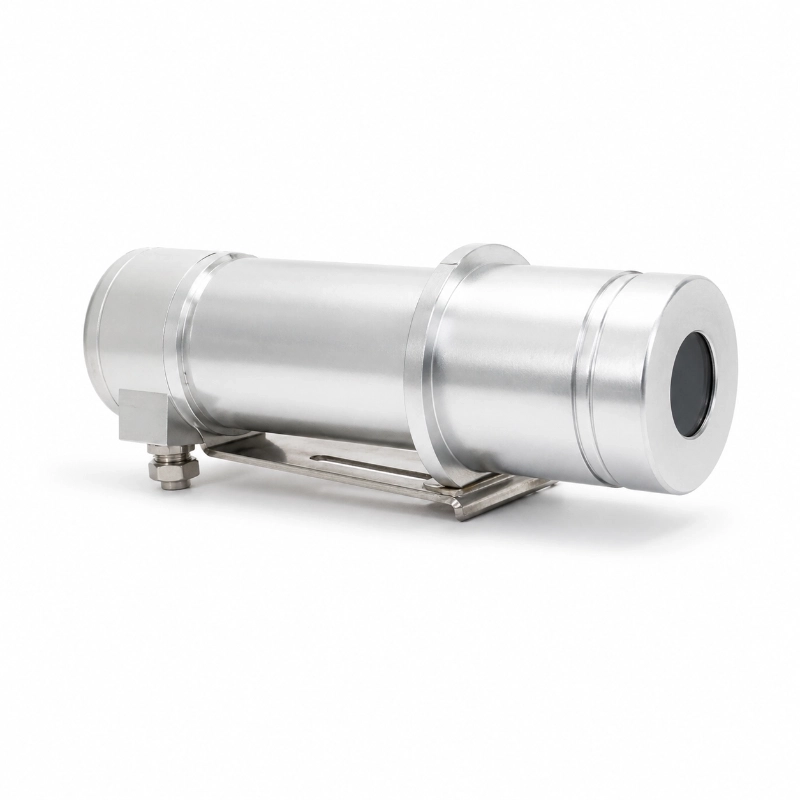
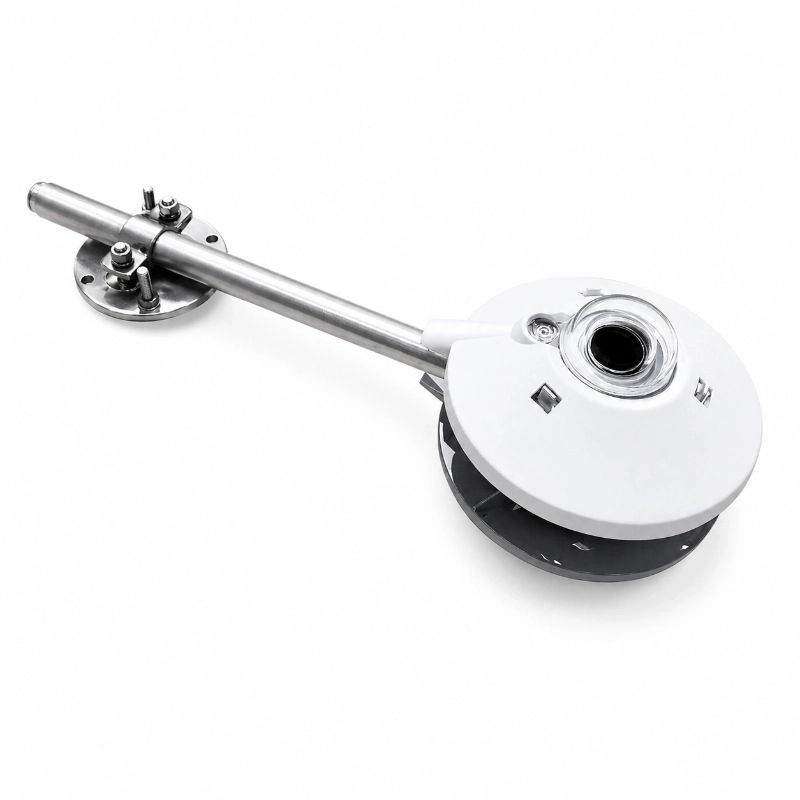
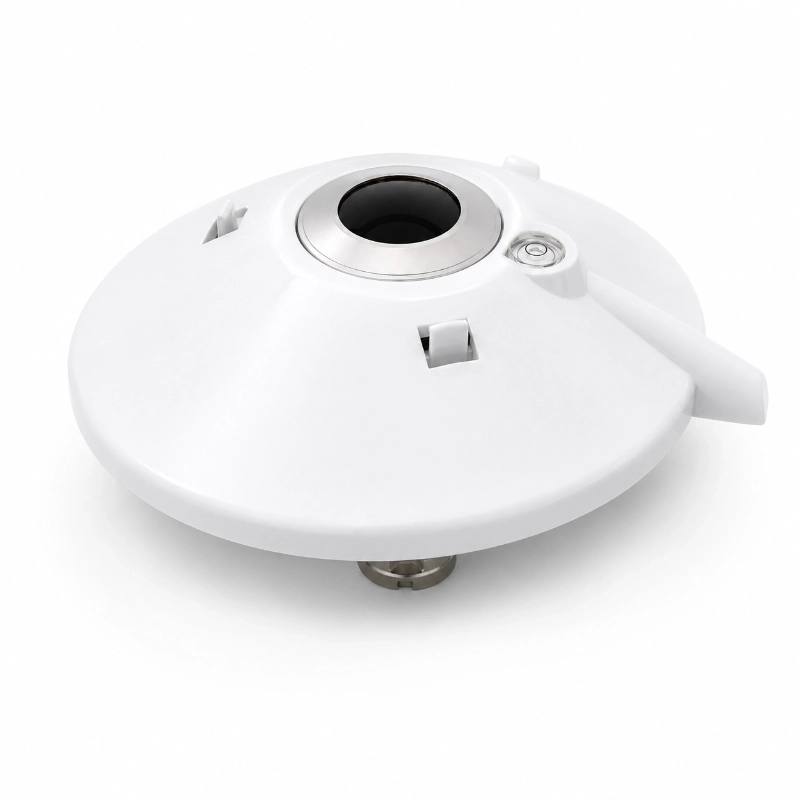
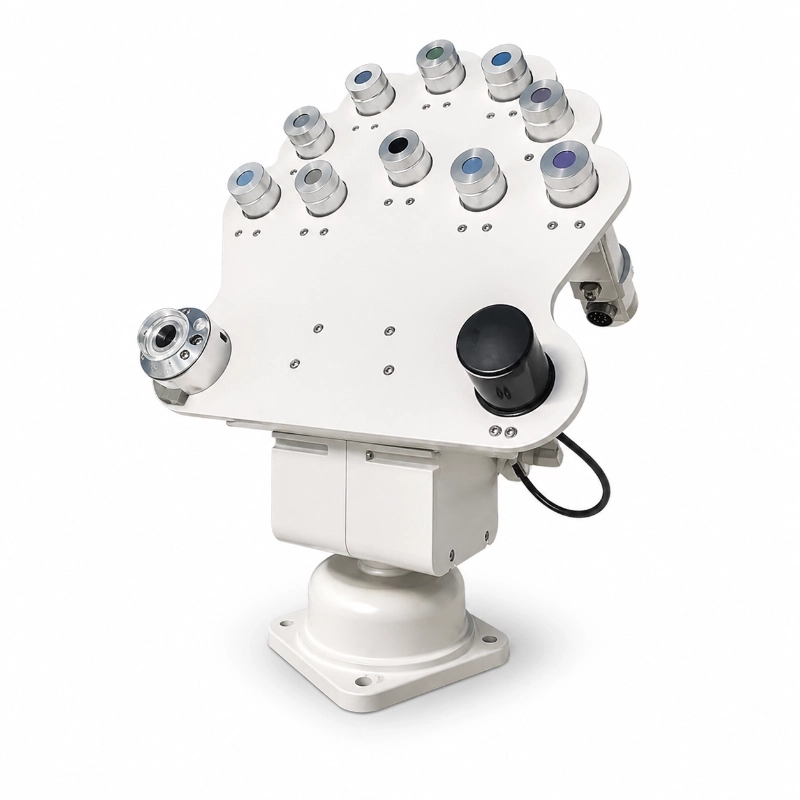
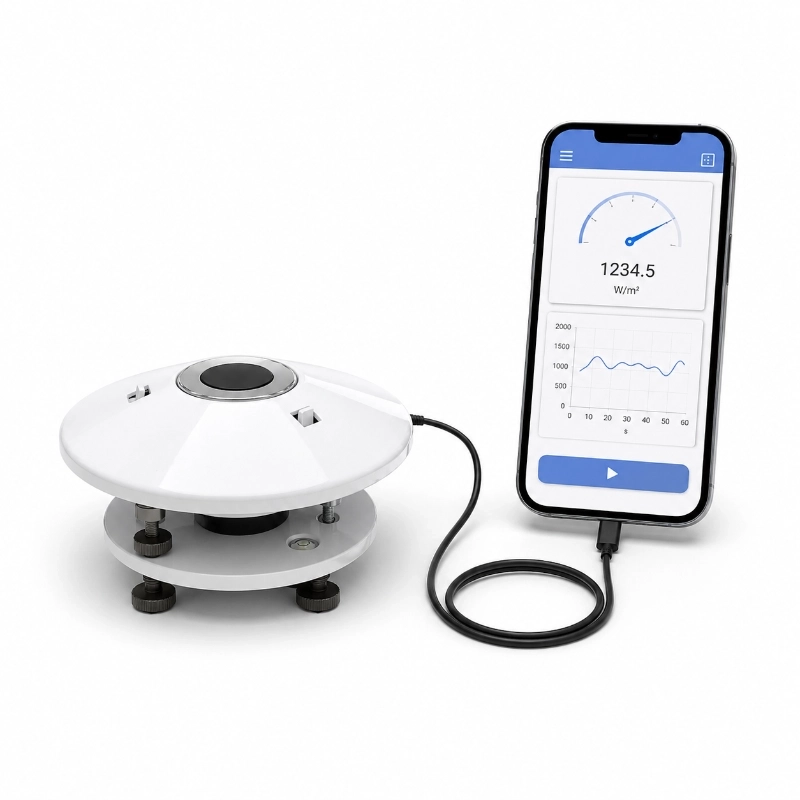
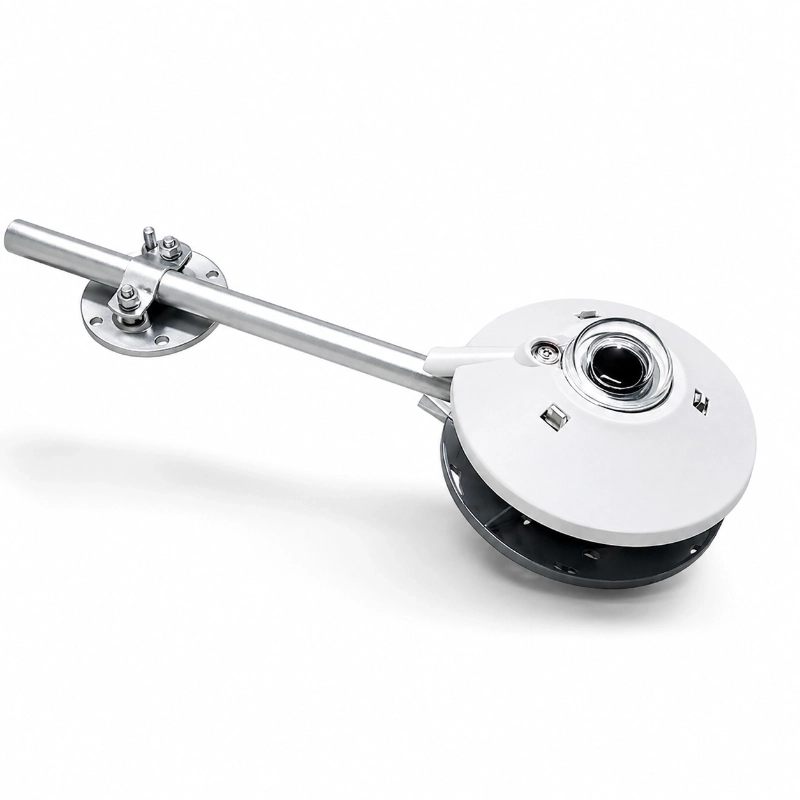
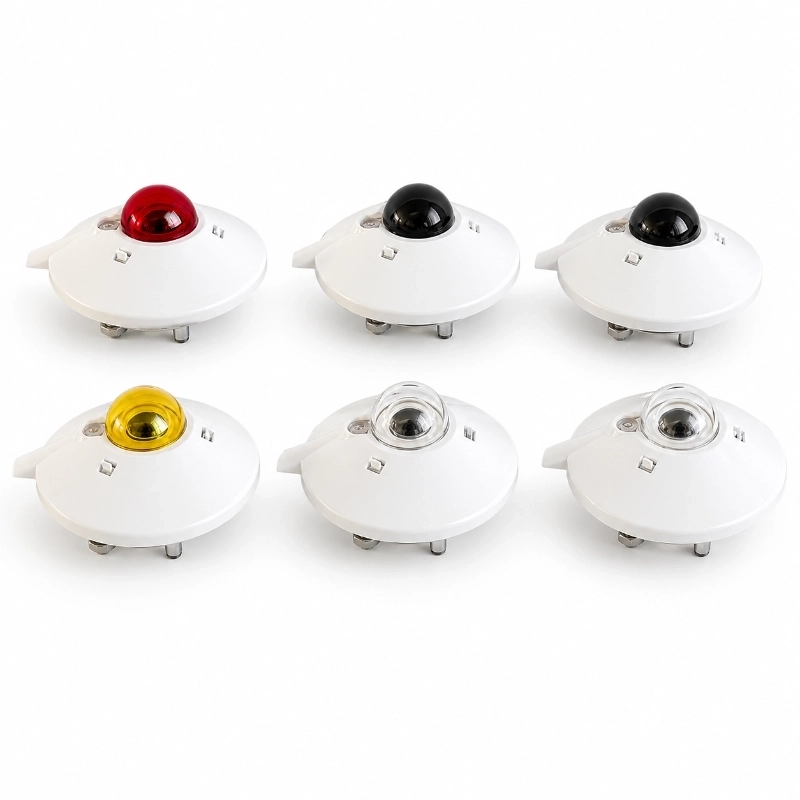
JW-TBS-2LGG-2(LC10) Automatic Solar Tracker Sensor is a high precision sun tracking instrument designed for real time solar position monitoring and dual axis tracking applications. It combines solar tracking, GPS positioning, direct radiation data acquisition and real time sun angle output in one compact device. With RS485 communication and Modbus protocol, it is ideal for solar energy systems, meteorological observation, environmental monitoring, scientific research and smart sensing projects.
2. Product Overview
JW-TBS-2LGG-2(LC10) Automatic Solar Tracker Sensor is a multifunction tracking instrument developed for accurate solar position detection and automatic sun tracking. It integrates intelligent control, sensor technology, GPS positioning and mechanical tracking structure into one device.
This product can continuously track the sun’s movement and output real time solar altitude angle, azimuth angle, local latitude and longitude, time information and direct radiation data. By using four point positioning and dual axis rotation, it improves solar tracking accuracy and helps solar panels, solar thermal systems and related equipment maintain the best orientation toward sunlight.
With standard RS485 communication and Modbus protocol, the tracker can be easily connected to data loggers, PLC systems, environmental monitoring platforms and solar control systems.
Parameter Name
Description
Model No.
JW-TBS-2LGG-2
Power Supply
DC 9 to 30V
Rotation Angle
Elevation angle -5 to 120° Azimuth angle 0 to 350°
Tracking Mode
Sun tracking plus GPS tracking
Product Weight
5 kgs
Power Consumption
Operating power 3.6W Standby power 0.95W
Output Data
Solar altitude angle -90 to +90° Azimuth angle 0 to 360° Latitude Longitude Time Direct radiation real time data Daily Monthly Yearly accumulated values Four point positioning data
Communication Interface
RS485
Communication Protocol
Standard Modbus protocol
3. Application Scenarios
Solar Energy Field: Used for automatic solar tracking in photovoltaic systems, solar thermal systems and solar energy testing platforms.
Meteorological Observation: Provides sun angle and radiation related data for weather stations and atmospheric monitoring.
Environmental Monitoring: Suitable for environmental sensing projects that require accurate sunlight and position data.
Scientific Research: Can be used in laboratories, field experiments and solar radiation studies.
Transportation Industry: Applicable in intelligent traffic sensing and special tracking related measurement scenarios.
Agricultural Ecology: Useful for agricultural meteorology, ecological monitoring and solar environment observation.
Communication Industry: Can be integrated into communication or remote sensing systems requiring solar direction data.
atellite Technology: Suitable for high precision tracking and positioning related applications.
FAQ
Q
1. What is an automatic solar tracker sensor used for?
A
An automatic solar tracker sensor is used to detect the sun’s position and help tracking systems maintain the best orientation toward sunlight. It is commonly used in solar energy, research and monitoring applications.
Q
2. What data can this product output?
A
It can output solar altitude angle, azimuth angle, GPS latitude and longitude, local time, direct radiation related data and cumulative daily monthly yearly values.
Q
3. Does this tracker support dual axis movement?
A
Yes. It supports dual axis rotation, including elevation and azimuth movement, which helps improve tracking precision.
Q
4. Does JW-IoT Automation provide RS485 communication support?
A
Yes. JW-IoT Automation provides this product with an RS485 interface and standard Modbus communication protocol for easy integration.
Q
5. Is GPS included in this solar tracker sensor?
A
Yes. The product can collect local GPS satellite signals and output latitude, longitude and local time information.
Q
6. Can JW-IoT Automation products be used in solar energy projects?
A
Yes. JW-IoT Automation solar tracking products are suitable for photovoltaic systems, solar thermal applications and other solar energy projects.
Q
7. What is the power supply range of this device?
A
The device supports a DC power input range of 9 to 30V, making it suitable for different field installation environments.
Q
8. Is this product suitable for environmental monitoring?
A
Yes. In addition to solar tracking, it can also be used in environmental monitoring, meteorological observation and agricultural ecology applications.
Q
9. Can JW-IoT Automation customize tracking solutions?
A
Yes. JW-IoT Automation can support different project requirements for solar tracking and related monitoring applications, depending on the project scope.
Q
10. What industries can use this automatic solar tracker?
A
It can be used in solar energy, transportation, scientific research, meteorology, agriculture, communication and satellite related industries.
Q
11. What communication protocol does the device use?
A
The product uses standard Modbus communication protocol, which makes it easier to integrate with industrial systems.
Q
12. Why is real time solar position output important?
A
Real time solar position output helps systems react quickly to changing sunlight conditions, improving tracking efficiency and data reliability.
 +86 13520127780
  info@jingelway.com