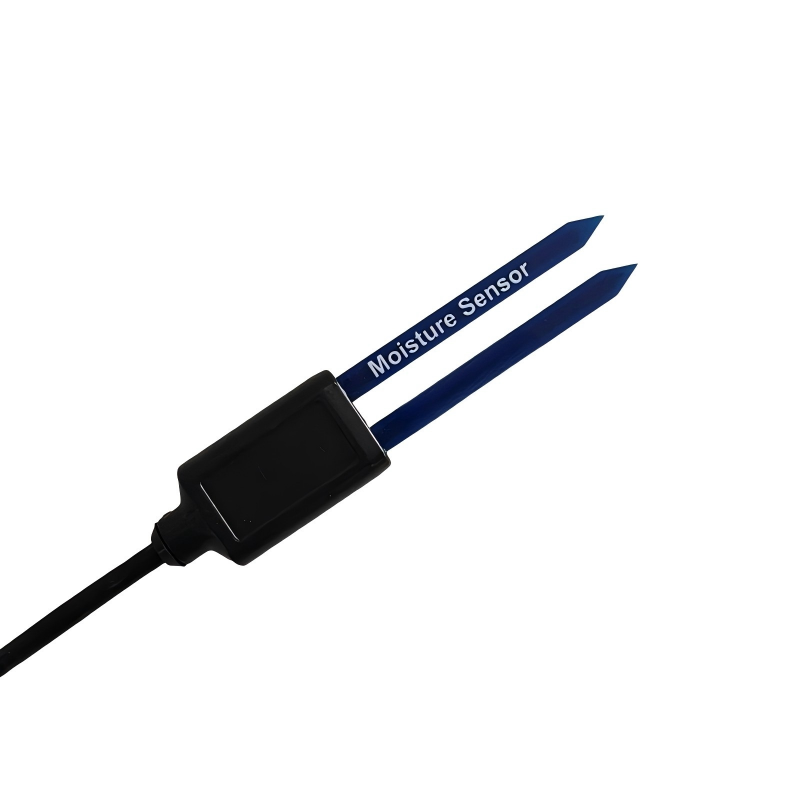
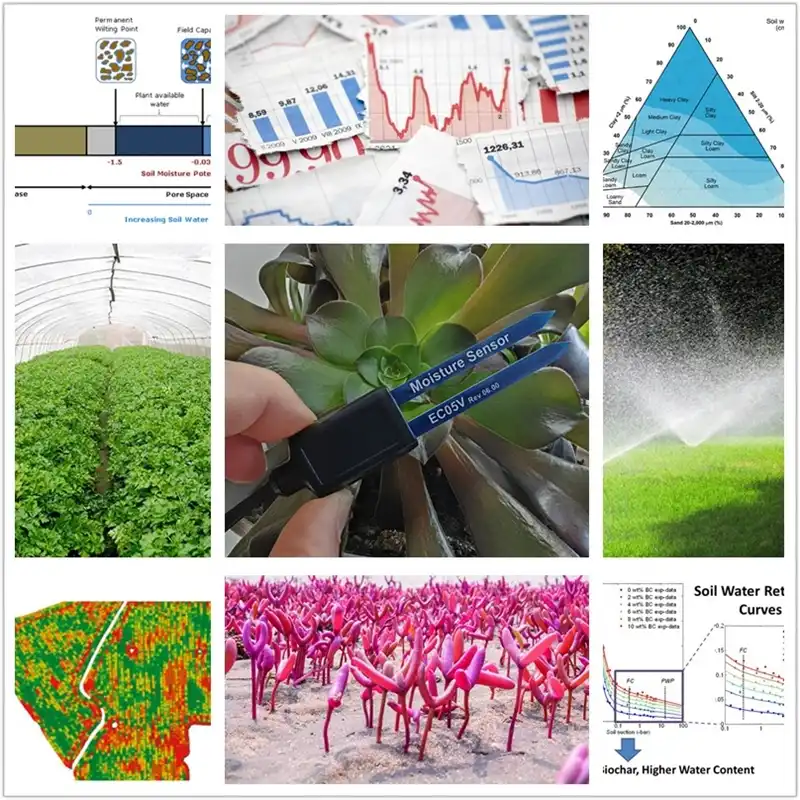
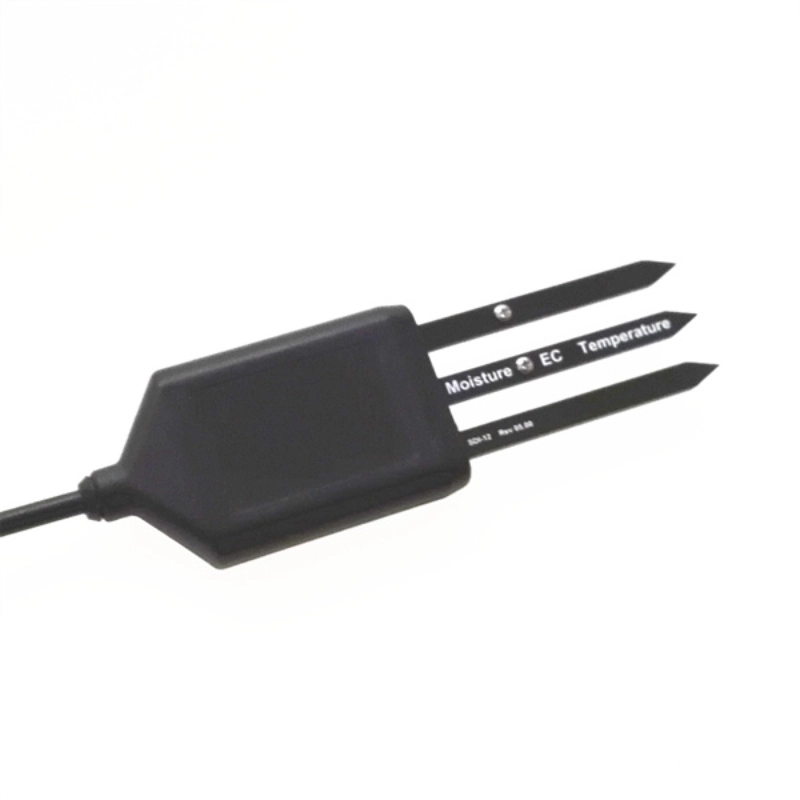
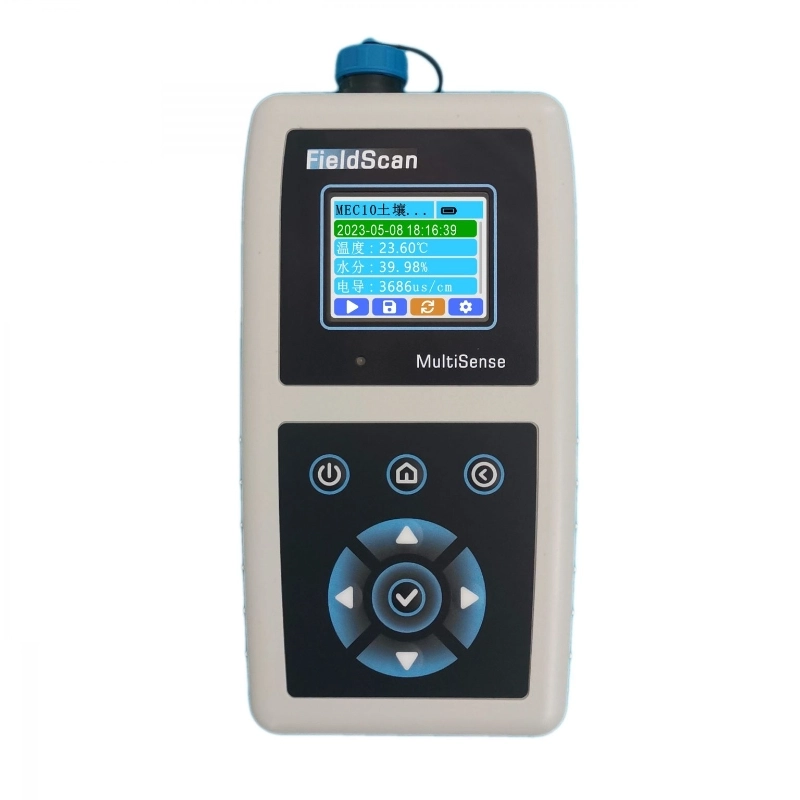
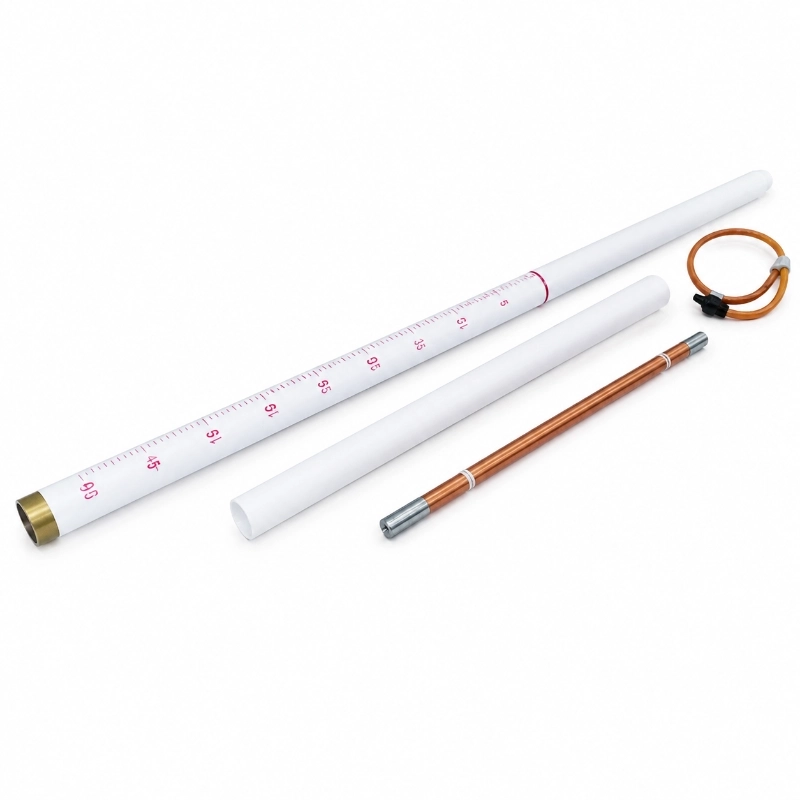
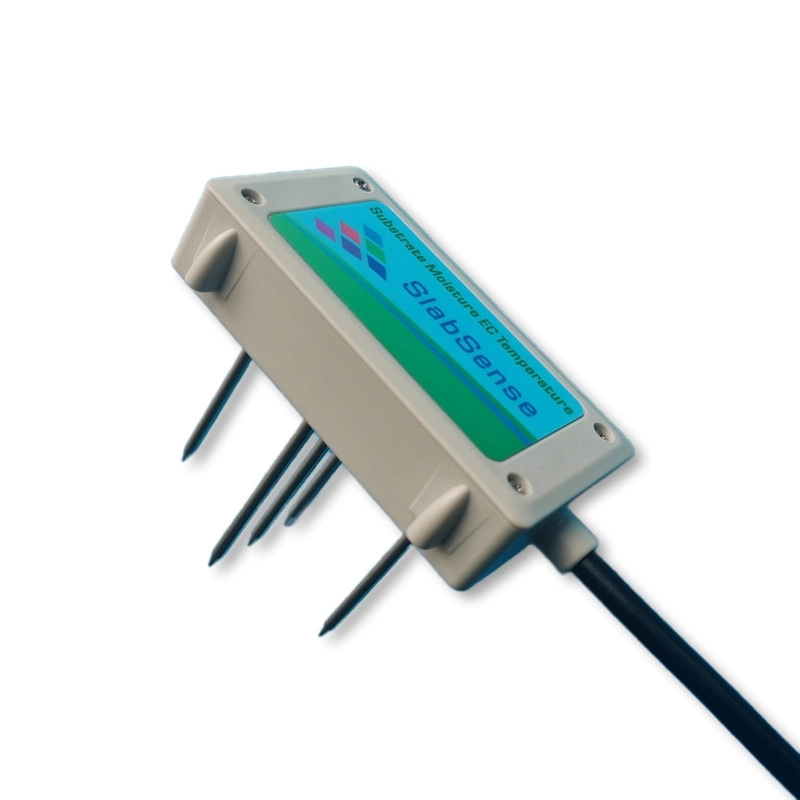
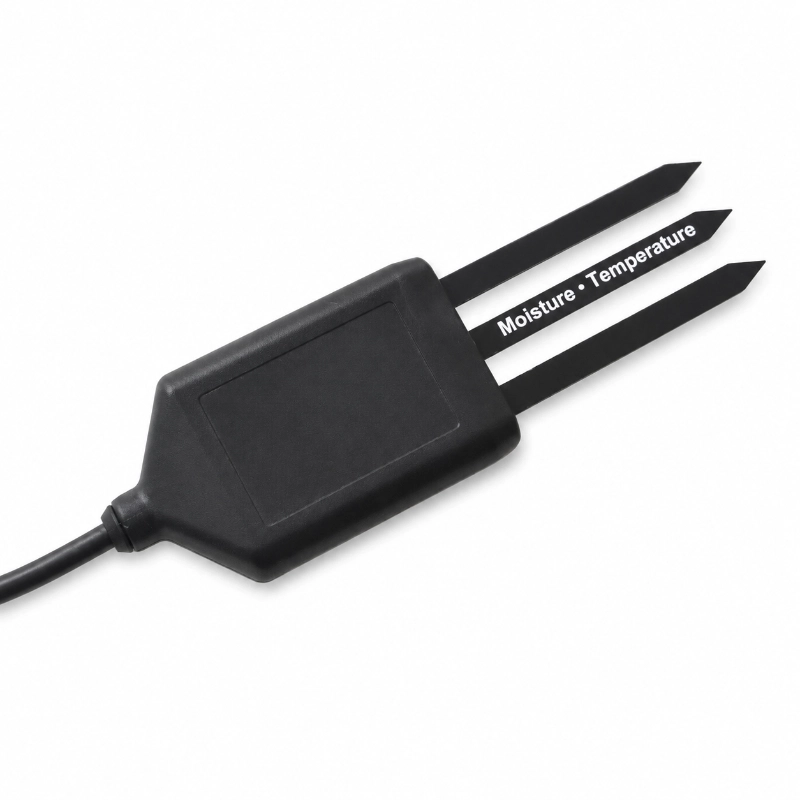
JW-S1S(Z6)Substrate Moisture Sensor is designed for accurate volumetric water content monitoring in soil and growing media. With analog voltage output, IP68 waterproof sealing, fast response time, low salinity sensitivity, and compact probe design, it is ideal for greenhouse irrigation, nursery trays, potted plants, soilless cultivation, plant research, and precision agriculture applications.
2. Product Overview
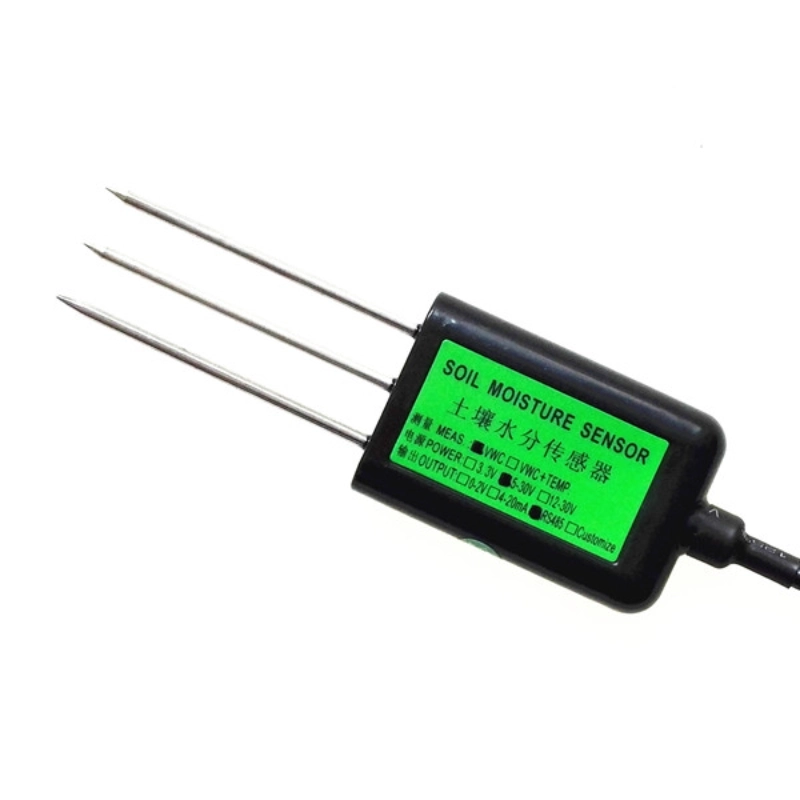
The Substrate Moisture Sensor is a compact analog sensor used to monitor the dynamic change of water content in soil and soilless growing media. By measuring the dielectric constant of the medium, the sensor can reflect the actual volumetric water content of the substrate and provide reliable data for irrigation management, plant growth research, and precision agriculture.
The sensor is especially suitable for greenhouses, potted plants, nursery trays, plant cultivation, substrate moisture monitoring, water-saving irrigation, and scientific experiments. Its small probe structure allows easy installation in limited root zone spaces, while the IP68 epoxy-sealed body supports long-term buried use.
With voltage output and fast measurement response, the sensor can be integrated with compatible data loggers, irrigation controllers, environmental monitoring terminals, and custom analog acquisition systems.
Parameter
Model No.
JW-S1S(Z6)
Product Type
Substrate Moisture Sensor
Measurement Parameter
Substrate moisture VWC
Measurement Method
Dielectric constant based moisture measurement
Power Supply
2.5–15V DC excitation voltage
Maximum Current
15 mA
Output Signal
Analog voltage output
Output Impedance
Less than 1 kΩ
Output Range at ≤5500 mV Excitation
10%–50% of excitation voltage
Output Range at >5500 mV Excitation
10%–50% of 5500 mV
VWC Measurement Range
0–100%
Resolution in Mineral Soil
0.001 m³/m³ VWC
Resolution in Growing Media
0.25%
Accuracy in Mineral Soil
±0.03 m³/m³ at EC <8 dS/m
Calibrated Accuracy in Porous Media
±0.02 m³/m³ at EC <8 dS/m
Measurement Time
Less than 10 ms
Compatible Data Loggers
METER ZL6, EM60, Em50, or compatible analog input data loggers
Data Logger Requirement
2.5–15.0 VDC excitation and single-ended voltage input
Recommended Input Resolution
12-bit or higher
Protection Rating
IP68
Operating Temperature
-40°C to 85°C
Encapsulation
Epoxy resin
Installation Method
Surface insertion or buried installation
Cable Length
5 m or customized
Dimensions
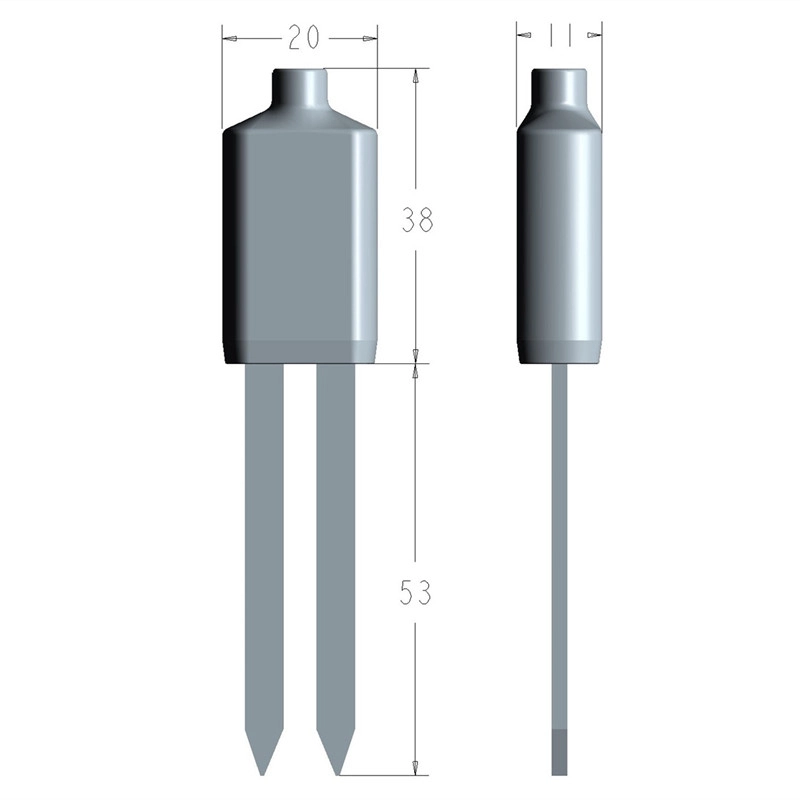
20 × 11 × 91 mm
3. Dimension
4. Output Options and Communication
The sensor uses analog voltage output, making it suitable for data loggers or acquisition systems that support excitation voltage and single-ended voltage input.
Analog Voltage Output
The sensor outputs voltage according to the dielectric constant of the surrounding medium. The output range is typically between 10% and 50% of the excitation voltage. Any data logger that can provide 2.5–15.0 VDC excitation voltage for about 10 ms and has a 12-bit or higher voltage input can be used with the sensor.
For battery-powered monitoring systems, pulse excitation is recommended. This allows the sensor to remain powered off most of the time, reducing battery consumption and supporting long-term field deployment.
Compatible Acquisition Systems
The sensor can be connected to:
Analog input data loggers
Greenhouse monitoring terminals
Irrigation controllers
Custom analog acquisition boards
Environmental monitoring stations
Plant research data collection systems
Low-power IoT monitoring devices
Signal Conversion for Different Media
The sensor provides conversion methods for different growing media, including:
Mineral soil
Potting soil
Rockwool
Other customized substrates
Dielectric constant calculation
For special substrates such as volcanic rock, high-titanium soil, or media with high dry dielectric constant, custom calibration is recommended to improve accuracy.
5. Application Scenarios
Greenhouse Irrigation Monitoring
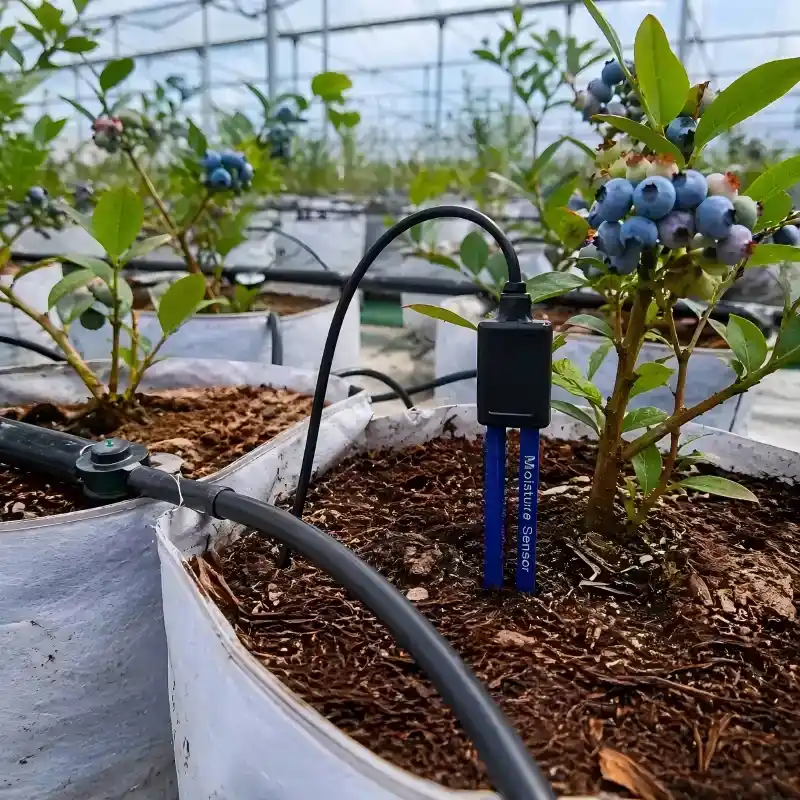
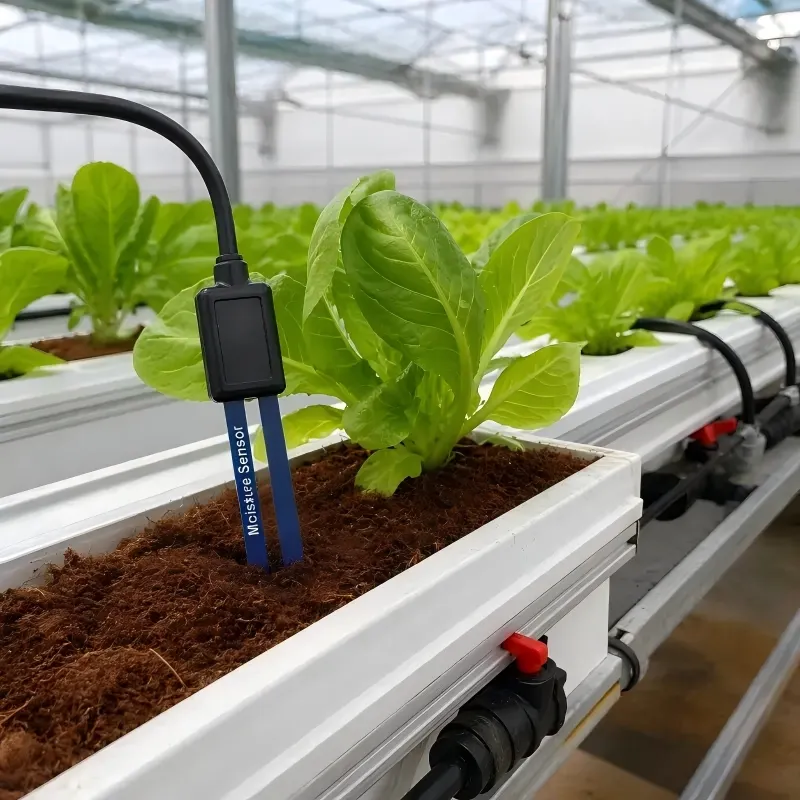
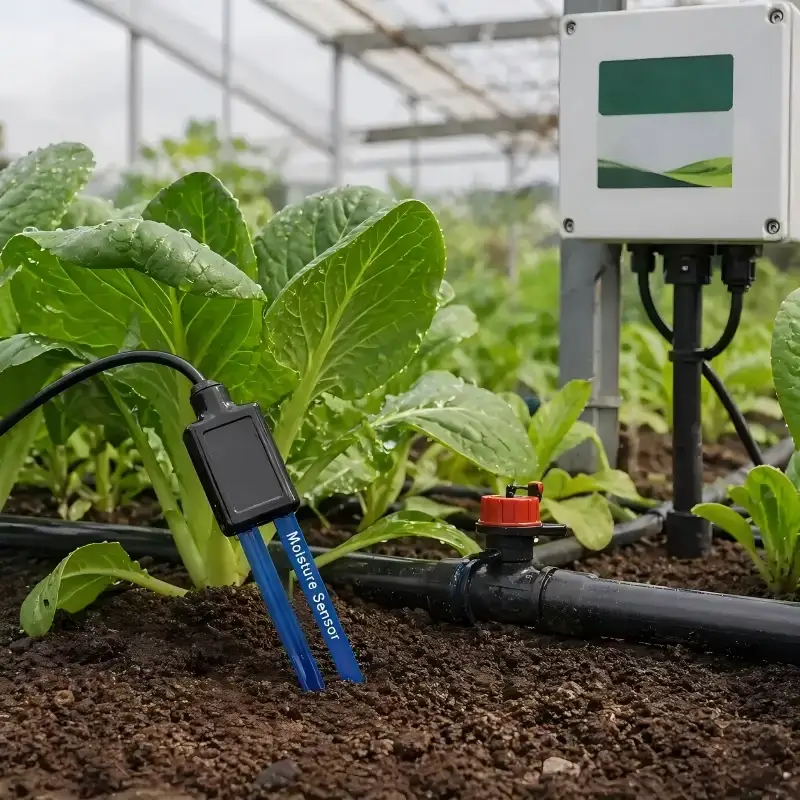
The sensor can be installed in greenhouse soil beds or growing substrates to monitor moisture changes in the root zone. It helps growers understand when to irrigate and how much water is needed, reducing overwatering and improving crop consistency.
Typical uses include:
Greenhouse vegetable irrigation
Tomato and cucumber substrate monitoring
Leafy vegetable cultivation
Flower and ornamental plant growing
Smart greenhouse water management
Potted Plants and Nursery Trays
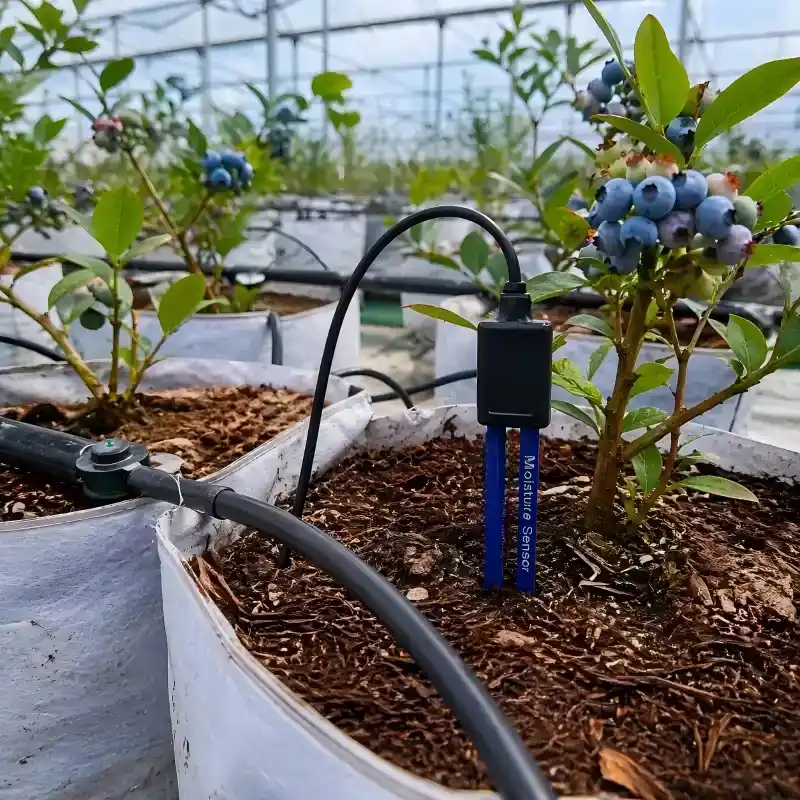
Thanks to its compact probe design, the sensor is suitable for small containers, nursery trays, seedling media, and potted plants. It can help monitor substrate moisture in limited spaces where larger probes may be difficult to install.
Typical uses include:
Seedling tray moisture monitoring
Potted plant irrigation control
Nursery production management
Plug tray water content monitoring
Plant cultivation experiments
Soilless Cultivation and Substrate Monitoring
The sensor can be used in different growing media such as potting soil, rockwool, peat, coco coir, perlite mixtures, and other porous substrates. For special media, custom calibration is recommended to improve measurement accuracy.
Typical uses include:
Rockwool water content monitoring
Coco coir substrate irrigation
Potting soil moisture monitoring
Hydroponic growing media monitoring
Substrate water balance analysis
Water Saving Irrigation
The sensor provides real-time substrate moisture data to support precise irrigation decisions. When connected to a data logger or controller, it can help reduce unnecessary irrigation and improve water use efficiency.
Typical uses include:
Drip irrigation management
Precision irrigation scheduling
Water-saving agriculture
Soil moisture threshold monitoring
Irrigation research and optimization
Scientific Research and Precision Agriculture
The sensor is suitable for agricultural research, plant physiology studies, soil water movement experiments, and controlled environment agriculture. It provides reliable moisture data for researchers studying plant water demand and substrate water dynamics.
Typical uses include:
Plant growth experiments
Soil and substrate moisture research
Root zone water dynamics
Precision agriculture monitoring
Controlled environment agriculture trials
6.Installation and Measurement
The sensor should be inserted into soil or substrate until the probes are fully covered. Good contact between the probe and the surrounding medium is essential for accurate measurement.
Recommended installation steps:
Remove stones or hard particles from the installation area.
If the soil is very hard, pre-drill a hole or water the soil before installation.
Insert the sensor into the soil or substrate carefully.
Make sure the probes are fully inserted.
Compact the surrounding medium gently after installation.
Avoid air gaps around the probes.
Connect the sensor to a compatible voltage input data logger.
Select the correct conversion formula for the target medium.
FAQ
Q
1. What does this substrate moisture sensor measure?
A
This sensor measures volumetric water content in soil and growing substrates by detecting the dielectric constant of the surrounding medium.
Q
2. Is this sensor suitable for greenhouse irrigation?
A
Yes. It is suitable for greenhouse irrigation monitoring, helping growers understand root zone moisture and optimize irrigation timing.
Q
3. What output signal does the sensor provide?
A
The sensor provides analog voltage output. It can be connected to compatible data loggers or acquisition systems with voltage input.
Q
4. Can JW-IoT provide this sensor for smart greenhouse projects?
A
Yes. JW-IoT can provide this substrate moisture sensor for smart greenhouse irrigation, nursery monitoring, potted plant cultivation, and precision agriculture projects.
Q
5. What power supply does the sensor require?
A
The sensor supports 2.5–15V DC excitation voltage, with maximum current up to 15 mA.
Q
6. Can it be used in rockwool?
A
Yes. The sensor provides a rockwool moisture conversion formula and can be used for rockwool substrate monitoring. For best results, calibration based on the actual substrate is recommended.
Q
7. Is the sensor waterproof?
A
Yes. The sensor has an IP68 waterproof rating and uses epoxy resin encapsulation for long-term buried installation.
Q
8. Can JW-IoT integrate this sensor with a monitoring system?
A
Yes. JW-IoT can integrate the sensor with data loggers, greenhouse monitoring terminals, irrigation systems, IoT gateways, and cloud platforms.
Q
9. What applications is this sensor suitable for?
A
It is suitable for substrate moisture monitoring, scientific experiments, water-saving irrigation, greenhouse cultivation, plant culture, precision agriculture, nursery trays, and potted plants.
Q
10. Does the sensor need custom calibration?
A
For common mineral soil, potting soil, and rockwool, users can apply the provided conversion formulas. For special substrates with high dielectric constant or high salinity, custom calibration is recommended.
Q
11. Why are the readings too low?
A
Low readings may be caused by air gaps around the probes or incorrect insertion. Make sure the probes are fully inserted and in good contact with the substrate.
Q
12. Why choose JW-IoT for substrate moisture monitoring?
A
JW-IoT can provide sensor selection, installation guidance, data acquisition integration, smart irrigation system design, and cloud-based monitoring solutions for agricultural projects.
 +86 13520127780
  info@jingelway.com