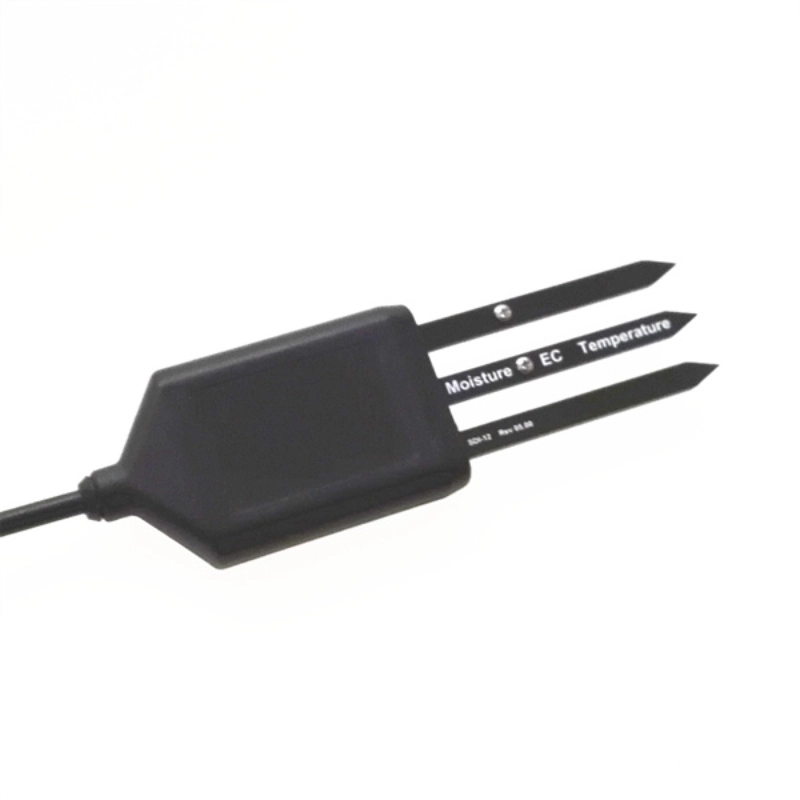
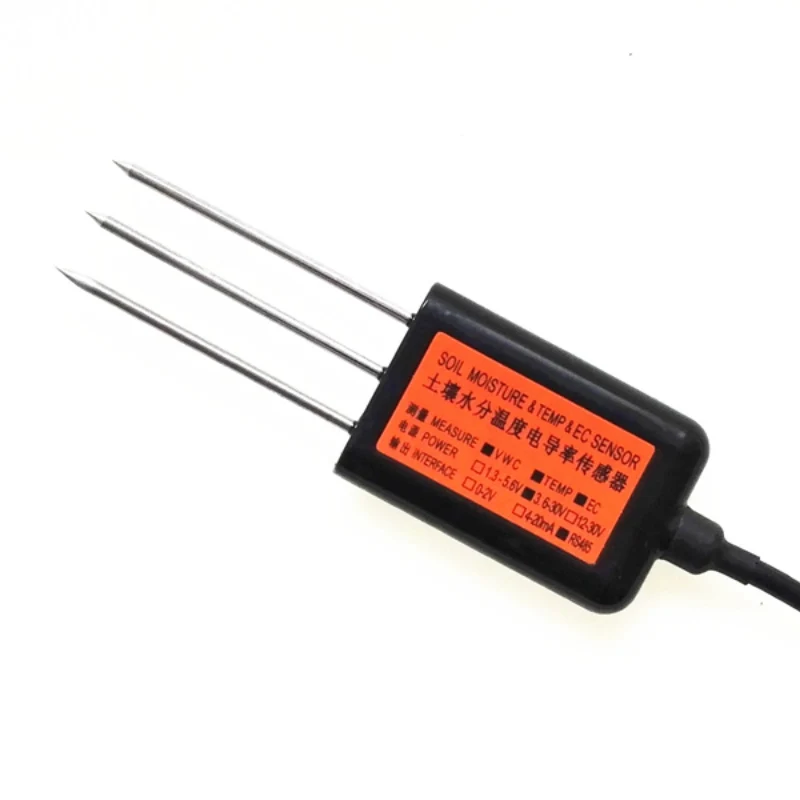
3-in-1 Soil and Substrate Monitoring
Measures soil moisture, temperature, and electrical conductivity in one compact probe.
RS485 Modbus RTU Output
Supports standard RS485 communication and Modbus RTU protocol for easy integration with data loggers, RTUs, IoT gateways, and smart agriculture platforms.
Wide Power Supply Range
Operates with 3.0–28V DC, suitable for low-power field monitoring and solar-powered systems.
Volumetric Water Content Measurement
Measures VWC from 0–100%, covering dry soil, moist substrate, and saturated growing media.
Electrical Conductivity Monitoring
EC range up to 0–20 dS/m or 0–20000 μS/cm, useful for salinity, nutrient, and fertilizer movement monitoring.
Temperature Measurement
Measures temperature from -40°C to 80°C, supporting greenhouse climate and root zone condition analysis.
IP68 Waterproof Protection
Epoxy resin encapsulation and IP68 structure allow long-term burial in soil or substrate.
Low Salinity Sensitivity
Designed to provide stable moisture readings with reduced interference from salinity variation.
High Stability and Accuracy
Suitable for continuous agricultural monitoring, research plots, irrigation control, and substrate management.
Custom Substrate Calibration Support
Supports user-defined substrate calibration for improved accuracy in rockwool, coco coir, peat, volcanic rock, and other soilless media.
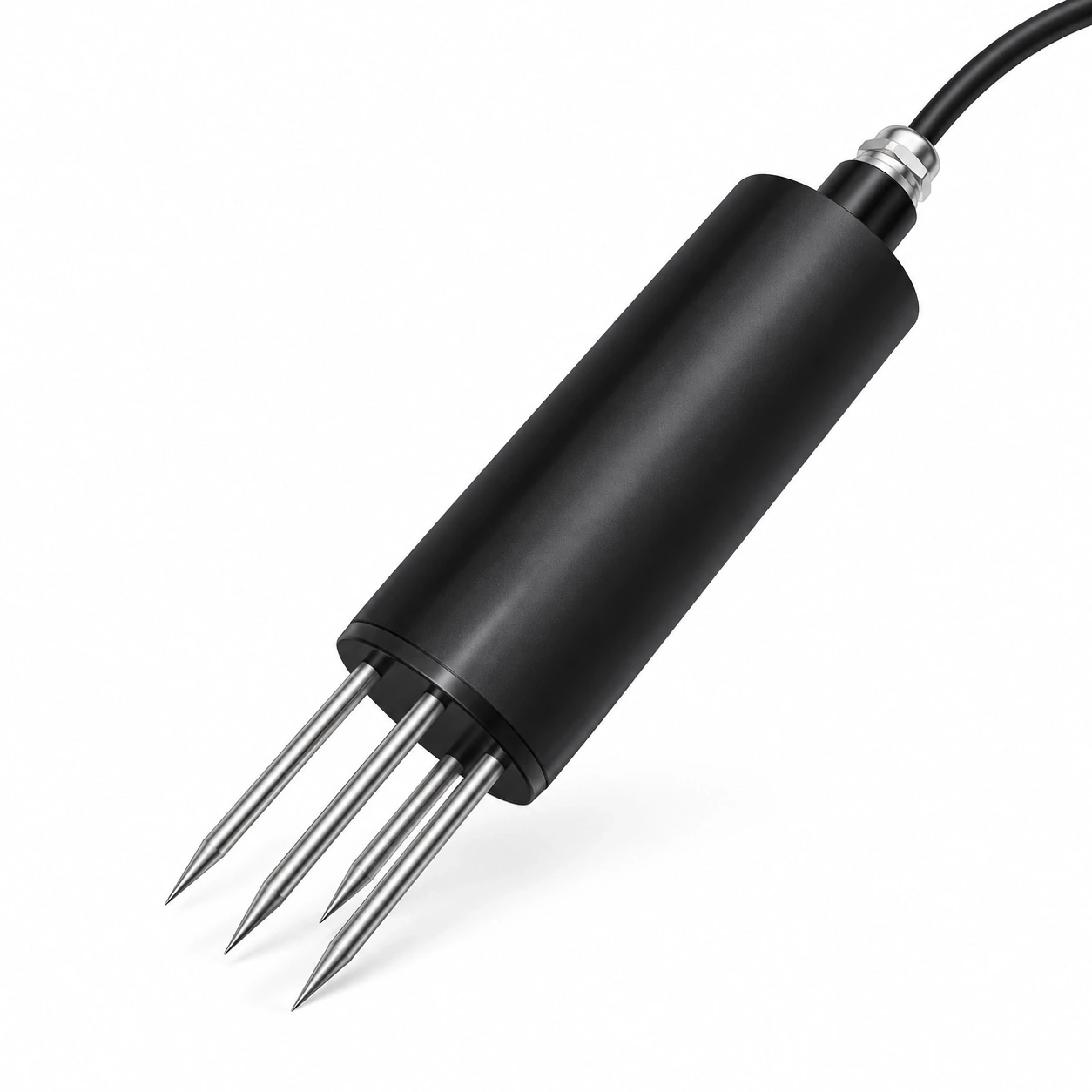
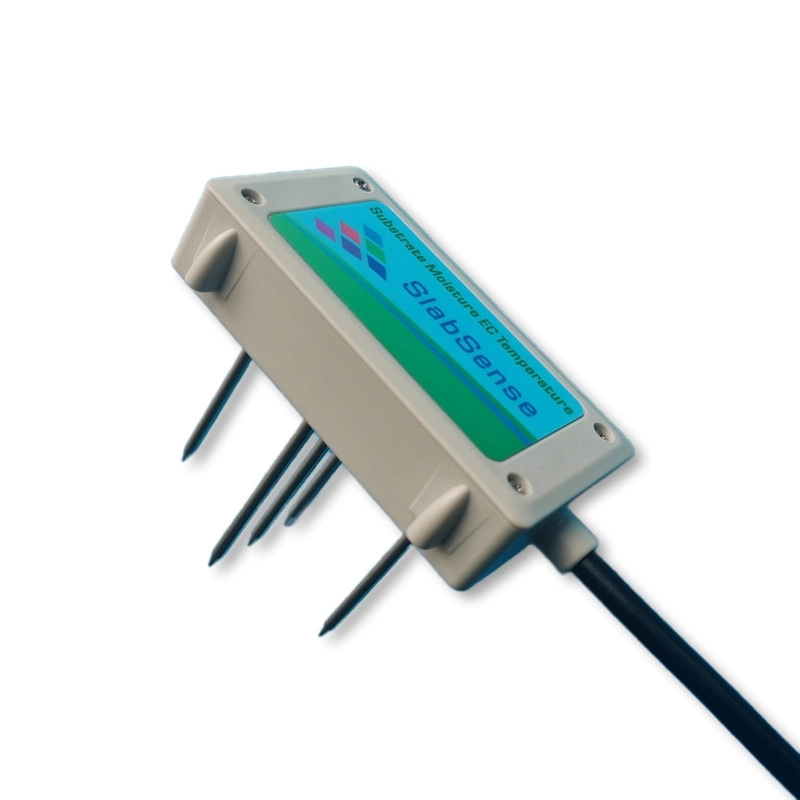
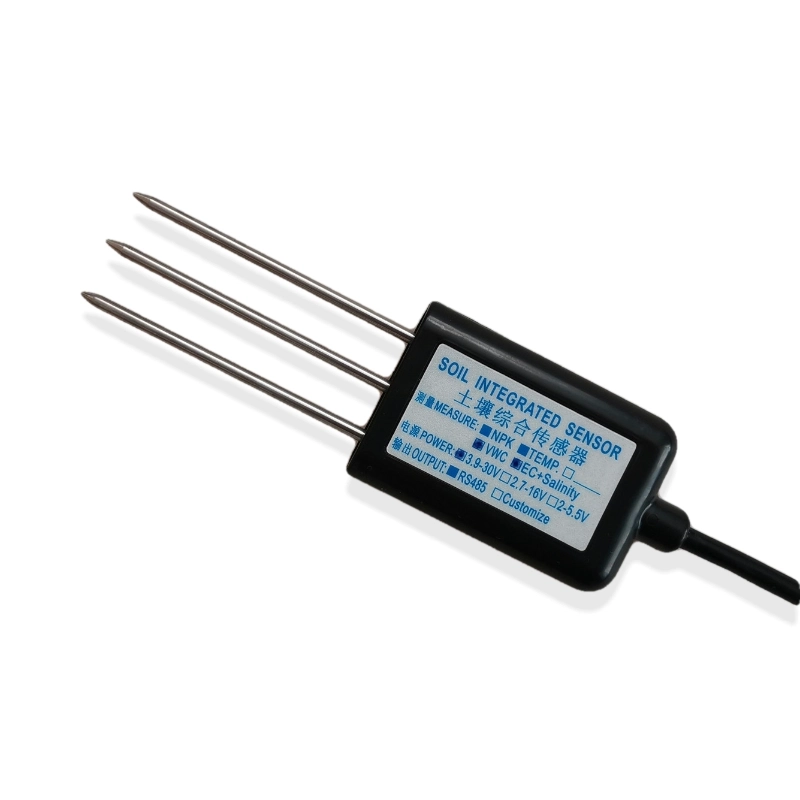
JW-S3S(Z5)soil moisture EC temperature sensor is designed for accurate monitoring of volumetric water content, substrate temperature, and electrical conductivity in soil and soilless growing media. With RS485 Modbus RTU output, IP68 waterproof protection, low power consumption, and stable epoxy-sealed construction, it is ideal for greenhouse monitoring, hydroponics, smart irrigation, horticulture, substrate water balance, and fertilizer movement analysis.
2. Product Overview
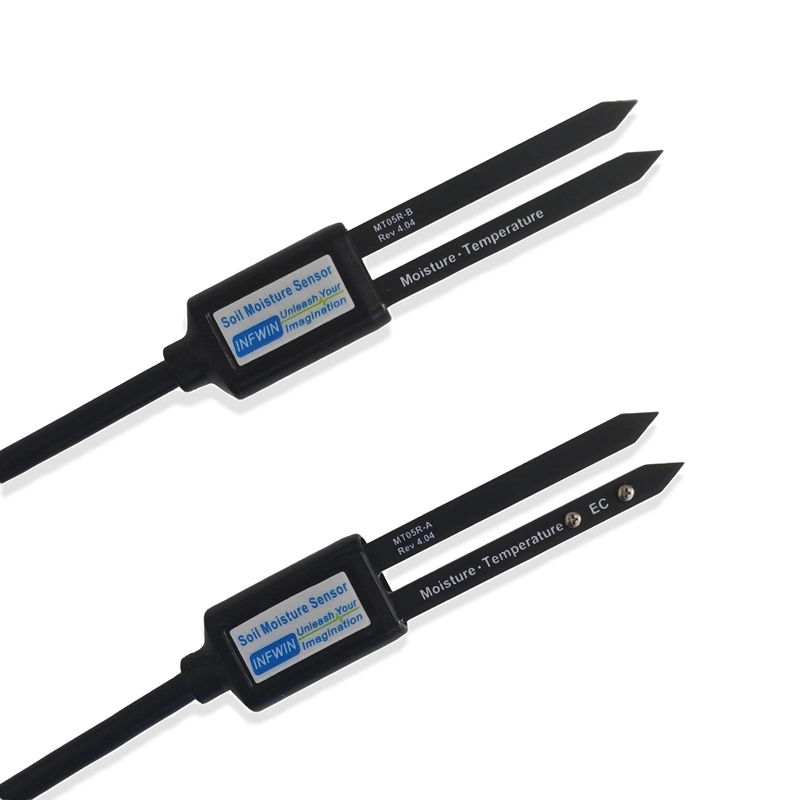
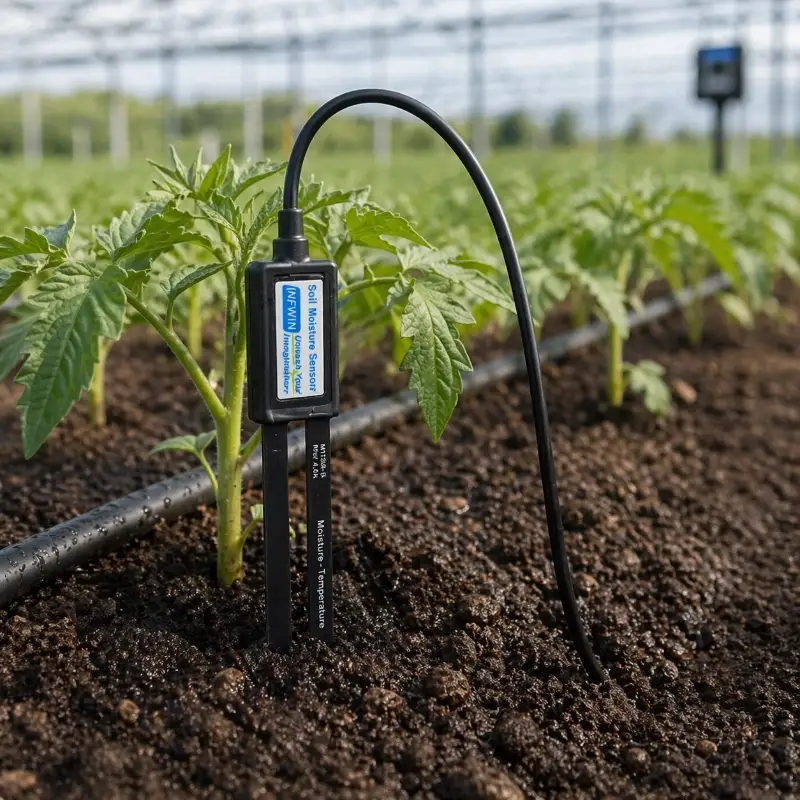
The Soil Moisture EC Temperature Sensor is a compact digital sensor for monitoring root zone conditions in soil and soilless substrates. It provides accurate data for volumetric water content VWC, temperature, and electrical conductivity EC, helping growers and researchers understand irrigation status, substrate water balance, nutrient movement, and root zone environment.
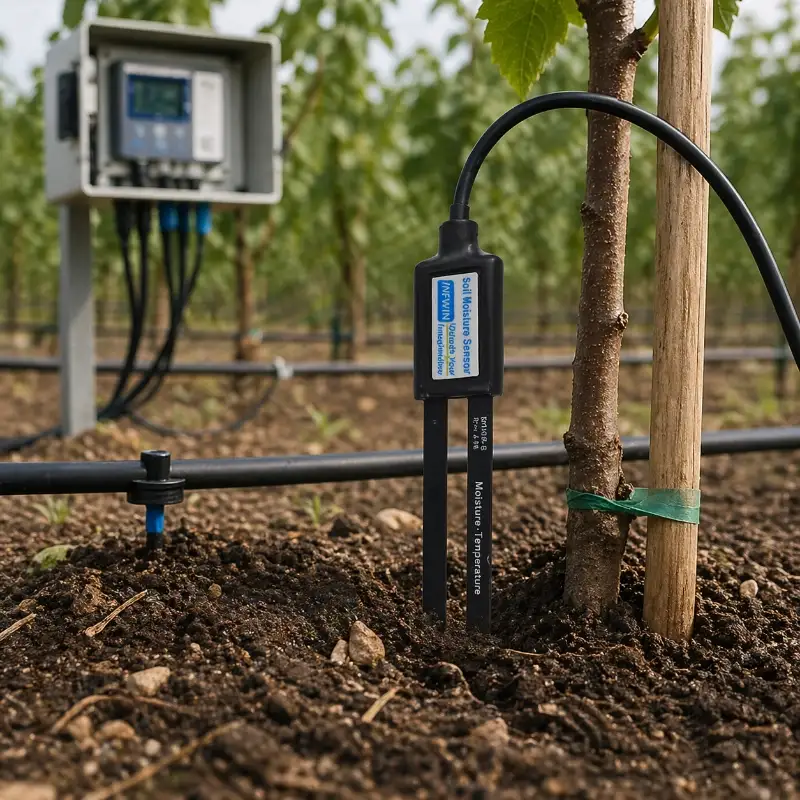
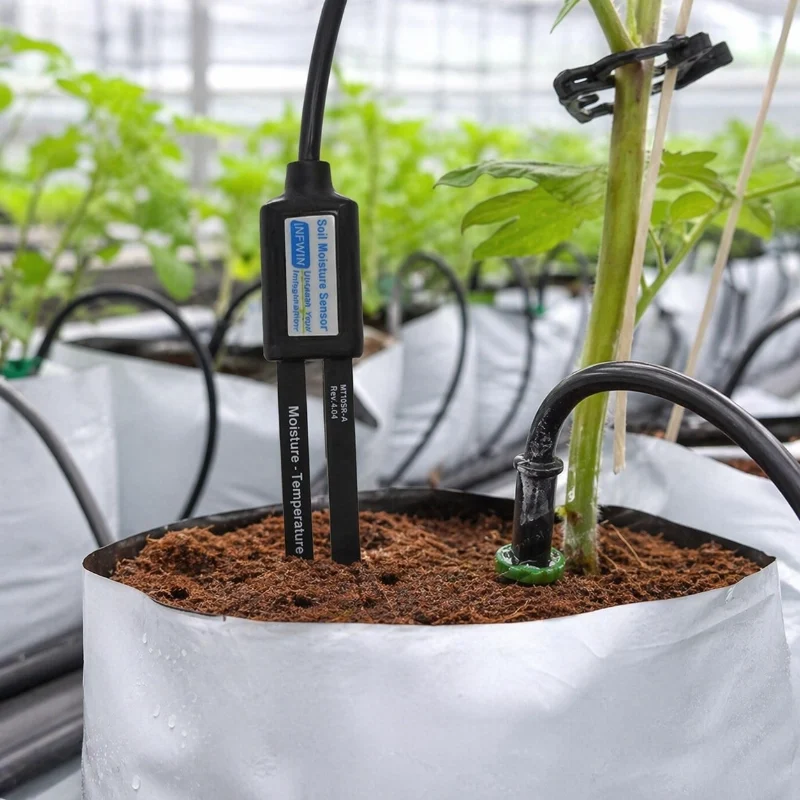
The sensor uses a rugged epoxy-sealed body and can be inserted directly into soil or growing media. Its IP68 waterproof design allows long-term buried installation in greenhouse beds, potted crops, hydroponic substrates, nursery containers, orchards, and field irrigation systems.
With RS485 Modbus RTU communication, the sensor can be integrated into smart agriculture systems, irrigation controllers, environmental monitoring stations, and cloud-based IoT platforms.
Parameter
Model No.
JW-S3S(Z5)
Product Type
Soil Moisture EC Temperature Sensor
Output Interface
RS485
Protocol
Modbus RTU
Power Supply
3.0–28V DC
Static Current
Typical less than 300 μA
Measurement Current
Typical less than 10 mA during 100 ms measurement
VWC Range
0–100%
VWC Resolution
0–50%: 0.1%, 50–100%: 0.5%
VWC Typical Accuracy
0–50%: ±3%, 50–100%: ±5%
Dielectric Constant Range
1–81
Dielectric Resolution
1.00–40.00: ±0.1, 40.00–81.00: ±0.5
Dielectric Typical Accuracy
1.00–40.00: ±1, 40.00–81.00: ±3
EC Range
0–20 dS/m or 0–20000 μS/cm
EC Resolution
0–5 dS/m: 0.01 dS/m, 5–20 dS/m: 0.1 dS/m
EC Accuracy
0–5 dS/m: ±5%, 5–20 dS/m: ±10%
EC Temperature Compensation
0–50°C
Temperature Range
-40°C to 80°C
Temperature Resolution
0.1°C
Temperature Accuracy
0–50°C: ±0.5°C, -40–80°C: ±1.0°C
Protection Rating
IP68
Operating Temperature
-40°C to 85°C
Cable Length
2 m or customized
Dimensions
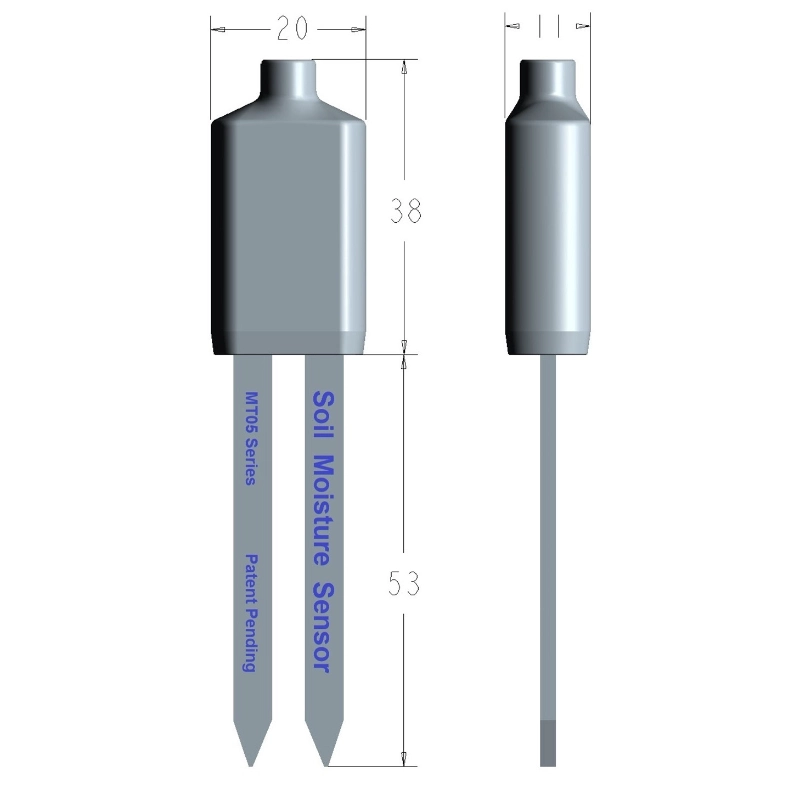
20 × 11 × 95 mm
Measurement Method
Continuous measurement or measurement on request
Default Baud Rate
9600 bps
Default Data Format
8 data bits, no parity, 1 stop bit
3. Dimension
4. Output Options and Communication
The sensor uses RS485 Modbus RTU output, which is widely used in smart agriculture, irrigation automation, environmental monitoring, and industrial IoT systems.
RS485 Modbus RTU Communication
The RS485 interface allows stable digital data transmission and easy connection to third-party controllers or cloud gateways. It is suitable for multi-sensor networks in greenhouses, farms, nurseries, hydroponic systems, and research fields.
Communication advantages include:
Standard Modbus RTU protocol
Easy integration with RTUs and data loggers
Suitable for IoT gateways and cloud platforms
Configurable Modbus address from 1 to 255
Default baud rate of 9600 bps
Supports 1200, 2400, 4800, 9600, 19200, and 38400 bps
Supports temperature unit setting in Celsius or Fahrenheit
Supports continuous measurement or request-based measurement
Provides INT16 and FLOAT register data formats
5. Application Scenarios
Greenhouse Monitoring
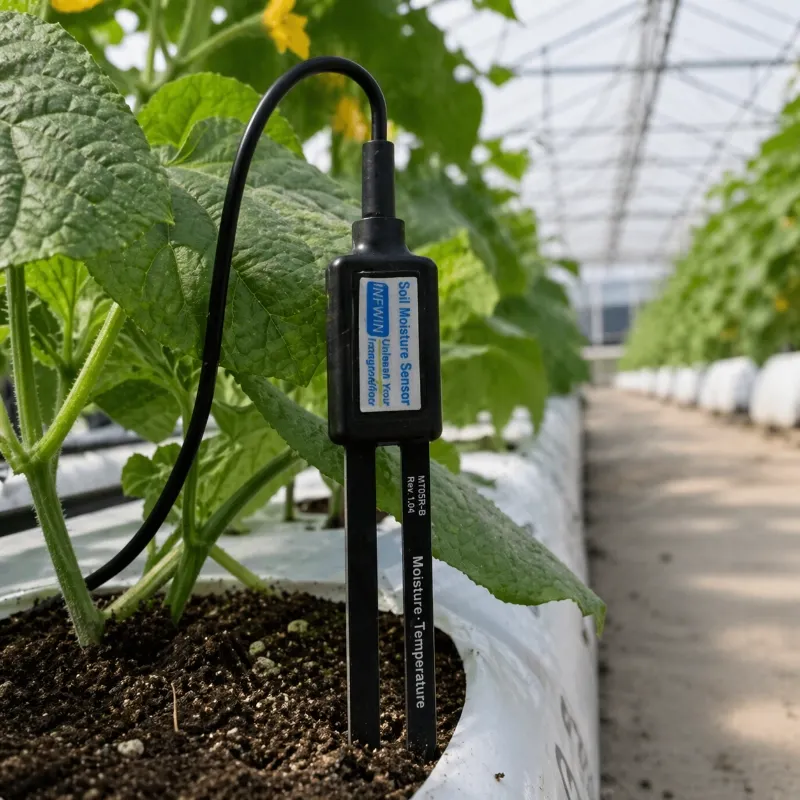
This sensor is ideal for greenhouse crop production where root zone moisture, temperature, and EC directly affect crop growth. It helps growers optimize irrigation timing, avoid overwatering, and monitor nutrient concentration in the substrate.
Typical greenhouse applications include:
Tomato greenhouse monitoring
Cucumber and pepper cultivation
Leafy vegetable production
Flower and ornamental plant growing
Seedling nursery management
Substrate water balance monitoring
Hydroponics and Soilless Cultivation
For hydroponics and soilless systems, the sensor can monitor growing media such as coco coir, rockwool, peat, perlite mixtures, volcanic rock, and other substrates. Custom calibration can be used to improve VWC accuracy for specific media types.
Typical uses include:
Coco coir substrate monitoring
Rockwool slab irrigation control
Hydroponic crop management
Blueberry substrate monitoring
Strawberry and tomato substrate EC monitoring
Nutrient movement analysis
Smart Irrigation Management
The sensor provides real-time moisture and EC data to support precise irrigation decisions. When connected to an irrigation controller or IoT gateway, it can help reduce water waste, improve fertigation efficiency, and maintain stable root zone conditions.
Typical uses include:
Irrigation scheduling
Drip irrigation monitoring
Fertigation management
Water saving agriculture
Soil moisture threshold control
Remote irrigation decision support
Soil and Substrate Research
The sensor is suitable for universities, agricultural institutes, and research farms that require stable data for soil water balance, substrate calibration, fertilizer migration, and crop growth studies.
Typical uses include:
Soil water balance research
Substrate VWC calibration
Fertilizer movement studies
Root zone temperature research
Plant available water analysis
Controlled environment agriculture trials
6.Installation and Measurement
The sensor should be inserted directly into soil or substrate until the stainless steel probes are fully covered. Good contact between the probe and the medium is essential for accurate measurement.
Recommended installation steps:
Remove stones or hard particles from the installation area.
Pre-drill a pilot hole in very hard soil if necessary.
Push the sensor carefully into the soil or substrate.
Make sure the probes are fully inserted.
Ensure close contact between the probe surface and the growing medium.
Avoid air gaps around the probes.
Connect the sensor to an RS485 data logger, RTU, or IoT gateway.
Check communication and readings before long-term operation.
FAQ
Q
1. What does this soil sensor measure?
A
This sensor measures volumetric water content, substrate temperature, and electrical conductivity. It is suitable for soil and soilless growing media monitoring.
Q
2. Is this sensor suitable for greenhouse irrigation control?
A
Yes. It can provide real-time root zone moisture and EC data, helping greenhouse growers optimize irrigation and fertigation schedules.
Q
3. Does the sensor support RS485 Modbus RTU?
A
Yes. The product is available with an RS485 interface using Modbus RTU protocol, which makes it easy to integrate with RTUs, data loggers, PLCs, and IoT gateways.
Q
4. Can JW-IoT provide this sensor for smart agriculture projects?
A
Yes. JW-IoT can provide this soil moisture EC temperature sensor for smart agriculture, greenhouse monitoring, hydroponics, irrigation automation, and substrate monitoring projects.
Q
5. What is the measuring range of soil moisture?
A
The volumetric water content range is 0–100%, suitable for dry soil, moist substrate, and saturated growing media.
Q
6. Can it be used in soilless substrates?
A
Yes. The sensor can be used in soilless media such as coco coir, rockwool, peat, perlite mixtures, and other substrates. Custom calibration is recommended for higher accuracy.
Q
7. What is the EC measurement range?
A
The EC measurement range is 0–20 dS/m, equivalent to 0–20000 μS/cm.
Q
8. Is this sensor waterproof?
A
Yes. The sensor has an IP68 waterproof rating and is suitable for long-term buried installation in soil or substrate.
Q
9. Can JW-IoT integrate this sensor with a cloud platform?
A
Yes. JW-IoT can integrate the sensor with RS485 data loggers, IoT gateways, cloud dashboards, and irrigation management platforms.
Q
10. What power supply does the sensor require?
A
The sensor supports a wide power supply range from 3.0V to 28V DC, suitable for low-power and solar-powered systems.
Q
11. Can the sensor support custom substrate calibration?
A
Yes. The sensor supports user-defined substrate calibration, which helps improve VWC accuracy for specific growing media.
Q
12. Why choose JW-IoT for soil and substrate monitoring?
A
JW-IoT can provide not only the sensor hardware, but also IoT gateway integration, cloud monitoring, smart irrigation system design, and project-based technical support for agricultural monitoring applications.
 +86 13520127780
  info@jingelway.com