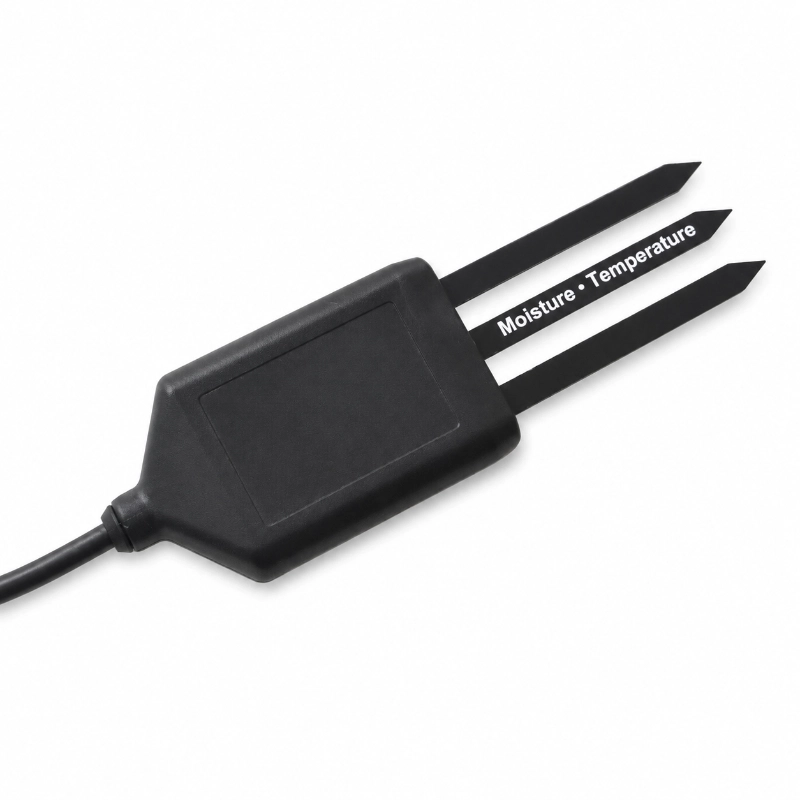
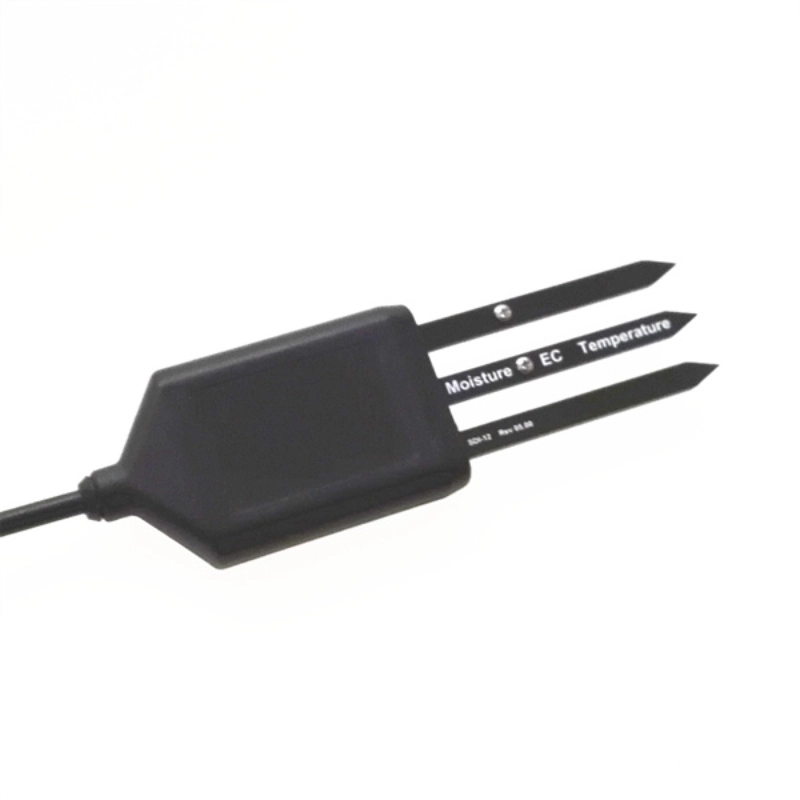
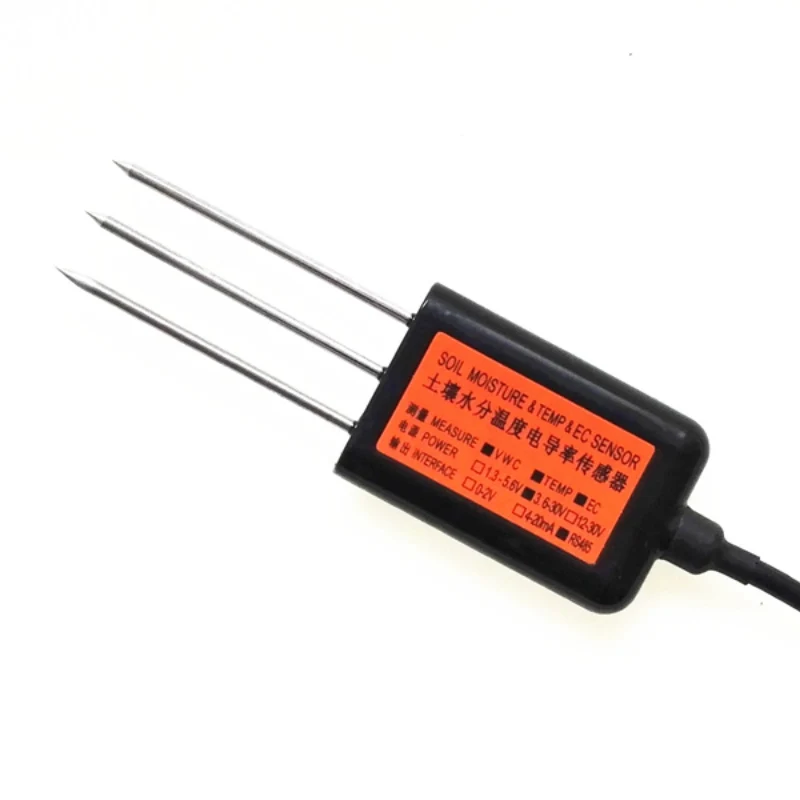
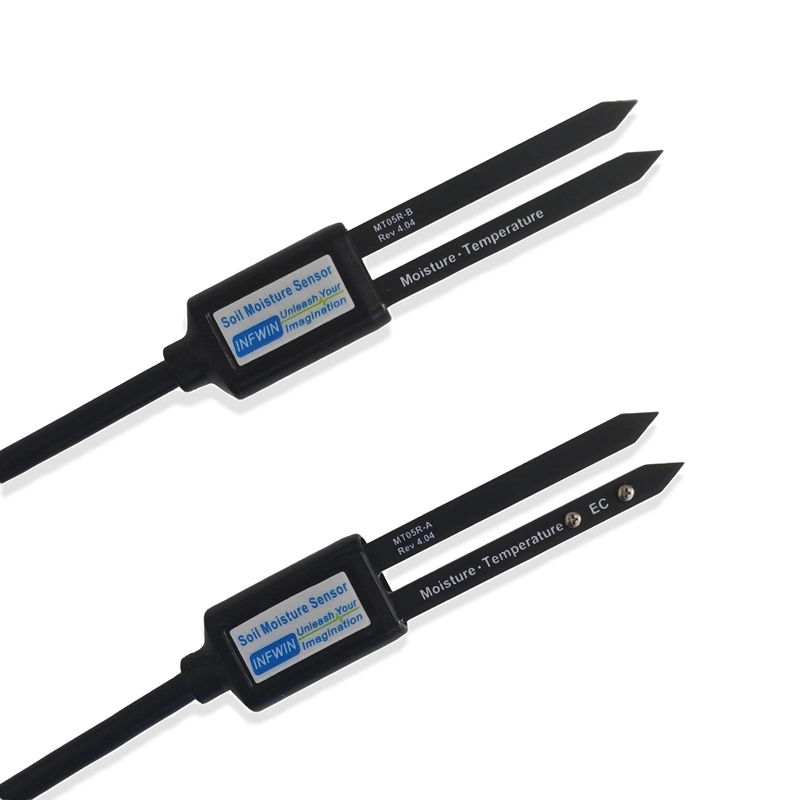
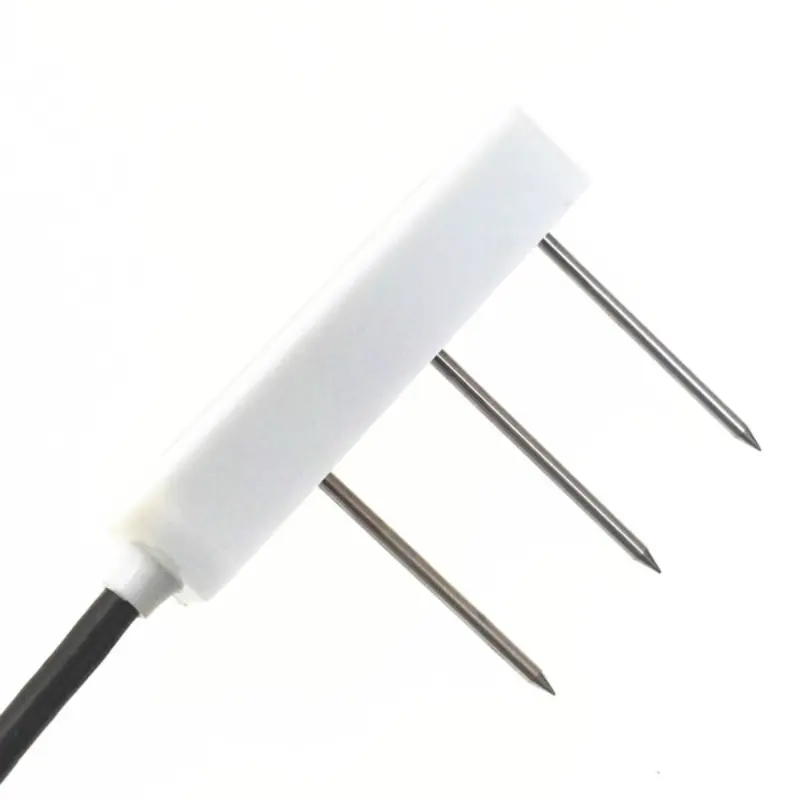
The JW-S2S(Z10) is a compact soil water content sensor for greenhouse irrigation, root-zone monitoring, nursery production and smart farming systems.
It measures two important root-zone parameters:
Volumetric soil water content
Soil temperature
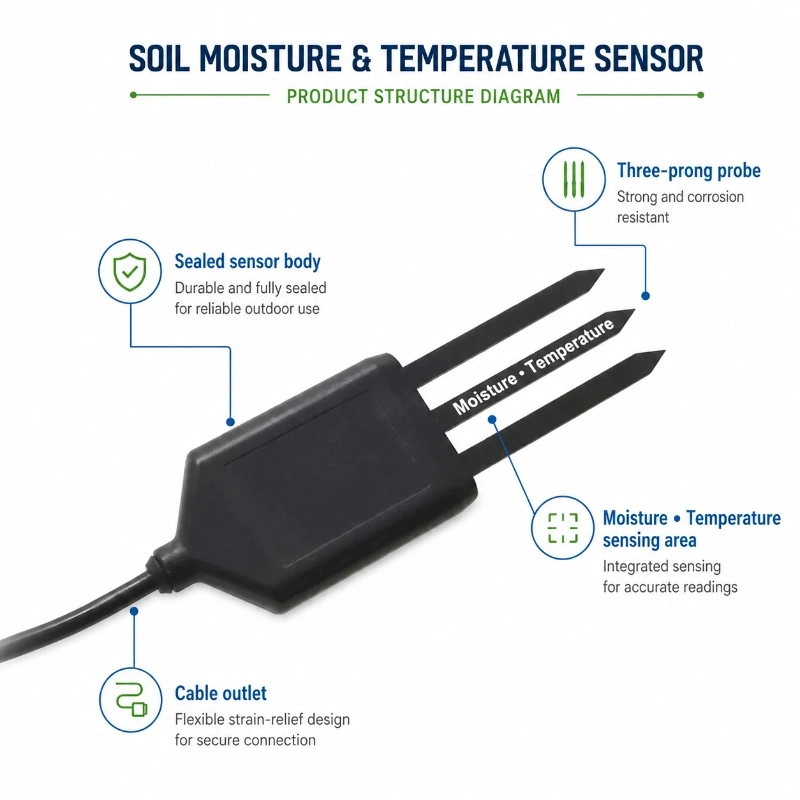
Based on FDR measurement technology, the sensor detects changes in the dielectric properties of soil and converts them into stable volumetric water content data. Its compact 35 × 11 × 111 mm body and 51 mm electrodes make it suitable for greenhouse beds, nursery containers, raised beds and other installations where available root-zone space is limited.
The sensor supports optional 0–2V analog output or RS485 Modbus-RTU communication. It can be connected to irrigation controllers, data acquisition modules, PLCs, RTUs, IoT gateways and cloud-based greenhouse monitoring platforms.
Product Overview
The JW-S2S(Z10) is designed to help greenhouse growers, irrigation engineers and agricultural IoT integrators monitor the amount of water available in the crop root zone.
Soil moisture directly affects:
Root respiration
Water absorption
Nutrient transport
Plant transpiration
Irrigation frequency
Crop stress
Root disease risk
Greenhouse water consumption
Relying only on fixed irrigation schedules can result in unnecessary watering when the soil is already wet or delayed irrigation when crops begin to experience water stress.
By collecting real-time volumetric water content data, the sensor helps greenhouse operators understand actual root-zone conditions instead of estimating irrigation demand only from time, weather or visual inspection.
The integrated temperature measurement also provides additional information about the growing environment because root-zone temperature can affect germination, root activity, microbial processes and nutrient uptake.
For projects requiring sensors, controllers, communication devices and cloud software, the probe can be incorporated into a complete Smart Greenhouse Control System.
What Is Volumetric Soil Water Content?
Volumetric water content, often abbreviated as VWC, describes the volume of water contained in a given volume of soil.
For example, a volumetric water content reading of 30% means that water occupies approximately 30% of the measured soil volume under the sensor’s measurement conditions.
Unlike a simple wet or dry switch, a VWC sensor provides continuous numerical data. This allows growers to observe:
How quickly soil dries after irrigation
Whether irrigation reaches the root zone
Whether soil remains excessively wet
Differences between greenhouse zones
Moisture changes during crop development
Irrigation response at different depths
Daily and seasonal moisture trends
The correct irrigation threshold is not identical for every crop or soil type. Greenhouse operators should establish suitable upper and lower moisture thresholds according to crop variety, growth stage, soil texture, rooting depth and irrigation strategy.
How the FDR Soil Moisture Sensor Works
The sensor uses Frequency Domain Reflectometry, or FDR, to measure changes in the dielectric properties of the surrounding soil.
Water has a much higher dielectric constant than air and most dry soil minerals. As soil water content changes, the dielectric response around the electrodes also changes. The sensor processes this response and outputs a volumetric water content value.
FDR sensing offers several benefits for greenhouse monitoring:
Fast measurement response
No moving parts
Continuous monitoring capability
Suitable for buried installation
Low maintenance requirements
Easy integration into automated systems
More useful trend data than manual visual inspection
Accurate measurement still depends on correct installation and good contact between the electrodes and the surrounding soil.
Parameter
Model No.
JW-S2S(Z10)
Product Type
Soil moisture temperature sensor
Measurement Parameters
Soil moisture and soil temperature
Measurement Principle
FDR soil moisture measurement
Output Options
0–2V voltage output or RS485 Modbus-RTU
Power Supply
3.9–30V DC
Static Power Consumption
6 mA at 24V DC
Soil Moisture Range
Optional 0–50% or 0–100%
Moisture Resolution
0.03% from 0–50%, 1% from 50–100%
Moisture Accuracy
±2% from 0–50%, ±3% from 50–100%
Temperature Range
-40–80°C
Temperature Resolution
0.1°C
Temperature Accuracy
±0.5°C
Operating Environment
-40–85°C
Protection Rating
IP68
Probe Material
Corrosion resistant special electrode
Sealing Material
Black flame retardant epoxy resin
Installation Method
Fully buried or probes fully inserted into measured medium
Standard Cable Length
2 m
Cable Customization
Available on request
Connection Method
Pre installed cold pressed terminal
Dimensions
35 × 11 × 111 mm
Electrode Length
51 mm
Which Soil Moisture Sensor Model Should You Choose?
Model
Main positioning
Output
Sensor size
Electrode length
Recommended application
JW-S2S(Z10)
Compact greenhouse root-zone sensor
0–2V or RS485
35 × 11 × 111 mm
51 mm
Greenhouse beds, nursery containers and limited-space installations
JW-S2S(Z1)
Multi-output monitoring sensor
0–2V, 4–20mA or RS485
88 × 26 × 68 mm
50 mm
Industrial controllers and general agricultural monitoring
JW-S2S(Z12)
Longer-electrode field sensor
0–2V, 4–20mA or RS485
45 × 15 × 145 mm
70 mm
Farmland, hydrology and deeper root-zone installation
Compact Probe Design for Greenhouse Root Zones
The JW-S2S(Z10) has a smaller body and shorter electrodes than several general-purpose field soil probes.
Its compact construction is useful in applications such as:
Greenhouse planting beds
Raised beds
Nursery containers
Seedling production areas
Potted ornamental plants
Vegetable production zones
Herb cultivation
Strawberry growing beds
Small experimental plots
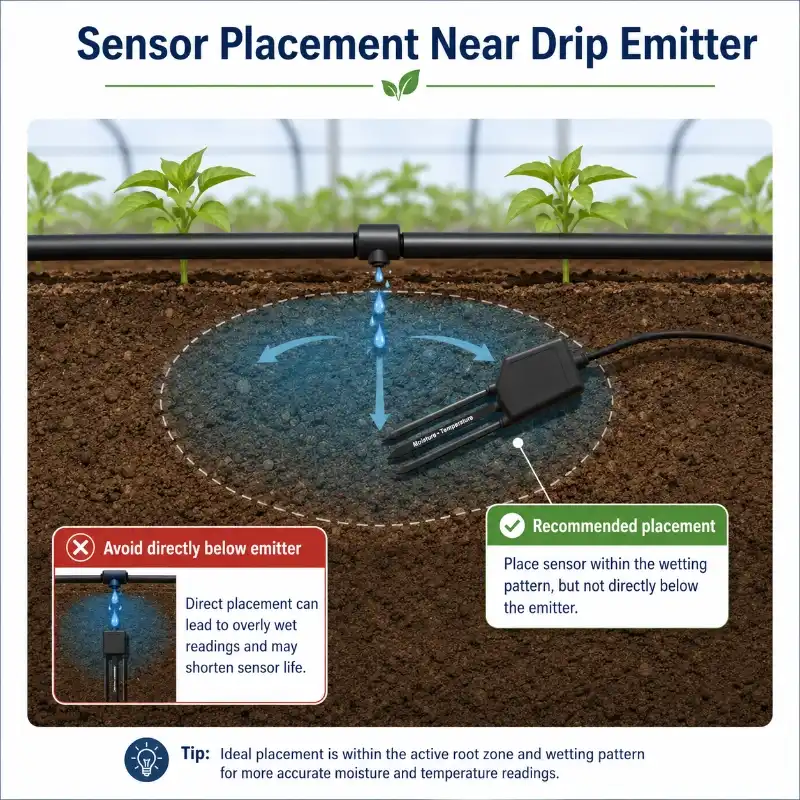
Root-zone monitoring near drip emitters
The compact design allows the probe to be installed closer to the active root zone while reducing disturbance to the surrounding soil.
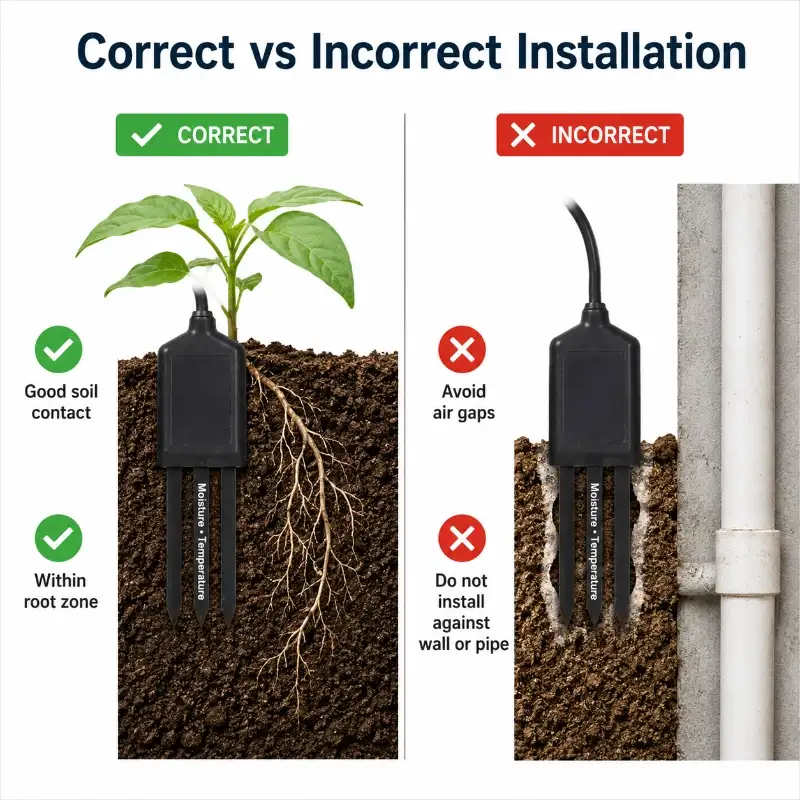
It is important to maintain sufficient soil around the electrodes. The probe should not be installed directly against a container wall, irrigation pipe, large stone or metal structure because these conditions may affect the representativeness of the reading.
Output Options
0–2V Analog Output
The 0–2V version is suitable for:
Analog input controllers
Local data acquisition modules
Greenhouse control cabinets
Irrigation controllers
Embedded acquisition equipment
Simple single-point monitoring systems
This version can be selected when the control system already provides a compatible analog voltage input.
The input impedance, cable length and controller configuration should be checked before installation.
RS485 Modbus-RTU Output
The RS485 version is suitable for:
PLC systems
Agricultural RTUs
IoT data loggers
Greenhouse controllers
LoRaWAN nodes
4G communication terminals
Edge gateways
SCADA systems
Cloud-connected monitoring networks
RS485 Modbus allows multiple sensors to communicate through a shared bus when the addresses, wiring, power supply and termination are configured correctly.
For multi-zone greenhouse projects, several sensors can be installed in different irrigation zones and connected to a central controller or gateway.
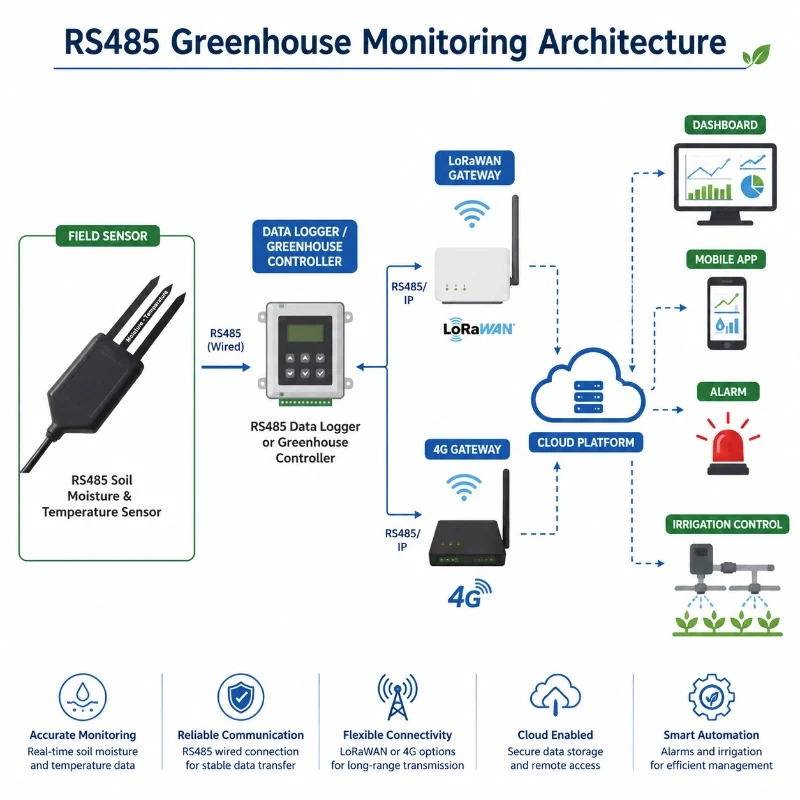
Smart Greenhouse System Architecture
A typical remote greenhouse monitoring system can use the following architecture:
Soil moisture sensor → RS485 data logger or greenhouse controller → LoRaWAN or 4G gateway → Cloud platform → Dashboard, alarm and irrigation control
Depending on the project, the system may also include:
Air temperature and humidity sensors
CO₂ sensors
Light intensity or PAR sensors
Leaf wetness sensors
Soil EC sensors
Substrate EC sensors
Water flow meters
Water pressure sensors
Irrigation valves
Fertigation equipment
Exhaust fans
Cooling pads
Roof or side ventilation motors
Explore the complete Greenhouse Monitoring System for climate monitoring, irrigation control, wireless communication and cloud platform integration.
Main Greenhouse Applications
Greenhouse Vegetable Production
The sensor can monitor root-zone moisture and temperature in greenhouse tomatoes, peppers, cucumbers, leafy vegetables and other soil-grown crops.
Moisture trend data can help growers evaluate whether irrigation is:
Starting too early
Starting too late
Running for too long
Failing to reach the root zone
Leaving the soil wet overnight
Uneven between greenhouse sections
Nursery and Seedling Production
Seedlings have relatively small root systems and can be sensitive to both water shortage and waterlogging.
The compact probe can be installed in representative nursery beds or containers to observe changes in soil moisture between irrigation cycles.
Flowers and Ornamental Plants
The sensor can support irrigation management for greenhouse flowers, ornamental plants and potted crops with different water requirements.
Separate sensors can be installed in representative crop groups rather than controlling all varieties according to one shared irrigation schedule.
Strawberry and Soft Fruit Cultivation
Strawberry roots are concentrated within a relatively shallow root zone. Correct sensor depth and placement can help growers observe how irrigation water moves through the active root area.
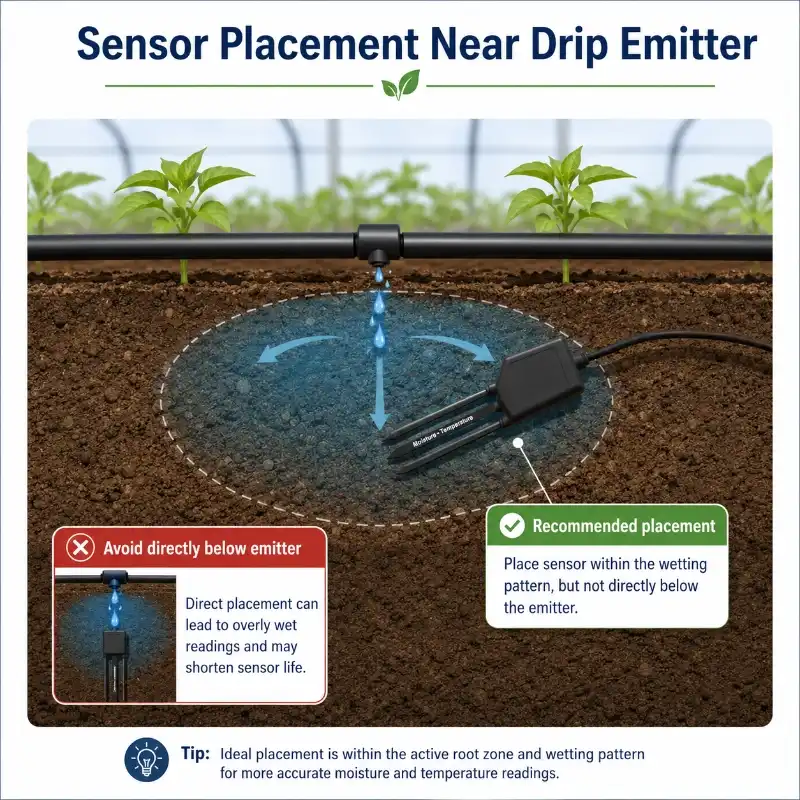
The probe should be installed near, but not directly under, the drip emitter to avoid measuring only the temporarily saturated wet spot.
Herbs and High-Value Crops
For herbs and high-value greenhouse crops, continuous moisture monitoring can help reduce irrigation variation and improve consistency between production zones.
Greenhouse Research
The sensor can be used in:
Irrigation comparison trials
Crop water demand studies
Root-zone temperature research
Soil drying curve analysis
Plant stress experiments
Water-use efficiency studies
Greenhouse automation testing
Greenhouse Vegetable Production
The sensor can monitor root-zone moisture and temperature in greenhouse tomatoes, peppers, cucumbers, leafy vegetables and other soil-grown crops.
Moisture trend data can help growers evaluate whether irrigation is:
Starting too early
Starting too late
Running for too long
Failing to reach the root zone
Leaving the soil wet overnight
Uneven between greenhouse sections
Nursery and Seedling Production
Seedlings have relatively small root systems and can be sensitive to both water shortage and waterlogging.
The compact probe can be installed in representative nursery beds or containers to observe changes in soil moisture between irrigation cycles.
Flowers and Ornamental Plants
The sensor can support irrigation management for greenhouse flowers, ornamental plants and potted crops with different water requirements.
Separate sensors can be installed in representative crop groups rather than controlling all varieties according to one shared irrigation schedule.
Strawberry and Soft Fruit Cultivation
Strawberry roots are concentrated within a relatively shallow root zone. Correct sensor depth and placement can help growers observe how irrigation water moves through the active root area.
The probe should be installed near, but not directly under, the drip emitter to avoid measuring only the temporarily saturated wet spot.
Herbs and High-Value Crops
For herbs and high-value greenhouse crops, continuous moisture monitoring can help reduce irrigation variation and improve consistency between production zones.
Greenhouse Research
The sensor can be used in:
Irrigation comparison trials
Crop water demand studies
Root-zone temperature research
Soil drying curve analysis
Plant stress experiments
Water-use efficiency studies
Greenhouse automation testing
Using the Sensor for Automated Irrigation
The sensor measures soil conditions but does not directly switch pumps or valves by itself.
For automated irrigation, the output is sent to a compatible controller, PLC, RTU or IoT gateway. The control system then compares the measurement with configured irrigation rules.
A basic control strategy may include:
Start irrigation when moisture falls below the lower threshold.
Stop irrigation after the target moisture level or operating time is reached.
Prevent repeated switching by using an upper and lower threshold.
Add a waiting period after irrigation before evaluating the next reading.
Trigger an alarm when moisture remains too low or too high.
Compare sensor data with water flow and valve status.
Correct placement is often more important than installing a large number of sensors without a plan.
Sensors should be installed in representative locations based on:
Crop type
Soil texture
Irrigation zone
Drip line layout
Rooting depth
Greenhouse orientation
Drainage conditions
Crop age
Shading differences
Ventilation and temperature differences
Avoid selecting only the easiest location to access.
A large greenhouse may require several sensors because one probe cannot represent all irrigation zones, crop varieties or soil conditions.
Recommended Horizontal Position
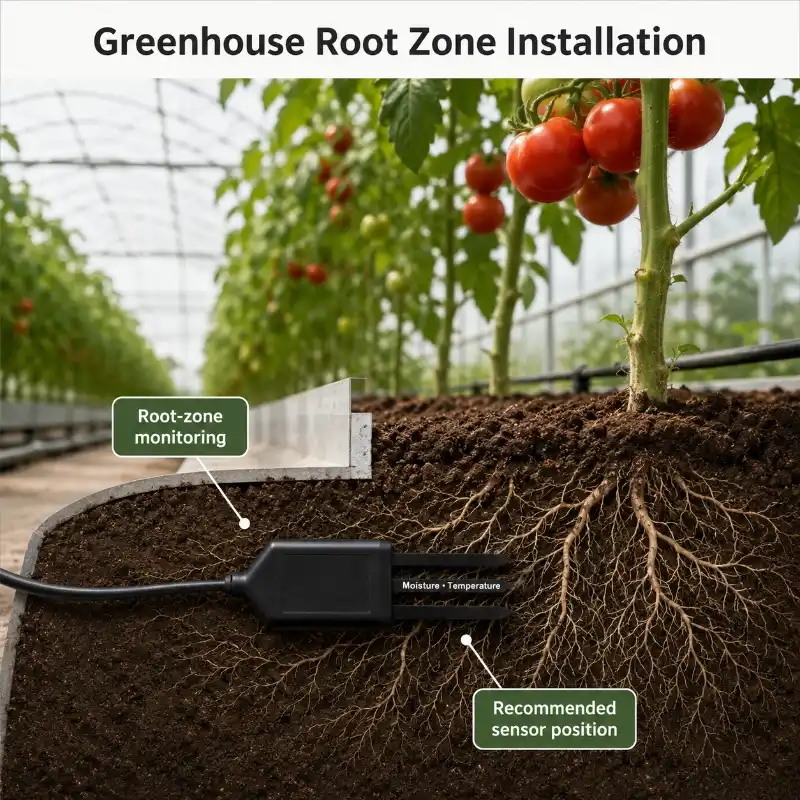
Install the sensor within the active root zone and within the normal wetting area of the irrigation system.
Do not place it:
Directly beneath a drip emitter
Immediately beside a greenhouse wall
Next to a drainage channel
Against an irrigation pipe
In a permanently shaded abnormal area
In a visibly damaged or compacted section
In a location that receives runoff from another zone
Recommended Installation Depth
The correct depth depends on crop rooting depth and irrigation objectives.
For shallow-rooted greenhouse crops, the probe may be installed in the main upper root zone. For deeper-rooted crops, additional sensors or another installation depth may be required.
When using only one sensor, place it at the depth most representative of active water uptake.
Do not hammer the probe directly into hard or stony soil.
Long-Term Buried Installation
Determine the target root-zone depth.
Dig a narrow vertical soil profile.
Insert the electrodes horizontally into the undisturbed pit wall.
Make sure the sensor body and electrodes have close soil contact.
Route the cable through protective conduit where necessary.
Refill the pit with the original soil.
Compact the soil carefully without damaging the cable.
Confirm the signal before completing the installation.
Record the installation depth and exact location.
Allow the surrounding soil to stabilize before establishing control thresholds.
Horizontal insertion into an undisturbed soil profile generally produces more representative long-term contact than placing the sensor loosely into recently refilled soil.
Common Installation Mistakes
Installing Directly Below the Dripper
The area directly below a drip emitter may become saturated quickly and may not represent the wider root zone.
Install the sensor within the wetting pattern but not at the point receiving the strongest direct water flow.
Leaving Air Gaps Around the Electrodes
Air gaps reduce contact between the sensor and soil and can produce unstable or misleading readings.
Installing Too Close to a Pot or Bed Wall
Container and bed walls can change water distribution and may influence the representativeness of the measurement.
Using One Sensor for Several Different Zones
Different crop varieties, irrigation valves, soil types and greenhouse sections may require separate monitoring points.
Setting Thresholds Immediately After Installation
Allow the sensor and soil to stabilize. Observe several irrigation and drying cycles before setting permanent automation thresholds.
Using a Universal Moisture Threshold
A reading suitable for one soil texture or crop may not be suitable for another. Thresholds should be established locally.
How to Establish Greenhouse Irrigation Thresholds
A practical commissioning process can include:
Install the sensor at the representative root depth.
Irrigate the crop normally.
Observe the moisture level after drainage and redistribution.
Monitor the drying trend during crop water use.
Identify the moisture level at which irrigation should begin.
Record crop condition, soil type and environmental conditions.
Repeat the observation across several irrigation cycles.
Configure conservative initial thresholds.
Evaluate crop response and water use.
Adjust the thresholds gradually.
The goal is not to use one universal number for every greenhouse. The goal is to establish a repeatable moisture range that is suitable for the specific crop, soil and irrigation system.
Soil Sensor or Substrate Sensor?
This product is primarily designed for soil-based root-zone monitoring.
Choose this compact soil water content sensor when:
Crops are grown in natural or prepared soil
Soil moisture and temperature are the main parameters
EC measurement is not required
A compact 51 mm electrode design is preferred
0–2V or RS485 output is suitable
The sensor will be connected to an irrigation controller or gateway
For coco coir, peat, rock wool, perlite or other soilless growing media, a dedicated substrate sensor may be more appropriate.
Choose an NPK model when the project requires field-reference measurements for nitrogen, phosphorus and potassium in addition to moisture, temperature, EC and salinity.
Tell us your greenhouse size, crop type, growing medium, planting bed dimensions, required monitoring depth, number of irrigation zones and preferred communication method.
JW-IoT can help configure soil sensors, climate sensors, data loggers, LoRaWAN or 4G gateways, cloud dashboards, alarms and automated irrigation control.
Contact JW-IoT to request a quotation, product datasheet, Modbus register document or greenhouse monitoring proposal.
FAQ
Q
1. What does this soil sensor measure?
A
It measures volumetric soil moisture and soil temperature. The moisture data helps evaluate soil water content, while temperature data supports root zone and crop growth monitoring.
Q
2. What is the difference between soil water content and soil moisture?
A
In practical agricultural monitoring, both terms are frequently used for the amount of water held in soil. This sensor reports volumetric water content as a percentage.
Q
3. What measurement technology does it use?
A
The sensor uses FDR technology to measure changes in the dielectric properties of soil and calculate volumetric water content.
Q
4. Why is this model suitable for greenhouse applications?
A
It has a compact 35 × 11 × 111 mm body, 51 mm electrodes, optional analog or RS485 output and an IP68 enclosure. These features make it suitable for root-zone monitoring in greenhouse beds and other space-limited installations.
Q
5. What output options are available?
A
The sensor is available with 0–2V analog voltage output or RS485 Modbus-RTU communication.
Q
6. Can it connect to an irrigation controller?
A
Yes. The output can be connected to a compatible controller, PLC, RTU or data acquisition module. The controller applies the irrigation rules and operates pumps or valves.
Q
7. Can JW-IoT provide LoRaWAN or 4G transmission?
A
Yes. The RS485 sensor can be connected to a LoRaWAN node, 4G terminal or IoT gateway for remote monitoring and cloud platform integration.
Q
8. Is the sensor waterproof?
A
Yes. It has an IP68 protection rating and can be fully buried for long-term monitoring when installed correctly.
Q
9. Can it measure substrate EC or fertilizer concentration?
A
No. This model measures soil water content and temperature. Choose a substrate moisture EC sensor or soil moisture EC temperature sensor when electrical conductivity is required.
Q
10. Can the cable length be customized?
A
Yes. The standard cable length is 2 m, and customized lengths are available according to greenhouse layout and controller location.
Q
11. How many sensors are needed in a greenhouse?
A
The number depends on greenhouse size, crop type, irrigation zones, soil variability, planting beds and required monitoring depth. At least one representative sensor should be considered for each independently managed irrigation zone.
Q
12. Where should the sensor be installed relative to a drip emitter?
A
Install it within the normal root-zone wetting pattern, but not directly below the emitter. The selected position should represent the water conditions experienced by the active roots.
 +86 13520127780
  info@jingelway.com