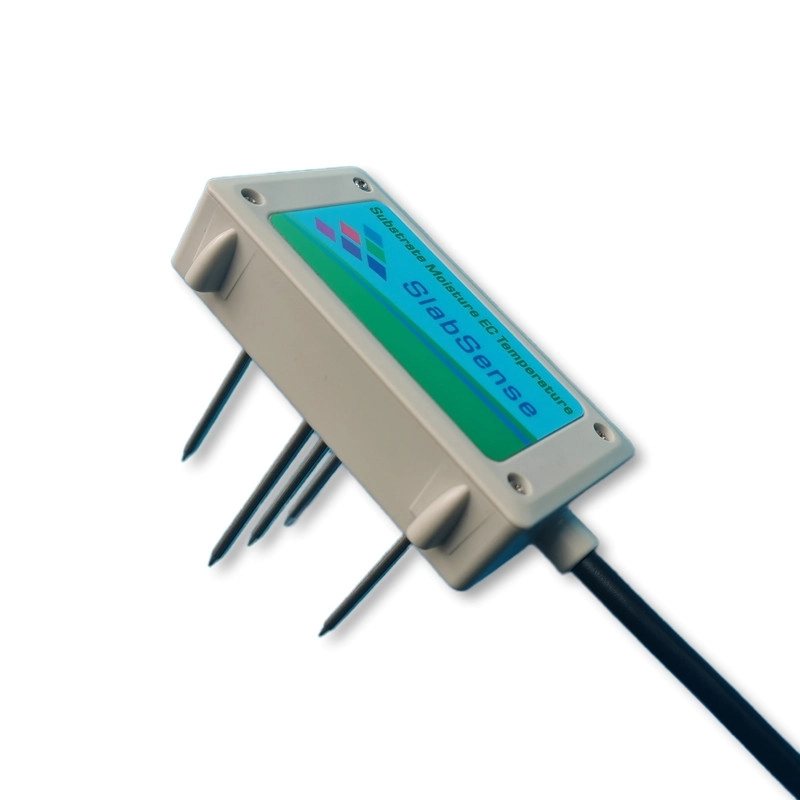
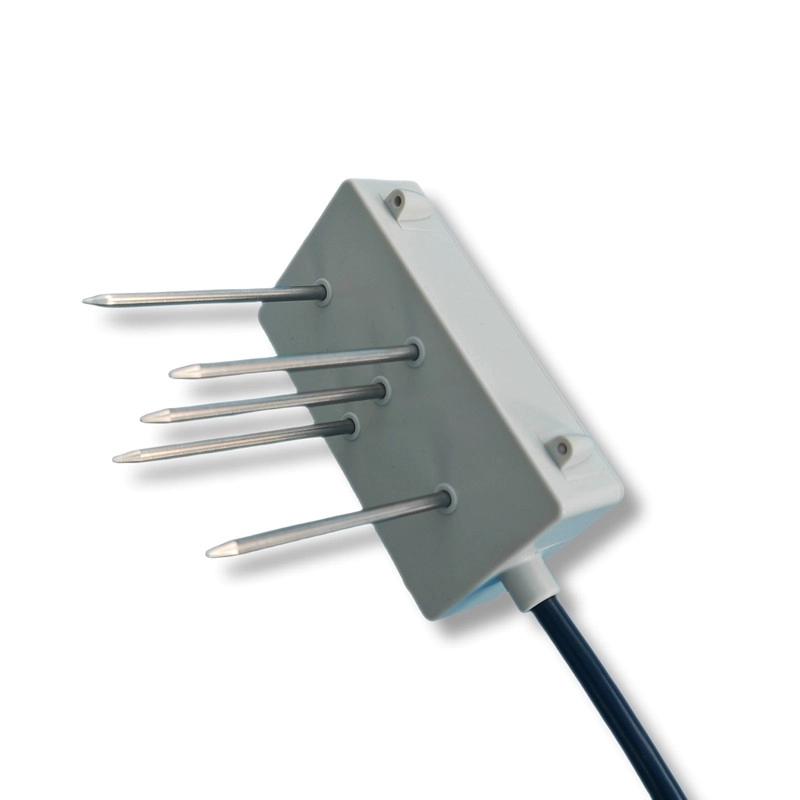
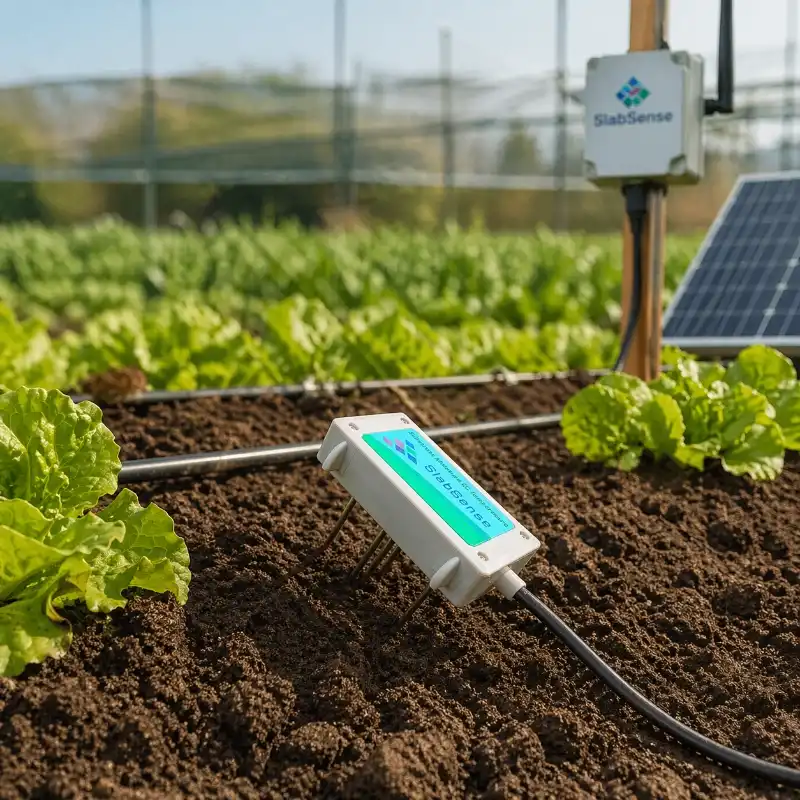
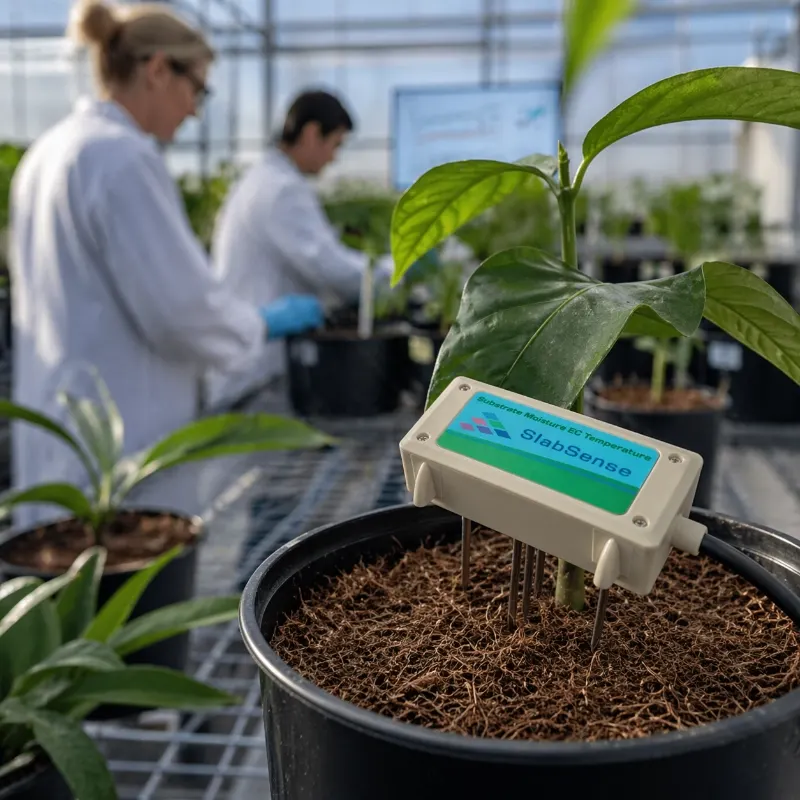
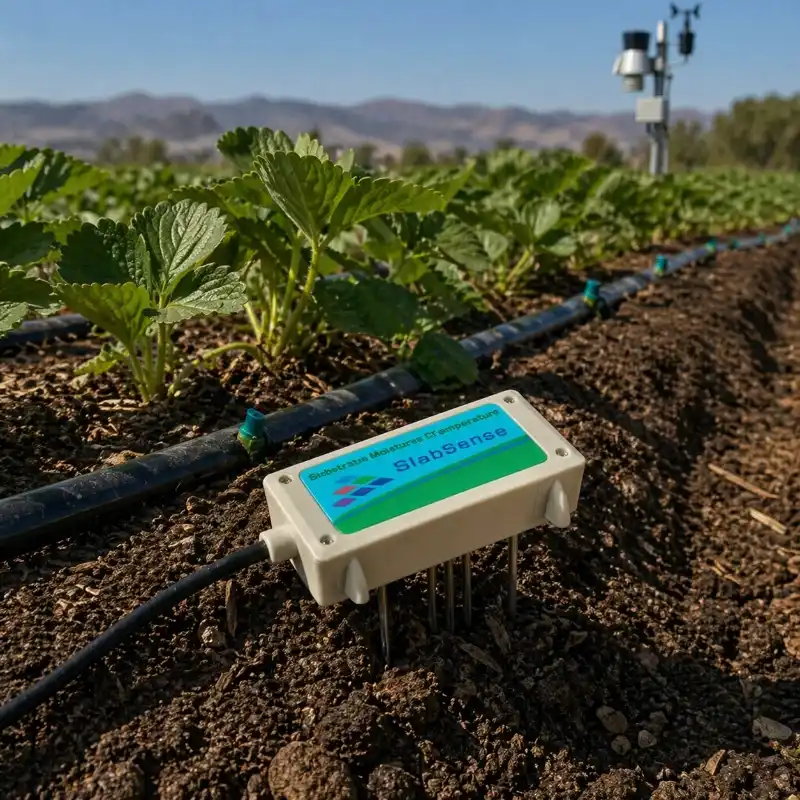
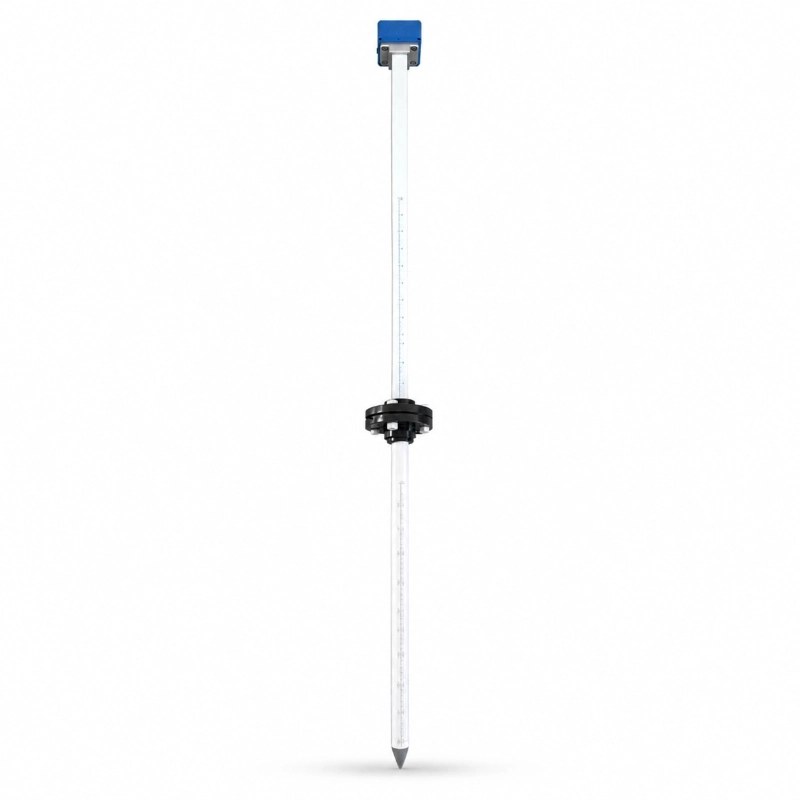
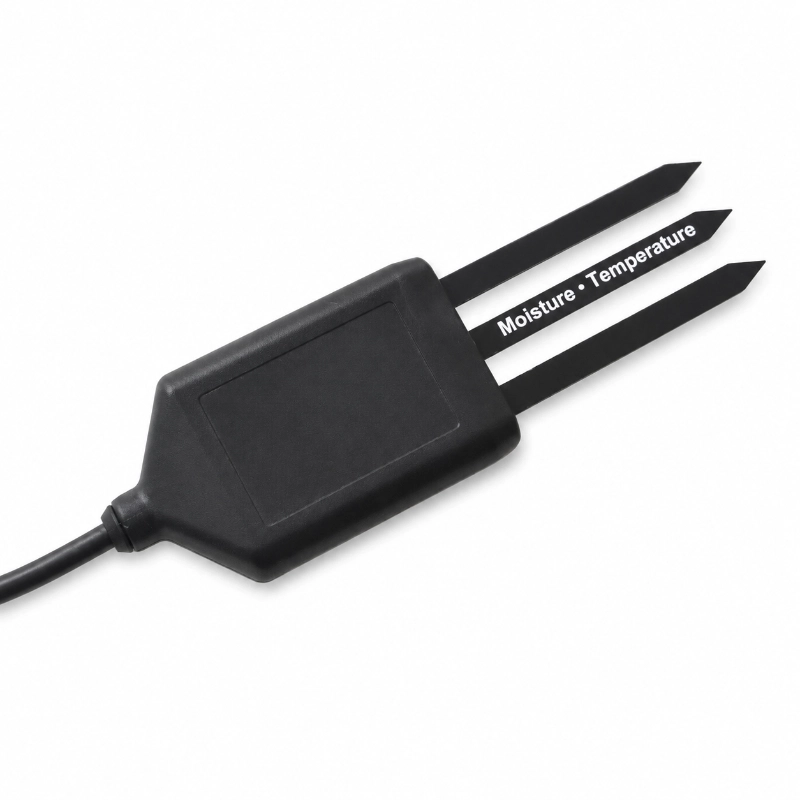
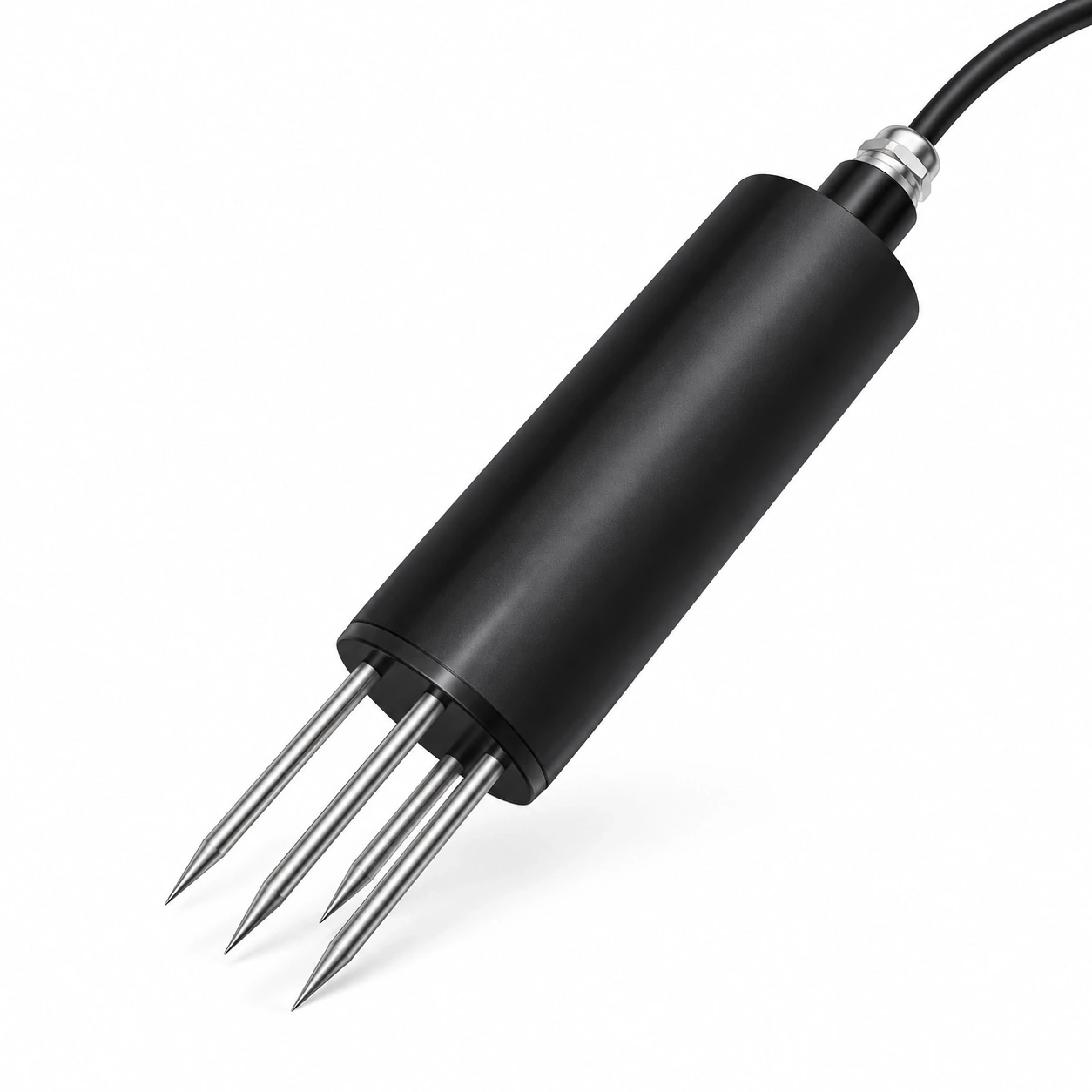
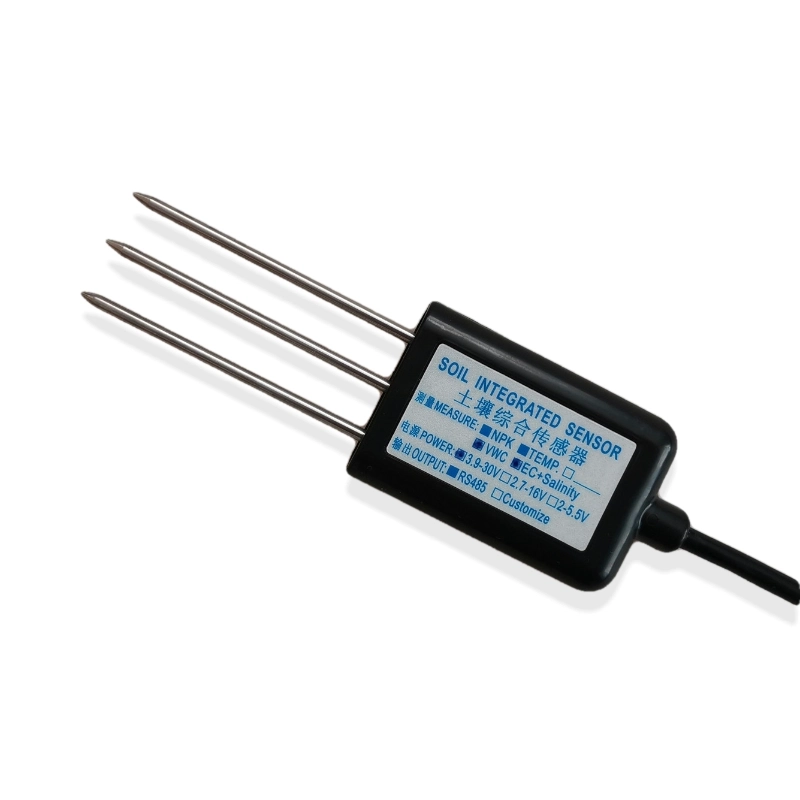
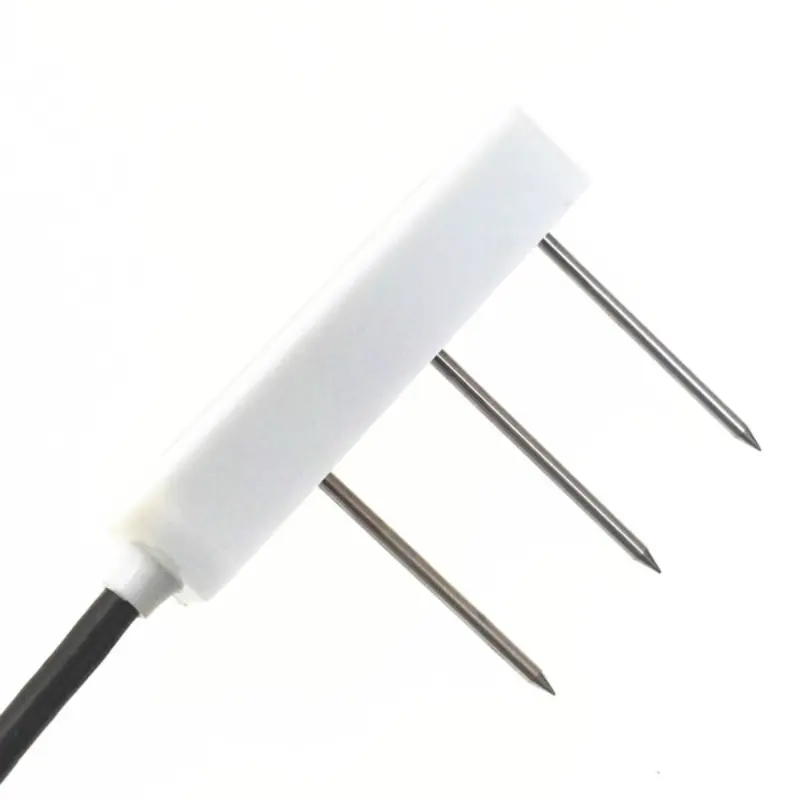
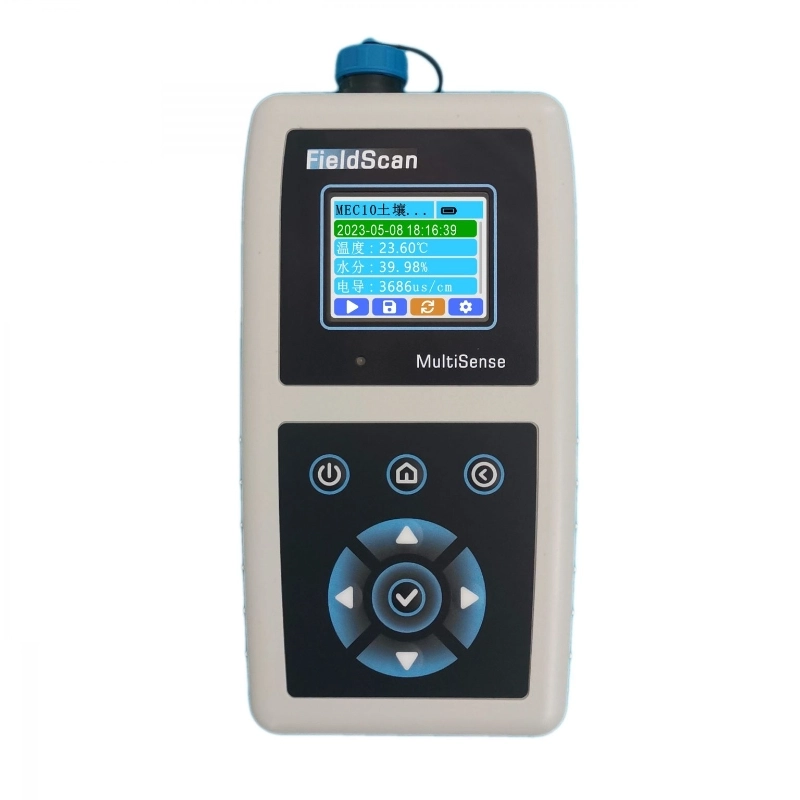
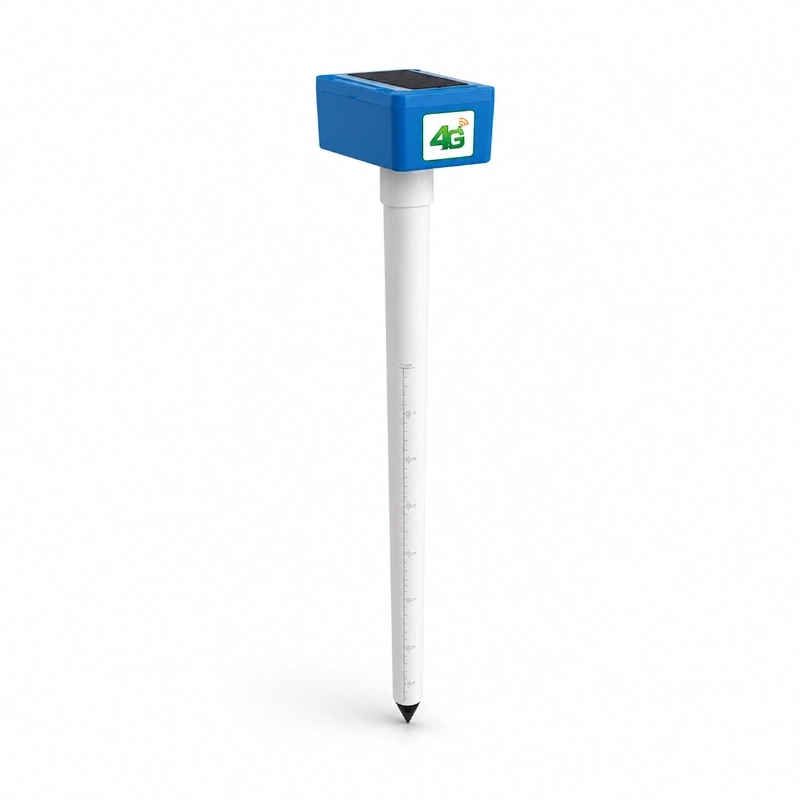
JW-S3S(Z8) Substrate Moisture EC Temperature Sensor is designed for accurate monitoring of volumetric water content, substrate temperature, and electrical conductivity in soil and soilless growing media. With optional SDI-12 or RS485 Modbus-RTU output, wide voltage input, low power consumption, and rugged epoxy resin sealing, it is ideal for greenhouse irrigation, hydroponics, horticulture, smart agriculture, substrate water balance, and fertilizer movement monitoring.
2. Product Overview
The Substrate Moisture EC Temperature Sensor is a professional root zone monitoring sensor for greenhouse and soilless cultivation systems. It measures key growing media parameters including volumetric water content, substrate temperature, and bulk electrical conductivity, helping growers understand irrigation demand, fertilizer movement, salinity accumulation, and root zone conditions.
For advanced greenhouse climate control, the sensor can also be equipped with air temperature and humidity measurement. This allows the system to calculate vapor pressure, saturated vapor pressure, dew point, and vapor pressure deficit. VPD is an important indicator for plant transpiration and water loss management, especially in controlled greenhouse production.
The sensor is suitable for smart agriculture, hydroponics, horticulture, irrigation management, scientific research, and substrate water balance monitoring.
3.Technical Parameter
Parameter
Model No.
JW-S3S(Z8)
Product Type
Substrate moisture EC temperature sensor
Measurement Parameters
Substrate moisture, substrate EC, substrate temperature
Optional Parameters
Air temperature, air humidity, dew point, vapor pressure, saturated vapor pressure, VPD
Output Interface
SDI-12 V1.3 or RS485 Modbus-RTU
Power Supply
3.9–28V DC
SDI-12 Standby Current
<30 μA
RS485 Standby Current
<5 mA
Measurement Current
<20 mA within 150 ms measurement time
VWC Range
0–100%
VWC Resolution
0.10%
Typical VWC Accuracy
±3%
Dielectric Constant Range
1–81
Dielectric Constant Resolution
0.1 from 1–40 and 0.5 from 40–81.88
Bulk EC Range
0–20 dS/m
EC Resolution
0.01 dS/m
EC Accuracy
±5% from 0–7 dS/m and ±10% from 7–20 dS/m
Temperature Compensation
0–50°C
Substrate Temperature Range
-40–80°C
Substrate Temperature Resolution
0.1°C
Substrate Temperature Accuracy
±0.5°C
Air Humidity Range
0–100% RH
Air Humidity Resolution
0.1% RH
Air Humidity Accuracy
±1.8% RH
Air Temperature Range
-40–80°C
Air Temperature Resolution
0.1°C
Air Temperature Accuracy
±0.2°C
Protection Rating
IP68 without air temperature and humidity module
Protection Rating with Air Module
IP50
Operating Temperature
-40–80°C
Sensor Sealing
Epoxy resin
Installation Method
Surface installation
Cable Length
2 m or customized
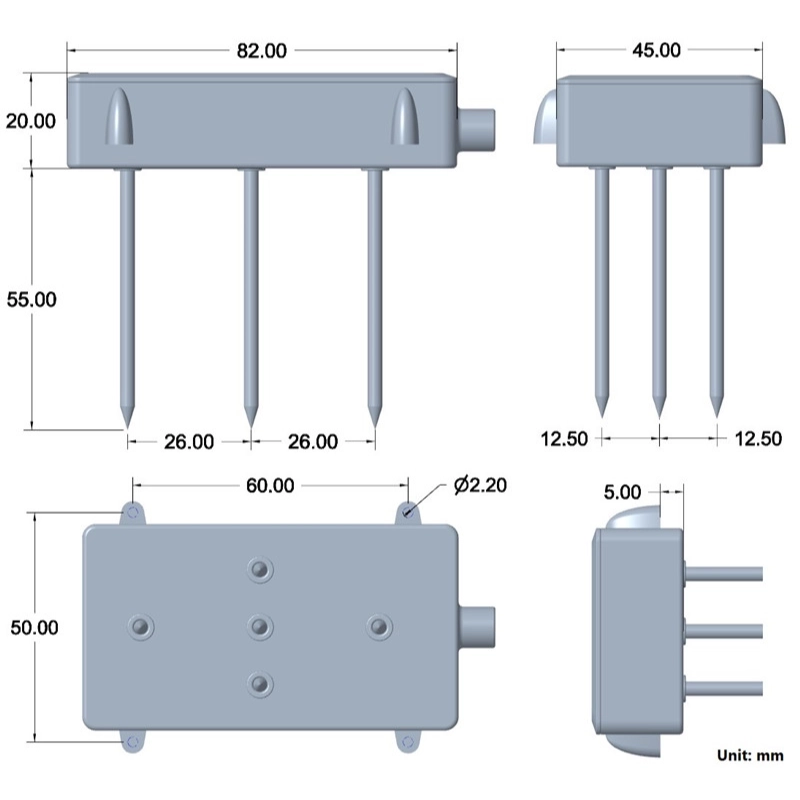
Dimensions
90 × 55 × 75 mm
4.Dimension
5. Output Options and Communication
The Soil Moisture EC Temperature Sensor supports SDI-12 V1.3 digital output, making it easy to connect with professional data loggers, RTUs, irrigation controllers, and IoT monitoring terminals. SDI-12 communication is widely used in environmental monitoring and smart agriculture systems because it supports stable digital data transmission, low power operation, and multi-sensor field deployment.
Communication Advantages
SDI-12 output for low power environmental monitoring systems
RS485 Modbus-RTU output for industrial and agricultural control systems
Easy integration with greenhouse automation and irrigation platforms
Suitable for multi-sensor field monitoring networks
Supports digital data transmission for stable long term monitoring
Compatible with cloud based IoT systems through gateways or RTUs
6. Application Scenarios
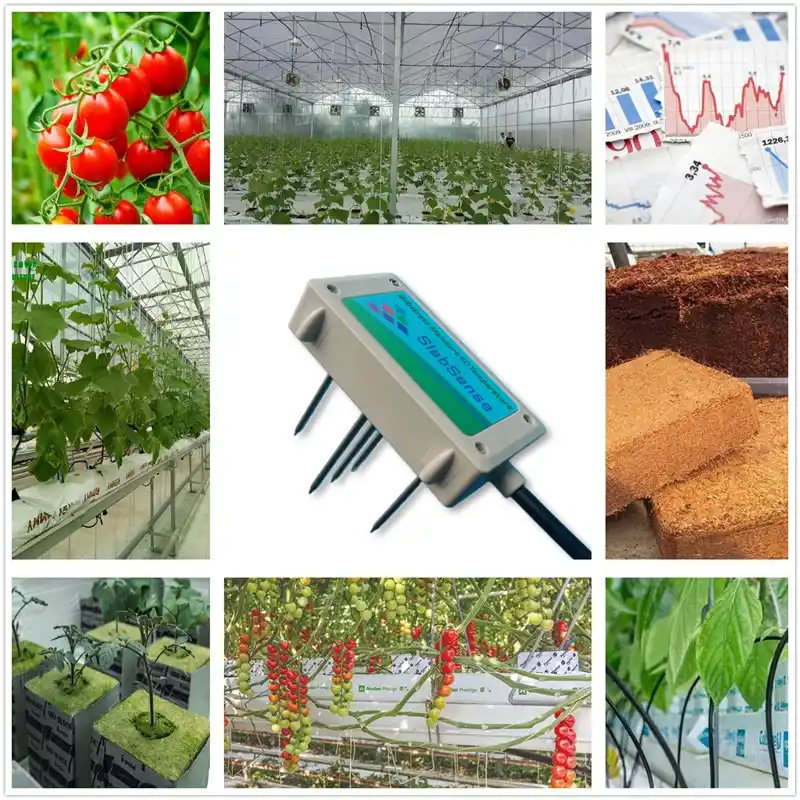
Greenhouse Monitoring
Used to monitor root zone moisture, substrate EC, and temperature in commercial greenhouse crops such as tomatoes, cucumbers, peppers, strawberries, blueberries, herbs, and flowers.
Hydroponics and Soilless Cultivation
Suitable for rockwool, cocopeat, perlite, peat moss, potting soil, and mixed growing substrates. It helps optimize irrigation frequency and nutrient solution management.
Smart Irrigation Management
The sensor provides real time VWC and EC data, helping growers decide when to irrigate, how much water to apply, and whether fertilizer concentration is appropriate.
Fertilizer and Solute Movement
By tracking EC changes in the substrate, the sensor helps evaluate fertilizer movement, salt accumulation, nutrient leaching, and root zone salinity trends.
Precision Agriculture
With optional air temperature and humidity measurement, the sensor can support VPD based greenhouse climate control, helping maintain better transpiration and plant growth conditions.
Scientific Research
Suitable for agricultural experiments, substrate water balance studies, evapotranspiration calculation, and root zone environment research.
7.Installation and Measurement
Insert the sensor probes fully into the soil or growing substrate and ensure good contact between the probe and the medium. Remove stones or hard particles before installation. For hard soil, pre-drilling is recommended. Do not pull the sensor out by the cable. If resistance is felt during insertion, stop and reinstall the sensor in a new position.
For rockwool, cocopeat, perlite, peat moss, or mixed substrates, calibration can improve measurement accuracy.
FAQ
Q
1. What does this substrate sensor measure?
A
It measures substrate moisture VWC, substrate temperature, and electrical conductivity. Optional versions can also measure air temperature, air humidity, dew point, vapor pressure, and VPD.
Q
2. Is this sensor suitable for greenhouse cultivation?
A
Yes. It is designed for greenhouse monitoring, hydroponics, horticulture, smart irrigation, and soilless cultivation systems.
Q
3. What output options are available?
A
The sensor supports SDI-12 V1.3 and RS485 Modbus-RTU output options, making it easy to connect with data loggers, RTUs, IoT gateways, and greenhouse control systems.
Q
4. Can JW-IoT integrate this sensor into a smart greenhouse system?
A
Yes. JW-IoT can integrate this sensor with irrigation controllers, LoRaWAN nodes, 4G gateways, cloud platforms, web dashboards, and mobile apps for greenhouse monitoring and irrigation management.
Q
5. Can it be used in hydroponics?
A
Yes. The sensor is suitable for hydroponic and soilless growing media such as rockwool, cocopeat, perlite, peat moss, and potting substrates.
Q
6. What is the EC measurement range?
A
The sensor measures substrate bulk EC from 0 to 20 dS/m, with 0.01 dS/m resolution.
Q
7. Does the sensor support VPD monitoring?
A
Yes. The optional air temperature and humidity version can support vapor pressure, saturated vapor pressure, dew point, and vapor pressure deficit monitoring.
Q
8. Can JW-IoT provide calibration support for special substrates?
A
Yes. JW-IoT can provide application guidance and calibration recommendations for special substrates such as cocopeat, rockwool, perlite, peat moss, volcanic rock, and customized greenhouse growing media.
Q
9. Is this sensor waterproof?
A
The version without air temperature and humidity measurement has an IP68 protection rating. The version with air temperature, humidity, and VPD measurement has an IP50 protection rating.
Q
10. What power supply does the sensor use?
A
The sensor supports a wide 3.9–28V DC power input, which is suitable for field data loggers, solar powered systems, and IoT monitoring terminals.
Q
11. Can JW-IoT use this sensor for smart irrigation projects?
A
Yes. JW-IoT can use this sensor as part of smart irrigation solutions to monitor substrate water content, EC, and temperature, helping optimize irrigation timing and fertilizer application.
Q
12. Why is VPD important in greenhouse control?
A
VPD helps evaluate plant transpiration and water loss. Proper VPD management supports healthier plant growth, better irrigation control, and reduced risk of leaf disease in greenhouse environments.
 +86 13520127780
  info@jingelway.com