Soil Freezing Depth Frost Tube for Permafrost Monitoring
Key Features
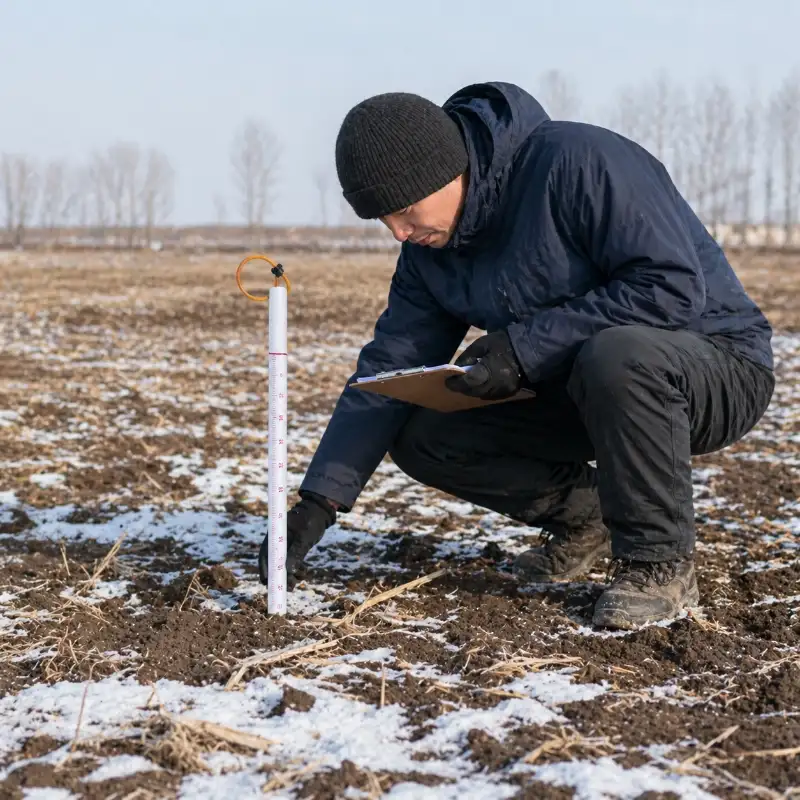
Direct soil freezing depth measurement: Designed to measure the actual frozen layer depth in soil by observing the ice column inside the inner tube.
Multiple measuring ranges available: Standard options cover 500 mm to 4500 mm, suitable for shallow frost, seasonal frozen soil, and deep permafrost monitoring.
Simple structure and easy operation: No power supply, electronics, or complicated calibration required.
Durable outer tube design: The rigid rubber outer tube protects the inner tube and allows long-term buried installation.
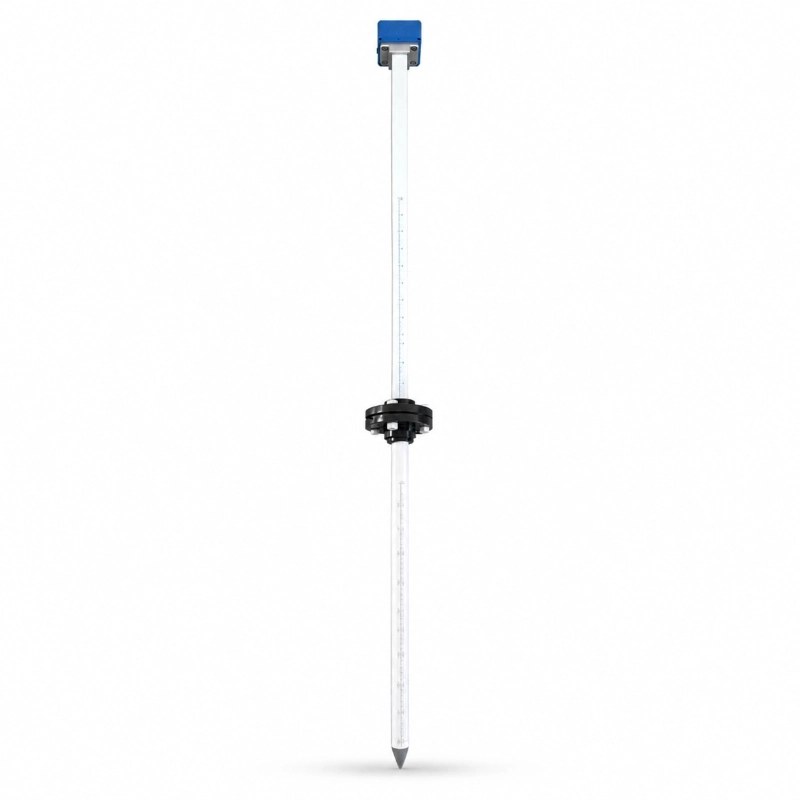
Clear scale marking: The outer tube is marked with a 0 cm reference line and scale marks for convenient field reading.
Suitable for harsh outdoor environments: Applicable to cold regions, agricultural fields, roadbeds, research stations, and geological monitoring sites.
Low maintenance for long-term observation: The inner tube can be filled with clean local water and inspected periodically during frost seasons.
Wide application coverage: Suitable for meteorological observation, soil science, transportation engineering, agriculture, and permafrost research.
The JW-DTSS(LC4) Soil Freezing Depth Frost Tube is a manual instrument designed for direct observation of soil freezing depth in cold-region monitoring projects.
It is suitable for meteorological observation, agricultural soil monitoring, road and railway engineering, frozen-soil research, geological investigation, water conservancy projects and permafrost observation.
Unlike an electronic soil temperature sensor, the frost tube provides a direct physical indication of the depth to which the surrounding soil has frozen. A flexible inner tube filled with clean local water is installed inside a rigid outer tube. As the surrounding soil freezes, the water inside the inner tube freezes accordingly. Operators can periodically remove the inner tube and observe the frozen water column to determine the soil frost depth.
The instrument requires no external power supply, battery, solar panel or communication module, making it particularly suitable for remote locations and long-term seasonal observation.
JW-IoT provides multiple measuring ranges from 0–500 mm to 0–4500 mm, allowing users to select a suitable version according to local climate, historical maximum frost depth and project requirements.
What Is a Soil Frost Depth Gauge?
A soil frost depth gauge, often called a frost tube, is an instrument used to determine how deep the ground has frozen.
Soil freezing depth can vary significantly according to local climate and surface conditions. Air temperature, snow cover, vegetation, soil properties and surface heat loss can all influence how deeply frost penetrates into the ground.
For this reason, frost depth is an important parameter in cold-region environmental monitoring and infrastructure assessment.
The U.S. Department of Agriculture notes that ground freezing depth may range from only a few centimeters in relatively mild conditions to much greater depths in colder regions. It also explains that snow and ground cover can significantly change the freezing behavior of soil.
Historical USDA Forest Service research has also documented water-filled frost tubes as a simple method for repeated frost-depth observation without repeatedly disturbing the monitoring site.
The JW-DTSS(LC4) is designed for manual observation of seasonal frozen soil and soil frost depth.
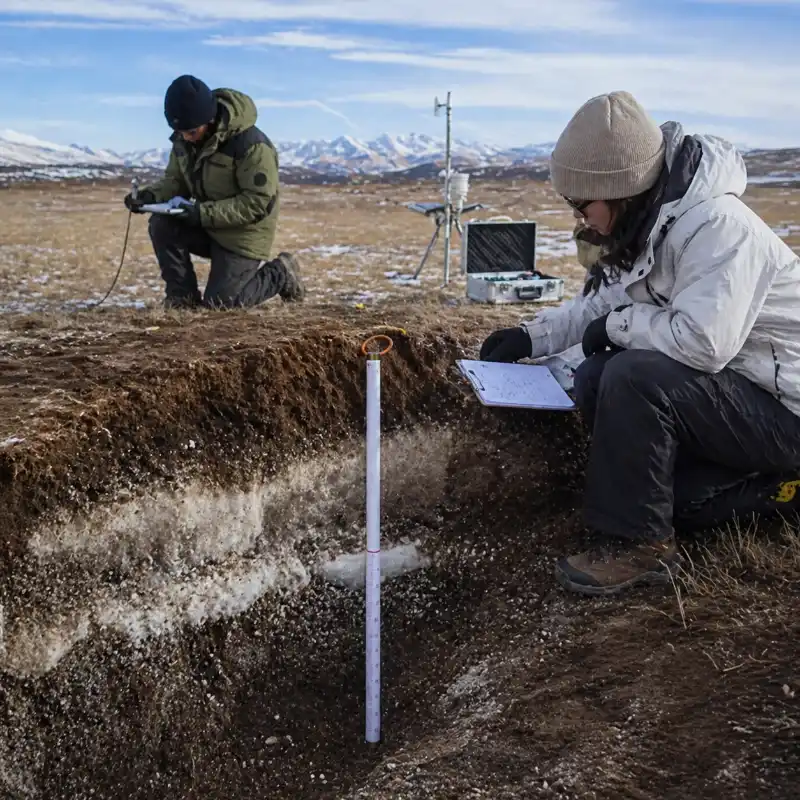
The instrument is normally installed vertically before the main freezing period begins.
Its basic measuring principle is straightforward:
The inner tube is filled with clean local water.
The frost tube is installed vertically in the soil.
As surrounding soil freezes, part of the water column inside the inner tube freezes.
During inspection, the operator removes the inner tube.
The frozen and unfrozen sections are identified.
The frost depth is determined according to the scale and frozen water column.
This method provides a simple physical indication of the freezing front and is well suited to fixed monitoring points that require periodic frost-depth records.
Technical Specifications
Item
Measuring Range
Minimum Division
Total Outer Tube Length
Exposed Outer Tube Length
Scale Accuracy
1
0–500 mm
10 mm
1060 ± 2 mm
500 mm
±10 mm
2
0–1000 mm
10 mm
1575 ± 2 mm
500 mm
±10 mm
3
0–1500 mm
10 mm
2075 ± 2 mm
500 mm
±10 mm
4
0–2000 mm
10 mm
2575 ± 3 mm
500 mm
±10 mm
5
0–2500 mm
10 mm
3075 ± 3 mm
500 mm
±10 mm
6
0–3000 mm
10 mm
3575 ± 4 mm
500 mm
±10 mm
7
0–3500 mm
10 mm
4075 ± 4 mm
500 mm
±10 mm
8
0–4000 mm
10 mm
4575 ± 5 mm
500 mm
±10 mm
9
0–4500 mm
10 mm
5075 ± 5 mm
500 mm
±10 mm
The available range should be selected according to the expected maximum frost depth at the monitoring site.
Product Structure
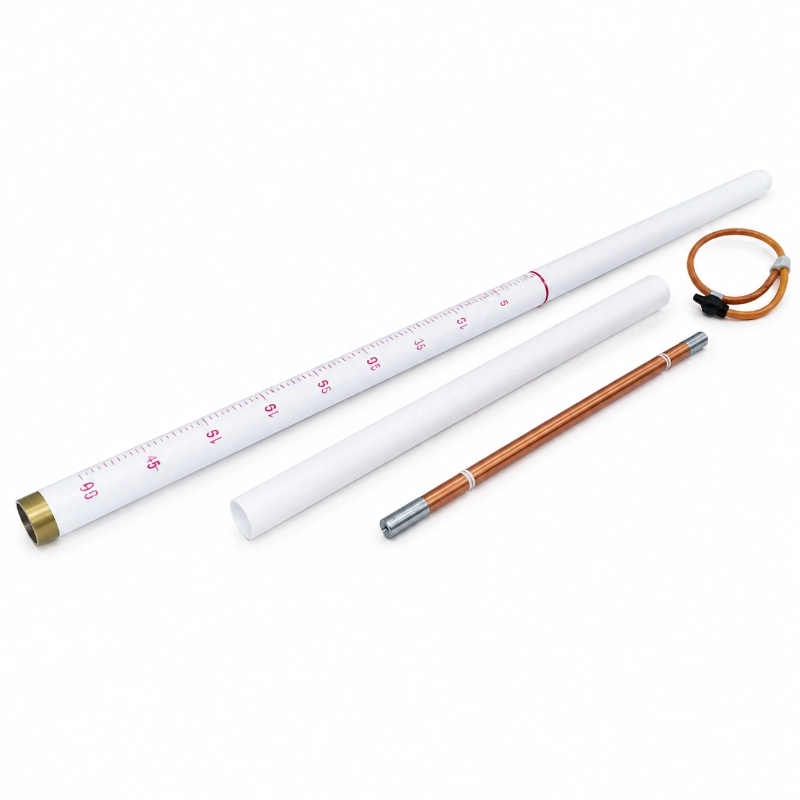
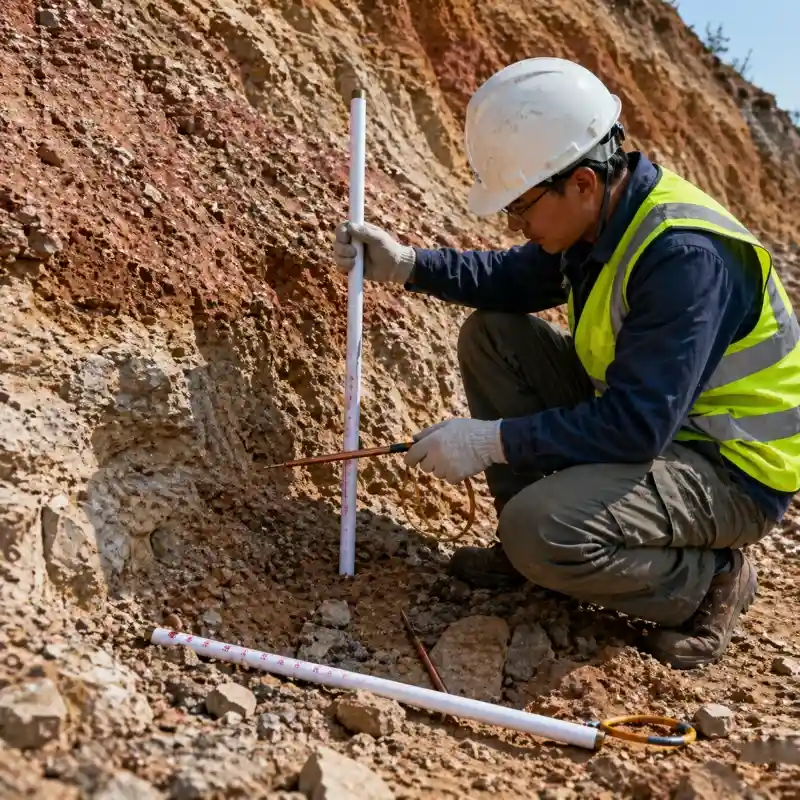
The JW-DTSS(LC4) frost depth gauge mainly consists of the following components:
Outer Tube
A rigid rubber outer tube is permanently installed in the soil.
Its primary functions are to protect the internal measuring tube, maintain the observation position and provide the scale reference used during measurement.
Inner Tube
The flexible inner tube is filled with clean local water before observation.
This water column provides the visual indication of the frozen and unfrozen zones.
Chain or Copper Wire
The internal structure includes a chain or copper wire used to support handling and observation of the frozen water column.
Short Metal Tube
A short metal section is connected to the upper part of the inner tube.
Wooden Rod
The wooden rod assists with handling and positioning.
Iron Cap
The top cap protects the exposed section of the instrument during outdoor use.
How Does the Frost Tube Measure Soil Freezing Depth?
The frost tube operates according to a simple physical principle.
When soil temperature falls sufficiently for the surrounding ground to freeze, the water inside the buried section of the inner tube also freezes.
During inspection, the operator removes the inner tube and checks where the water transitions between frozen and unfrozen conditions.
The measured length of the frozen section corresponds to the approximate depth of the soil freezing front.
This makes the system different from a normal soil temperature probe.
A temperature probe measures temperature at one or more defined depths. A frost tube, by comparison, is intended to provide a direct observation of how far freezing has progressed vertically through the soil profile.
For projects requiring broader environmental information, the two measurement approaches can be complementary.
Frost Tube vs. Soil Temperature Sensor
A frost tube and an electronic soil temperature sensor are not interchangeable instruments.
Frost Tube
Best suited when the main requirement is:
Direct frost-depth observation
Manual seasonal monitoring
Long-term fixed measurement points
Remote locations without electricity
Low-complexity field observation
Soil Temperature Sensor
More suitable when the project requires:
Continuous temperature measurement
Automated data logging
Multiple soil depth measurements
Remote data transmission
Connection to an IoT or weather monitoring platform
For a complete cold-region soil monitoring project, users may combine frost-depth observations with electronic soil temperature, moisture and meteorological measurements.
Explore additional instruments in the JW-IoT Soil Sensors category:
Selecting the right frost-tube length is one of the most important steps when planning a monitoring station.
1. Review Historical Maximum Frost Depth
Local meteorological records, engineering surveys or previous site monitoring data should be reviewed wherever available.
The selected measuring range should be sufficient to cover the expected maximum freezing depth.
2. Consider Local Climate
Colder regions generally require longer frost tubes, while areas with limited seasonal freezing may only need shorter measuring ranges.
3. Consider Surface Conditions
Snow cover, vegetation, pavement, bare soil and other surface conditions can change ground heat loss and therefore influence frost penetration.
4. Consider the Application
A meteorological monitoring station, agricultural field and highway roadbed may experience different surface conditions even within the same geographic region.
5. Allow Sufficient Monitoring Margin
Where historical frost depth approaches the upper limit of a particular model, selecting the next longer measurement range can provide additional monitoring margin.
JW-IoT can assist with range selection when users provide the project location, expected frost depth and application.
Installation Recommendations
Proper installation is important for obtaining useful and repeatable frost-depth observations.
Select a Representative Monitoring Point
Choose a location that reflects the ground conditions the project intends to monitor.
Avoid selecting an obviously abnormal position unless the project specifically requires measurement at that location.
Install Before the Main Freezing Period
The frost tube should normally be installed before the soil becomes deeply frozen.
This makes installation easier and allows monitoring to begin as seasonal freezing develops.
Keep the Tube Vertical
The outer tube should be installed vertically to maintain a consistent depth reference.
Maintain the Ground-Surface Reference
The scale reference should correspond correctly with the surrounding ground surface.
Changes around the installation point may affect interpretation of frost-depth measurements.
Use Clean Local Water
The inner tube should be prepared with clean local water according to the product operating method.
Record Observation Dates
For seasonal monitoring, operators should record both the frost depth and the observation date.
A time series is more useful than a single reading because it shows the progression of freezing and thawing.
Application Scenarios
Meteorological Stations
Frost tubes can be installed at weather and climate observation sites to record seasonal changes in soil freezing depth.
When combined with air temperature, precipitation, snow and soil temperature observations, frost-depth data can provide additional context for cold-season environmental conditions.
JW-IoT also provides weather-monitoring equipment that can be integrated into broader observation projects.
Permafrost and Frozen-Soil Research
Cold-region research stations may use frost tubes for repeated observation of the active frozen layer and seasonal freezing processes.
They can also serve as simple field reference instruments alongside electronic temperature monitoring.
Agriculture
Seasonal freezing affects soil conditions before spring planting.
Frost-depth observation may be useful in farmland, orchards, nurseries and agricultural research sites where operators want to understand winter ground conditions.
Freezing and thawing conditions can influence roadbeds, embankments and other soil-based infrastructure.
USDA soil guidance notes that frost action can contribute to ground movement and road-surface damage where frost-susceptible soil, water and sufficiently cold temperatures occur.
Frost-depth measurements can therefore provide useful supporting information for cold-region infrastructure observation.
Geological and Environmental Monitoring
Frost tubes can be deployed at fixed field sites for geological surveys, environmental observation and frozen-ground investigations.
Water Conservancy and Hydrology Projects
Potential applications also include cold-region monitoring around reservoirs, riverbanks, irrigation areas, embankments and other water-related infrastructure.
For related environmental monitoring systems, see:
Electronic instruments are increasingly common in environmental monitoring, but manual frost tubes remain useful in specific applications.
No Electricity Required
There is no battery to replace and no solar power system to maintain.
No Communication Network Required
The instrument can be used in locations where cellular, LoRaWAN or other communication infrastructure is unavailable.
Simple Measurement Principle
Operators can directly observe the frozen water section rather than relying solely on an electronic value.
Suitable for Fixed Seasonal Observation
Once installed, the outer tube can remain at the monitoring point while measurements are taken periodically.
Useful as a Complementary Instrument
A frost tube can be installed alongside soil-temperature sensors or weather stations when a project requires both direct frost-depth observations and continuous environmental measurements.
Building a Complete Frozen Soil Monitoring System
A frost tube provides frost-depth information, but many projects require additional environmental parameters.
Depending on the objective, a broader monitoring system may include:
Soil temperature sensors
Soil moisture sensors
Multi-layer soil probes
Air temperature and humidity sensors
Snow observations
Rainfall or precipitation monitoring
Automatic weather stations
Data loggers
Wireless communication
Cloud monitoring platforms
For users who require automated measurements, JW-IoT soil and weather monitoring instruments can be used alongside the manual frost tube to create a more complete cold-region observation system.
Typical Project Information Required for Selection
When requesting a quotation or model recommendation, providing the following information can help determine the appropriate configuration:
Project country or region
Application type
Expected maximum frost depth
Required measuring range
Number of monitoring points
Installation environment
Whether electronic soil-temperature monitoring is also required
Whether a complete weather or environmental monitoring system is needed
For multi-site projects, the required frost-tube length may differ between locations depending on climate and surface conditions.
Need Help Selecting the Correct Frost Tube?
The JW-DTSS(LC4) Soil Freezing Depth Frost Tube is available in multiple measuring ranges for meteorological, agricultural, infrastructure and cold-region monitoring projects.
To recommend the appropriate model, please provide:
Project location
Application
Expected maximum frost depth
Required quantity
Monitoring period
Any additional soil or weather parameters required
JW-IoT can also help combine frost-depth measurement with soil temperature, soil moisture and meteorological monitoring for more complete frozen-ground observation projects.
Contact JW-IoT for model selection, technical information and project quotations.
FAQ
Q
1. What is a soil frost depth gauge used for?
A
A soil frost depth gauge is used to measure how deep the soil has frozen. It is commonly used in meteorology, agriculture, roadbed monitoring, soil research, and permafrost studies.
Q
2. How does the frost depth gauge work?
A
The inner tube is filled with clean local water. When the surrounding soil freezes, the water inside the tube freezes at the corresponding depth. The frozen section can then be read against the scale to determine soil freezing depth.
Q
3. What measuring ranges are available?
A
Available measuring ranges include 0–500 mm, 0–1000 mm, 0–1500 mm, 0–2000 mm, 0–2500 mm, 0–3000 mm, 0–3500 mm, 0–4000 mm, and 0–4500 mm.
Q
4. Can JW-IoT provide this frost depth gauge for meteorological projects?
A
Yes. JW-IoT can provide frost depth gauges for meteorological observation, frozen soil monitoring, agricultural research, and cold-region environmental monitoring projects.
Q
5. Is this instrument suitable for permafrost monitoring?
A
Yes. The gauge is suitable for seasonal frozen soil and permafrost observation, especially in cold regions where manual frost depth readings are required.
Q
6. Does the frost depth gauge require power supply?
A
No. It is a manual mechanical measuring instrument and does not require batteries, solar panels, or external power.
Q
7. Can JW-IoT recommend the correct measuring range?
A
Yes. JW-IoT can help select the appropriate measuring range based on local historical frost depth, installation depth, soil type, and project application.
Q
8. What industries commonly use this product?
A
It is widely used in weather stations, agricultural monitoring, soil science research, road and railway engineering, geological exploration, and water conservancy projects.
Q
9. Can this product be used with other JW-IoT monitoring systems?
A
Yes. The JW-IoT frost depth gauge can be used together with soil temperature sensors, weather stations, data loggers, and IoT platforms to support complete frozen soil monitoring solutions.
 +86 13520127780
  info@jingelway.com