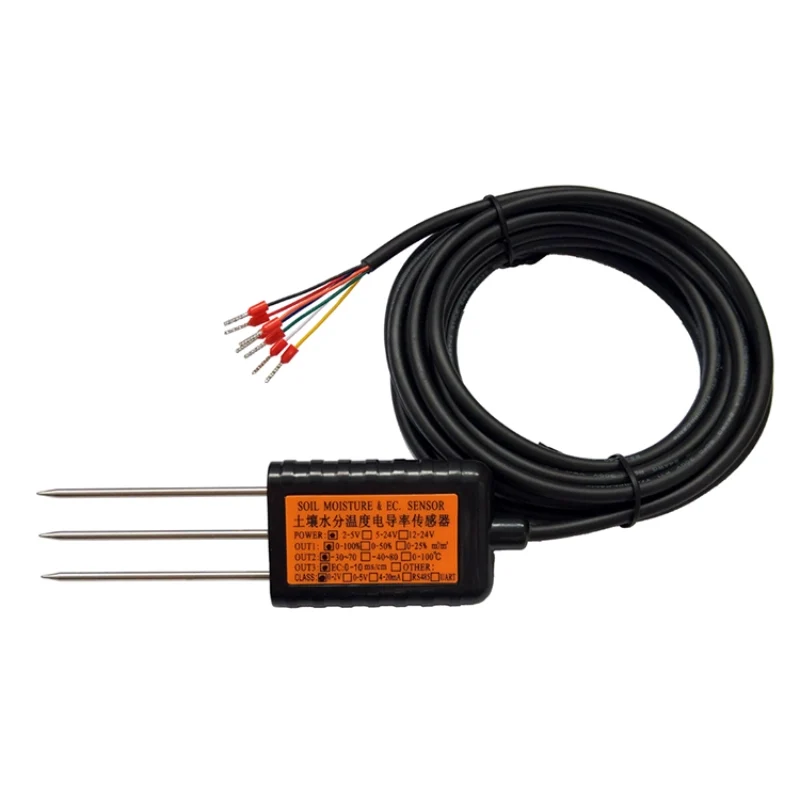
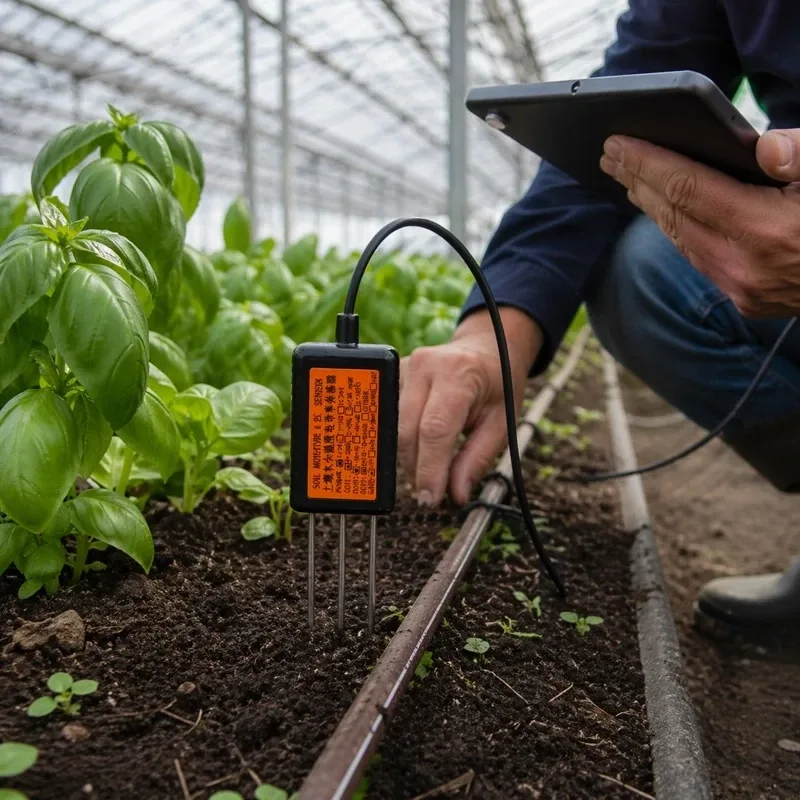
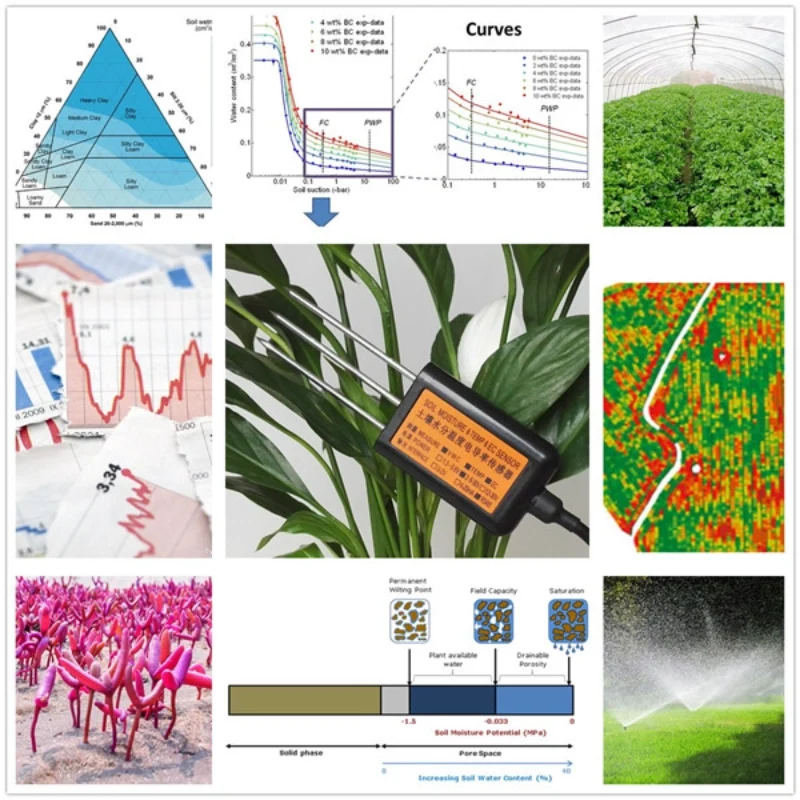
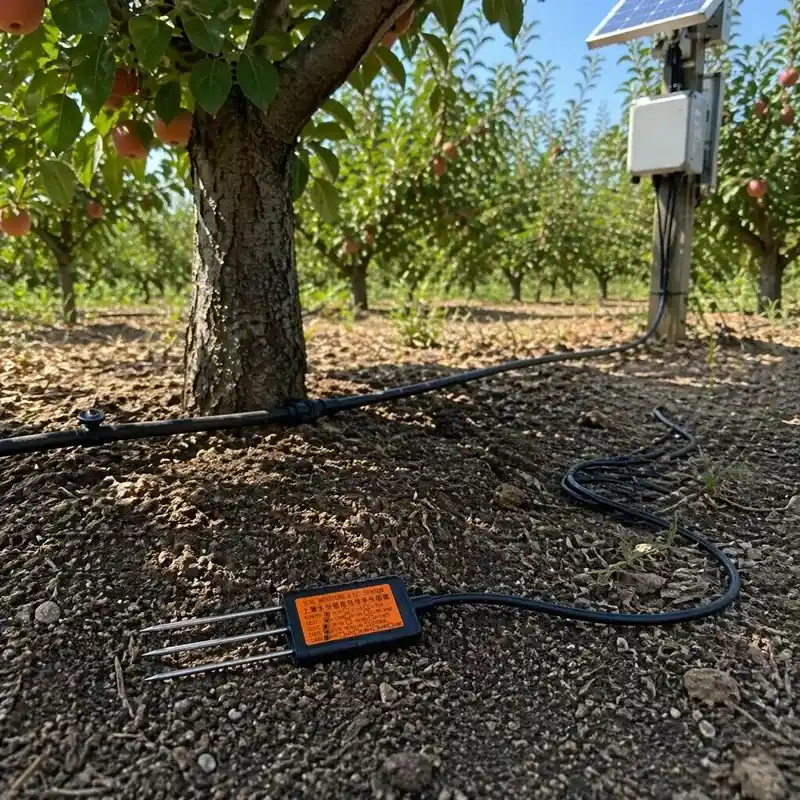
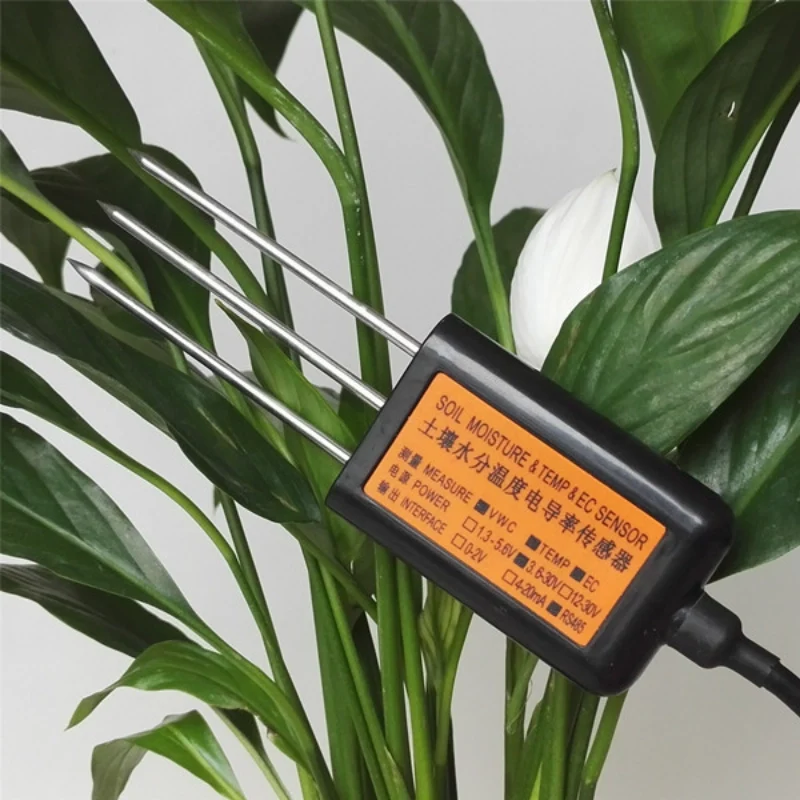
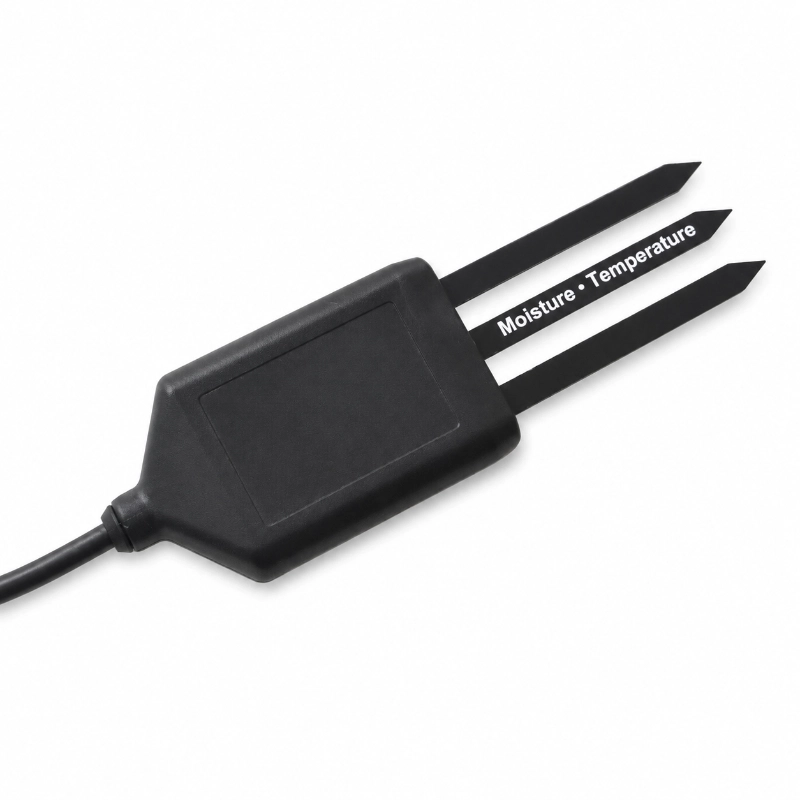
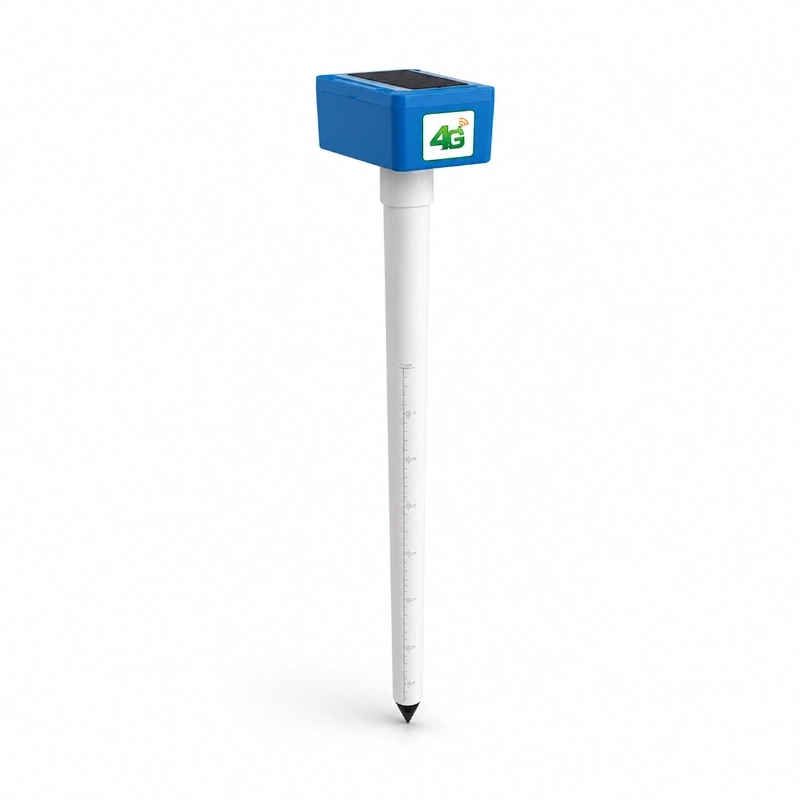
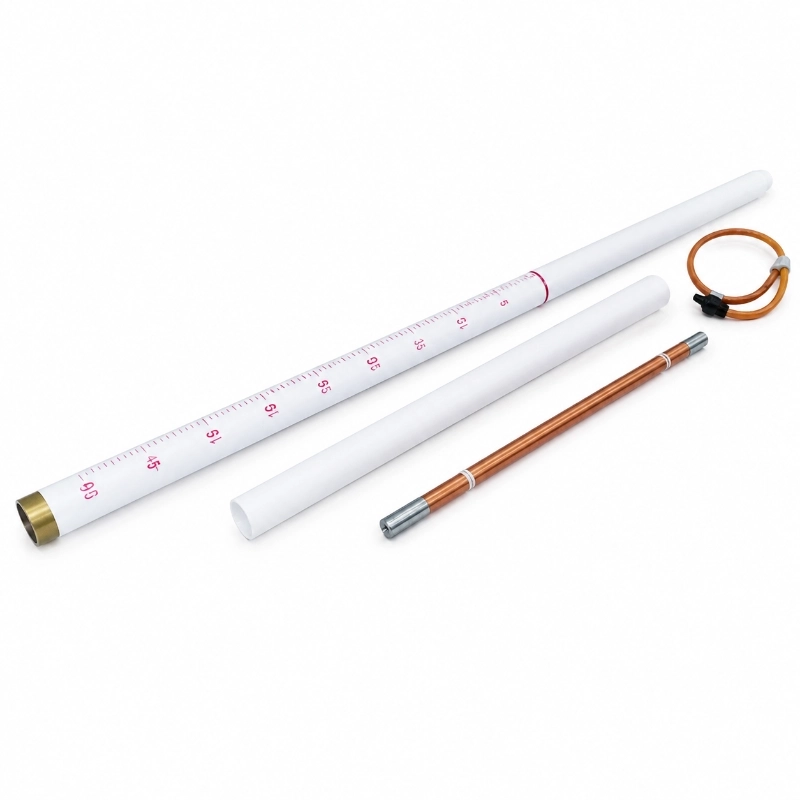
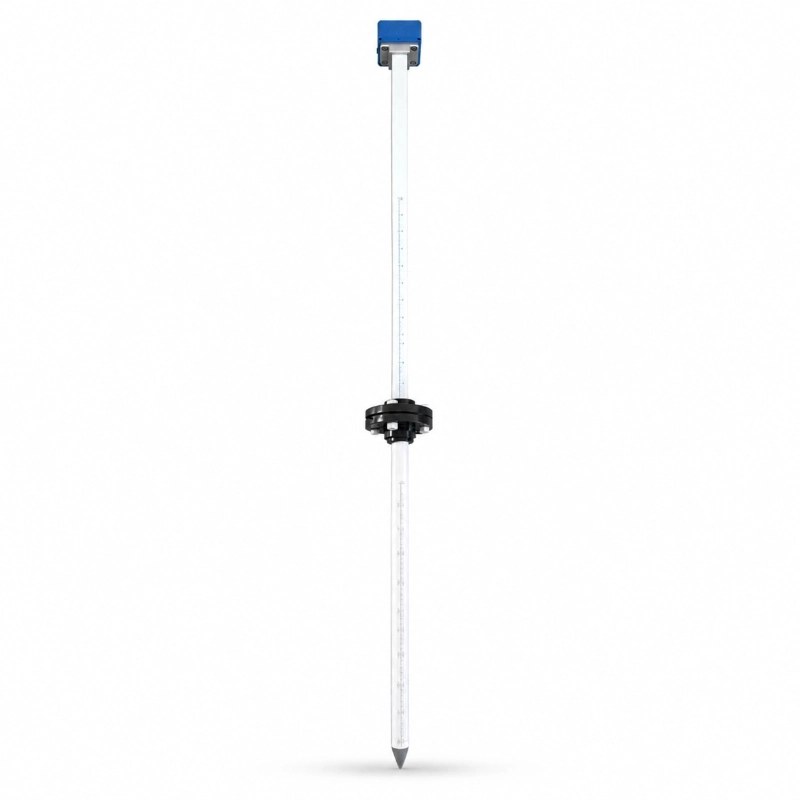
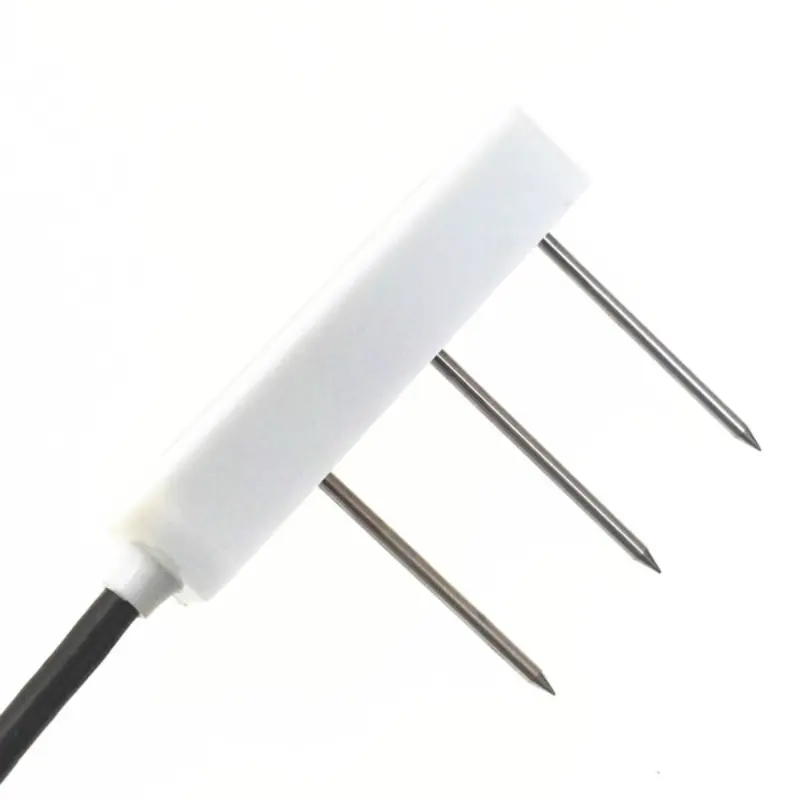
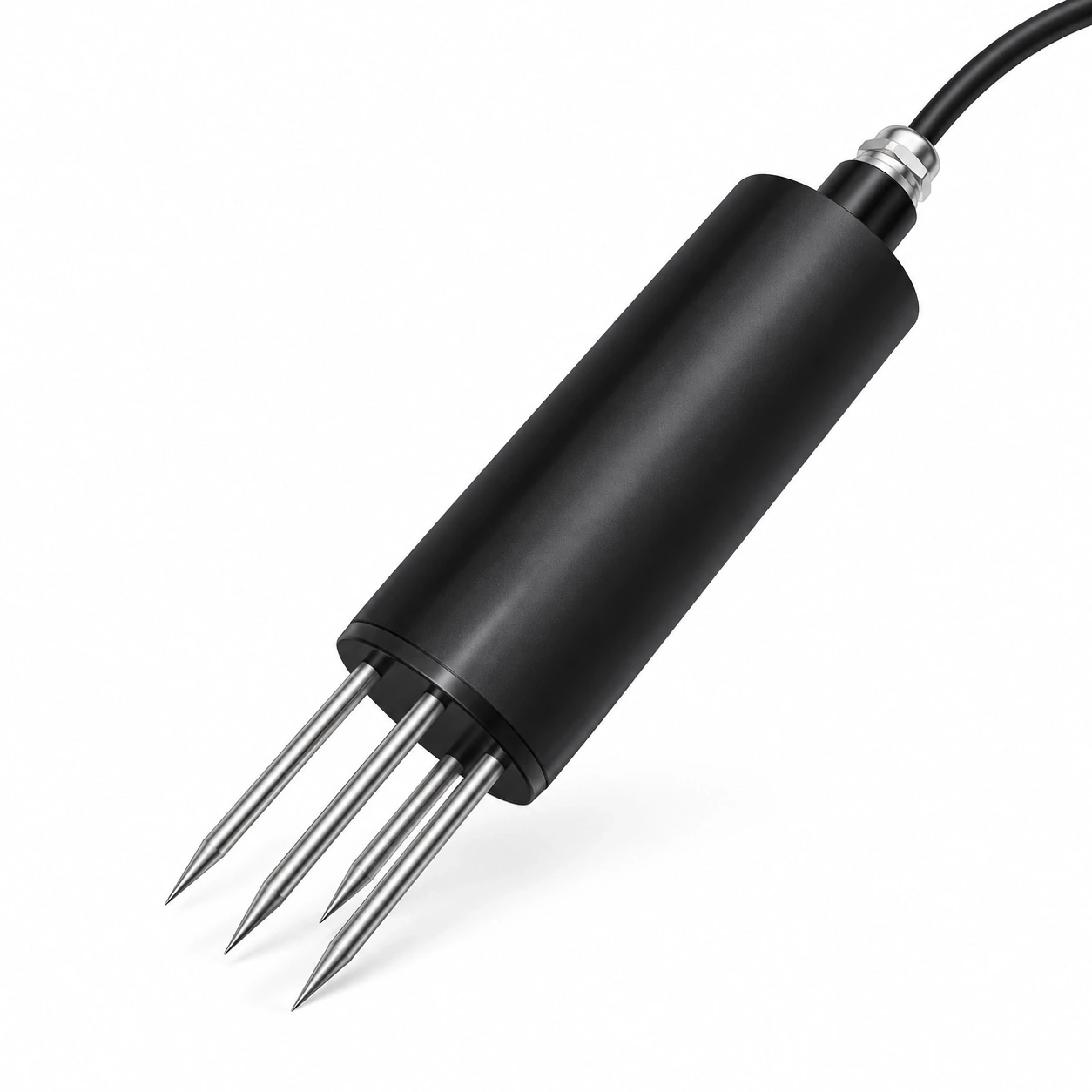
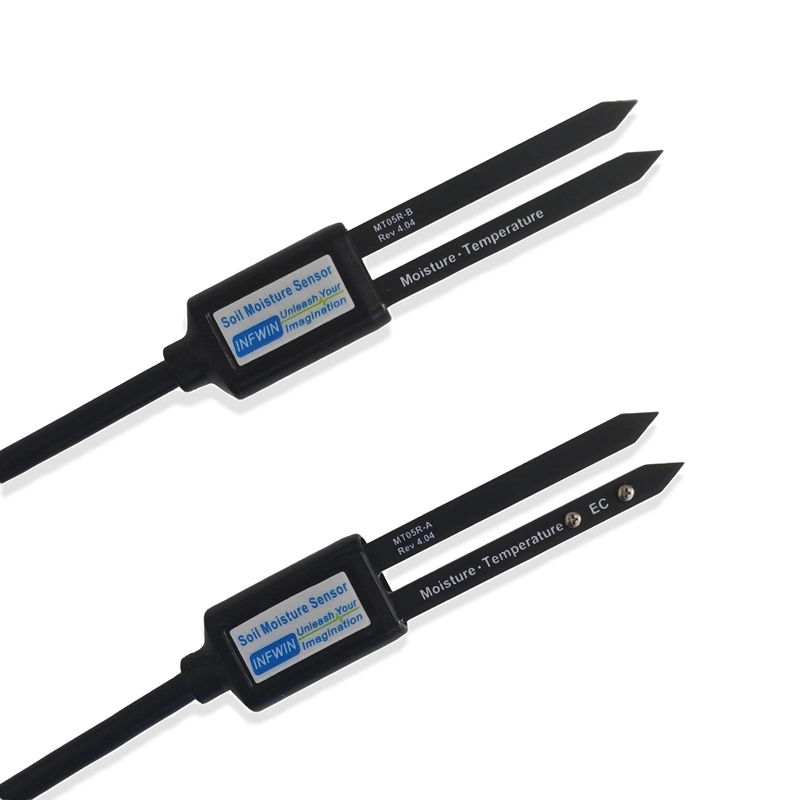
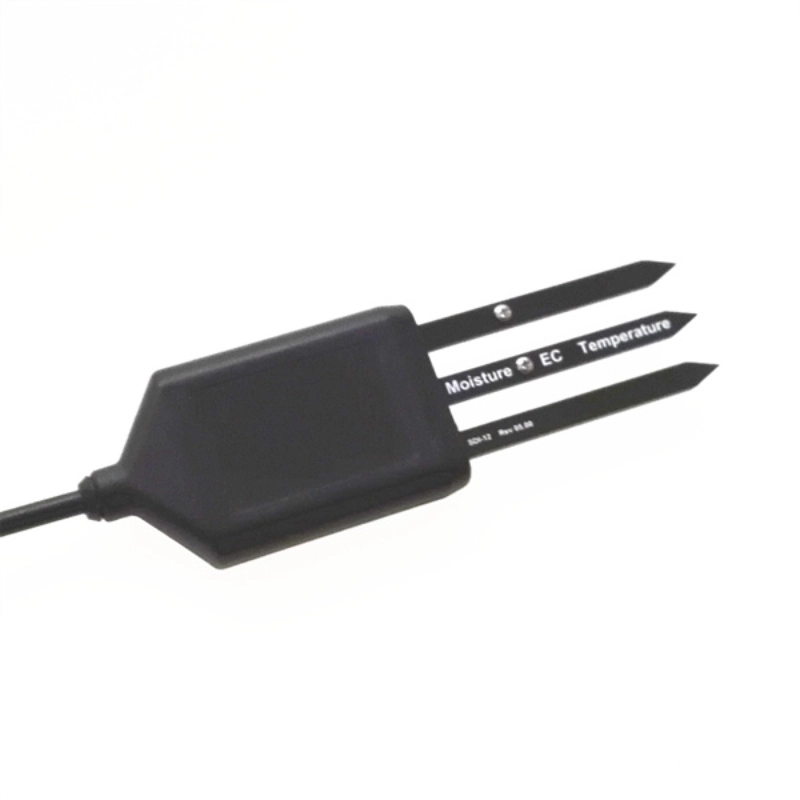
JW-S3S(Z3) soil moisture EC temperature sensor is designed for accurate root-zone monitoring in agriculture, greenhouse cultivation, irrigation systems. It measures soil moisture, electrical conductivity, and temperature in one compact probe, helping growers and integrators improve irrigation decisions, nutrient control, and crop performance. With optional RS485 Modbus, 0 to 2V, and 4 to 20mA outputs, it is suitable for both standalone use and smart farming system integration.
2. Product Overview
The soil moisture EC temperature sensor is a 3 in 1 monitoring device developed for continuous measurement of key soil. It combines volumetric water content, electrical conductivity, and temperature sensing into a single rugged probe, reducing installation complexity and improving field efficiency. The sensor uses the FDR method to measure soil moisture and an AC bridge method to measure conductivity. It features stable performance, fast response, high sensitivity, and strong environmental adaptability. The probe is fully sealed and corrosion resistant, making it suitable for long-term monitoring in soil, substrate, nutrient solution, and fertigation applications.
3.Technical Parameters
Item
Parameters
Model No.
JW-S3S(Z3)
Measured Parameters
Soil moisture, electrical conductivity, temperature
Soil Moisture Range
0 to 50% or 0 to 100% optional
Soil Moisture Resolution
0.03% within 0 to 50%, 1% within 50 to 100%
Soil Moisture Accuracy
±2% within 0 to 50%, ±3% within 50 to 100%
EC Range
0 to 5000 us/cm, 0 to 10000 us/cm, 0 to 20000 us/cm optional
EC Resolution
10 us/cm within 0 to 10000 us/cm, 50 us/cm at higher range
EC Accuracy
±3% within 0 to 10000 us/cm, ±5% within 10000 to 20000 us/cm
Temperature Range
-40 to 80°C
Temperature Resolution
0.1°C
Temperature Accuracy
±0.5°C
EC Temperature Compensation
Built-in, compensation range 0 to 50°C
Moisture Measurement Principle
FDR
EC Measurement Principle
AC bridge method
Output Options
RS485 Modbus, 0 to 2V, 4 to 20mA
Supply Voltage
3.6 to 30V DC, 12 to 30V DC, 2 to 5.5V DC optional by version
Static Power Consumption
6mA at 24V DC or 50mA at 24V DC depending on version
Protection Rating
IP68
Operating Environment
-40 to 85°C
Probe Material
Anti-corrosion special electrode
Sealing Material
Black flame-retardant epoxy resin
Installation Method
Fully buried or fully inserted into measured medium
Standard Cable Length
2 meters
Cable Customization
Available
Dimensions
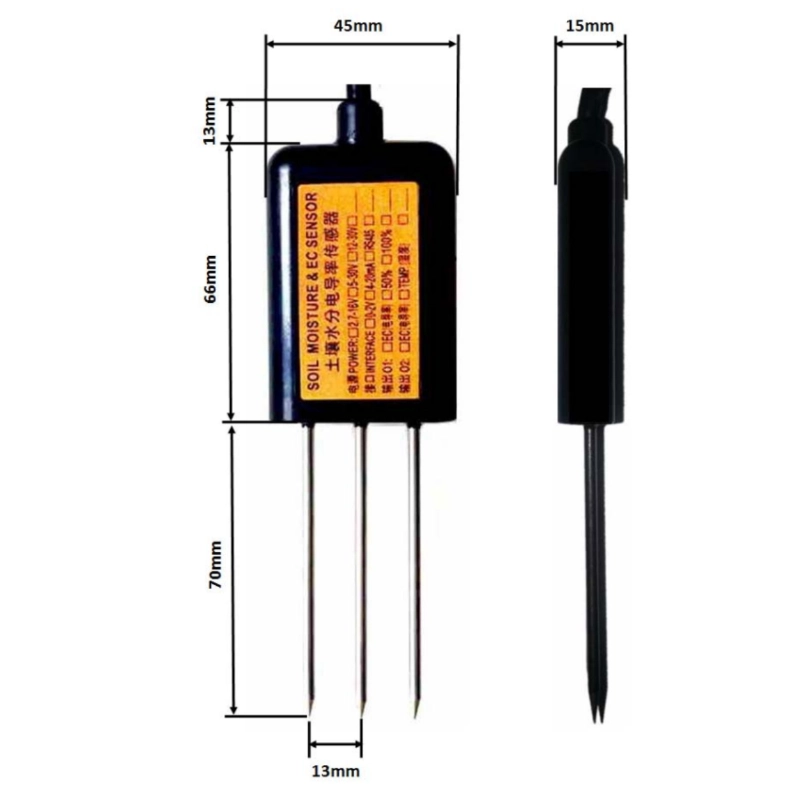
45 × 15 × 145 mm
Electrode Length
70 mm
4.Dimension
5. Output Options and Communication
This soil sensor is available in multiple signal output versions to match different monitoring systems:
RS485 Modbus Version
The RS485 version supports Modbus communication and is suitable for integration with:
PLC systems
IoT gateways
Remote telemetry units
Agricultural controllers
Cloud monitoring platforms
The manual notes default communication settings such as 9600 bps, 8 data bits, no parity, 1 stop bit, with configurable Modbus address, baud rate, protocol, and response delay.
Analog Output Versions
0 to 2V output
4 to 20mA output
These versions are suitable for analog acquisition systems and industrial monitoring applications.
6. Application Scenarios
This sensor is widely used in:
Smart agriculture
Precision irrigation
Greenhouse monitoring
Soil salinity management
Scientific experiments
Vegetable and flower cultivation
Grassland and pasture monitoring
Plant substrate testing
7.Installation and Measurement
For best measurement performance, the supplier manual provides several practical recommendations:
During spot testing, insert the probe vertically into the soil and avoid shaking it during insertion.
Make sure the electrodes maintain close contact with the measured medium.
For buried deployment, insert the probe horizontally into the wall of the excavation pit at the desired depth, then compact the backfill.
In hard soil, pre-drill a hole smaller than the probe diameter before insertion.
Avoid severe vibration, impact, or hitting the probe with hard objects.
For accurate EC measurement, soil volumetric water content should generally be above about 20 percent. Measurements taken after irrigation or rainfall are closer to actual conditions.
When used in strong sunlight, proper shielding is recommended to reduce temperature influence on the sensor body.
FAQ
Q
1. What does this product measure?
A
It measures soil moisture, electrical conductivity, and temperature in one probe, making it suitable for root-zone monitoring and irrigation management.
Q
2. Is this sensor suitable for greenhouse and substrate applications?
A
Yes. The manual states it can be used in greenhouses, flower and vegetable cultivation, plant cultivation, and also for nutrient solution or substrate EC testing.
Q
3. What communication outputs are available?
A
Available outputs include RS485 Modbus, 0 to 2V, and 4 to 20mA, depending on the selected version.
Q
4. Can JW-IoT offer this product for smart agriculture integration projects?
A
Yes. For SEO and branding purposes, this model can be positioned under the JW-IoT smart agriculture sensor lineup for integration with gateways, dataloggers, controllers, and cloud platforms.
Q
5. Is the probe waterproof for long-term outdoor use?
A
Yes. The manual specifies IP68 protection, and the probe can be buried in soil or used in immersed conditions for long-term dynamic detection.
Q
6. Can JW-IoT support RS485 Modbus integration with third-party platforms?
A
Yes. This product is a strong fit for JW-IoT precision agriculture and greenhouse automation solutions, especially where RS485 Modbus data acquisition is required.
Q
7. What moisture and EC ranges can be selected?
A
Moisture range options are 0 to 50% and 0 to 100%. EC range options include 0 to 5000 us/cm, 0 to 10000 us/cm, and 0 to 20000 us/cm.
Q
8. How should the probe be installed for accurate readings?
A
Insert the probe vertically for spot checks and keep tight contact with the measured medium. For buried use, install it horizontally into the pit wall at the required depth and compact the backfill. The manual also notes that EC readings are more accurate when moisture is above about 20%.
Q
9. Why choose JW-IoT for this soil moisture EC temperature probe?
A
Because JW-IoT can position this product not only as a standalone probe, but also as part of a broader smart farming solution including gateways, weather stations, irrigation control, and cloud monitoring.
 +86 13520127780
  info@jingelway.com