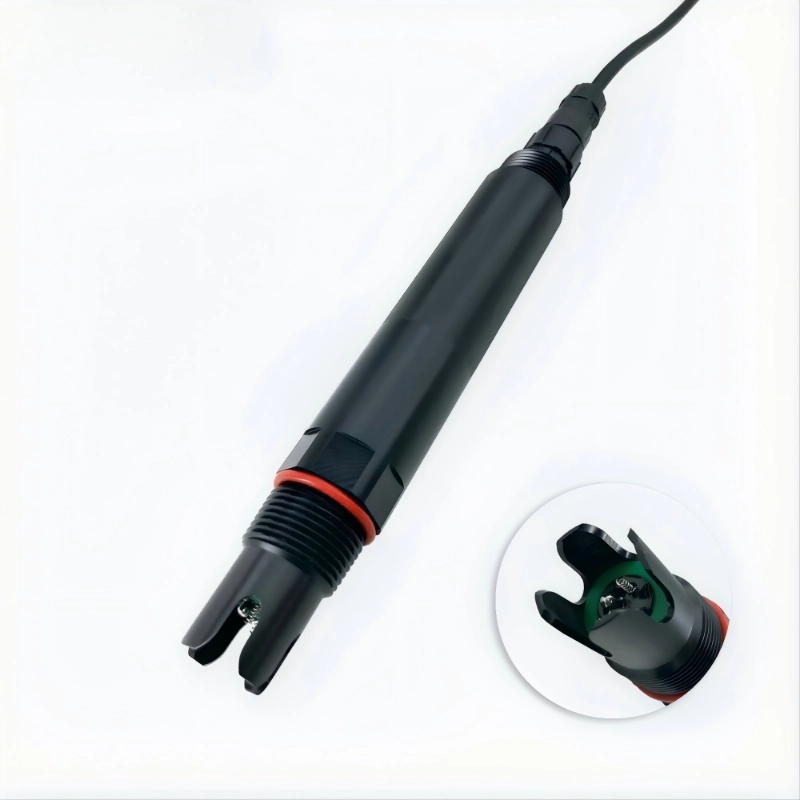
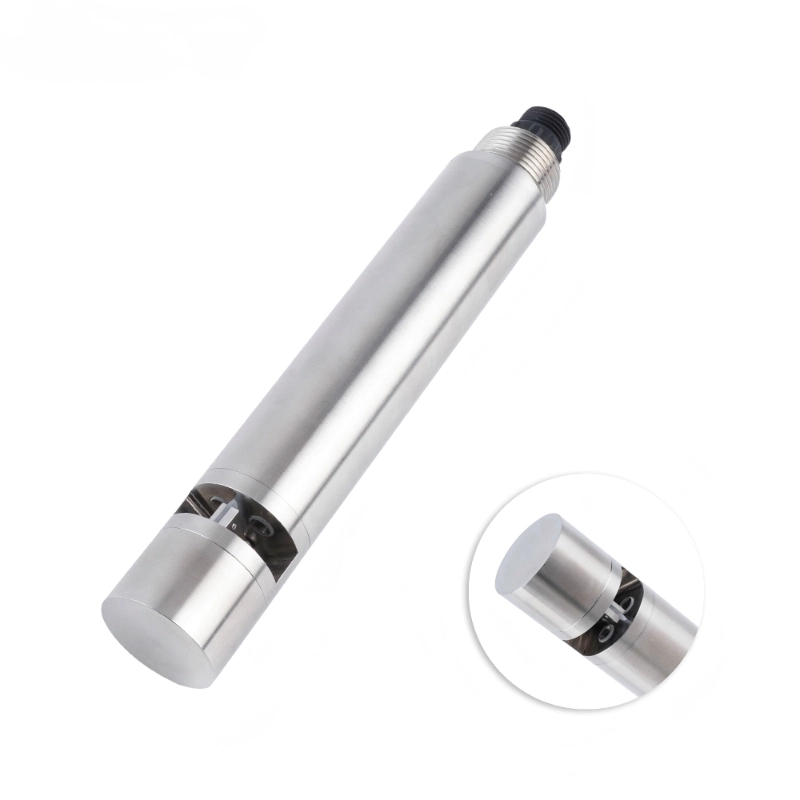
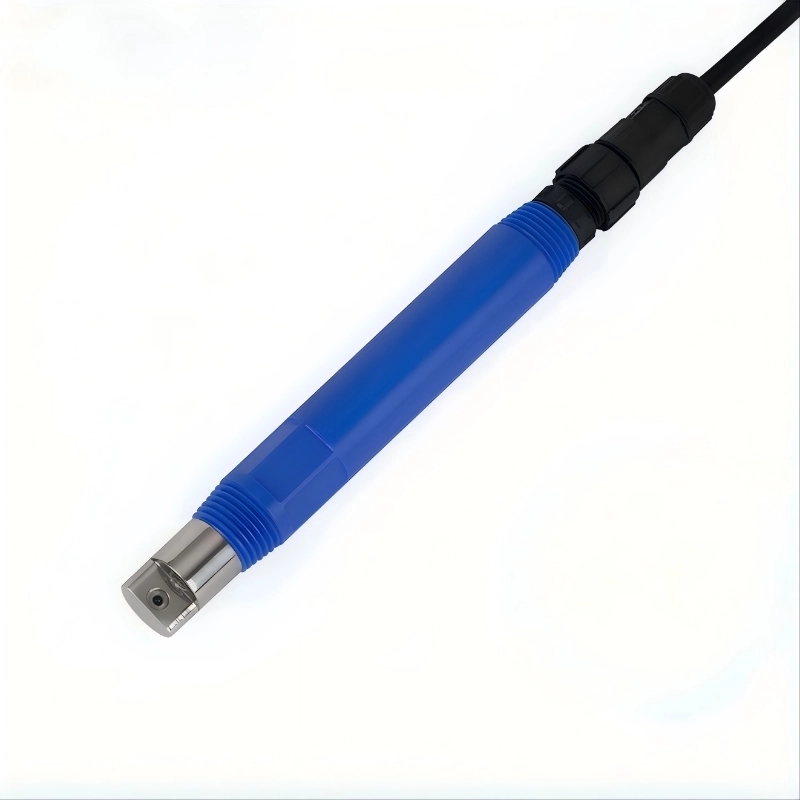
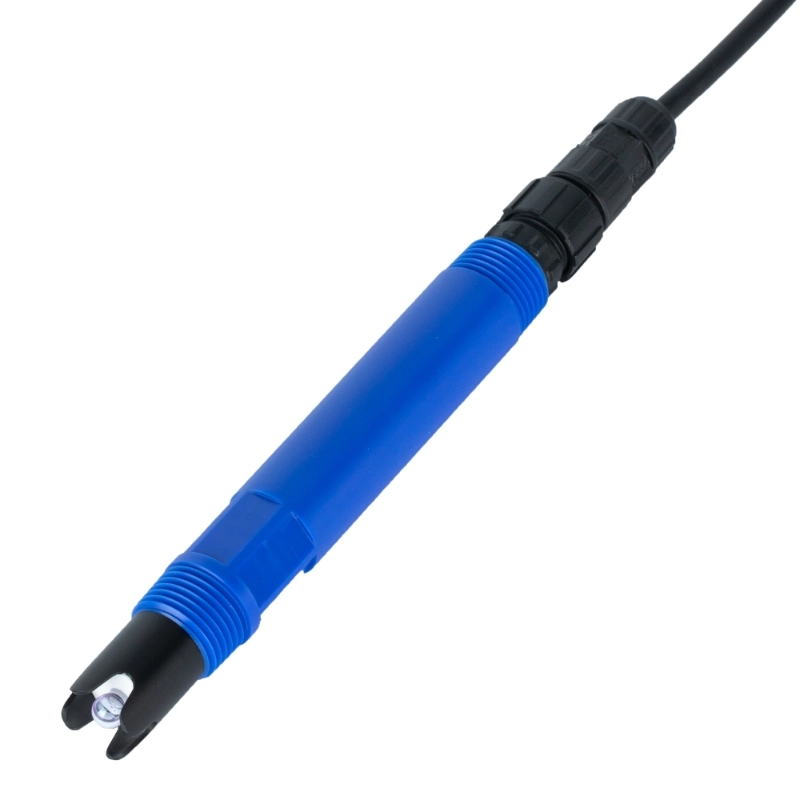
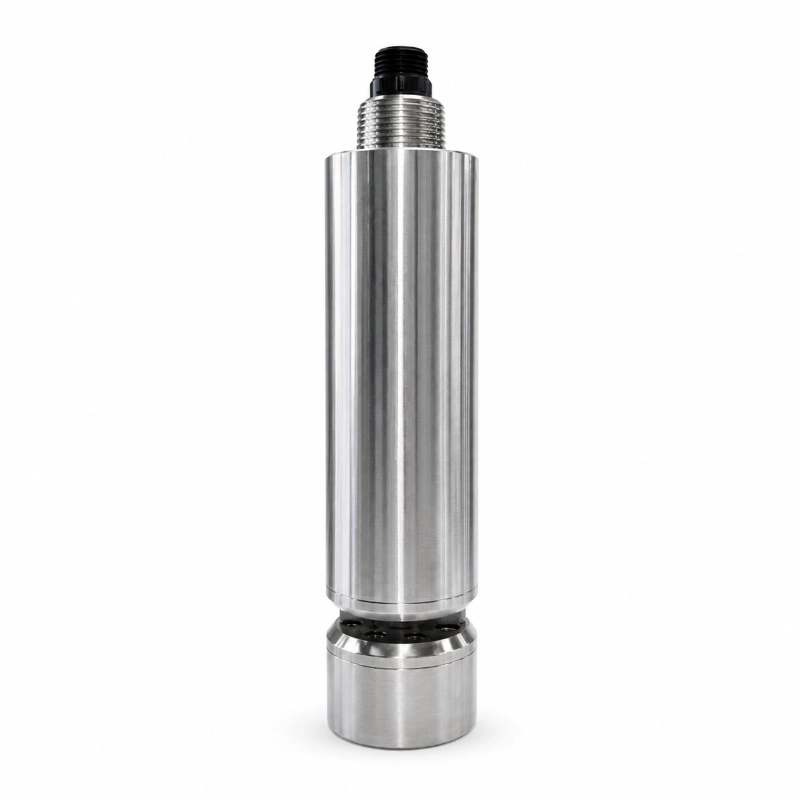
JW-CL-206(K12) Online Residual Chlorine Sensor is designed for continuous free chlorine and residual chlorine monitoring in drinking water plants, bottled water systems, water distribution networks, swimming pools, cooling circulation water, and water treatment projects. Based on the constant voltage measurement principle, it provides stable residual chlorine and temperature data through RS485 Modbus RTU communication. With a flow cell installation design, automatic Pt1000 temperature compensation, and IP68 protection, it is suitable for smart water quality monitoring and industrial water disinfection control.
2. Product Overview
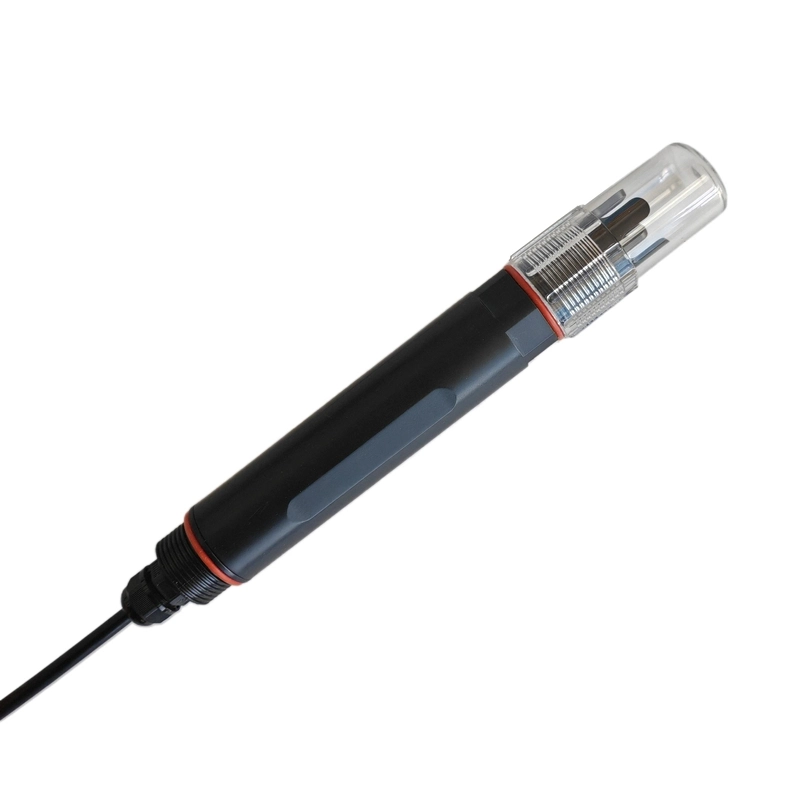
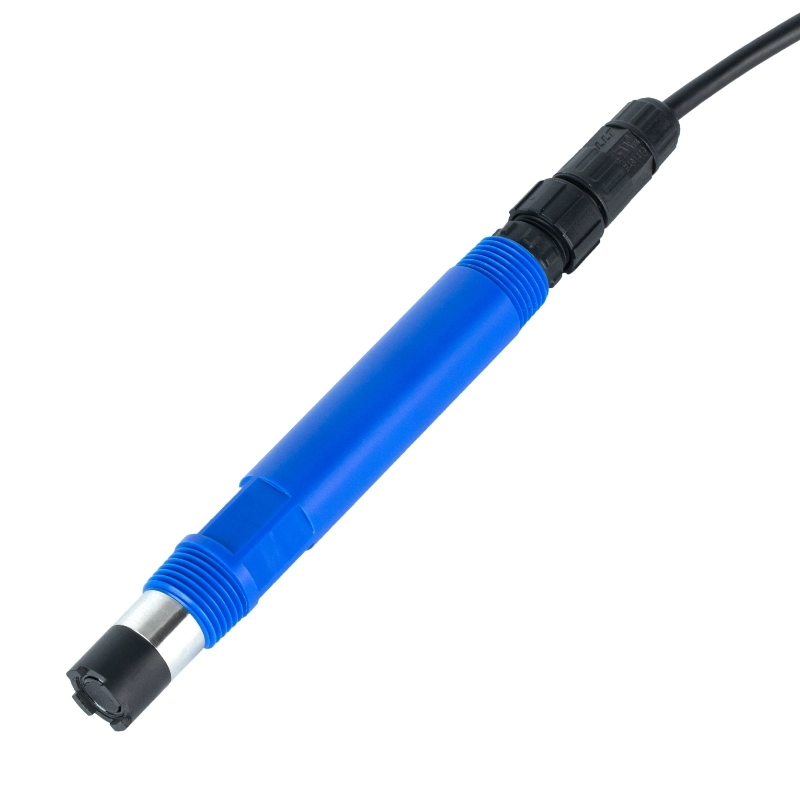
JW-CL-206(K12) Online Residual Chlorine sensor is developed for continuous monitoring of HClO concentration in water disinfection and treatment processes. It uses a constant voltage measurement method to detect residual chlorine concentration and outputs both residual chlorine and temperature data through RS485 Modbus RTU communication.
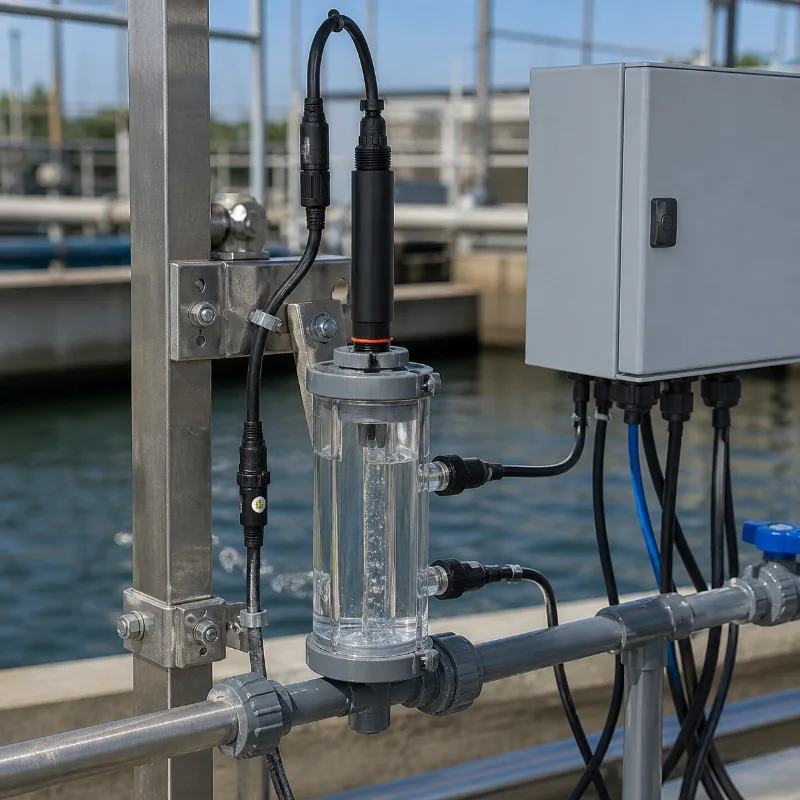
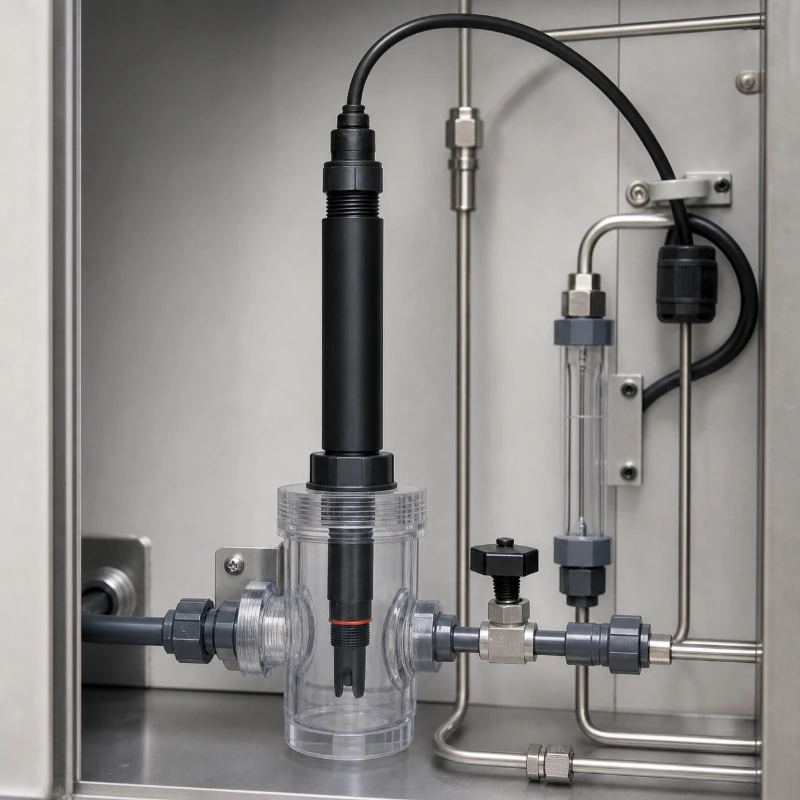
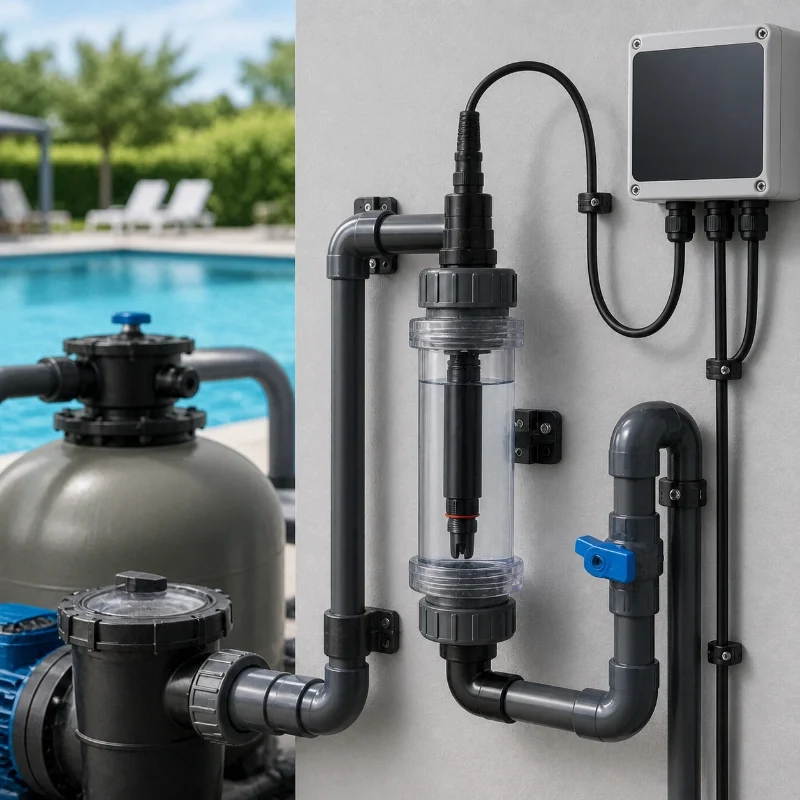
The sensor is designed for use with a matched flow cell. During installation, the measuring section should be placed near the flow cell inlet area and should not directly face the outlet. A stable flow rate of 30–60 L/h is recommended to improve measurement accuracy. This makes the sensor especially suitable for drinking water treatment, water distribution networks, swimming pools, cooling water systems, and water quality treatment projects.
Item
Specification
Product Type
Online Residual Chlorine Sensor
Model
JW-CL-206(K12)
Measurement Principle
Constant voltage method
Measuring Parameter
Residual chlorine HClO
Measuring Range
0–2.000 mg/L HClO
Resolution
0.001 mg/L
Accuracy
±5% or ±0.05 mg/L
Temperature Accuracy
±0.3°C
Response Time
T90 less than 90 s
Minimum Detection Limit
0.05 mg/L
Calibration
Two point calibration
Temperature Compensation
Automatic Pt1000 compensation
Output
RS485 Modbus RTU
Storage Temperature
-5°C to 65°C
Working Temperature
5°C to 50°C
Working Pressure
≤0.2 MPa
Working pH Range
pH 4–9
Installation
Flow cell installation 3/4 NPT
Recommended Flow Rate
30–60 L/h
Housing Material
ABS and PC alloy
Power Supply
12–24V DC
Power Consumption
0.2W at 12V
Protection Grade
IP68
Cable Length
Standard 5 m customizable
Connector
M16 5 pin waterproof male connector
3. Application Scenarios
Drinking Water Treatment Plants: The sensor can be used for continuous residual chlorine monitoring after disinfection, helping operators maintain safe chlorine concentration and stable water quality.
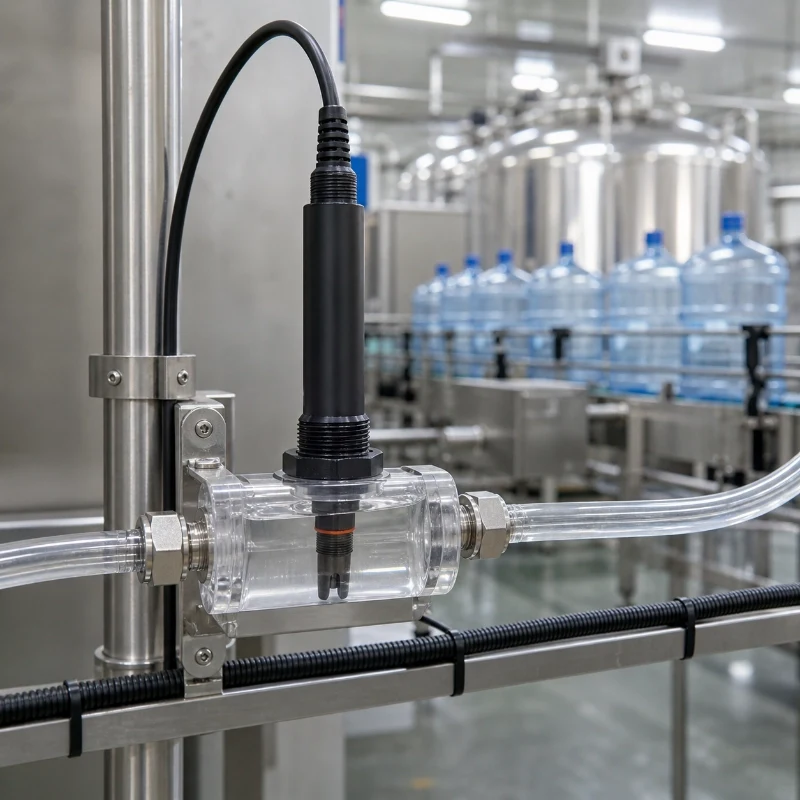
Bottled Water Systems: It is suitable for bottled water production and filling lines where online chlorine monitoring is required before or after treatment stages.
Water Distribution Networks: The sensor supports residual chlorine monitoring in water supply pipelines, distribution networks, and secondary water supply systems.
Swimming Pool Water Monitoring: It can be used in swimming pools and recreational water systems to monitor residual chlorine concentration and support disinfection control.
Cooling Circulation Water: The sensor is suitable for cooling water systems where residual chlorine is monitored to control microbial growth and maintain water treatment performance.
Smart Water Quality Systems: With RS485 Modbus RTU communication, the sensor can be integrated with RTUs, PLCs, telemetry terminals, gateways, SCADA systems, and cloud based monitoring platforms.
4. Installation Notes
The sensor should be installed with the matched flow cell. The measuring section should be placed near the flow cell inlet area and should not directly face the outlet. To ensure measurement accuracy, the flow should remain stable, and the recommended flow rate is 30–60 L/h.
Before powering on, wiring should be carefully checked to avoid damage caused by incorrect connection. Since cables may be immersed in water, seawater, or exposed to air for long periods, all wiring joints should be waterproofed, and user side cables should have corrosion resistance.
5. Maintenance Guide
For a new electrode or an electrode stored for a long time, activation is required before use. Place the sensor in tap water for 24 hours before operation. If the returned value is inaccurate, zero calibration and slope calibration can be performed.
For zero calibration, place the sensor in chlorine free water and calibrate after the value becomes stable. For slope calibration, place the sensor in a flow cell with flowing known HClO standard solution and calibrate after the value becomes stable. A 1–2 mg/L HClO standard solution is recommended for slope calibration.
FAQ
Q
1. What is an online residual chlorine sensor used for?
A
It is used for continuous residual chlorine monitoring in drinking water plants, bottled water systems, water distribution networks, swimming pools, cooling water, and water treatment projects.
Q
2. What measurement principle does this chlorine sensor use?
A
It uses the constant voltage method to measure residual chlorine concentration in water.
Q
3. Can JW-IoT integrate this residual chlorine sensor into a smart water platform?
A
Yes. JW-IoT can integrate the sensor with RTUs, gateways, PLCs, cloud dashboards, alarms, and remote water quality monitoring systems.
Q
4. What is the measuring range of this sensor?
A
The measuring range is 0–2.000 mg/L HClO with 0.001 mg/L resolution.
Q
5. Does the sensor support RS485 Modbus RTU?
A
Yes. It supports RS485 Modbus RTU communication for integration with industrial controllers, data loggers, and IoT platforms.
Q
6. How should the sensor be installed?
A
The sensor should be installed with a matched flow cell. The measuring section should be near the flow cell inlet area, not directly facing the outlet, and the recommended flow rate is 30–60 L/h.
Q
7. Why choose JW-IoT for residual chlorine monitoring projects?
A
JW-IoT can provide residual chlorine sensors, telemetry devices, flow cell installation support, cloud platforms, data visualization, and complete water quality monitoring integration.
Q
8. Does the sensor need calibration before use?
A
The sensor is calibrated before delivery. If values become inaccurate, users can perform zero calibration and slope calibration according to the operating procedure.
Q
9. Can JW-IoT support customized cable length and system integration?
A
Yes. JW-IoT can support customized cable length, RS485 Modbus integration, data acquisition, and smart water quality monitoring system deployment.
 +86 13520127780
  info@jingelway.com