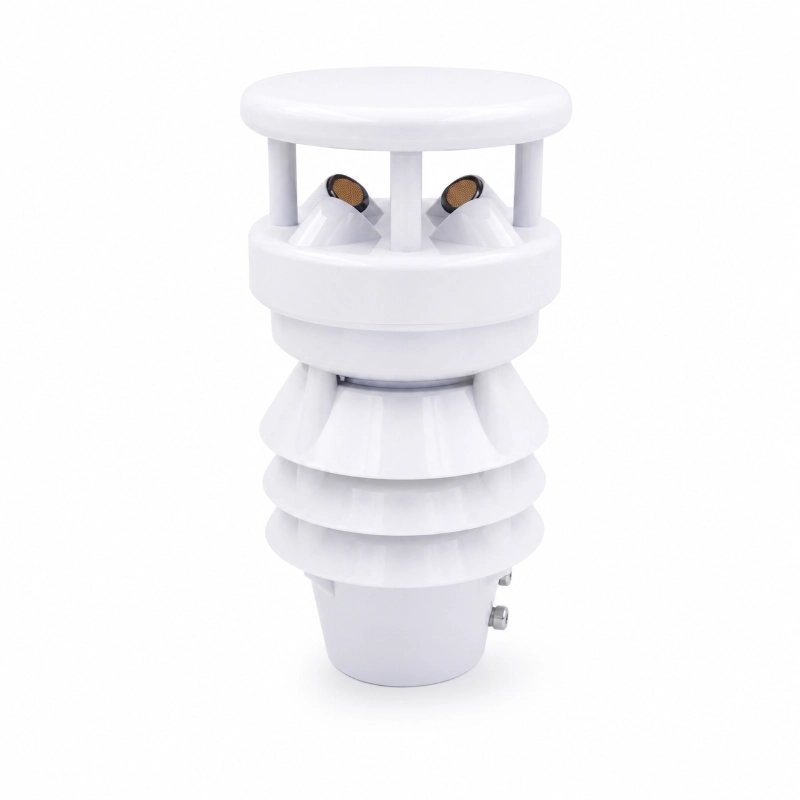
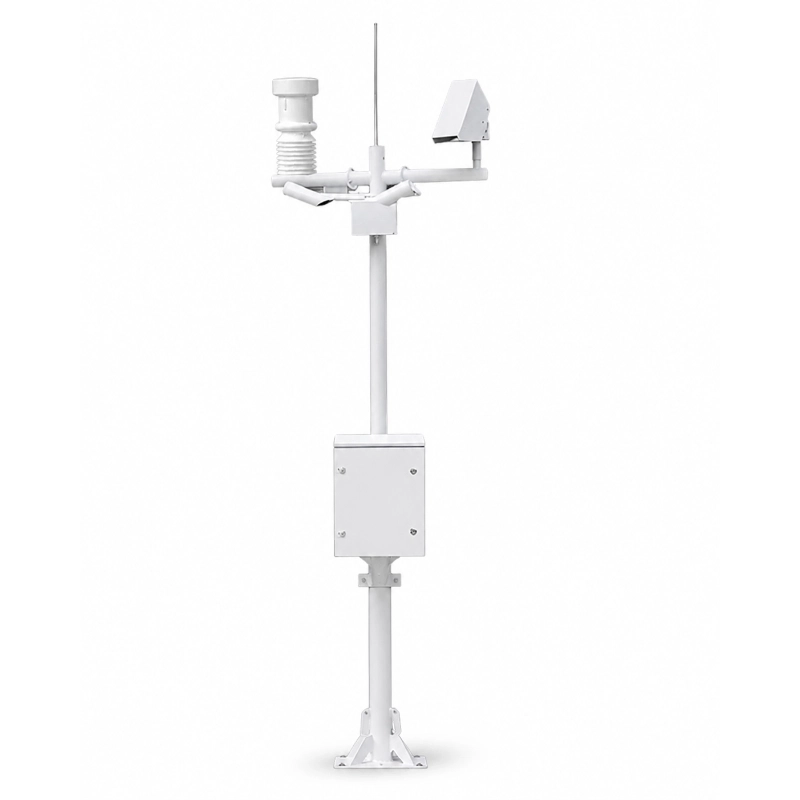
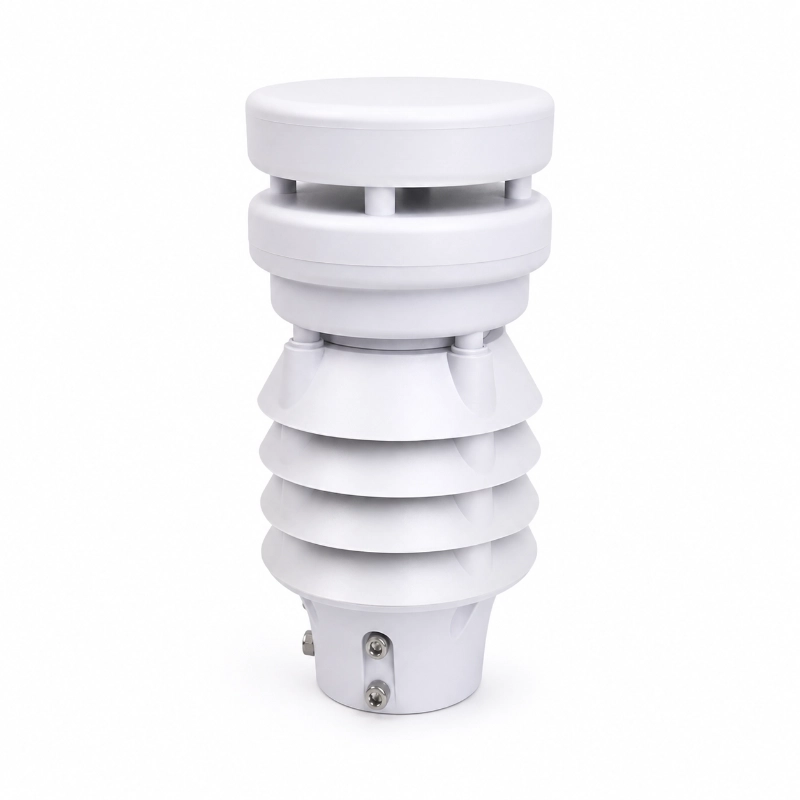
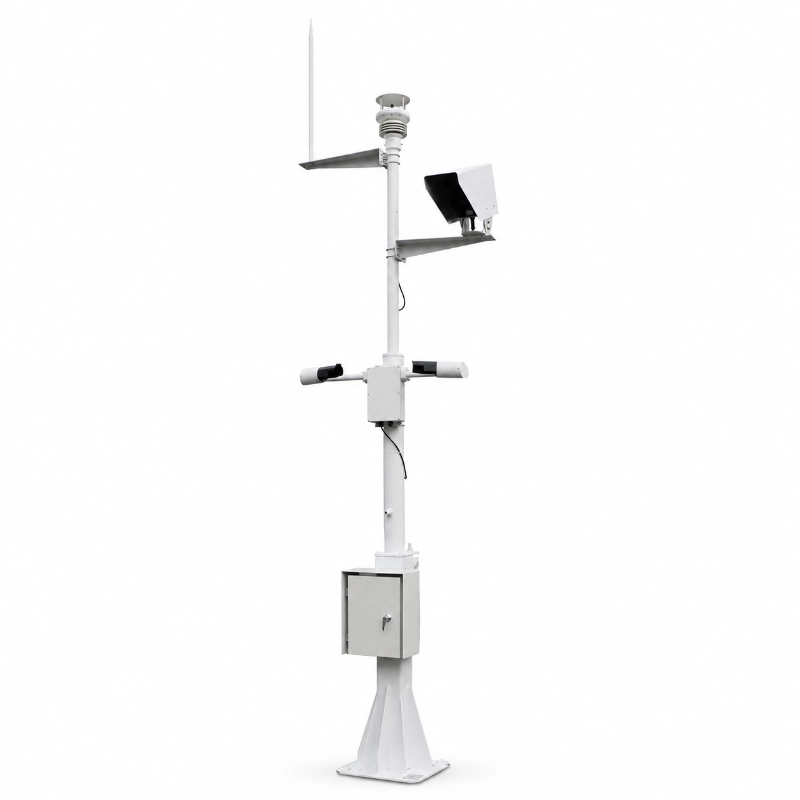
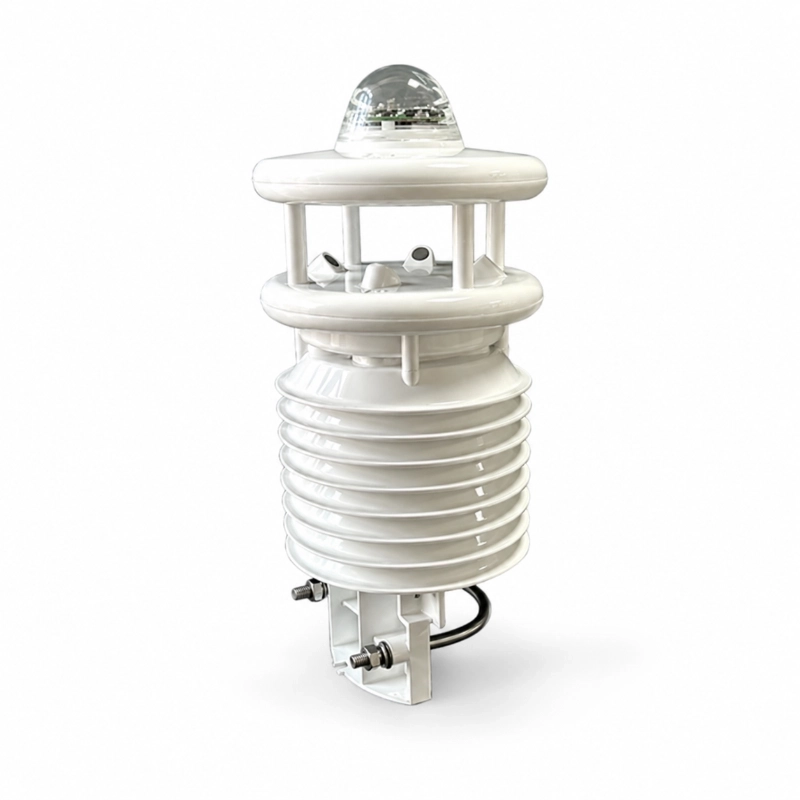
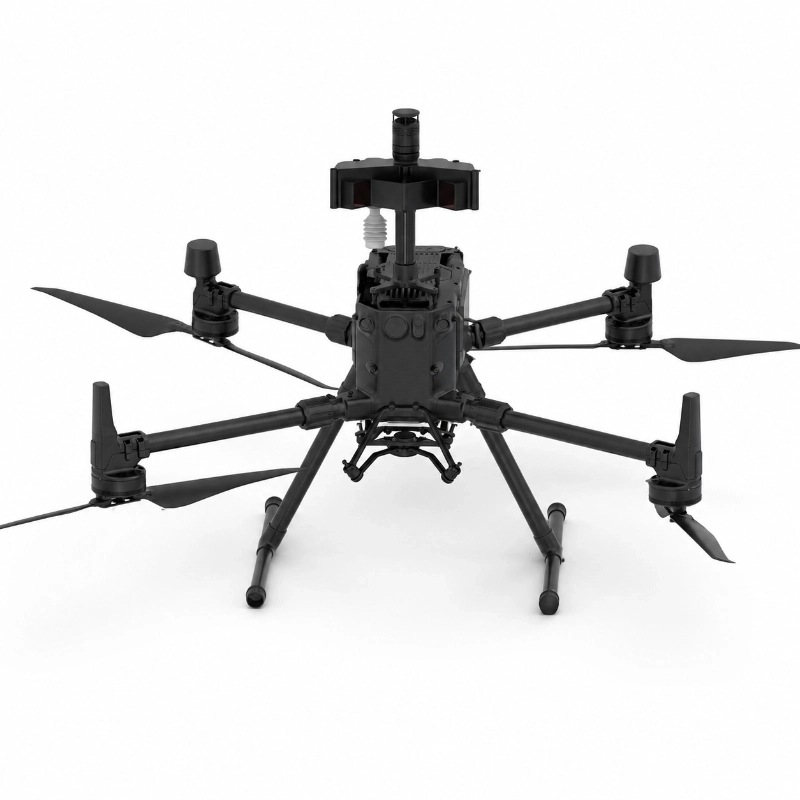
Vehicle Mounted Weather Station for Mobile Environment Monitoring
Key Features
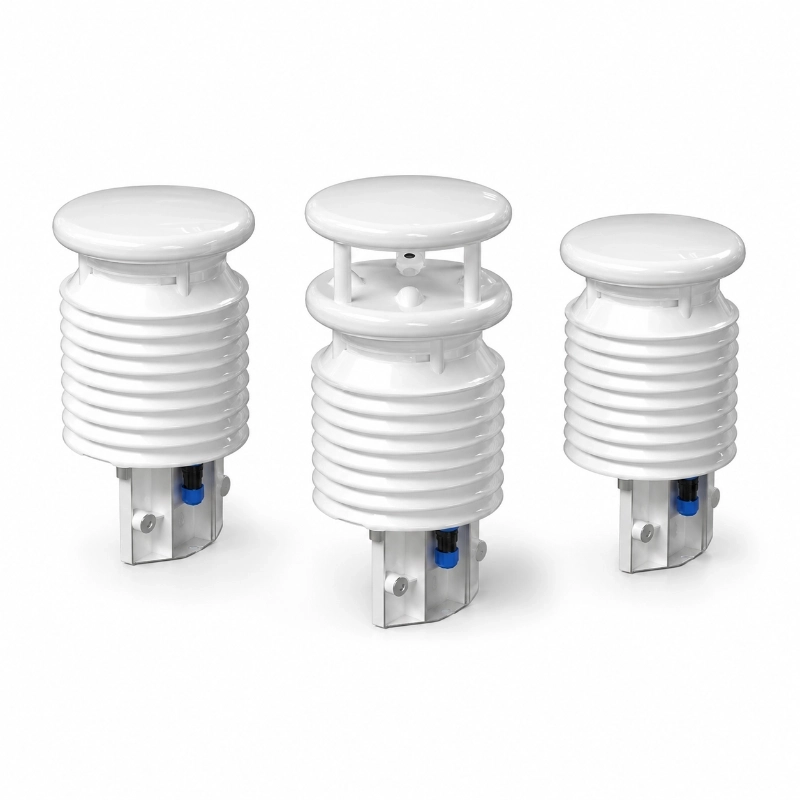
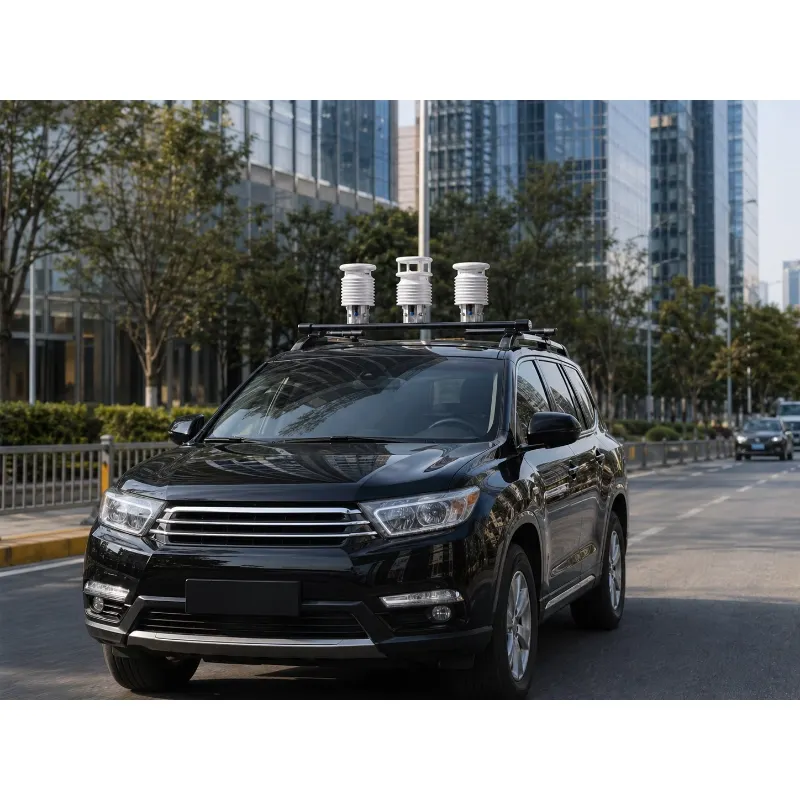
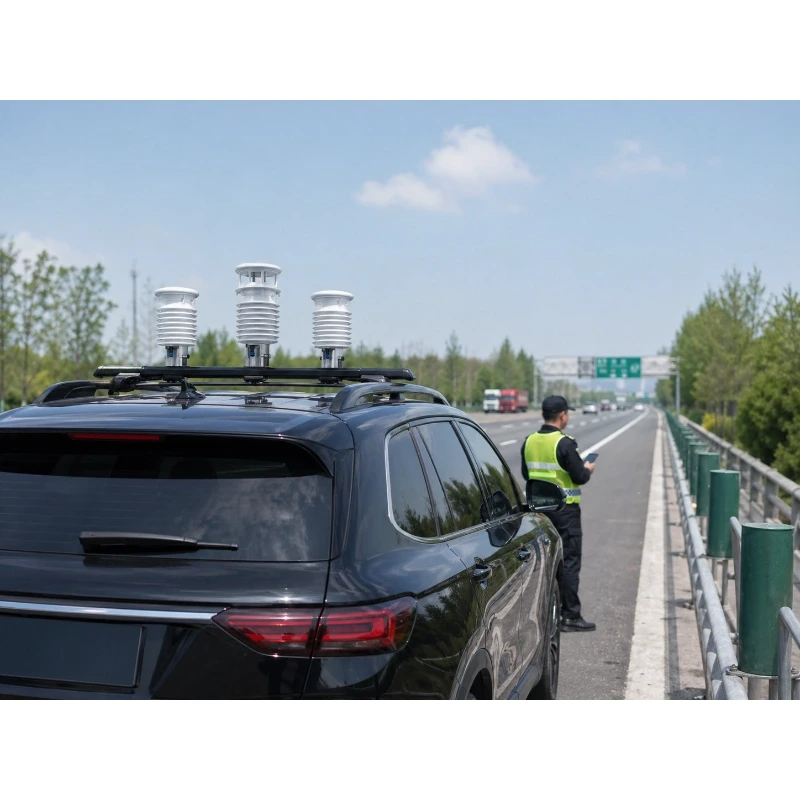
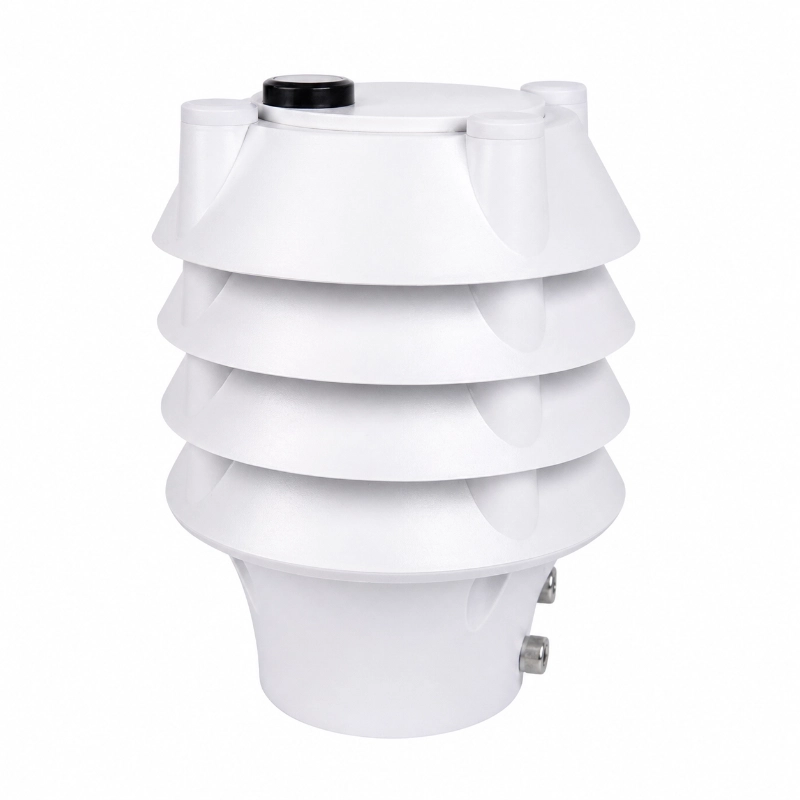
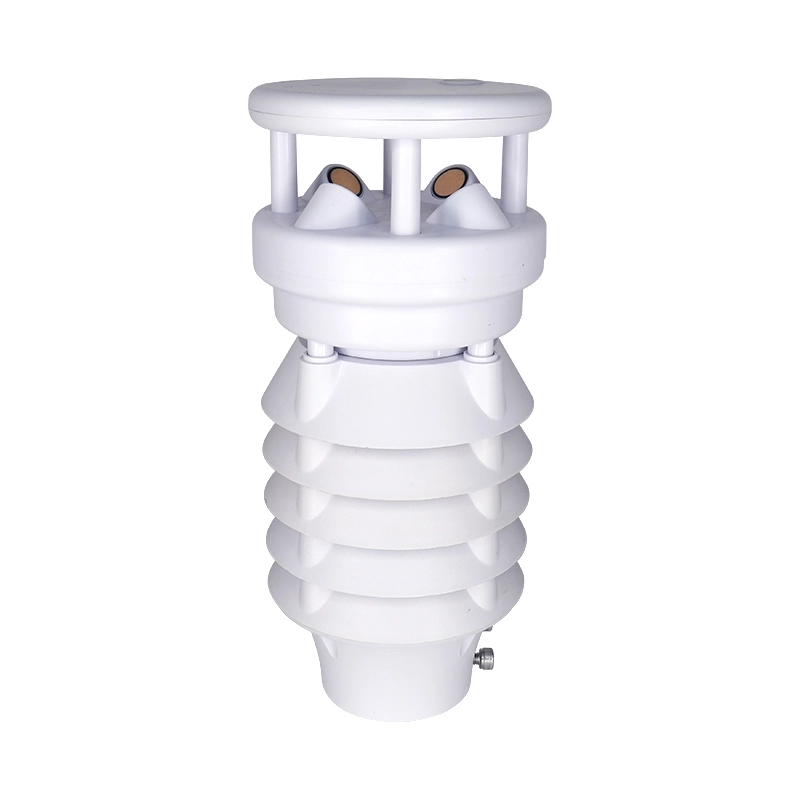
Integrated Mobile Weather Monitoring: This on board weather station combines multiple sensors in one compact vehicle-mounted system, helping users collect real-time environmental and meteorological data during mobile operation.
Multi Parameter Sensor Integration: The system can monitor temperature, relative humidity, dew point, wind speed, wind direction, atmospheric pressure, rainfall, solar radiation, illuminance, UV radiation, PM1, PM2.5, PM10, CO, NO2, SO2, ozone and noise.
Vehicle Motion Correction Algorithm: Built-in attitude correction and algorithm processing help reduce vehicle wind resistance and direction errors, improving the accuracy of real wind speed and wind direction during driving.
Built In Electronic Compass: The integrated electronic compass supports flexible installation without strict orientation requirements, making roof-mounted deployment faster and easier.
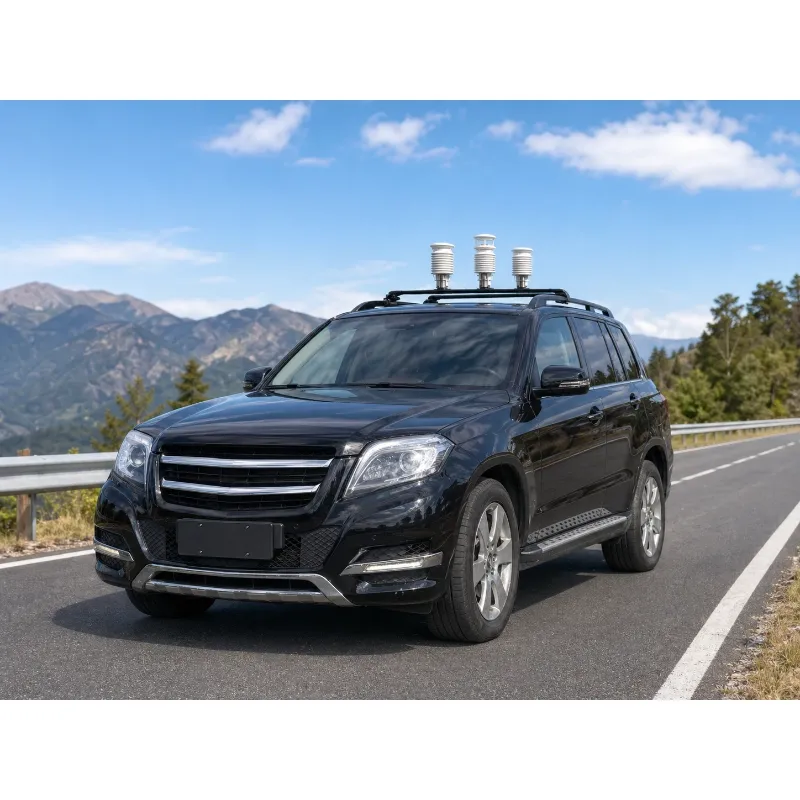
Compact Roof Mount Design: The lightweight structure and aluminum alloy vehicle bracket are designed for mobile observation vehicles. The system can be mounted on roof rails or dedicated vehicle supports without damaging the vehicle body.
Flexible Sensor Combination: Different sensor modules can be selected based on project requirements, including meteorological monitoring, air quality monitoring, road patrol, emergency response and engineering supervision.
Low Power Operation: The system is designed for low power consumption and can support continuous operation for field missions, mobile monitoring campaigns and temporary environmental surveys.
Real Time Data Collection: The station can be connected to data acquisition devices, display terminals or IoT platforms to support real-time monitoring, data storage, visualization and remote management.
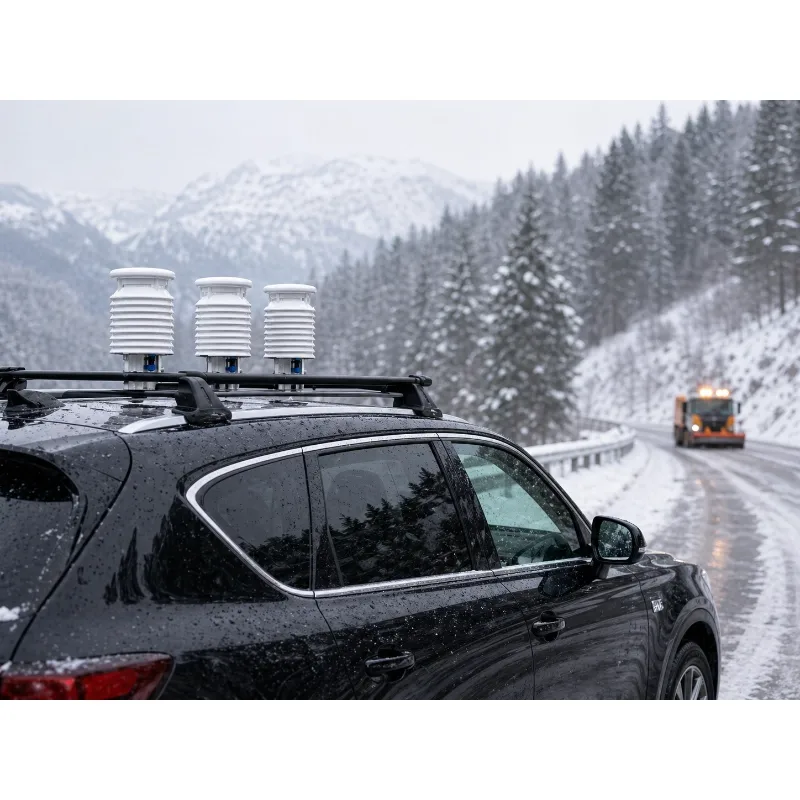
Suitable for Harsh Outdoor Environments: The rugged sensor housing supports long-term outdoor use in rain, snow, dust, high wind and mobile vibration environments.
Easy Installation and Maintenance: The modular structure allows quick installation, simple replacement of sensor modules and convenient maintenance for fleet operators and system integrators.
JW-IWS-VM(LC35) vehicle mounted weather station is a compact mobile environmental monitoring system designed for vehicles, emergency response fleets, road inspection vehicles and field survey platforms. It integrates multiple meteorological and air quality sensors to measure temperature, humidity, wind speed, wind direction, pressure, rainfall, solar radiation, noise, particulate matter and gas indicators while the vehicle is moving. With attitude correction algorithms and flexible sensor configuration, it provides reliable data for mobile weather observation, environmental monitoring, emergency rescue and road operation management.
2. Product Overview
JW-IWS-VM(LC35) Vehicle Mounted Weather Station is a compact vehicle-mounted system for mobile meteorological and environmental monitoring. It can measure temperature, humidity, wind speed, wind direction, pressure, rainfall, radiation, illuminance, PM, gas and noise data in real time.
With attitude correction algorithms and a built-in electronic compass, the system helps reduce vehicle movement errors and improves wind data accuracy. Its compact roof-mounted design supports quick installation on emergency vehicles, road patrol vehicles, environmental inspection vehicles and mobile survey platforms. Data can be connected to local terminals, IoT platforms or third-party monitoring systems.
3.Why Choose This On Board Weather Station
The product is designed for mobile and temporary monitoring tasks where fixed weather stations cannot provide enough spatial data. It allows users to capture environmental changes along roads, cities, mountains, industrial zones and emergency sites.
Compared with a traditional fixed weather station, the on board weather station provides wider monitoring coverage, faster deployment and better flexibility for mobile applications. It is especially suitable for system integrators, meteorological service providers, environmental monitoring companies and public safety agencies.
Parameter
Measurement Range
Resolution
Accuracy
Ambient Temperature
-50 to 90°C
0.1°C
±0.3°C
Relative Humidity
0 to 100%RH
1%RH
±3%RH
Dew Point
-50 to 50°C
0.1°C
±0.3°C
Wind Speed
0 to 60 m/s
0.1 m/s
± 0.3 plus 0.03V
Wind Direction
0 to 359°
1°
±3°
Rainfall
0 to 999.9 mm
0.1 0.2 0.5 mm optional
±4%
Noise
20 to 130 dB
0.1 dB
±5 dB
Solar Radiation
0 to 2000 W/m²
1 W/m²
≤5%
Illuminance
0 to 200000 Lux
1 Lux
≤5%
UV Radiation
0 to 1000 W/m²
1 W/m²
≤5%
PM1 PM2.5 PM10
0 to 1000 μg/m³
1 μg/m³
≤5%
Carbon Monoxide
0 to 5 ppm
0.001 ppm
±2% FS
Sulfur Dioxide
0 to 5 ppm
0.001 ppm
±2% FS
Nitrogen Dioxide
0 to 5 ppm
0.001 ppm
±2% FS
Ozone
0 to 5 ppm
0.001 ppm
±2% FS
Extended Parameters
Customizable
Customizable
Customizable
4. Output and Communication
The on board weather station can be integrated with different data collection and communication systems according to project requirements.
Common output and communication options include:
Option
Description
RS485
Suitable for industrial data acquisition and Modbus RTU integration
4G LTE
Supports remote data upload from mobile vehicles
GPS Positioning
Adds location data to environmental measurements
IoT Platform Integration
Enables cloud data visualization and remote monitoring
Local Display Terminal
Supports real-time data viewing inside the vehicle
API Integration
Allows third-party software or command platforms to access monitoring data
Custom Protocol
Available for project-based integration requirements
5. Application Scenarios
Mobile Meteorological Observation: Suitable for vehicles used in field weather surveys, road weather monitoring, mountain area observation, emergency meteorology and temporary climate investigation.
Environmental Monitoring: The station can measure particulate matter, noise, gas concentration and meteorological factors for urban environmental inspection, pollution source tracking and air quality mapping.
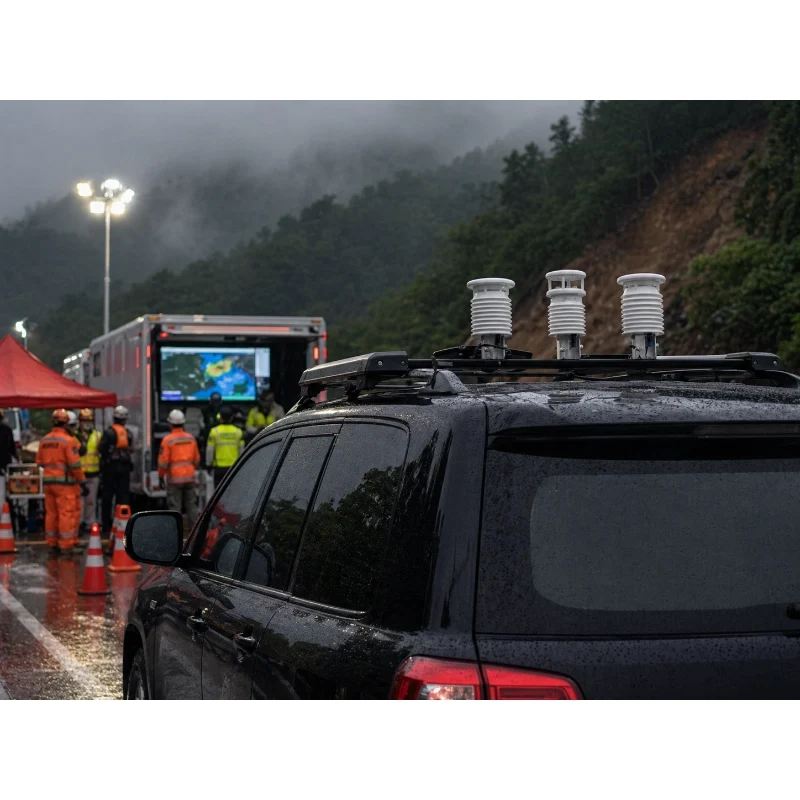
Emergency Rescue: Installed on emergency command vehicles or rescue vehicles, the system provides on-site weather and environmental data for disaster response, fire rescue, flood control and hazardous condition assessment.
Road Patrol and Traffic Operation: Useful for highway patrol, road maintenance, tunnel emergency rescue, snow road inspection and transport safety management.
Engineering Supervision: The system can support construction site inspection, road engineering monitoring and mobile field data collection for environmental compliance and safety assessment.
FAQ
Q
1. What is an on board weather station used for?
A
An on board weather station is used to collect real-time meteorological and environmental data from a moving or parked vehicle. It is commonly used for mobile weather observation, emergency rescue, road patrol, environmental monitoring and engineering inspection.
Q
2. Can this vehicle weather station measure wind speed and wind direction while driving?
A
Yes. The system can measure wind speed and wind direction during vehicle operation. It uses algorithm correction and attitude calibration to reduce errors caused by vehicle movement and airflow disturbance.
Q
3. What parameters can JW-IoT on board weather station monitor?
A
JW-IoT on board weather station can be configured to monitor temperature, humidity, dew point, wind speed, wind direction, pressure, rainfall, solar radiation, UV radiation, illuminance, PM1, PM2.5, PM10, CO, NO2, SO2, ozone and noise.
Q
4. Is the station suitable for emergency rescue vehicles?
A
Yes. It is suitable for emergency command vehicles, rescue vehicles, fire response vehicles and disaster response fleets. It helps provide on-site weather and environmental data for decision-making.
Q
5. Does the system require fixed installation direction?
A
No. The system can be equipped with an electronic compass, so installation does not require strict direction alignment. This makes vehicle roof installation faster and more convenient.
Q
6. Can JW-IoT provide customized sensor combinations?
A
Yes. JW-IoT can provide customized configurations based on project requirements, including meteorological sensors, air quality sensors, gas sensors, noise sensors and communication modules.
Q
7. Can the data be uploaded to a cloud platform?
A
Yes. The station can support platform integration through communication options such as RS485, 4G, GPS data linkage, API integration or customized data transmission protocols.
Q
8. What vehicles can use this on board weather station?
A
It can be used on SUVs, inspection vehicles, emergency rescue vehicles, meteorological survey vehicles, environmental monitoring vehicles, road patrol vehicles and mobile command vehicles.
Q
9. Is JW-IoT on board weather station suitable for harsh weather?
A
Yes. JW-IoT on board weather station is designed for outdoor mobile applications and can be used in rain, snow, dust, wind and high-altitude field environments.
Q
10. Can it be used for air quality monitoring?
A
Yes. The system can be expanded with PM1, PM2.5, PM10, CO, NO2, SO2, O3 and noise sensors, making it suitable for mobile air quality monitoring and pollution mapping.
Q
11. What makes this product different from a fixed weather station?
A
A fixed weather station monitors one location, while an on board weather station can collect environmental data across multiple locations during vehicle movement. It is more flexible for road inspection, emergency response and mobile surveys.
Q
12. Can the product be integrated into a third-party monitoring platform?
A
Yes. The system can be integrated into third-party platforms through standard communication interfaces or customized API development, depending on the project requirements.
 +86 13520127780
  info@jingelway.com