HomeProductsWater SensorsOptical Dissolved Oxygen Sensor for Online Water Quality Monitoring
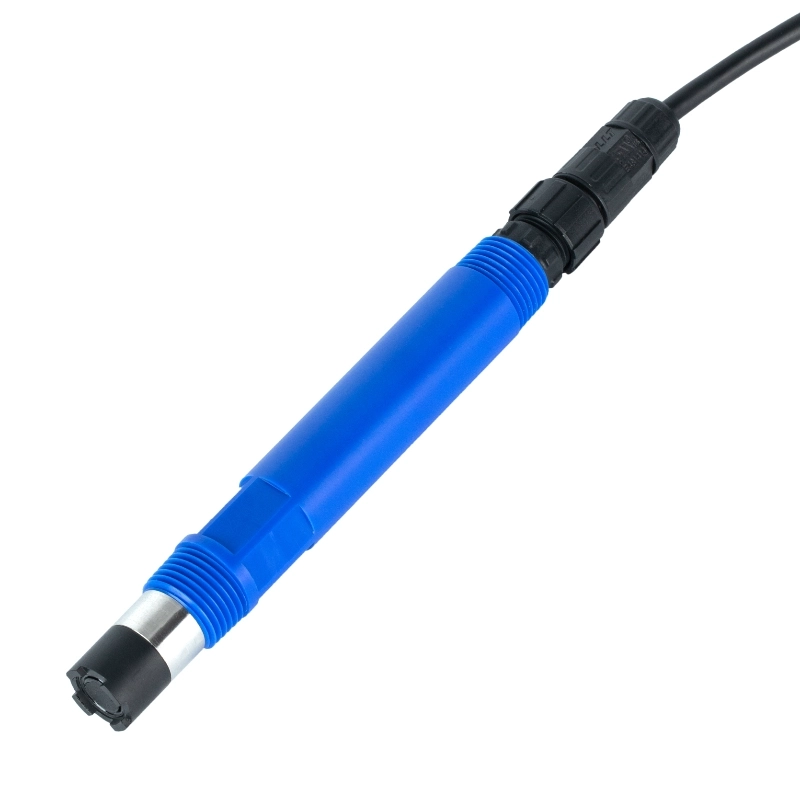
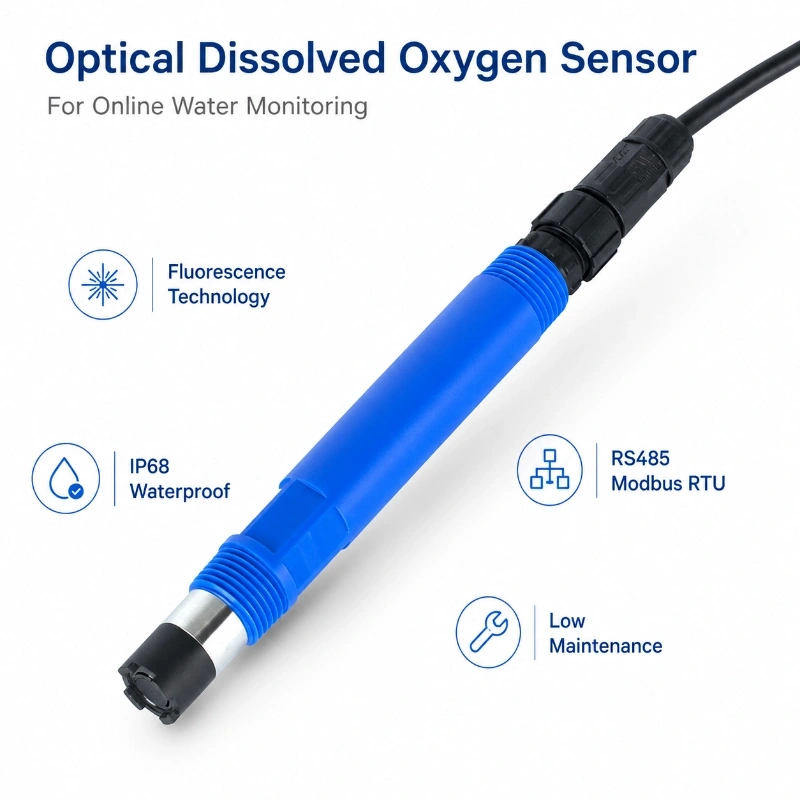
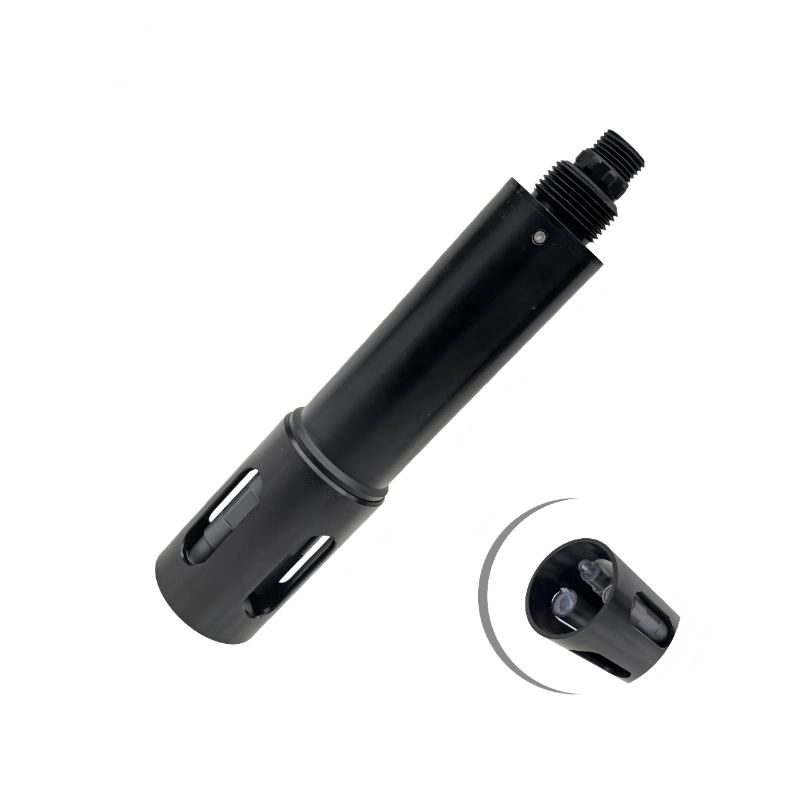
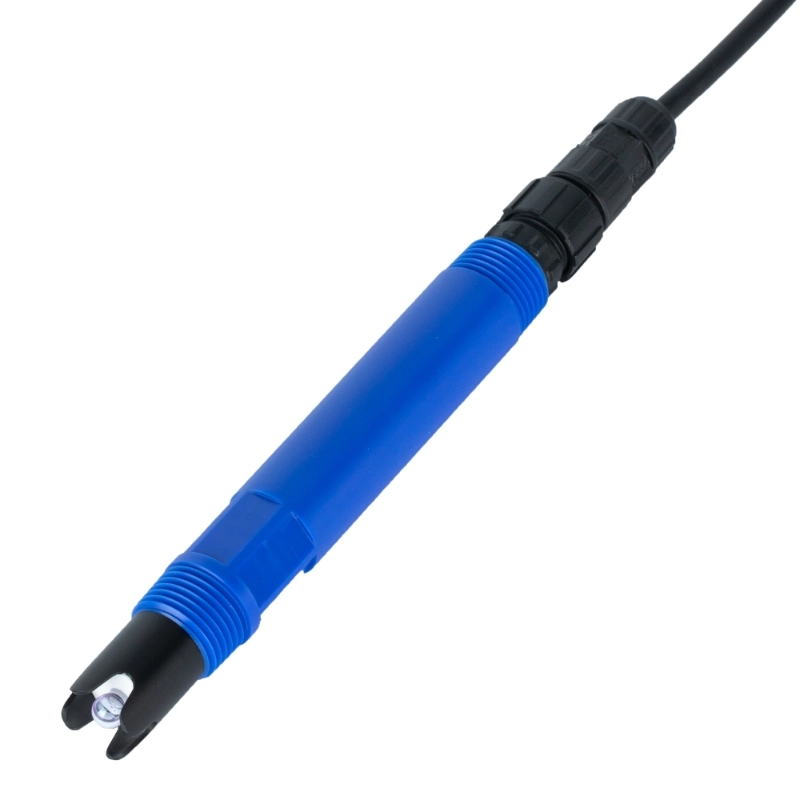
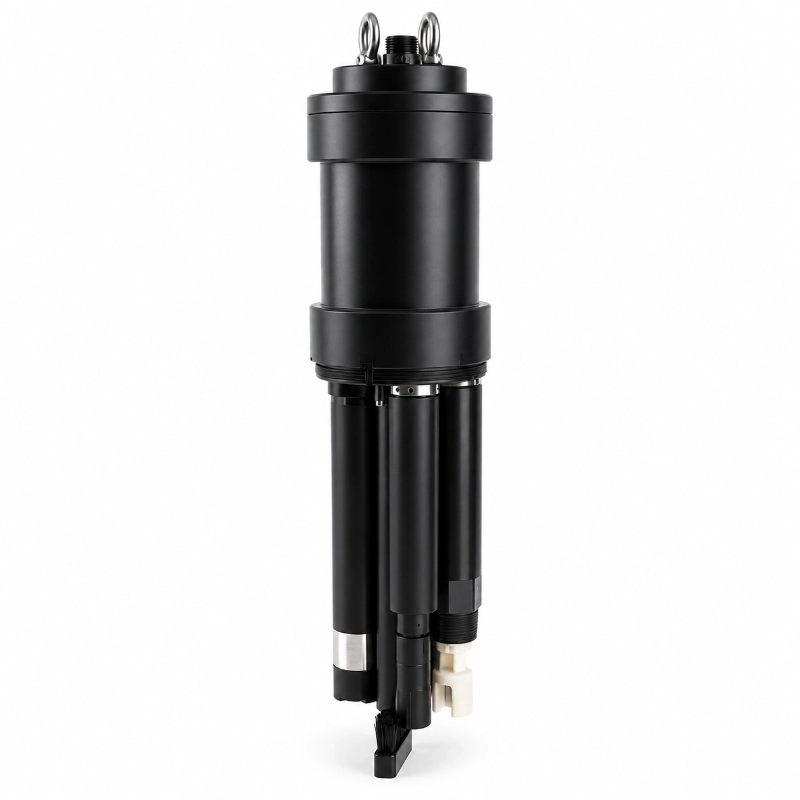
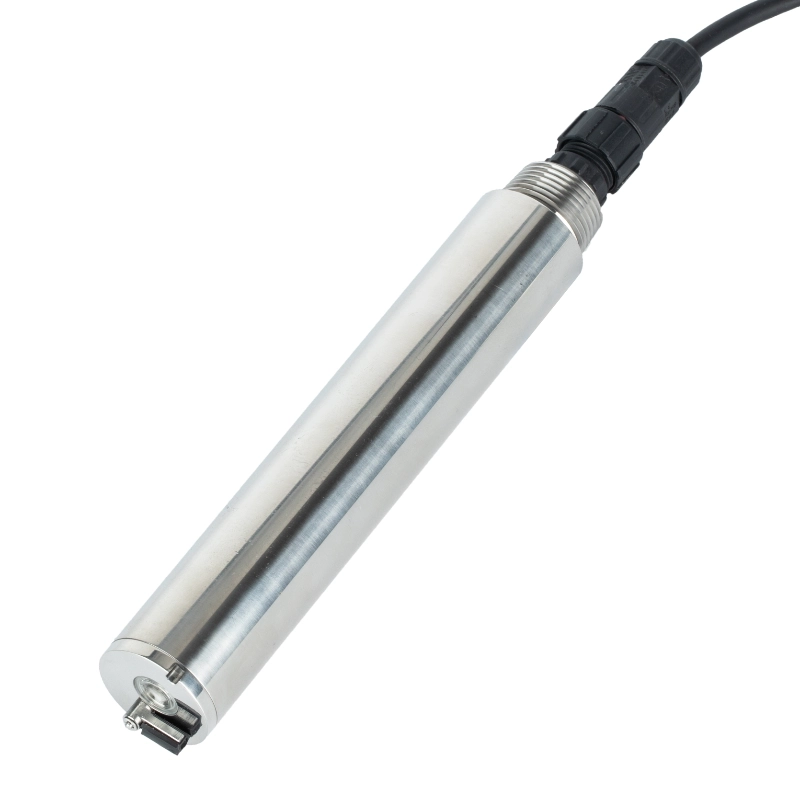
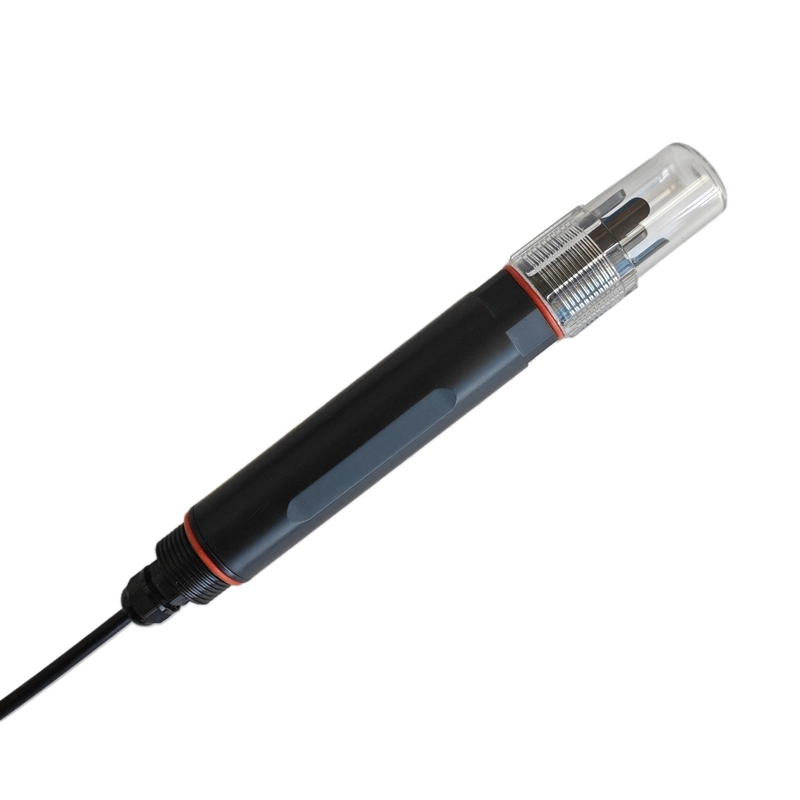
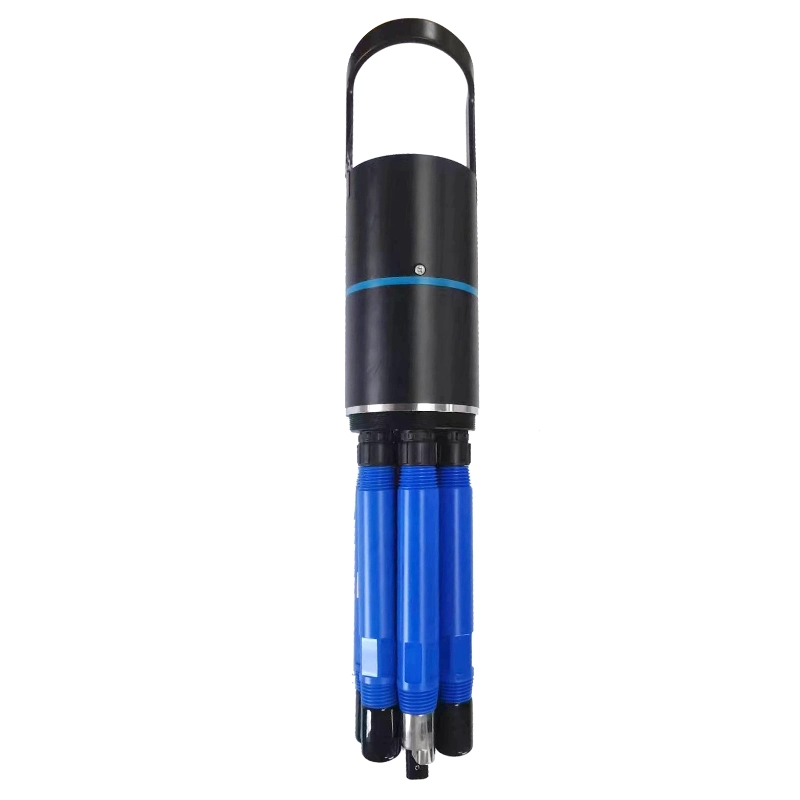
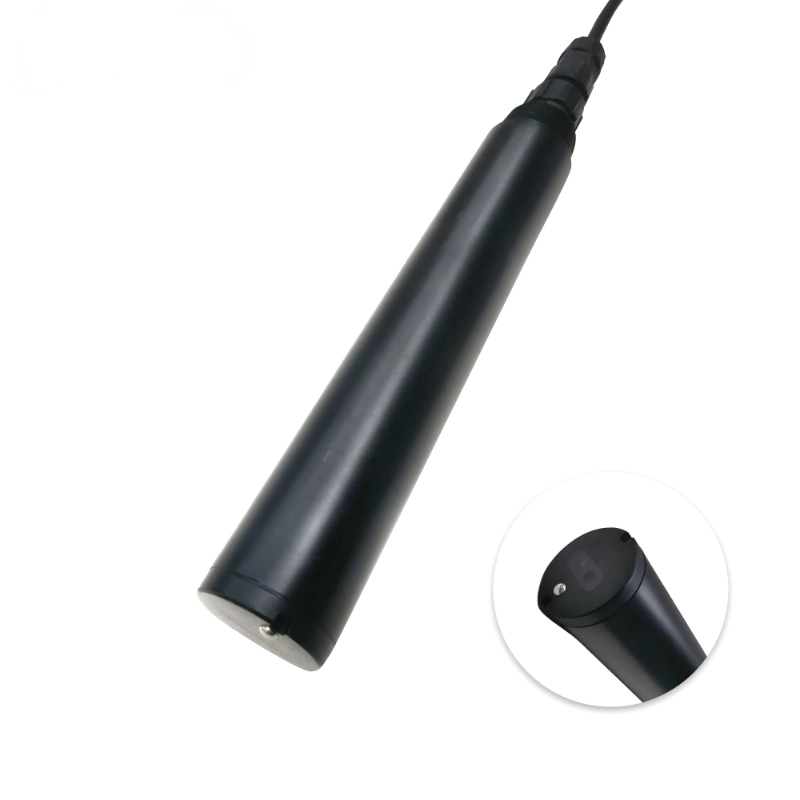
  • Optical dissolved oxygen sensor for online water monitoring

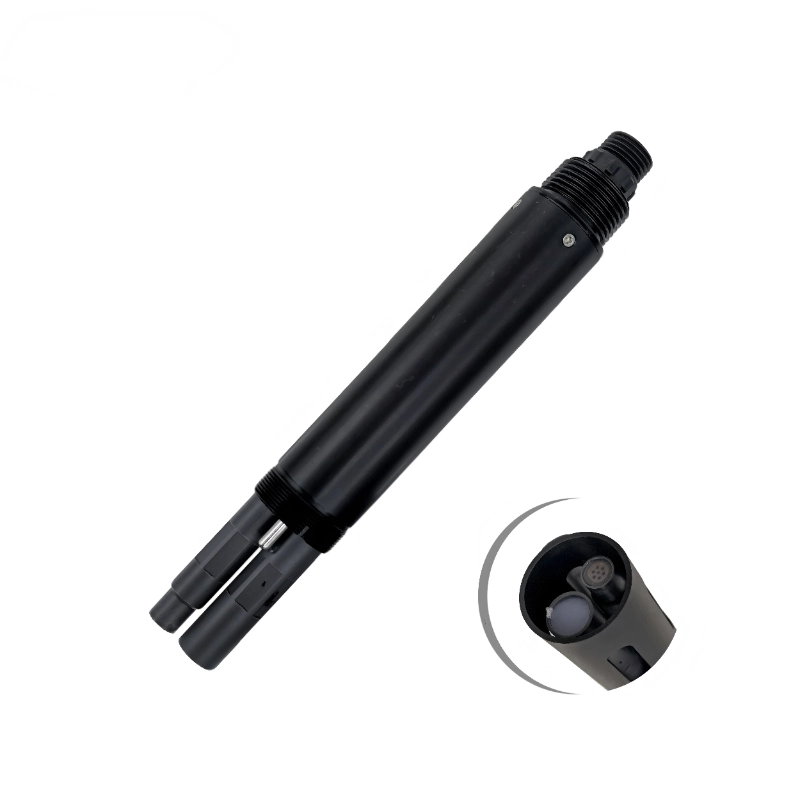
Optical Dissolved Oxygen Sensor for Online Water Quality Monitoring

Key Features

  • Optical fluorescence measurement principle for stable dissolved oxygen monitoring
  • 0–20.00 mg/L measuring range and 0–200% saturation range at 25°C
  • No electrolyte required reducing routine maintenance work
  • No oxygen consumption and no polarization during measurement
  • Unaffected by water flow rate for flexible installation in different sites
  • Built in Pt1000 temperature sensor with automatic temperature compensation
  • Built in salinity compensation with flexible parameter setting
  • Fast response time under 30 seconds for real time water quality tracking
  • RS485 Modbus RTU output for easy integration with controllers and IoT platforms
  • IP68 waterproof protection for submerged installation
  • Low power consumption 0.2W at 12V for field monitoring systems
  • Replaceable fluorescence cap for easier maintenance and lower service cost

Product Description

Fluorescence DO Sensor with RS485 Modbus for Aquaculture, Wastewater and Environmental Monitoring

JW-IoT optical dissolved oxygen sensor is designed for continuous online dissolved oxygen (DO) measurement in water quality monitoring applications.

Using advanced fluorescence measurement technology, the sensor provides stable dissolved oxygen monitoring without electrolyte replacement, oxygen consumption or polarization procedures.

Compared with traditional electrochemical dissolved oxygen probes, optical DO sensors provide lower maintenance requirements and better suitability for long-term monitoring projects.

The sensor supports RS485 Modbus RTU communication and can be integrated with:

  • Data loggers
  • RTUs
  • PLC systems
  • IoT gateways
  • Cloud monitoring platforms

Typical applications include:

  • Aquaculture oxygen monitoring
  • Wastewater treatment plants
  • River and lake monitoring
  • Reservoir water quality monitoring
  • Industrial process water
  • Smart water monitoring stations

What Is an Optical Dissolved Oxygen Sensor?

An optical dissolved oxygen sensor is a water quality sensor that measures dissolved oxygen concentration using fluorescence technology.

Unlike electrochemical DO probes, optical sensors detect oxygen concentration by analyzing fluorescence changes caused by oxygen molecules interacting with the sensing material.

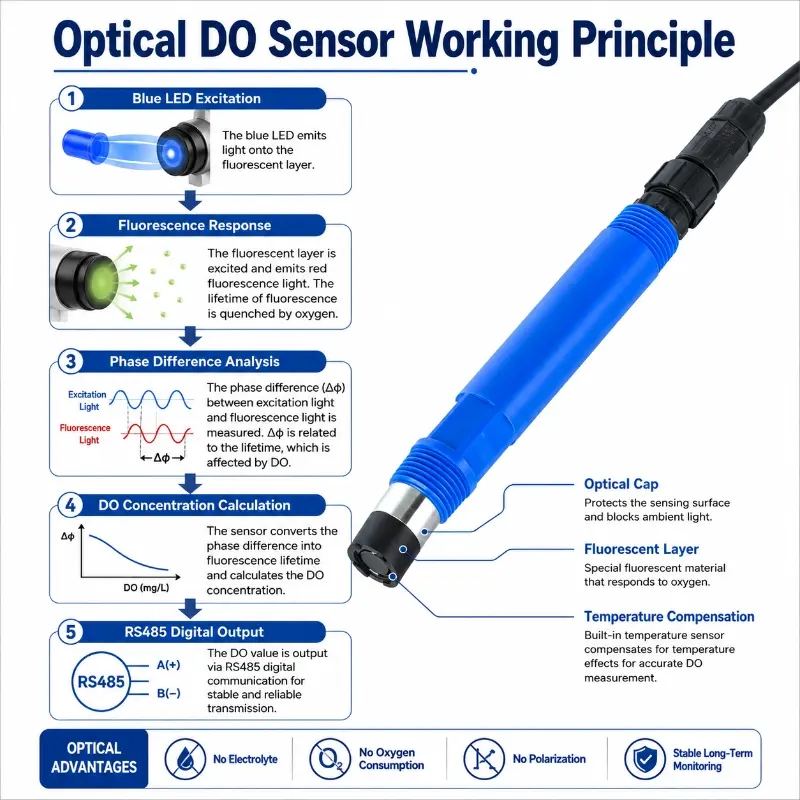
The measurement process:

Blue LED Excitation

↓

Fluorescence Response

↓

Phase Difference Analysis

↓

DO Concentration Calculation

↓

Digital Output

This technology allows stable dissolved oxygen measurement with reduced maintenance requirements.

Optical DO Sensor vs Traditional Electrochemical DO Sensor

Feature Optical DO Sensor Electrochemical DO Sensor
Measurement Principle Fluorescence Electrochemical
Electrolyte Not required Required
Polarization Time No Required
Oxygen Consumption No Yes
Maintenance Frequency Low Higher
Long-Term Monitoring Excellent Good

For projects requiring continuous unattended monitoring, optical dissolved oxygen sensors are often preferred because of their stability and lower maintenance requirements.

Online Dissolved Oxygen Monitoring Applications

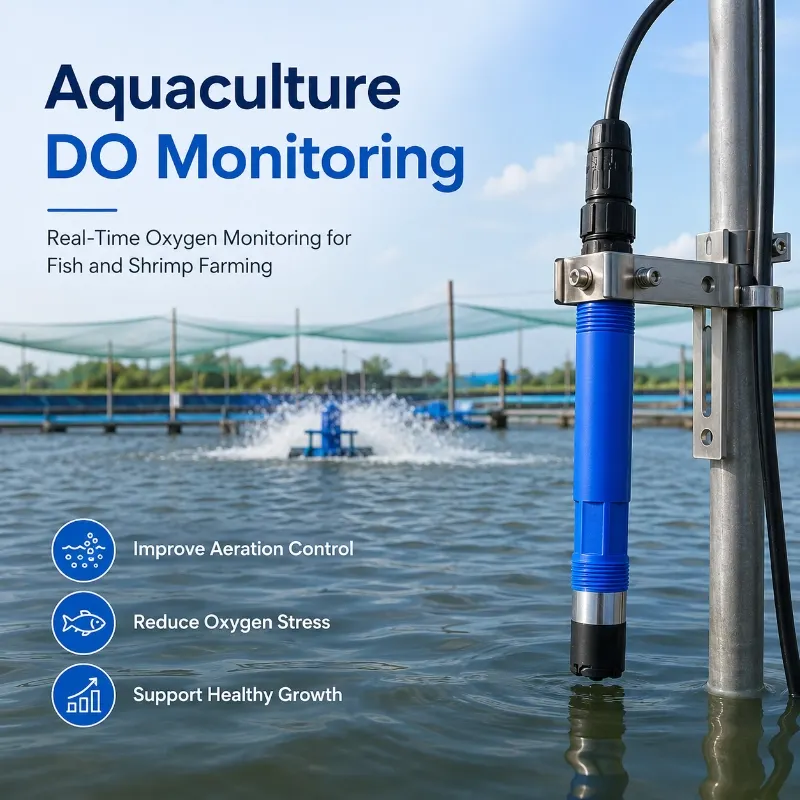
Aquaculture Dissolved Oxygen Monitoring

Dissolved oxygen is one of the most important parameters in aquaculture systems.

The optical DO sensor helps monitor:

  • Fish ponds
  • Shrimp farms
  • Hatcheries
  • RAS systems

Real-time DO data helps operators:

  • Optimize aeration
  • Improve survival rates
  • Reduce oxygen shortage risks
  • Improve farming efficiency

JW-IoT provides smart aquaculture monitoring solutions integrating:

  • DO sensors
  • Temperature sensors
  • pH sensors
  • Water monitoring platforms

Wastewater Treatment DO Monitoring

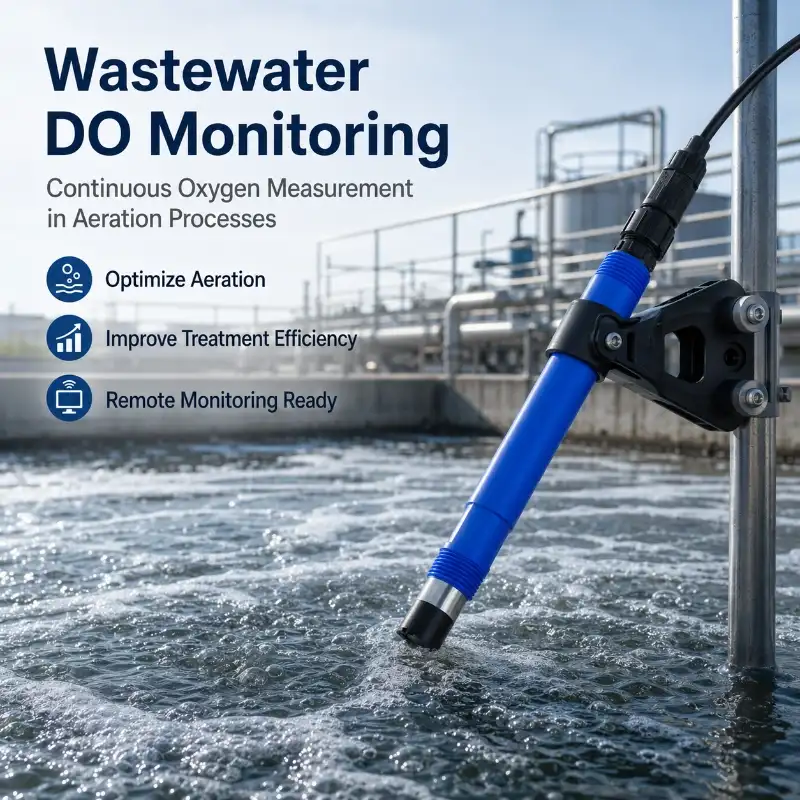
Dissolved oxygen monitoring plays an important role in biological wastewater treatment processes.

Applications include:

  • Aeration tanks
  • Activated sludge systems
  • Oxidation ditches
  • Industrial wastewater treatment

Online DO measurement helps operators:

  • Optimize aeration control
  • Reduce energy consumption
  • Maintain biological treatment efficiency
  • Detect abnormal conditions

River, Lake and Reservoir Monitoring

Environmental monitoring stations use dissolved oxygen sensors to evaluate water ecosystem conditions.

Applications:

  • Rivers
  • Lakes
  • Reservoirs
  • Surface water monitoring stations

The IP68 waterproof design allows long-term submerged installation for outdoor monitoring projects.

Industrial Process Water Monitoring

Industrial facilities may require continuous dissolved oxygen monitoring for:

  • Process water management
  • Chemical processes
  • Water treatment systems
  • Environmental compliance

The RS485 Modbus interface allows easy connection with industrial automation systems.

RS485 Modbus Optical DO Sensor Integration

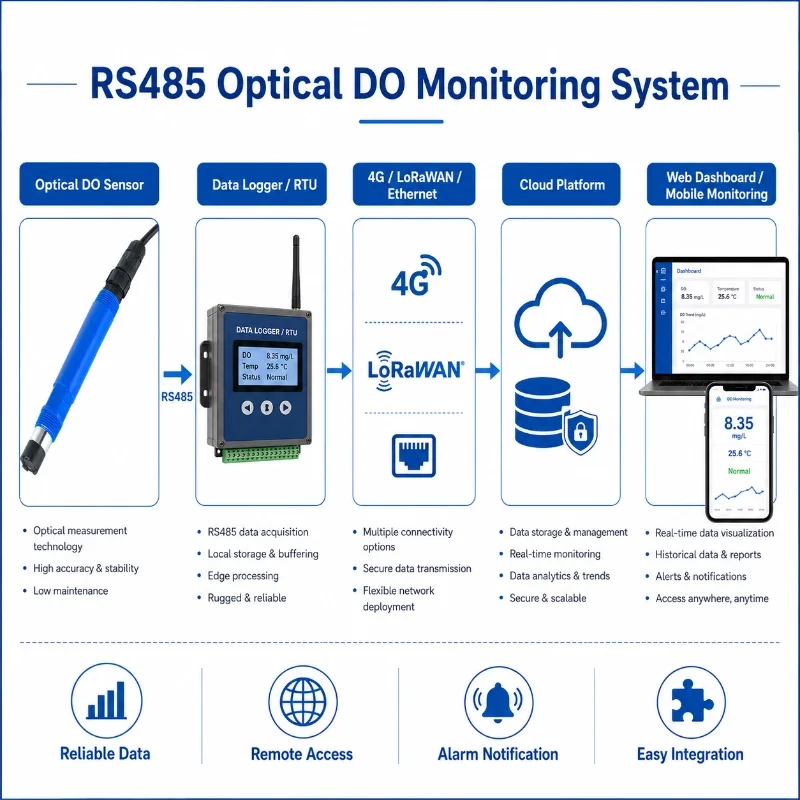
A typical IoT dissolved oxygen monitoring system includes:

Optical DO Sensor

↓

RS485 Modbus RTU

↓

Data Logger / RTU

↓

4G / LoRaWAN / Ethernet

↓

Cloud Platform

↓

Remote Dashboard

The sensor can integrate with:

  • PLC
  • SCADA
  • IoT gateways
  • Environmental monitoring platforms

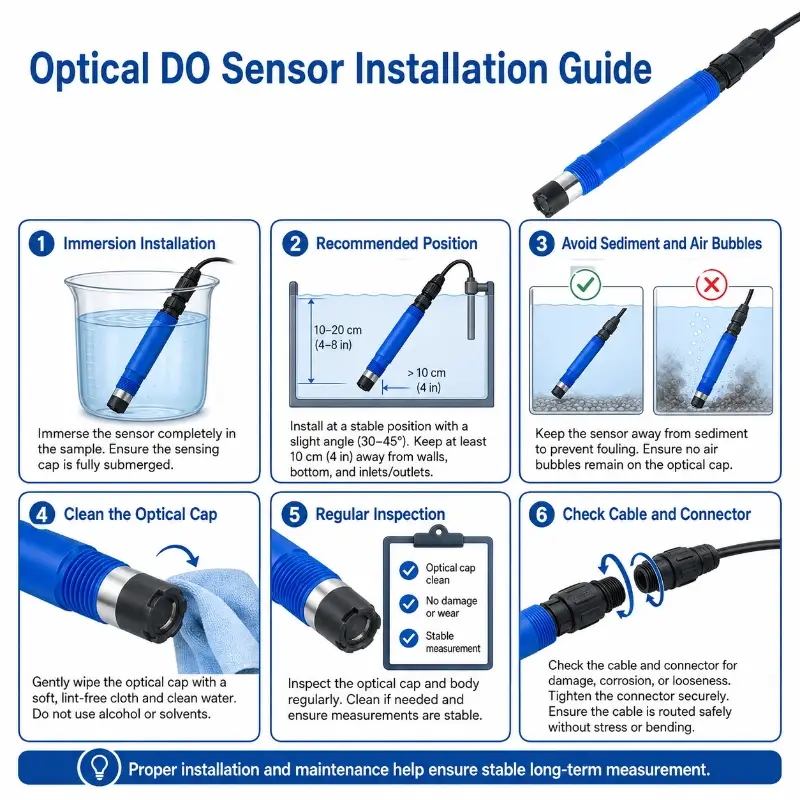
Installation Guide

Installation Position

Recommended:

✔ Fully immerse sensing area

✔ Install in representative water location

✔ Keep sensor away from direct mechanical impact

Avoid:

✘ Air bubbles attached to sensing surface

✘ Sediment covering fluorescence cap

✘ Strong physical collision

Maintenance Recommendations

Although optical DO sensors require less maintenance, regular inspection is still recommended.

Maintenance includes:

  • Cleaning sensor surface
  • Checking fluorescence cap condition
  • Verifying calibration
  • Inspecting cable connection

Recommended:

  • Clean sensor every month depending on water conditions
  • Replace fluorescence cap according to service condition

Technical Specifications

Item Specification
Product Type Online Optical Dissolved Oxygen Sensor
Measurement Principle Fluorescence Method
Measuring Range 0–20.00 mg/L
Saturation Range 0–200% saturation at 25°C
Resolution 0.01 mg/L 0.1°C
Accuracy ±2% ±0.3°C
Response Time T90 less than 30 s
Minimum Detection Limit 0.08 mg/L
Calibration Method Two Point Calibration
Temperature Compensation Automatic Pt1000
Output Signal RS485 Modbus RTU
Power Supply 12–24V DC
Power Consumption 0.2W at 12V
Working Conditions 0–50°C ≤0.2 MPa
Storage Temperature -5–65°C
Installation Method Submersible 3/4 NPT
Protection Rating IP68
Housing Material POM ABS and 316L
Fluorescence Cap Life 1 year under normal use
Cable Length 5 m customizable

How to Select an Online DO Sensor?

Before selecting a dissolved oxygen sensor, consider:

1. Application Environment

Is it used for:

  • Aquaculture?
  • Wastewater?
  • River monitoring?
  • Industrial water?

2. Communication Method

Common options:

  • RS485 Modbus
  • Analog output
  • IoT gateway

3. Installation Requirements

Consider:

  • Water depth
  • Installation method
  • Maintenance accessibility

4. Monitoring Platform

Confirm compatibility with:

  • Data logger
  • RTU
  • Cloud platform

Complete Water Quality Monitoring Solution

A professional online water monitoring system may include:

Sensors

  • Dissolved oxygen sensor
  • pH sensor
  • ORP sensor
  • Conductivity sensor
  • Turbidity sensor

Communication

  • RS485
  • 4G LTE
  • LoRaWAN
  • Ethernet

Platform

Functions:

  • Real-time monitoring
  • Historical data
  • Alarm notification
  • Remote management

Explore JW-IoT water quality monitoring solutions:

https://www.jw-iot.com/category/products/water-sensors/water-quality-sensor

FAQ

  • Q

    1. What is an optical dissolved oxygen sensor used for?

    A

    An optical dissolved oxygen sensor is used to measure dissolved oxygen concentration in water for aquaculture, wastewater treatment, environmental monitoring, and industrial water systems.

  • Q

    2. What is the measuring range of this DO sensor?

    A

    The sensor measures dissolved oxygen from 0 to 20.00 mg/L and supports 0 to 200% oxygen saturation at 25°C.

  • Q

    3. Does this optical DO sensor require electrolyte?

    A

    No. The sensor uses fluorescence technology, so it does not require electrolyte and does not polarize during measurement.

  • Q

    4. Can JW-IoT supply this sensor for aquaculture monitoring projects?

    A

    Yes. JW-IoT can supply optical dissolved oxygen sensors for fish ponds, shrimp farms, RAS systems, and smart aquaculture monitoring stations.

  • Q

    5. What output signal does the sensor support?

    A

    The sensor supports RS485 communication with Modbus RTU protocol, making it suitable for integration with controllers, data loggers, PLCs, and IoT platforms.

  • Q

    6. Is the sensor suitable for submerged installation?

    A

    Yes. The sensor has an IP68 protection rating and supports submerged installation with a 3/4 NPT interface.

  • Q

    7. How often should the fluorescence cap be replaced?

    A

    Under normal use, the fluorescence cap is recommended to be replaced once per year.

  • Q

    8. Can JW-IoT integrate this DO sensor into a water quality monitoring system?

    A

    Yes. JW-IoT can integrate the sensor with data acquisition units, wireless telemetry, solar power systems, and online monitoring platforms.

  • Q

    9. What should be avoided during installation and maintenance?

    A

    Avoid scratching, pressing, or touching the fluorescence membrane. Also prevent air bubbles, sediment, and debris from attaching to the sensing surface during measurement.

WhatsApp

Leave a message!

Leave a message!