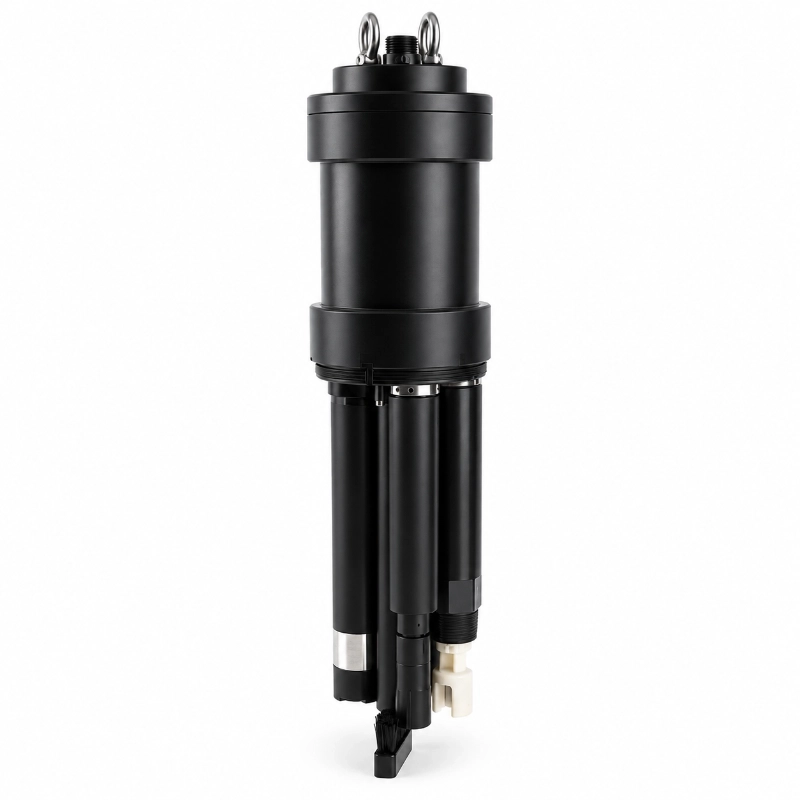
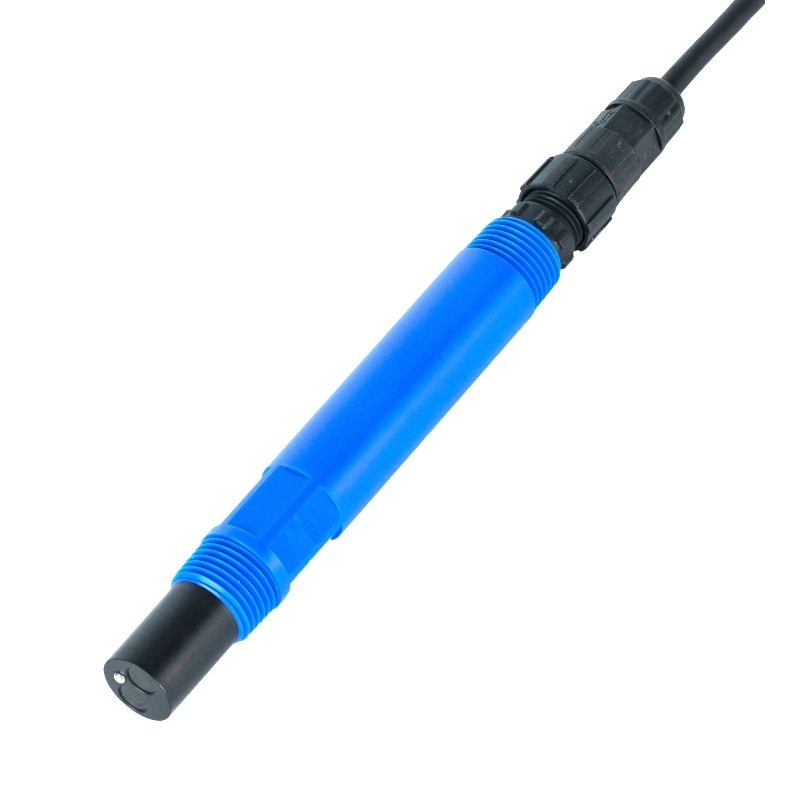
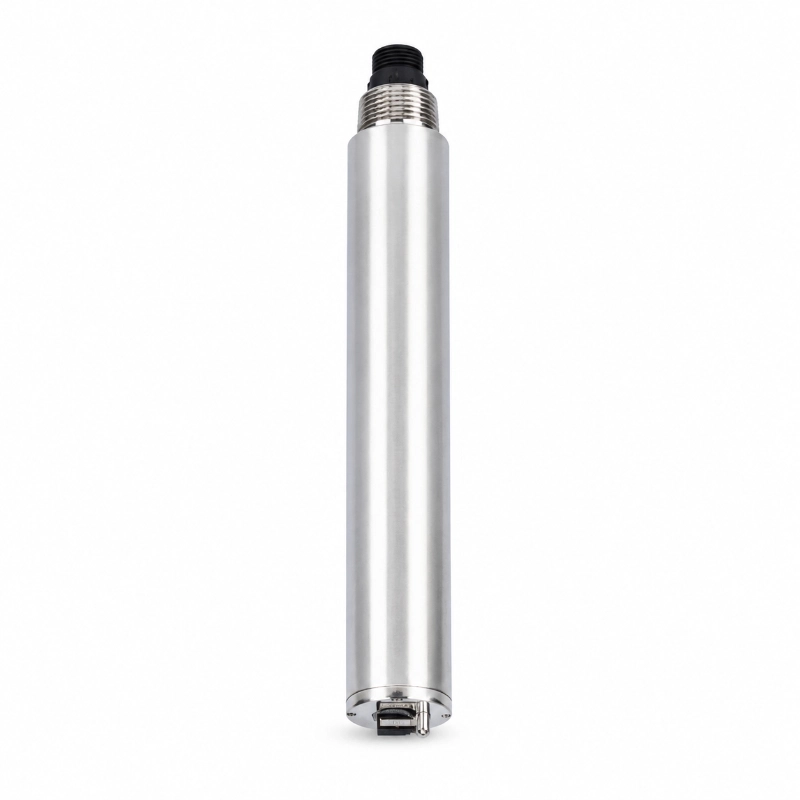
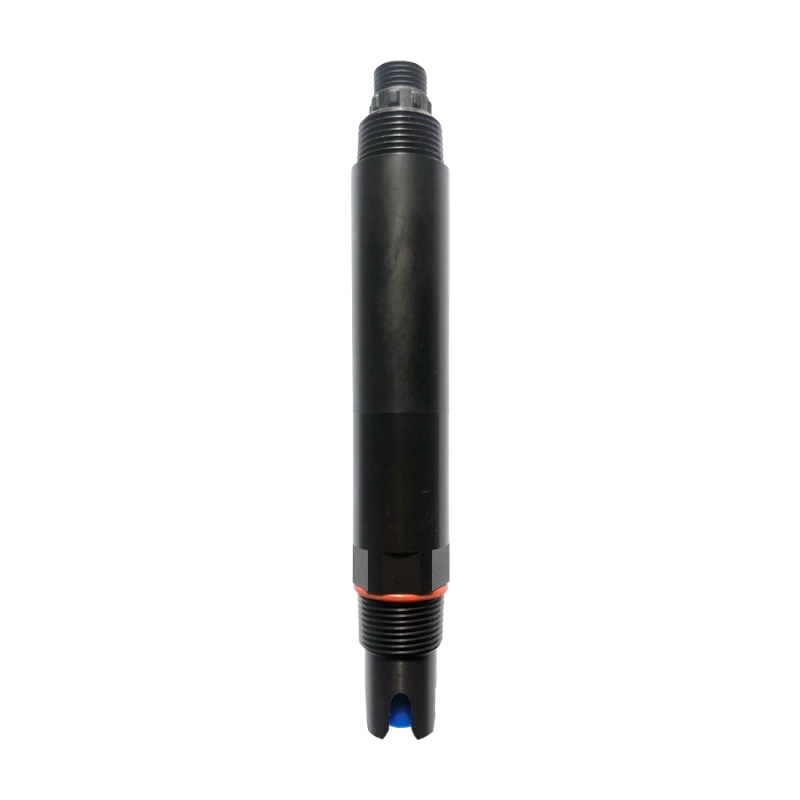
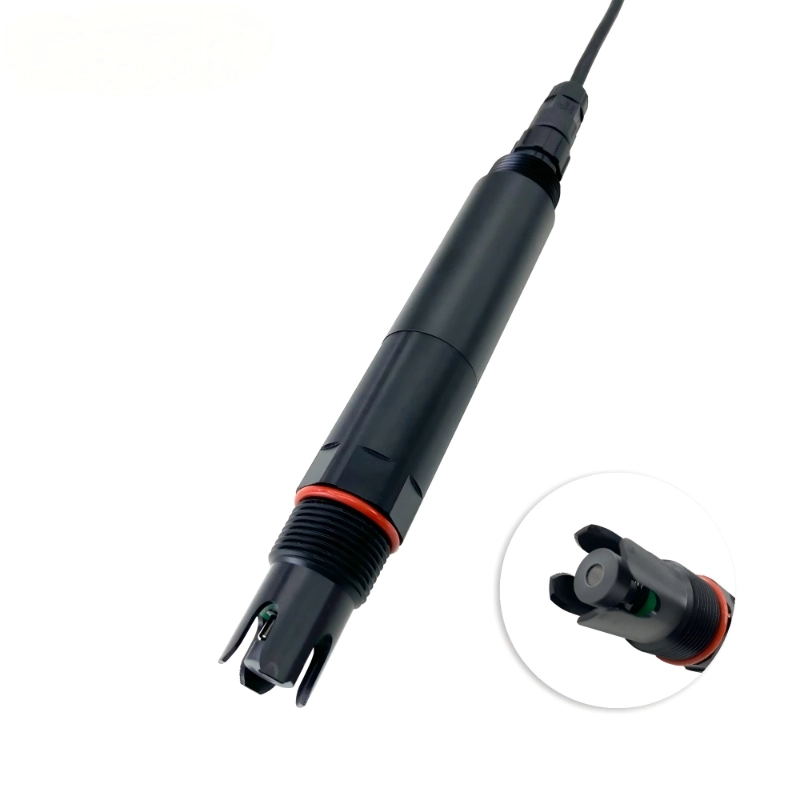
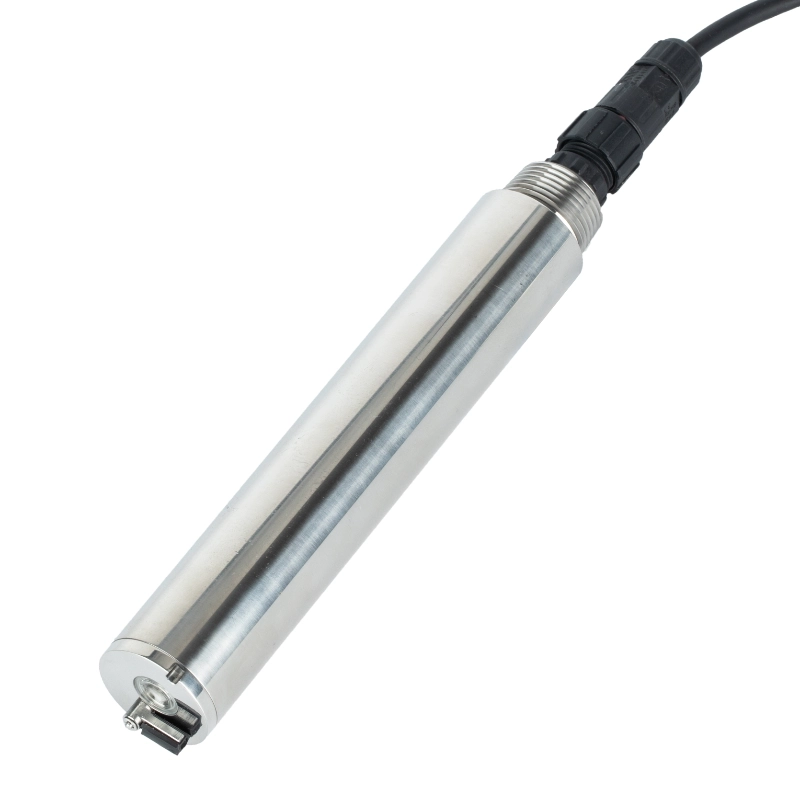
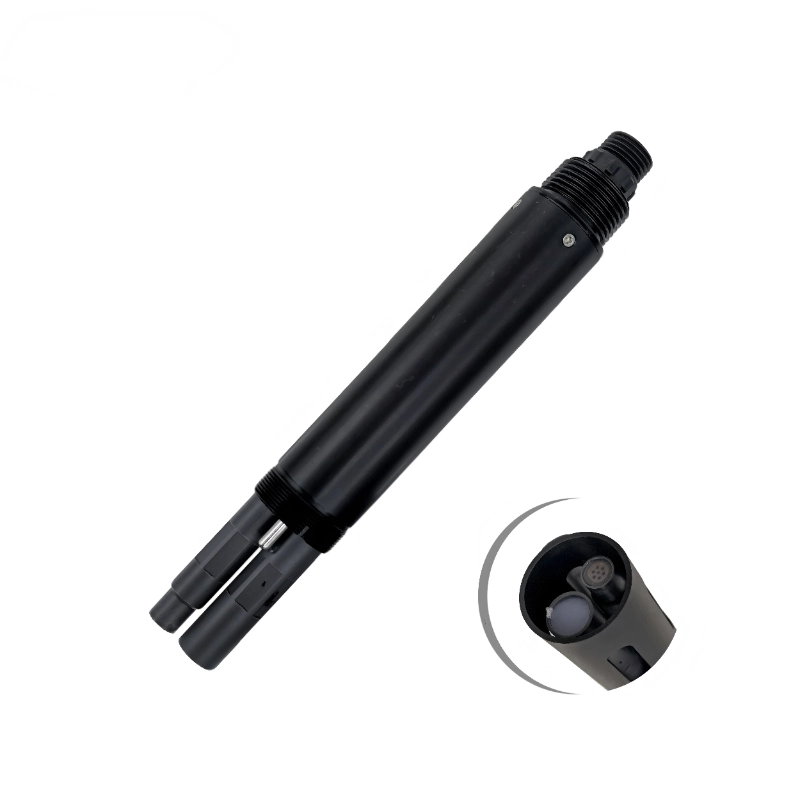
JW-MPS-400(K32) multiparameter water quality sensor with self cleaning is an integrated digital probe designed for continuous online water quality monitoring.
Instead of installing several completely independent probes, the MPS-400 provides a common multiparameter platform that can accommodate different water quality sensing elements according to project requirements.
The system can simultaneously monitor up to eight parameters including temperature.
Available sensor parameters include:
Dissolved oxygen
COD
pH
ORP
Conductivity
Salinity
Ammonium
Turbidity
Temperature
The sensor communicates through an RS485 bus using Modbus RTU, allowing measured data to be transmitted directly to compatible data acquisition and monitoring equipment.
One of the main advantages of JW-MPS-400(K32) is its integrated automatic cleaning mechanism. The cleaning interval and number of cleaning cycles can be configured according to water conditions.
This helps clean the sensing surfaces, reduce biological attachment and extend the period between manual maintenance operations.
The probe is therefore particularly suitable for projects where multiple parameters need to be measured continuously at one monitoring location.
2. Why Use a Self-Cleaning Multiparameter Water Quality Sensor?
Continuous water monitoring presents a different challenge from occasional handheld testing.
When a sensor remains submerged for long periods, its sensing surfaces may gradually become affected by:
Biological growth
Suspended particles
Sediment
Organic contamination
Surface deposits
These conditions may increase maintenance requirements and can affect measurement stability if the sensing surfaces are not inspected and cleaned.
JW-MPS-400(K32) includes an automatic cleaning device designed to clean the sensor surfaces and reduce biological attachment.
The cleaning system can be configured according to actual site conditions rather than relying on a fixed cleaning schedule.
According to the communication configuration of the sensor, the automatic cleaning interval can be adjusted from 6 to 6000 minutes, with a default value of 30 minutes. Cleaning cycles can also be configured from 0 to 10 cycles, with a default of three.
Automatic cleaning does not eliminate routine inspection and calibration, but it can help extend maintenance intervals in continuous monitoring applications.
3. Up to 8 Water Quality Parameters in One Probe
A major benefit of a multiparameter probe is the ability to build a monitoring configuration according to the actual water quality parameters required by the project.
The MPS-400 supports combinations of multiple digital water quality sensors.
Dissolved Oxygen
Dissolved oxygen is commonly monitored in applications where oxygen conditions in water need to be continuously observed.
The integrated cleaning system is designed specifically for continuous monitoring applications.
During long-term immersion, biological attachment and contamination on the probe surfaces can gradually increase maintenance work.
The automatic cleaning mechanism periodically cleans the exposed sensing surfaces.
The user can configure:
Cleaning Interval
Default:
30 minutes
Adjustable range:
6–6000 minutes
Cleaning Cycles
Default:
3 cycles
Adjustable range:
0–10 cycles
This flexibility allows the cleaning strategy to be adjusted according to the characteristics of the monitoring site.
Water with higher levels of biological growth or suspended matter may require a different cleaning configuration from relatively clean water.
6. Protective Sensor Structure
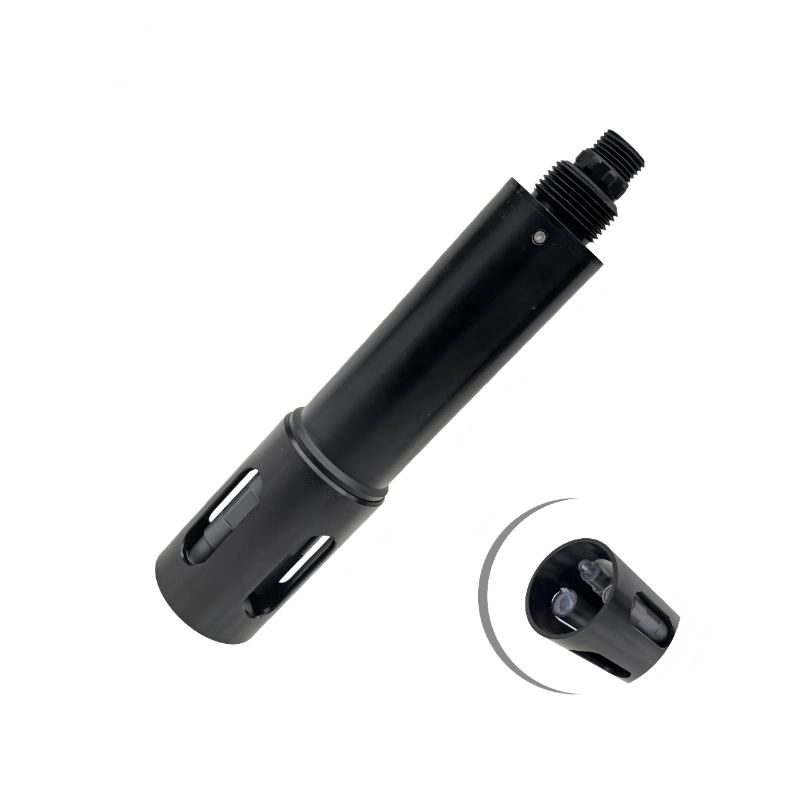
The front of the multiparameter probe includes a protective guard surrounding the sensing elements.
Slots around the guard allow water to reach the sensing area while helping protect the internal probes against larger suspended material or biological objects.
Each sensor also uses a quick-connect waterproof interface, which facilitates sensor installation and removal during maintenance.
This modular structure makes it easier to configure and service the probe without treating the complete monitoring assembly as a single permanently fixed sensor.
7. RS485 Modbus RTU Integration
JW-MPS-400(K32) uses RS485 communication with Modbus RTU protocol.
Default communication settings are:
Baud rate: 9600 bps
Data bits: 8
Parity: None
Stop bit: 1
The documentation provides Modbus registers for individual water quality measurements as well as calibration and cleaning settings.
This architecture makes the multiparameter probe suitable for integration into digital water quality monitoring systems.
A typical architecture may be:
Multiparameter Water Quality Sensor ↓ RS485 / Modbus RTU ↓ Data Logger / Controller / RTU ↓ Communication System ↓ Monitoring Platform
The exact data acquisition and telemetry configuration should be selected according to the monitoring project.
8. Typical Applications
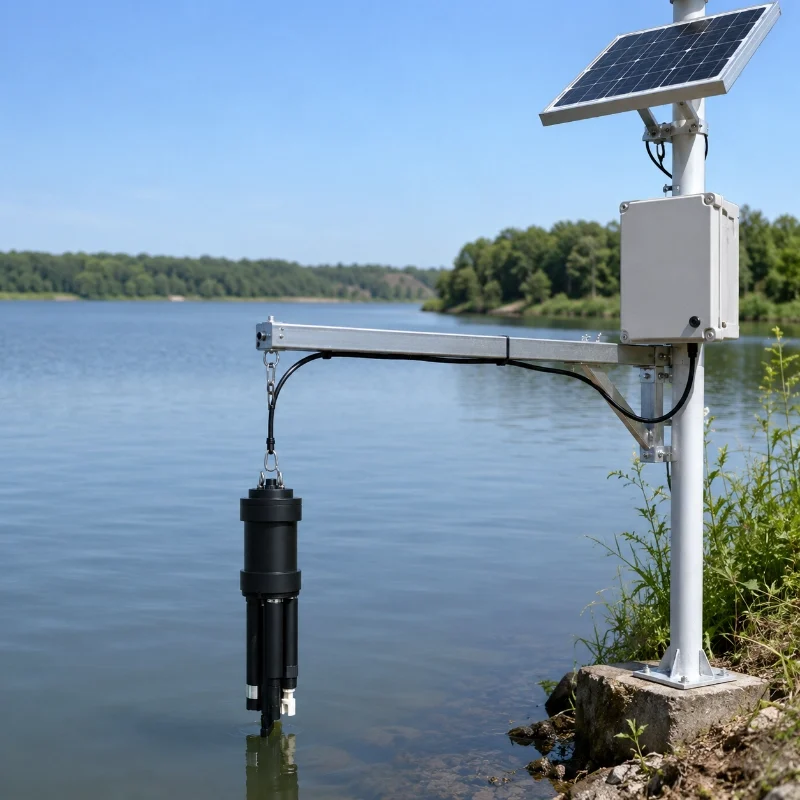
Surface Water Monitoring
A multiparameter sensor can be deployed at fixed monitoring locations where several water quality parameters need to be observed simultaneously.
Typical sites may include:
Rivers
Lakes
Reservoirs
Environmental monitoring points
Using one integrated probe simplifies installation compared with mounting many independent probes at the same monitoring location.
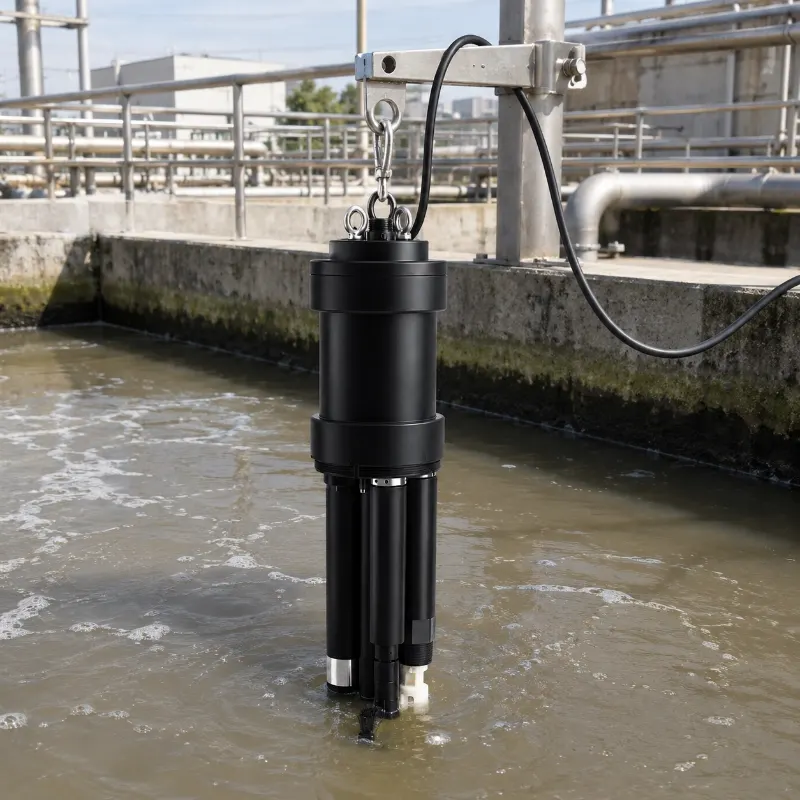
Wastewater Monitoring
Wastewater conditions can change continuously.
Depending on the process, projects may require parameters such as:
pH
ORP
Dissolved oxygen
Conductivity
Turbidity
COD
Ammonium
The automatic cleaning system can be particularly useful where the probes are continuously exposed to suspended solids or biological material.
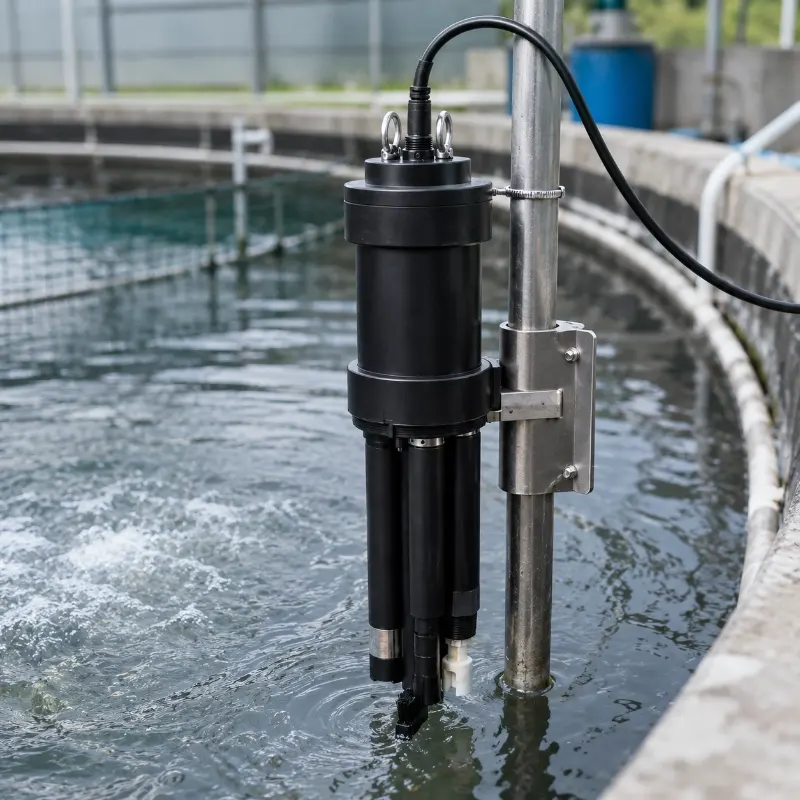
Aquaculture Water Monitoring
Aquaculture monitoring projects may combine dissolved oxygen, temperature, pH and other selected parameters according to the farming system.
Continuous digital monitoring allows multiple measurements to be collected from one submerged sensing assembly.
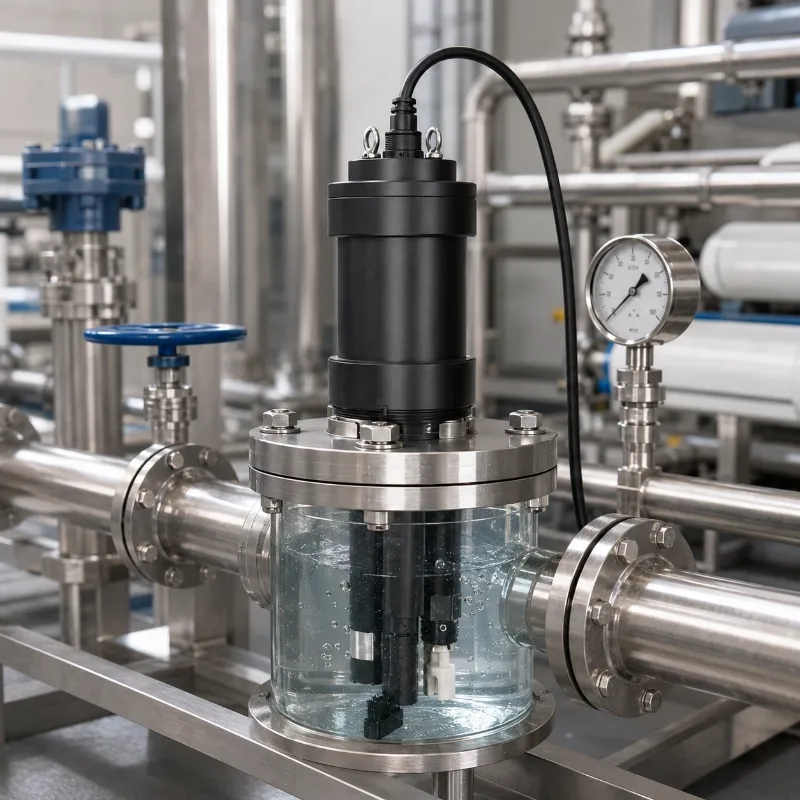
Industrial Water Monitoring
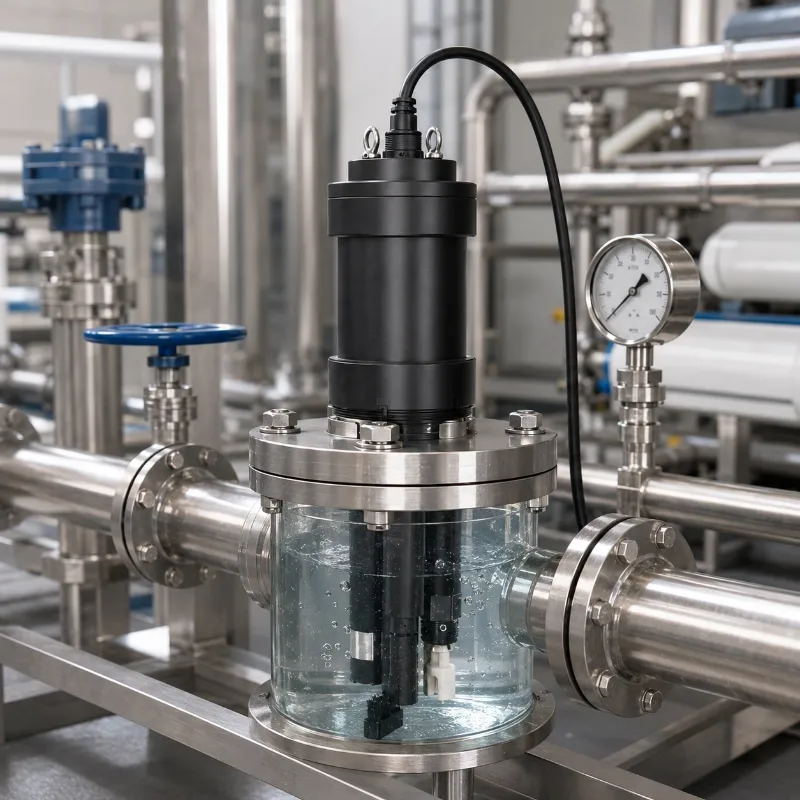
For industrial water projects, the MPS-400 can provide multiple digital water quality measurements through one RS485 Modbus interface.
This can simplify connection to an existing controller or data acquisition system where several parameters need to be monitored at the same location.
Online Water Quality Monitoring Stations
The sensor can also serve as the submerged measurement component of an online monitoring station.
Because measurement data are provided digitally through Modbus RTU, the sensor can be connected to compatible field data acquisition equipment for centralized monitoring.
9. Installation
JW-MPS-400(K32) is designed for submersible installation.
During installation, the sensor should be supported through the dedicated lifting ring or threaded installation point.
Do not use the communication cable as the mechanical support for the sensor.
The product manual specifically states that the cable should not be subjected directly to the weight of the probe.
For underwater installation, particularly in long-term freshwater, seawater or humid environments:
Waterproof all wiring connections
Use corrosion-resistant user-side cable
Verify the wiring sequence before applying power
Avoid mechanical impact on the sensing elements
10. Electrical Connection
The standard cable uses four conductors:
Red: 12VDC power
Black: GND
Blue: RS485 A
White: RS485 B
All wiring should be checked carefully before the system is powered.
For permanently submerged installations, waterproof treatment of cable joints is especially important.
11. Maintenance and Calibration
Although JW-MPS-400(K32) includes an automatic cleaning brush, routine inspection and calibration are still required.
Maintenance frequency depends on the actual water environment.
Inspection
Regularly check:
Sensor head for contamination
Biological attachment
Physical damage
Cable condition
Measurement stability
Consumable components
Cleaning
The outer surface can first be rinsed with clean tap water.
If debris remains, gently clean it using a damp soft cloth.
For more persistent contamination, the product manual allows a small amount of household cleaning liquid to be added to the rinse water.
Calibration
Depending on the selected sensor, one-point or two-point calibration may be required.
Appropriate standard solutions should be selected according to the individual sensing parameter.
The manual recommends periodic sensor calibration according to operating conditions.
12. Multiparameter Sensor vs Multiple Independent Sensors
For monitoring projects, the decision is not simply whether a multiparameter probe is “better” than separate sensors.
The correct solution depends on the system architecture.
Multiparameter Probe
Suitable when:
Several parameters are required at the same location
Installation space is limited
One digital interface is preferred
Centralized maintenance is beneficial
Long-term submerged monitoring is required
Independent Sensors
May be preferable when:
Sensors are installed at different locations
Parameters require different installation conditions
Individual sensor replacement without removing the full assembly is a priority
Only one or two parameters are required
JW-MPS-400(K32) is primarily designed for projects requiring multiple measurements from a common submerged monitoring point.
13. How to Select the Sensor Configuration
Before requesting a quotation, it is useful to confirm the following information:
Which water quality parameters are required?
What measurement ranges are needed?
What type of water will be monitored?
Is the installation permanent or temporary?
What is the expected immersion depth?
How frequently will the site be maintained?
Does the existing system support RS485 Modbus RTU?
Will the sensor connect directly to a controller or through a field data logger?
Providing these details allows the multiparameter configuration to be selected according to the actual project rather than using unnecessary sensing modules.
14. Build Your Multiparameter Water Quality Monitoring System
JW-MPS-400(K32) Multiparameter Water Quality Sensor with Self Cleaning is designed for projects that require several water quality parameters to be collected continuously from one submerged monitoring point.
With configurable sensor combinations, automatic cleaning, IP68 protection and RS485 Modbus RTU communication, it can be integrated into environmental monitoring, wastewater, aquaculture and industrial water monitoring systems.
For project selection, please provide:
Required parameters
Measurement ranges
Water type
Installation conditions
Communication requirements
Monitoring system architecture
JW-IoT can integrate this sensor with 4G, LoRaWAN, RS485, RTU, and cloud platforms to build a multi-parameter water quality monitoring solution for remote field deployment.
FAQ
Q
1. What parameters can this multiparameter water quality sensor measure?
A
It can be configured to measure temperature, dissolved oxygen, COD, pH, ORP, conductivity, salinity, ammonium, turbidity, and other optional water quality parameters.
Q
2. How many parameters can the sensor measure at the same time?
A
The sensor can measure up to 8 parameters simultaneously, including temperature.
Q
3. Does the sensor support automatic cleaning?
A
Yes. It is equipped with an automatic cleaning device that can clean the sensor surface and reduce microbial attachment.
Q
4. Can JW-IoT provide this sensor for wastewater treatment projects?
A
Yes. JW-IoT can supply multiparameter self cleaning sensors for wastewater plants, industrial discharge monitoring, and online process control.
Q
5. What communication protocol does the sensor use?
A
The sensor uses RS485 communication with Modbus RTU protocol, which is suitable for PLCs, RTUs, SCADA systems, data loggers, and IoT platforms.
Q
6. Is the sensor suitable for submerged installation?
A
Yes. The sensor supports submersible installation and has an IP68 waterproof rating.
Q
7. Can JW-IoT integrate this sensor into a cloud monitoring platform?
A
Yes. JW-IoT can integrate the sensor with data acquisition units, wireless telemetry devices, solar power systems, and cloud based water quality platforms.
Q
8. How does the self cleaning function reduce maintenance?
A
The automatic cleaning brush helps remove biofouling and dirt from the sensor surface, which extends maintenance intervals and improves measurement stability.
Q
9. What should be considered during installation?
A
The sensor should be fixed with a lifting ring or pipe thread, and the cable should not bear direct mechanical force. All wiring joints should be waterproofed for long term field use.
 +86 13520127780
  info@jingelway.com