+86 13520127780
  info@jingelway.com








Agricultural Temperature Sensors: Uses, Types and Selection Guide
Release time: 2026-07-05
Introduction
Temperature is one of the most important environmental factors in agriculture. It affects seed germination, root development, plant growth, microbial activity, irrigation efficiency, nutrient absorption, and crop stress response.
For modern farms, greenhouses, orchards, hydroponic systems, and smart irrigation projects, relying only on manual temperature checks is no longer enough. Farmers and system integrators need continuous, accurate, and real-time temperature data to make better decisions.
This is where agricultural temperature sensors play an important role.
Temperature sensors in agriculture are used to monitor soil temperature, air temperature, greenhouse climate, irrigation water temperature, storage temperature, and even crop canopy temperature. When connected with IoT gateways, data loggers, cloud platforms, and automation systems, they help farms move from experience-based management to data-driven precision farming.
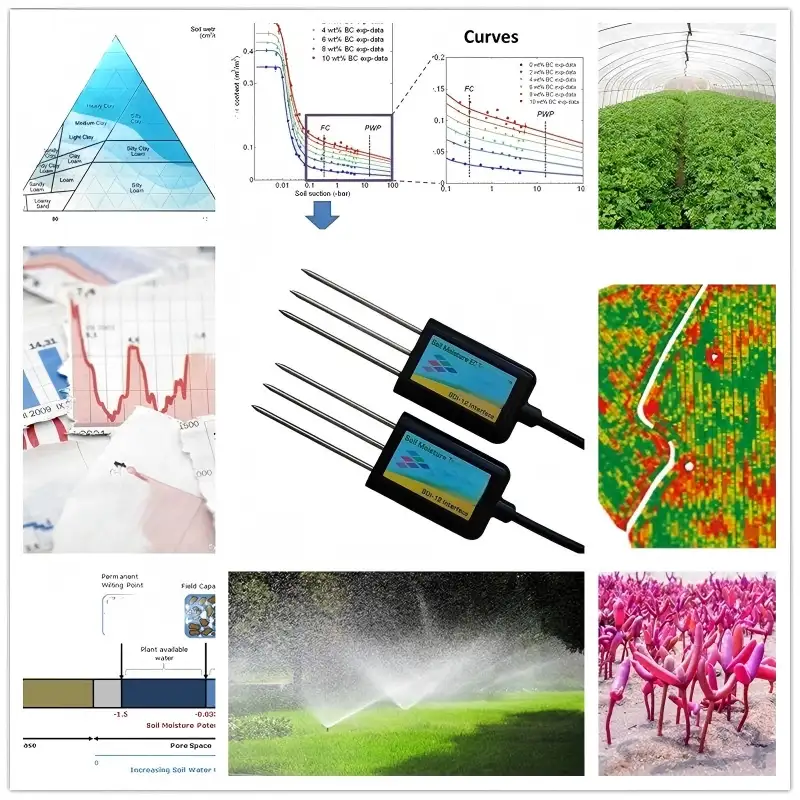
For projects that require complete root-zone monitoring, JW-IoT provides a wide range of agricultural soil sensors for soil moisture, temperature, EC, salinity, and nutrient monitoring in smart agriculture, irrigation, greenhouse, and research applications.
Why Temperature Monitoring Matters in Agriculture?
Temperature directly influences how crops grow and how agricultural systems perform. Even small temperature changes can affect biological and physical processes in the field.
For example, soil temperature influences seed germination and root activity. Air temperature affects photosynthesis, transpiration, flowering, fruit setting, and disease risk. Water temperature can influence irrigation quality, aquaculture conditions, and hydroponic nutrient uptake.
In agricultural IoT systems, temperature data is often used together with soil moisture, humidity, light intensity, EC, pH, rainfall, wind speed, and solar radiation data. This allows growers to understand the complete growing environment instead of looking at one parameter alone.
Accurate temperature monitoring can help users:
- Improve irrigation scheduling
- Reduce crop stress
- Support greenhouse climate control
- Prevent frost and heat damage
- Optimize seed germination timing
- Improve fertilizer and nutrient management
- Support crop growth models
- Reduce manual field inspection
- Improve traceability and reporting
Main Types of Temperature Sensors Used in Agriculture
Agriculture is not a single application. Different projects require different types of temperature sensors depending on where the sensor is installed and what data is needed.
1. Soil Temperature Sensors
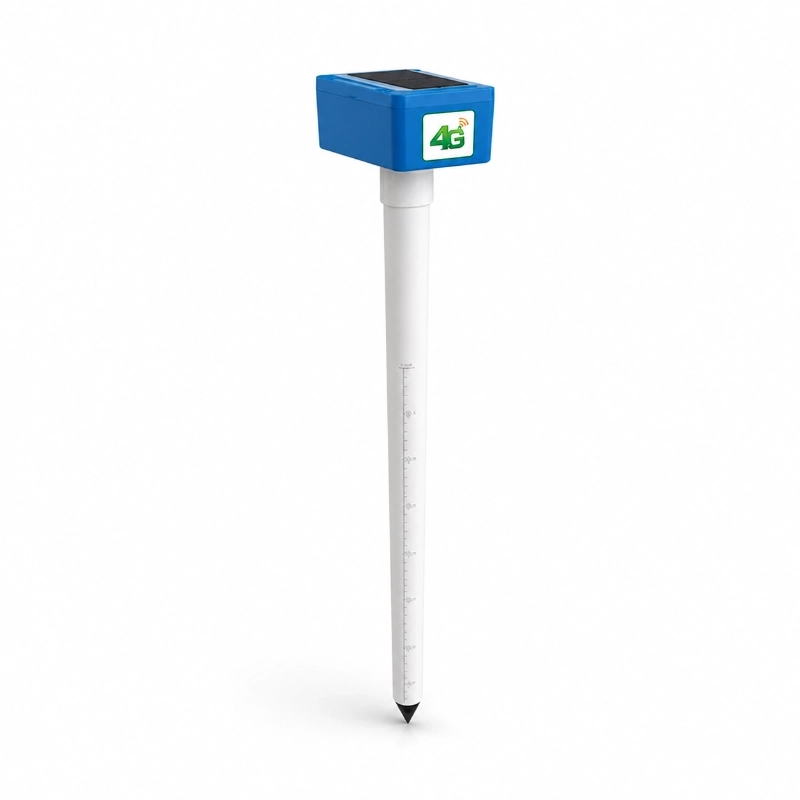
Soil temperature sensors are installed in the root zone to measure the temperature of the soil environment. This data is important for seed germination, root growth, microbial activity, and nutrient transformation.
In many smart agriculture projects, soil temperature is monitored together with soil moisture. A soil moisture temperature sensor allows growers to understand whether the root zone is both warm enough and wet enough for healthy crop growth.
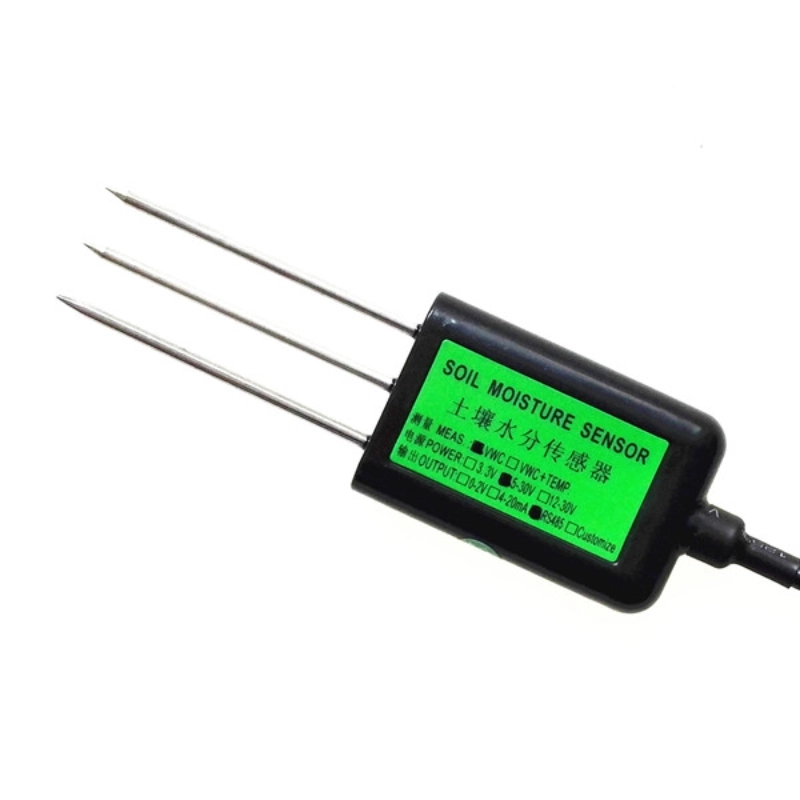
Typical applications include:
- Open field farming
- Greenhouse cultivation
- Smart irrigation systems
- Vegetable and fruit production
- Pasture monitoring
- Soil research
- Water-saving irrigation projects
For irrigation control, soil temperature is especially useful because water demand is not only related to moisture level. Root activity and evaporation also change with temperature.
2. Air Temperature Sensors
Air temperature sensors are used to monitor the ambient growing environment around crops. They are commonly installed in greenhouses, weather stations, orchards, farms, and livestock facilities.
Air temperature is usually monitored together with humidity, pressure, light, wind, rainfall, and solar radiation. In greenhouse systems, air temperature data can be used to control fans, ventilation windows, heaters, cooling pads, shading systems, and alarms.
Typical applications include:
- Greenhouse climate monitoring
- Weather station systems
- Orchard microclimate monitoring
- Smart livestock facilities
- Outdoor crop monitoring
- Frost and heat stress warning
For greenhouse operators, air temperature is one of the most important control parameters because it directly affects crop growth rate and energy cost.
3. Greenhouse Temperature Sensors
Greenhouse temperature monitoring is more complex than outdoor air temperature monitoring. A greenhouse can have different temperature zones depending on height, ventilation, sunlight, crop density, and equipment layout.
For this reason, greenhouse projects often need multiple temperature sensors at different positions. Sensors may be installed near the crop canopy, near the root zone, near ventilation points, and inside equipment rooms.
Greenhouse temperature sensors can support:
- Automatic ventilation
- Heating control
- Cooling control
- Crop stress warning
- Climate zone comparison
- Energy-saving management
- Remote monitoring through cloud platforms
For greenhouse root-zone management, growers can use soil moisture temperature sensors for precision farming applications to monitor soil or substrate conditions together with greenhouse climate data.
In high-value crop production, temperature control is not only about avoiding extreme conditions. It is also about creating a stable growing environment that supports yield, quality, and production consistency.
4. Irrigation Water Temperature Sensors
Water temperature is often ignored in irrigation projects, but it can affect root comfort, nutrient solubility, and system stability.
In hydroponics, fertigation, and recirculating irrigation systems, water temperature monitoring is useful for managing nutrient solution conditions. If the water is too cold or too hot, crops may absorb nutrients less efficiently.
Typical applications include:
- Hydroponic farms
- Fertigation systems
- Smart irrigation stations
- Greenhouse irrigation systems
- Aquaculture and agriculture combined systems
Water temperature sensors are usually selected with waterproof protection and corrosion-resistant materials, especially when they are used in nutrient solutions or outdoor irrigation tanks.
For hydroponic and research systems, an SDI-12 soil moisture EC temperature sensor can be selected when the project requires stable digital communication and multi-parameter monitoring.
5. Crop Canopy Temperature Sensors
Crop canopy temperature can help identify crop water stress and heat stress. When plants lack water, transpiration decreases, and the canopy temperature may rise.
Canopy temperature monitoring is often used in precision irrigation, drought stress assessment, orchard monitoring, and research projects. It can be combined with weather and soil data to support smarter irrigation decisions.
Typical applications include:
- Water stress monitoring
- Precision irrigation
- Orchard management
- Tea garden monitoring
- Field crop research
- Crop health analysis
For advanced smart agriculture systems, canopy temperature can provide useful information that soil sensors alone cannot fully capture.
6. Storage Temperature Sensors
Agricultural temperature sensors are also used after harvest. Grain, seed, fruit, vegetable, and cold chain storage all require temperature monitoring.
In grain storage, temperature changes may indicate moisture problems, insect activity, or spoilage risk. In cold storage, temperature monitoring helps maintain product quality and reduce loss.
Typical applications include:
- Grain storage
- Seed storage
- Fruit and vegetable warehouses
- Cold chain monitoring
- Agricultural product logistics
- Food safety traceability
How Temperature Sensor Data Supports Smart Farming Decisions?
Temperature data becomes more valuable when it is connected with practical farm decisions.
Irrigation Scheduling
Soil moisture data shows whether water is available, but soil temperature helps explain how actively roots can absorb water. Combining soil moisture and temperature data can improve irrigation timing.
For example, when soil moisture is low and soil temperature is high, crops may face stronger water stress. When soil temperature is too low, irrigation may need to be adjusted to avoid root stress.
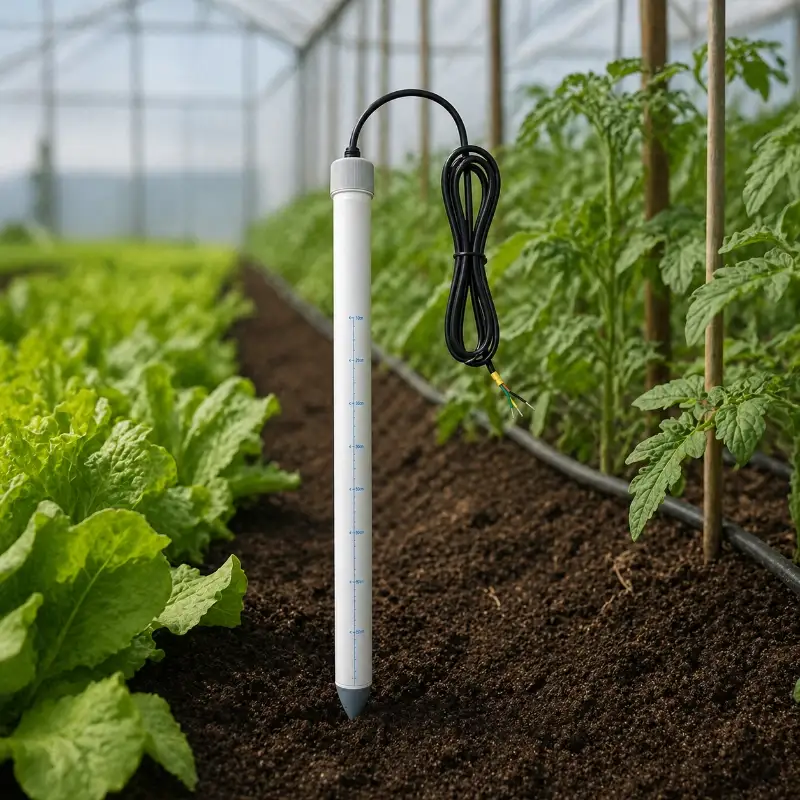
For large farms, orchards, or research plots that need vertical profile data, a multi layer soil moisture temperature sensor can monitor moisture and temperature changes at different soil depths.
Frost Warning
In orchards, tea gardens, vineyards, and vegetable fields, low-temperature warning is critical. Temperature sensors can trigger alerts before frost damage occurs.
When connected to an IoT platform, users can receive alarms by dashboard, SMS, email, or app notification, depending on the system design.
Greenhouse Automation
Temperature sensors are core devices in greenhouse climate control. They can be connected with controllers, PLCs, RTUs, or IoT gateways to control ventilation, heating, cooling, and shading systems.
This helps maintain a stable growing environment and reduce manual operation.
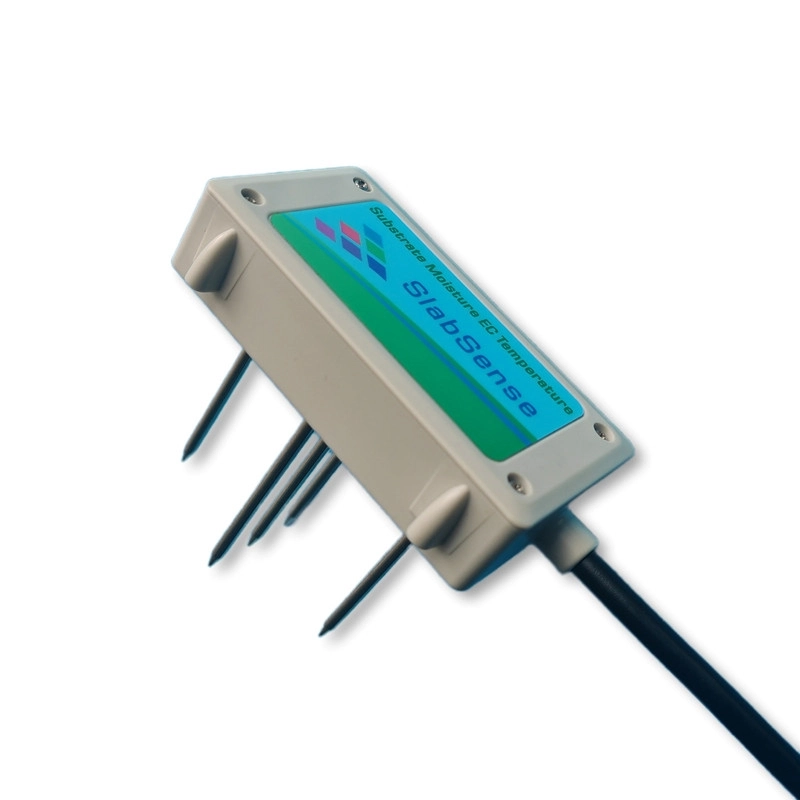
For substrate cultivation and greenhouse irrigation, a substrate moisture EC sensor can help growers manage irrigation frequency and nutrient solution conditions more accurately.
Crop Growth Analysis
Temperature data can support crop growth models and growing degree day analysis. By recording temperature changes over time, growers can better understand crop development stages and plan field operations.
Disease Risk Monitoring
Some crop diseases are closely related to temperature and humidity conditions. By monitoring temperature together with humidity and leaf wetness, farms can improve disease risk assessment and preventive management.
How to Choose the Right Agricultural Temperature Sensor?
Choosing a temperature sensor for agriculture should not only depend on price. The sensor must match the application environment, communication method, installation method, and data system.
Here are the key selection factors.
1. Choose the Right Measurement Object
First, confirm what you need to measure.
If the project focuses on root-zone conditions, choose a soil temperature sensor or a soil moisture temperature sensor. If the project focuses on greenhouse climate, choose an air temperature or temperature humidity sensor. If the project focuses on irrigation water, choose a waterproof water temperature sensor.
Different measurement objects require different probe structures and protection levels.
2. Check the Measurement Range
Agricultural environments can be very different. Outdoor farms may face high summer temperatures, freezing winter conditions, and strong daily temperature changes.
For most agricultural applications, a wide measurement range such as -40°C to 80°C is suitable. For special cold storage, desert farms, or high-temperature environments, the range should be confirmed carefully.
3. Check Accuracy and Resolution
Accuracy determines how close the sensor reading is to the real temperature. Resolution determines the smallest temperature change the sensor can display.
For general agriculture monitoring, ±0.5°C accuracy is often suitable. For scientific research or high-value crop management, higher accuracy may be required.
4. Consider Waterproof and Protection Level
Agricultural sensors are often installed in soil, greenhouses, irrigation areas, or outdoor fields. They may face water, mud, fertilizer, dust, insects, sunlight, and temperature changes.
For soil and outdoor deployment, waterproof protection such as IP68 is strongly recommended. For greenhouse air monitoring, the sensor housing should still be protected against humidity and condensation.
5. Select the Right Output Signal
Output signal is very important for system integration.
Common output options include:
- RS485 Modbus RTU
- 4–20mA
- 0–2V or 0–5V
- SDI-12
- LoRaWAN or wireless transmission
For smart agriculture IoT systems, RS485 Modbus RTU is widely used because it supports digital communication, multi-device connection, and long-distance wiring. For simple control systems, analog output may be enough.
6. Match the Sensor with the Data Logger or IoT Gateway
A temperature sensor alone cannot create a smart farming system. It needs to work with data loggers, gateways, cloud platforms, or controllers.
Before choosing a sensor, confirm:
- Power supply voltage
- Communication protocol
- Cable length
- Data upload method
- Platform compatibility
- Installation distance
- Whether solar power is required
- Whether 4G, LoRaWAN, or Ethernet communication is needed
7. Consider Long-Term Stability
Agricultural projects usually require continuous monitoring for months or years. Long-term stability is more important than a low initial price.
A suitable agricultural temperature sensor should have stable readings, strong sealing, anti-interference design, low power consumption, and reliable communication.
Recommended Temperature Sensor Selection by Application
|
Application |
Recommended Sensor Type |
Key Selection Points |
|
Open field irrigation |
Soil moisture temperature sensor |
IP68, root-zone installation, RS485 or 4–20mA |
|
Greenhouse cultivation |
Air temperature humidity sensor and soil temperature sensor |
Multi-point monitoring, automation compatibility |
|
Hydroponics |
Water temperature sensor |
Waterproof probe, corrosion resistance, continuous monitoring |
|
Orchard monitoring |
Air temperature sensor and canopy temperature sensor |
Frost warning, distributed deployment |
|
Smart irrigation station |
Soil temperature sensor with moisture sensor |
Irrigation decision support, low power consumption |
|
Grain storage |
Storage temperature sensor |
Multi-point monitoring, alarm function |
|
Research project |
High-accuracy temperature sensor |
Stable data, calibration support, data export |
Common Installation Tips
Correct installation is just as important as sensor selection.
For soil temperature monitoring, install the probe at the target root depth. Avoid placing the sensor too close to stones, metal objects, irrigation pipes, or direct surface exposure.
For greenhouse air temperature monitoring, install the sensor near the crop canopy but away from direct sunlight, heaters, fans, and water spray points. A radiation shield or protective housing may be needed.
For outdoor air temperature monitoring, install the sensor in a ventilated radiation shield to avoid solar radiation errors.
For water temperature monitoring, make sure the probe is fully immersed and protected from physical damage.
For multi-point farm monitoring, keep installation depth and sensor position consistent across monitoring points so that the data can be compared correctly.
Temperature Sensors in IoT-Based Agriculture Monitoring Systems
In a complete smart agriculture system, temperature sensors are usually part of a larger monitoring network.
A typical system includes:
- Field sensors
- Data logger or acquisition controller
- Wireless or wired communication network
- IoT gateway
- Cloud monitoring platform
- Alarm and control system
- Data analysis and reports
For example, a greenhouse monitoring system may include soil moisture temperature sensors, air temperature humidity sensors, light sensors, CO2 sensors, irrigation controllers, and ventilation devices.
A farmland irrigation system may include soil moisture temperature sensors, weather stations, rainfall sensors, flow meters, and remote valve controllers.
By combining temperature data with other environmental parameters, users can build a more complete understanding of crop conditions.
Why Use Temperature Sensors Together with Soil Moisture and EC Sensors?
Temperature alone is useful, but it becomes more powerful when combined with other parameters.
Soil moisture shows water availability. EC shows salinity and nutrient concentration. Soil temperature shows whether root-zone conditions are suitable for crop activity.
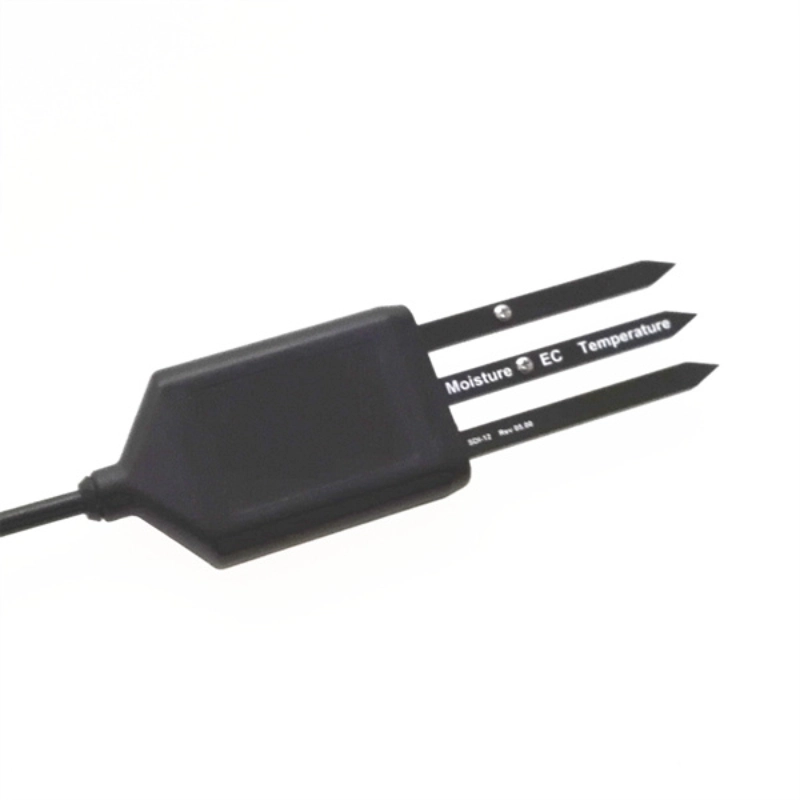
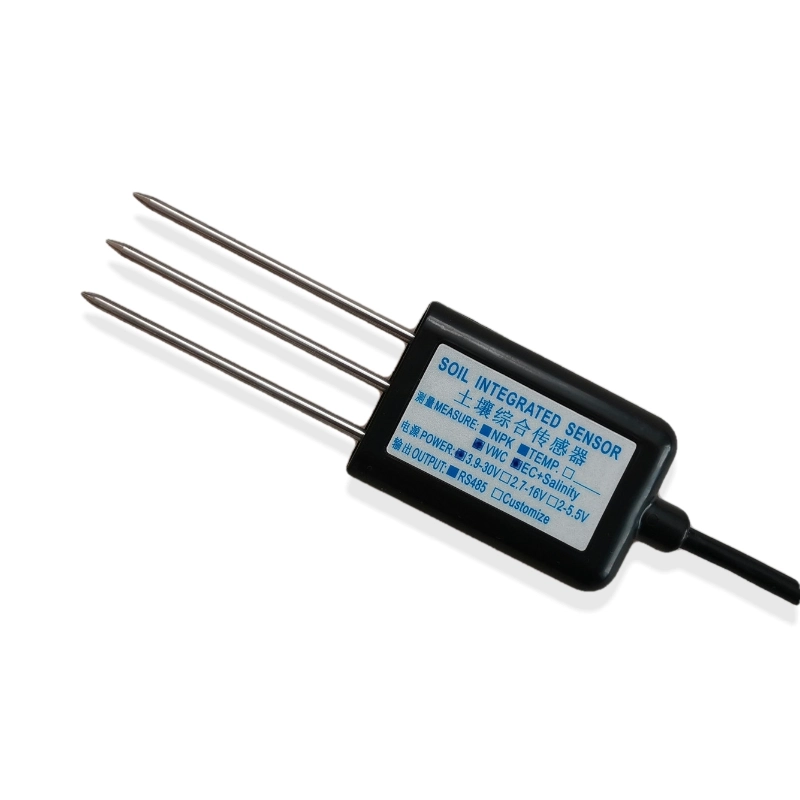
A soil moisture EC temperature probe can provide moisture, electrical conductivity, and temperature data in one device. This reduces installation complexity and gives growers a more complete view of soil conditions.
This type of sensor is suitable for:
- Greenhouse vegetables
- Fruit crops
- Smart irrigation
- Fertigation systems
- Research plots
- Precision agriculture projects
For system integrators, multi-parameter sensors also reduce wiring, installation time, and maintenance complexity.
For farms that also need nutrient monitoring, a soil NPK moisture sensor can support nutrient management, soil fertility analysis, and crop growth monitoring.
Key Benefits of Agricultural Temperature Sensors
Agricultural temperature sensors help farms and project owners achieve:
- More accurate crop environment monitoring
- Better irrigation decisions
- Reduced crop stress
- Improved greenhouse automation
- Lower manual inspection workload
- Faster abnormal condition detection
- Better historical data analysis
- Stronger support for precision agriculture platforms
For B2B projects, temperature sensors are not just small devices. They are basic data sources for smart agriculture, irrigation automation, greenhouse control, and farm management systems.
Related Soil Sensors for Agriculture
If you are selecting sensors for agriculture, greenhouse, irrigation, or research projects, the following JW-IoT soil sensor products can be considered:
1. Soil Moisture Temperature Sensor for Agriculture and Hydrology
The soil moisture temperature sensor is suitable for root-zone moisture and temperature monitoring in farms, greenhouses, orchards, irrigation systems, and hydrology monitoring projects.
2. Soil Moisture EC Temperature Probe for Precision Farming
The soil moisture EC temperature probe is suitable for fertigation, salinity monitoring, greenhouse irrigation, and precision agriculture projects.
3. Multi Layer Soil Moisture Temperature Sensor
The multi layer soil moisture temperature sensor is suitable for multi-depth soil profile monitoring in large farms, orchards, irrigation districts, and research plots.
4. Substrate Moisture EC Sensor for Greenhouse Irrigation
The substrate moisture EC sensor is suitable for soilless cultivation, substrate monitoring, greenhouse irrigation, and nutrient solution management.
5. Soil Sensors Product Category
You can also explore the full soil sensors for smart farming category to compare soil moisture, temperature, EC, salinity, NPK, and multi-layer monitoring sensors.
Conclusion
Temperature sensors are widely used in agriculture because temperature affects almost every stage of crop production. From soil temperature and greenhouse air temperature to irrigation water temperature and storage temperature, accurate monitoring helps growers make better decisions and reduce risks.
When selecting an agricultural temperature sensor, users should consider the measurement object, accuracy, range, waterproof protection, output signal, communication method, installation environment, and long-term stability.
For smart agriculture projects, temperature sensors are often used together with soil moisture, EC, humidity, light, rainfall, and weather data. This integrated approach helps farms build a reliable, data-driven monitoring system for precision farming.
Whether the application is greenhouse cultivation, open field irrigation, orchard frost warning, hydroponics, or grain storage, the right temperature sensor can provide the environmental data needed for smarter agricultural management.
To build a complete soil and crop monitoring system, visit the JW-IoT agricultural soil sensors page or learn more about our smart agriculture IoT solution.