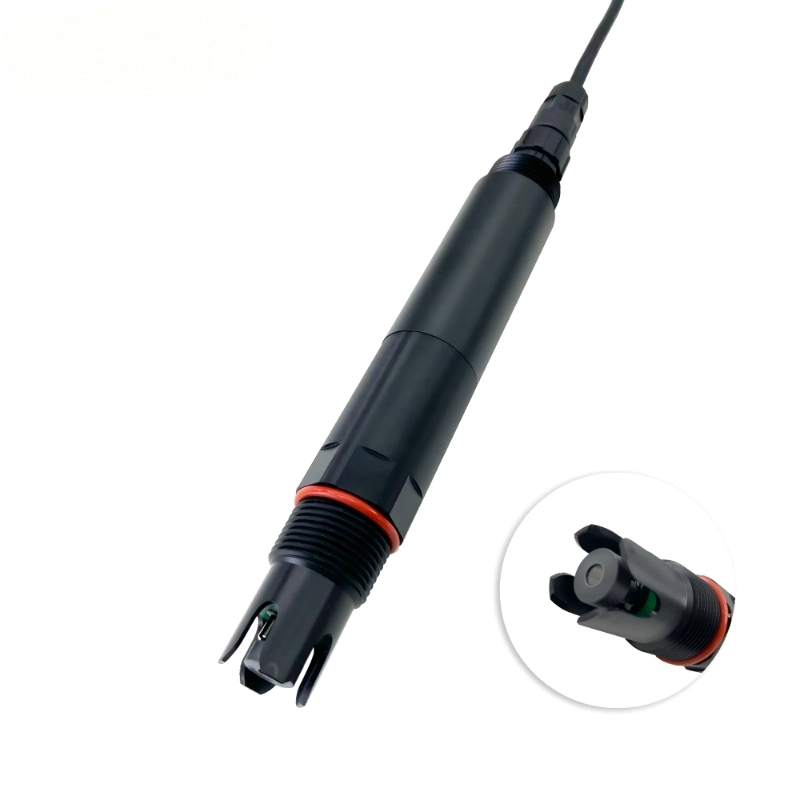
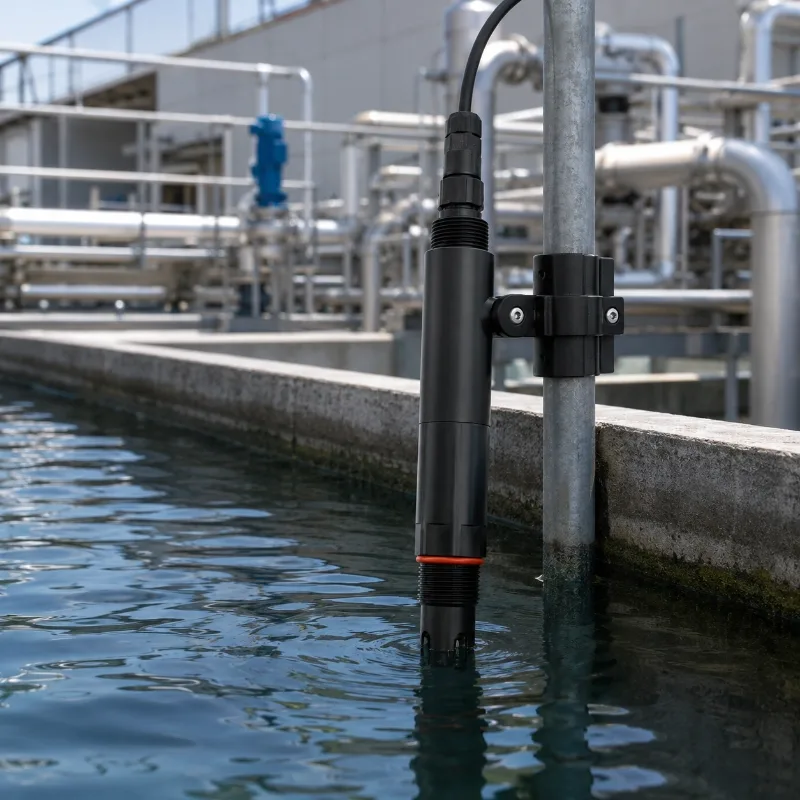
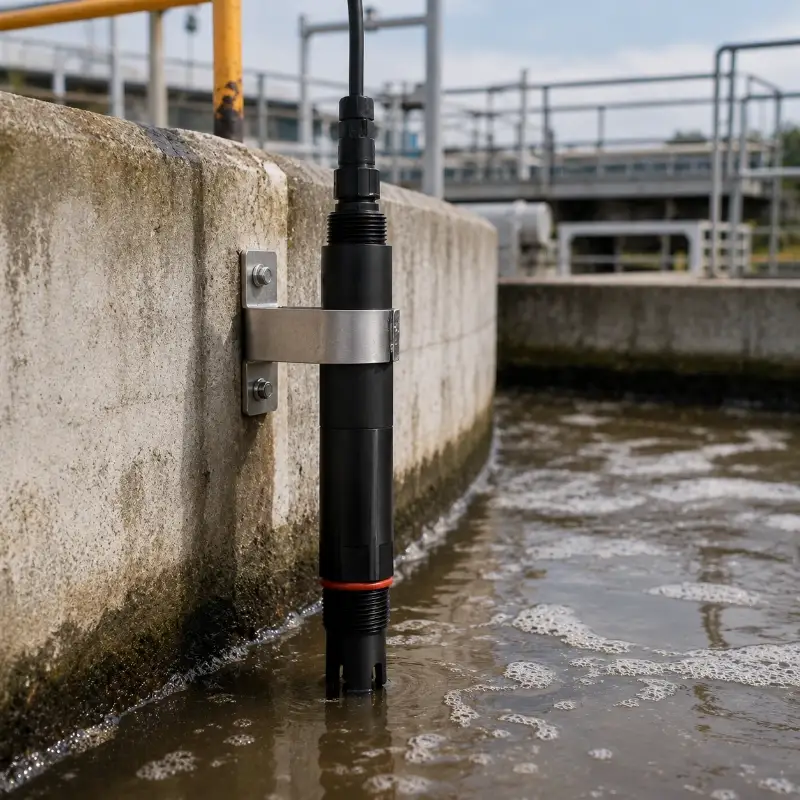
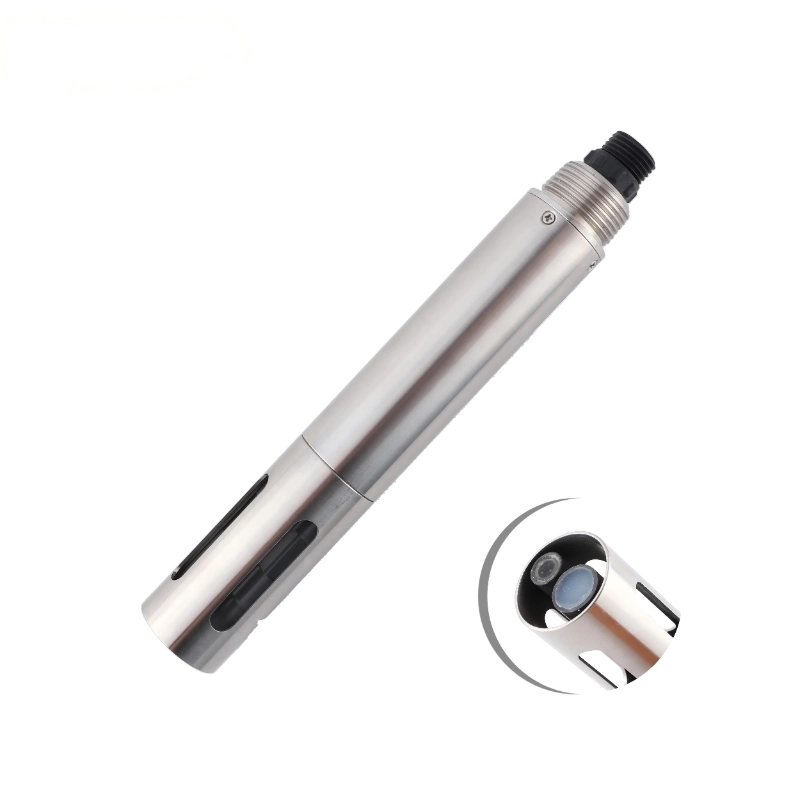
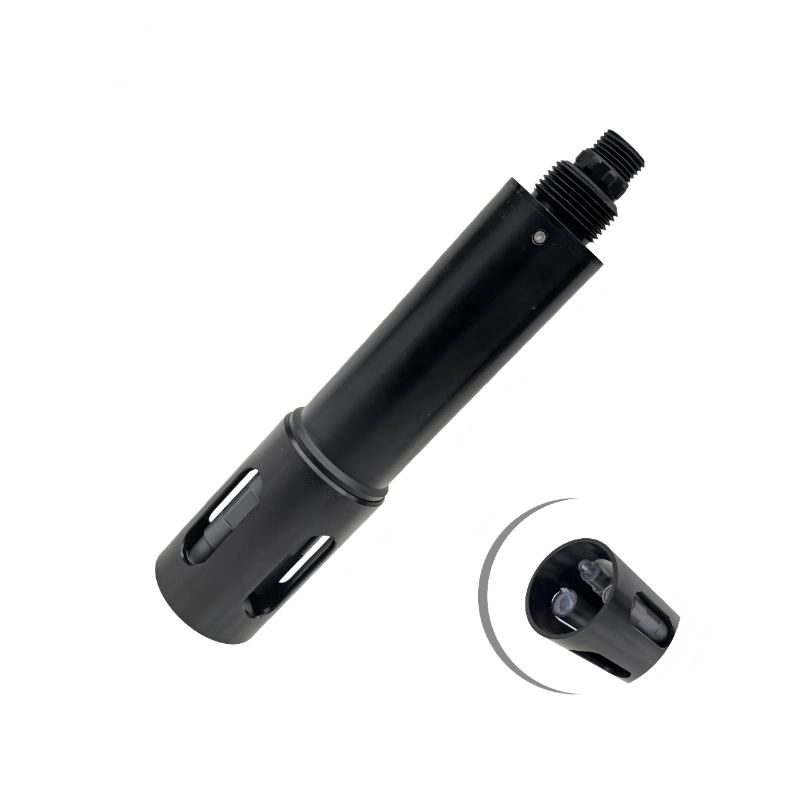
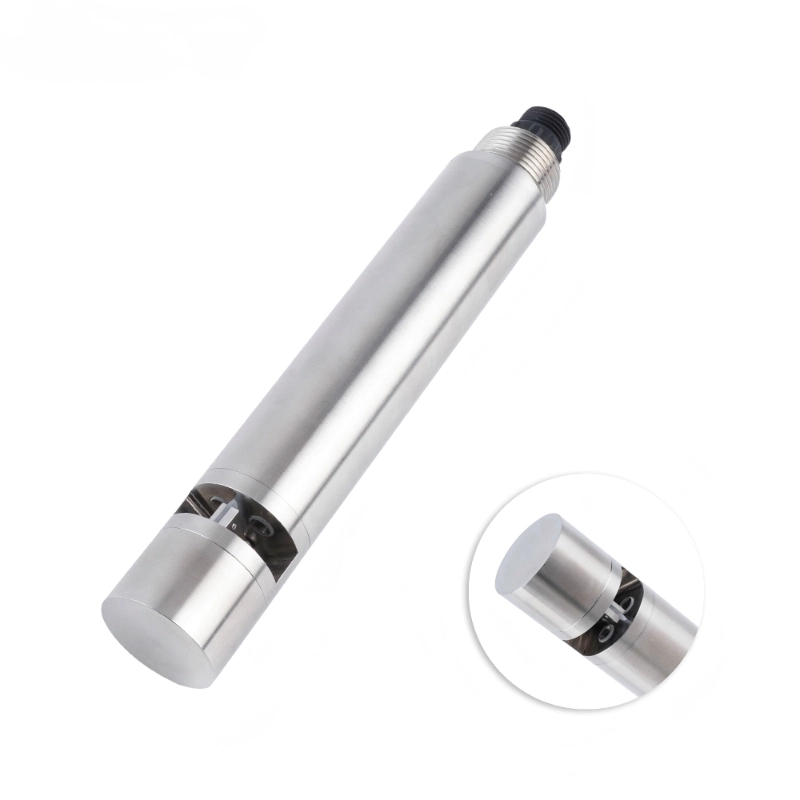
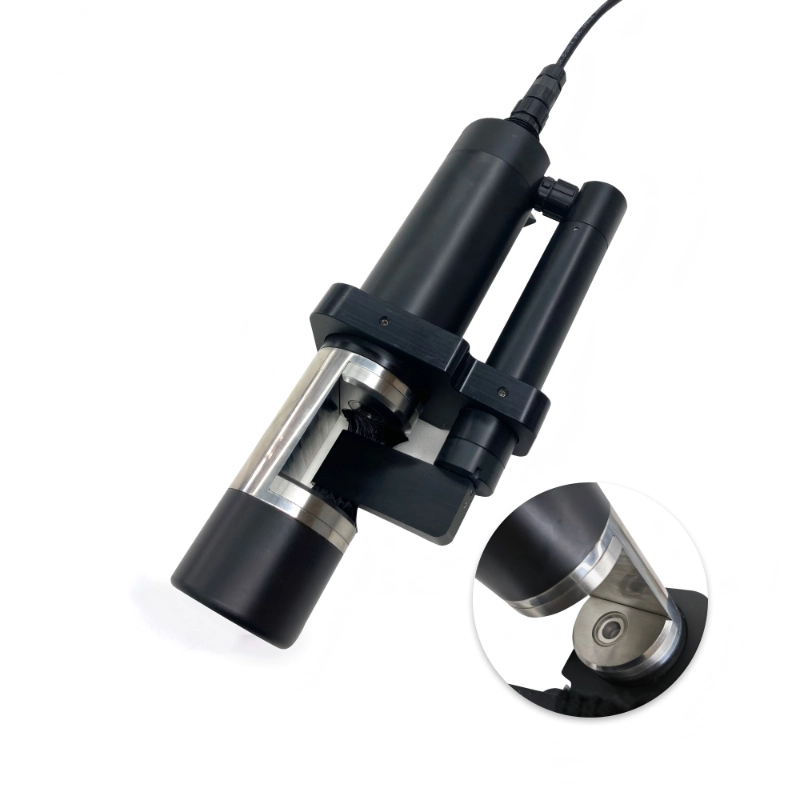
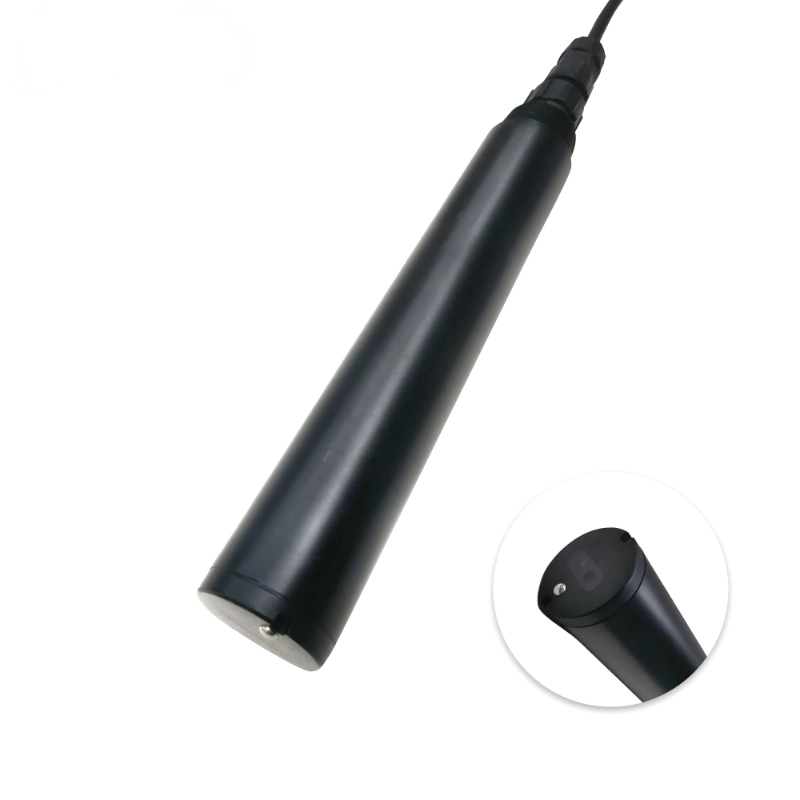
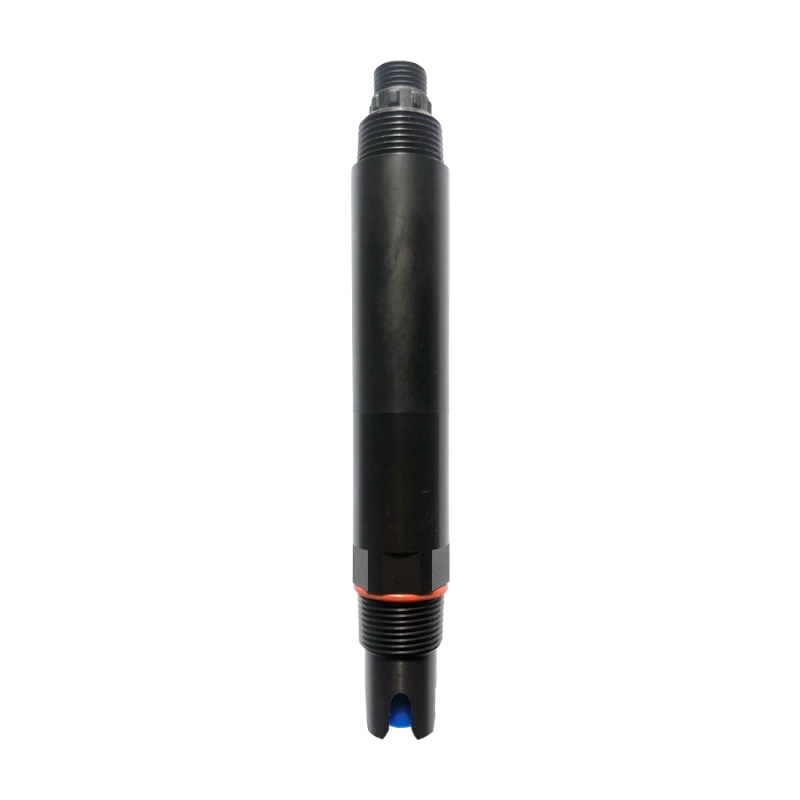
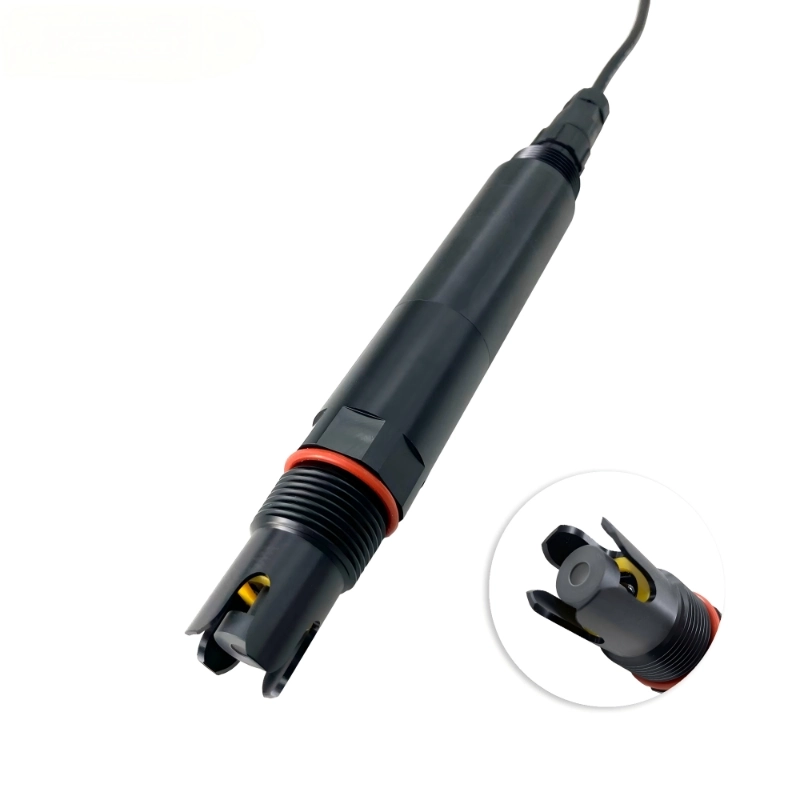
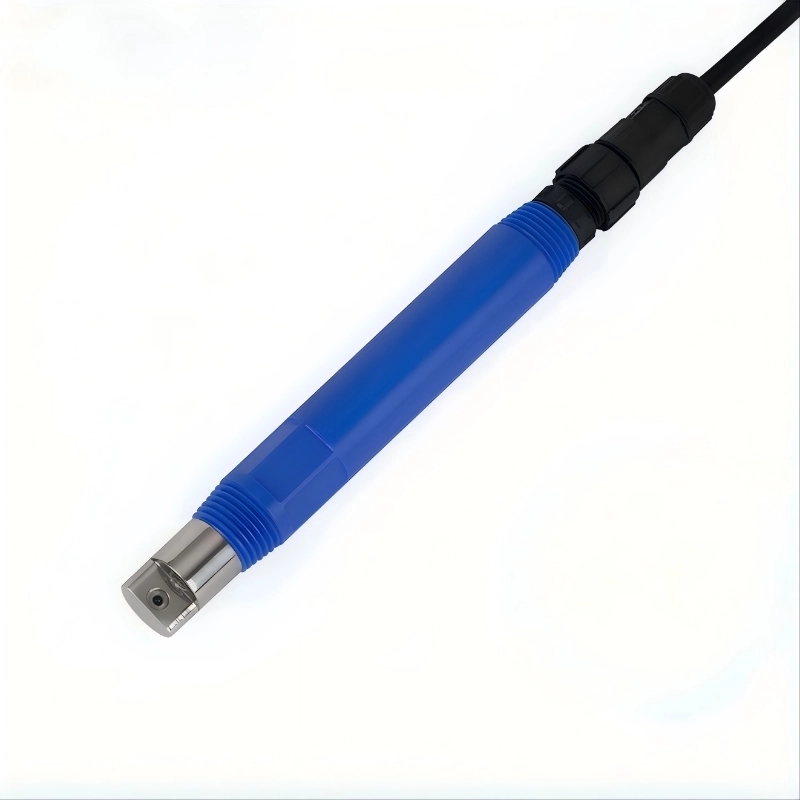
JW-CLI-406(K20) online chloride ion sensor is designed for continuous chloride monitoring in water treatment, industrial process water, environmental water quality, aquaculture, seawater, and wastewater applications. Using a solid membrane ion selective electrode, it provides fast, simple, accurate, and cost-effective chloride ion measurement with RS485 Modbus RTU output, automatic temperature compensation, IP68 protection, and 3/4 NPT installation.
2. Product Overview
JW-CLI-406(K20) chloride ion sensor is an integrated online water quality sensor for measuring free chloride ions in water. It uses a solid membrane ion selective electrode to provide rapid and stable chloride concentration measurement in water treatment, industrial discharge, aquaculture, seawater, process water, and environmental monitoring systems.
The patented chloride ion electrode uses an internal reference solution that slowly flows through a microporous salt bridge under pressure, helping improve reference system stability and extend electrode service life compared with ordinary industrial electrodes. The sensor supports RS485 Modbus RTU communication, allowing convenient connection to PLCs, DCS systems, industrial control computers, universal controllers, paperless recorders, and touchscreen HMIs.
With IP68 protection, 3/4 NPT pipe thread, and automatic temperature compensation, the sensor is suitable for continuous chloride monitoring in tanks, pipelines, flow cells, and immersion installations.
Item
Specification
Product Type
Online Chloride Ion Sensor
Measurement Principle
Solid membrane ion selective electrode
Measurement Range Option 1
0 to 3500.0 mg/L
Resolution Option 1
0.1 mg/L
Measurement Range Option 2
0 to 35000 mg/L
Resolution Option 2
1 mg/L
Accuracy
±5%
Temperature Accuracy
±0.3°C
Response Time
T90 less than 60 seconds
Minimum Detection Limit
0.9 mg/L
Medium pH Range
2 to 12 pH
Temperature Compensation
Automatic temperature compensation with Pt1000
Output Signal
RS485 Modbus RTU
Storage Temperature
-5 to 65°C
Working Condition
0 to 50°C less than 0.2 MPa
Housing Material
POM
Installation Method
3/4 NPT pipe thread immersion installation
Cable Length
5 m standard cable customizable
Calibration Method
Two-point calibration
Power Consumption
0.2W at 12V
Power Supply
12 to 24V DC
Protection Grade
IP68
Connector
M16 5 pin waterproof male connector
3. Application Scenarios
Industrial wastewater chloride monitoring
Water treatment process control
Seawater and brackish water monitoring
Aquaculture water quality monitoring
Cooling water and circulating water systems
Environmental water quality stations
Drinking water source monitoring
Desalination pretreatment monitoring
Chemical process water monitoring
Smart water quality IoT platforms
4. Installation Notes
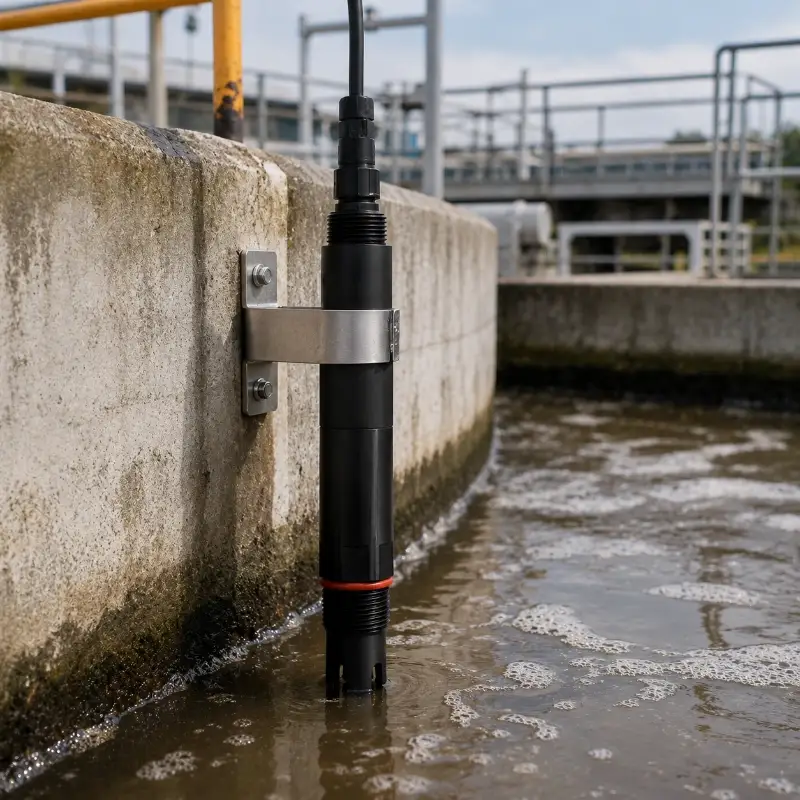
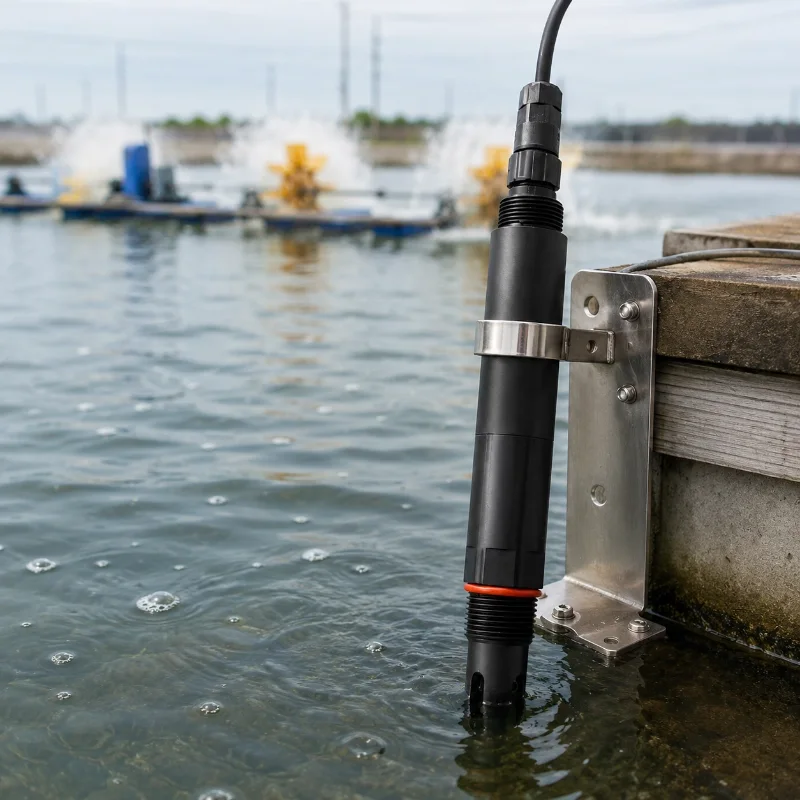
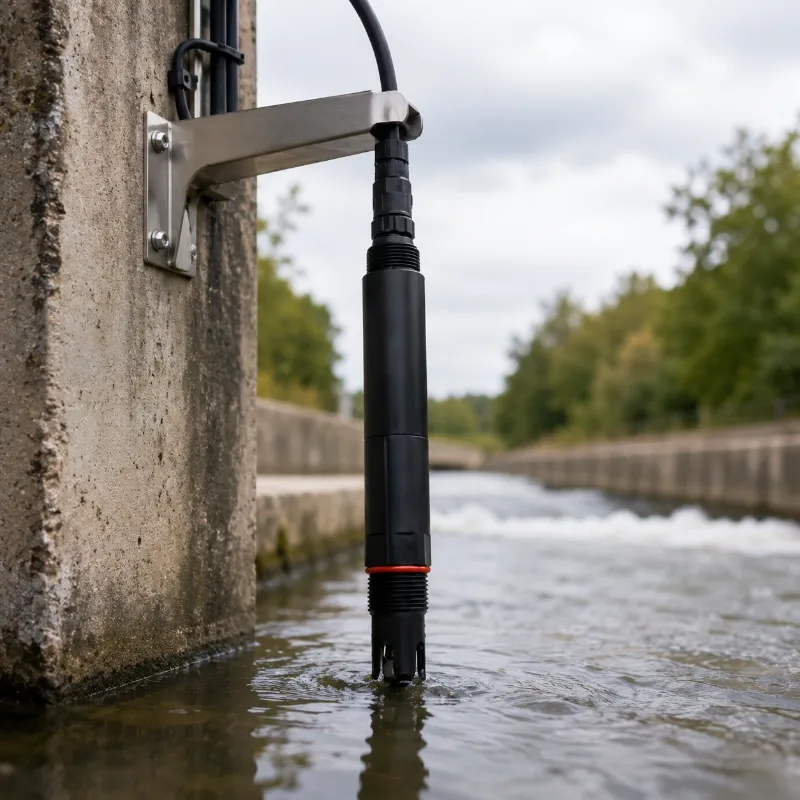
The chloride ion sensor supports immersion installation, tank installation, and pipeline installation using its 3/4 NPT pipe thread. During installation, the sensor must not be installed upside down or horizontally. It should be installed at an inclination angle of at least 15 degrees to ensure stable operation and avoid measurement issues.
For long-term use in water, seawater, or humid outdoor environments, all wiring joints should be waterproofed, and the user-side cable should have corrosion-resistant protection. Before power-on, check the wiring order carefully to avoid damage caused by incorrect wiring.
5. Maintenance Guide
Before use, remove the protective cap from the electrode head and avoid touching the sensitive membrane with fingers. The electrode should be kept dry before use, and the sensing element should remain in the protective bottle. Before testing, power on the electrode and soak it in tap water for 24 hours.
If stored overnight or longer, rinse the electrode head with deionized water, dry it, and place it back into the original packaging. Avoid long-term soaking in distilled water or protein solutions, and prevent contact with silicone grease. If calibration and measurement cannot be restored after maintenance, the electrode should be replaced.
Potential interfering ions include sulfide ions, iodide ions, and bromide ions.
FAQ
Q
1. What is an online chloride ion sensor used for?
A
It is used to continuously monitor free chloride ion concentration in water treatment, industrial process water, seawater, aquaculture, wastewater, and environmental water quality applications.
Q
2. What measurement principle does this chloride sensor use?
A
The sensor uses a solid membrane ion selective electrode to directly measure chloride ion concentration in water.
Q
3. What measurement ranges are available?
A
The sensor supports two range options: 0 to 3500.0 mg/L with 0.1 mg/L resolution and 0 to 35000 mg/L with 1 mg/L resolution.
Q
4. Can this chloride sensor connect to PLC or IoT systems?
A
Yes. It provides RS485 Modbus RTU output for connection to PLCs, DCS systems, industrial computers, controllers, RTUs, and IoT gateways.
Q
5. How does JW-IoT use this sensor in smart water projects?
A
JW-IoT can integrate the chloride ion sensor with IoT gateways, cloud dashboards, threshold alarms, and multi-parameter water quality monitoring systems.
Q
6. Is this sensor suitable for seawater or brackish water monitoring?
A
Yes. The sensor can be used for seawater, brackish water, desalination pretreatment, aquaculture, and high-chloride industrial water monitoring.
Q
7. Can JW-IoT provide a complete chloride monitoring solution?
A
Yes. JW-IoT can combine chloride, conductivity, salinity, pH, dissolved oxygen, turbidity, temperature, and other water quality sensors into a complete online monitoring system.
Q
8. What should be noted during installation?
A
The sensor must not be installed upside down or horizontally. It should be installed at an inclination angle of at least 15 degrees.
Q
9. Can JW-IoT customize system integration for different projects?
A
Yes. JW-IoT can support customized cable length, RS485 Modbus integration, gateway connection, cloud platform configuration, and multi-site monitoring.
 +86 13520127780
  info@jingelway.com