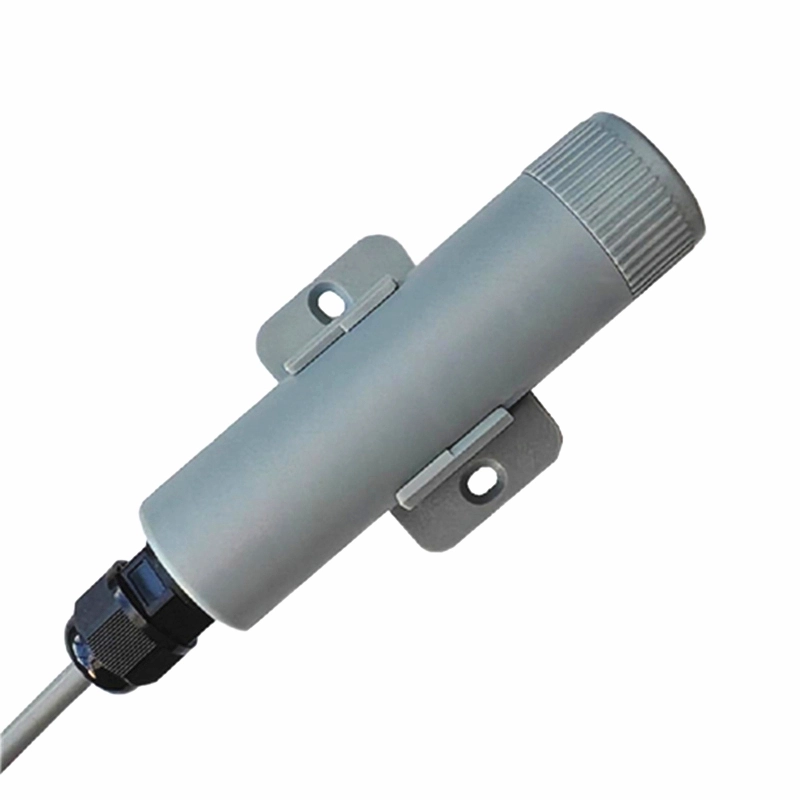
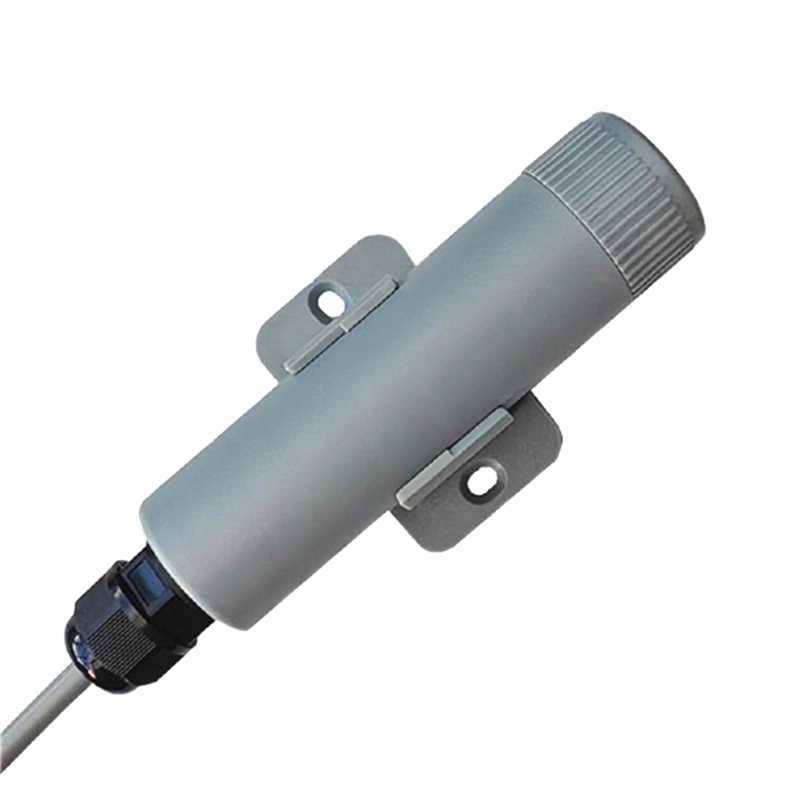
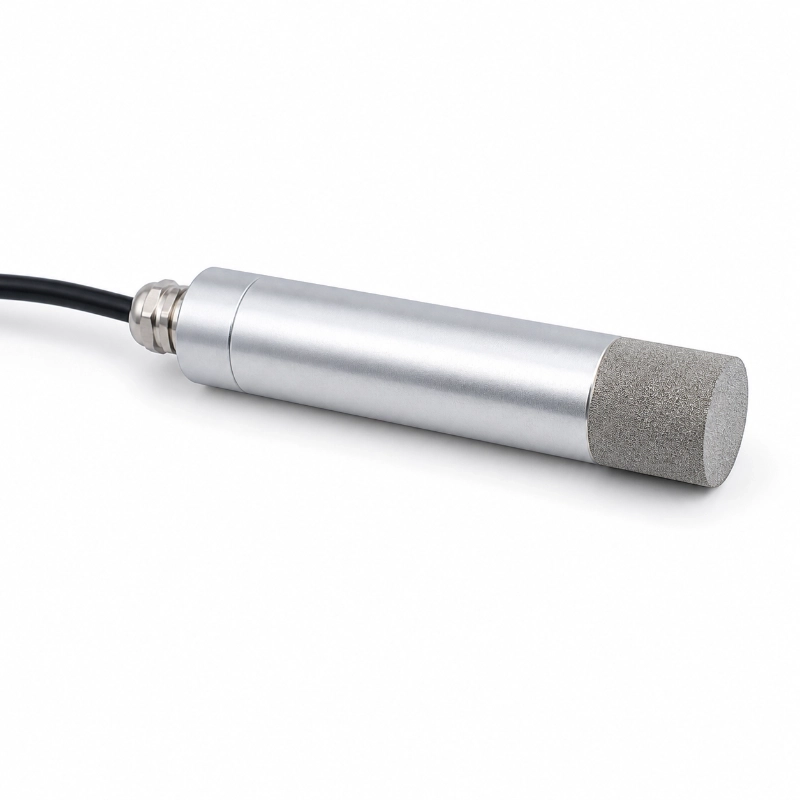
The JWGas-CDF(Z17) High Concentration CO2 Sensor is designed for monitoring carbon dioxide concentrations from 0 to 100 vol% in air or nitrogen environments.
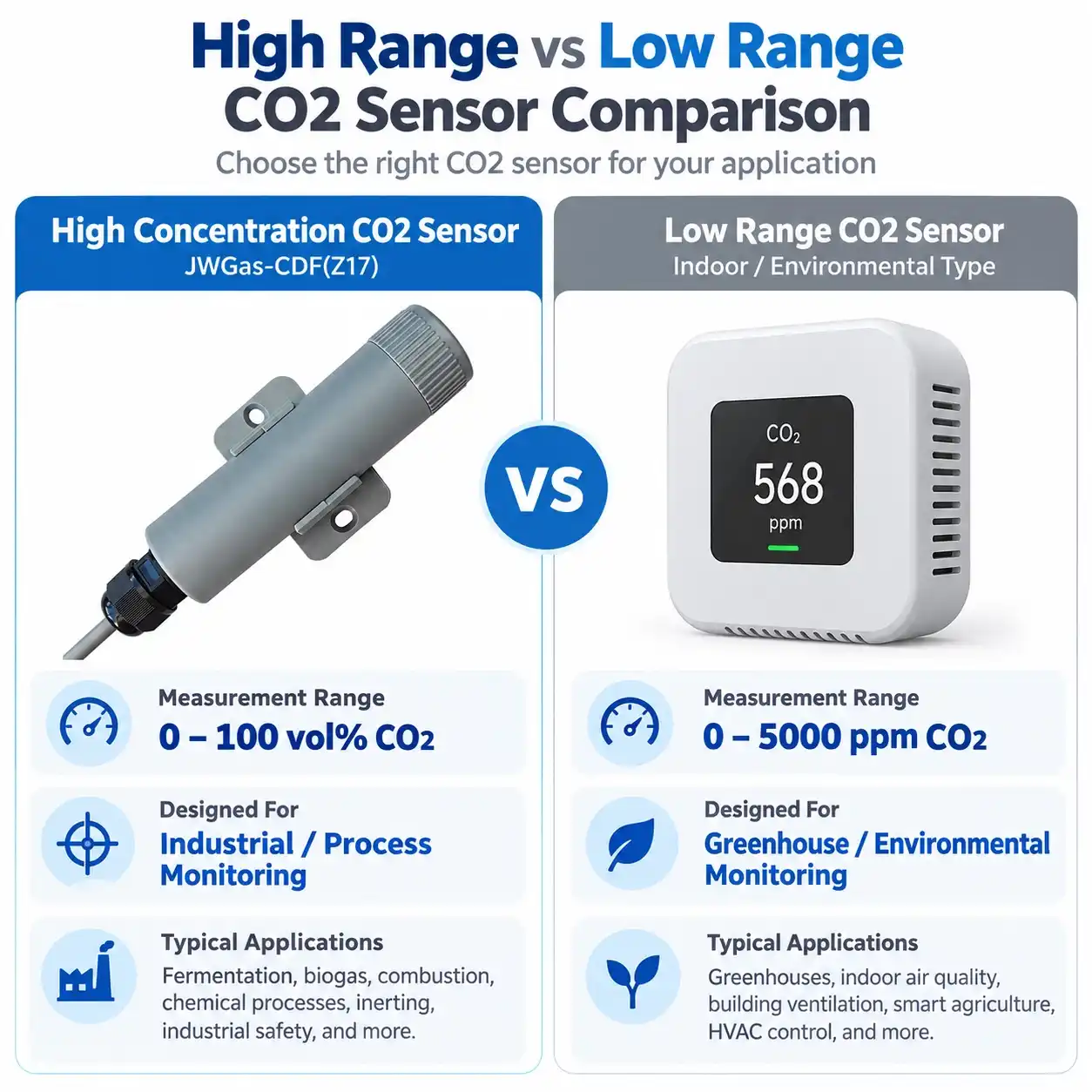
Unlike conventional low-range CO2 sensors commonly used in indoor air quality and greenhouse monitoring, this high range CO2 sensor supports applications requiring percentage-level carbon dioxide measurement.
The sensor incorporates a Sensirion STC31-C thermal conductivity sensing element with integrated temperature and humidity compensation.
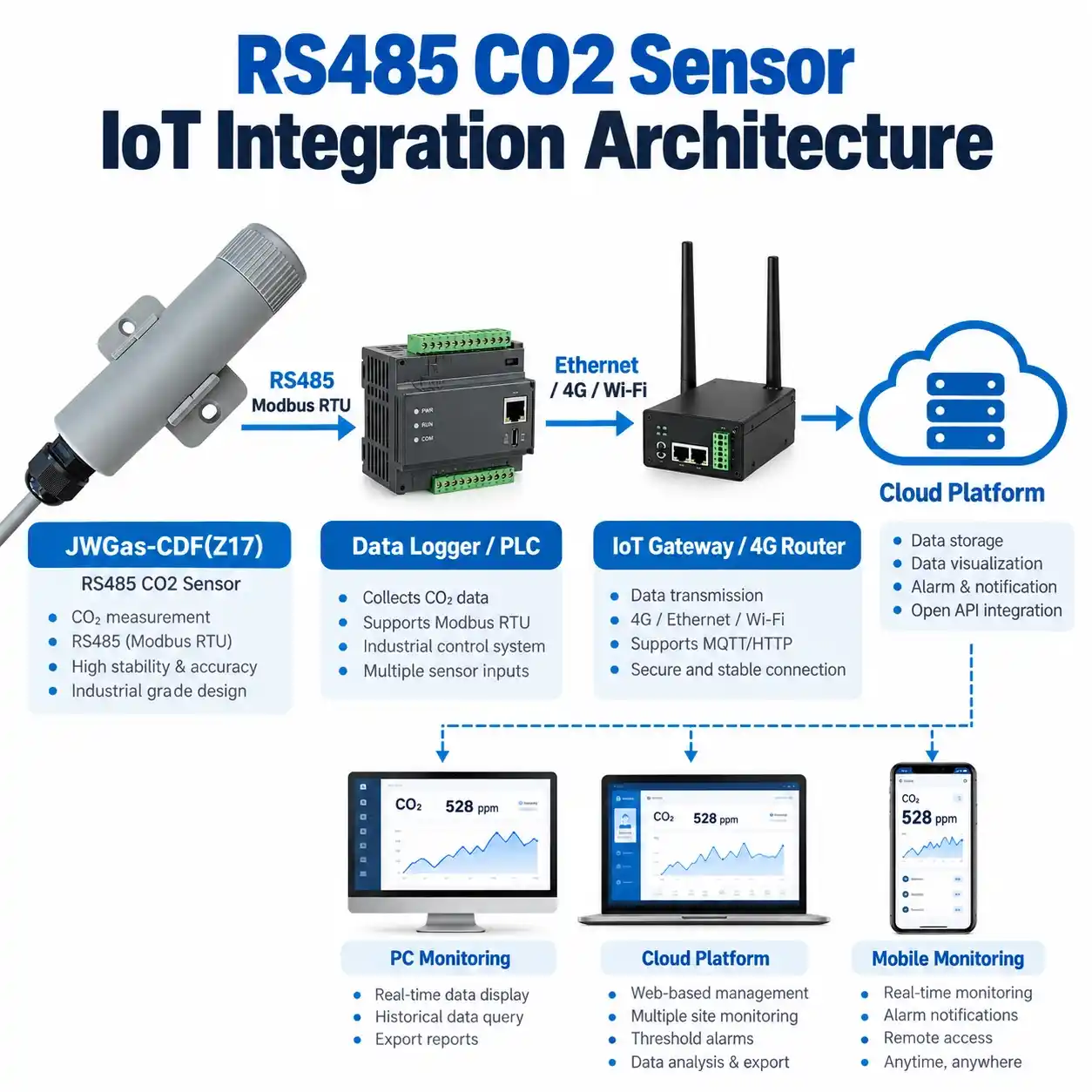
Available with RS485 Modbus RTU or SDI-12 V1.3 output, it can connect to compatible industrial controllers, environmental data loggers and remote monitoring systems.
Typical applications include controlled atmosphere monitoring, laboratory gas measurement, storage environment monitoring and industrial gas concentration data acquisition.
2. How Does a Thermal Conductivity CO2 Sensor Work?
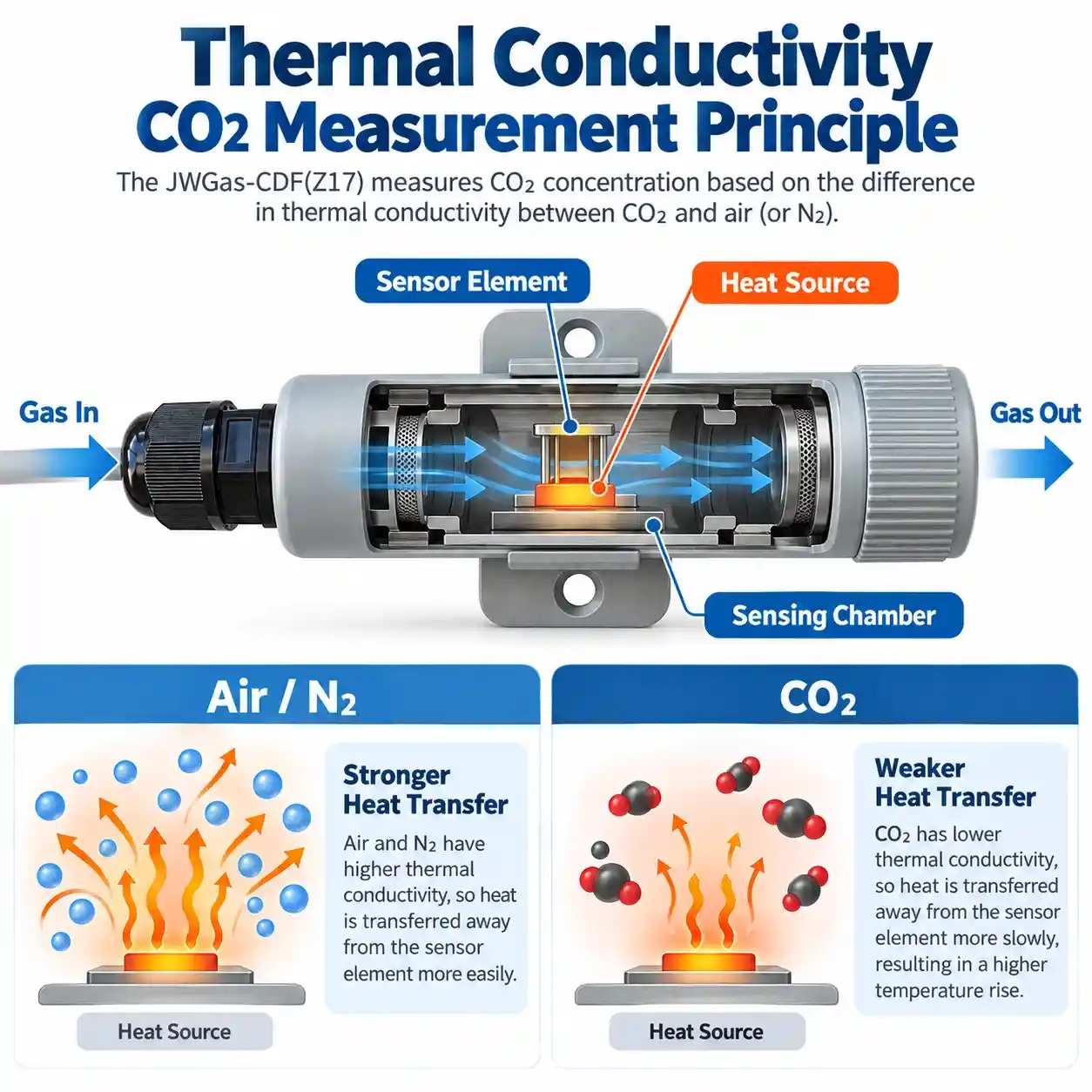
A thermal conductivity CO2 sensor measures changes in the thermal conductivity of a gas mixture.
Carbon dioxide has different thermal conductivity characteristics from common background gases, including nitrogen and oxygen. Changes in gas composition affect heat transfer at the sensing element, allowing the sensor to estimate CO2 concentration using an appropriate gas model.
The integrated Sensirion STC31-C supports high concentration CO2 measurement in air or nitrogen.
Advantages of Thermal Conductivity Measurement
Suitable for percentage-level CO2 concentration measurement
Compact sensing element
Low power consumption
Fast response under specified measurement conditions
Digital signal processing and filtering
Supports calibration and compensation
Important: Thermal conductivity measurements depend on the background gas composition. Users should select the correct gas model and verify calibration requirements when the gas mixture differs from the specified air or nitrogen conditions.
0.5 s without filtering (sensor-level specification)
CO2 Noise, No Filtering
±0.32 vol%
CO2 Noise, Strong Filtering
±0.07 vol%
Temperature Measurement Range
-40 to +125°C
Long-Term Operating Temperature
-40 to +80°C
Temperature Resolution
0.01°C
Typical Temperature Accuracy
Up to ±0.2°C
Relative Humidity Range
0–100% RH
Humidity Resolution
0.01% RH
Typical Humidity Accuracy
Up to ±1.8% RH
Working Environment
-40 to +80°C, 0–95% RH, non-condensing
Output Options
RS485 Modbus RTU / SDI-12 V1.3
Power Supply
5–28 V DC
Protection Rating
IP50
Installation
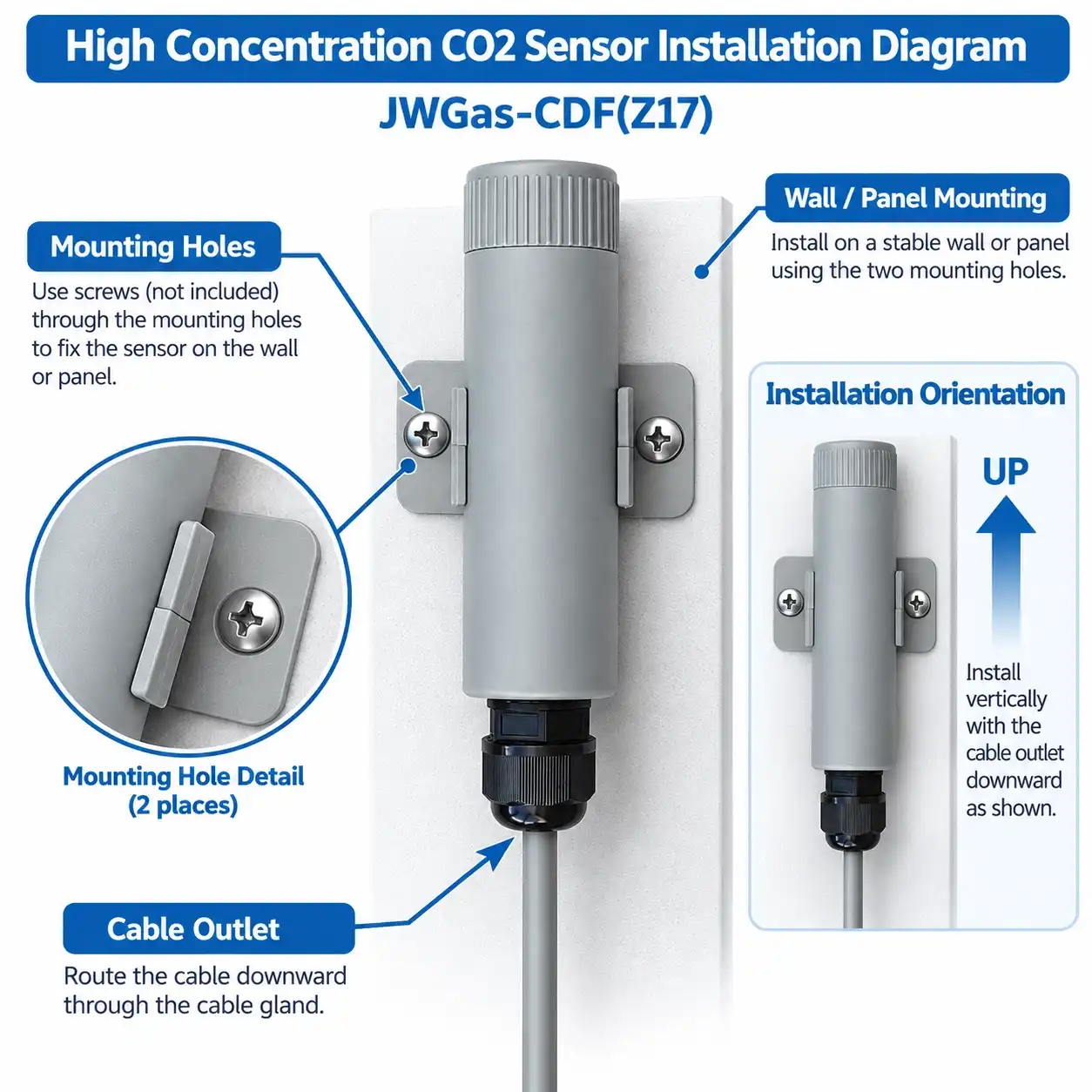
Wall-mounted
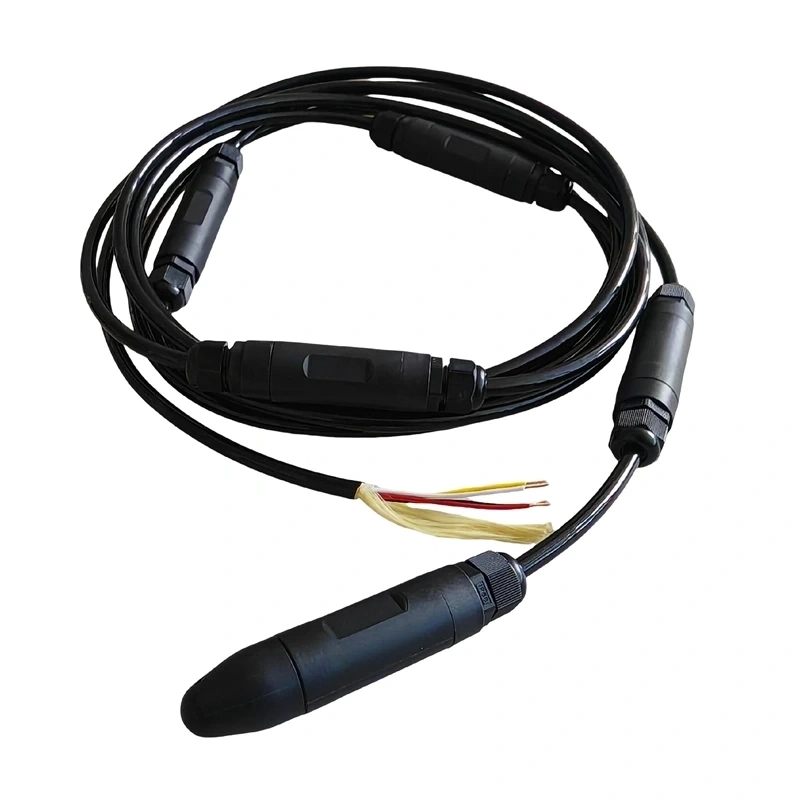
Standard Cable
2 m
Maximum Custom Cable
5 m
Sensor Body Size
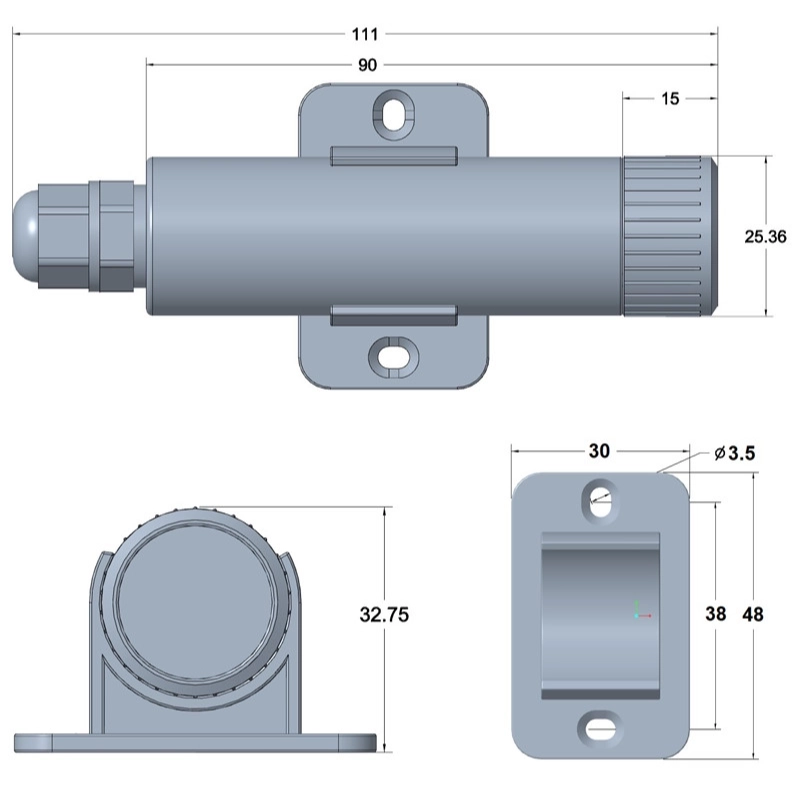
111 × 25.5 mm
Note: Sensor-element specifications and complete-device specifications are not interchangeable. CO2 measurement accuracy depends on calibration, gas composition, temperature, humidity and pressure. The temperature measurement range is not the permissible operating range of the complete device.
4. High Concentration CO2 Sensor vs Conventional CO2 Sensor
Selecting the correct CO2 measurement range is essential for reliable monitoring.
Feature
JWGas-CDF(Z17)
JWGas-CD(Z19)
Main Application
High concentration CO2 monitoring
Greenhouse and environmental monitoring
CO2 Range
0–100 vol%
0–5000 ppm
Measurement Principle
Thermal conductivity
Infrared
Typical Gas Environment
Air or nitrogen
Environmental air
Measurement Focus
Percentage-level CO2
Low concentration CO2
Digital Interface
RS485 / SDI-12
RS485 / SDI-12
A concentration of 1 vol% is equivalent to 10,000 ppm. Therefore, the 0–100 vol% measurement range is fundamentally different from a conventional 0–5000 ppm environmental sensor.
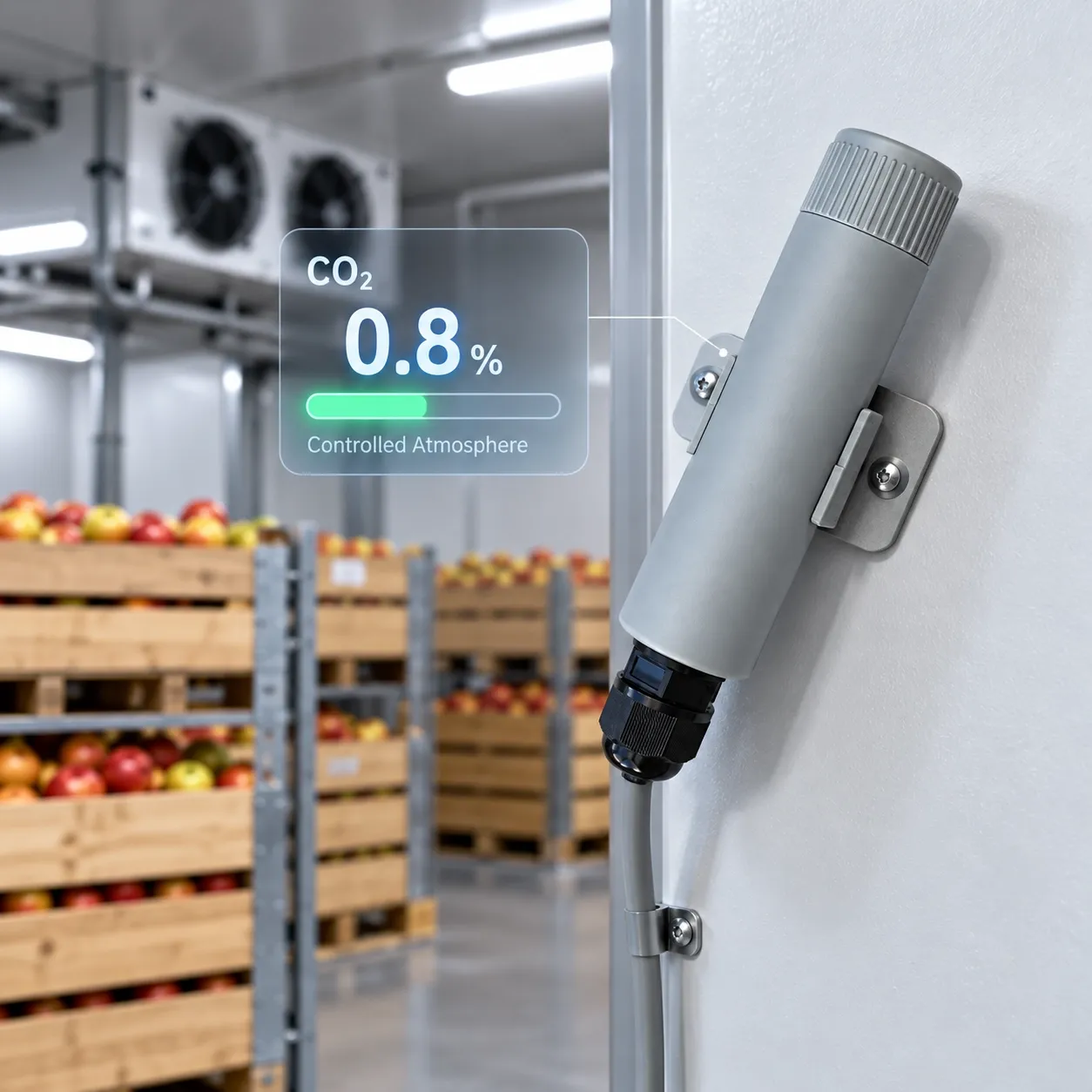
Controlled atmosphere storage systems may require carbon dioxide monitoring as part of managing gas composition.
The JWGas-CDF(Z17) can be considered for CO2 concentration measurement where the expected range and background gas composition are compatible with its sensing principle.
Actual suitability should be confirmed against the storage environment, gas composition and installation conditions.
5.2 Cold Chain and Storage Environment Monitoring
Some cold chain and storage applications involve modified or controlled atmospheres.
The high range CO2 sensor provides a measurement option where percentage-level CO2 concentrations must be recorded.
For these applications, installation protection, condensation and calibration conditions must be evaluated before deployment.
5.3 Laboratory Gas Concentration Measurement
Research laboratories and testing facilities may require CO2 measurements in controlled gas mixtures.
The sensor supports measurement in air or nitrogen with configurable gas model settings and calibration functions.
Users should verify measurement uncertainty against the required experimental conditions.
5.4 Industrial Gas Monitoring
Industrial processes may involve elevated carbon dioxide concentrations requiring continuous or periodic measurement.
With RS485 Modbus RTU communication, the sensor can transmit measurement data to compatible controllers or data acquisition equipment.
The complete monitoring system should be designed according to the process environment and required measurement performance.
This device should not be treated as a certified personnel safety gas detector without appropriate product-level certification.
5.5 Remote Environmental Data Acquisition
The SDI-12 version is suitable for integration with compatible environmental data loggers.
Depending on the complete system configuration, measurements can be recorded locally or transmitted through an external communication gateway.
1. What does the JWGas CDF High Range CO2 Sensor measure?
A
JWGas-CDF(Z17) sensor measures high concentration carbon dioxide from 0 to 100 vol%, along with temperature, humidity, and dew point.
Q
2. Is this sensor suitable for normal indoor CO2 monitoring?
A
It can measure CO2, but it is mainly designed for high concentration CO2 applications. For typical indoor air quality monitoring around 400–5000 ppm, a lower-range CO2 sensor may be more suitable.
Q
3. Can JWGas-CDF(Z17) measure CO2 in nitrogen?
A
Yes. JWGas-CDF(Z17) supports CO2 measurement in nitrogen and air. Users should select the correct gas type setting before use to improve measurement accuracy.
Q
4. Does JWGas-CDF(Z17) support RS485 Modbus RTU?
A
Yes. JWGas-CDF(Z17) supports RS485 Modbus RTU, making it suitable for PLC systems, industrial IoT gateways, data acquisition units, and cloud monitoring platforms.
Q
5. Can JWGas-CDF(Z17) work with SDI-12 data loggers?
A
Yes. JWGas-CDF(Z17) supports SDI-12 V1.3, making it suitable for data loggers, remote environmental monitoring stations, and low-power field monitoring systems.
Q
6. What is the CO2 measurement resolution?
A
The CO2 resolution is 0.01 vol%, suitable for high concentration gas monitoring applications.
Q
7. Does the sensor support calibration?
A
Yes. JWGas-CDF(Z17) supports automatic calibration and forced calibration. Forced calibration should be performed in a known, uniform, and stable CO2 concentration environment.
Q
8. What is the response time of the CO2 measurement?
A
The response time is 0.5 seconds without filtering. Stronger filtering can provide smoother data but will slow down the response.
Q
9. Does JWGas-CDF(Z17) measure temperature and humidity?
A
Yes. JWGas-CDF(Z17) measures temperature, humidity, and dew point in addition to CO2 concentration.
Q
10. Is JWGas-CDF(Z17) suitable for battery-powered systems?
A
Yes. The SDI-12 request measurement mode has a static current of less than 50 μA at 12 V DC, making it suitable for low-power monitoring applications.
Q
11. What applications is this sensor best suited for?
A
It is suitable for high concentration CO2 detection, cold chain logistics, warehouse monitoring, controlled atmosphere storage, laboratory gas measurement, environmental monitoring, and industrial gas monitoring.
Q
12. Does JWGas-CDF(Z17) support OEM or ODM customization?
A
Yes. JWGas-CDF(Z17) supports OEM and ODM customization, including communication interface, cable length, labeling, gas type configuration, and system integration requirements.
 +86 13520127780
 info@jingelway.com