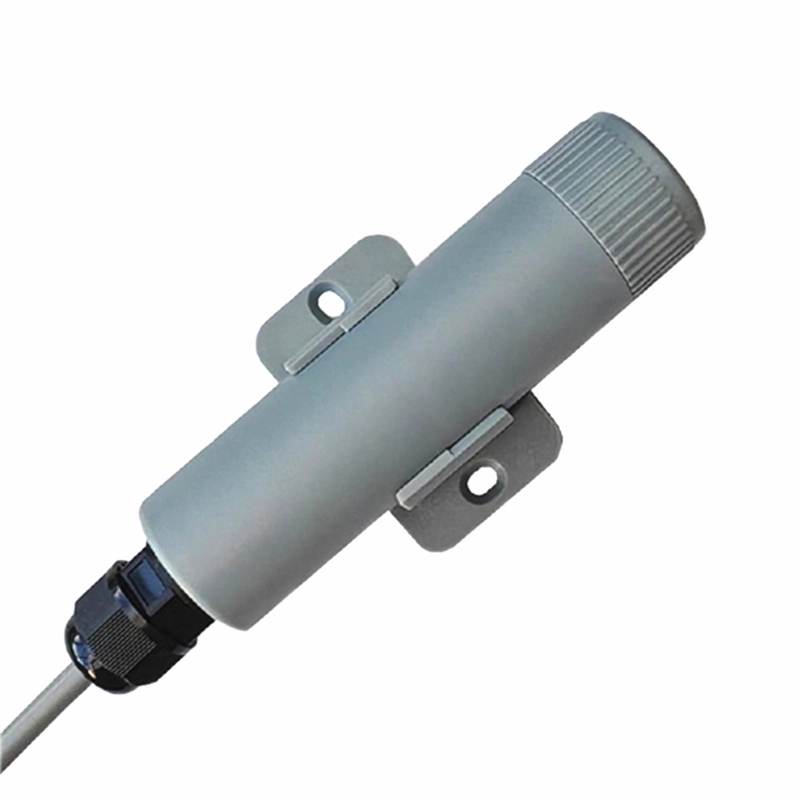
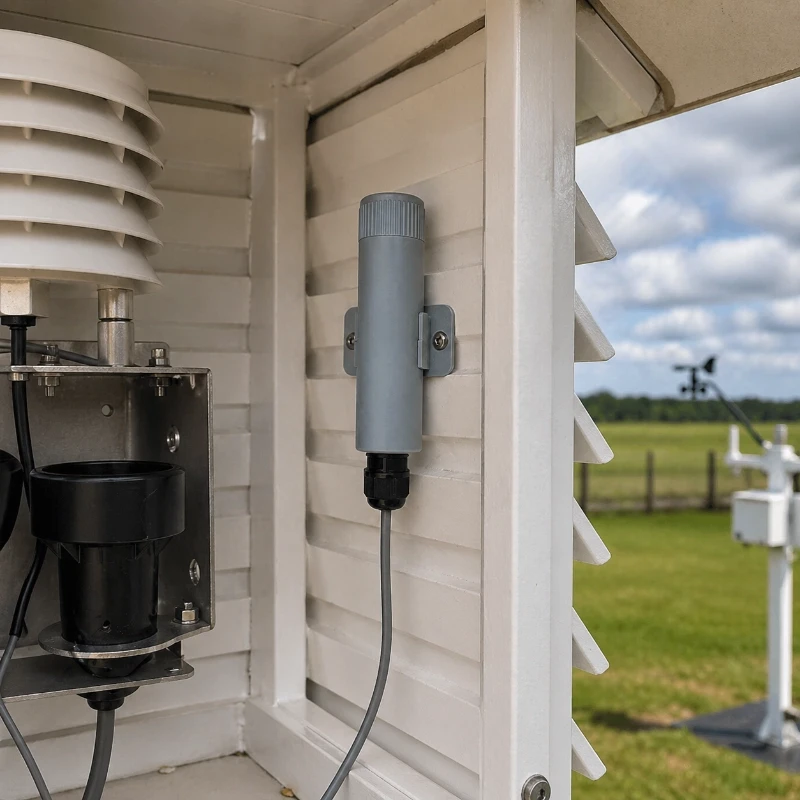
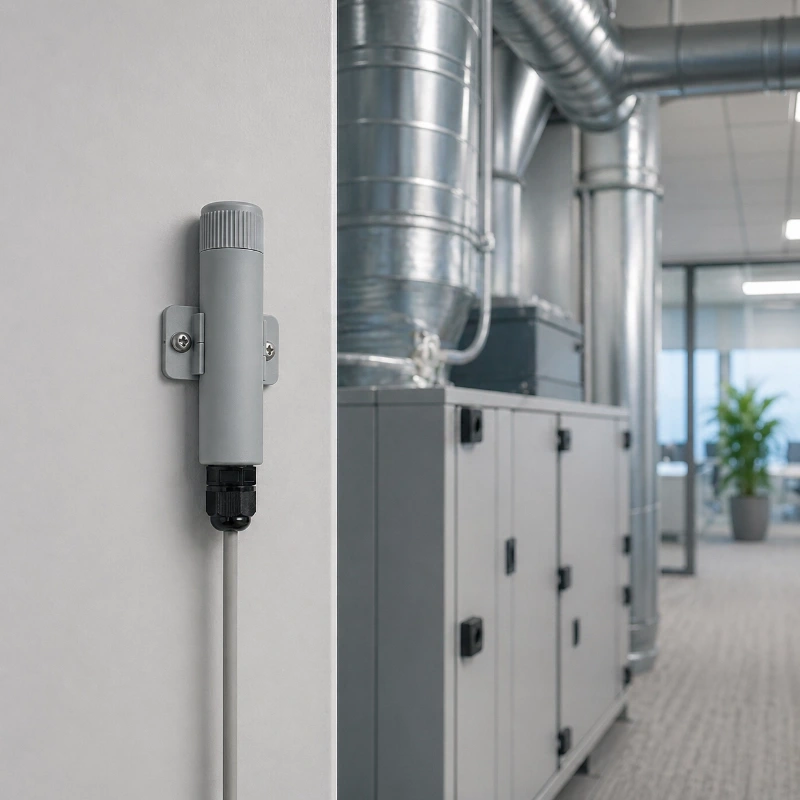
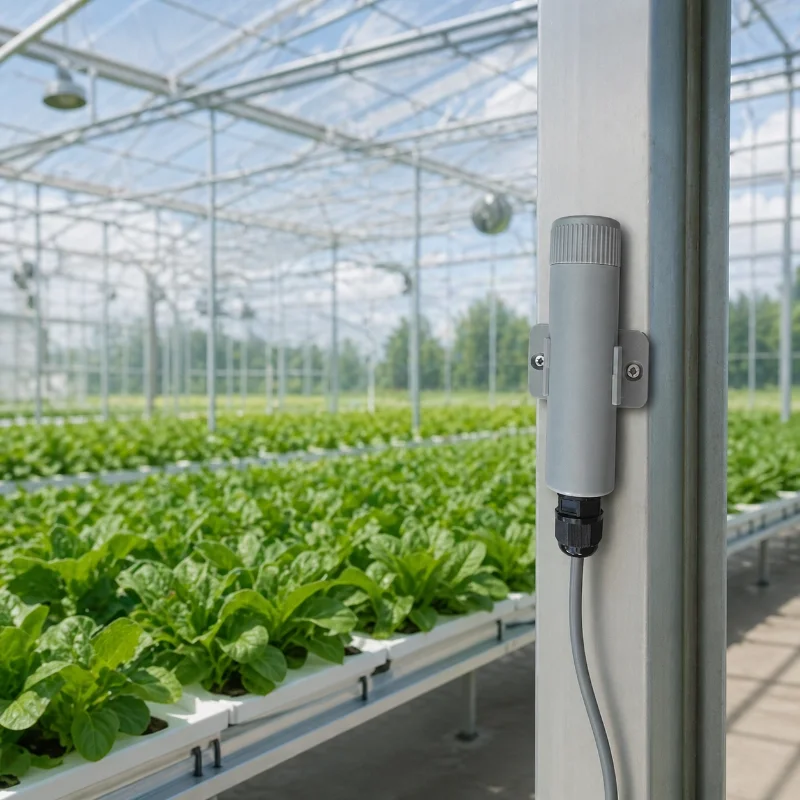
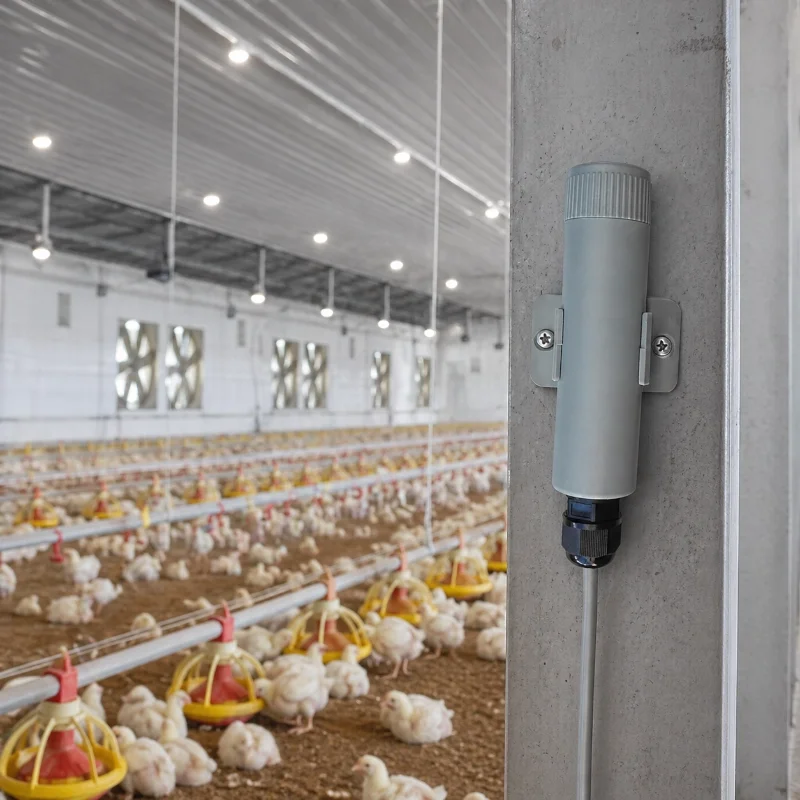
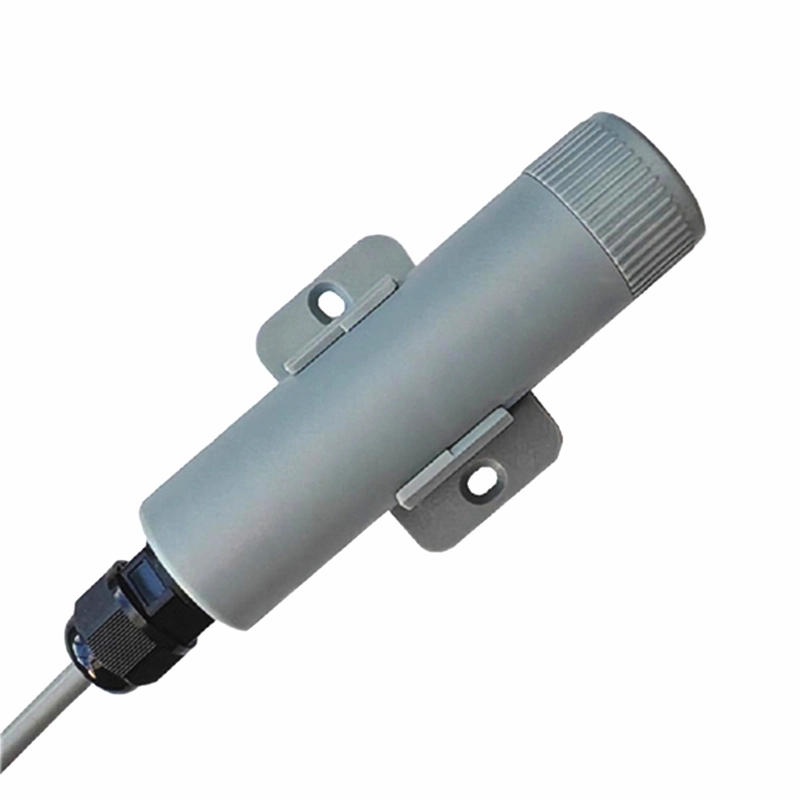
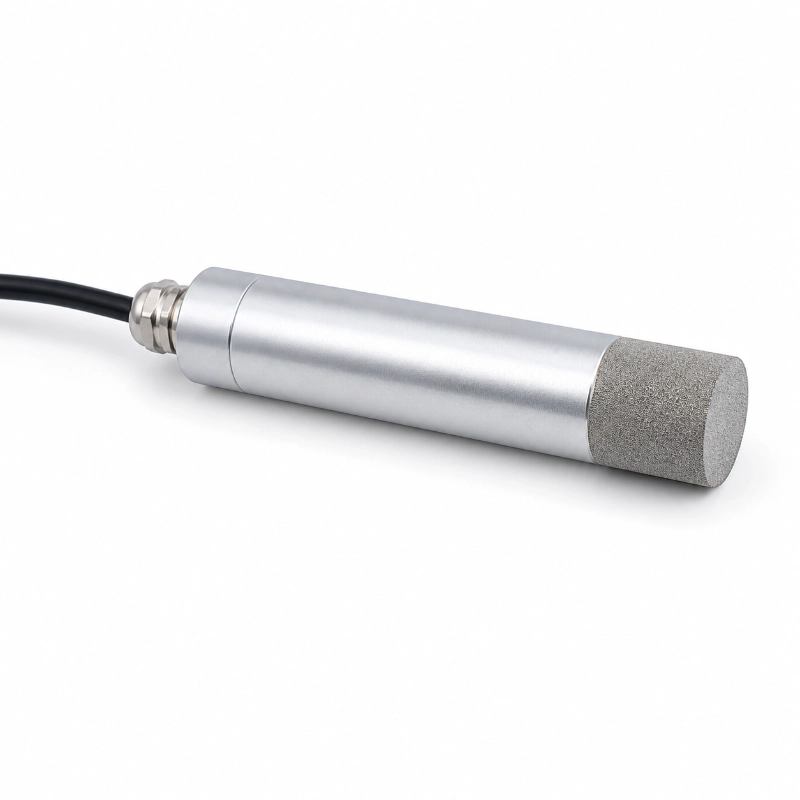
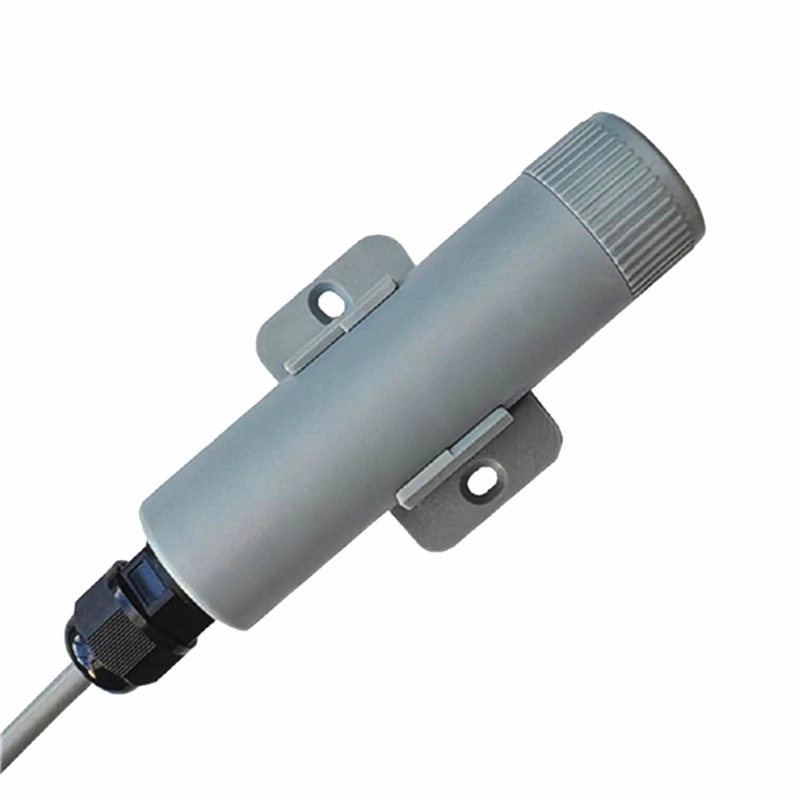
JWGas-CD(Z19) Digital CO2 Sensor is an infrared carbon dioxide sensor designed for greenhouse monitoring, HVAC ventilation control, environmental monitoring, agriculture, livestock farming, laboratories, and meteorological applications. It measures CO2 concentration, temperature, humidity, and dew point in one compact wall-mounted device.
With optional RS485 Modbus RTU or SDI-12 V1.3 output, automatic calibration, forced calibration, low power consumption, and digital data communication, this CO2 sensor is suitable for data loggers, IoT gateways, greenhouse controllers, ventilation systems, and remote environmental monitoring platforms.
2. Product Overview
JWGas-CD(Z19) Digital CO2 Sensor is developed for reliable carbon dioxide monitoring in environmental and control applications. It uses infrared gas detection technology and built-in temperature compensation to provide stable CO2 concentration data. The sensor is not easily affected by other background gases, making it suitable for long-term fixed-point monitoring.
The product supports SDI-12 and RS485 Modbus RTU, so it can be connected to data loggers, weather stations, greenhouse controllers, HVAC systems, IoT gateways, and cloud monitoring platforms. In addition to CO2 concentration, it also provides temperature, humidity, and dew point data, helping users build a more complete indoor or outdoor environmental monitoring system.
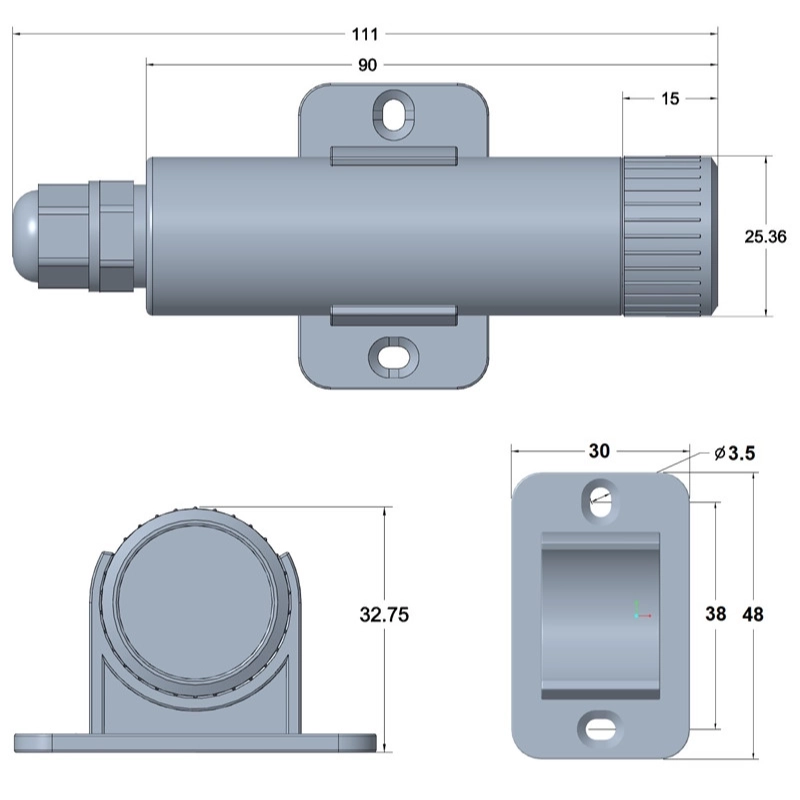
According to the supplier manual, the product supports 9–28 V DC power input, 0–5000 ppm CO2 range, IP50 protection, wall-mounted installation, default 2 m cable, and a compact sensor body size of 111 × 25.5 mm.
Parameter
Model No.
JWGas-CD(Z19)
Sensing Technology
Infrared gas detection
Measurement Parameters
CO2, temperature, humidity, dew point
CO2 Range
0–5000 ppm
CO2 Resolution
1 ppm
CO2 Accuracy 400–1000 ppm
±50 ppm + 2.5% of reading
CO2 Accuracy 1001–2000 ppm
±50 ppm + 3% of reading
CO2 Accuracy 2001–5000 ppm
±40 ppm + 5% of reading
CO2 Repeatability
±10 ppm typical
CO2 Response Time
60 s typical
Temperature Range
-10 to 60°C
Temperature Resolution
0.1°C
Temperature Accuracy 15–35°C
±0.8°C
Temperature Accuracy -10–60°C
±1.5°C
Humidity Range
0–100% RH
Humidity Resolution
0.1% RH
Humidity Accuracy 15–35°C 20–65% RH
±6% RH
Humidity Accuracy -10–60°C 0–100% RH
±9% RH
Working Environment
-10 to 60°C, 0–95% RH non-condensing
Output Option 1
SDI-12 V1.3
Output Option 2
RS485 Modbus RTU
Power Supply
9–28 V DC
Protection Rating
IP50
Installation Method
Wall-mounted
Default Cable Length
2 m
Max Custom Cable Length
5 m
Sensor Body Size
111 × 25.5 mm
OEM ODM
Available
3. Dimension
4. Communication and Integration
RS485 Modbus RTU Output
The RS485 version supports Modbus RTU and is suitable for PLC systems, greenhouse controllers, HVAC controllers, IoT gateways, data acquisition units, and cloud monitoring platforms. The default communication setting is 9600 bps, 8 data bits, no parity, and 1 stop bit.
SDI-12 Output
The SDI-12 version is suitable for meteorological data loggers, environmental monitoring stations, agricultural monitoring systems, and low-power field applications. Through SDI-12 commands, the sensor can output corrected CO2 concentration, temperature, humidity, and dew point.
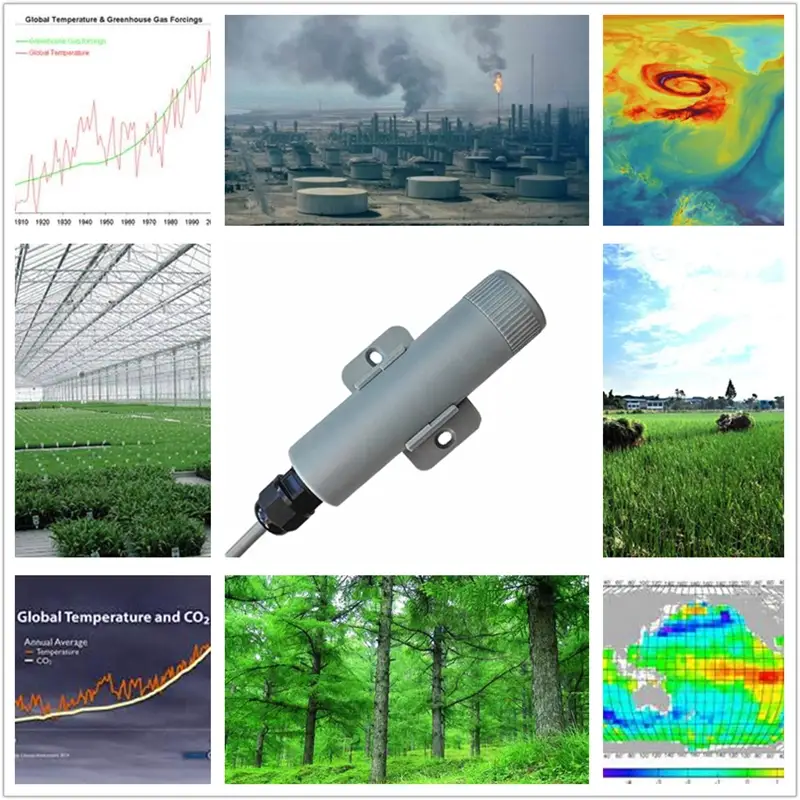
5. Application Scenarios
Greenhouse CO2 monitoring
Smart agriculture environmental monitoring
Livestock and poultry farm monitoring
HVAC ventilation control
Indoor air quality monitoring
Meteorological observation
Environmental monitoring stations
Laboratory CO2 monitoring
Building automation
Fresh air and ventilation systems
Remote IoT monitoring platforms
Data logging and multi-point monitoring networks
FAQ
Q
1. What does the JWGas CD Digital CO2 Sensor measure?
A
JWGas-CD(Z19) sensor measures carbon dioxide concentration, temperature, humidity, and dew point for greenhouse, HVAC, environmental monitoring, agriculture, livestock farming, and laboratory applications.
Q
2. What is the CO2 measurement range?
A
The CO2 measurement range is 0 to 5000 ppm, with a resolution of 1 ppm.
Q
3. Does JWGas-CD(Z19) support RS485 Modbus RTU?
A
Yes. JWGas-CD(Z19) supports RS485 Modbus RTU, making it suitable for greenhouse controllers, HVAC controllers, PLC systems, IoT gateways, and cloud monitoring platforms.
Q
4. Can JWGas-CD(Z19) work with SDI-12 data loggers?
A
Yes. JWGas-CD(Z19) supports SDI-12 V1.3, which is suitable for meteorological data loggers, environmental stations, agricultural monitoring systems, and low-power field installations.
Q
5. Is it suitable for greenhouse CO2 monitoring?
A
Yes. it is suitable for greenhouse CO2 monitoring, smart agriculture, plant growth environments, and CO2 control systems.
Q
6. Does the sensor measure temperature and humidity?
A
Yes. The sensor measures temperature from -10 to 60°C and humidity from 0 to 100% RH, and it can also output dew point.
Q
7. What is the CO2 accuracy of this sensor?
A
The accuracy is ±50 ppm + 2.5% of reading from 400–1000 ppm, ±50 ppm + 3% of reading from 1001–2000 ppm, and ±40 ppm + 5% of reading from 2001–5000 ppm.
Q
8. Does it support automatic calibration?
A
The sensor outputs lightning count since last read, noise count, disturbance count, latest distance estimate, latest lightning energy, 10-minute strike count, 30-minute strike count, 60-minute strike count, 60-minute noise count, and 60-minute disturbance count.
Q
9. Can the sensor be force calibrated?
A
Yes. it supports forced calibration in a known, uniform, and stable CO2 concentration environment. Outdoor air around 400 ppm may be used as a reference if no standard gas is available.
Q
10. Is it suitable for battery-powered systems?
A
The disturbance rejection function helps reduce false detection caused by man-made electromagnetic noise. Users can adjust parameters such as noise floor level, watchdog threshold, and spike rejection.
Q
11. What power supply does the sensor require?
A
The sensor supports 9–28 V DC power input, which is compatible with most data loggers, controllers, and IoT gateways.
Q
12. Does it support OEM or ODM customization?
A
Yes. it supports OEM and ODM customization, including communication interface, cable length, labeling, enclosure integration, and system integration requirements.
 +86 13520127780
  info@jingelway.com