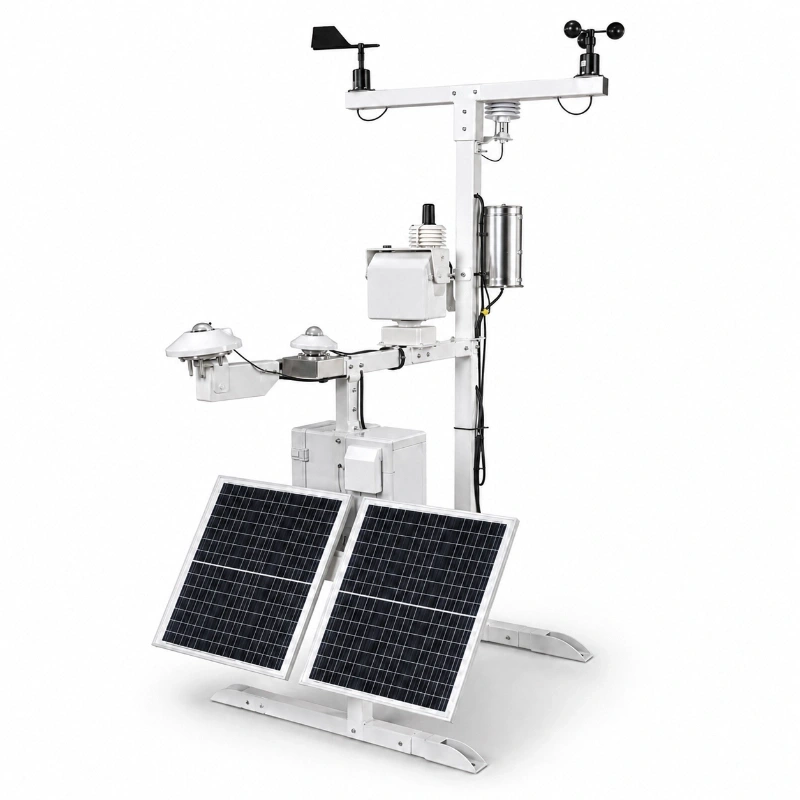
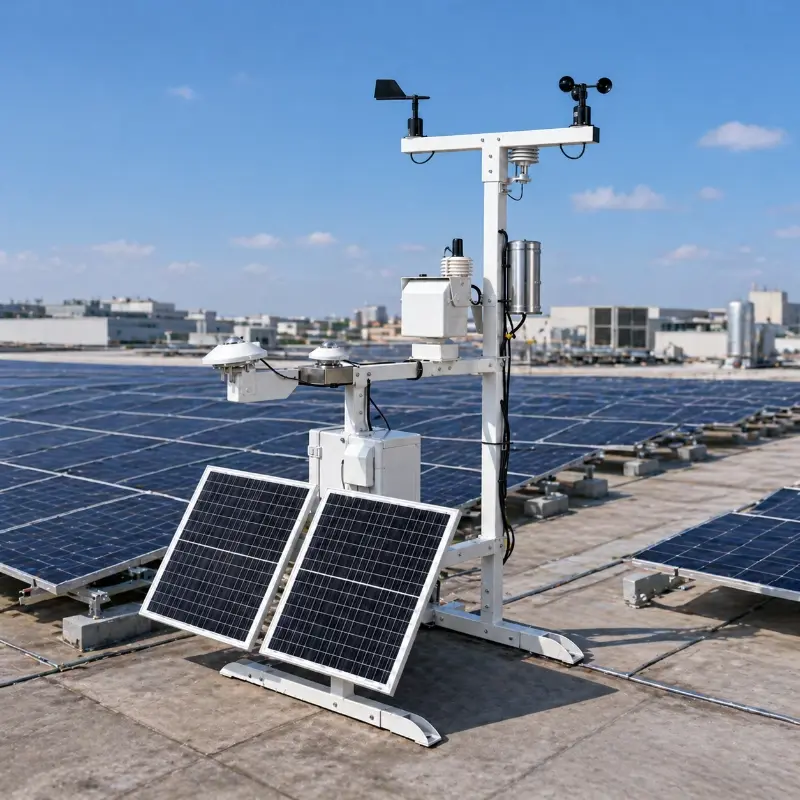
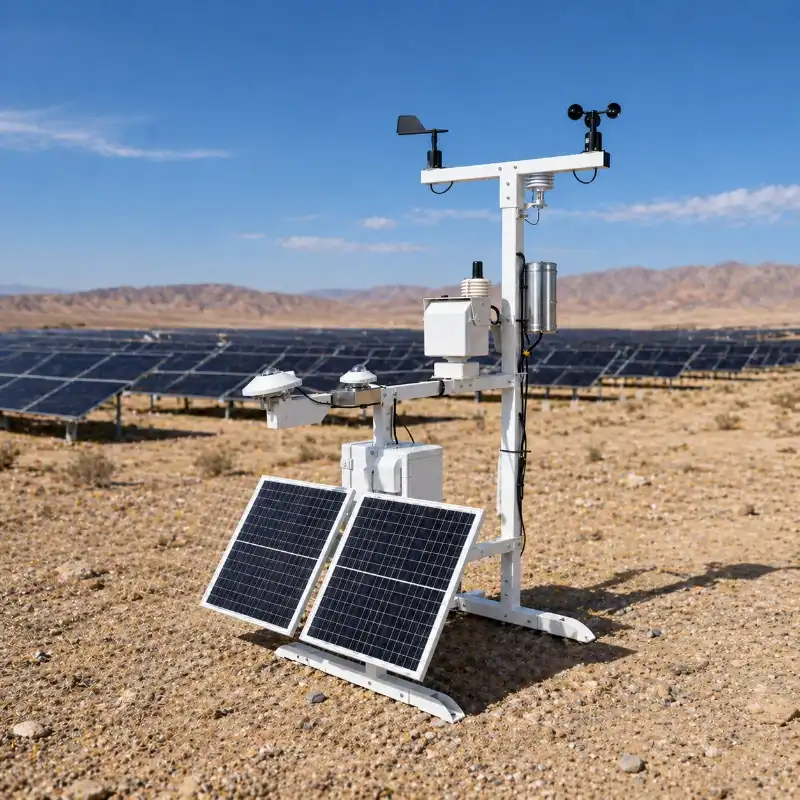
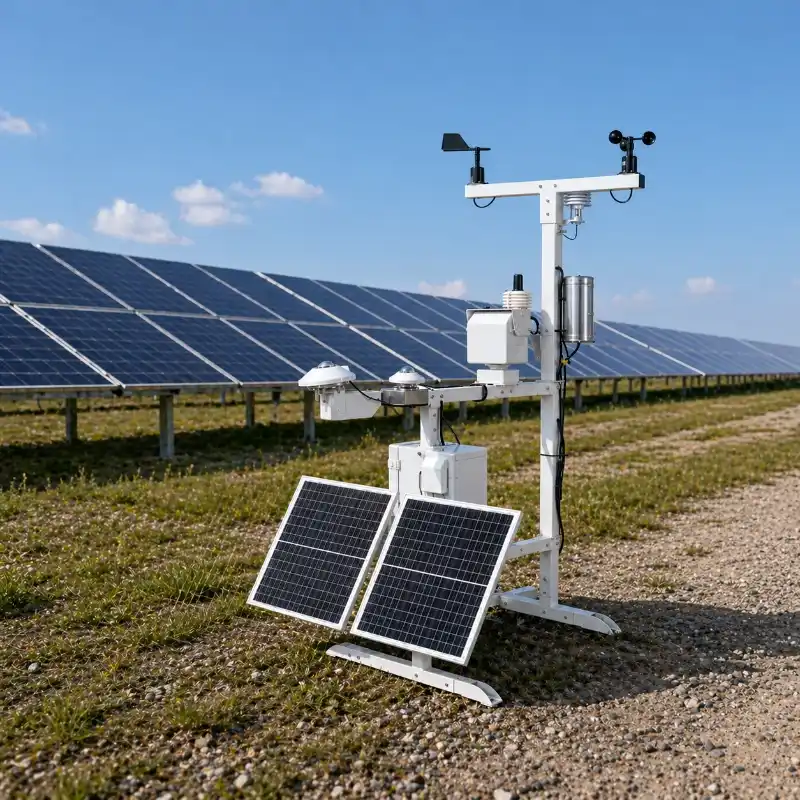
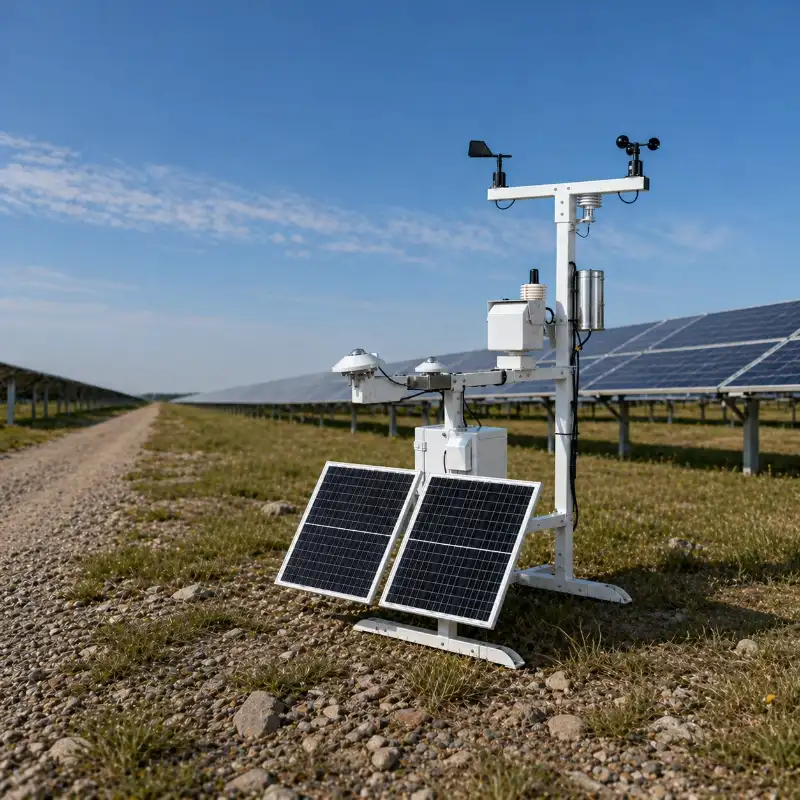
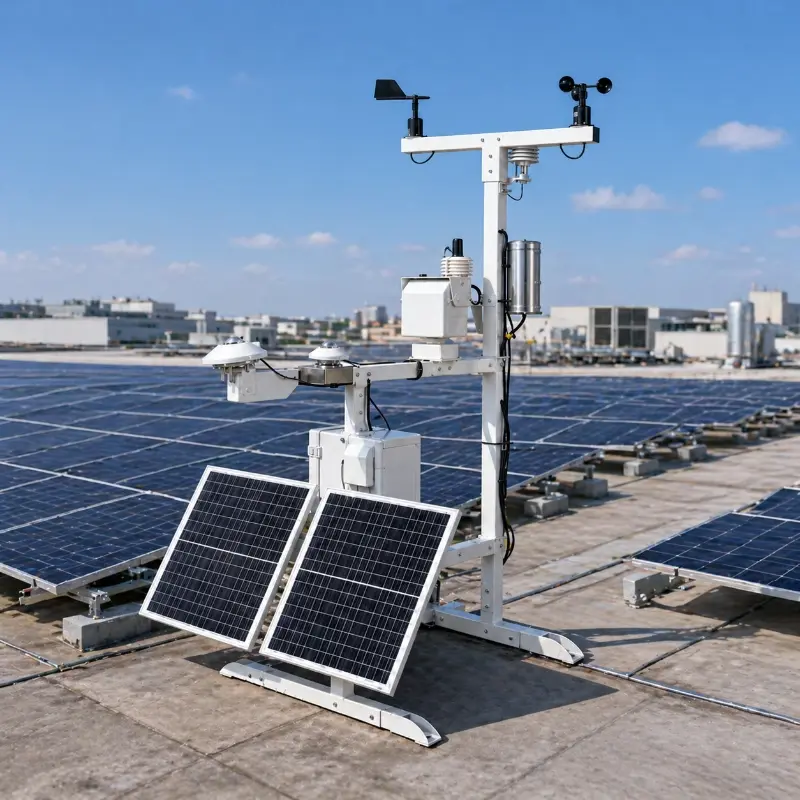
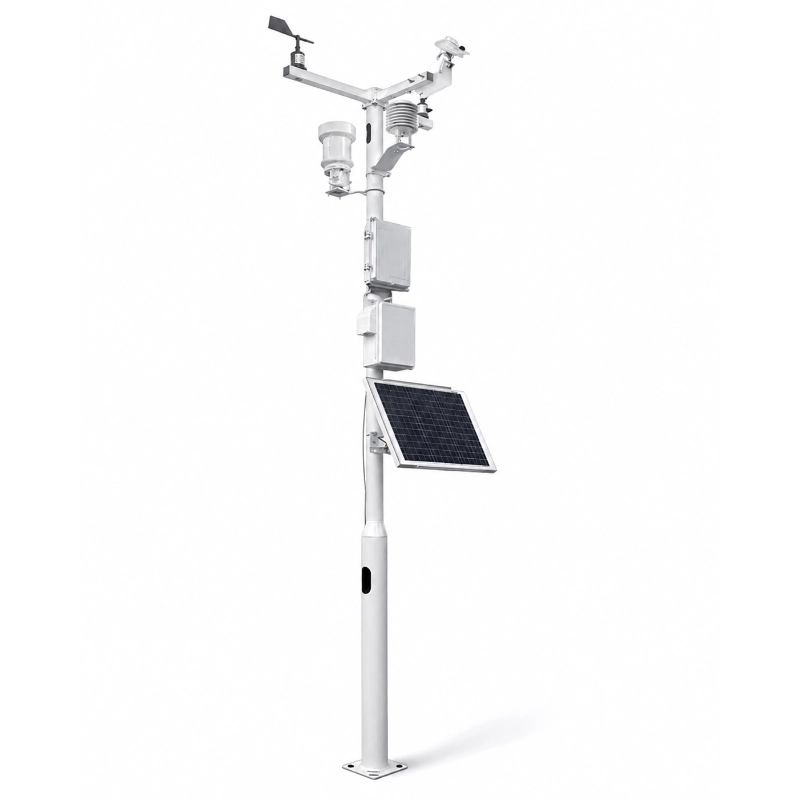
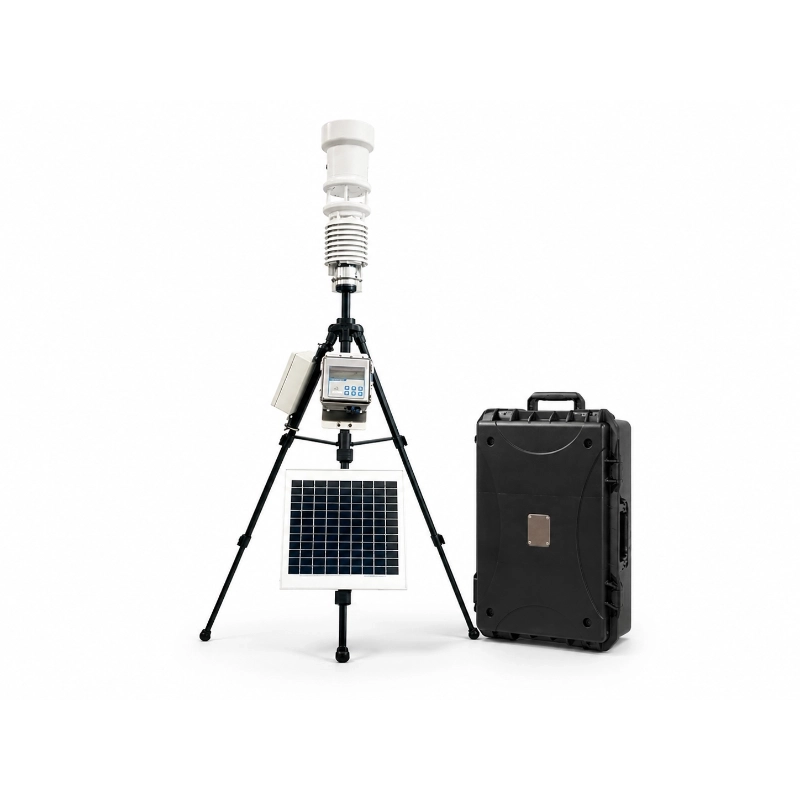
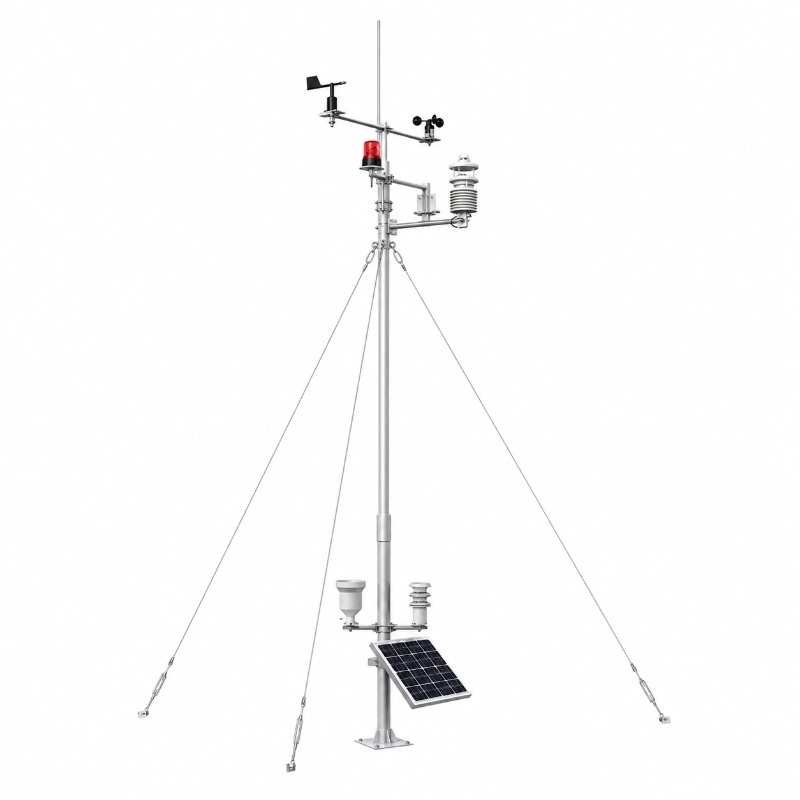
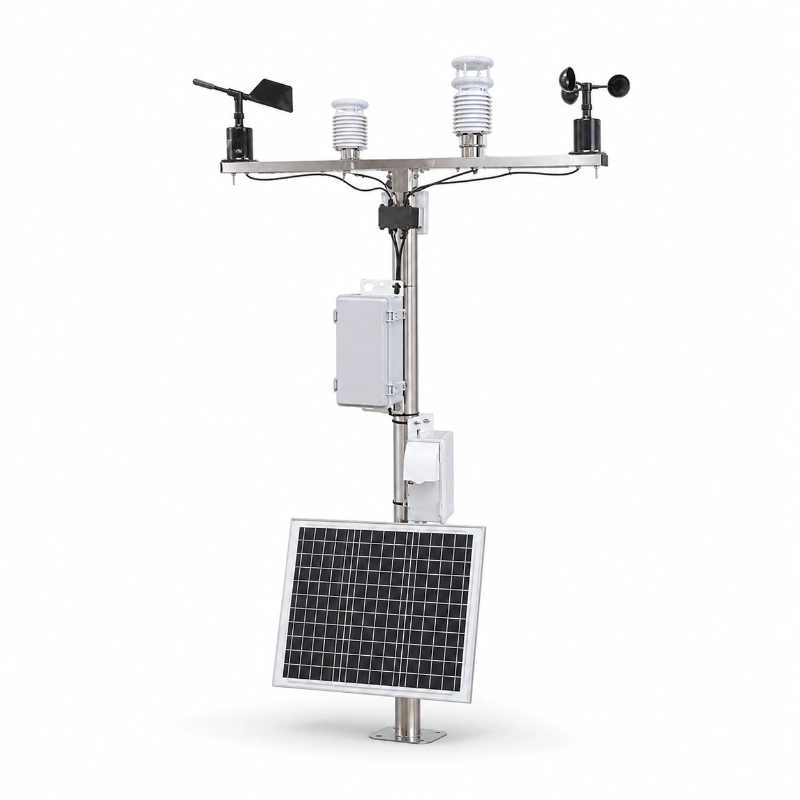
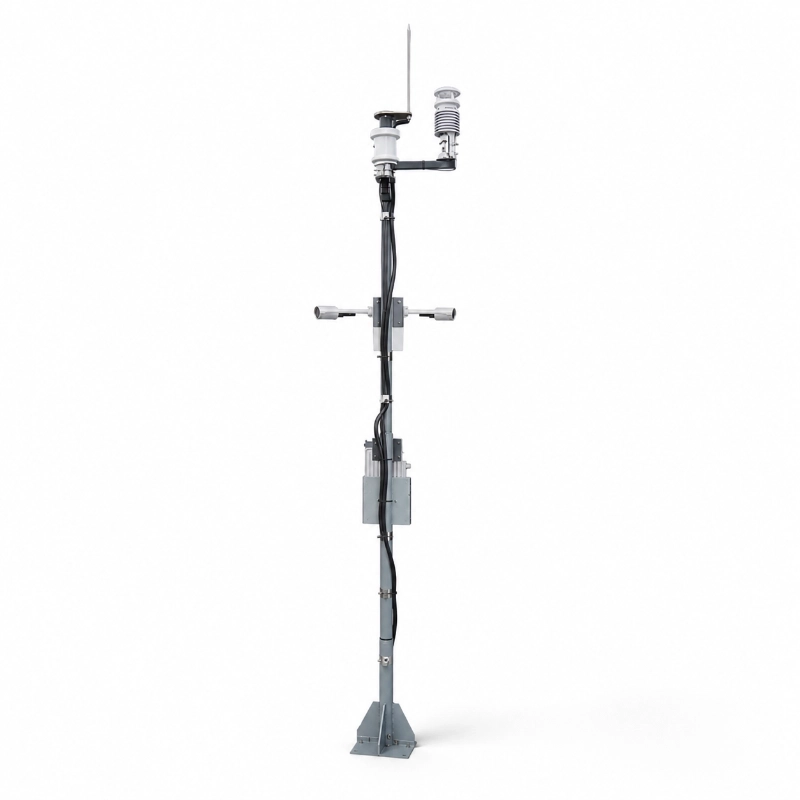
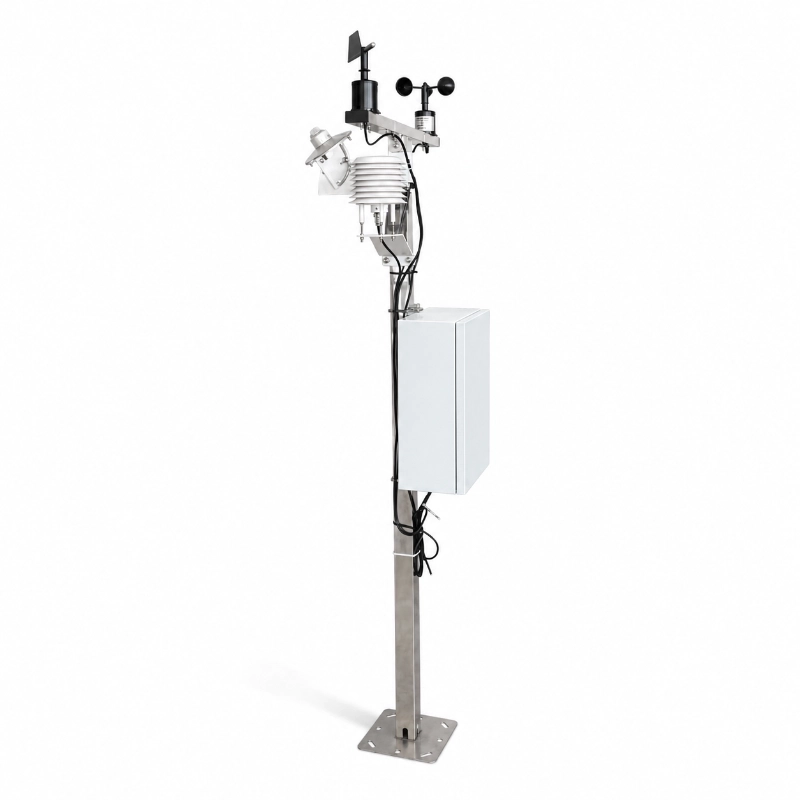
JW-QTS(LC5) Solar Weather Monitoring Station is an integrated photovoltaic environmental monitoring system designed for solar power plants, PV farms, rooftop solar projects, and renewable energy monitoring applications. It combines solar power supply, meteorological sensing, data logging, and remote communication in one compact solution.
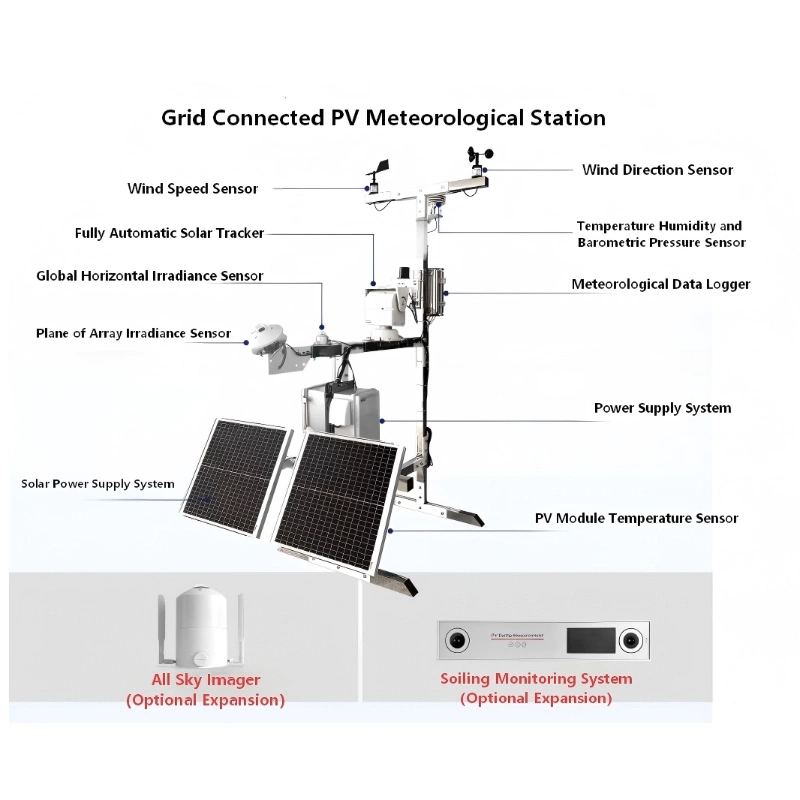
This system can monitor key environmental and PV performance parameters such as ambient temperature, humidity, wind speed, wind direction, atmospheric pressure, module temperature, irradiance, sunshine duration, rainfall, and optional dust monitoring. It supports RS485, RJ45, 4G, and HTTP communication, making it ideal for smart solar plant management and energy assessment.
2. Product Overview
JW-QTS(LC5)Solar Weather Monitoring Station is a modern environmental monitoring system developed for the photovoltaic industry. It uses solar energy as part of its power solution while integrating precision meteorological sensors and intelligent data acquisition technology. The station is specifically designed to help solar plant owners, EPC contractors, O and M teams, and energy managers collect reliable site data for daily operation, performance analysis, and compliance reporting.
By monitoring environmental conditions together with irradiance and module temperature, the system helps users evaluate the relationship between weather variables and power generation performance. It is ideal for utility scale solar farms, distributed rooftop PV systems, hybrid renewable projects, and research applications.
Parameter Name
Measuring Range
Accuracy
Resolution
Ambient Temperature
-40 to 125°C
±0.2°C
0.1°C
Ambient Humidity
0 to 100%RH
±2%RH below 80%RH and ±3%RH above 80%RH
0.1%RH
Wind Speed
0 to 60 m/s
±3% plus 0.3 m/s
0.1 m/s
Wind Direction
0 to 360°
±3°
1°
Atmospheric Pressure
300 to 1100 hPa
±0.3 hPa
0.1 hPa
Module Temperature
-50 to 150°C
±0.2°C
0.1°C
Tilted Global Irradiance
0 to 4000 W/m²
≤2%
1 W/m²
Horizontal Global Irradiance
0 to 4000 W/m²
≤2%
W/m²
Direct Irradiance
0 to 2000 W/m²
≤2%
1 W/m²
Diffuse Irradiance
0 to 2000 W/m²
≤2%
1 W/m²
Sunshine Duration
0 to 24 h
±0.1 h
0.1 h
Dust Monitoring
50 to 100%
90 to 100% accuracy ±1% plus 1%FS 80 to 90% accuracy ±3% 50 to 80% accuracy ±5%
0.10%
Rainfall
0 to 999 mm
≤4%
0.2 mm or 0.5 mm
3.Standard Components
4. Communication and Data Functions
Communication Options: RS485 RJ45 4G HTTP
Remote Monitoring: Supports online data transmission and remote access
Time Synchronization: GPS and Beidou automatic calibration
Power Supply: Solar powered with optional mains backup
Commissioning Method: Bluetooth debugging tool supported
Data Storage: Continuous storage for more than three months
System Expansion: Optional all sky imager and dust monitoring module
5. Application Scenarios
Utility scale photovoltaic power plants
Rooftop solar power systems
Distributed solar energy projects
PV performance testing and evaluation
Solar resource assessment
Renewable energy research
Smart energy management systems
Environmental monitoring for solar sites
Grid connected solar station assessment
PV operation and maintenance management
FAQ
Q
1. What is a solar weather monitoring station used for?
A
A solar weather monitoring station is used to measure environmental and irradiance data at photovoltaic sites. It helps analyze weather conditions, solar radiation, and plant operating performance.
Q
2. What parameters can this system monitor?
A
It can monitor ambient temperature, humidity, wind speed, wind direction, air pressure, module temperature, irradiance, sunshine duration, rainfall, and optional dust parameters.
Q
3. Is this system suitable for utility scale solar farms?
A
Yes. It is designed for utility photovoltaic power plants, distributed PV projects, rooftop installations, and renewable energy monitoring sites.
Q
4. Can JW-IoT provide customized solar weather monitoring solutions?
A
Yes. JW-IoT can provide customized solar weather monitoring station solutions according to your project requirements, communication method, power supply mode, and sensor configuration.
Q
5. Does the station support remote communication?
A
Yes. It supports multiple communication methods including RS485, RJ45, 4G, and HTTP for remote data transmission and online monitoring.
Q
6. Can JW-IoT support OEM or project based integration?
A
Yes. JW-IoT supports OEM, ODM, and project based integration services for photovoltaic monitoring stations, including customized branding, parameter selection, and platform integration.
Q
7. What power supply methods are available?
A
The system supports solar power supply and can also support automatic switching between mains power and solar power for uninterrupted operation.
Q
8. Is the system easy to install and maintain?
A
Yes. The station is designed for field installation and supports Bluetooth commissioning, which makes setup, debugging, and maintenance more convenient.
Q
9. Why choose JW-IoT for photovoltaic monitoring projects?
A
JW-IoT offers professional environmental monitoring products, flexible customization, and technical support for photovoltaic projects, helping customers build efficient and reliable monitoring systems.
 +86 13520127780
  info@jingelway.com