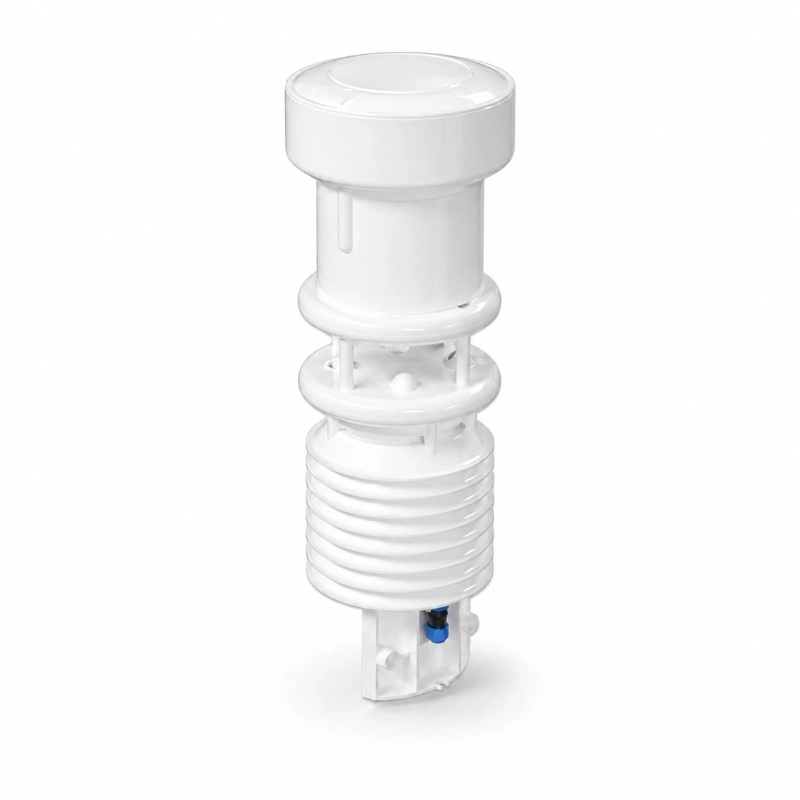
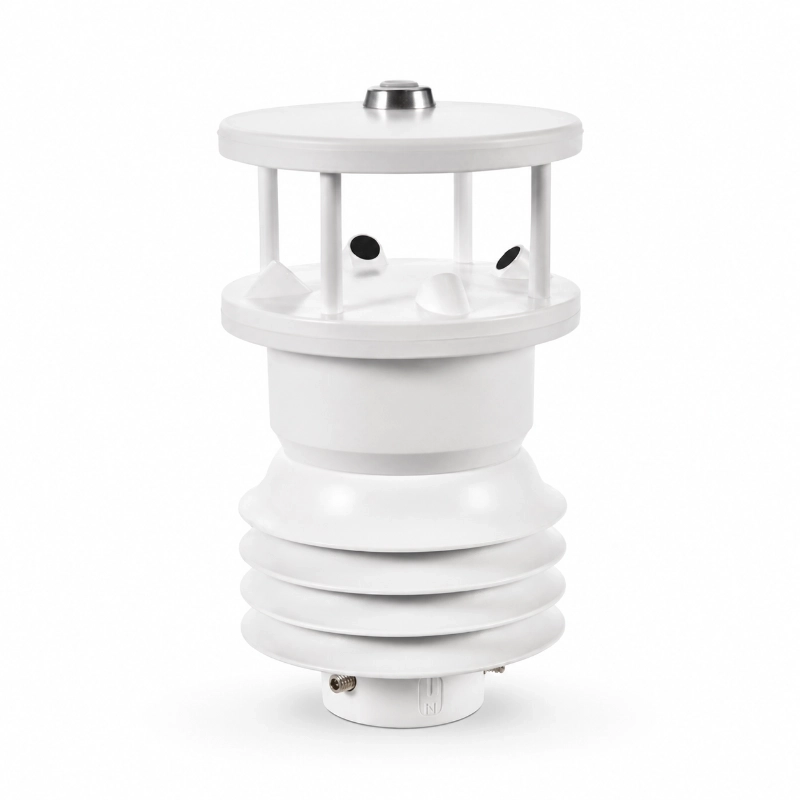
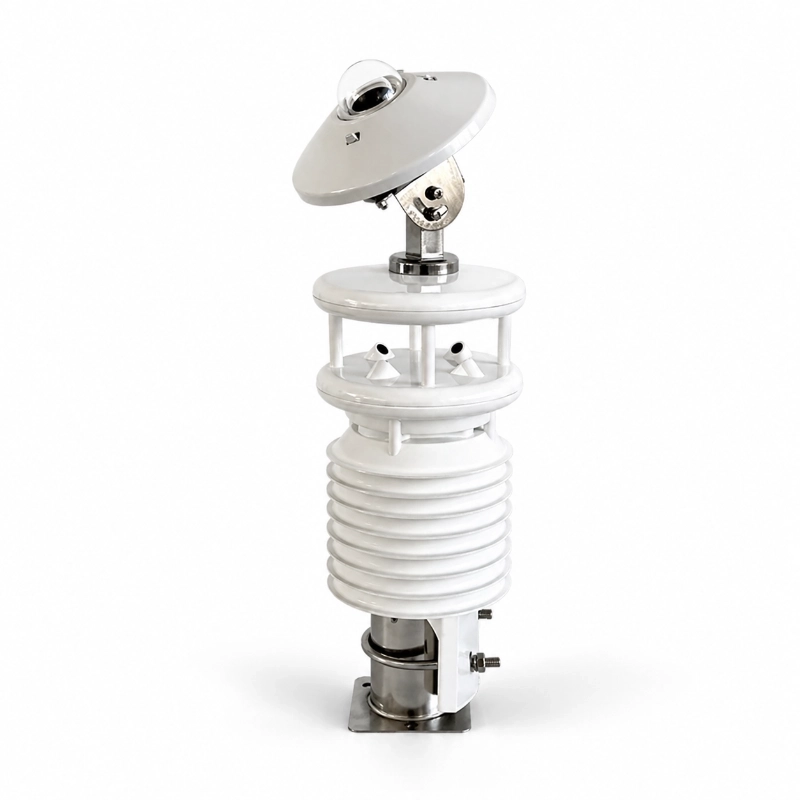
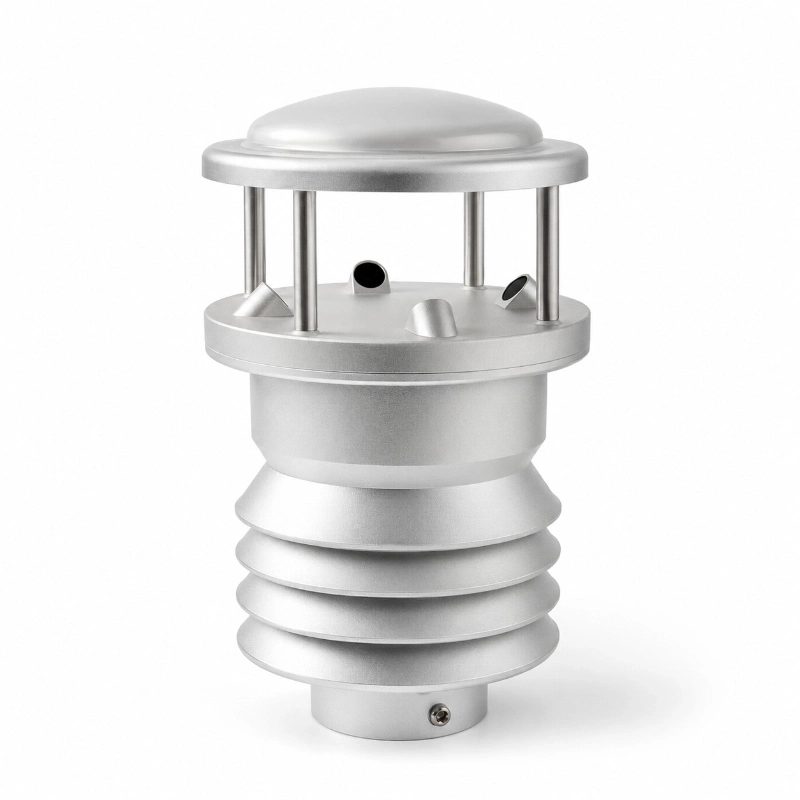
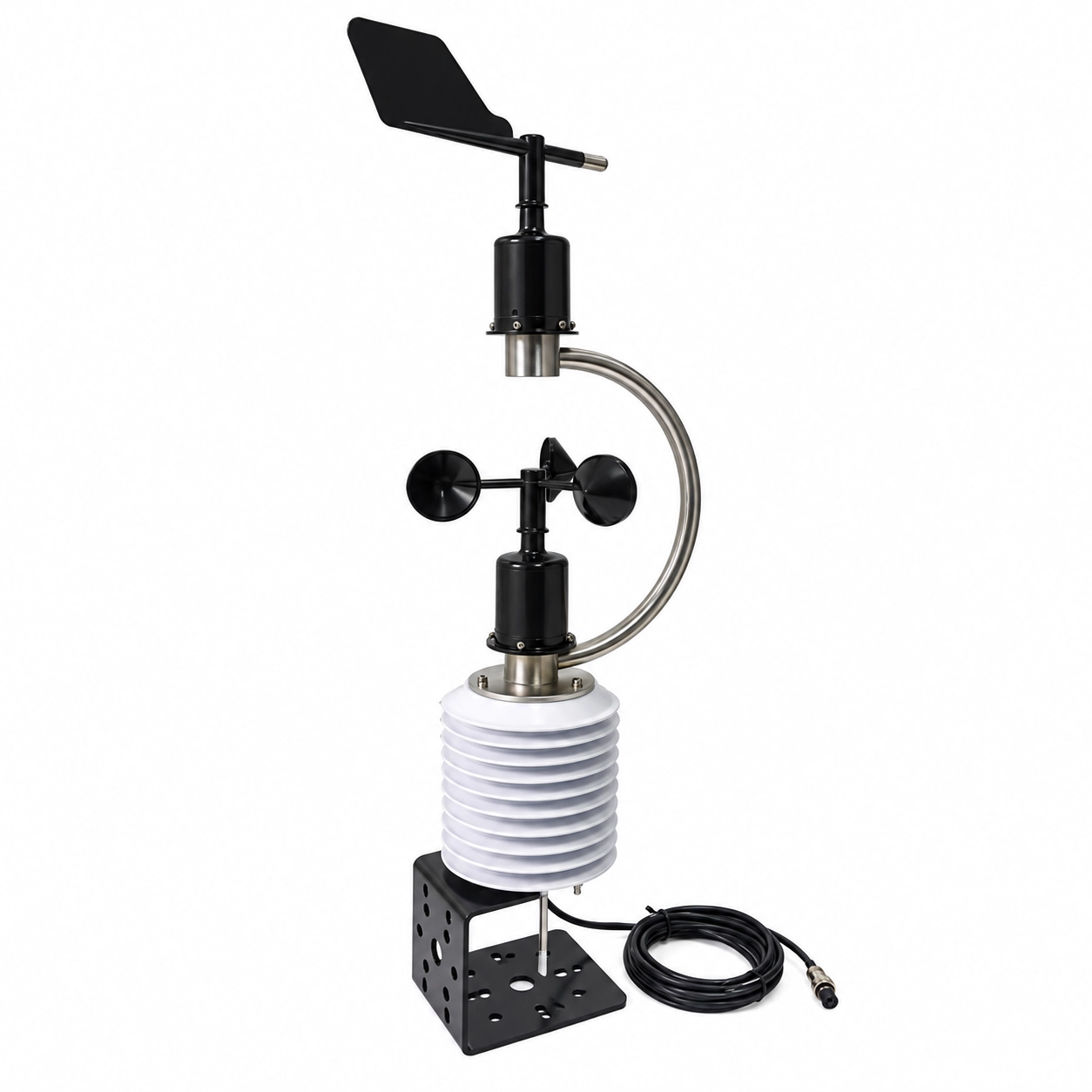
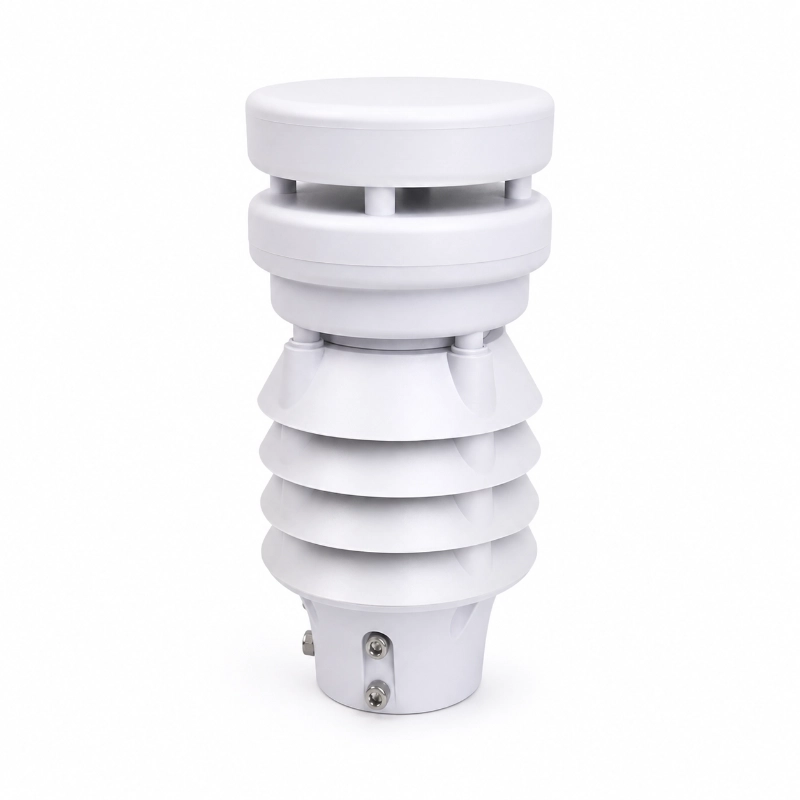
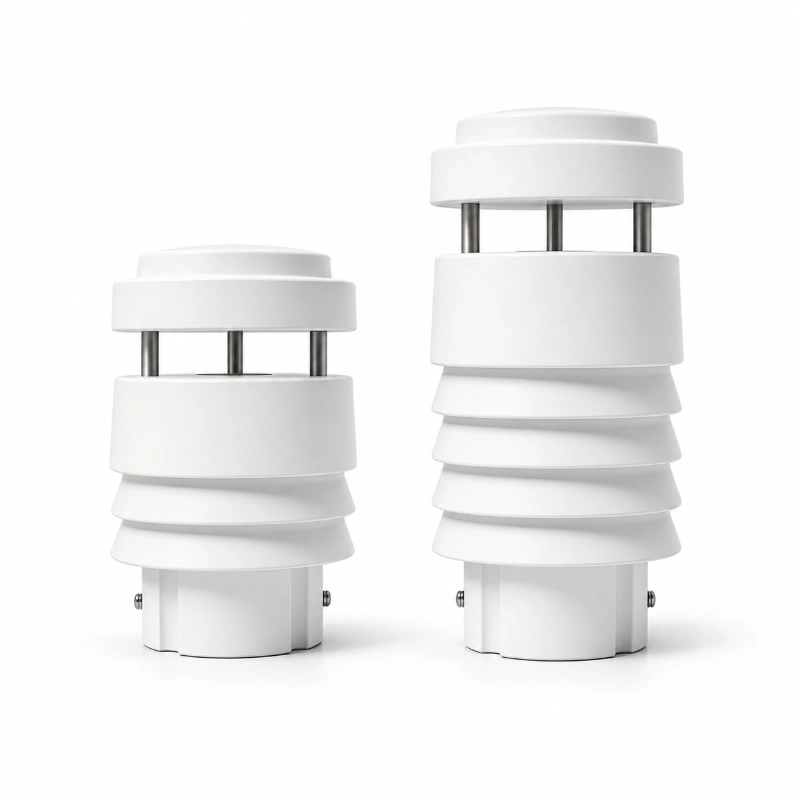
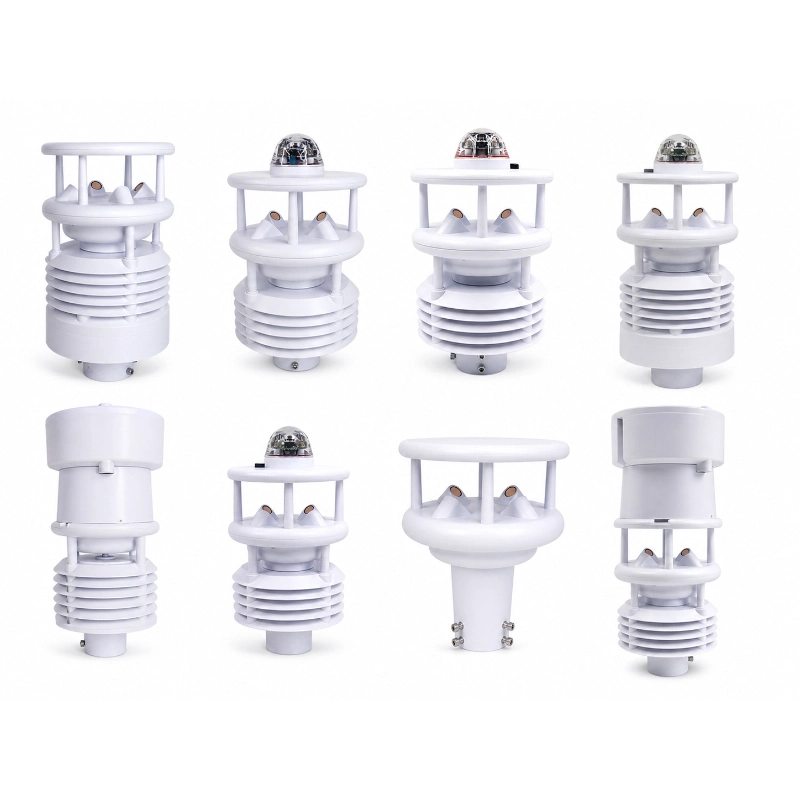
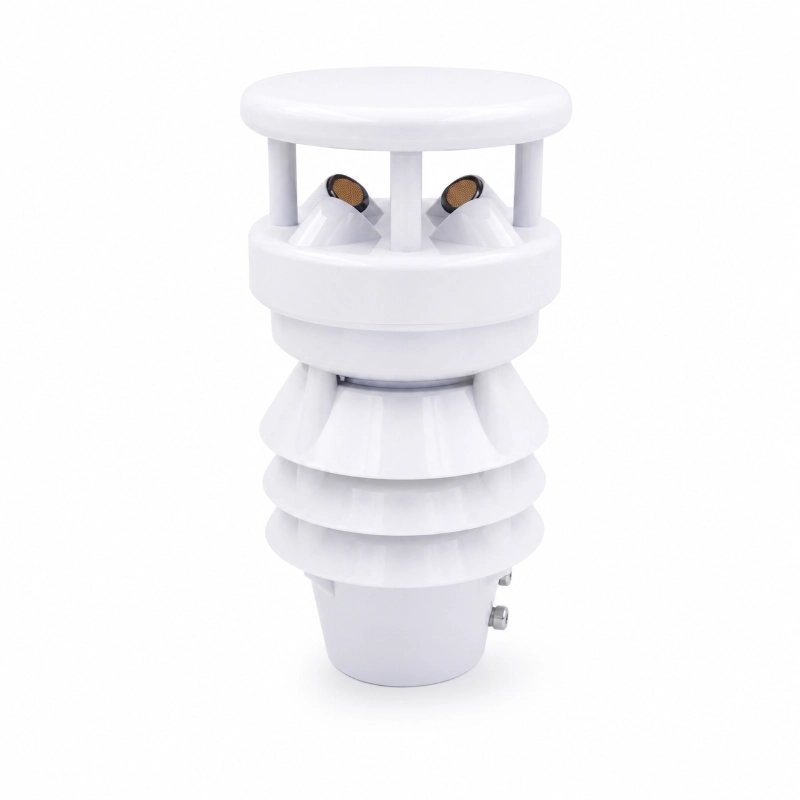
The JW-IWS-DC(LC31) All-in-One Integrated Weather Station is a compact multi-parameter weather monitoring device developed for continuous outdoor environmental data collection.
By integrating multiple meteorological sensors into one compact housing, the station reduces the number of separate instruments, cables, mounting brackets and field connections required at a monitoring site. It is suitable for environmental monitoring, precision agriculture, smart city infrastructure, campuses, industrial parks, ecological observation and distributed IoT weather networks.
The integrated structure makes the station particularly useful for projects that require multiple monitoring points, limited installation space or lower long-term maintenance requirements.
What Is an All-in-One Integrated Weather Station?
An all-in-one integrated weather station combines several meteorological sensing elements inside one compact device.
Unlike a conventional split-type weather station, which normally requires separate wind, temperature, humidity, pressure, rainfall and radiation sensors, an integrated station can collect several weather parameters through one enclosure and one mounting position.
This design can reduce installation time, cable routing, mounting complexity and the number of exposed electrical connections. It is therefore well suited to distributed weather monitoring networks and IoT projects where many monitoring points must be deployed efficiently.
Technical Parameters
Parameter
Measurement Range
Resolution
Accuracy
Air Temperature
-50°C to 90°C
0.1°C
±0.3°C
Relative Humidity
0 to 100% RH
1% RH
±3% RH
Dew Point
-50°C to 50°C
0.1°C
±0.3°C
Wind Direction
0 to 359°
1°
±3°
Wind Speed
0 to 60 m/s
0.1 m/s
±0.3 + 0.03V
Atmospheric Pressure
300 to 1100 hPa
0.1 hPa
±0.3 hPa
Rainfall
0 to 999.9 mm
0.1, 0.2, 0.5 mm
±4%
Solar Radiation
0 to 2500 W/m²
1 W/m²
≤5%
UV Radiation
0 to 1000 W/m²
1 W/m²
≤5%
Illuminance
0 to 200000 Lux
1 Lux
≤5%
Sunshine Duration
0 to 24 h
0.1 h
±0.1 h
Other Parameters
Expandable
Customizable
Customizable
Parameters Available for Monitoring
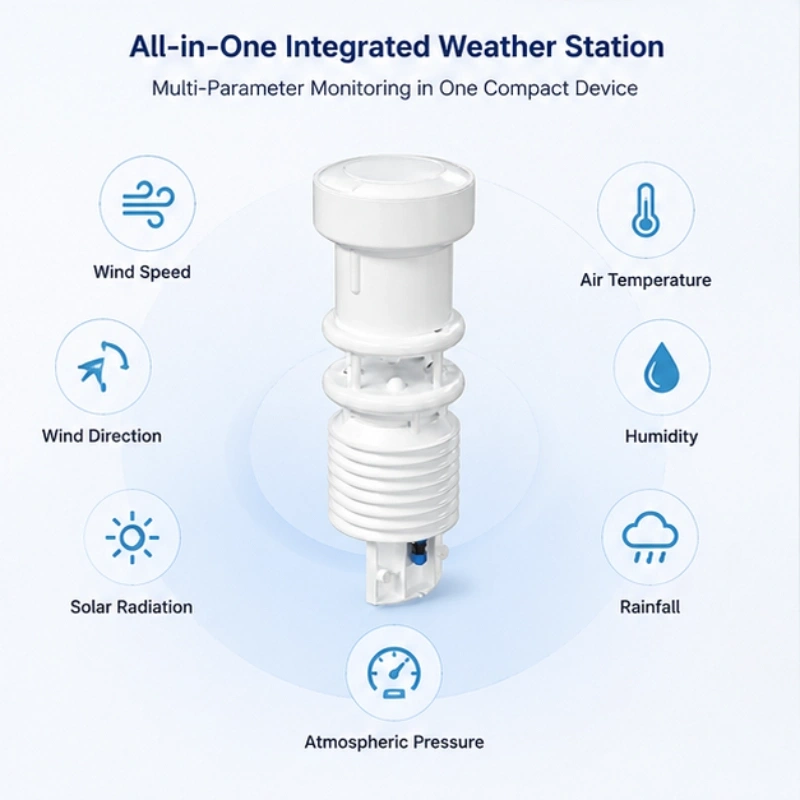
Depending on the selected configuration, the JW-IWS-DC(LC31) can be used to monitor a combination of meteorological and environmental parameters, including:
Air temperature
Relative humidity
Wind speed
Wind direction
Atmospheric pressure
Rainfall
Solar radiation
Illuminance
Other project-specific environmental parameters
The exact parameter combination should be selected according to the project objective, required measurement method and site conditions.
For applications requiring a different sensor combination, JW-IoT can assist with model selection and system configuration.
Compact Multi-Parameter Design
The integrated structure places several sensing functions in a single compact housing. This helps reduce the physical footprint of the monitoring system and makes the device suitable for installation on:
Weather monitoring poles
Smart light poles
Rooftops
Agricultural fields
Greenhouse surroundings
Orchards and plantations
Campuses
Industrial parks
Ecological monitoring sites
Urban environmental monitoring points
Compared with a system made from many separate sensor assemblies, the all-in-one design can reduce the number of brackets, cables and junction points required in the field.
Ultrasonic Wind Monitoring
Models equipped with ultrasonic wind measurement determine wind speed and wind direction without conventional rotating wind cups or mechanical wind vanes.
The absence of large moving wind components helps reduce mechanical wear and makes the station suitable for continuous monitoring in distributed outdoor projects.
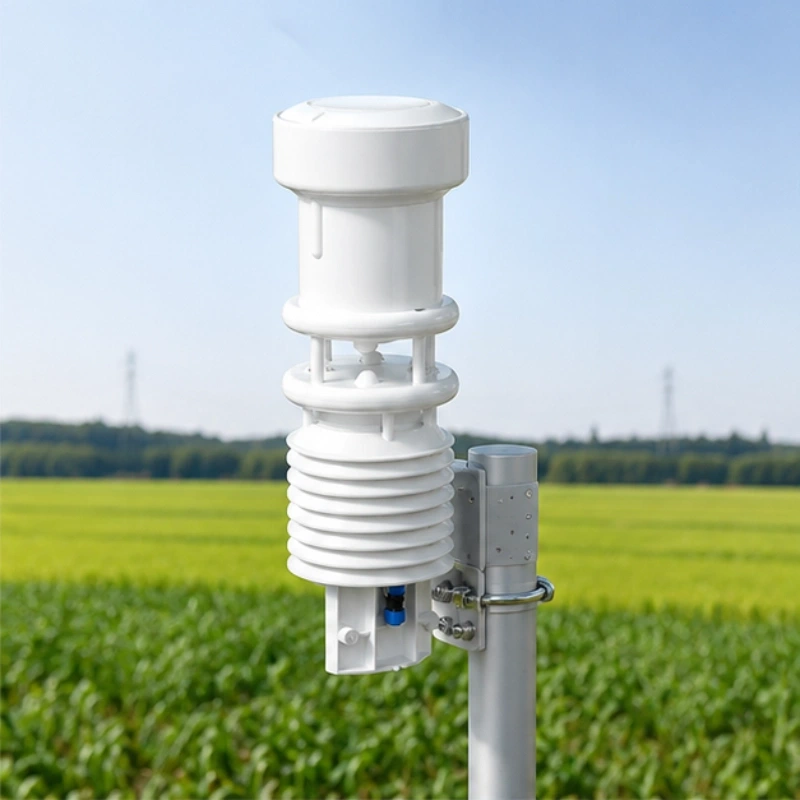
Correct installation remains important. The weather station should be mounted vertically in an open position, away from walls, trees, buildings and other objects that may disturb airflow.
RS485 Modbus and IoT System Integration
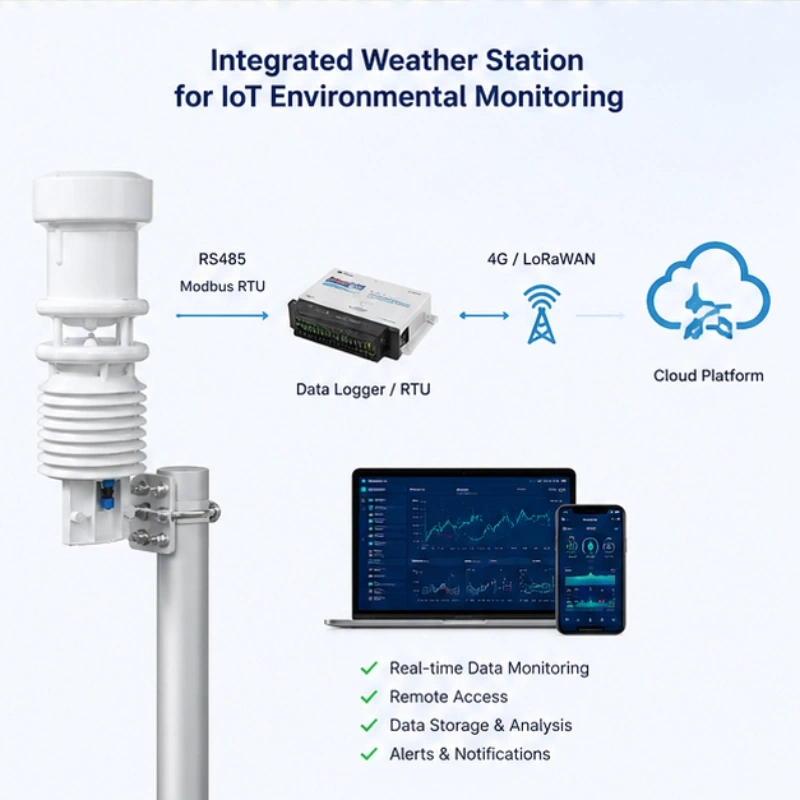
The integrated weather station can be connected to a data logger, RTU, PLC or IoT gateway through the communication interface provided by the selected model.
A typical remote weather monitoring architecture includes:
Integrated Weather Station → RS485 Modbus → Data Logger or RTU → 4G LTE or LoRaWAN → Cloud Platform
This architecture allows users to collect field data, transmit it to a remote server and view real-time or historical information through a web-based monitoring platform.
Communication functions depend on the selected sensor, data logger and gateway configuration.
All-in-One Weather Station vs Split-Type Weather Station
Comparison Item
All-in-One Weather Station
Split-Type Weather Station
Sensor arrangement
Multiple sensors in one housing
Separate sensors and brackets
Installation
Faster and more compact
More mounting and wiring work
Field cabling
Fewer cable connections
Multiple sensor cables
Space requirement
Low
Relatively high
Distributed deployment
Well suited
More complex
Sensor flexibility
Based on integrated configurations
Highly flexible individual selection
Component replacement
Integrated module servicing
Individual sensors can be replaced
Typical application
Smart cities, farms and distributed monitoring
Professional meteorological and customized stations
An all-in-one weather station is generally suitable when compact deployment, simple installation and multi-point monitoring are priorities.
A split-type weather station may be more appropriate when the project requires specialized sensor heights, independent sensor positioning or highly customized meteorological instruments.
A complete environmental weather monitoring system may include:
JW-IWS-DC(LC31) integrated weather station
Mounting pole and installation brackets
Data logger, RTU or IoT gateway
Solar panel and rechargeable battery
4G LTE or LoRaWAN communication module
Outdoor control cabinet
Cloud monitoring platform
API or MQTT interface
Optional external environmental sensors
The required components depend on power availability, communication coverage, sampling interval and project deployment conditions.
Installation Recommendations
For reliable weather data, the installation site should be selected carefully.
Choose an Open Location
Install the station away from buildings, trees, fences, ventilation outlets and other structures that can affect airflow or create abnormal temperature conditions.
Keep the Device Vertical
The station should be mounted vertically on a stable pole or bracket. Incorrect alignment may affect wind, rainfall or radiation measurements.
Avoid Local Heat Sources
Do not install the sensor directly above metal roofs, air-conditioning outlets, exhaust systems or other surfaces that generate abnormal heat.
Consider Sensor Height
The installation height should be determined according to the monitored parameter, site standard and project objective. Agricultural, urban and research projects may use different mounting heights.
Protect Cables and Connectors
Outdoor cables should be fixed securely and protected from pulling, standing water, sharp bends and long-term ultraviolet exposure.
Verify Communication Before Final Installation
RS485 addresses, baud rates, Modbus registers and data logger settings should be tested before the station is installed permanently.
Before selecting an integrated weather station, confirm the following project requirements:
Parameters that must be measured
Required measurement ranges and accuracy
Installation location and mounting height
Available power supply
Solar power requirements
RS485 cable distance
Sampling and reporting interval
4G LTE or LoRaWAN coverage
Cloud platform or API requirements
Number of monitoring points
Local environmental conditions
Data ownership and deployment requirements
JW-IoT can recommend an appropriate sensor and communication architecture according to these conditions.
Environmental Monitoring Applications
Smart City Microclimate Monitoring
Cities can deploy integrated weather stations on smart poles, public facilities, rooftops and urban infrastructure to create a distributed microclimate monitoring network.
Localized measurements of temperature, humidity, wind, pressure and rainfall can support urban environmental analysis, public safety, infrastructure management and smart city data platforms.
Localized weather conditions can vary between fields, orchards, greenhouses and growing zones. An integrated agricultural weather station can help collect site-specific data for:
Irrigation planning
Crop growth management
Frost risk assessment
Plant disease risk evaluation
Greenhouse ventilation decisions
Spray operation planning
Agricultural research
For a complete agricultural monitoring system, the station can be combined with soil sensors, rainfall sensors, data loggers and wireless communication devices.
The compact weather station can be installed in ecological parks, wetlands, forest areas, nature reserves and environmental monitoring zones where continuous local meteorological data is required.
Its compact design is useful for projects that need many geographically distributed monitoring points rather than one large traditional weather station.
Campus and Research Monitoring
Universities, schools and research institutions can use the station for environmental observation, teaching, field experiments and microclimate research.
RS485 or Modbus data can be integrated into local data loggers, laboratory platforms or customized research systems.
Industrial Park Monitoring
Industrial parks, construction sites, warehouses and outdoor facilities may require continuous weather data for environmental management, operational planning and safety monitoring.
The weather station can be connected to an industrial data acquisition system and combined with optional air quality, noise or gas monitoring devices where required.
FAQ
Q
1. What is an all in one weather station?
A
An all in one weather station integrates multiple meteorological sensors into one compact device for measuring weather parameters such as wind, temperature, humidity, pressure, rainfall, and radiation.
Q
2. What parameters can the DC Series weather station measure?
A
Depending on the model, it can measure wind speed, wind direction, temperature, humidity, dew point, air pressure, rainfall, solar radiation, UV radiation, illuminance, sunshine duration, and other expandable parameters.
Q
3. What output does the weather station support?
A
The product supports Modbus RTU output and can be integrated with data loggers, controllers, gateways, cloud platforms, and PC monitoring systems.
Q
4. Can JW-IoT integrate this weather station with a cloud platform?
A
Yes. JW-IoT can integrate the weather station with 4G communication, IoT gateways, cloud platforms, PC software, mobile apps, and LED monitoring screens.
Q
5. Is this weather station suitable for agriculture?
A
Yes. It is suitable for farms, greenhouses, orchards, irrigation systems, and crop research projects that require continuous weather and microclimate monitoring.
Q
6. Can the device be installed on a standard pole?
A
Yes. The product is designed for easy installation and can be mounted on 50 to 70 mm round pipes or suitable field brackets.
Q
7. Does the weather station support Bluetooth data viewing?
A
Yes. Some configurations support Bluetooth communication, allowing users to view monitoring data on-site with a mobile device.
Q
8. Can JW-IoT provide a complete weather monitoring solution?
A
Yes. JW-IoT can provide sensors, controllers, communication devices, power systems, cloud platform integration, installation guidance, and project-based weather monitoring solutions.
Q
9. Can the weather station be used for solar PV projects?
A
Yes. It can be used in solar PV plants to monitor weather and environmental conditions such as wind, temperature, humidity, radiation, rainfall, and illuminance.
Q
10. What is the power supply requirement?
A
The DC Series models shown support DC12V power supply, suitable for field monitoring and solar-powered system integration.
Q
11. Is the product expandable?
A
Yes. The system supports sensor expansion and multi-channel access, making it adaptable to different environmental monitoring requirements.
Q
12. Why choose JW-IoT for integrated weather station projects?
A
JW-IoT supports complete integrated weather station deployment, including hardware selection, communication design, platform connection, data visualization, alarm settings, and long-term project operation support.
 +86 13520127780
  info@jingelway.com