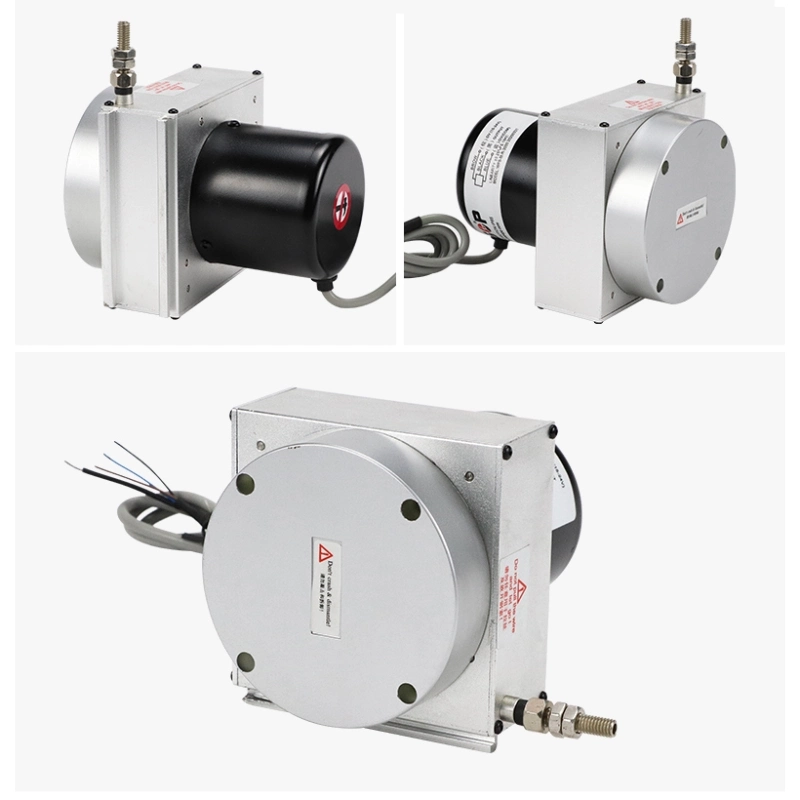
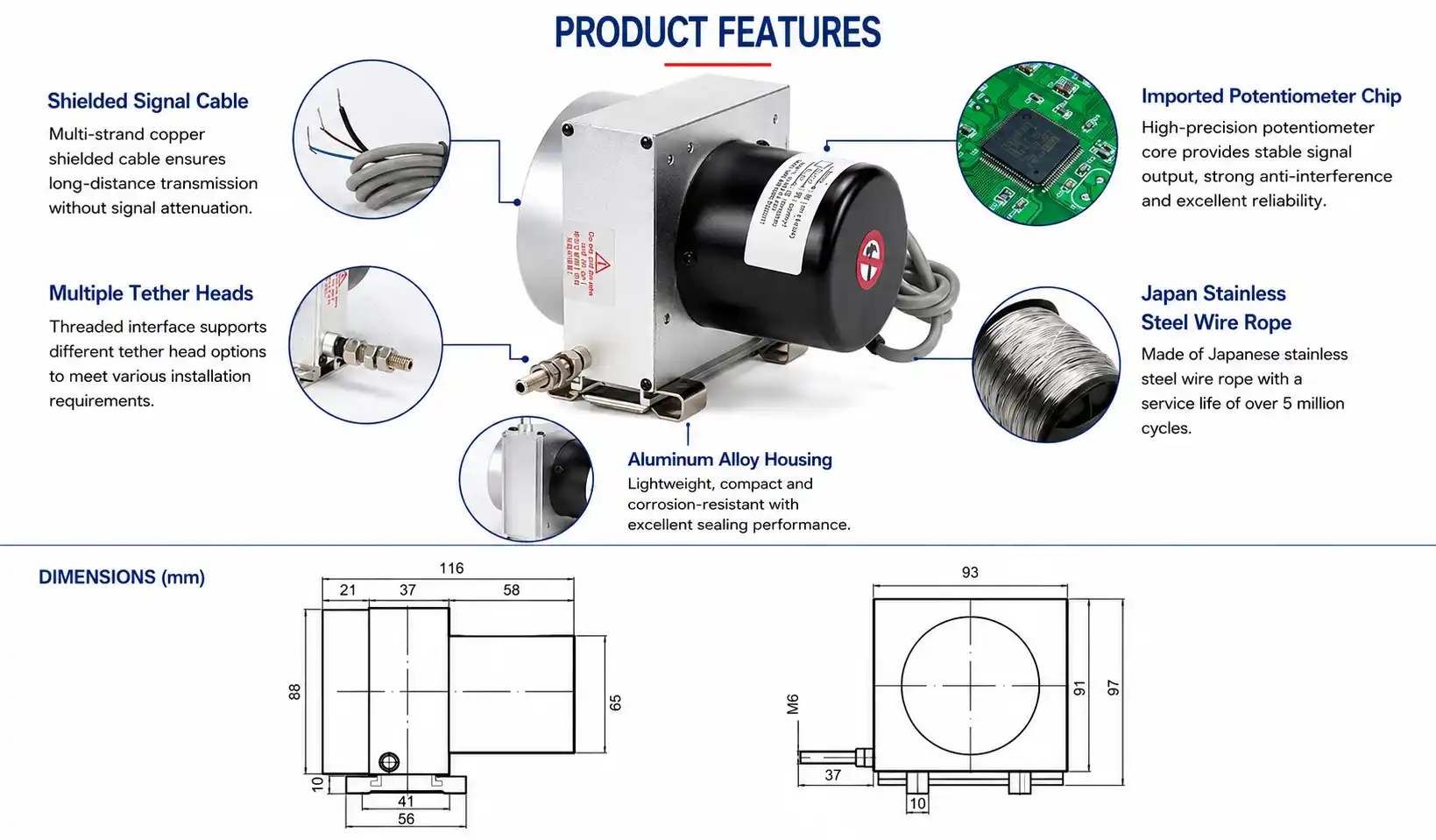
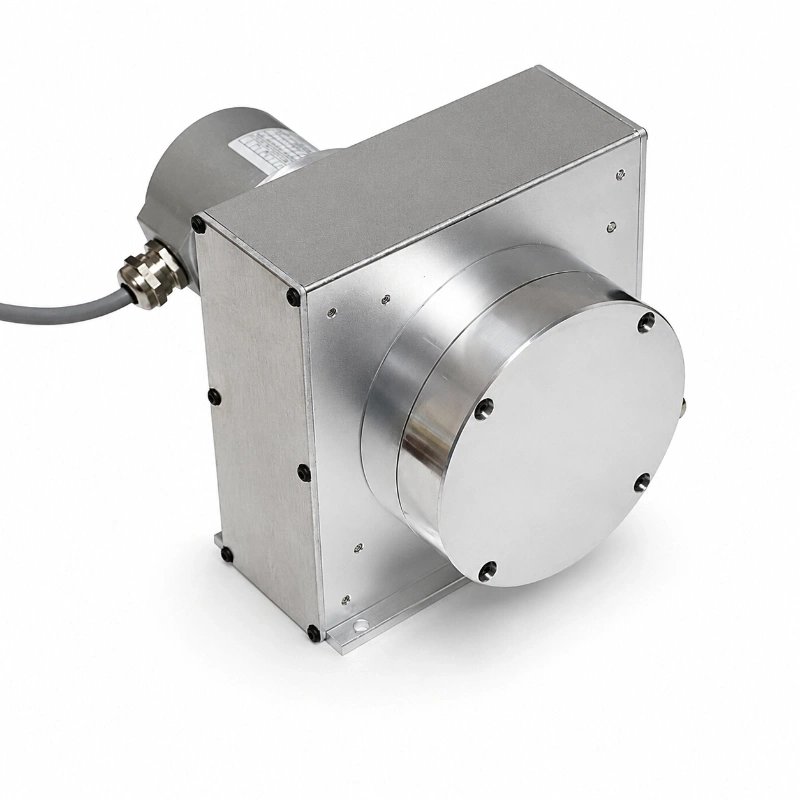
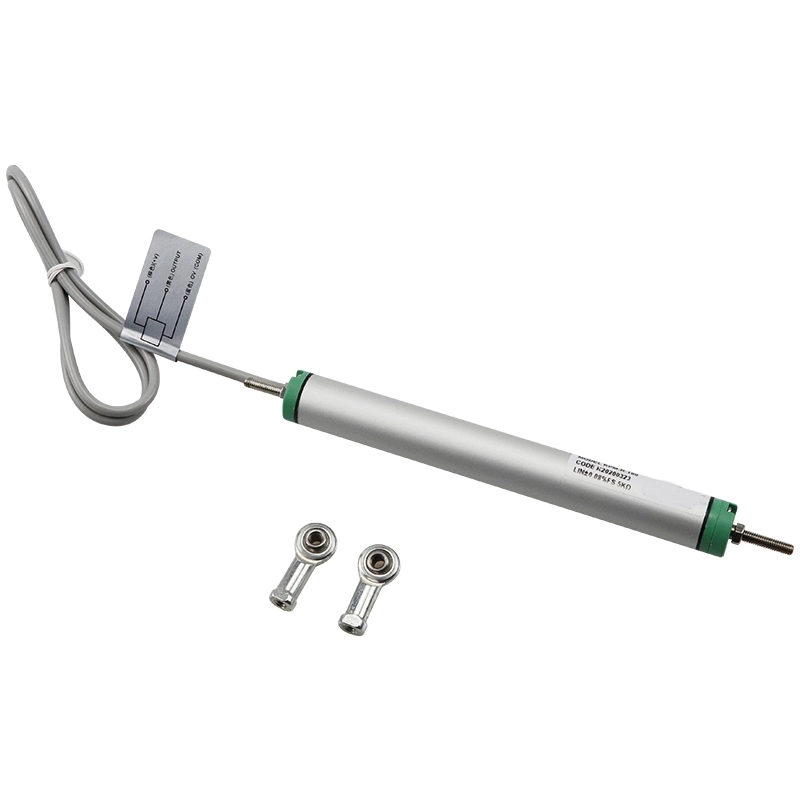
JW-WPS-M(S12)Draw Wire Displacement Sensor 2500 to 6000mm is a long-stroke linear position sensor designed for precise displacement measurement, motion feedback, and positioning control. With high repeatability, multiple output options, IP65 protection, and a compact structure, it is widely used in industrial automation, gate opening control, warehouse positioning, hydraulic equipment, and motion control systems.
2. Product Overview
JW-WPS-M(S12)draw wire displacement sensor, also known as a cable displacement sensor, string potentiometer, or wire encoder, is a precision device for measuring linear movement over longer distances. This M-type model is designed for medium to long stroke measurement and integrates the advantages of compact structure, simple installation, high accuracy, and excellent repeatability.
This product converts linear movement into electrical output signals, allowing precise monitoring and control in industrial equipment. It can be connected to display instruments, PLCs, controllers, and automation systems for real-time displacement feedback and position control.
Compared with traditional linear measurement methods, this sensor offers a smaller installation footprint, easier mounting, and flexible signal output options for different industrial systems.
Item
Specification
Product Type
Draw Wire Displacement Sensor
Model Series
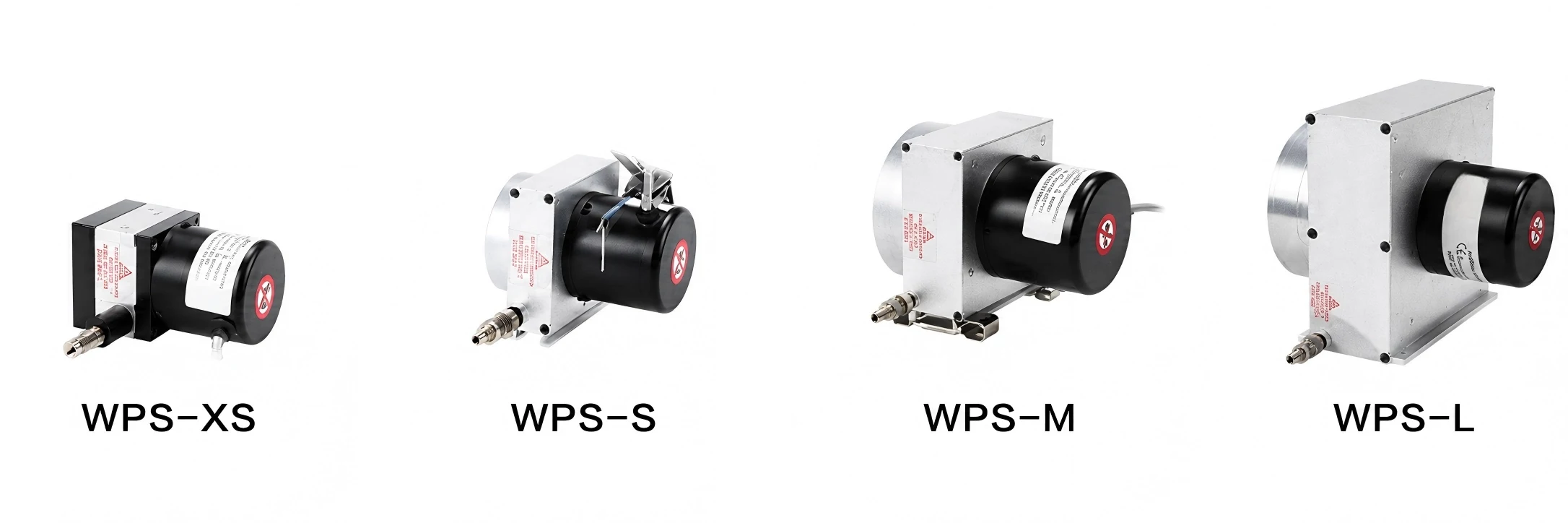
M Type
Measuring Range
2500 to 6000mm
Standard Linearity
0.25%FS
Precision Linearity
0.05% to 0.08%FS
Repeatability
0.002%FS to 0.001%FS
Current Output
4 to 20mA or 20 to 4mA
Voltage Output
0 to 10VDC or 10 to 0VDC
Resistance Output
0 to 5kΩ or 0 to 10kΩ
Pulse Output
3600 to 5000 ppr incremental AB phase or ABZ phase
Digital Output
RS485 or absolute encoder signal optional including CANopen and Profinet configurations
Supply Voltage
24VDC
Pulse Type Supply Voltage
5 to 24VDC
Pulling Force
500 ±50g
Service Life
5 million reciprocating cycles
Protection Rating
IP65
Housing Material
Aluminum alloy
Mounting Screw
M4
Tether Screw Installation
M6
Bracket Hole Distance
43 ±0.5mm
Recommended Distance Between Two Brackets
50 to 74mm
Installation Method
Bracket mounting
3. Application Scenarios:
Storage position monitoring
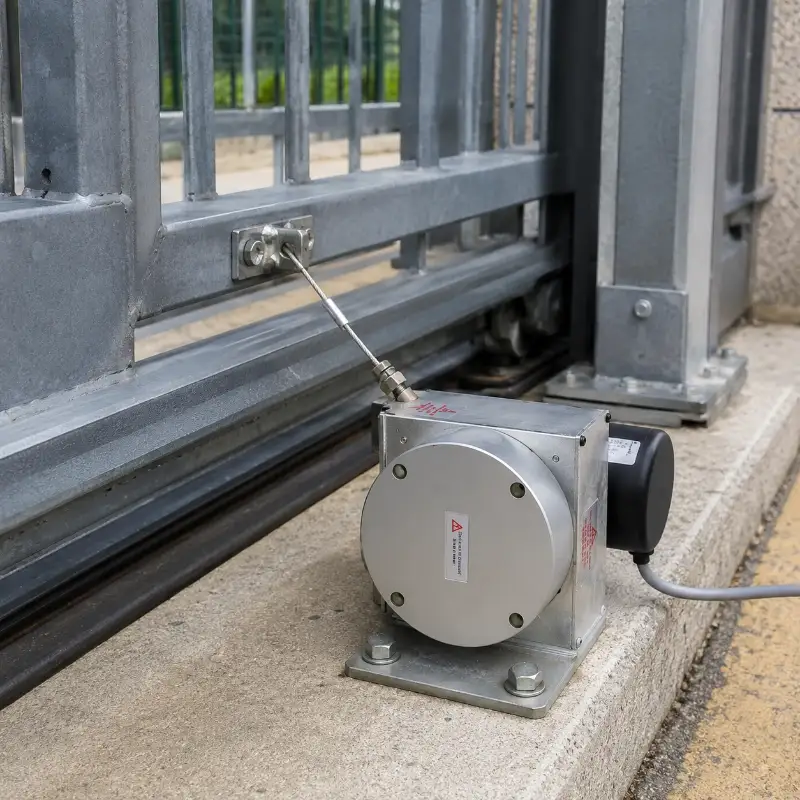
Reservoir gate positioning
Sluice gate opening control
Pressure machinery
Shipbuilding machinery
Textile machinery
Metal sheet processing equipment
Packaging machinery
Printing machinery
Horizontal movement control
Construction machinery
Industrial robots
Injection molding machines
Woodworking machinery
Elevators
Air compressors
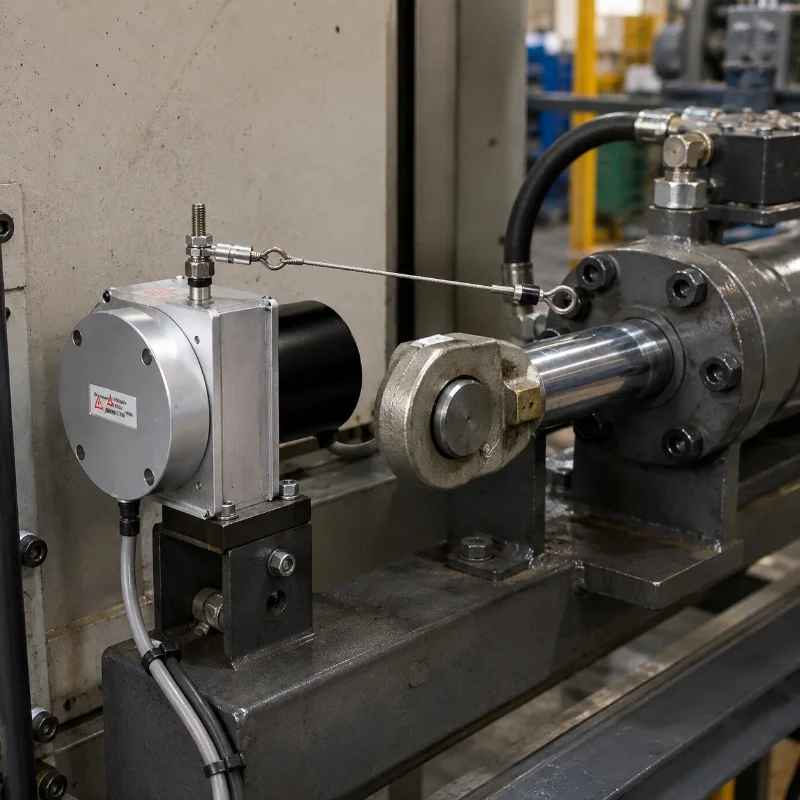
Hydraulic machines
Height and length measurement
X Y axis displacement monitoring
Positioning and motion control systems
4. Installation Notes
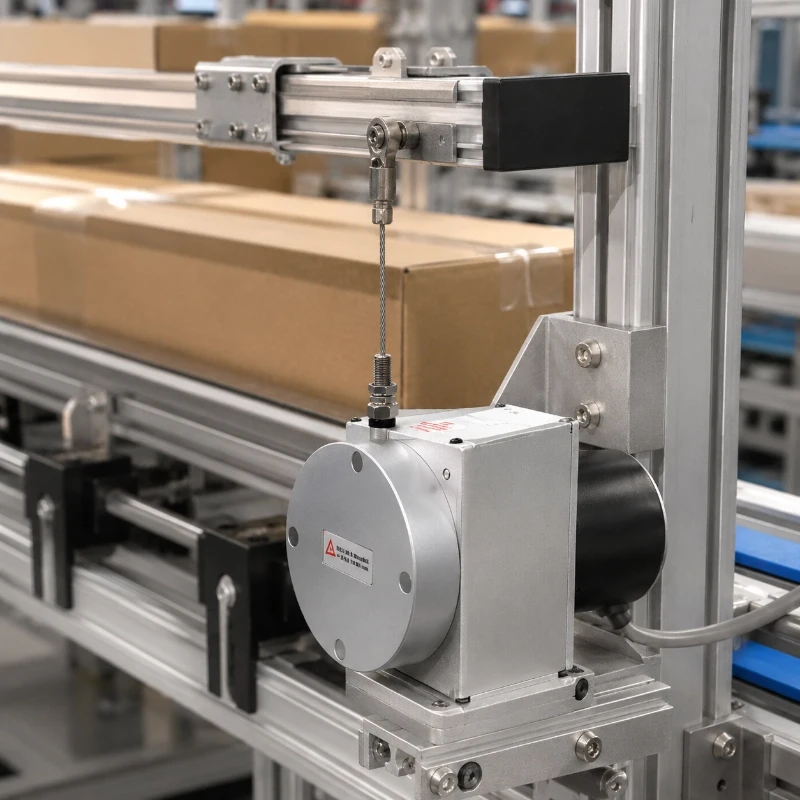
Use the four fixing screw holes on the mounting bracket or base, and choose the correct installation direction according to the available equipment space.
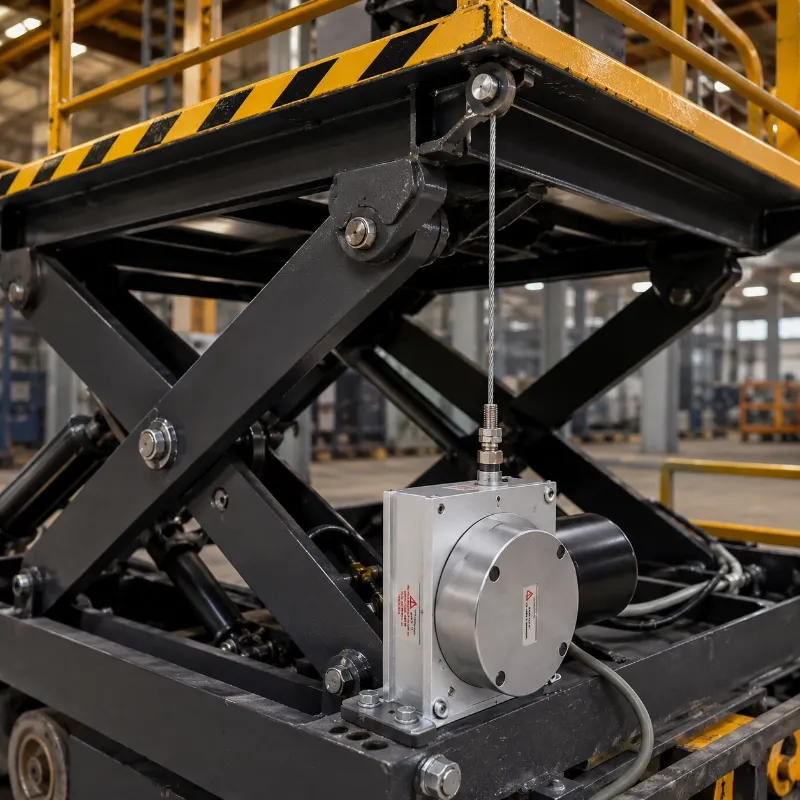
During installation, keep the wire rope movement as straight as possible between the rope outlet and the moving point. The angle deviation should be minimized, with a recommended tolerance of about ±3°, to maintain measurement accuracy and rope service life.
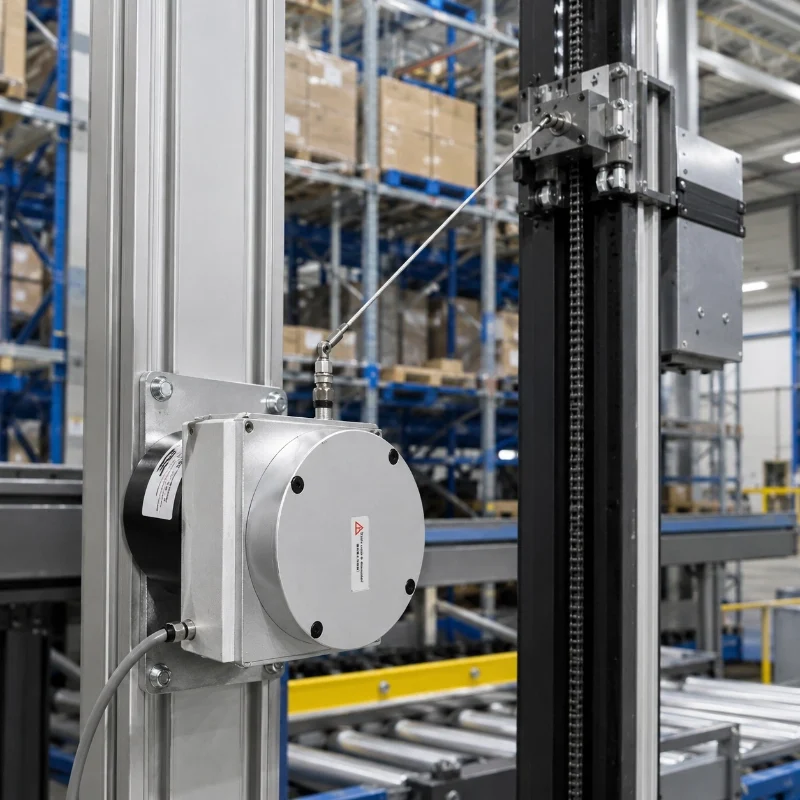
For vertical long-stroke applications with heavier moving parts, it is recommended to place the sensor body at the lower side and pull the wire rope upward.
The wire rope is made of stainless steel. Avoid cuts, welding sparks, collisions, excessive dust buildup, debris, and corrosive environments.
Before installation is completed, do not pull out the rope by hand or with objects and allow it to retract suddenly, as this may damage the rope or sensor body.
For non-linear motion, use a suitable pulley or guide mechanism so that the moving path remains aligned with the wire rope.
Operate the sensor within the recommended motion speed and acceleration limits to ensure product reliability and longer service life.
FAQ
Q
1. What is a draw wire displacement sensor used for?
A
A draw wire displacement sensor is used to measure linear movement, stroke length, and position changes in machinery, gates, automation systems, and industrial equipment.
Q
2. What measuring range does this model support?
A
This M-type model supports a measuring range from 2500mm to 6000mm, which makes it suitable for medium and long-stroke applications.
Q
3. What output signals are available?
A
This sensor can support current output, voltage output, resistance output, pulse output, and optional digital interfaces such as RS485, CANopen, and Profinet depending on configuration.
Q
4. Is this sensor suitable for industrial environments?
A
Yes. With an IP65 protection rating, aluminum alloy housing, and long service life, it is suitable for industrial applications that require reliable displacement measurement.
Q
5. Can JW-IoT provide different output configurations?
A
Yes. JW-IoT can support different output types based on your project needs, including analog, pulse, and digital communication options.
Q
6. What industries commonly use this sensor?
A
It is widely used in warehouse positioning, gate control, textile machinery, packaging equipment, industrial robots, construction machinery, elevators, and hydraulic systems.
Q
7. Does JW-IoT support OEM and project applications?
A
Yes. JW-IoT can support OEM integration and project-based solutions for industrial position feedback, displacement monitoring, and automation control.
Q
8. How should the sensor be installed for best performance?
A
The wire rope should move in as straight a line as possible, with minimal angle deviation. For non-linear movement, a pulley or guide mechanism should be used.
Q
9. Why choose JW-IoT for draw wire displacement sensors?
A
JW-IoT provides practical sensing solutions with flexible specifications, stable industrial performance, and support for a wide range of displacement measurement applications.
 +86 13520127780
  info@jingelway.com