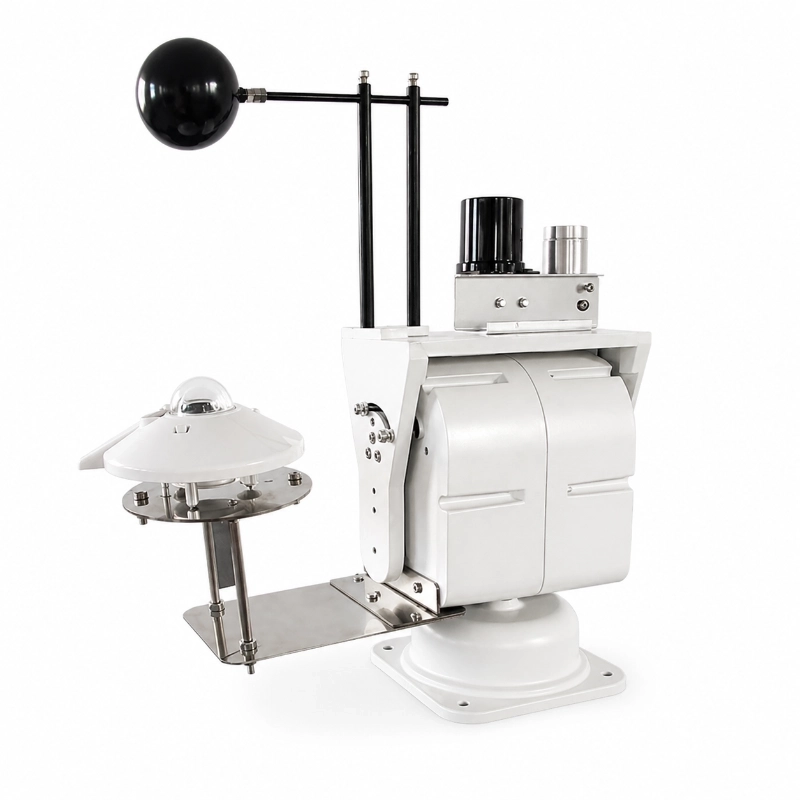
Automatic Solar Photometer for Spectral Irradiance Monitoring and Solar Energy Analysis
Key Features
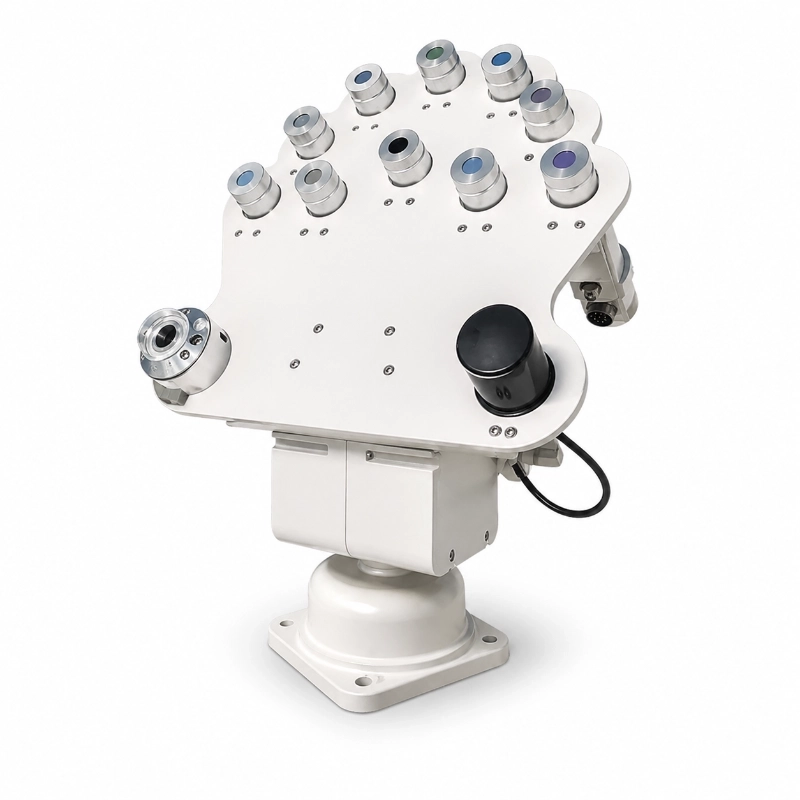
Automatic Solar Tracking: Uses optical scanning and time tracking technology to automatically follow the sun throughout the day with high tracking accuracy.
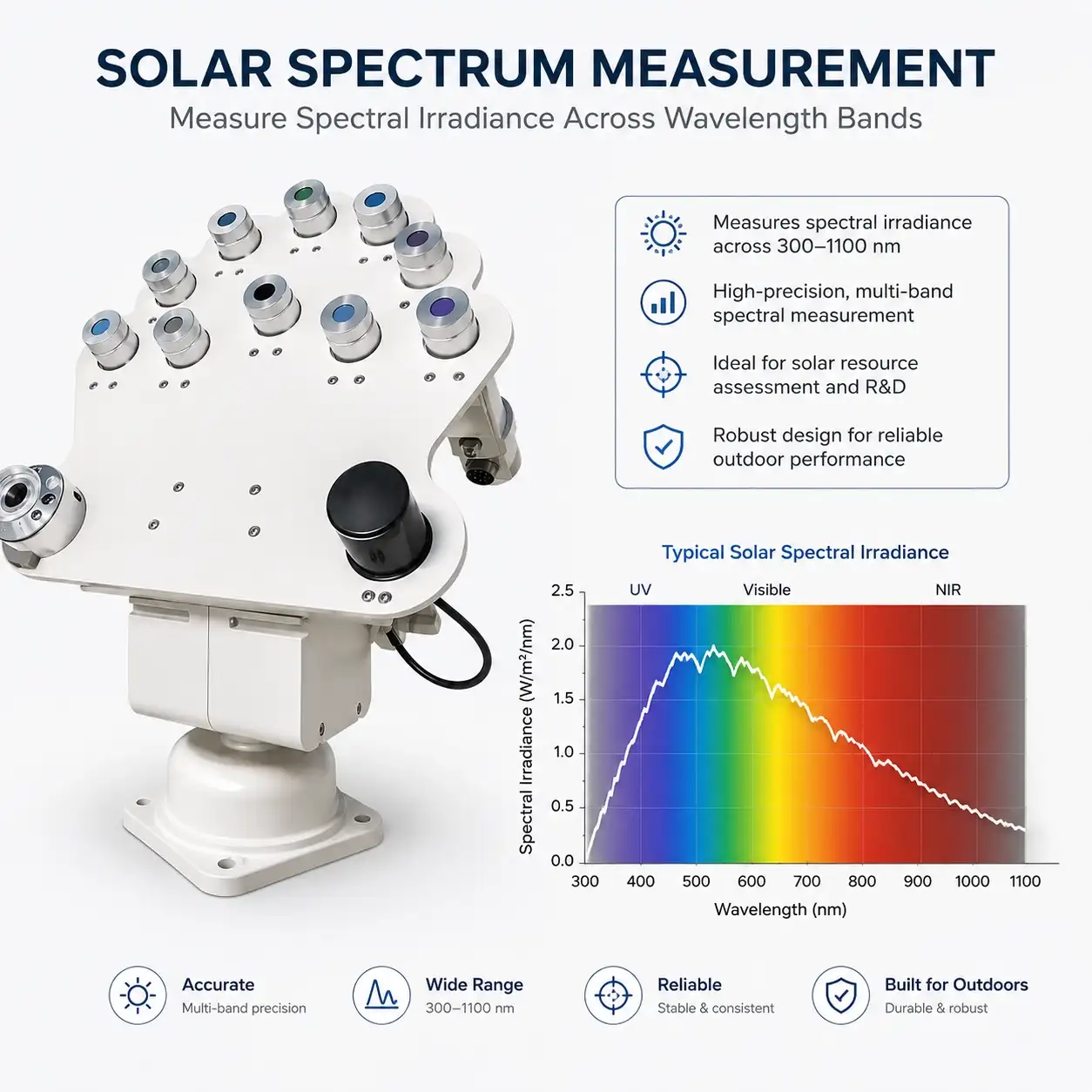
Multi Band Spectral Irradiance Measurement: Measures direct solar spectral irradiance at multiple wavelengths including 280–3000 nm, 340 nm, 380 nm, 440 nm, 500 nm, 670 nm, 870 nm, 936 nm, 1020 nm and 1640 nm.
Synchronous Measurement Technology: Simultaneously records multiple solar radiation parameters to reduce time sharing errors and improve spectral analysis accuracy.
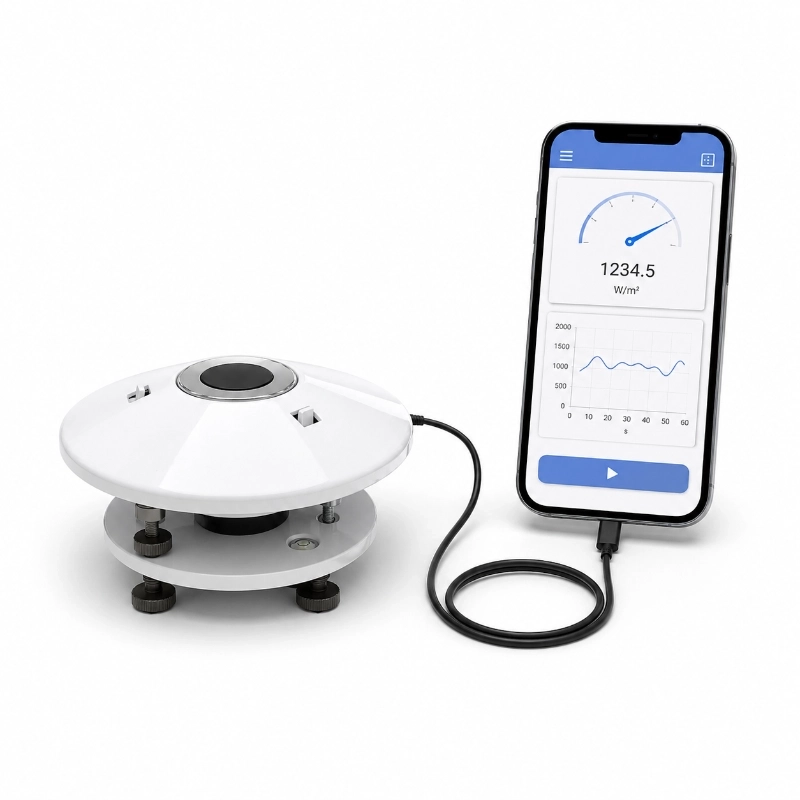
Comprehensive Solar Radiation Monitoring: Supports direct irradiance, total irradiance, horizontal total irradiance, vertical total irradiance, diffuse irradiance, sunshine duration and solar altitude angle measurement.
Atmospheric Aerosol Optical Depth Calculation: Provides aerosol optical depth monitoring for atmospheric research, air quality studies and satellite calibration applications.
Built In RS485 Output Module: Integrated RS485 communication allows direct connection to existing RS485 networks without external converters or adapters.
GPS Real Time Positioning: Supports real time tracking of latitude, longitude and altitude for field deployment and mobile observation scenarios.
Solar Powered Outdoor Operation: Designed for outdoor monitoring with solar power support, reducing dependency on fixed power infrastructure.
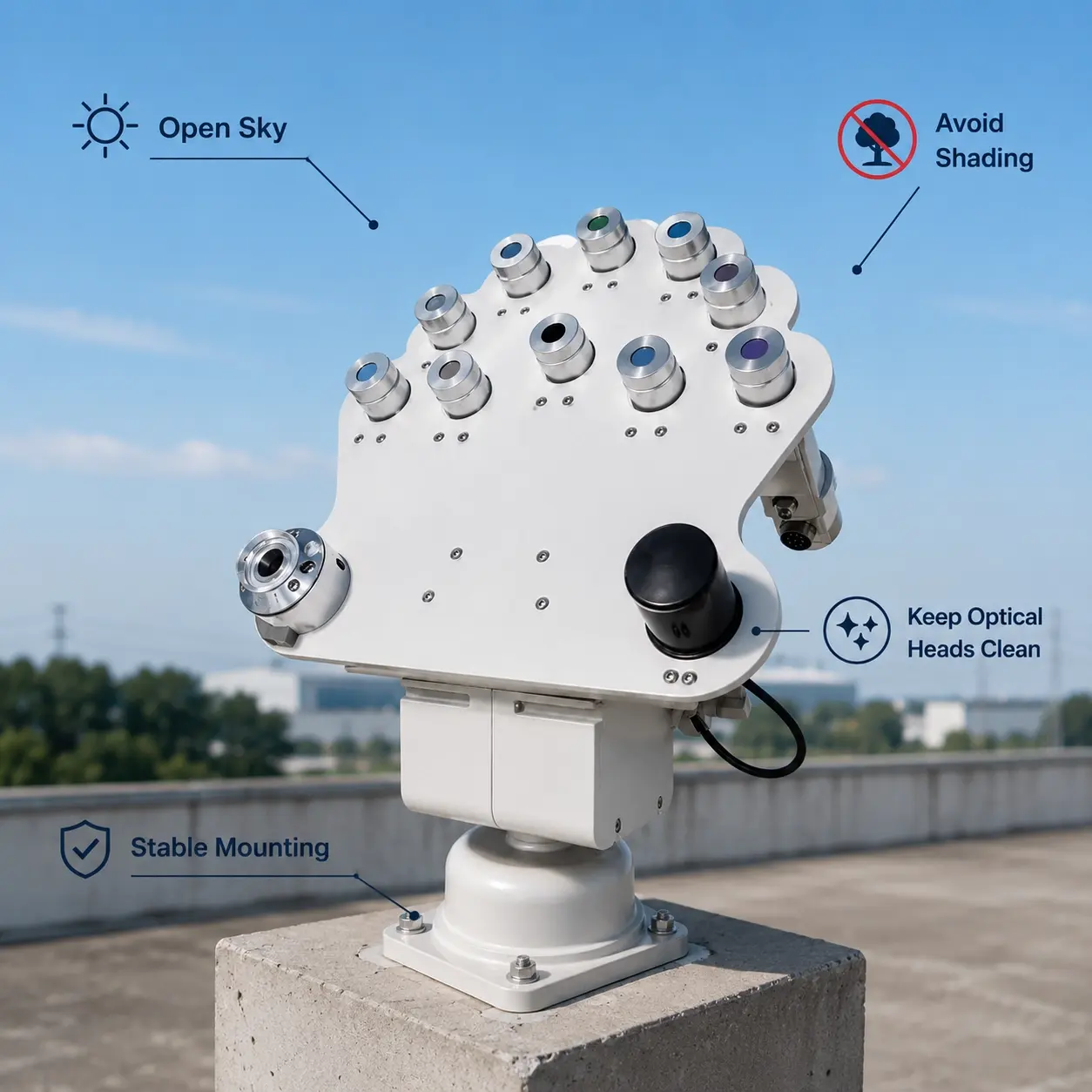
Easy Installation and Low Maintenance: Integrated structure, automatic operation and no frequent manual calibration requirements help reduce field maintenance workload.
Rugged Outdoor Design: IP66 protection and wide operating temperature range make it suitable for long term use in harsh outdoor environments.
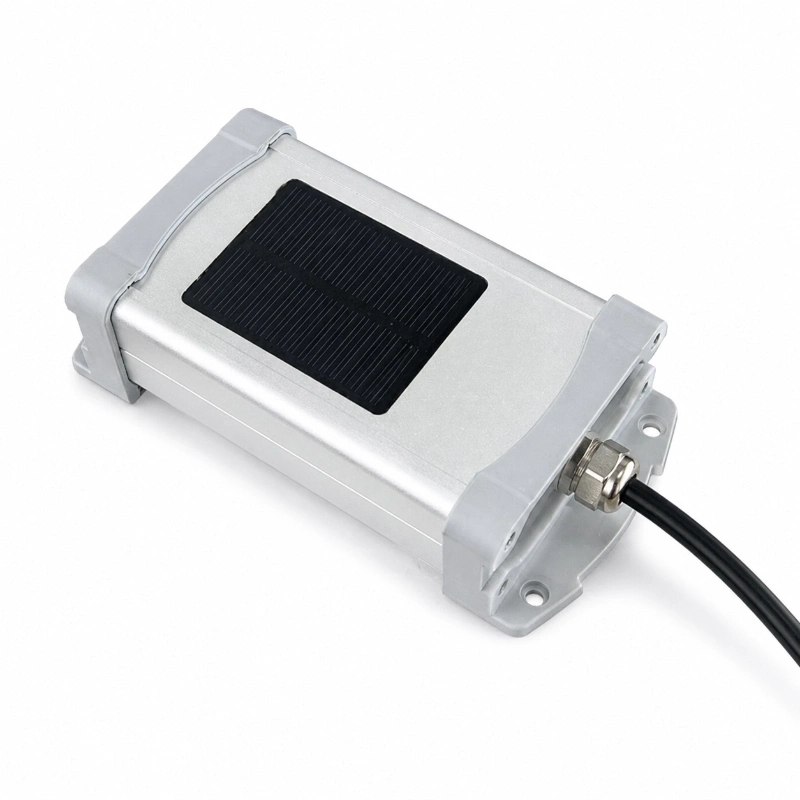
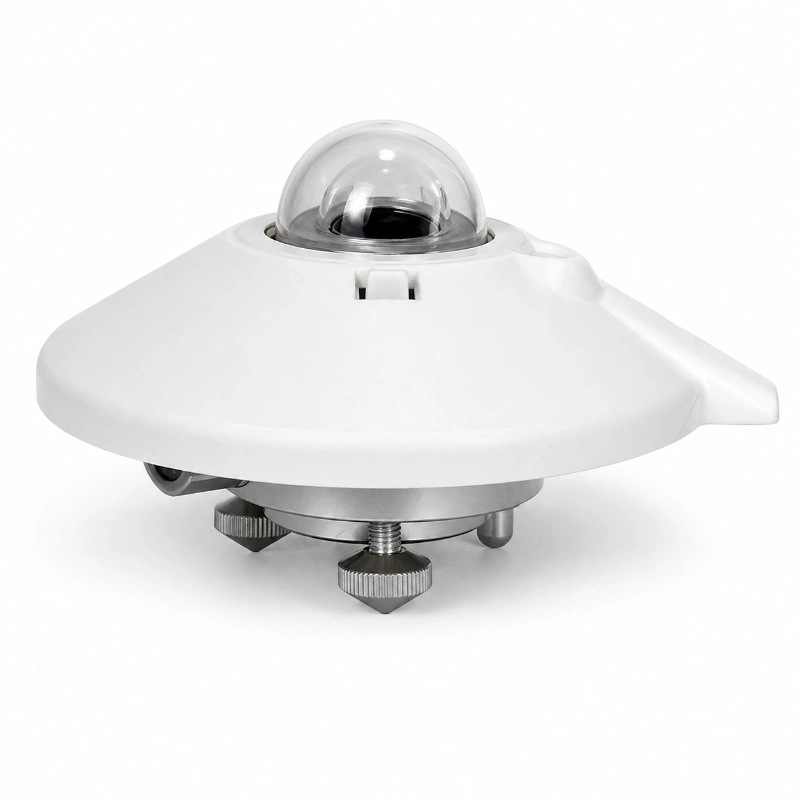
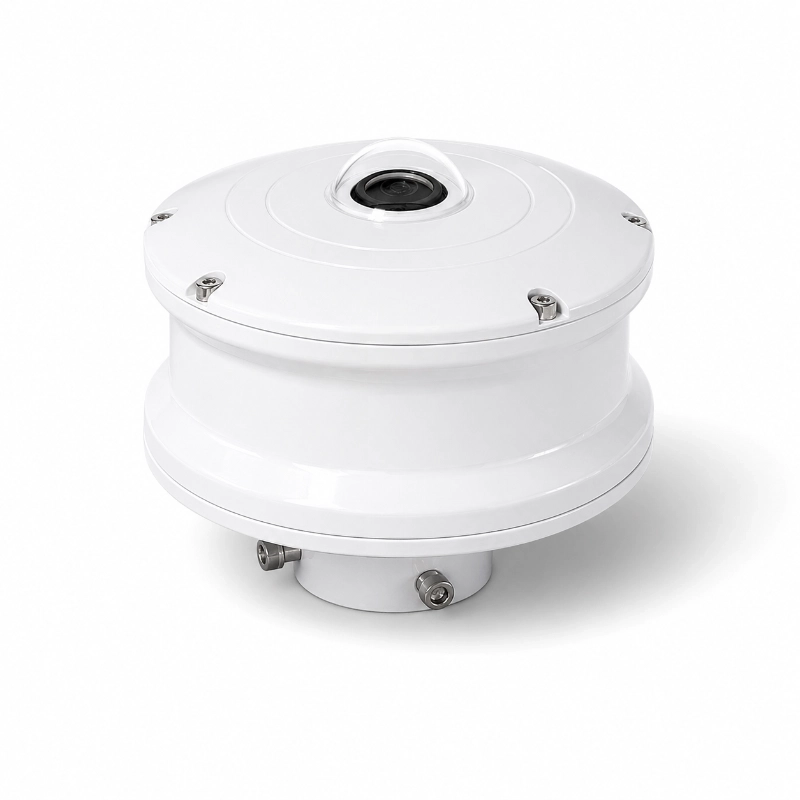
JW-TBS-5L(LC21)Automatic Solar Photometer is a professional solar radiation monitoring device designed for spectral irradiance measurement, solar resource assessment and renewable energy monitoring applications.
Unlike conventional solar radiation sensors that measure only total solar radiation, a solar photometer can provide more detailed information about solar radiation distribution within specific wavelength ranges.
The system is suitable for:
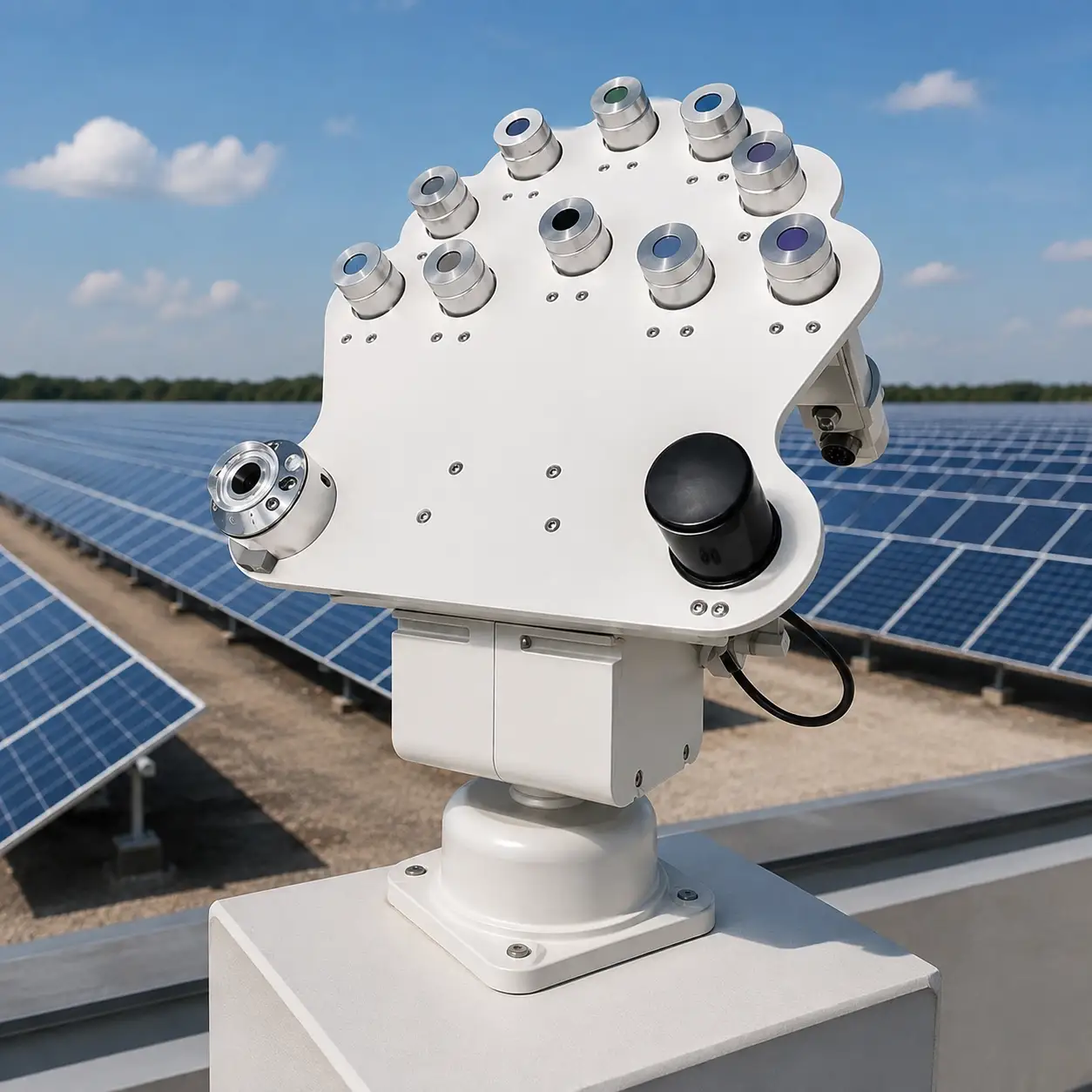
Solar PV power plant monitoring
Solar resource evaluation
Meteorological observation
Environmental research
Agricultural solar radiation monitoring
Renewable energy projects
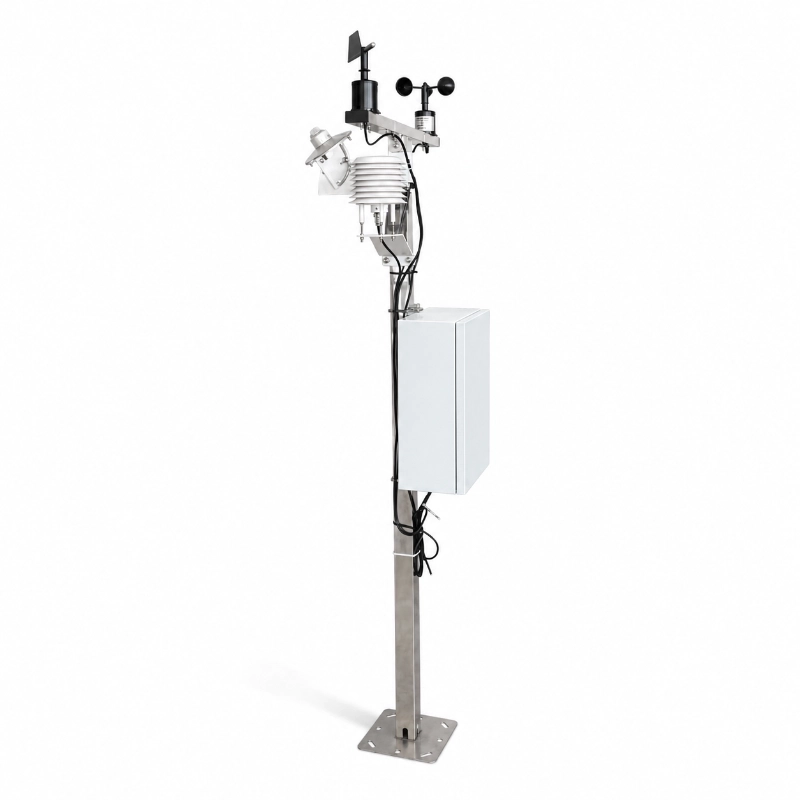
The automatic solar photometer can be integrated with:
Sunlight contains different wavelength components:
Ultraviolet (UV)
Visible light
Near infrared (NIR)
Different wavelengths influence:
PV module response
Solar energy conversion efficiency
Atmospheric attenuation
Plant photosynthesis
Spectral monitoring provides deeper information compared with simple solar irradiance measurement.
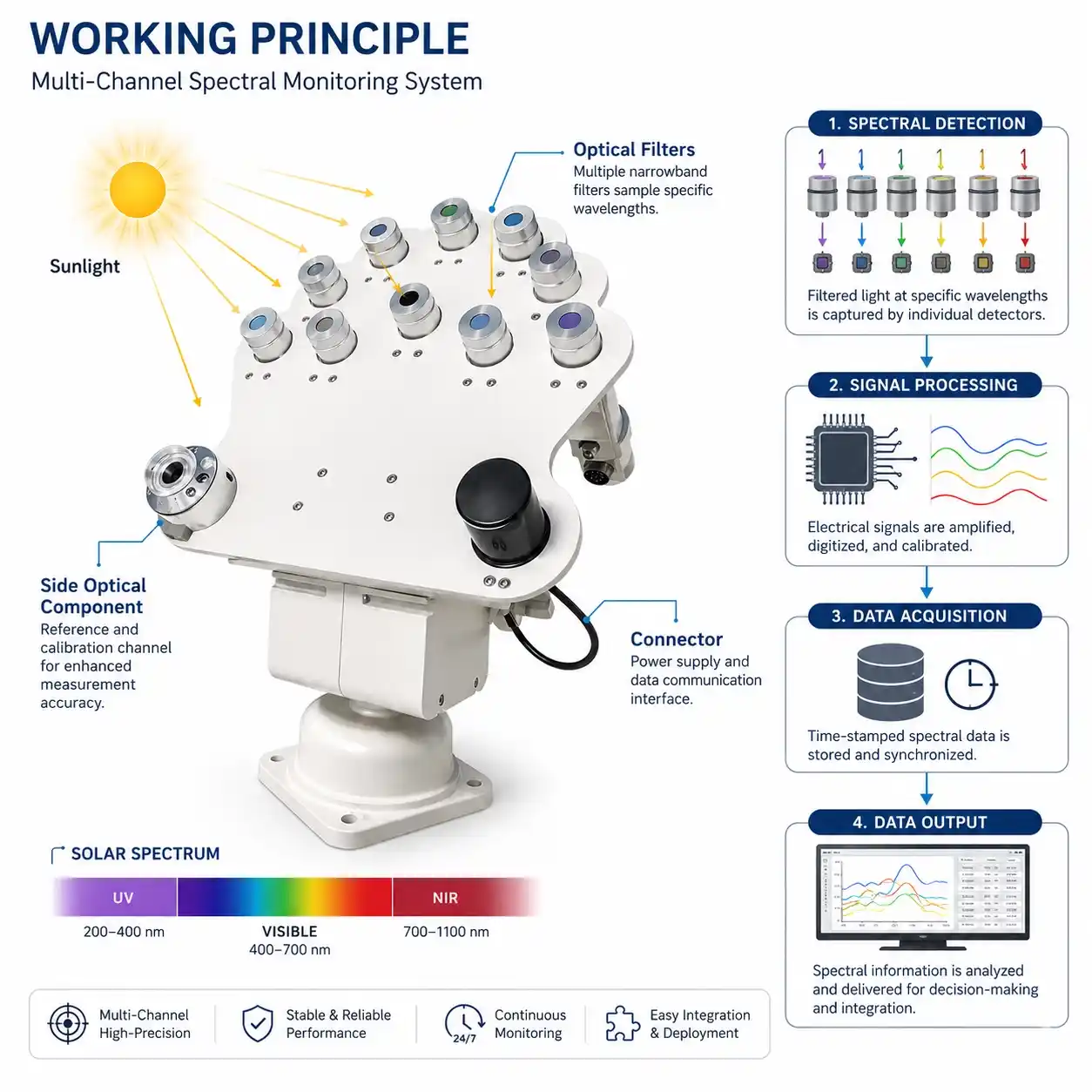
Solar Photometer Working Principle
Solar Radiation

↓

Optical Filter / Detector

↓

Spectral Signal Processing

↓

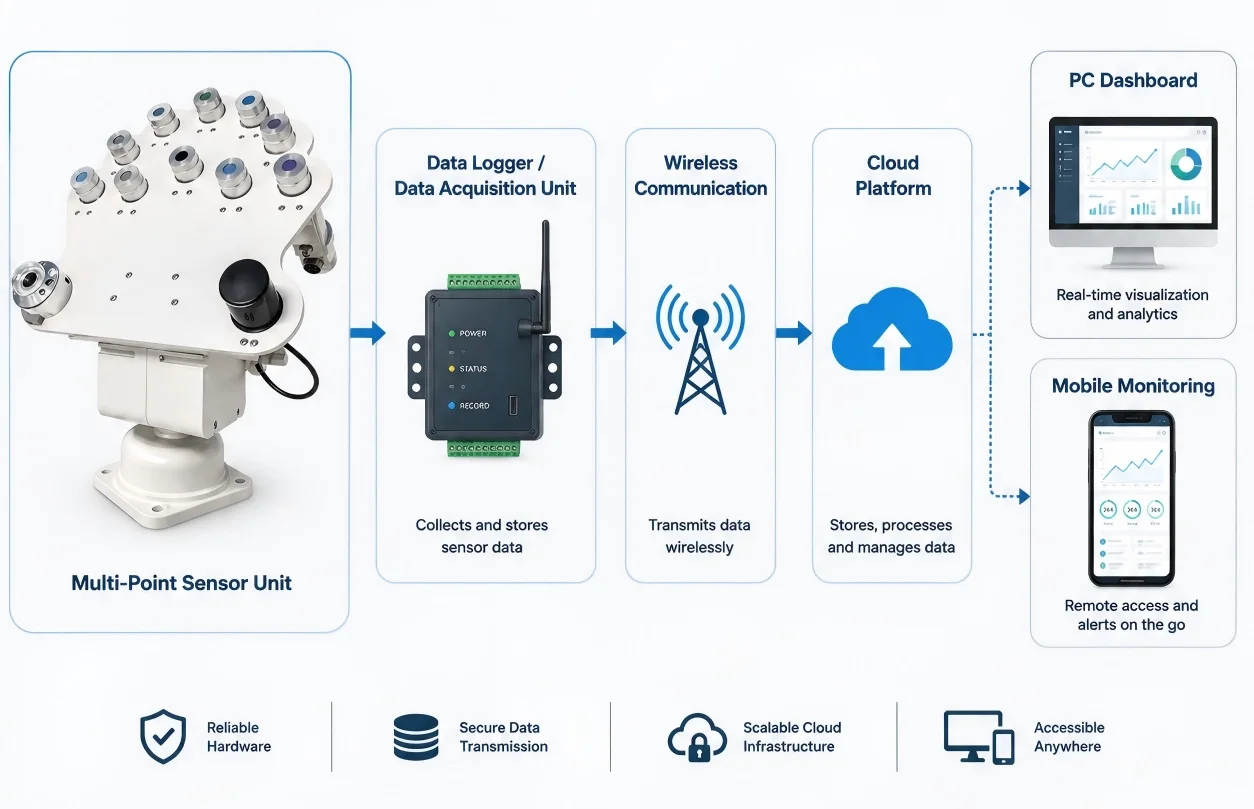
Data Logger

↓

Cloud Monitoring Platform
The instrument automatically collects solar radiation information and stores measurement data for further analysis.
Solar Photometer Applications
Solar PV Power Plant Monitoring
Solar spectral information helps engineers analyze:
Solar resource availability
Irradiance variation
PV performance changes
Solar Resource Assessment
Before developing a solar project, accurate solar radiation data is important for:
Site evaluation
Energy prediction
System optimization
Meteorological and Environmental Monitoring
Solar radiation monitoring supports:
Weather observation
Climate research
Atmospheric analysis
Solar Photometer vs Pyranometer
Solar Photometer
Pyranometer
Measurement
Spectral radiation
Total solar irradiance
Output
Spectral information
Global irradiance
Application
Research, PV analysis
Weather stations, solar monitoring
Data Detail
Higher
General
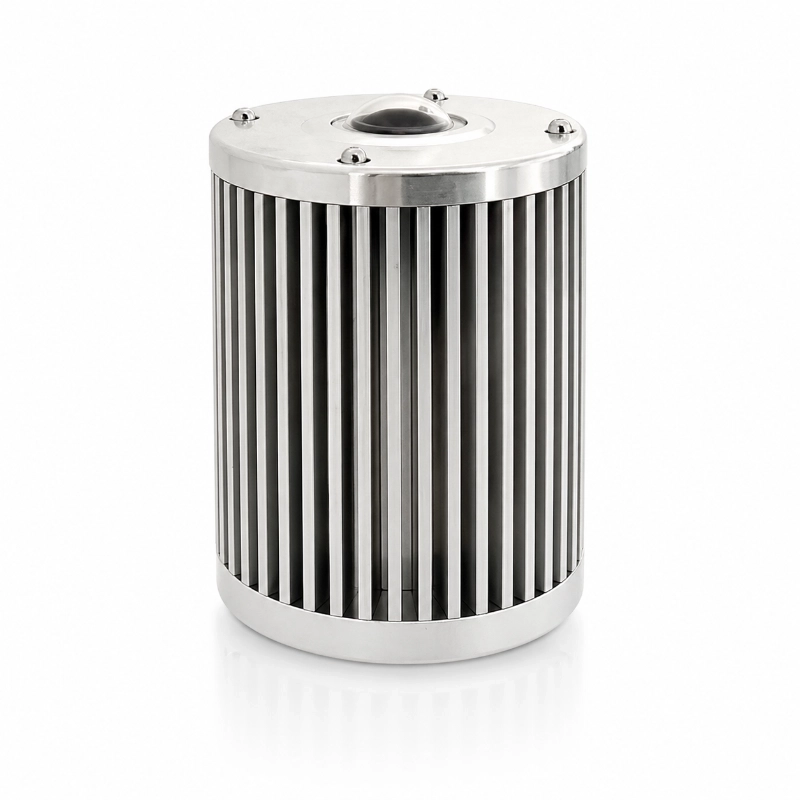
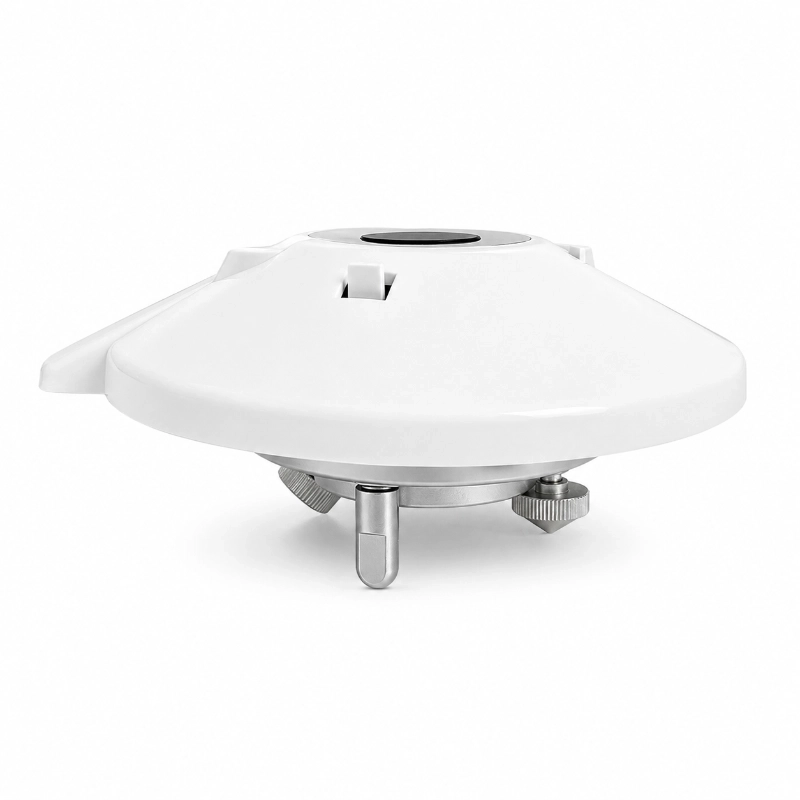
A pyranometer measures solar radiation flux density over a broad wavelength range, while spectral instruments provide wavelength-specific radiation information.
1. What does this automatic solar photometer measure?
A
It measures direct solar irradiance, spectral direct irradiance, total irradiance, horizontal total irradiance, vertical total irradiance, diffuse radiation, sunshine duration, solar incidence angle and atmospheric aerosol optical depth.
Q
2. Which spectral wavelengths are supported?
A
The system supports multiple solar spectral bands, including 280–3000 nm, 340 nm, 380 nm, 440 nm, 500 nm, 670 nm, 870 nm, 936 nm, 1020 nm and 1640 nm.
Q
3. Can the photometer track the sun automatically?
A
Yes. The instrument uses automatic sun tracking technology with optical scanning and time tracking to follow the sun throughout the day, reducing the need for manual operation.
Q
4. Does JW-IoT provide this product for meteorological monitoring projects?
A
Yes. JW-IoT can provide this type of automatic solar photometer as part of meteorological radiation monitoring, atmospheric observation and environmental monitoring solutions.
Q
5. What communication output does the product support?
A
The product has a built in RS485 output module, allowing direct integration into RS485 communication networks without an additional external converter.
Q
6. Is this solar photometer suitable for satellite calibration?
A
Yes. Because it measures multi band solar spectral irradiance and aerosol optical depth, it can be used for satellite ground calibration, atmospheric correction and remote sensing validation.
Q
7. Can JW-IoT integrate this photometer into an IoT monitoring platform?
A
Yes. JW-IoT can integrate the RS485 data output into local data acquisition systems, RTUs, cloud platforms or customized IoT monitoring dashboards according to project requirements.
Q
8. What are the main advantages compared with traditional solar photometers?
A
Compared with traditional instruments, it supports automatic tracking, multi wavelength measurement, synchronous data acquisition, RS485 output, GPS positioning and lower maintenance requirements.
Q
9. Is the product suitable for outdoor long term installation?
A
Yes. The instrument has an IP66 protection rating, supports outdoor operation and works within a temperature range of -30°C to 60°C.
Q
10. Can JW-IoT support OEM or project based customization?
A
Yes. JW-IoT can support project based configuration, data platform integration, communication protocol adaptation and solution packaging for overseas meteorological and environmental monitoring projects.
 +86 13520127780
  info@jingelway.com