 +86 13520127780
 info@jingelway.com









-
Integrated 3-axis electronic compass: Provides orientation information for applications requiring directional reference.
-
3D acceleration sensing: Supplies motion-related data, including pitch and roll information, for platform monitoring.
-
Ultrasonic wind measurement: No mechanical rotating cups or wind vane, reducing wear-related maintenance.
-
Compact reflective ultrasonic design: Optimized for installations where instrument dimensions and weight are important.
-
Wind speed range up to 60 m/s: Optional extension to 75 m/s, subject to selected configuration.
-
Low-power version available: Supports energy-conscious monitoring systems with normal and sleep operating modes.
-
Optional intelligent heating: Helps mitigate icing-related measurement interruptions in cold environments.
-
Multiple output interfaces: RS232, RS485 or SDI-12 digital interface options, plus a two-channel 4–20 mA analog-output configuration.
-
IP65 protection: Designed for outdoor environmental monitoring.
-
Wide operating temperature range: -50°C to +80°C, according to the manufacturer's stated specifications.
Compass-Integrated Ultrasonic Anemometer for Mobile Wind Monitoring
Product Description
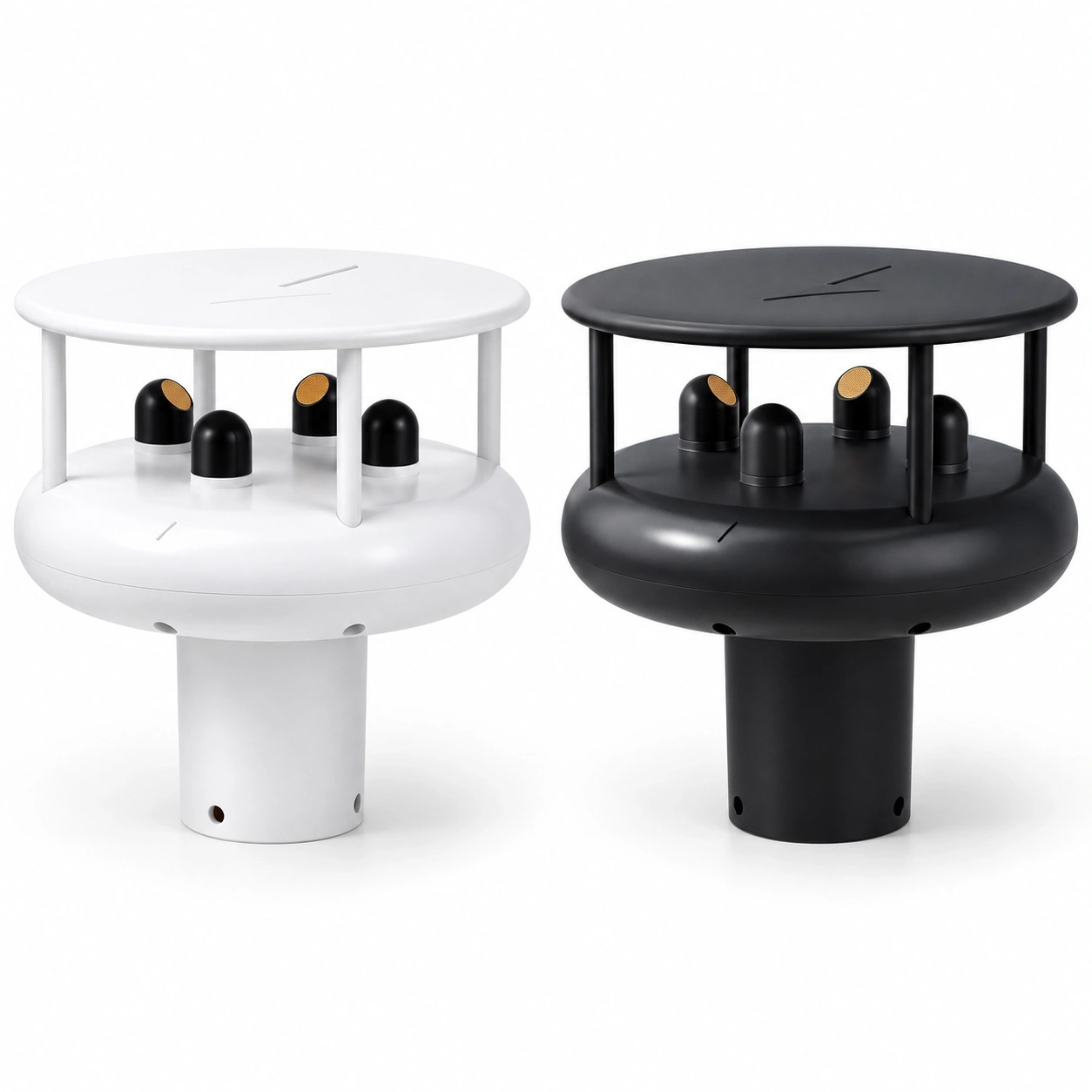
The JW-WDS2 is a compact ultrasonic anemometer with an integrated 3-axis electronic compass and acceleration sensing module, designed for wind measurement applications where installation orientation, equipment movement and power consumption require special consideration.
Using ultrasonic time-of-flight measurement technology, the sensor measures wind speed and direction without mechanical rotating components. Its reflective ultrasonic structure, lightweight enclosure and digital communication options make it suitable for fixed meteorological stations, transport monitoring systems and selected mobile monitoring platforms.
Unlike conventional fixed-orientation wind instruments, the JW-WDS2 provides additional orientation and motion-related information through its electronic compass and 3D acceleration module.
For engineers integrating wind measurements into mobile equipment, the additional information can support platform-orientation assessment and wind-data processing.
Product Description
1. Compact Wind Measurement with Electronic Compass Integration
The JW-WDS2 combines a two-dimensional ultrasonic wind measurement system with orientation sensing in a compact instrument.
Conventional ultrasonic anemometers measure horizontal wind speed and direction relative to their sensor reference. When equipment orientation changes, interpreting the directional data may require additional heading information.
The integrated 3-axis electronic compass provides this additional directional reference.
Meanwhile, the 3D acceleration module provides pitch and roll information associated with sensor movement or mounting orientation.
These features make the JW-WDS2 a candidate for applications where a permanently fixed installation orientation cannot always be assumed.
The sensor uses a compact reflective ultrasonic measurement structure and phase compensation technology.
Its lightweight body measures approximately 144 mm in diameter and 148 mm in height, with a stated weight of approximately 0.36 kg.
For other types of wind instrumentation, explore the JW-IoT Wind Sensors portfolio.
2. How the Ultrasonic Wind Measurement System Works
The JW-WDS2 uses ultrasonic time-of-flight technology to calculate wind speed and direction.
Ultrasonic signals propagate between acoustic measurement elements. Air movement influences signal propagation, allowing the instrument to determine the horizontal wind vector.
The measurement system provides:
- Wind speed
- Wind direction
- Wind speed resolution of 0.01 m/s
- Wind direction resolution of 1°
Unlike traditional cup anemometers, the instrument does not depend on rotating bearings or a mechanical wind vane.
This reduces wear-related maintenance requirements, although regular inspection and cleaning may still be necessary depending on environmental exposure.
For broader meteorological measurements, the sensor can form part of a modular Weather Monitoring Station.
3. Integrated Compass and Motion Sensing
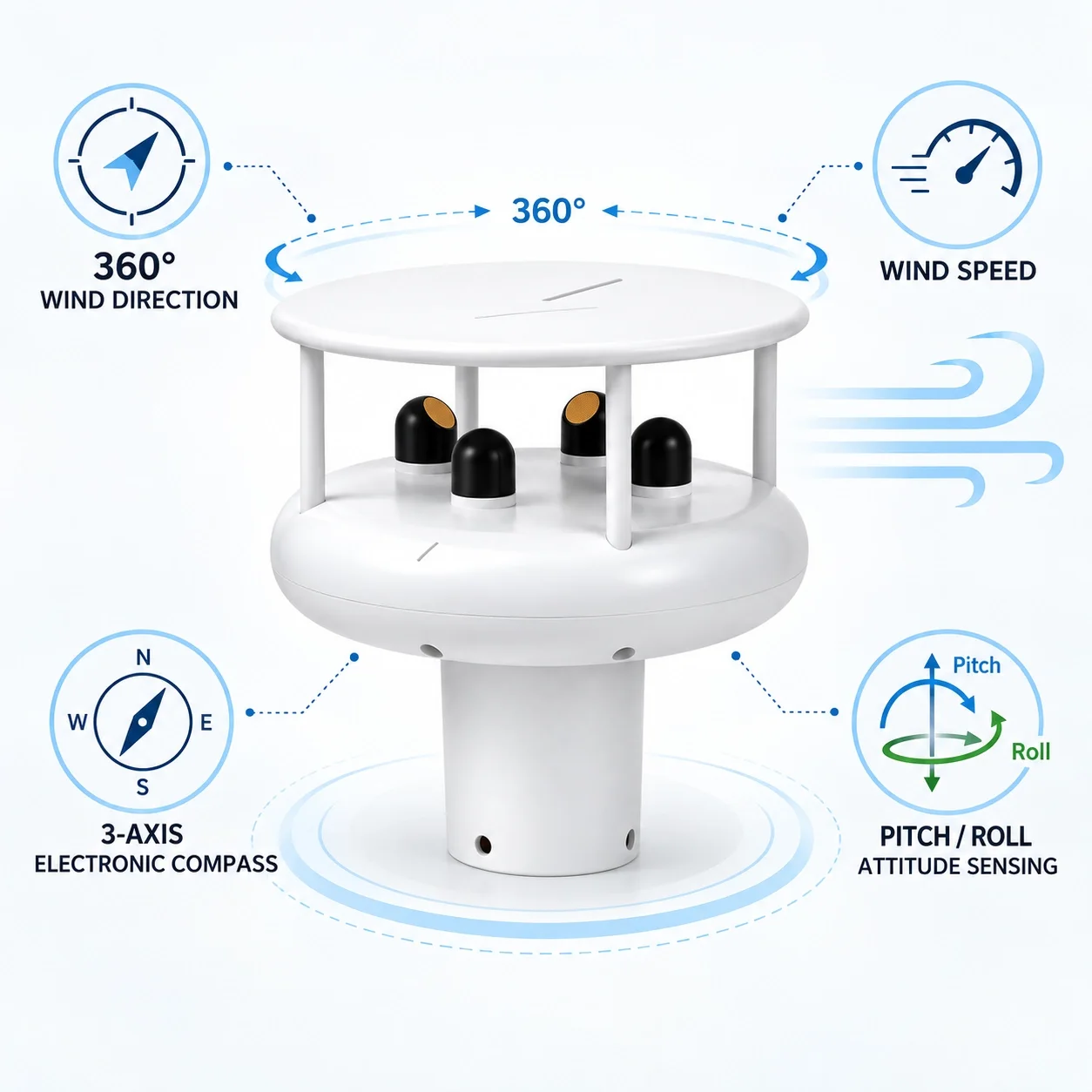
One of the most distinctive features of the JW-WDS2 is its built-in orientation-sensing capability.
3-Axis Electronic Compass
The compass supplies heading information that may be used to interpret wind direction relative to a geographic reference.
This is particularly useful when the sensor is installed on equipment whose heading may change.
3D Acceleration Module
The acceleration module provides information associated with pitch and roll.
This can help system developers observe platform attitude and assess how sensor orientation influences wind measurements.
Relative and True Wind Data
The manufacturer describes the sensor as supporting true and apparent/relative wind information through its integrated electronic sensing architecture.
For moving applications, reliable true-wind calculations may require platform speed, heading and motion compensation. System designers should confirm the available data fields and calculation method for the selected firmware.
The compass and acceleration module provide useful inputs, but their presence alone does not establish complete motion-compensated wind measurement performance.
4. Technical Specifications
| Parameter | Specification |
| Model | JW-WDS2 (proposed designation) |
| Measurement principle | Ultrasonic time-of-flight |
| Wind speed range | 0–60 m/s |
| Extended wind speed range | Up to 75 m/s, optional |
| Wind speed accuracy | ±(0.5 m/s + 0.03 × V), where V is wind speed in m/s |
| Wind speed resolution | 0.01 m/s |
| Wind direction range | 0–360° (0° and 360° equivalent) |
| Wind direction accuracy | ±3° |
| Wind direction resolution | 1° |
| Orientation sensing | 3-axis electronic compass |
| Motion sensing | 3D acceleration module |
| Digital interfaces | RS232 / RS485 / SDI-12 (select one) |
| Analog interface | Dual-channel 4–20 mA option |
| Analog load resistance | Less than 500 Ω |
| Baud rate | 1200–115200 bps |
| Ingress protection | IP65 |
| Operating temperature | -50°C to +80°C |
| Storage temperature | -40°C to +80°C |
| Supply voltage | DC 12–24V |
| Standard version power | 1.2W normal; 2.9W with heating |
| Low-power version | 0.12W normal; 0.008W sleep; 1.6W with heating |
| Dimensions | Φ144 × 148 mm |
| Weight | Approximately 0.36 kg |
| Housing | ASA engineering plastic |
| EMC specification | EN 61000-6-2 |
5. Typical Applications
5.1 Mobile Wind Monitoring Platforms
The integrated electronic compass and acceleration sensing module are particularly relevant to mobile monitoring systems.
Potential applications include:
- Vehicle-mounted environmental monitoring
- Mobile meteorological observation equipment
- Transport-related wind measurement systems
- Temporary meteorological field deployments
These applications may require additional information about sensor heading and platform attitude.
For vehicle-mounted deployments, wind data must be interpreted with consideration of vehicle motion, mounting position and airflow disturbance.
5.2 Highway and Transport Weather Monitoring
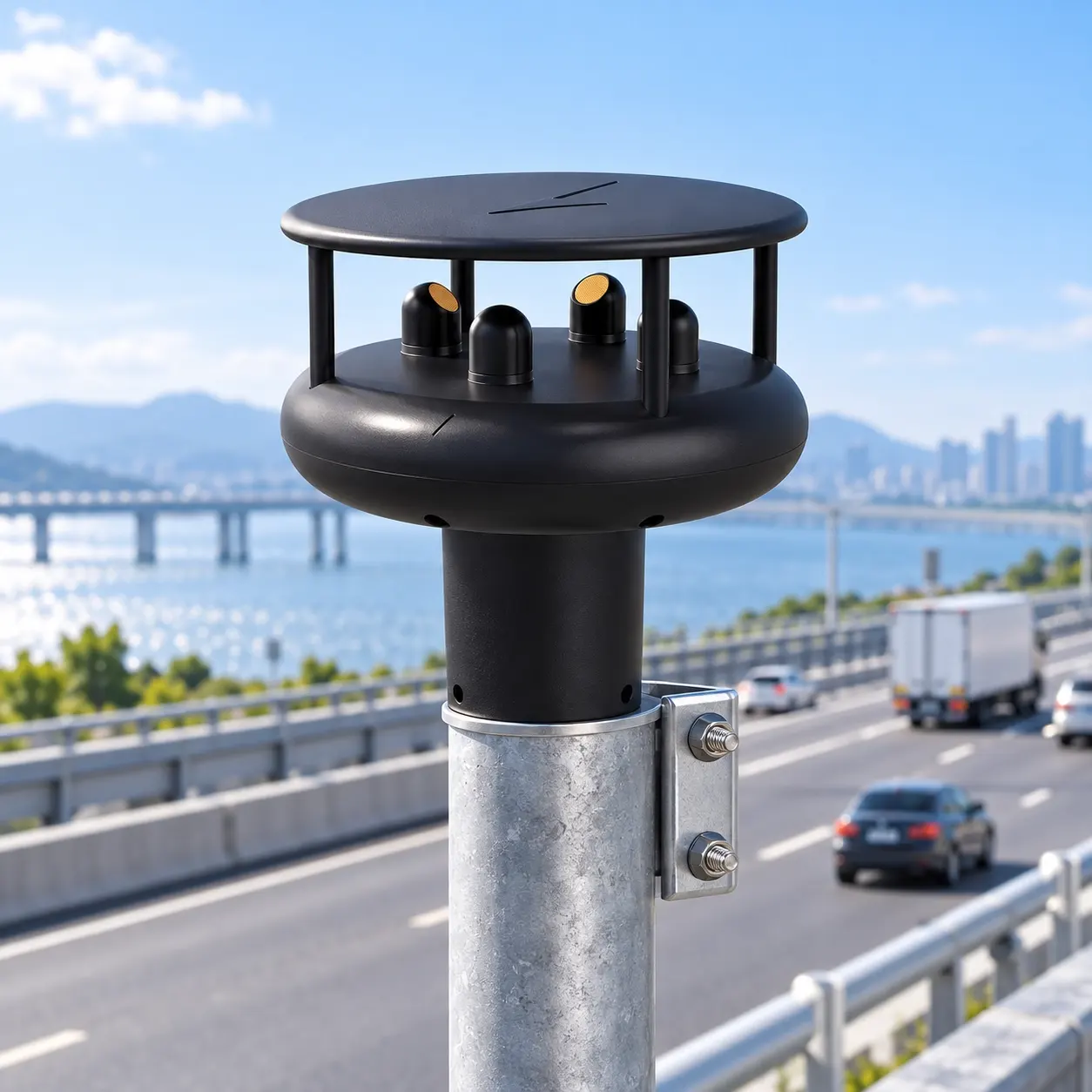
Wind conditions influence transportation operations, particularly on exposed roads, elevated infrastructure and open terrain.
The JW-WDS2 can provide wind speed and direction data as part of a wider monitoring architecture.
The compact measurement structure and available digital interfaces allow system designers to evaluate integration with roadside acquisition equipment.
Where visibility, road-surface condition and additional weather parameters are required, a dedicated Road Weather Station may offer a more comprehensive monitoring solution.
5.3 Temporary and Portable Weather Monitoring
Temporary outdoor observation projects often require instruments that can be transported, installed and removed with limited complexity.
The JW-WDS2 combines lightweight construction with optional low-power operation.
Its compass output can also help technicians assess sensor orientation during deployment.
For complete field monitoring systems, see JW-IoT’s Portable Weather Station.
5.4 Marine and Coastal Monitoring
Ports, waterways, vessels and coastal monitoring systems require wind measurements for local environmental awareness.
The JW-WDS2’s orientation features may be useful in selected applications involving changing equipment heading.
For marine deployments, the suitability of the housing, mounting arrangement and environmental protection should be evaluated against actual exposure conditions.
The IP65 rating alone should not be interpreted as certification for continuous saltwater immersion or severe marine corrosion exposure.
5.5 Distributed Environmental Monitoring
The JW-WDS2 can also be used in distributed wind-monitoring networks where compact equipment and digital connectivity are important.
Potential installations include environmental monitoring towers, local meteorological networks and research observation sites.
Its measurement data can be collected by compatible industrial data acquisition equipment and incorporated into broader monitoring systems.
6. Standard and Low-Power Versions
The JW-WDS2 reference product includes standard-power and low-power operating configurations.
| Feature | Standard Version | Low-Power Version |
| Supply voltage | DC 12–24V | DC 12–24V |
| Normal power consumption | 1.2W | 0.12W |
| Sleep mode | Not specified | 0.008W |
| Heating-state power | 2.9W | 1.6W |
The low-power version is particularly relevant to monitoring installations where average energy consumption is a major system-design consideration.
For solar-powered or battery-powered deployments, the final energy budget should account for the measurement schedule, communication equipment, heating operation and environmental conditions.
The manufacturer’s power figures describe sensor operating states and should not be treated as the power consumption of a complete monitoring station.
7. Communication and System Integration
The JW-WDS2 reference instrument offers multiple interface configurations to support integration with field acquisition equipment.
Available interfaces include RS232, RS485 and SDI-12, with a selectable digital interface according to the ordered version.
A two-channel 4–20 mA analog-output option is also specified.
A typical integration architecture may be:
JW-WDS2 Ultrasonic Anemometer → Data Logger / RTU → Communication Gateway → Monitoring Platform
Depending on project requirements, the associated data acquisition equipment may provide cellular or other network connectivity.
Engineers should confirm protocol documentation, register definitions, output parameters, baud rate and interface selection before integrating the sensor into an existing monitoring system.
8. Installation and Engineering Considerations
Correct installation is essential for meaningful wind measurements.
Mounting position
Select an installation point with minimal interference from nearby obstacles, structural surfaces or equipment-generated airflow.
Directional reference
Confirm the instrument’s reference direction and electronic compass configuration before interpreting wind direction data.
Magnetic interference
Compass accuracy can be affected by nearby ferromagnetic materials, electrical equipment and magnetic fields.
Motion-related measurements
When installing the sensor on a moving platform, verify how pitch, roll, heading and platform velocity are handled by the data-processing system.
Cold-weather operation
Confirm the selected heating configuration, available power supply and temperature requirements before deployment in freezing conditions.
Data acquisition compatibility
Check the chosen digital or analog interface, wiring arrangement and acquisition software before commissioning.
9. Choosing Between JW-IoT Wind Monitoring Products
Different monitoring projects require different sensor configurations.
For compact, multi-parameter meteorological monitoring, consider the Ultrasonic Weather Station for Wind and Climate Monitoring.
For demanding fixed-site installations where a metal housing and high-power heating are priorities, consider the High-Precision Ultrasonic Wind Speed and Direction Sensor.
The JW-WDS2 is positioned differently: it focuses on lightweight construction, orientation information, motion-related sensing and low-power configuration options.
The preferred instrument should be selected according to measurement requirements, environmental conditions and system architecture rather than a single specification.
10. Request a Wind Monitoring Configuration
Looking for an ultrasonic anemometer with compass and motion-sensing capabilities?
JW-IoT can help evaluate the appropriate wind sensor configuration for your environmental monitoring project.
Please provide:
- Application and installation environment
- Fixed or mobile installation
- Expected wind speed range
- Required interface: RS485, RS232, SDI-12 or 4–20 mA
- Power supply and energy limitations
- Required compass and motion data
- Data logger or monitoring platform details
- Operating temperature and heating requirements
Contact JW-IoT to discuss product configuration, technical documentation and integration requirements.
FAQ
-
Q
1. What is an ultrasonic anemometer with an electronic compass?
AIt is a wind measurement instrument that combines ultrasonic wind sensing with heading information from an electronic compass. The compass can support directional interpretation when sensor orientation is relevant.
-
Q
2. Can this sensor be used on a moving vehicle?
AThe integrated compass and acceleration module make it a candidate for mobile monitoring applications. However, vehicle motion, airflow distortion and true-wind calculation requirements must be evaluated before deployment.
-
Q
3. What is the wind speed measurement range?
AThe standard reference specification is 0–60 m/s, with an optional extension to 75 m/s.
-
Q
4. Does the instrument support low-power operation?
AYes. The manufacturer's low-power version specifies 0.12W during normal operation and 0.008W in sleep mode.
-
Q
5. Does the sensor measure three-dimensional wind?
AThe reference product is a two-dimensional ultrasonic wind sensor with additional orientation and acceleration sensing. A 3D acceleration module does not mean the instrument directly measures all three wind velocity components.
-
Q
6. Which communication interfaces are available?
AThe reference product lists RS232, RS485 and SDI-12 digital-interface choices, plus a dual-channel 4–20 mA analog-output option. The exact configuration must be confirmed when ordering.
-
Q
7. Is the instrument suitable for extremely cold weather?
AThe manufacturer specifies an operating temperature range of -50°C to +80°C and offers heating configurations. Final suitability depends on the selected version, available power and icing conditions.
-
Q
8. How does this model differ from a conventional ultrasonic weather station?
AA conventional multi-parameter weather station may measure wind along with temperature, humidity, pressure and rainfall. The JW-WDS2 emphasizes wind measurement with integrated compass and motion-related information, particularly for orientation-sensitive installations.
SimilarProducts Recommended
Precision Monitoring. Reliable Data. Intelligent Decisions.
-
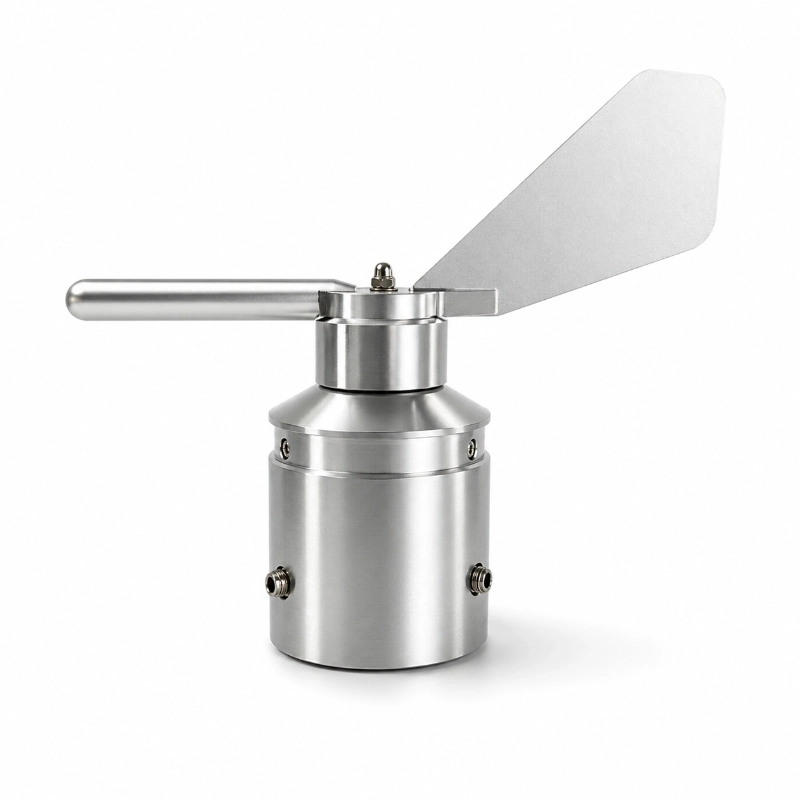
Wind Direction Sensor with Aerospace-grade Aluminum Body for Industrial Weather Monitoring Systems
Learn More

-
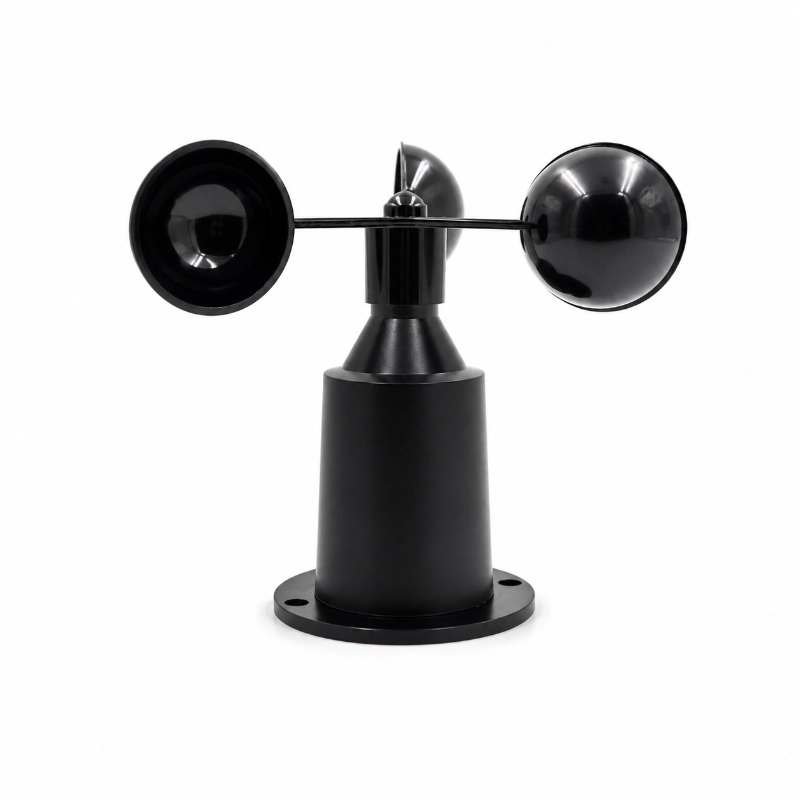
RS485 Wind Speed Sensor for Weather Monitoring
Learn More
-
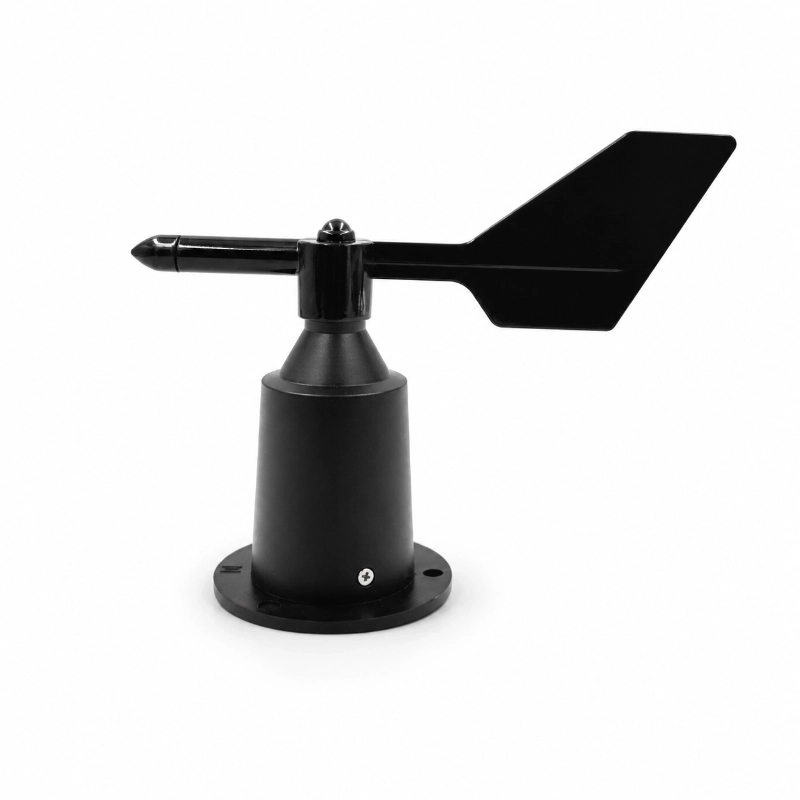
RS485 Wind Direction Sensor for Weather Stations
Learn More
-
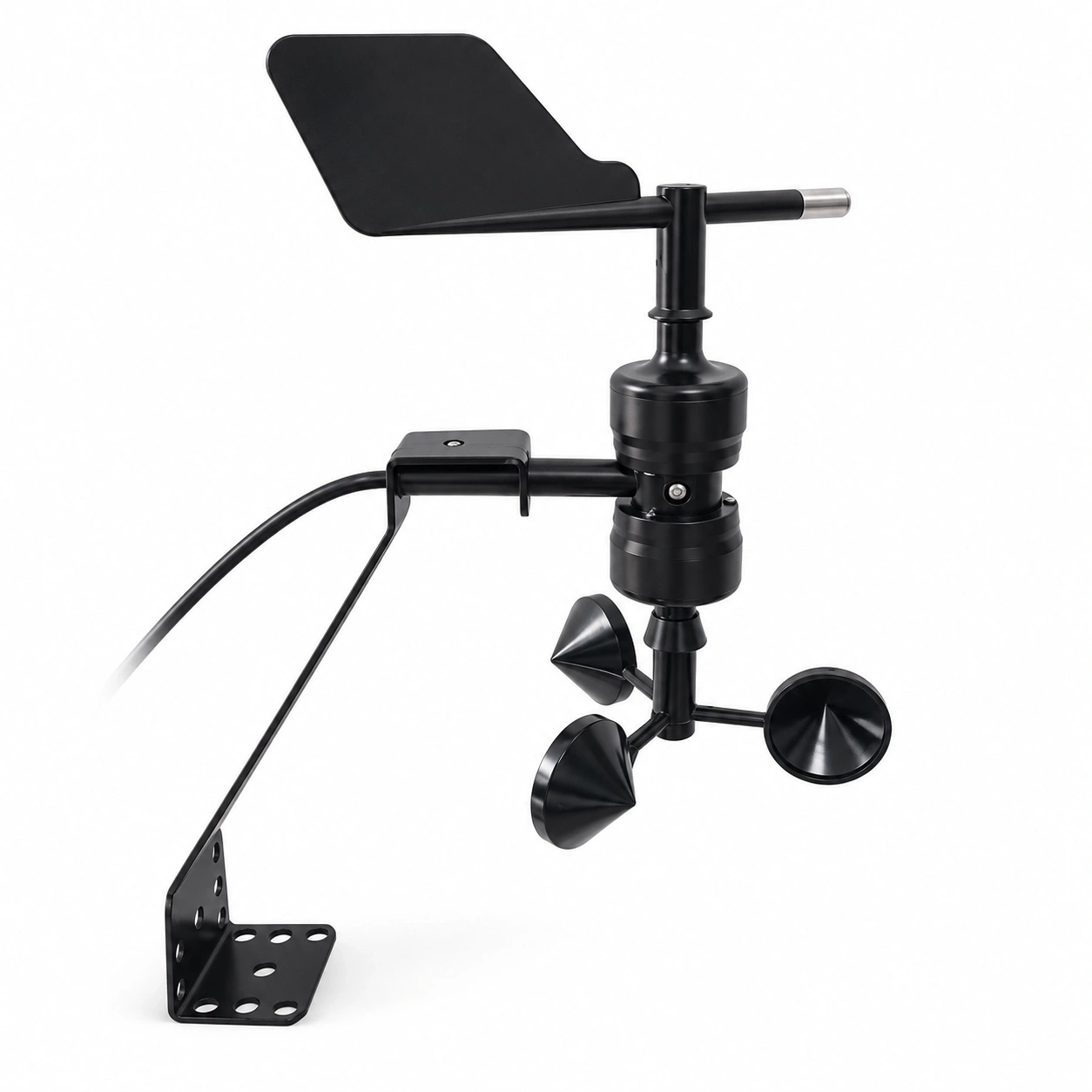
Integrated Cup Anemometer Wind Speed and Direction Sensor
Learn More
-
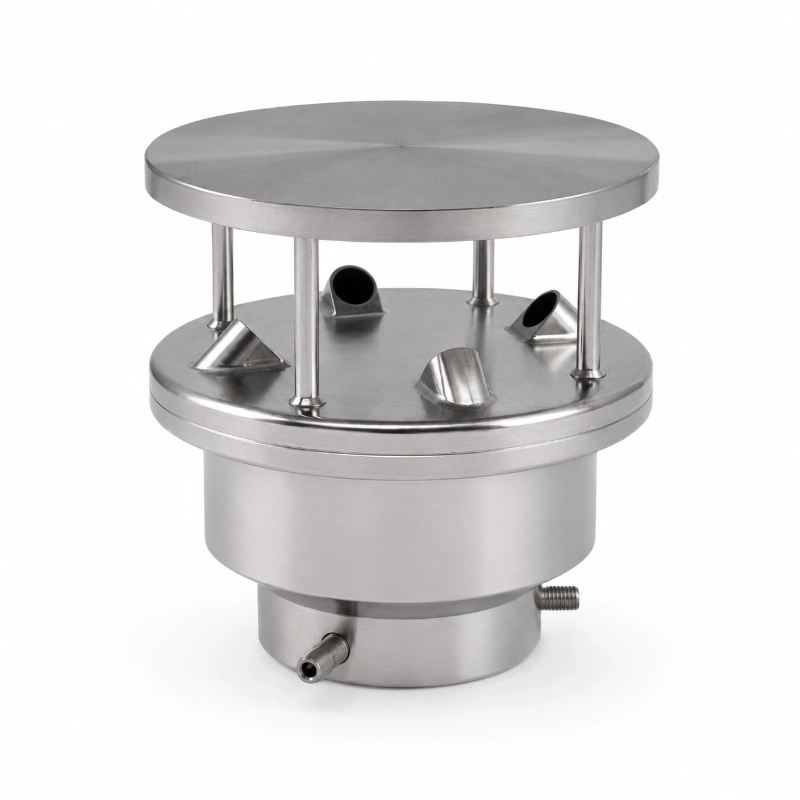
316 Stainless Steel Ultrasonic Wind Sensor for Offshore Wind Monitoring
Learn More
-
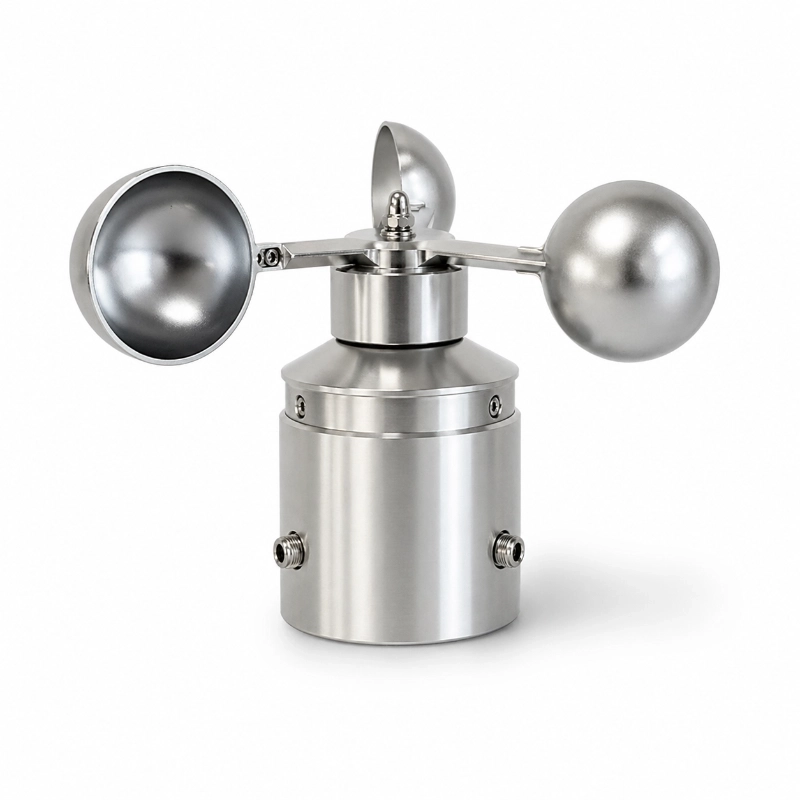
Wind Speed Sensor with Aerospace-grade Aluminum Body for Wind Energy Monitoring
Learn More
-
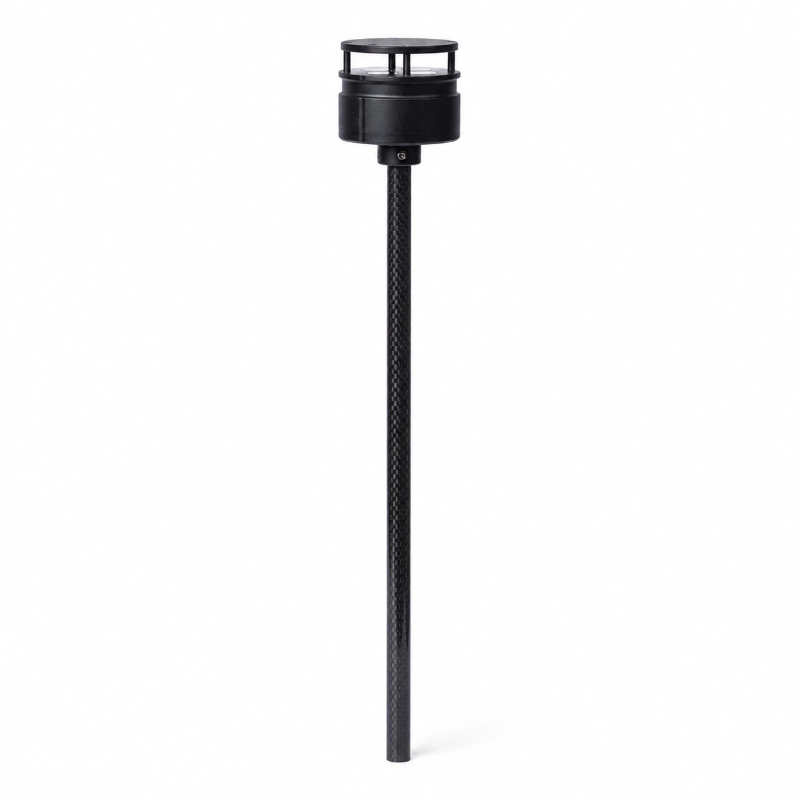
UAV Ultrasonic Wind Speed Direction Sensor
Learn More
-
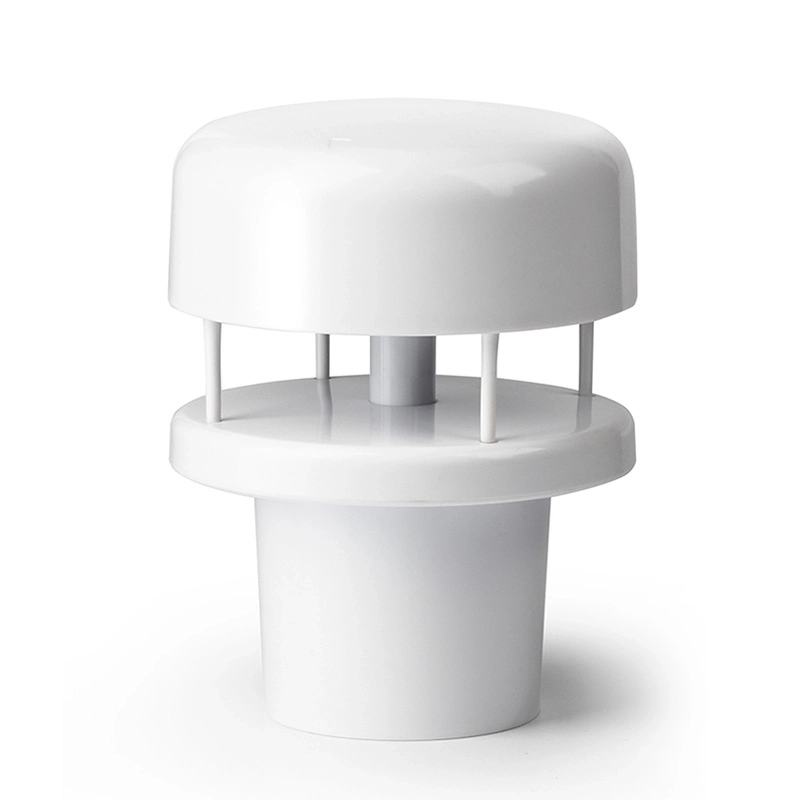
Ultrasonic Weather Station for Wind and Climate Monitoring
Learn More