+86 13520127780
  info@jingelway.com








How Transmission Line Weather Monitoring Systems Improve Power Grid Reliability
Release time: 2026-08-18
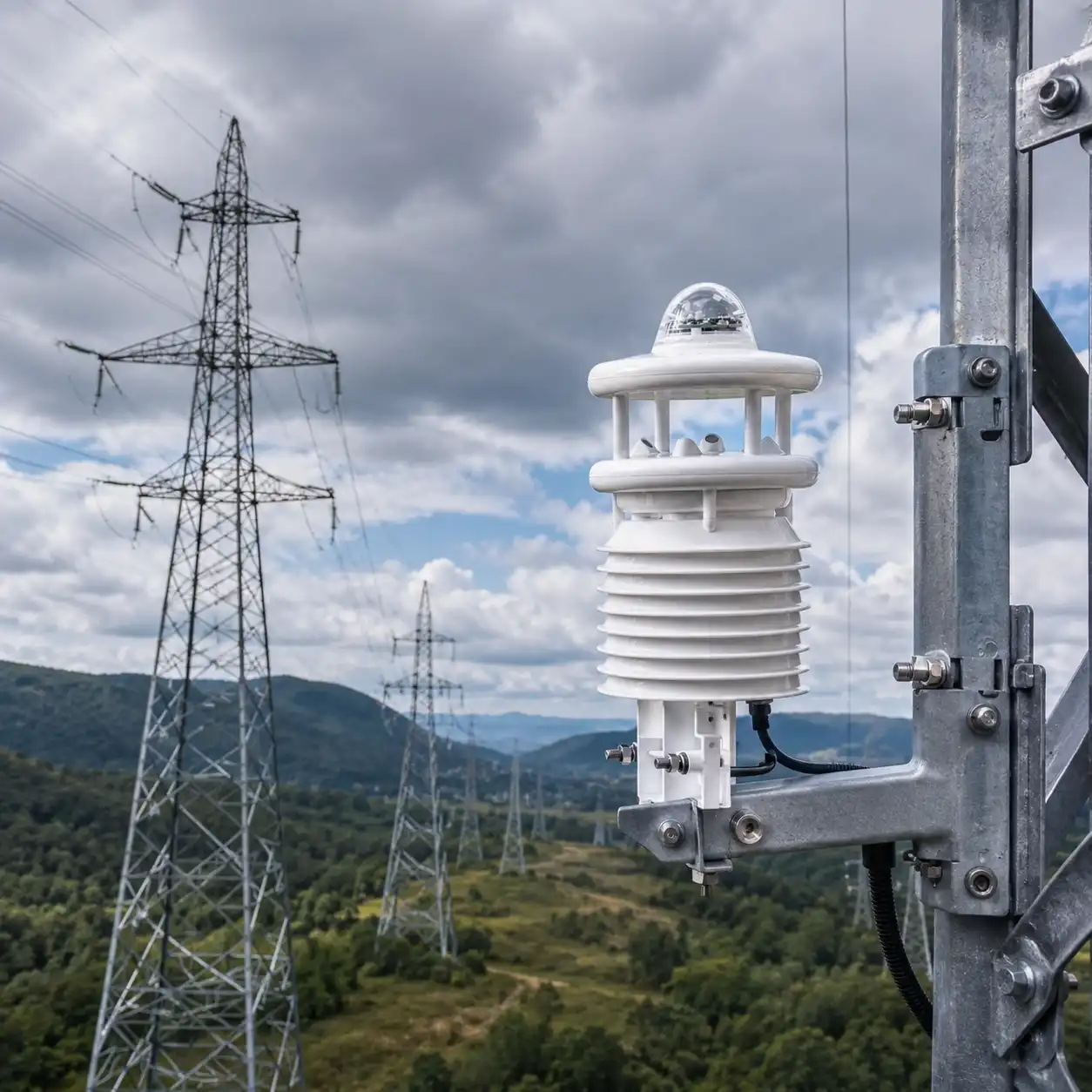
Electric power transmission networks are critical infrastructure connecting power generation facilities with cities, industries, and communities.
However, overhead transmission lines are continuously exposed to changing environmental conditions, including strong winds, icing, heavy rainfall, thunderstorms, fog, extreme temperatures, and other weather-related risks.
Traditional weather stations often provide regional weather information, but they may not accurately represent the local microclimate conditions around transmission towers and power corridors.
This is why more power utilities and smart grid projects are adopting transmission line weather monitoring systems to collect real-time environmental data and improve grid safety.
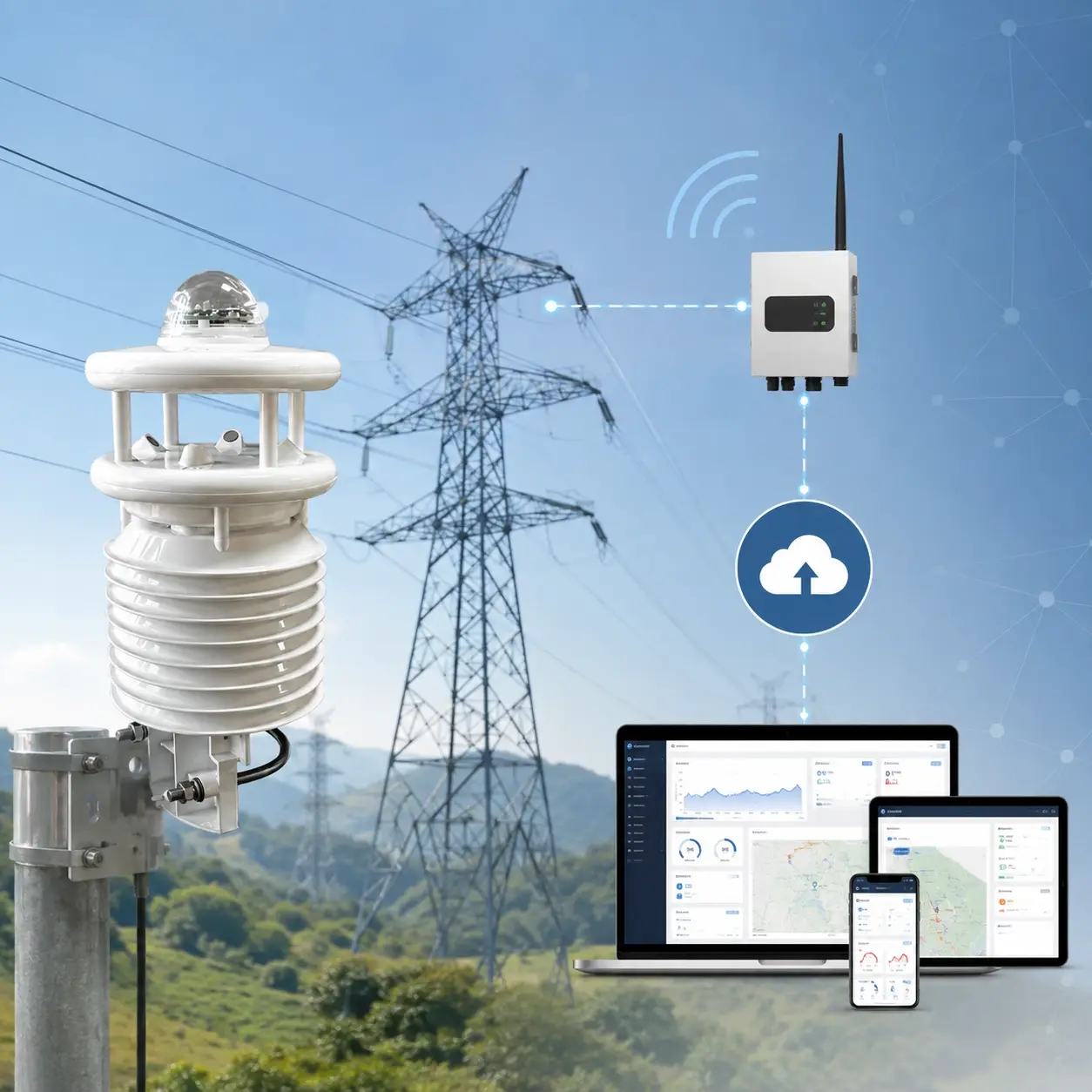
A modern transmission line weather monitoring system combines meteorological sensors, IoT communication, data acquisition units, and cloud platforms to provide real-time weather intelligence for power infrastructure management.
Why Weather Monitoring Is Important for Transmission Lines
Transmission lines are usually installed across complex environments such as:
- Mountain areas
- Forest regions
- Coastal zones
- Valleys and rivers
- High-altitude areas
- Remote areas with limited access
These locations often experience weather conditions that can directly affect power transmission safety.
1. Strong Wind and Conductor Galloping Risk
Strong wind is one of the major environmental threats to overhead transmission lines.
Wind pressure can cause:
- Conductor vibration
- Conductor galloping
- Tower mechanical stress
- Reduced line clearance
- Potential line faults
By monitoring:
- Wind speed
- Wind direction
- Temperature
- Humidity
operators can better understand wind-related risks and improve maintenance decisions.
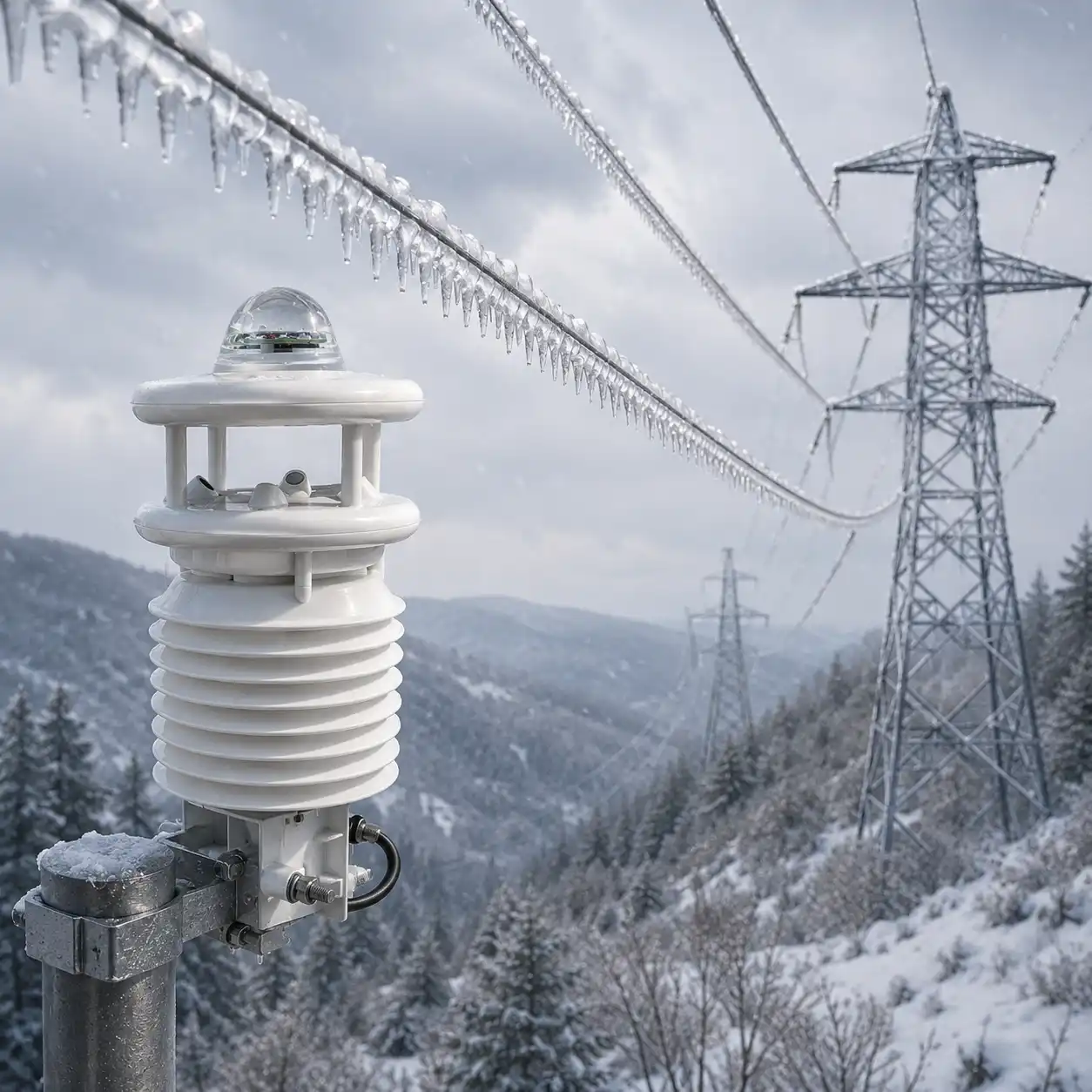
2. Transmission Line Icing Risk
In cold regions, ice accumulation on conductors can significantly increase mechanical load.
Icing conditions are usually related to:
- Low temperature
- High humidity
- Rain or freezing precipitation
- Wind conditions
A transmission line weather monitoring system helps collect localized weather data to support:
- Ice risk assessment
- Early warning
- Maintenance planning
- Emergency response
For regions with frequent freezing weather, microclimate monitoring becomes an important part of transmission line safety management.
3. Heavy Rainfall and Environmental Hazards
Transmission towers located in mountainous or remote areas may face additional risks from:
- Heavy rainfall
- Soil erosion
- Landslides
- Flash floods
- Foundation instability
By integrating rainfall monitoring with environmental sensors, utilities can identify high-risk periods and improve disaster prevention strategies.
What Parameters Should a Transmission Line Weather Monitoring System Measure?
A professional power grid weather monitoring solution usually includes multiple sensors according to project requirements.
Typical monitoring parameters include:
Meteorological Parameters
- Wind speed
- Wind direction
- Temperature
- Relative humidity
- Atmospheric pressure
- Rainfall
- Solar radiation
- UV radiation
Environmental Risk Parameters
- Visibility
- Noise
- PM2.5 / PM10
- Weather condition recognition
- Ice-risk related environmental factors
Different projects may require different sensor combinations depending on:
- Geographic location
- Climate conditions
- Grid operation requirements
- Communication availability
JW-IoT supports customized configurations for different transmission corridor monitoring projects.
How IoT Technology Enables Smart Grid Weather Monitoring
Traditional inspection methods usually depend on manual patrols and periodic checks.
For large transmission networks, this approach has several limitations:
- High inspection cost
- Slow response to extreme weather
- Limited visibility of remote areas
- Lack of continuous environmental data
IoT-based transmission line monitoring changes this approach.
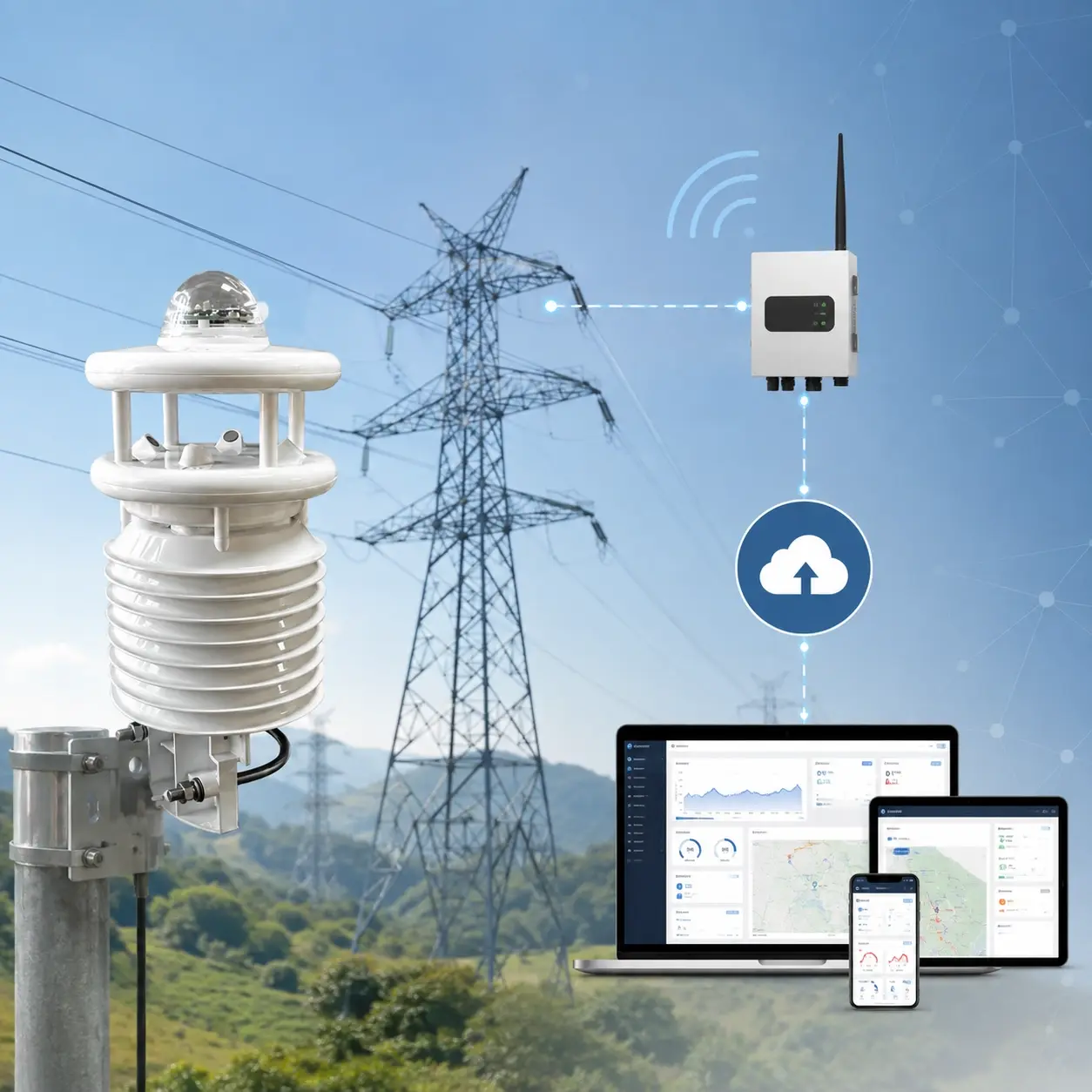
A typical architecture includes:
1. Field Sensor Layer
Weather sensors installed near:
- Transmission towers
- Power corridors
- Mountain sections
- High-risk line areas
collect real-time environmental information.
2. Data Acquisition Layer
A data logger or RTU collects sensor signals through interfaces such as:
- RS485 Modbus
- Analog signals
- Digital inputs
The collected data is prepared for remote transmission.
3. Communication Layer
Depending on site conditions, transmission line monitoring systems may use:
- 4G LTE
- LoRaWAN
- NB-IoT
- Ethernet
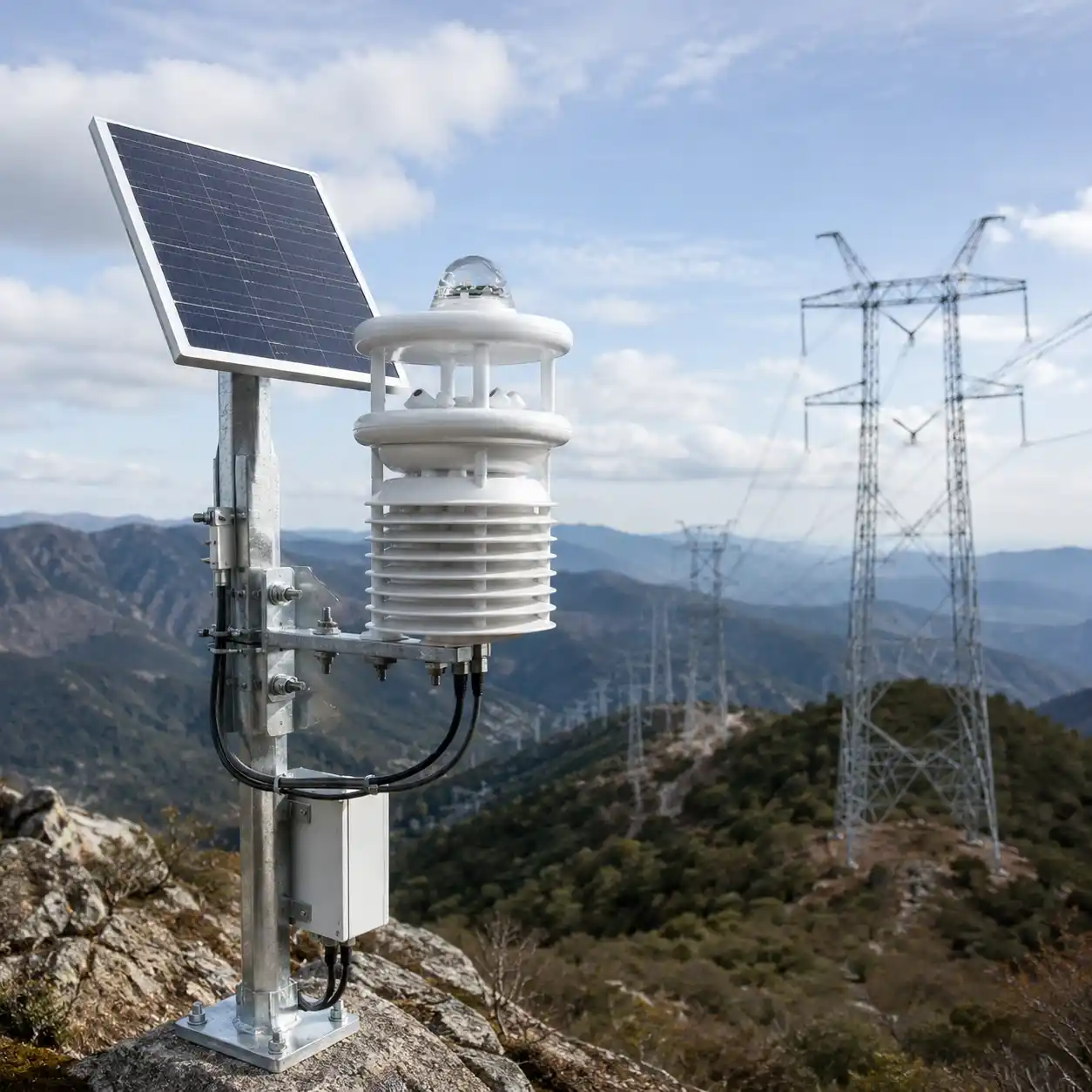
For remote mountain areas, wireless communication and solar power supply can reduce installation difficulties.
JW-IoT provides multiple communication options for industrial IoT monitoring applications.
4. Cloud Monitoring Platform
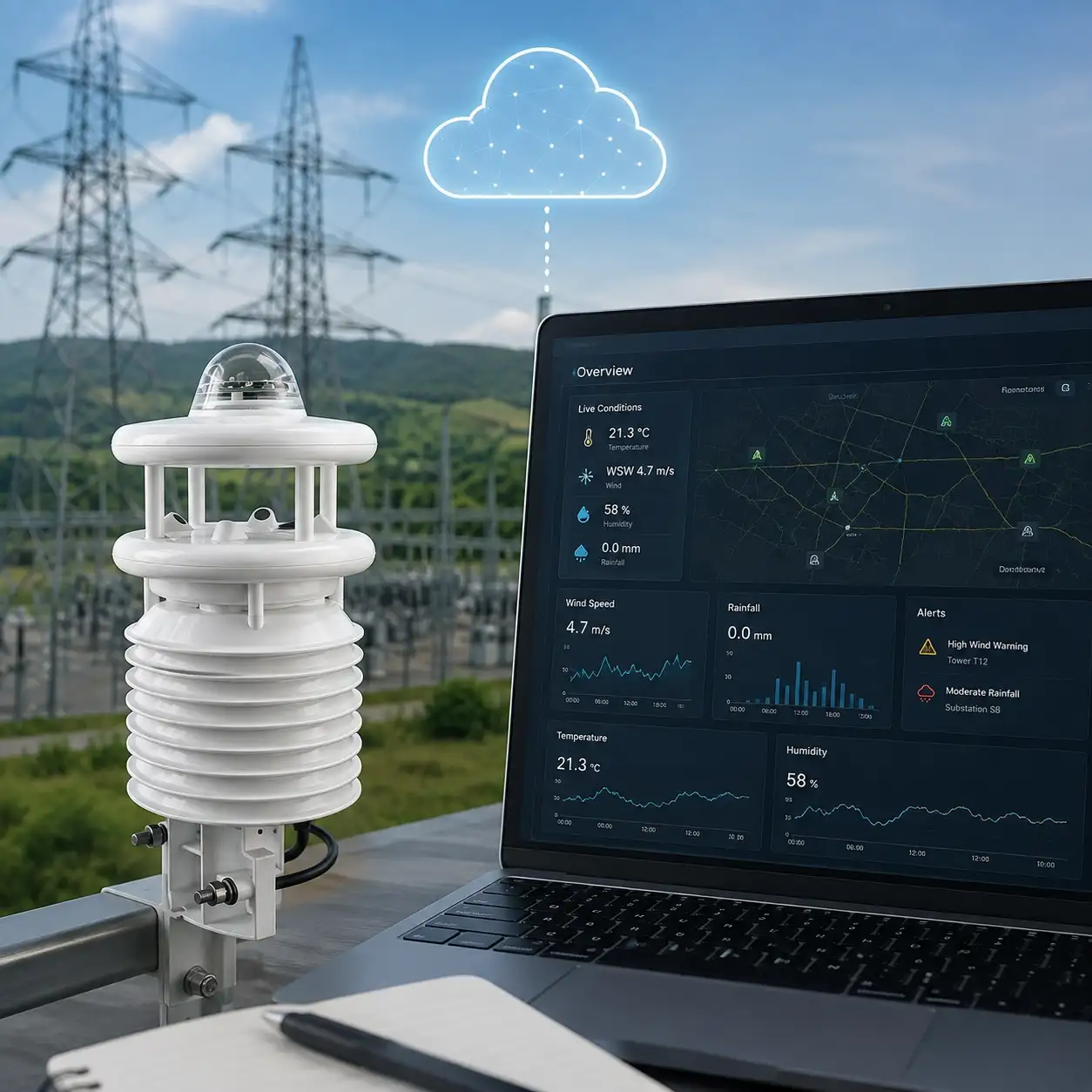
The cloud platform allows operators to:
- View real-time weather conditions
- Analyze historical trends
- Set alarm thresholds
- Receive abnormal weather notifications
- Manage multiple monitoring locations
This enables centralized management of distributed transmission infrastructure.
Transmission Line Weather Monitoring System Deployment Scenarios
A flexible monitoring system can be applied in different power infrastructure environments.
Mountain Transmission Lines
Challenges:
- Strong wind
- Snow and icing
- Difficult inspection access
Recommended monitoring:
✔ Wind speed and direction
✔ Temperature and humidity
✔ Rainfall
✔ Solar power supply
✔ Wireless communication
Coastal Transmission Corridors
Challenges:
- Strong storms
- High humidity
- Salt environment
Recommended monitoring:
✔ Wind monitoring
✔ Rainfall monitoring
✔ Environmental monitoring
✔ Remote alarm system
Long-Distance Smart Grid Networks
Challenges:
- Large geographic coverage
- Multiple monitoring points
- Communication difficulty
Recommended architecture:
Sensor → Data Logger → Wireless Gateway → Cloud Platform → Control Center
Benefits of Installing a Transmission Line Weather Monitoring System
For power utilities and engineering companies, real-time environmental monitoring can provide several benefits:
Improved Grid Reliability
Real-time weather information helps operators understand environmental conditions affecting transmission lines.
Faster Risk Response
Extreme weather events can be detected earlier through automatic alarms.
Reduced Manual Inspection Costs
Remote monitoring reduces unnecessary field inspections in difficult locations.
Better Preventive Maintenance
Historical weather data helps identify high-risk sections and optimize maintenance schedules.
Support for Smart Grid Development
Environmental sensing is an important component of digital power infrastructure and IoT-enabled grid management.
How to Select the Right Transmission Line Weather Monitoring Solution
Before selecting a monitoring system, project teams should evaluate:
1. Monitoring Location
Consider:
- Mountain area
- Coastal area
- Urban grid
- Remote corridor
2. Required Parameters
Define:
- Weather parameters
- Risk indicators
- Alarm requirements
3. Communication Conditions
Select suitable communication methods:
- 4G LTE
- LoRaWAN
- NB-IoT
- Ethernet
4. Power Supply
For remote transmission towers, consider:
- Solar power supply
- Low-power sensors
- Battery backup
5. Integration Requirements
For large utility projects, confirm:
- Data protocols
- API requirements
- Platform integration
- SCADA compatibility
JW-IoT Transmission Line Weather Monitoring Solution
JW-IoT provides integrated weather and environmental monitoring solutions designed for power grids, transmission corridors, and remote infrastructure projects.
The system can combine:
- Weather sensors
- Data acquisition terminals
- Wireless communication modules
- Solar power systems
- Cloud monitoring platforms
Applications include:
- High-voltage transmission line monitoring
- Smart grid weather monitoring
- Transmission corridor risk assessment
- Icing monitoring projects
- Remote power infrastructure monitoring
Learn more:
👉 Transmission Line Weather Monitoring System for Power Grids
Related solutions:
- Industrial IoT Monitoring Solution
https://www.jw-iot.com/category/solutions/industrial-iot-monitoring/ - High-Voltage Transmission Line Microclimate Monitoring Station
https://www.jw-iot.com/high-voltage-transmission-line-microclimate-monitoring-station/ - Wind Speed Direction Sensor for Wind Energy Monitoring
- Outdoor LoRaWAN Gateway for Remote Monitoring
FAQ
1. What is a transmission line weather monitoring system?
A transmission line weather monitoring system is an IoT-based monitoring solution that measures local weather conditions around power transmission infrastructure and provides real-time data for grid safety management.
2. Why is microclimate monitoring important for power grids?
Local weather conditions around transmission towers can be significantly different from regional weather forecasts. Microclimate monitoring provides more accurate environmental information for operation decisions.
3. What sensors are used for transmission line monitoring?
Common sensors include wind speed sensors, wind direction sensors, temperature humidity sensors, rainfall sensors, atmospheric pressure sensors, and solar radiation sensors.
4. Can transmission line monitoring systems work in remote areas?
Yes. Systems with solar power supply and wireless communication such as 4G or LoRaWAN are suitable for remote transmission corridors.
5. Can JW-IoT customize transmission line monitoring solutions?
Yes. JW-IoT supports customized sensor combinations, communication methods, OEM/ODM services, and integration requirements for different power grid projects.
Conclusion
As power grids become smarter and more interconnected, reliable environmental data is becoming increasingly important.
A transmission line weather monitoring system provides utilities with real-time visibility into wind, rainfall, temperature, humidity, icing risks, and other environmental conditions affecting power infrastructure.
By combining IoT sensors, wireless communication, and cloud platforms, power operators can improve grid reliability, optimize maintenance, and build safer smart grid systems.
For power utilities, EPC contractors, and smart grid integrators, investing in localized weather monitoring is an important step toward more intelligent and resilient power transmission management.