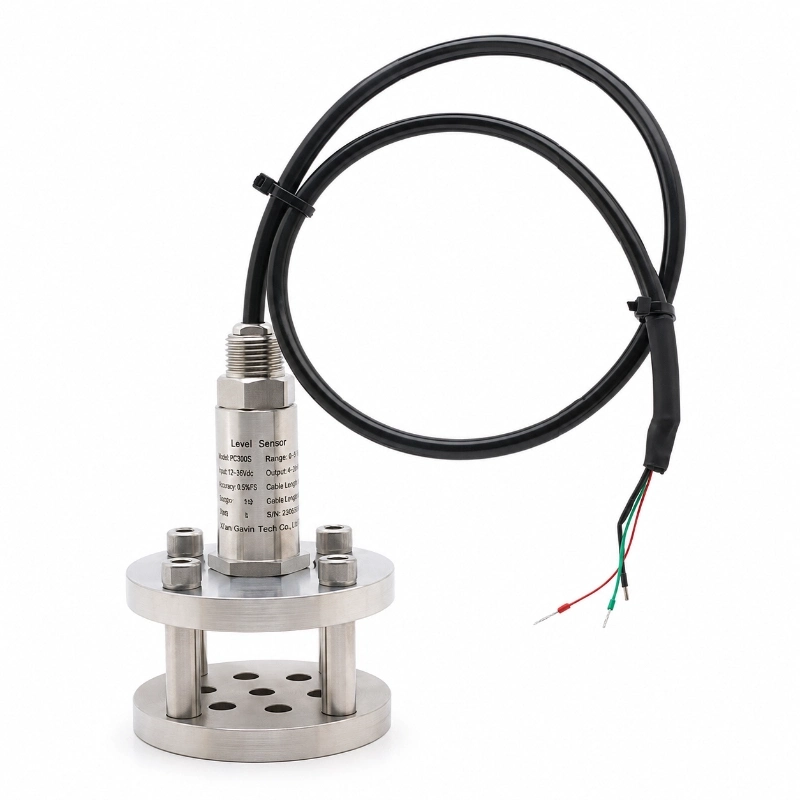
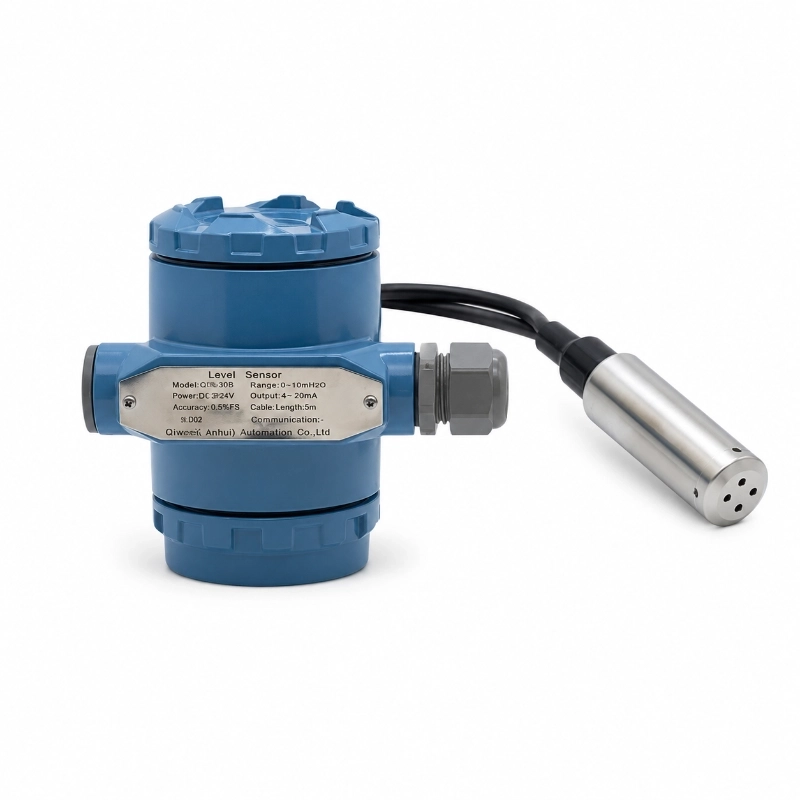
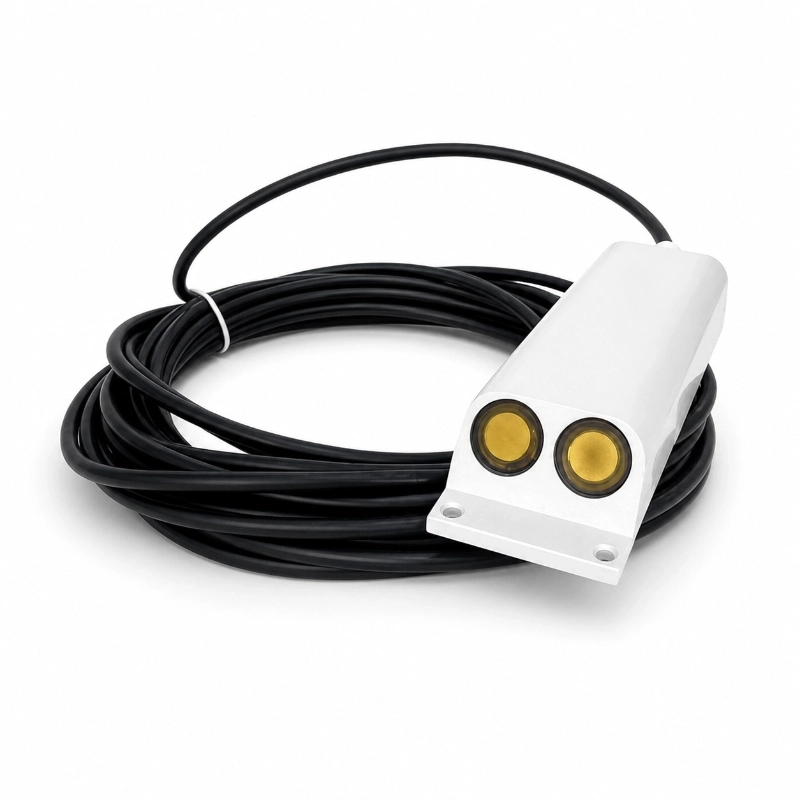
The JW-LM02X(JY07) sewage sludge submersible level transmitter is designed for continuous liquid level measurement in wastewater tanks, sewage pumping stations, sludge-containing basins, and industrial wastewater monitoring systems.
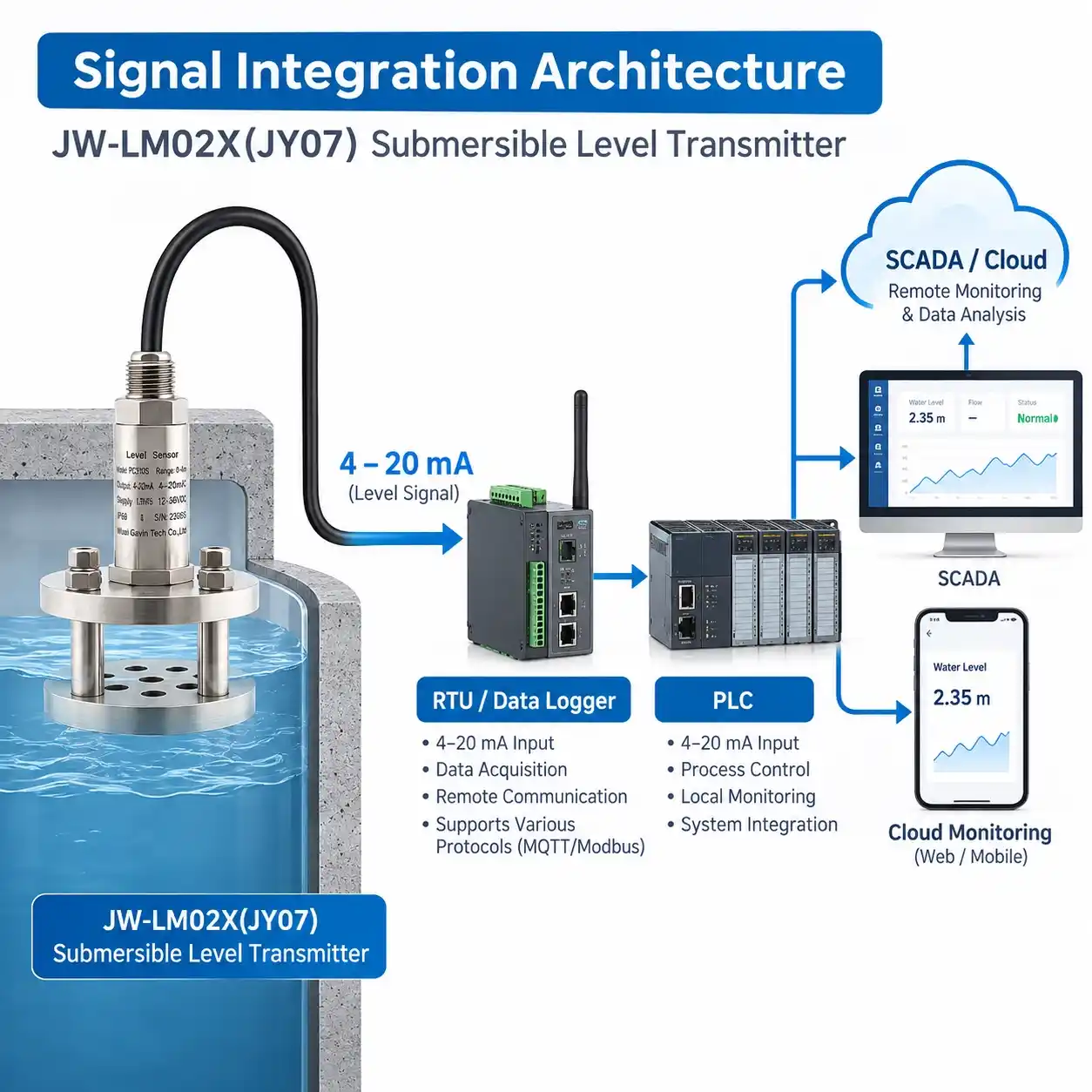
Featuring an Al₂O₃ ceramic diaphragm, IP68 protection, and a standard 4–20mA output, this hydrostatic level transmitter converts liquid pressure into an electrical signal for connection to PLCs, RTUs, data loggers, and industrial monitoring systems.
With measuring ranges from 0–10 mH₂O to 0–100 mH₂O, the transmitter supports different wastewater tank depths and submerged monitoring requirements.
1. What Is a Sewage Sludge Submersible Level Transmitter?
A sewage sludge submersible level transmitter is a pressure-based instrument used to measure the hydrostatic head of wastewater or sludge-containing liquid.
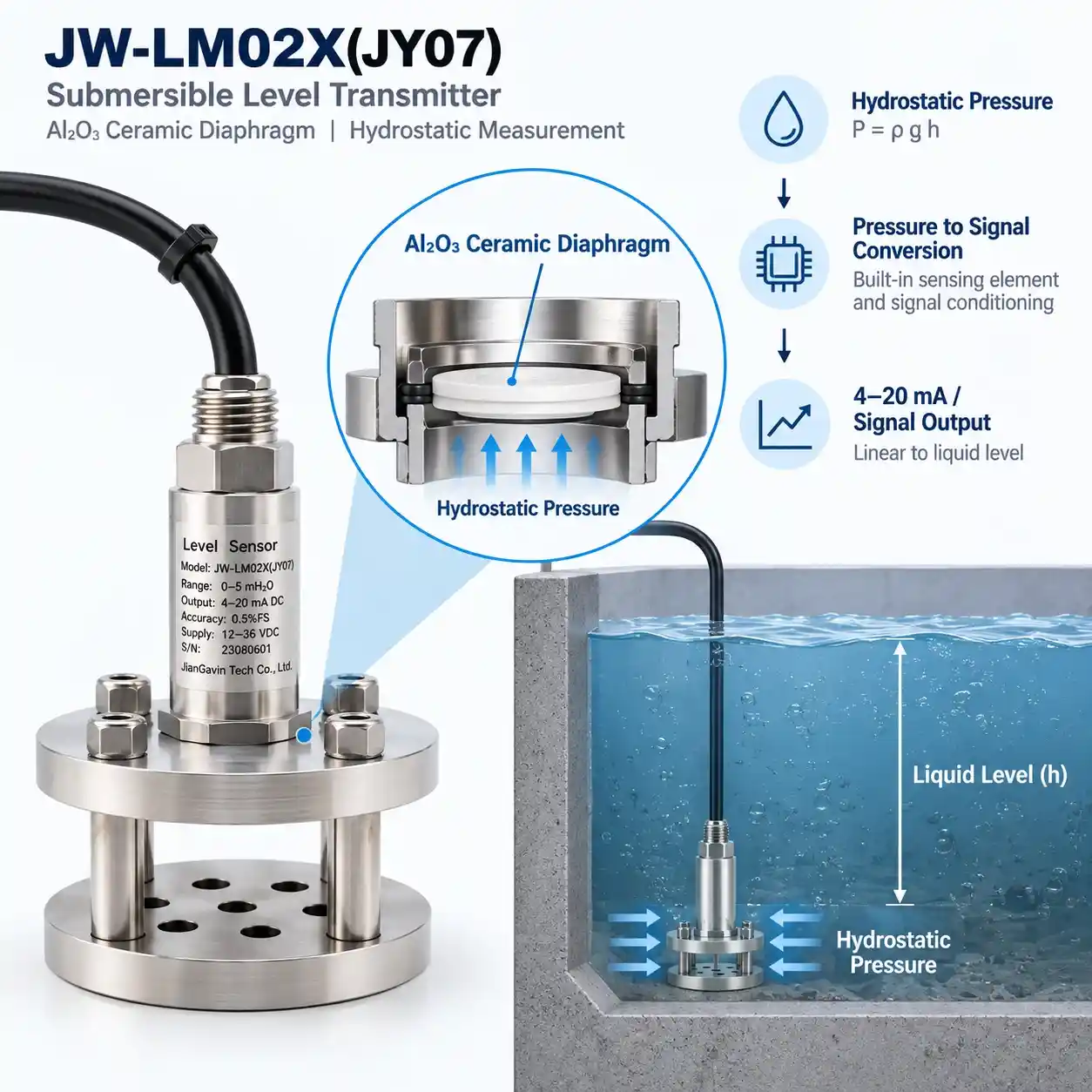
The instrument is submerged at a selected measuring position. As the liquid level changes, the pressure acting on the sensing diaphragm changes.
The transmitter processes the pressure signal and converts it into a standard electrical output.
For a liquid of approximately constant density, the hydrostatic relationship is:
P = ρgh
Where:
P = hydrostatic pressure
ρ = liquid density
g = gravitational acceleration
h = liquid height above the measuring point
This principle enables continuous level measurement without requiring a sensor mounted above the liquid surface.
Important: In sludge-containing wastewater, liquid density may change with solids concentration. These changes can affect calculated level accuracy. The transmitter measures hydrostatic pressure, not sludge blanket thickness or the interface between sludge and clarified water.
2. Why Use a Ceramic Diaphragm for Wastewater Level Measurement?
The JW-LM02X(JY07) uses an Al₂O₃ ceramic pressure-sensitive diaphragm.
Ceramic sensing diaphragms are used in industrial pressure measurement applications because they offer chemical resistance and mechanical stability under appropriate operating conditions.
Advantages for Wastewater Applications
Corrosion resistance
The ceramic diaphragm provides resistance to certain chemically demanding liquids. However, suitability depends on the actual wastewater composition and all wetted materials.
Pressure measurement stability
The sensing element, together with the transmitter’s signal conditioning circuit, converts applied pressure into a standardized output.
Submerged monitoring
The IP68 construction supports installation below the liquid surface, subject to the manufacturer’s immersion and installation requirements.
Industrial integration
The standard 4–20mA output can be connected to compatible industrial monitoring and control equipment.
Important Selection Considerations
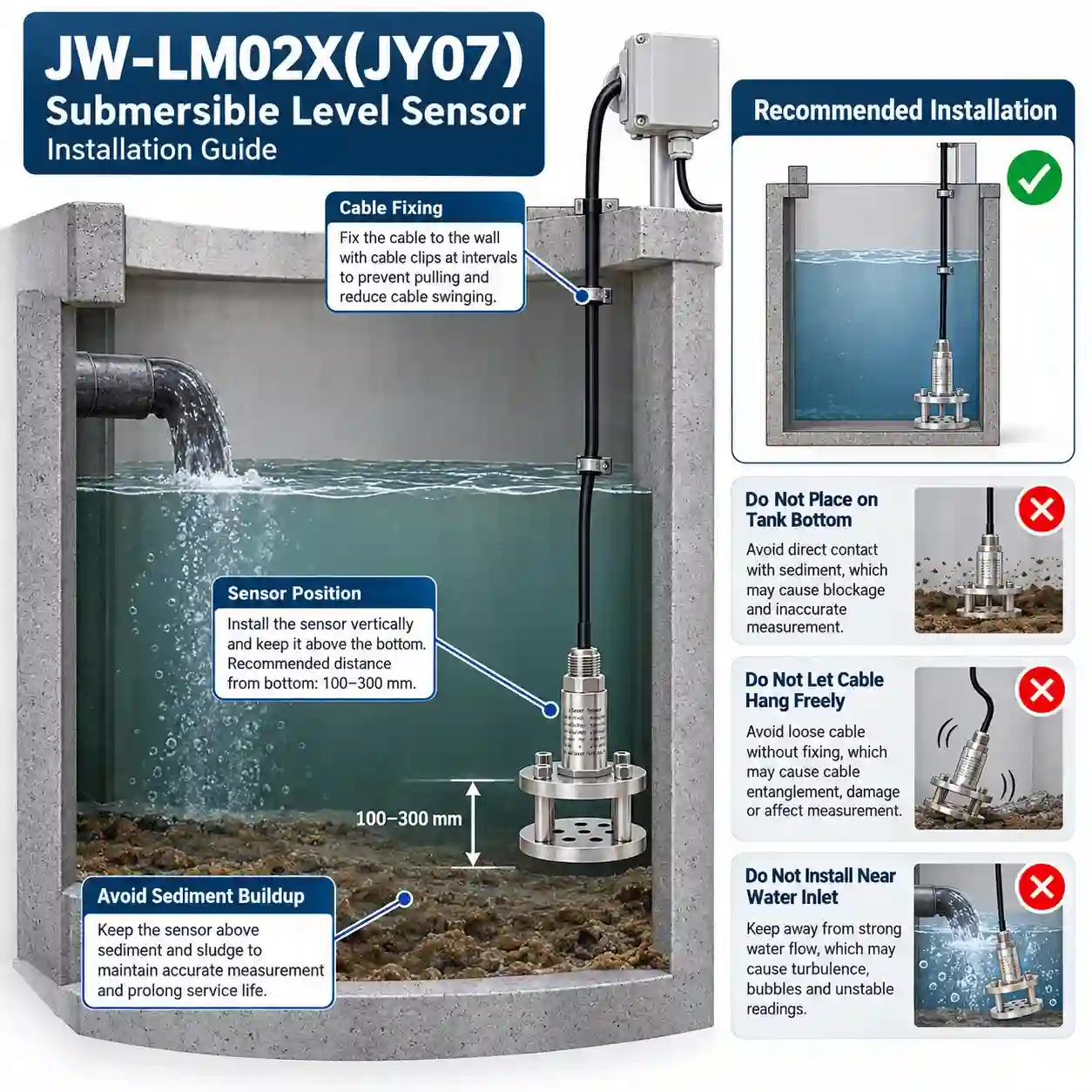
A ceramic diaphragm does not make a transmitter immune to sludge accumulation, grease buildup, abrasive particles, or chemical attack.
For wastewater containing high concentrations of solids, engineers should consider possible fouling, mechanical damage, material compatibility, and maintenance access.
3. Wastewater and Sludge Level Monitoring Applications
3.1 Sewage Pumping Stations
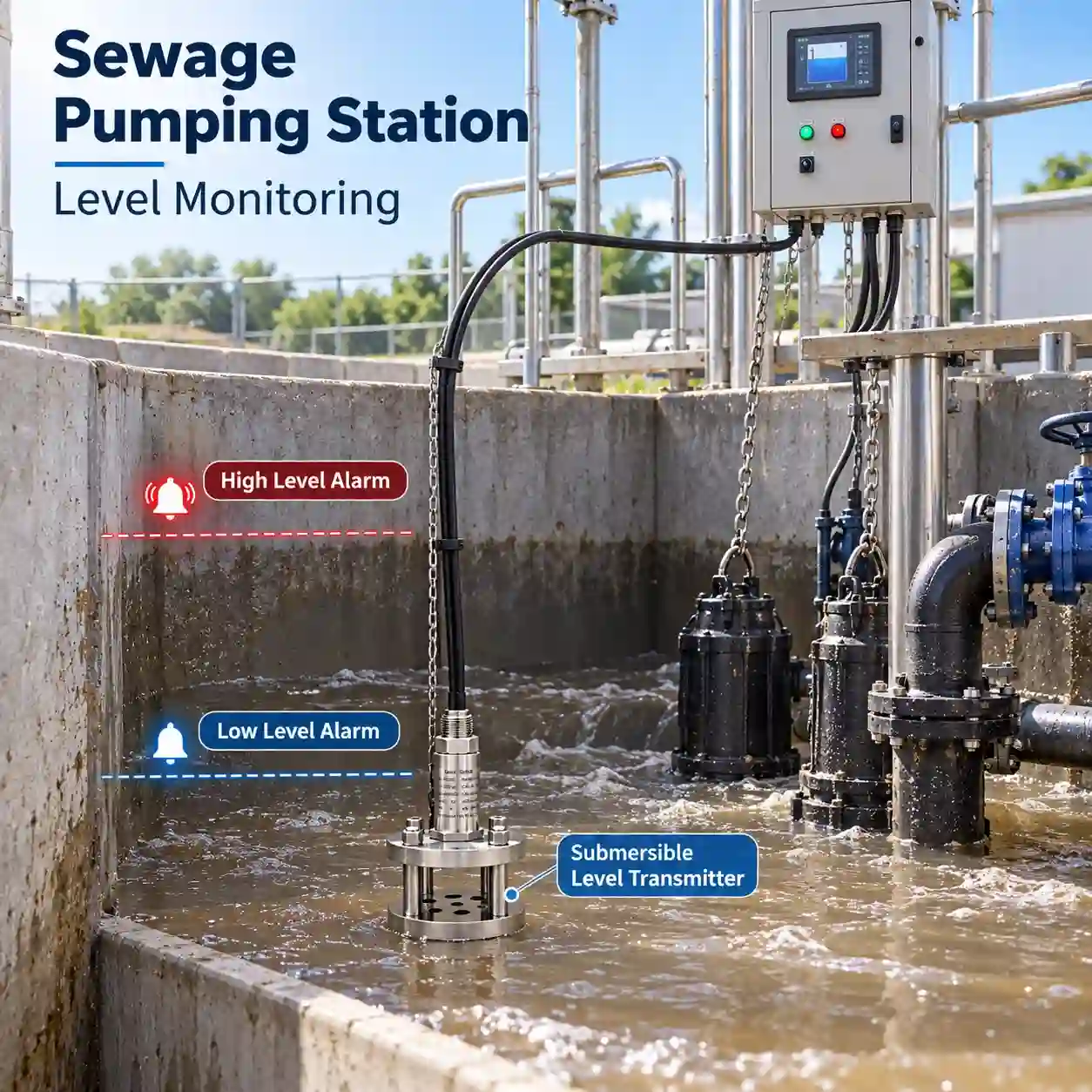
Sewage pumping stations require liquid level information for pump operation, alarm management, and overflow prevention.
A submersible wastewater level sensor can transmit continuous measurements to a compatible controller.
Typical functions include:
Pump start and stop level monitoring
High-level alarm inputs
Pumping chamber level trends
Remote pump station supervision
Pump control logic and protective interlocks must be configured independently in the control system.
3.2 Wastewater Treatment Basins
Wastewater facilities use tanks and basins for collection, treatment, equalization, and transfer.
The transmitter can measure liquid level in compatible basins where submerged pressure sensing is appropriate.
For applications involving heavy deposits, the installation position should minimize the risk of sensor burial and blockage.
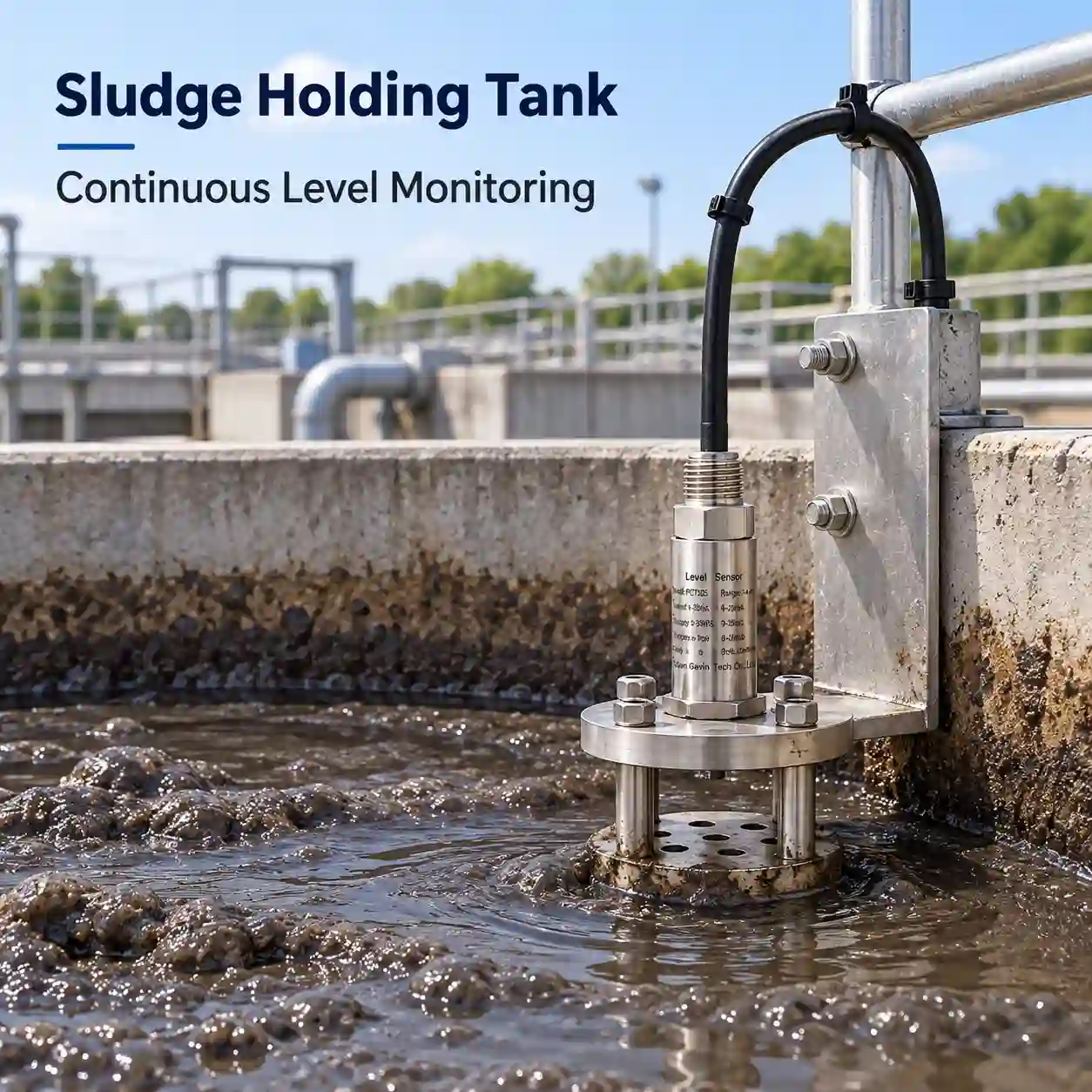
3.3 Sludge Holding Tanks
Sludge holding tanks may contain mixtures of water and suspended solids.
The JW-LM02X(JY07) can be considered for hydrostatic level monitoring where the liquid composition, density variation, and installation conditions are compatible.
For applications requiring accurate level conversion despite substantial density changes, additional compensation or another measurement technology may be necessary.
3.4 Industrial Wastewater Tanks
Industrial wastewater can contain chemicals, oils, suspended particles, and variable dissolved substances.
The available housing materials, including 316L, PTFE, and PVDF options, allow project-specific material selection.
However, compatibility must be confirmed against the actual process medium.
3.5 Drainage and Flood Monitoring
The transmitter can also provide submerged level measurements in drainage structures and suitable flood monitoring applications.
Ex ia IIC T6, subject to configuration and certification confirmation
Note: Output signals, power requirements, accuracy classes, pressure reference types, and material options depend on the selected configuration. Confirm the complete specification before ordering.
5. 4–20mA and Digital Output Integration
The standard JW-LM02X(JY07) configuration provides a 4–20mA signal.
This output is widely used in industrial process measurement because it can be connected to compatible analog input modules.
9. Configure Your Wastewater Level Monitoring Project
JW-IoT provides submersible level transmitters and related monitoring equipment for wastewater treatment, industrial water management, and distributed environmental monitoring.
Our team can review the measuring conditions and recommend an appropriate transmitter configuration for your project.
FAQ
Q
1. Can the JW-LM02X(JY07) measure sewage and sludge levels?
A
It measures hydrostatic pressure in compatible sewage and sludge-containing liquids. Pressure can be converted into liquid height when the liquid density and reference conditions are known.
Q
2. Can it measure the sludge blanket interface?
A
No sludge-interface measurement function is specified. Measuring the boundary between settled sludge and clarified water generally requires a different measurement approach.
Q
3. What is the standard measuring range?
A
The standard range is 0–10 mH₂O. Available ranges extend to 0–100 mH₂O.
Q
4. Does it support 4–20mA output?
A
Yes. The standard version provides a 4–20mA signal for compatible industrial monitoring and control equipment.
Q
5. Can it connect to an RS485 data logger?
A
An RS485 output option is listed. The electrical interface, communication protocol, and logger compatibility must be confirmed for the selected version.
Q
6.Is the transmitter suitable for continuous submersion?
A
It has an IP68 protection rating and is designed for submerged operation. The permitted immersion conditions should be confirmed for the complete selected assembly.
Q
7. Does the ceramic diaphragm prevent fouling?
A
No. Ceramic construction provides certain material advantages but does not eliminate deposits, grease accumulation, or mechanical abrasion.
Q
8. Can the cable length and housing material be customized?
A
Yes. The product page lists configurable cable length, housing material, measuring range, and output options.
 +86 13520127780
 info@jingelway.com