Open Channel Flow Meter for Smart Drainage Monitoring
Key Features
Non-contact radar measurement: The sensor does not touch the water surface, reducing maintenance risks in open channels, sewage outlets, and harsh outdoor environments.
Integrated water level and flow monitoring: Combines radar water level measurement and open channel flow calculation for continuous real-time monitoring.
High measurement accuracy: Supports high-precision level measurement with ±2 mm and ±0.05% FS accuracy and 0.1 mm resolution.
Multiple measuring ranges available: Measurement ranges include 2 m 7 m and 15 m, suitable for small channels, drainage systems, and open channel flow monitoring projects.
Low-power battery operation: Built-in rechargeable lithium battery supports long-term field deployment, with maximum working duration up to 5 years depending on reporting interval and site conditions.
Wireless data transmission: Supports 4G NB-IoT and LoRa communication options for remote data upload and unattended monitoring stations.
Bluetooth mobile app configuration: Built-in low-power Bluetooth allows on-site parameter setting and debugging through a mobile app without wiring or laptop connection.
IP68 waterproof protection: Fully sealed waterproof design is suitable for submerged vapor, rain, splashing water, and long-term outdoor environments.
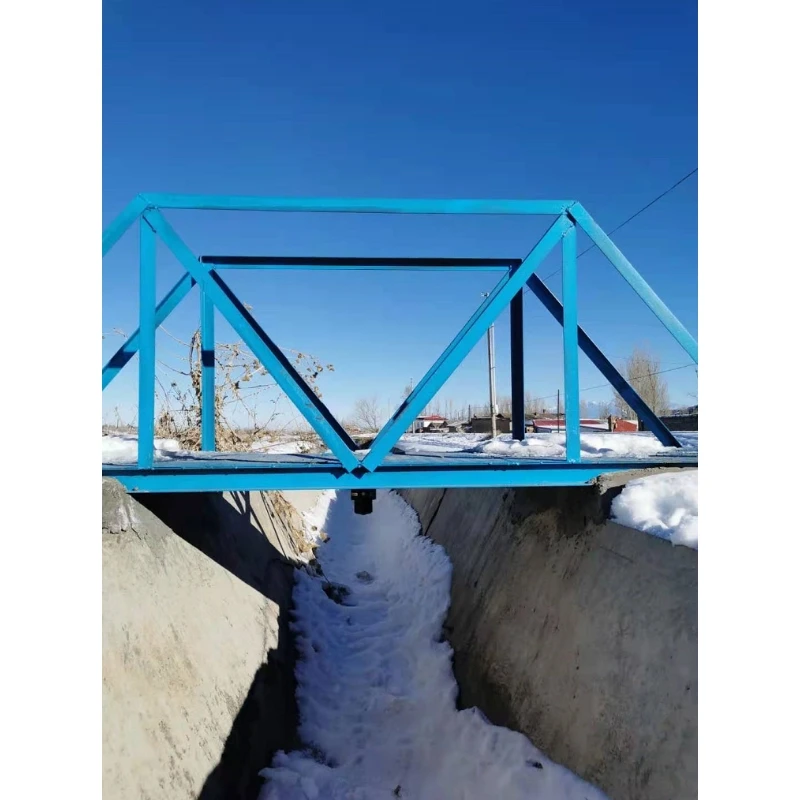
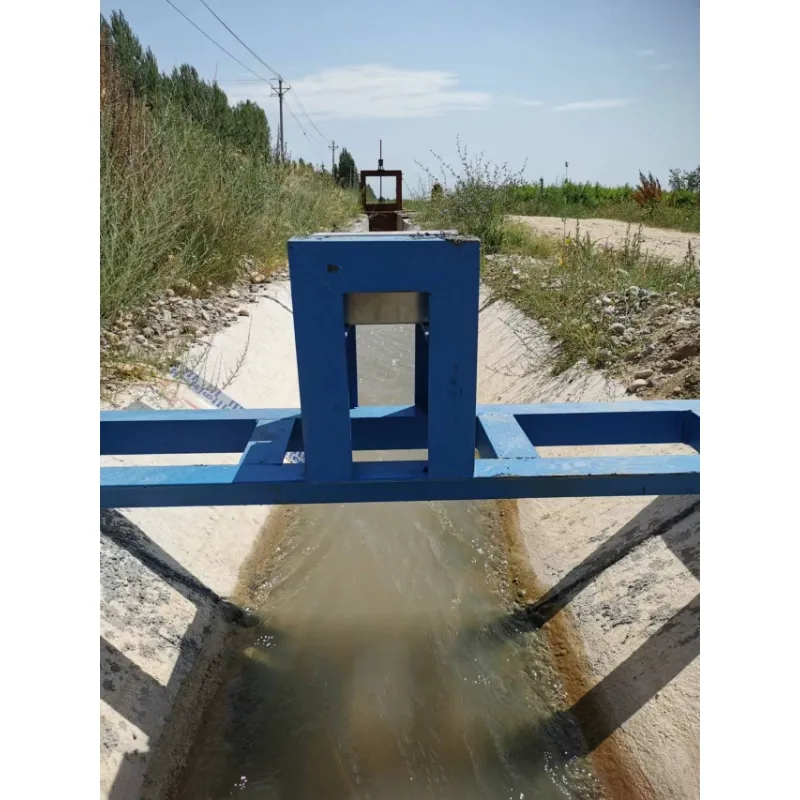
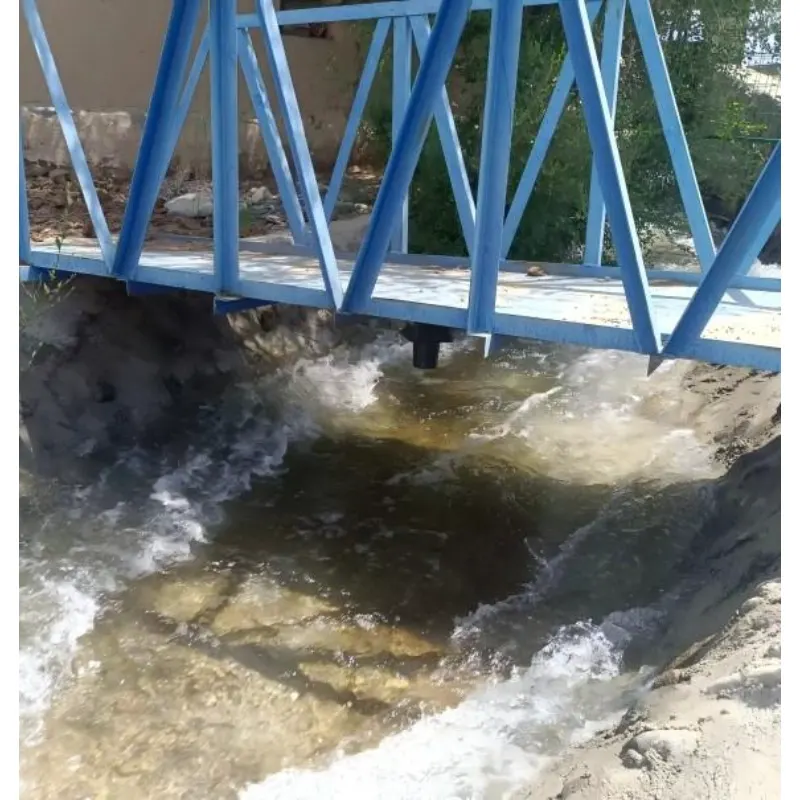
Compact and lightweight structure: Small size and integrated design make installation easier on bridges, channel walls, drainage outlets, brackets, and monitoring poles.
Multiple protocol support: Supports SL651 SZY206 MQTT HJ212 HTTP and customized protocols for integration with hydrology platforms and IoT systems.
Remote maintenance and upgrade: Supports wireless remote parameter configuration, data management, and system maintenance for distributed monitoring networks.
Suitable for harsh monitoring sites: Applicable to water conservancy, agriculture, environmental protection, industrial wastewater, urban drainage, and pipe outlet monitoring.
Non-Contact Radar Measurement · Integrated Water Level and Flow Monitoring · Battery-Powered Remote Deployment · 4G / NB-IoT / LoRa Communication · Bluetooth Configuration · IP68 Protection
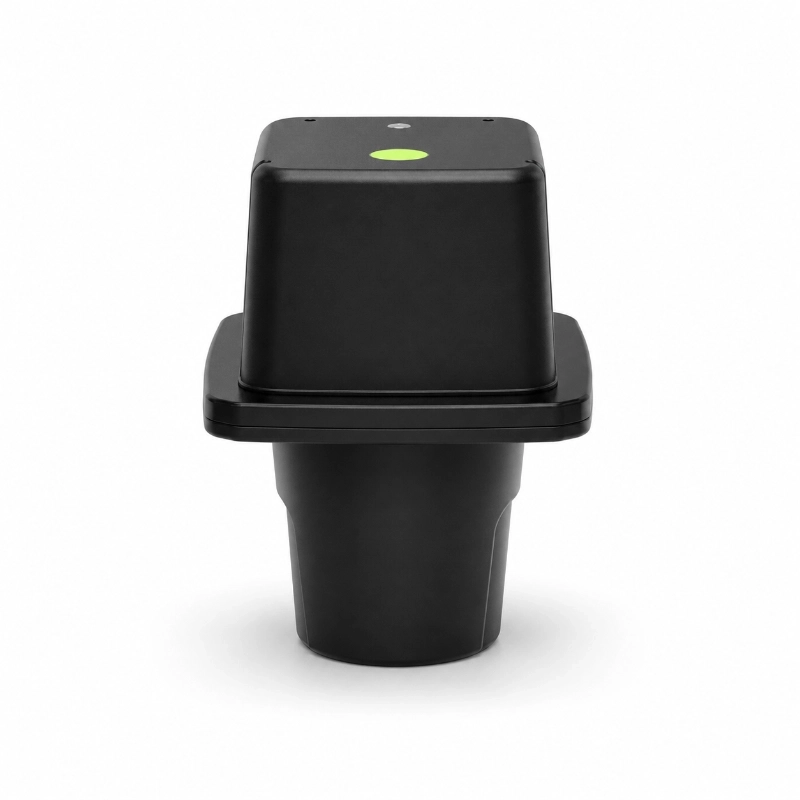
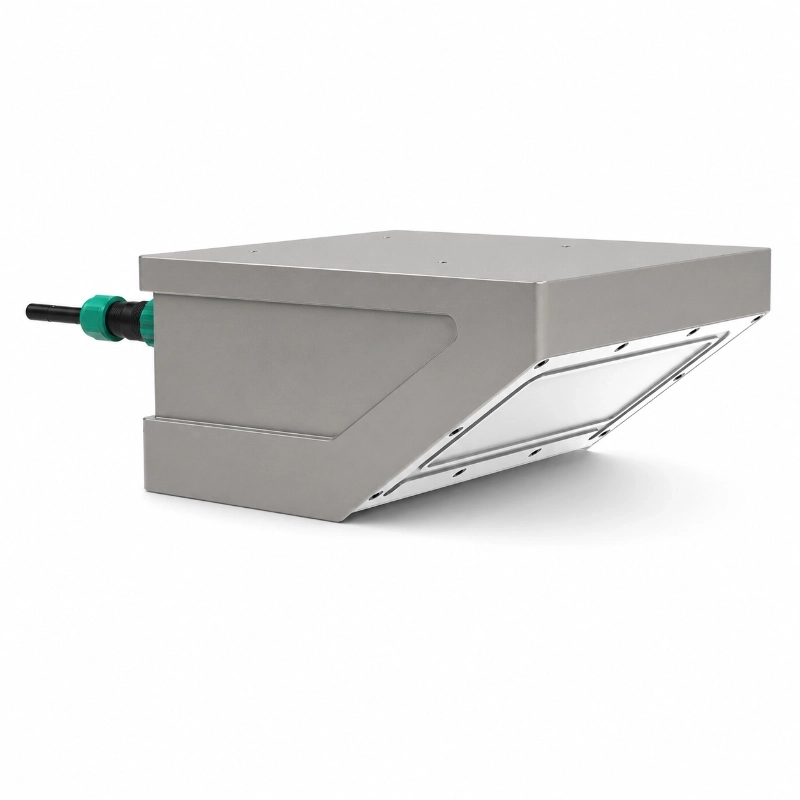
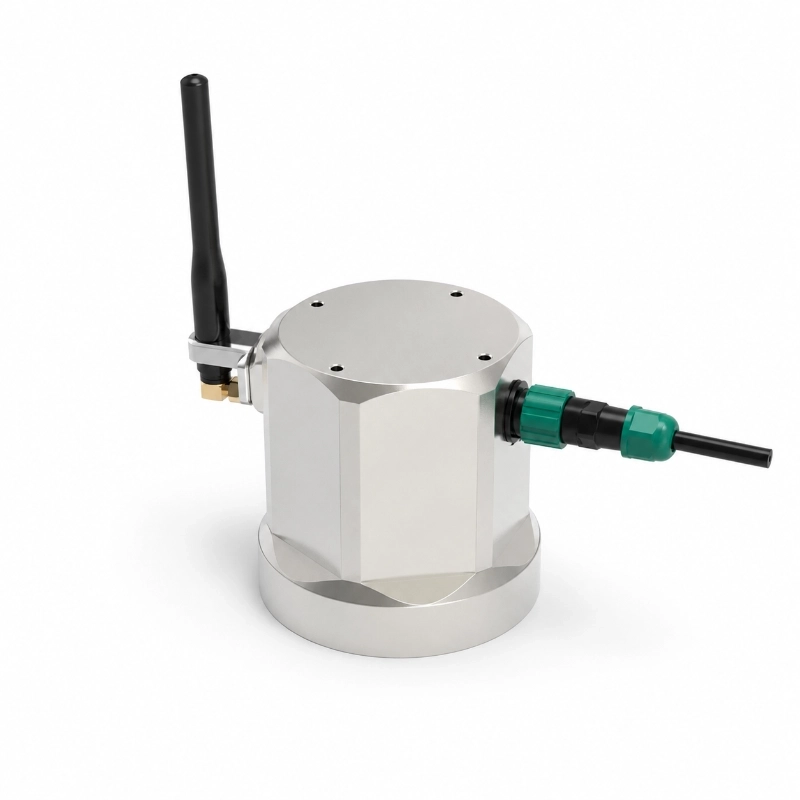
The JW-RD-306 (HJ04) Open Channel Flow Meter is a compact non-contact radar flow monitoring device designed for open channels, drainage outlets, water conservancy projects, industrial discharge points, and hydrological monitoring stations.
It integrates radar water level measurement, open channel flow calculation, RTU data transmission, Bluetooth configuration, and low-power operation into one device. With IP68 waterproof protection, wireless communication, and long battery life, it is well suited to remote outdoor flow monitoring, smart drainage monitoring, and urban waterlogging applications.
For projects where traditional contact sensors are difficult to install or maintain, this integrated radar solution provides a practical way to monitor water level and flow without direct contact with the water surface.
1. Product Description
The JW-RD-306 (HJ04) Open Channel Flow Meter is an integrated non-contact radar device for measuring water level and calculating flow in open channels.
It is designed for sites where conventional contact sensors may face difficulties due to sediment, floating debris, corrosion, sewage, splashing water, or unstable hydraulic conditions. Typical installation sites include:
drainage outlets
irrigation channels
culverts
industrial discharge points
hydrological monitoring stations
urban drainage systems
The device combines radar sensing, flow calculation, wireless communication, and battery-powered operation in a compact waterproof housing. It can collect field data and transmit monitoring results to a cloud platform or water management system for remote supervision.
For unattended monitoring projects, the built-in battery and wireless communication options reduce cabling work and simplify deployment in distributed outdoor monitoring networks.
2. Why This Meter Is Suitable for Smart Drainage Monitoring
Smart drainage monitoring requires more than a simple water level sensor. Monitoring points are often distributed, difficult to wire, exposed to rain, sewage vapor, debris, and changing water conditions.
The JW-RD-306 is designed for this type of environment because it offers:
Non-contact measurement, reducing maintenance risks in polluted or unstable channels
Integrated water level and flow monitoring, helping operators understand both hydraulic condition and discharge behavior
Wireless communication, suitable for remote or unattended monitoring stations
Battery-powered operation, reducing installation complexity in field deployments
Bluetooth setup, allowing field engineers to configure the device through a mobile app
IP68 protection, supporting long-term outdoor use
This makes it suitable for smart drainage projects, urban waterlogging monitoring, culvert monitoring, and open channel flow supervision where long-term remote monitoring is required.
4. Product Overview
The JW-RD-306 (HJ04) Open Channel Flow Meter is designed as an integrated solution for projects that need both water level information and open channel flow monitoring.
Instead of relying on contact probes installed in the water, the device uses radar technology to measure level from above the water surface. Based on the level data and the hydraulic model or channel parameters, the system can calculate open channel flow for real-time monitoring.
This design helps reduce common field problems such as:
sensor fouling
sediment interference
corrosion
maintenance difficulty in sewage or polluted water
unstable sensor performance in debris-laden water
Because the device integrates measurement, wireless transmission, and low-power operation in one housing, it is especially useful for distributed smart drainage networks and remote outdoor monitoring points.
5. How the Open Channel Flow Meter Works
The meter uses radar measurement to detect water level without touching the water surface.
In a typical smart drainage monitoring project, the workflow is:
The radar sensor measures water level from above the channel.
The device calculates or outputs the data required for open channel flow monitoring.
Monitoring data is transmitted through 4G, NB-IoT, or LoRa.
The data is uploaded to a cloud platform, drainage management system, or hydrology platform.
Operators use the data for real-time supervision, trend analysis, warnings, and maintenance planning.
This architecture is suitable for projects that require continuous remote monitoring rather than manual site inspection.
6. Why Non-Contact Radar Is Better for Many Drainage Sites
Drainage monitoring environments are often more difficult than standard clean-water channels. They may involve:
floating debris
sewage or industrial discharge
sediment accumulation
splashing water
difficult site access
high maintenance cost
In these environments, a non-contact radar meter offers practical advantages:
no direct contact with sewage or polluted water
reduced fouling and corrosion risk
lower maintenance frequency
safer operation in harsh sites
more convenient installation above the channel or outlet
For smart drainage systems, this helps improve reliability while reducing field service workload.
7. Technical Specifications
Item
Specification
Product Type
Integrated Radar Open Channel Flow Meter
Measuring Range
2 m 7 m 15 m
Measurement Accuracy
±2 mm ±0.05% FS
Resolution
0.1 mm
Blind Zone
Greater than 10 cm
Radar Frequency
60 GHz or 80 GHz
Protection Rating
IP68
Radar Antenna
Flat microstrip array radar antenna
Beam Angle
8°
Upload Interval
1 minute to 24 hours configurable
Battery
Rechargeable lithium battery
Average Current
≤10 mA
Sleep Current
≤0.1 mA
Working Duration
Up to 5 years depending on reporting interval
Storage Temperature
-40°C to 80°C
Operating Temperature
-30°C to 70°C
Wireless Communication
4G NB-IoT LoRa
Transmit Power
≤24 dBm
Receiver Sensitivity
-110 dBm
SIM Card
Built-in
Antenna
Built-in or external optional
Wireless Protocols
SL651 SZY206 MQTT HJ212 HTTP
Bluetooth Standard
Bluetooth 4.2 or above
Bluetooth Transmit Power
+8 dBm
Bluetooth Receiver Sensitivity
-95 dBm at 0.1% BER
Housing Color
Blue
Housing Material
Waterproof ASA
Product Size
146.5 × 146.5 × 188.5 mm
8. Communication, Configuration, and Remote Management
The JW-RD-306 is designed for unattended remote monitoring applications.
Wireless communication options
The device supports:
4G
NB-IOT
LoRa
This allows users to choose the communication method according to project location, network coverage, power strategy, and system architecture.
Protocol compatibility
Supported protocols include:
SL651
SZY206
MQTT
HJ212
HTTP
This helps the meter integrate with:
hydrology platforms
drainage monitoring systems
environmental monitoring platforms
IoT cloud systems
Bluetooth commissioning
Built-in low-power Bluetooth allows field technicians to configure parameters through a mobile app, which is useful during installation, commissioning, and maintenance.
Remote maintenance
The device supports remote configuration, data management, and maintenance functions, helping operators manage distributed monitoring points more efficiently.
9. Installation Methods
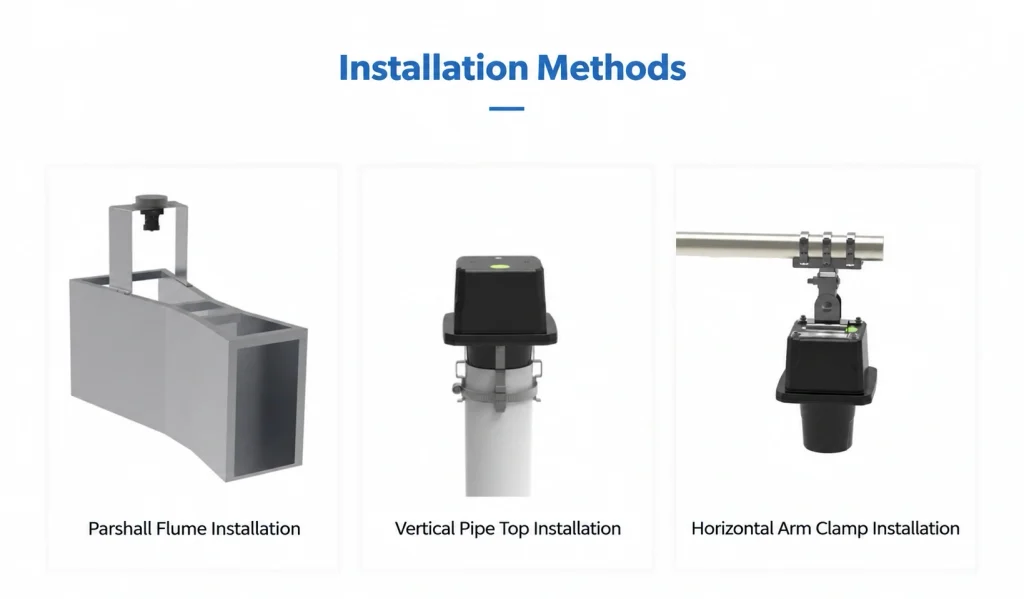
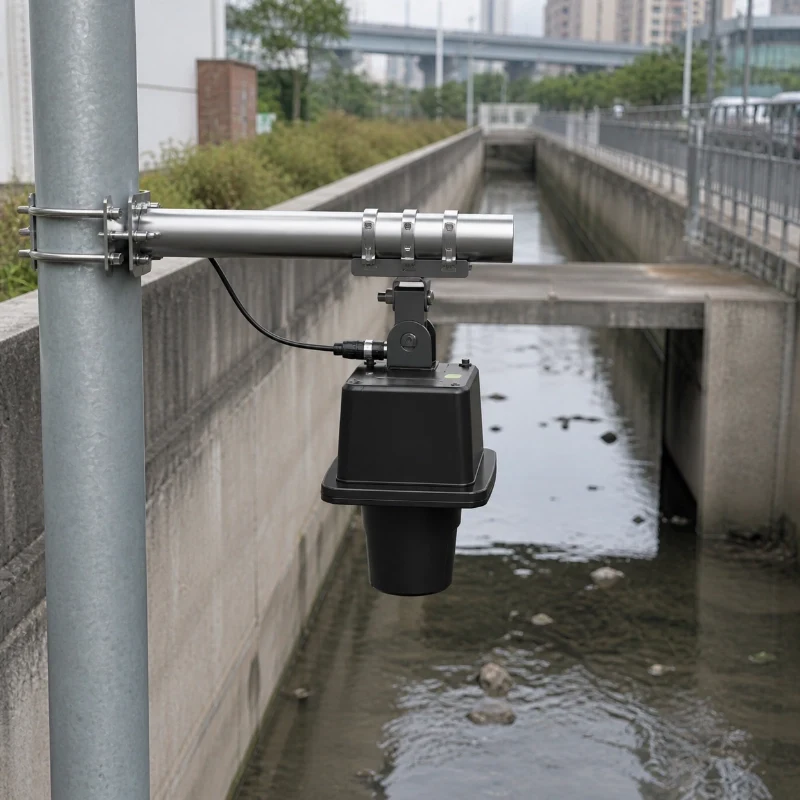
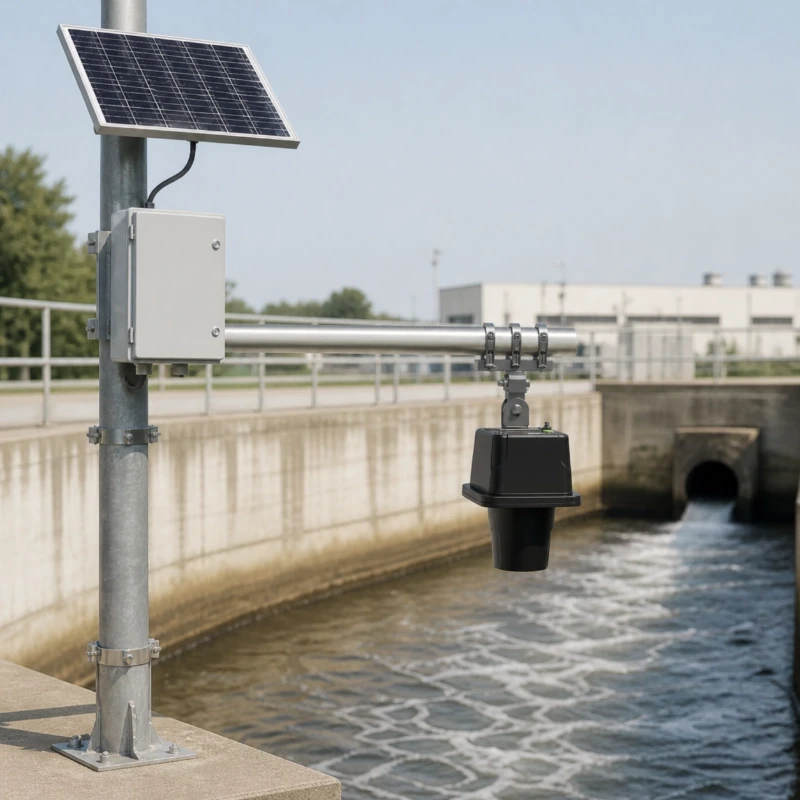
The radar open channel flow meter supports multiple mounting methods for different field conditions, including installation above a Parshall flume, top-mounted installation on a vertical pipe or monitoring column, and suspended installation using a horizontal arm and clamp bracket,that is:
Parshall Flume Installation
Vertical Pipe Top Installation
Horizontal Arm Clamp Installation
In all configurations, the radar sensor should face downward toward the water surface, with the beam path kept clear of structural obstructions.
10. Installation Advantages for Remote Outdoor Deployment
In many drainage and waterlogging monitoring projects, available installation points may include:
bridges
channel walls
drainage outlets
monitoring poles
culvert structures
water conservancy facilities
The compact integrated design simplifies installation at these locations.
Compared with more complex multi-device solutions, this product reduces:
installation complexity
on-site wiring work
construction difficulty at distributed monitoring points
maintenance effort in difficult environments
This is especially important in projects where monitoring points are spread across a large drainage network.
11. Application Scenarios
Open Channel Flow Monitoring
Drainage flow data can help identify reduced discharge capacity, channel overload, and runoff changes during heavy rainfall. When combined with rainfall, water level, and warning devices, the meter can support an integratedurban flood early warning system.
Urban Drainage and Waterlogging Monitoring
Suitable for drainage outlets, underground channels, urban culverts, low-lying areas, and stormwater systems where early warning and real-time monitoring are required.
Industrial Wastewater Outlet Monitoring
Applicable to industrial discharge outlets, environmental monitoring points, and enterprise wastewater supervision systems where non-contact measurement reduces maintenance difficulty.
Hydrology and Water Conservancy Monitoring
Can be used for hydrological stations, small rivers, reservoirs, sluice gates, and water resource projects to support long-term data collection and management.
Agricultural Irrigation Monitoring
Suitable for irrigation canals and farmland water distribution systems, helping improve irrigation scheduling and water use efficiency.
12. Difference Between a Water Level Sensor and an Open Channel Flow Meter
A water level sensor mainly tells you how high the water is.
An open channel flow meter is used when the project also needs to understand how much water is flowing through the channel.
The JW-RD-306 is designed for projects that require more than a basic level signal. It supports integrated monitoring for water level and open channel flow, making it more suitable for:
drainage supervision
channel flow assessment
waterlogging warning
discharge trend analysis
smart water management systems
13. Call to Action
If your project requires a non-contact radar open channel flow meter for smart drainage monitoring, urban waterlogging monitoring, industrial discharge supervision, or remote open channel flow applications, JW-IoT can help with product selection and monitoring architecture planning.
Please share the following information with us:
installation site type
channel type and size
measuring range requirement
communication preference
platform or protocol requirement
power supply condition
project deployment region
This helps us recommend a more suitable configuration for your monitoring project.
FAQ
Q
1. What is this open channel flow meter used for?
A
This open channel flow meter is used for non-contact flow monitoring in open channels, drainage outlets, irrigation canals, urban stormwater systems, industrial wastewater outlets, and hydrological monitoring stations.
Q
2. Does the device need to touch the water?
A
No. The device uses non-contact radar measurement, so it does not need to touch the water surface. This helps reduce maintenance in sewage, sediment-heavy water, and harsh outdoor environments.
Q
3. What measuring ranges are available?
A
The device supports 2 m 7 m and 15 m measuring ranges, making it suitable for small and medium open channel monitoring applications.
Q
4. Can it be used outdoors for long-term monitoring?
A
Yes. The IP68 waterproof design, low-power operation, and rugged ASA housing make it suitable for long-term outdoor deployment.
Q
5. Does JW-IoT provide a complete open channel flow monitoring solution?
A
Yes. JW-IoT can provide the open channel flow meter, wireless data transmission, cloud platform integration, solar or battery power options, and monitoring dashboard configuration for smart water projects.
Q
6. What wireless communication methods are supported?
A
The device supports 4G NB-IoT and LoRa communication options for remote data transmission.
Q
7. Can parameters be configured on-site?
A
Yes. Built-in Bluetooth allows users to configure parameters, check device status, and perform debugging through a mobile app.
Q
8. Is this flow meter suitable for urban drainage monitoring?
A
Yes. It is suitable for urban drainage channels, culverts, stormwater outlets, low-lying areas, and waterlogging monitoring points.
Q
9. Can JW-IoT integrate this device with an existing platform?
A
Yes. JW-IoT can support platform integration through SL651 SZY206 MQTT HJ212 HTTP and customized communication protocols.
Q
10. What is the main advantage compared with contact-type flow meters?
A
The main advantage is non-contact measurement. It avoids direct contact with water, reducing sensor fouling, corrosion, blockage, and maintenance frequency.
Q
11. Can it be used for industrial wastewater monitoring?
A
Yes. It is suitable for industrial wastewater outlets, enterprise discharge supervision, environmental monitoring points, and pipe outlet flow monitoring.
Q
12. Does JW-IoT support customized project deployment?
A
Yes. JW-IoT can support customized installation brackets, communication protocol adaptation, cloud platform connection, and project-based monitoring solutions for water conservancy, drainage, and environmental applications.
 +86 13520127780
 info@jingelway.com