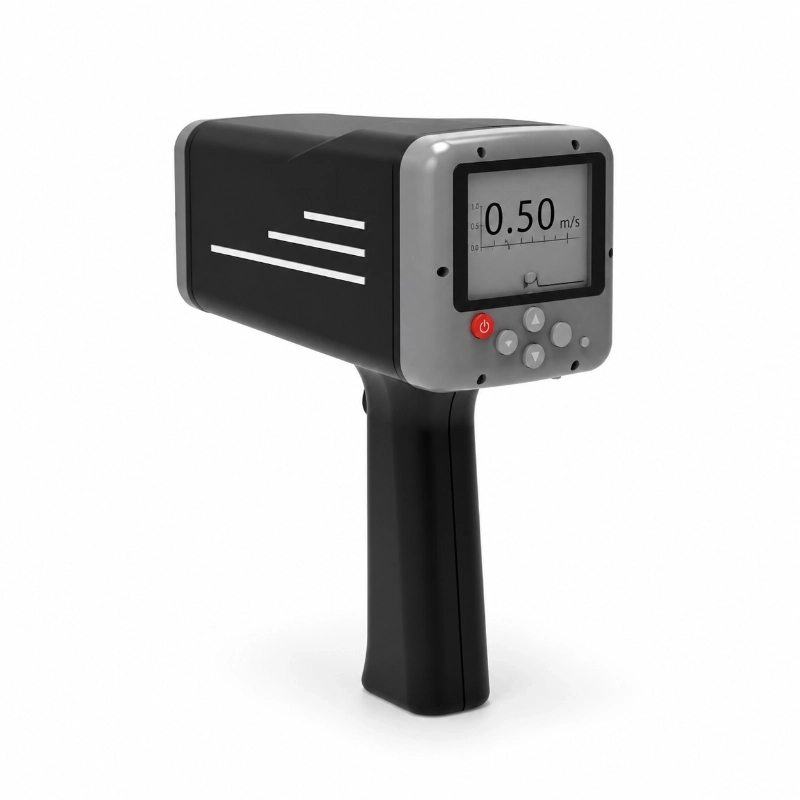
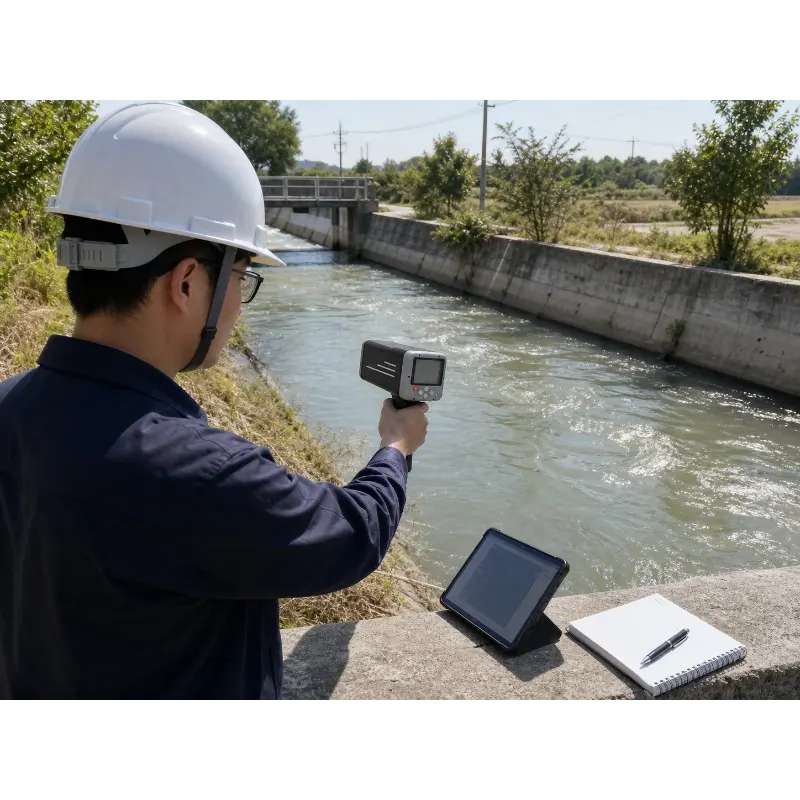
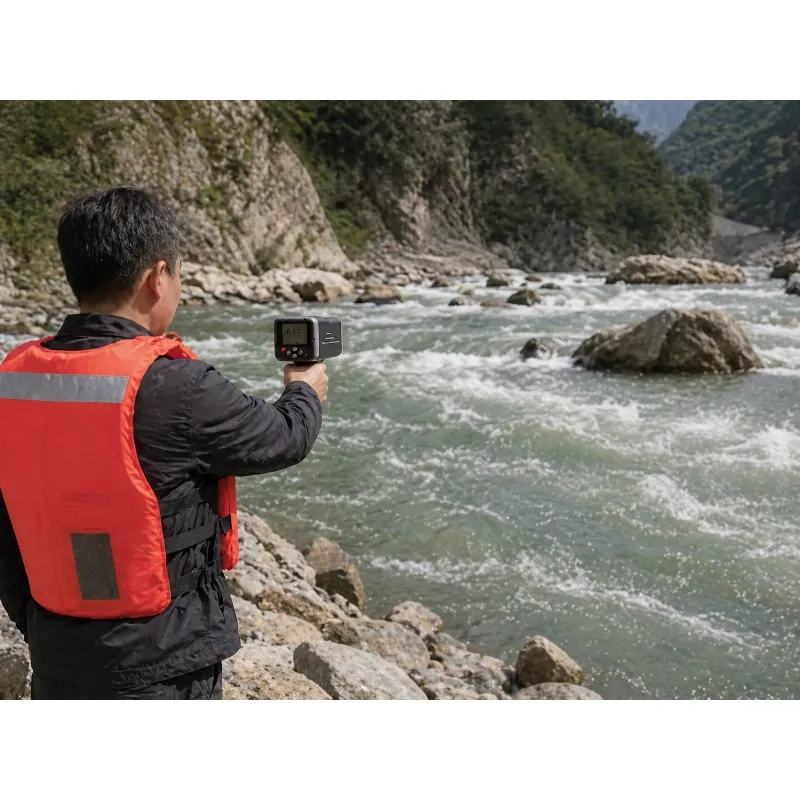
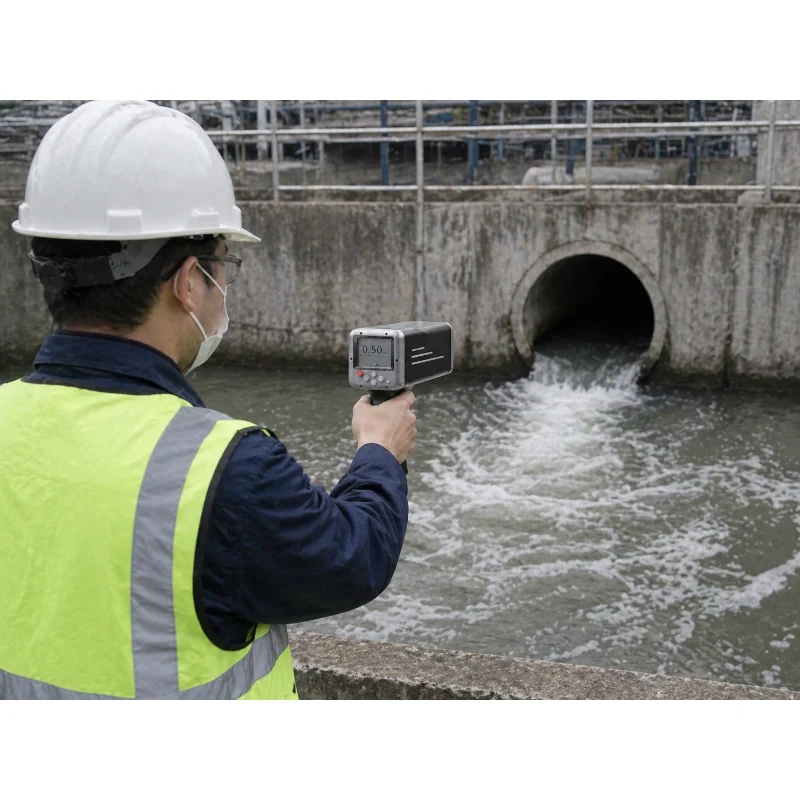
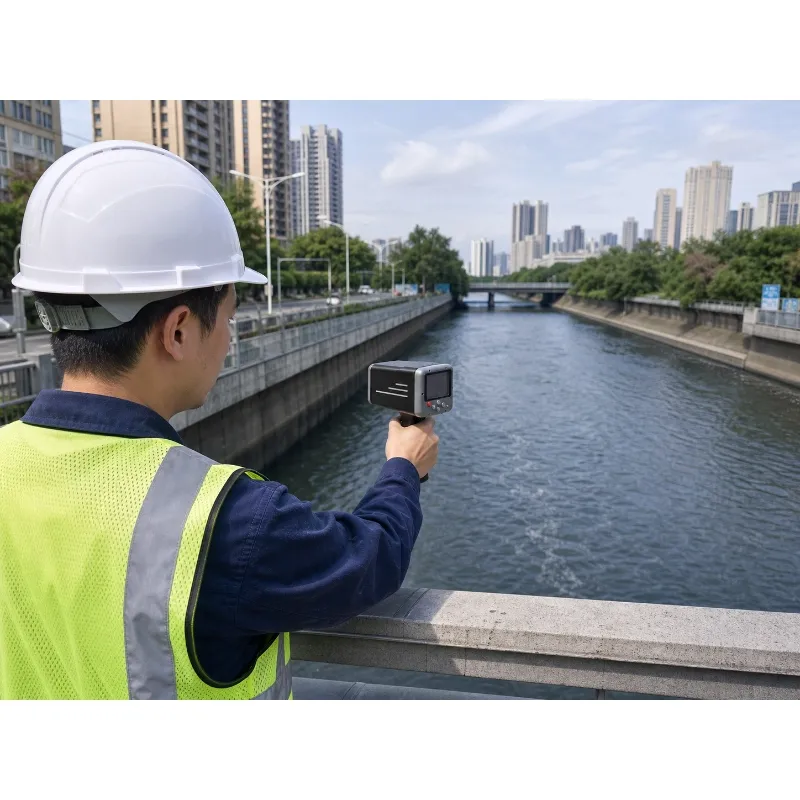
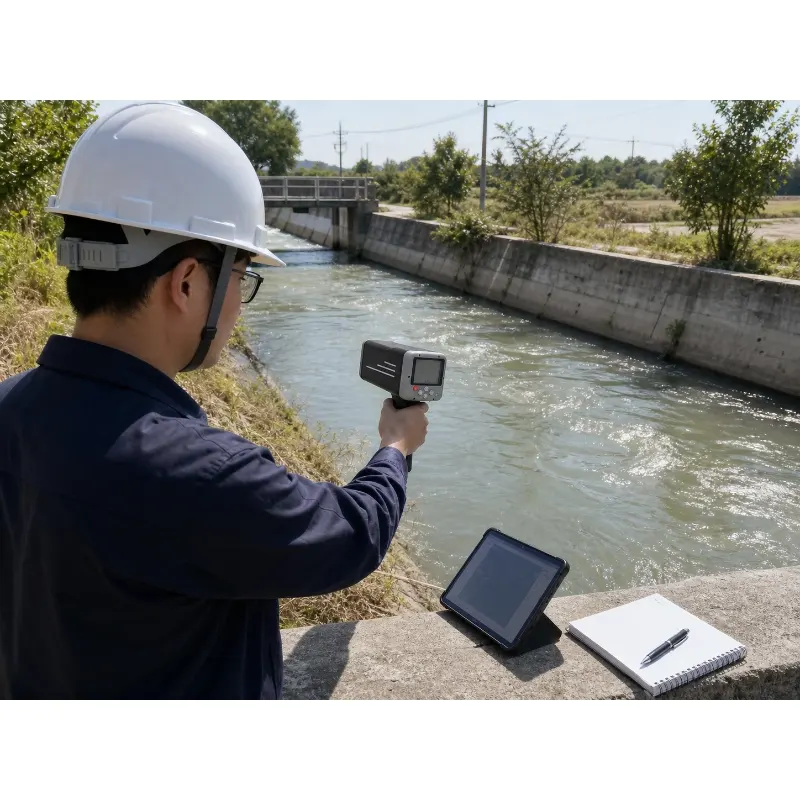
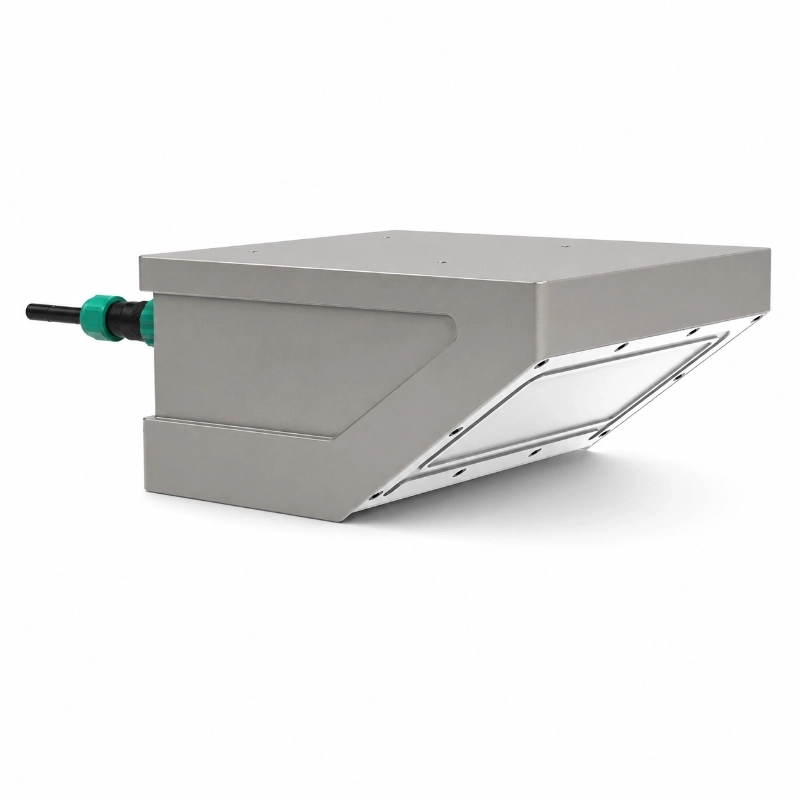
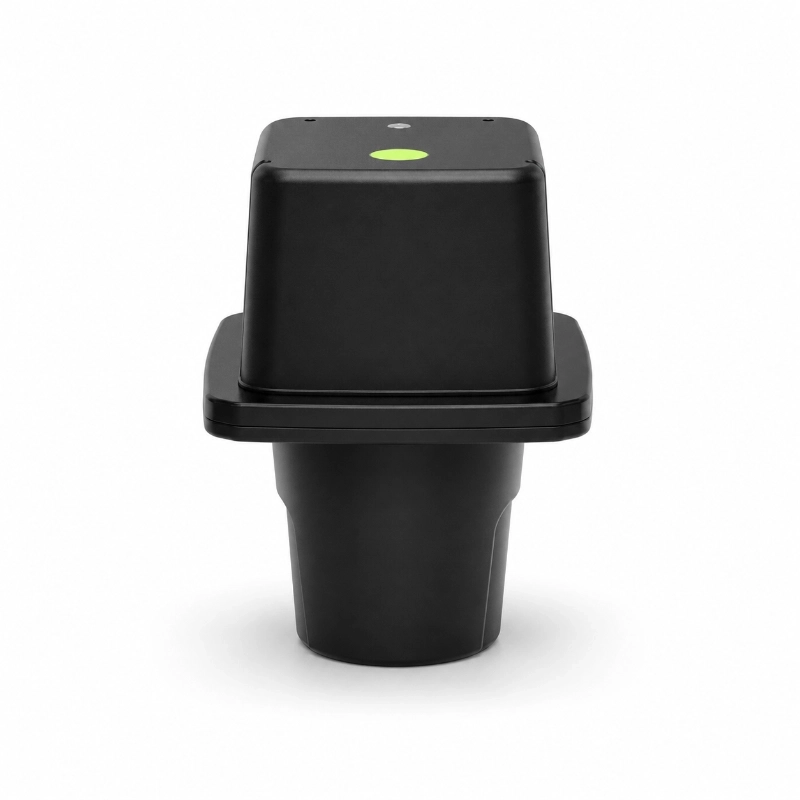
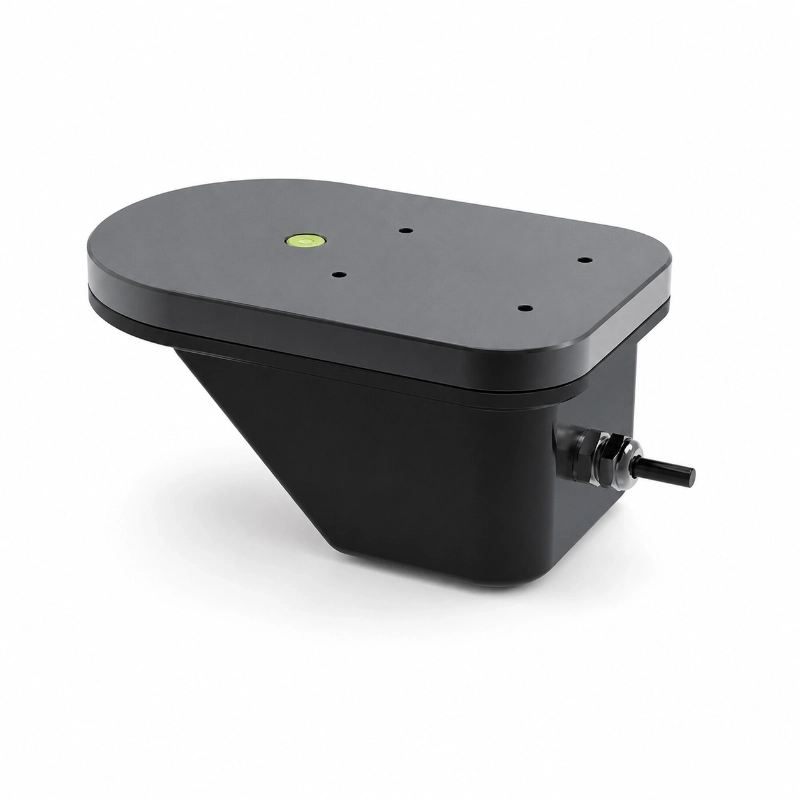
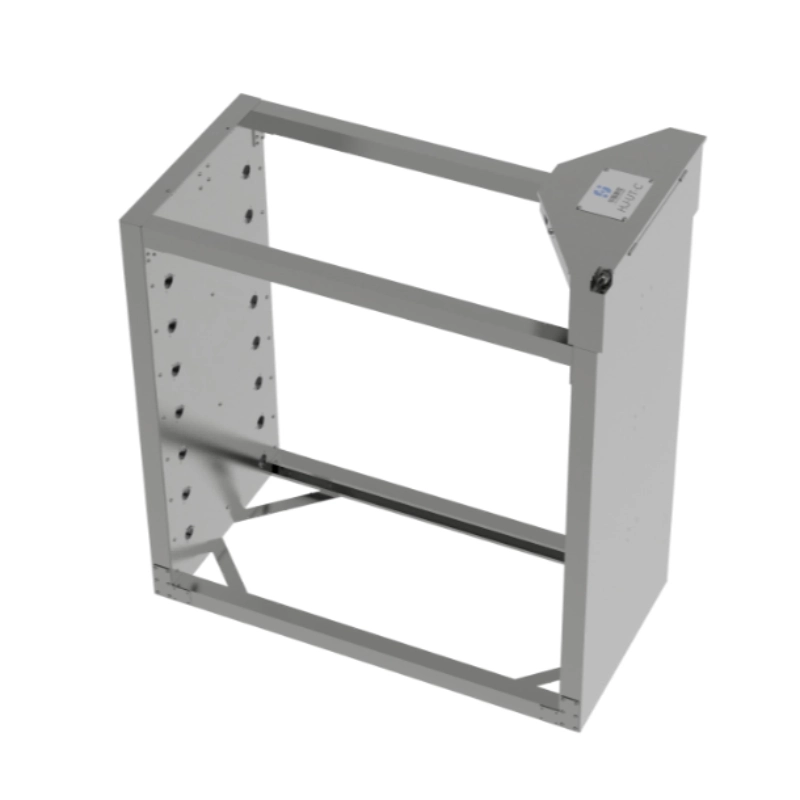
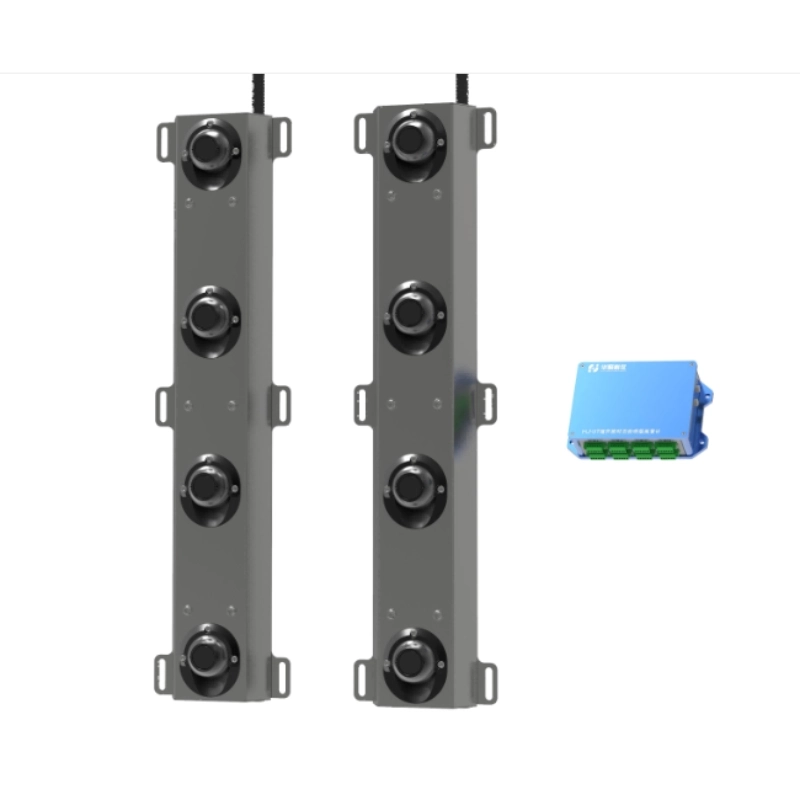
JW-RD-60(HJ01) handheld radar current meter is a portable non-contact flow velocity measuring instrument designed for rivers, channels, flood control, hydrological surveys and wastewater monitoring. Using 24 GHz radar technology, it measures surface water velocity without touching the water, helping users work safely in fast-flowing, polluted or difficult-to-access sites.
With a compact handheld design, built-in display, Bluetooth connection, IP67 protection and one-button operation, this radar flow meter is suitable for field teams that need quick, accurate and safe water velocity measurement.
2. Product Overview
JW-RD-60(HJ01) Handheld Radar Current Meter is designed for fast and safe water surface velocity measurement in natural and engineered water environments. It uses microwave radar sensing to measure flow velocity without direct contact with water, making it especially suitable for flood monitoring, river flow surveys, drainage channels, sewage outlets and other sites where contact measurement may be unsafe or inconvenient.
According to the brochure, the RD-60 is small in size, lightweight, easy to operate and powered by batteries. It does not require external cables or underwater probes during measurement, reducing field operation complexity. The device is equipped with an integrated tilt angle sensor and supports automatic correction of vertical and horizontal angles, improving measurement accuracy in handheld field use.
Parameter
Specification
Product Model
RD-60
Product Type
Handheld Radar Current Meter
Measuring Range
0.03 to 20 m/s
Measurement Accuracy
±0.01 m/s or ±2% FS
Resolution
0.01 m/s
Operating Temperature
-20 to 70°C
Radar Beam Angle
12°
Radar Transmit Power
18 dBm
Radar Frequency
24 GHz
Protection Rating
IP67
Measuring Distance
Up to 100 m depending on water flow condition
Data Storage
Up to 2000 records
Battery Life
Approx. 15 hours continuous operation
Weight
Less than 700 g
Communication
Bluetooth app connection
3. Communication and Platform Functions
The handheld radar current meter supports Bluetooth communication for app-based data viewing and configuration. Measurement data can be stored in the device and reviewed later, helping field teams record velocity readings during river surveys, flood inspections and water conservancy operations.
Optional accessories such as a Bluetooth thermal printer can be used to print measurement results on site, which is useful for inspection reports, acceptance records and field documentation.
4. Application Scenarios
River Flow Monitoring: Suitable for measuring surface velocity in natural rivers, streams and mountain waterways during hydrological surveys.
Flood Control and Emergency Monitoring: Can be used during flood season to measure high-speed water flow without entering the water, improving safety for emergency field teams.
Irrigation and Drainage Channels: Useful for open channels, irrigation canals and drainage systems where quick flow velocity measurement is required.
Wastewater and Sewage Monitoring: Non-contact measurement helps avoid direct contact with contaminated water in wastewater channels or sewage discharge areas.
Hydrological Survey Projects: Supports mobile hydrological teams, water conservancy departments and environmental monitoring agencies in rapid on-site measurements.
Bridge and Bank-Side Measurement: The device can be used from riverbanks, bridges, piers or safe observation points to measure flow velocity remotely.
5. Product Configuration
The standard and optional configuration shown in the brochure includes:
Thermal Bluetooth printer optional
Portable case
Main unit
Built-in angle sensor
Built-in Bluetooth
Charger and rechargeable battery
Radar flow measurement software
Tripod
FAQ
Q
1. What is a handheld radar current meter used for?
A
A handheld radar current meter is used to measure surface water velocity in rivers, channels, flood areas, drainage systems and wastewater monitoring sites without direct contact with the water.
Q
2. How does this radar current meter measure flow velocity?
A
It uses 24 GHz radar technology to detect the movement of the water surface and calculate flow velocity. This allows safe non-contact measurement from the bank, bridge or other secure position.
Q
3. Can JW-IoT provide this handheld radar current meter for hydrological projects?
A
Yes. JW-IoT can supply handheld radar current meters for hydrological surveys, flood monitoring, water conservancy projects and environmental monitoring applications.
Q
4. What is the measuring range of the RD-60?
A
The measuring range is 0.03 to 20 m/s, which covers many common river, channel and floodwater velocity conditions.
Q
5. Is this product suitable for flood monitoring?
A
Yes. The non-contact radar design makes it suitable for flood monitoring because operators can measure water velocity without entering dangerous fast-flowing water.
Q
6. Does JW-IoT support accessories for field operation?
A
Yes. JW-IoT can help configure accessories such as a tripod, portable case, rechargeable battery system and optional Bluetooth thermal printer based on project needs.
Q
7. What is the measurement accuracy?
A
The measurement accuracy as ±0.01 m/s or ±2% FS, with a resolution of 0.01 m/s.
Q
8. Can the device connect to a mobile phone?
A
Yes. The device has built-in Bluetooth and can connect to an app for data viewing and parameter configuration.
Q
9. How much data can it store?
A
The device can store up to 2000 measurement records, making it suitable for multi-site field surveys.
Q
10. Can JW-IoT provide this device for wastewater or polluted water monitoring?
A
Yes. JW-IoT can provide this non-contact radar current meter for wastewater channels and polluted water monitoring where avoiding direct contact is important.
Q
11. What is the protection rating?
A
The device has an IP67 protection rating, suitable for outdoor field measurement and wet environments.
Q
12. Why choose JW-IoT handheld radar current meter solutions?
A
JW-IoT handheld radar current meter solutions provide safe non-contact measurement, portable field operation, Bluetooth data support and reliable radar velocity monitoring for hydrology, flood control and water conservancy projects.
 +86 13520127780
  info@jingelway.com