HomeProductsWater SensorsIntegrated In-ground Water Level Sensor for Road Flood Monitoring
  • Integrated in-ground water level sensor

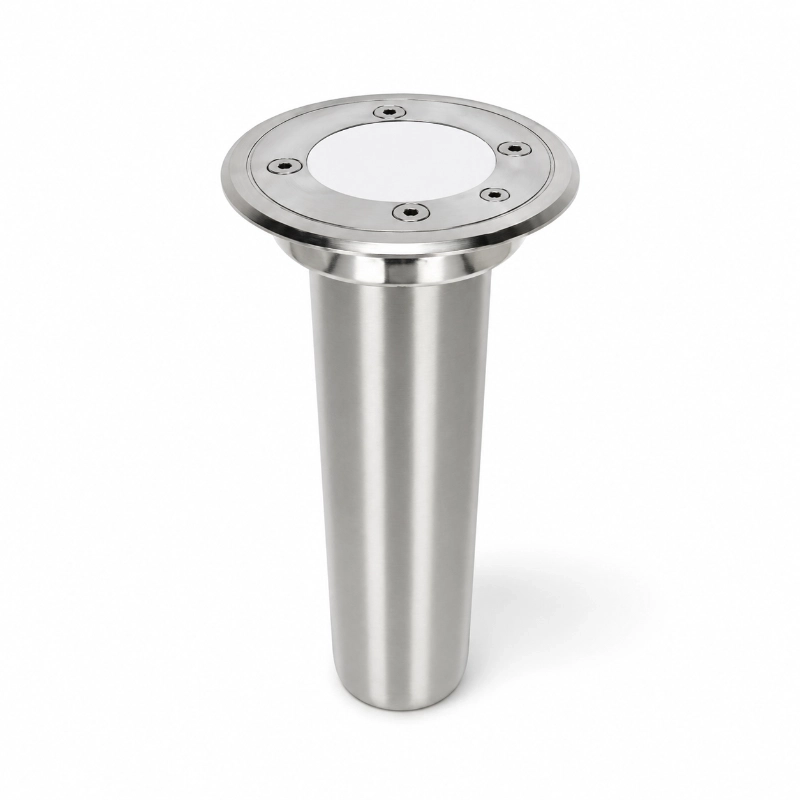
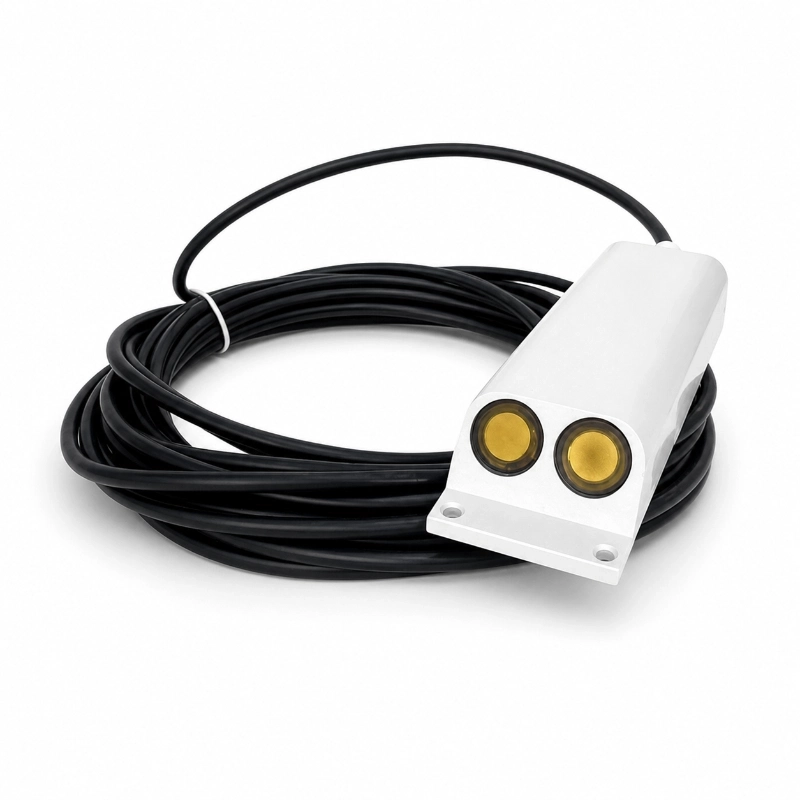
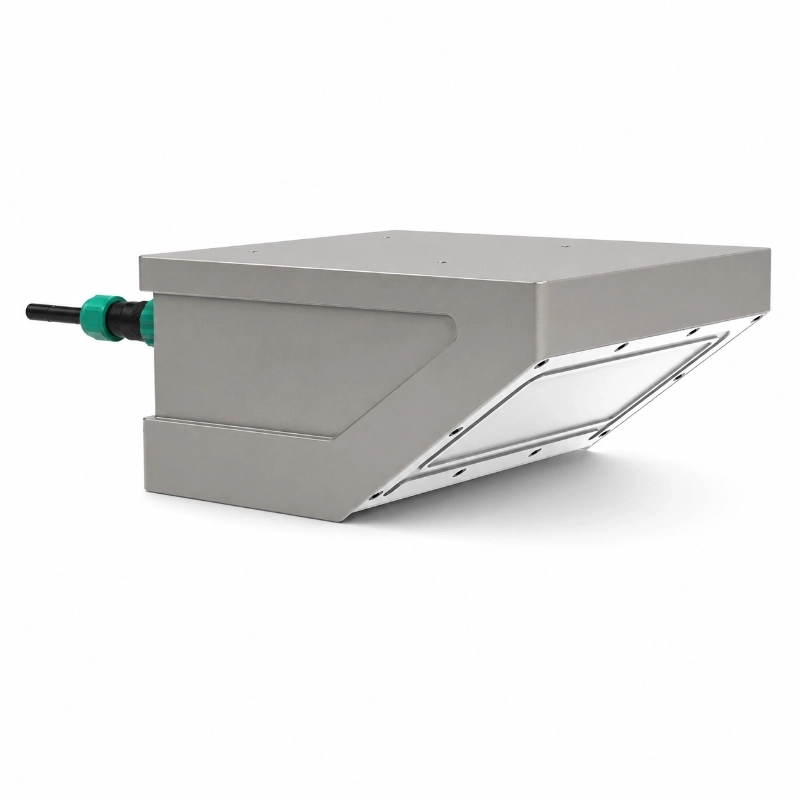
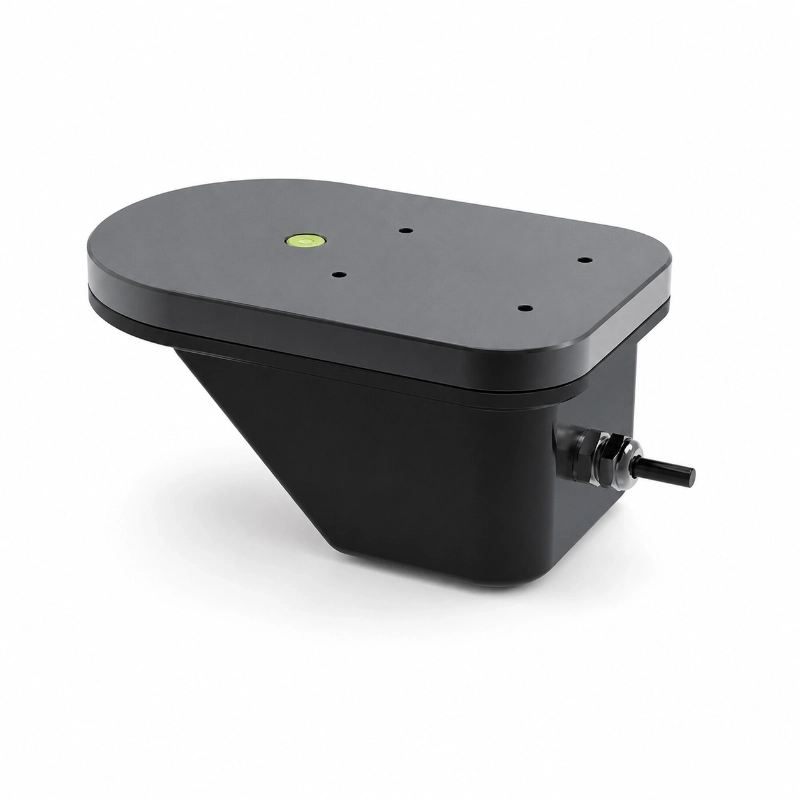
Integrated In-ground Water Level Sensor for Road Flood Monitoring

Key Features

  • Integrated host-free design: No external main controller is required. The sensor integrates sensing, communication and storage in one compact unit.
  • Built-in 4G wireless communication: Data is uploaded directly to the cloud platform through the internal 4G module for real-time monitoring.
  • Direct in-ground installation: The device can be embedded directly into the road or ground surface for fast and convenient installation.
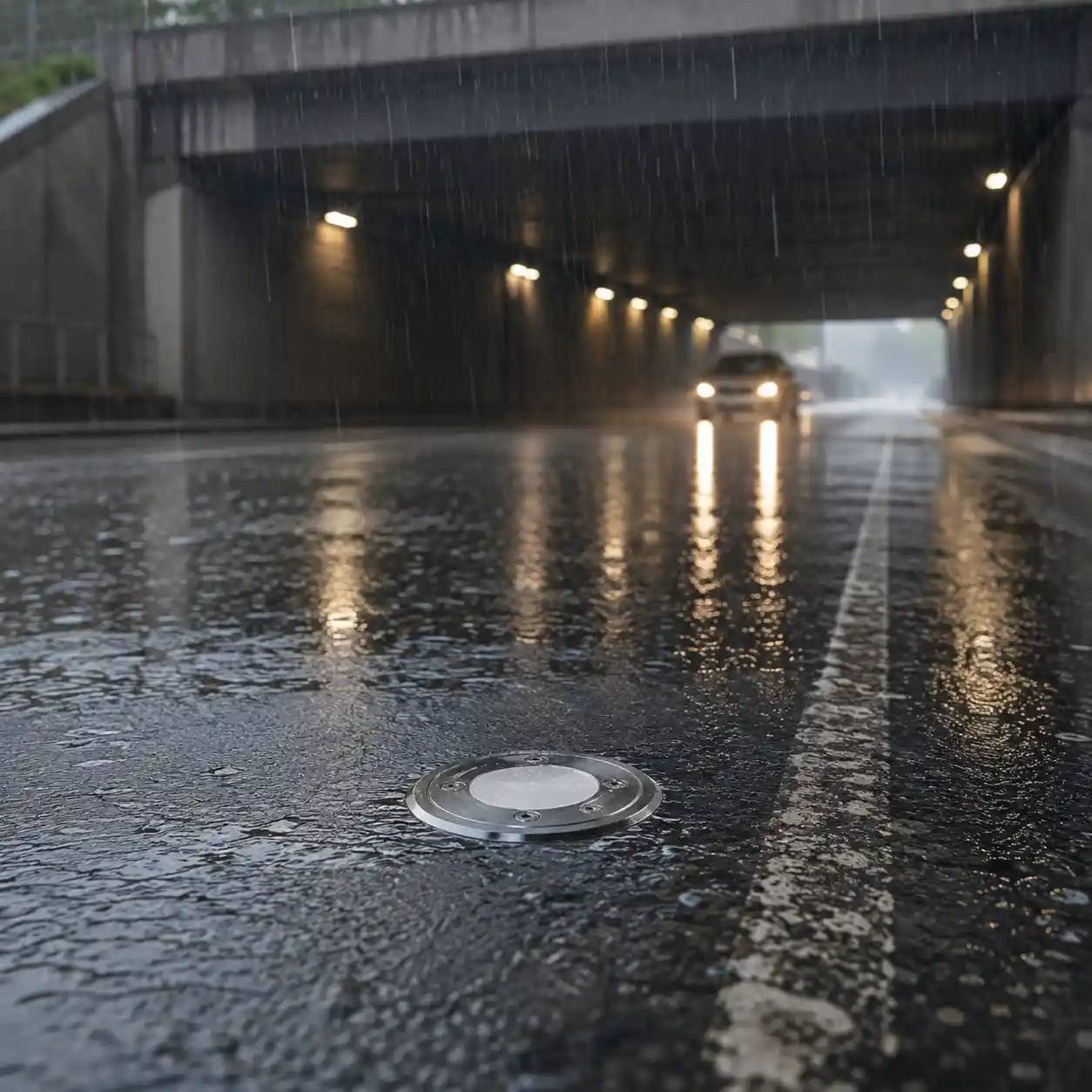
  • Designed for road flooding detection: Ideal for water accumulation monitoring in roads, underpasses, tunnels, parking areas and other flood-prone locations.
  • Smart water level acquisition: The sensor collects water level data based on a preset cycle and reports data when water level changes are detected.
  • Ultrasonic water level detection: Uses ultrasonic sensing for water level measurement without being restricted by typical mechanical structures.
  • Temperature compensation function: Compensates for different water temperature conditions to improve measurement accuracy.
  • Electrode compensation function: Helps eliminate interference from abnormal objects during measurement, reducing errors.
  • Ultra-low power consumption: Supports long standby time with a 38000 mAh battery and low-power operation.
  • Flexible power supply: Built-in battery design supports optional external solar power or mains power connection.
  • Offline data storage: When the network is disconnected, the device stores data locally and uploads it after reconnection.
  • Alarm linkage support: Can work with LED warning displays, voice broadcast systems and sound-light alarms for on-site warning.
  • Cloud platform integration: Supports PC terminal, mobile app and big data platform integration for centralized management.
  • Low battery warning: Helps maintenance teams detect device power issues in time.
  • AI data analysis option: Can be connected to an AI analysis and operation platform according to customer requirements.

Product Description

Product Overview

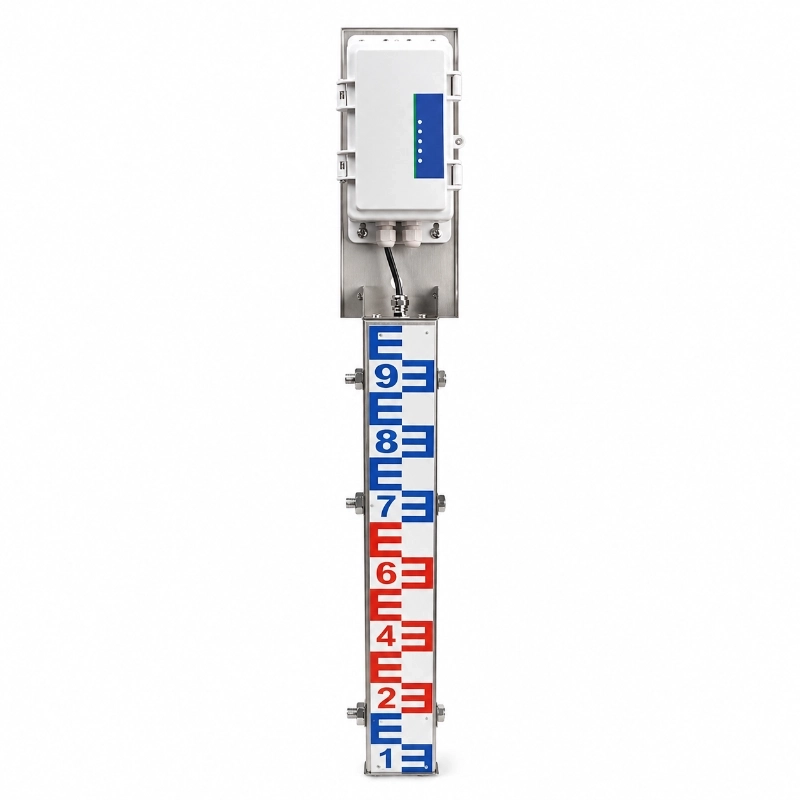
JW-DC-JS3(LC51) Integrated In-Ground Water Level Sensor is an IoT-based flood monitoring device designed for road flooding detection, urban waterlogging monitoring and smart drainage management.

Unlike traditional water level monitoring systems that require external sensors, controllers and communication cabinets, this integrated sensor combines:

  • Water level sensing
  • Data processing
  • Wireless communication
  • Data storage

into one compact underground installation unit.

The device can be directly embedded into roads, tunnels, parking areas and low-lying locations to monitor accumulated water depth in real time.

Typical applications include:

  • Urban road flood monitoring
  • Underpass waterlogging detection
  • Tunnel flooding warning
  • Underground parking flood monitoring
  • Smart city drainage systems
  • Low-lying area water accumulation monitoring

The sensor supports:

  • Alarm linkage
  • Built-in 4G communication
  • Cloud platform monitoring
  • Mobile APP viewing
  • PC monitoring

Related Products

For river, reservoir and canal water level monitoring:

Integrated Radar Water Level Gauge

For complete flood warning solutions:https://www.jw-iot.com/flood-monitoring-system/

What Is an Integrated Road Flood Monitoring Sensor?

A road flood monitoring sensor is designed to detect water accumulation on urban infrastructure.

Unlike conventional hydrological water level monitoring, which usually measures rivers, lakes or reservoirs, road flood monitoring focuses on:

  • Surface water accumulation
  • Road ponding depth
  • Sudden urban flooding
  • Drainage system overflow

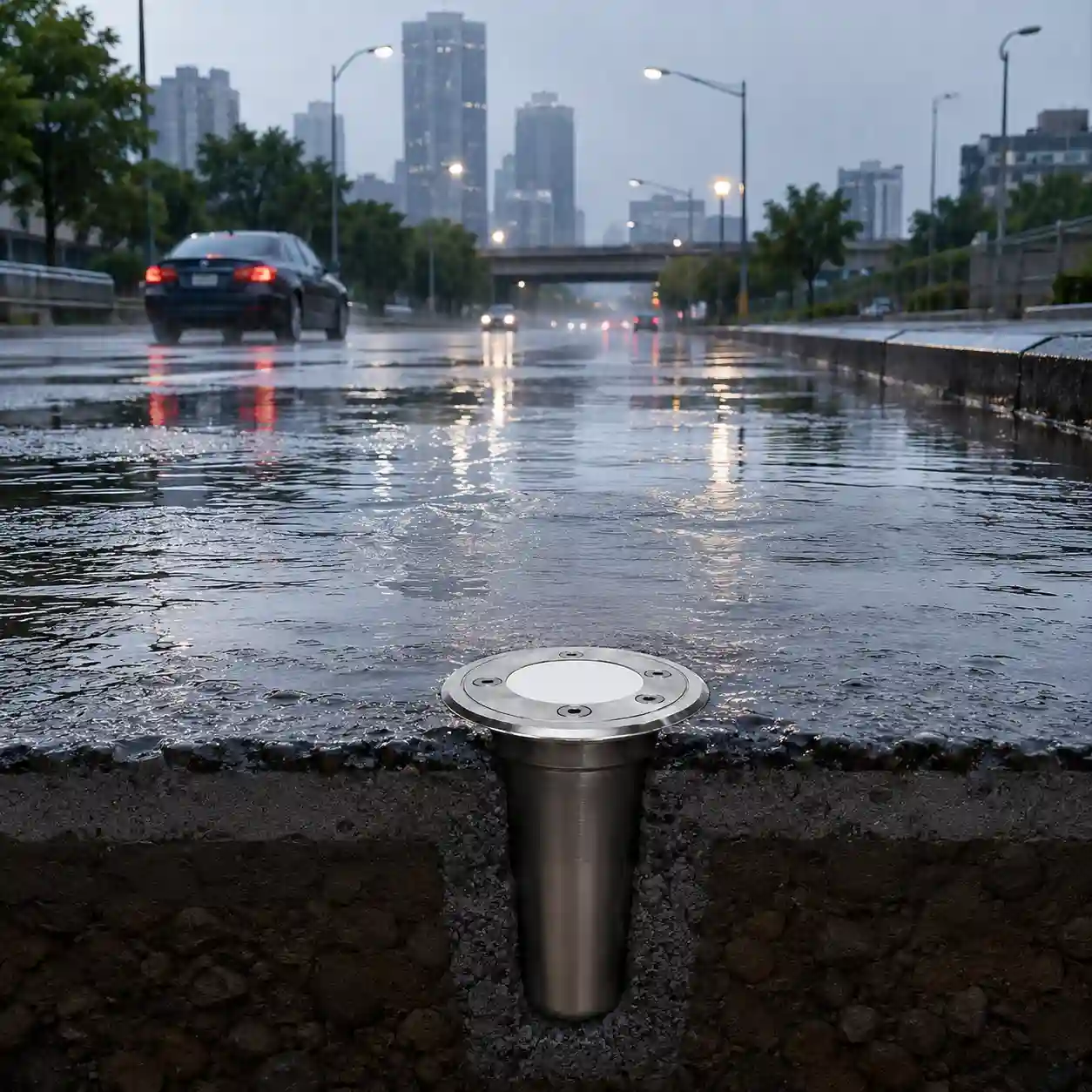
The sensor is installed directly into the ground surface.

When rainfall causes water accumulation:

Rainfall

↓

Road Surface Water Accumulation

↓

Water Depth Detection

↓

4G Data Transmission

↓

Cloud Monitoring Platform

↓

Flood Warning

This allows city management teams to identify flooding conditions quickly and take action.

Technical Specification

Parameter Specification
Product Model JW-DC-JS3(LC51)
Product Type Integrated In-Ground Water Level Sensor
Measurement Range 20 to 2000 mm
Water Level Error ≤ 1 cm
Resolution 1 mm
Monitoring Blind Zone 10 to 15 mm
Data Storage 60 records locally storing the latest 60 records
Breakpoint Resume Supported
Low Power Mode Supported
Low Power Current 5 to 10 μA
Communication Protocol MQTT AliMQTT
Communication Format API JSON format MQTT
Communication Method 4G wireless communication
Operating Temperature -40 to 80°C
Storage Temperature -20 to 80°C
Protection Rating IP68
Power Supply DC 3.6V
Battery Capacity 38000 mAh
Operating Current Approx. 16 mA excluding communication
4G Module Average Working Current Approx. 150 mA during wake-up transmission cycle
Water Level Travel 200 cm
Signal Penetration Capacity Capable of detecting road surface ponding within approx. 2 m conditions
Data Upload Capacity Supports uploading up to 25000 data records

Integrated Design for Smart Flood Monitoring

Traditional flood monitoring systems often require:

  • External sensor
  • Data logger
  • Communication module
  • Power cabinet
  • Installation enclosure

JW-IoT integrated flood monitoring sensor combines these components into a compact device.

Advantages:

  • Faster deployment
  • Lower installation complexity
  • Reduced maintenance requirement
  • Suitable for distributed monitoring networks

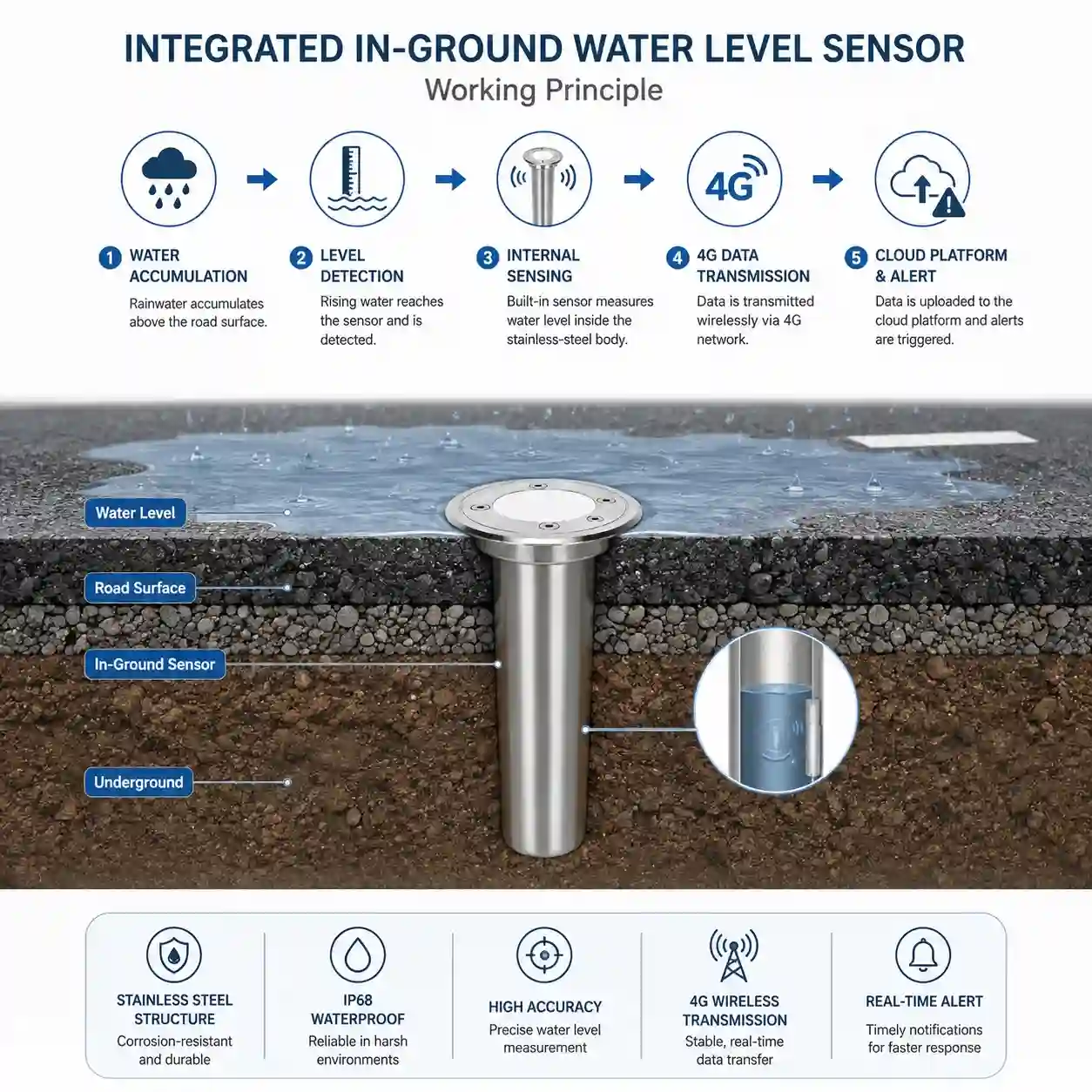
Working Principle

The sensor measures water accumulation depth at the installation location.

Measurement workflow:

Water Level Change

↓

Sensor Detection

↓

Data Processing

↓

4G Transmission

↓

Cloud Platform Analysis

↓

Alarm Notification

The collected data can be used for:

  • Flood risk assessment
  • Drainage management
  • Emergency response
  • Smart city operation

Application Scenarios

Road Flood Monitoring

Urban roads are highly affected by:

  • Heavy rainfall
  • Blocked drainage
  • Low terrain
  • Storm events

Distributed water level sensors can identify flooding conditions at critical locations.

Underground Parking Flood Detection

Underground parking areas are vulnerable to sudden water intrusion.

The sensor can monitor:

  • Entrance flooding
  • Basement water accumulation
  • Drainage failure

Applications:

  • Commercial buildings
  • Residential communities
  • Smart facilities

Tunnel Flood Warning

Road tunnels require early detection of water accumulation.

Monitoring points can be installed at:

  • Tunnel entrances
  • Drainage channels
  • Low points

Smart City Drainage Monitoring

A smart drainage network may include:

  • Rainfall sensors
  • Water level sensors
  • Weather stations
  • IoT communication
  • Cloud platform

The integrated sensor provides the field-level data required for intelligent urban flood management.

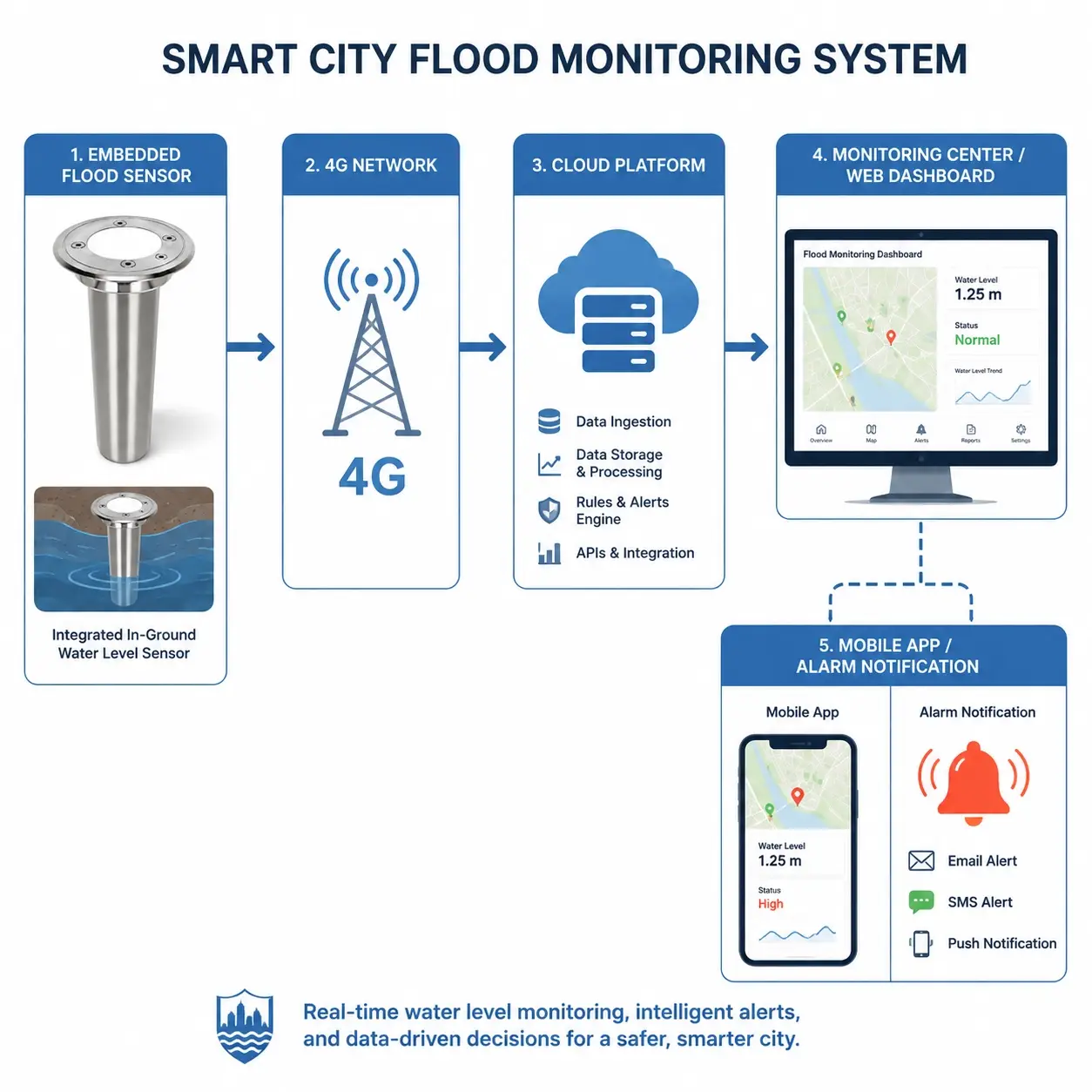
Flood Monitoring System Architecture

Embedded Flood Sensor

4G Network

Cloud Platform

Monitoring Center

Alarm System

Integrated Flood Sensor vs Traditional Monitoring System

  Traditional System Integrated Flood Sensor
Sensor Separate Integrated
Communication External module Built-in 4G
Installation Complex Embedded installation
Maintenance Higher Lower
Deployment Limited points Distributed monitoring network

Road Flood Sensor vs Radar Water Level Sensor

  Road Flood Sensor Radar Water Level Sensor
Measurement Target Surface water accumulation River/lake/water body level
Installation Ground embedded Above water surface
Application Roads, tunnels, parking Hydrology stations
Typical Use Urban flood warning Water resource monitoring

Related product: https://www.jw-iot.com/integrated-radar-water-level-gauge-for-hydrology-station/

Installation Guidelines

Installation Location

Recommended locations:

  • Low-lying roads
  • Tunnel entrances
  • Underpasses
  • Drainage bottlenecks
  • Flood-prone intersections

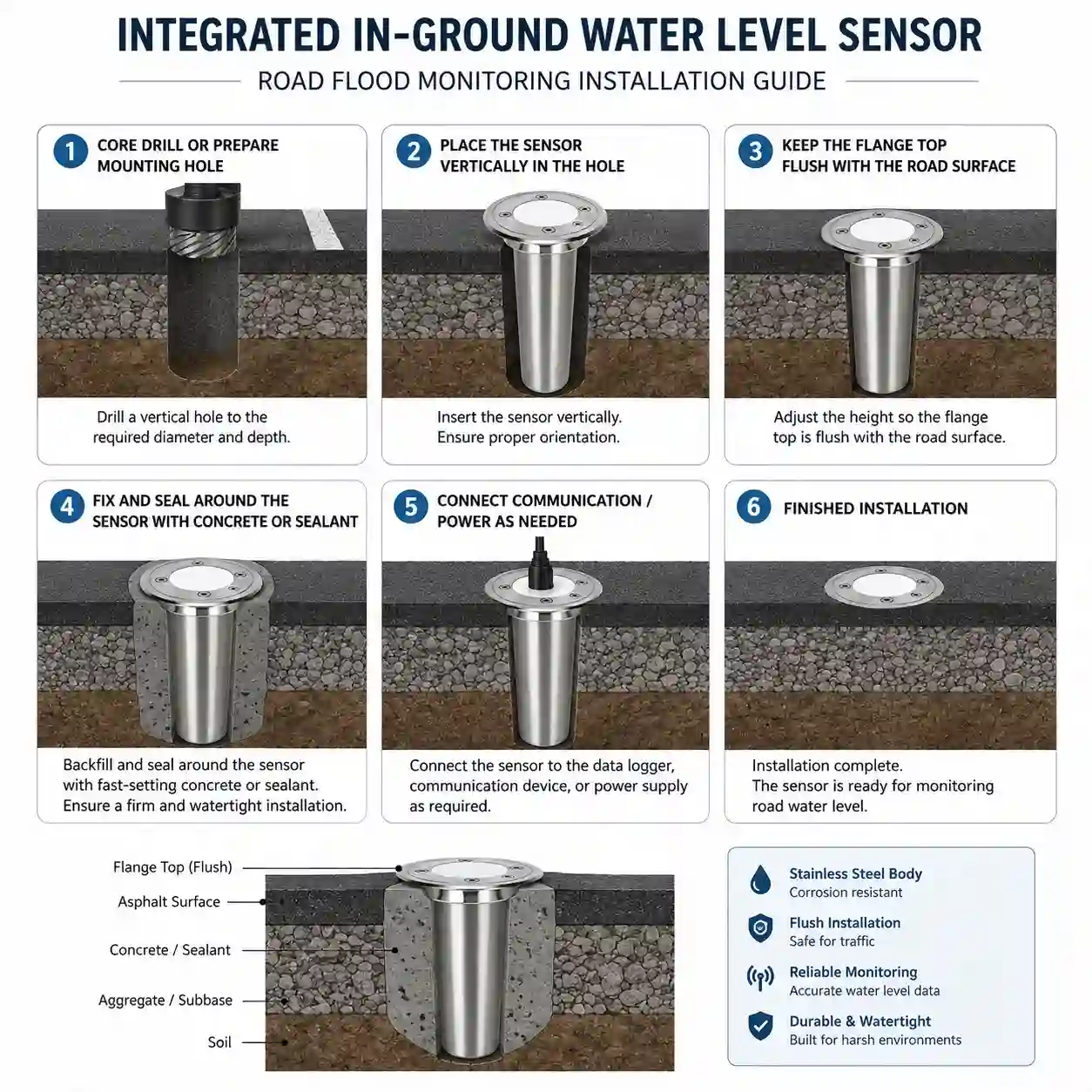
Installation Method

Typical steps:

  1. Prepare installation hole
  2. Install sensor vertically
  3. Fix surrounding material
  4. Keep sensor top surface level with ground

IoT Platform Integration

The sensor can connect with:

  • Web monitoring platform
  • Mobile APP
  • Cloud database
  • API systems
  • Alarm equipment

Possible integrations:

  • LED warning display
  • Sound alarm
  • Traffic management system
  • Emergency response platform

How to Select a Road Flood Monitoring Sensor?

Before deployment, consider:

1. Monitoring Location

Examples:

  • Road
  • Tunnel
  • Parking area
  • Drainage outlet

2. Required Communication

Options:

  • 4G
  • LoRaWAN
  • NB-IoT
  • Ethernet

3. Alarm Requirement

Determine:

  • Warning threshold
  • Notification method
  • Response workflow

4. Deployment Scale

Large cities usually require:

  • Multiple monitoring points
  • Central platform
  • Historical data analysis

Request Road Flood Monitoring Solution

JW-IoT provides integrated flood monitoring devices for:

  • Smart cities
  • Municipal drainage systems
  • Transportation infrastructure
  • Emergency management
  • Engineering projects

Please provide:

  • Monitoring locations
  • Required communication method
  • Number of monitoring points
  • Alarm requirements

Contact:

https://www.jw-iot.com/contact-us

FAQ

  • Q

    1. What is this water level sensor used for?

    A

    This product is used to monitor water accumulation and water depth in flood-prone locations such as roads, underpasses, tunnels, parking lots and residential areas.

  • Q

    2. How does the in-ground water level sensor work?

    A

    It uses ultrasonic water level detection together with compensation functions to monitor water depth accurately and upload the data to the cloud through 4G communication.

  • Q

    3. Can JW-IoT provide cloud platform integration for this sensor?

    A

    Yes. JW-IoT can support cloud platform integration, PC terminal viewing, mobile app monitoring and API-based data access according to project requirements.

  • Q

    4. Does the sensor require an external controller?

    A

    No. This is a host-free integrated device, so it does not require a separate external controller for normal deployment.

  • Q

    5. Is this product suitable for urban flood warning projects?

    A

    Yes. It is highly suitable for urban flood warning, road ponding monitoring and waterlogging detection in smart city drainage systems.

  • Q

    6. Can JW-IoT customize alarm linkage solutions?

    A

    Yes. JW-IoT can help customize alarm linkage solutions including LED warning screens, voice broadcast devices and sound-light alarms.

  • Q

    7. What communication method does the sensor use?

    A

    The sensor uses built-in 4G wireless communication and supports MQTT and API JSON integration.

  • Q

    8. Does the sensor support offline storage?

    A

    Yes. When the network is disconnected, the sensor stores data locally and uploads it after the connection is restored.

  • Q

    9. Can JW-IoT support OEM or project-based integration?

    A

    Yes. JW-IoT can support OEM cooperation, project deployment and customized integration for smart flood monitoring systems.

  • Q

    10. What is the protection rating of the device?

    A

    The device has an IP68 protection rating, making it suitable for harsh outdoor and wet environments.

  • Q

    11. Is the product easy to install?

    A

    Yes. The sensor is designed for direct in-ground installation. It only requires drilling, embedding and leveling during installation.

  • Q

    12. Why choose JW-IoT water level monitoring solutions?

    A

    JW-IoT water level monitoring solutions combine wireless communication, smart warning, low-power operation and cloud data access, helping customers build efficient and scalable flood monitoring systems.

WhatsApp

Leave a message!

Leave a message!