+86 13520127780
  info@jingelway.com








How Solar PV Monitoring Stations Improve Power Plant Performance
Release time: 2026-06-08
Introduction
As solar energy becomes a major part of the global renewable energy market, power plant owners and operators are paying more attention to how to improve generation efficiency, reduce operation costs, and maintain long-term system reliability. For utility-scale solar farms, commercial rooftop PV projects, and distributed solar power systems, environmental conditions have a direct impact on energy output.
A solar PV monitoring station provides real-time environmental and module-level data that helps operators better understand the relationship between weather conditions and power generation. By monitoring solar irradiance, module temperature, ambient temperature, humidity, wind speed, rainfall, and other key parameters, solar plant managers can make more accurate decisions to improve PV performance and reduce unnecessary energy losses.
For projects that require a complete IoT-based solution, JW-IoT provides a dedicated Solar PV Monitoring System with IoT Automation for real-time monitoring, data collection, and remote management.
Why PV Performance Depends on Environmental Data
Solar power generation is not only affected by the quality of PV modules and inverters. On-site environmental conditions also play a critical role in determining actual energy output. Even when a solar power plant is designed with high-quality components, poor weather visibility, dust accumulation, high module temperature, shading, or unexpected rainfall patterns may reduce generation efficiency.
Key environmental factors that affect PV performance include:
| Monitoring Parameter | Impact on Solar Power Plant |
| Solar irradiance | Determines available solar energy for power generation |
| PV module temperature | High temperature can reduce module efficiency |
| Ambient temperature and humidity | Helps analyze operating conditions and equipment stress |
| Wind speed and direction | Supports cooling analysis and weather risk assessment |
| Rainfall | Helps evaluate natural cleaning effects and site conditions |
| Dust and soiling | Indicates potential power loss caused by surface contamination |
Without accurate field data, it is difficult to know whether power loss is caused by low irradiance, module heating, dust accumulation, equipment faults, or other site-specific issues. This is why a solar PV monitoring station has become an important part of modern solar power plant operation.
What Is a Solar PV Monitoring Station?
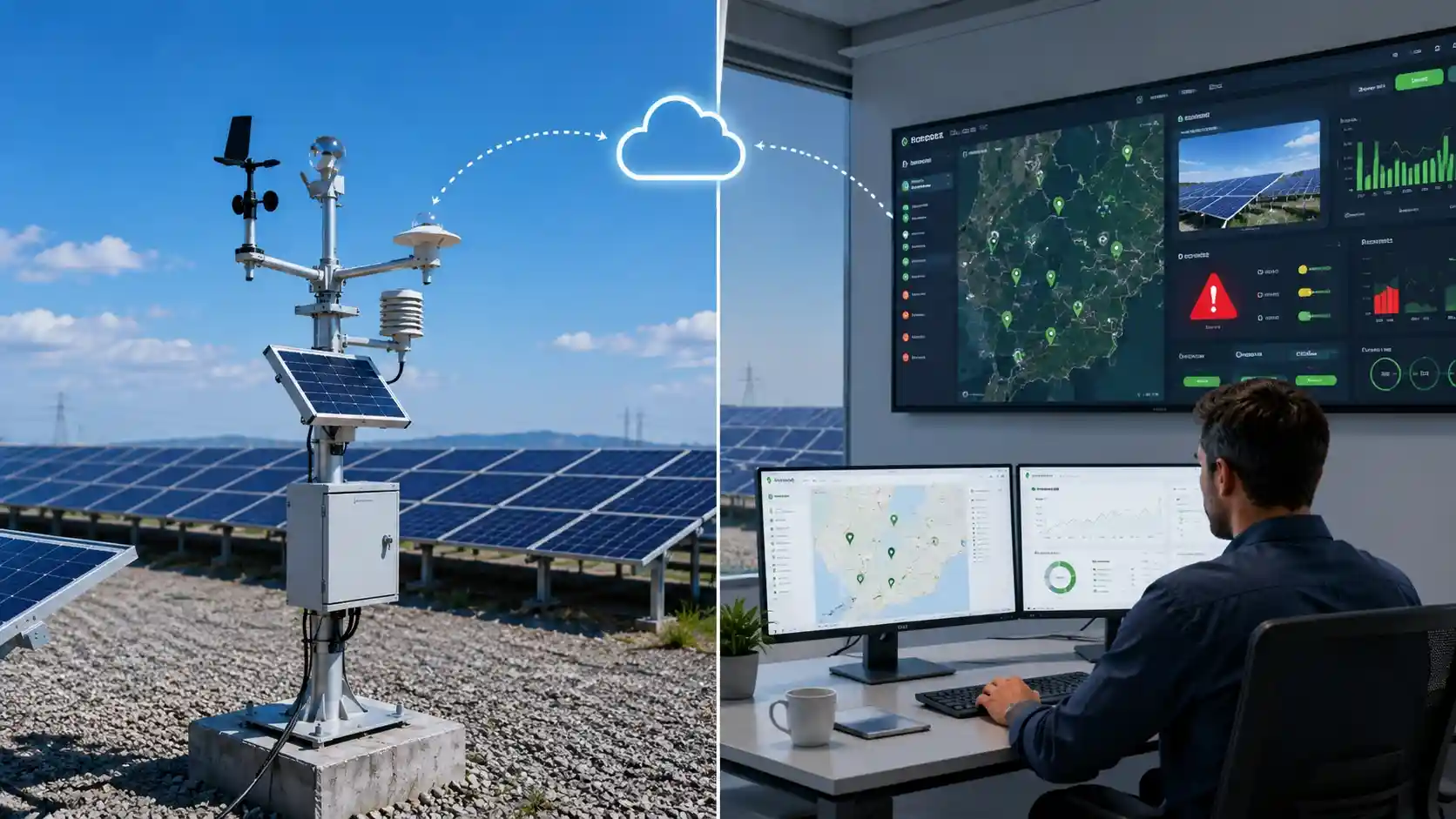
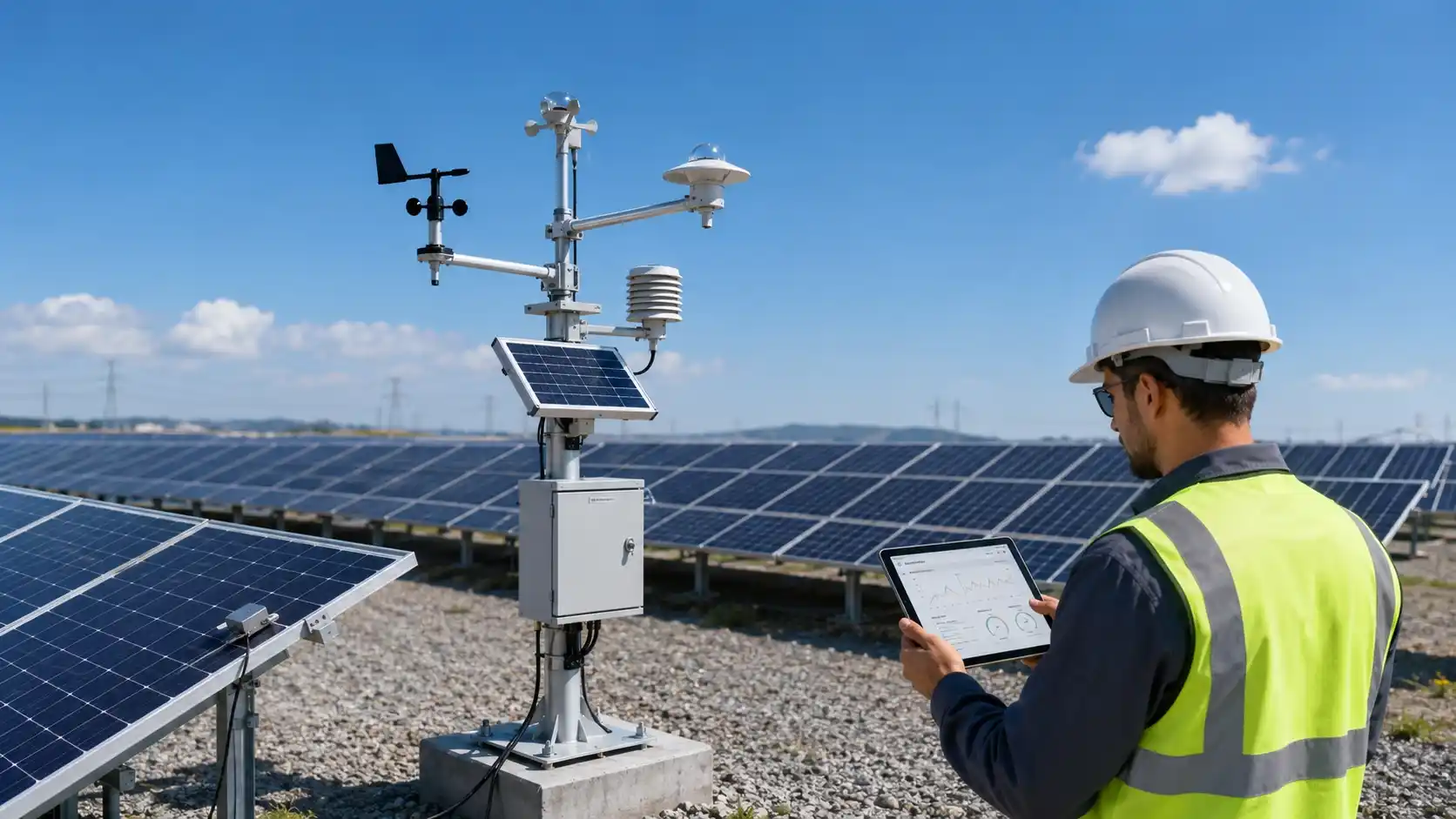
A solar PV monitoring station is an integrated monitoring system designed for solar power plants. It collects real-time data from environmental sensors and PV-related sensors, then transmits the data to a cloud platform or local monitoring system through communication methods such as RS485, LoRaWAN, 4G, or Ethernet.
A typical solar PV monitoring station may include:
| Device or Sensor | Function |
| Solar irradiance sensor | Measures sunlight intensity |
| PV module temperature sensor | Monitors panel surface temperature |
| Ambient temperature and humidity sensor | Measures surrounding environmental conditions |
| Wind speed and direction sensor | Supports weather and safety analysis |
| Rain gauge | Records rainfall and cleaning-related data |
| Data logger or RTU | Collects and processes field data |
| IoT gateway | Sends data to the cloud platform |
| Monitoring platform | Displays data, trends, alarms, and reports |
By combining these devices, a solar PV monitoring station helps operators build a clear picture of on-site conditions and evaluate real-time PV performance more accurately.
How Solar PV Monitoring Stations Improve Power Plant Performance
1. Accurate Irradiance Monitoring for Performance Ratio Analysis
Solar irradiance is one of the most important indicators for evaluating solar plant output. When irradiance data is compared with actual power generation data, operators can calculate whether the PV system is performing as expected.
For example, if solar irradiance is high but power output is lower than normal, there may be issues such as module soiling, inverter problems, shading, wiring faults, or abnormal module temperature. A solar PV monitoring station helps identify these problems earlier by providing reliable irradiance data at the project site.
This makes it easier to analyze PV performance based on real environmental conditions instead of relying only on inverter output data.
2. Module Temperature Monitoring to Reduce Efficiency Loss
PV modules are sensitive to temperature. When module temperature rises, conversion efficiency usually decreases. In hot climates, desert solar farms, rooftop PV systems, and low-ventilation installation areas, module temperature can become a major factor affecting generation output.
By using module temperature sensors, a solar PV monitoring station allows operators to monitor thermal conditions in real time. This data helps evaluate whether high temperature is causing reduced PV performance, especially during peak sunlight hours.
Temperature data can also support better system design, ventilation evaluation, and long-term performance analysis.
3. Soiling and Dust Monitoring for Better Cleaning Decisions
Dust, sand, pollen, bird droppings, and industrial particles can accumulate on PV module surfaces and reduce the amount of sunlight reaching the cells. In desert regions, mining areas, agricultural zones, and dry climates, soiling loss can be a major reason for reduced power generation.
A solar PV monitoring station can help operators compare irradiance, module temperature, and power output trends to identify possible soiling-related losses. When combined with dedicated soiling monitoring devices, the system can support cleaning schedule optimization.
Instead of cleaning panels based on a fixed schedule, operators can use real data to decide when cleaning is necessary. This improves PV performance while reducing water use, labor costs, and unnecessary maintenance work.
4. Weather Risk Monitoring for Safer Operation
Solar power plants are often exposed to harsh outdoor environments. Strong wind, heavy rain, high temperature, sandstorms, or sudden weather changes may affect equipment safety and maintenance planning.
A solar PV monitoring station can monitor wind speed, wind direction, rainfall, temperature, and other weather conditions around the PV plant. When abnormal data is detected, the monitoring platform can issue alarms to remind operators to take action.
| Application Scenario | Monitoring Value |
| Utility-scale solar farms | Multi-zone weather and irradiance monitoring |
| Rooftop PV systems | Module temperature and safety monitoring |
| Desert solar plants | Dust, wind, and high-temperature monitoring |
| Floating solar projects | Humidity, wind, and rainfall monitoring |
| Industrial PV projects | Environmental risk and performance analysis |
By improving weather visibility, operators can better protect assets and maintain stable PV performance over time.
5. Faster Fault Identification and Maintenance Response
When power output drops, plant operators need to quickly determine whether the issue comes from environmental conditions or equipment failure. Without field monitoring data, troubleshooting may require manual inspection and repeated comparison across different systems.
A solar PV monitoring station helps reduce this uncertainty. By comparing environmental data with inverter output and power generation trends, operators can identify abnormal patterns more quickly.
For example:
| Abnormal Situation | Possible Cause |
| High irradiance but low output | Soiling, inverter fault, shading, module issue |
| High module temperature | Poor ventilation or heat stress |
| Sudden output drop with strong wind or rain | Weather-related fluctuation |
| Gradual generation decline | Dust accumulation or equipment aging |
This data-driven approach improves maintenance efficiency and helps reduce downtime.
Benefits of Using a Solar PV Monitoring Station
A well-designed solar PV monitoring station offers both operational and economic benefits for solar power projects.
Main benefits include:
| Benefit | Description |
| Better energy yield analysis | Supports accurate comparison between weather data and power output |
| Improved PV performance | Helps identify causes of generation loss |
| Lower maintenance cost | Optimizes inspection and cleaning schedules |
| Real-time alerts | Notifies operators of abnormal weather or performance changes |
| Remote monitoring | Reduces manual site visits |
| Long-term data records | Supports asset management and project reporting |
| Better O&M decisions | Provides reliable data for plant operation teams |
For EPC companies, solar asset owners, O&M service providers, and energy management platforms, real-time monitoring data is becoming an essential part of professional solar plant management.
Solar PV Monitoring Station and IoT Automation
Modern solar power plants often require more than basic sensor data collection. They need connected systems that can support remote access, alarms, historical data analysis, and integration with other platforms.
With IoT automation, a solar PV monitoring station can send data to a cloud-based platform where users can view real-time conditions, compare historical trends, export reports, and manage multiple project sites from one dashboard.
Common communication options include:
| Communication Method | Typical Use |
| RS485 Modbus | Local sensor and data logger connection |
| LoRaWAN | Long-distance, low-power field communication |
| 4G LTE | Remote solar farm data transmission |
| Ethernet | Local network or industrial site connection |
| MQTT or API | Platform integration and data sharing |
This makes it easier to connect environmental monitoring data with PV power generation data, SCADA systems, and energy management platforms.
Where Solar PV Monitoring Stations Are Commonly Used
A solar PV monitoring station can be used in different solar energy applications, including:
| Application | Monitoring Purpose |
| Utility-scale solar farms | Irradiance, weather, module temperature, and performance analysis |
| Commercial rooftop PV systems | Module condition and rooftop environmental monitoring |
| Industrial solar projects | Energy efficiency and environmental data tracking |
| Desert PV plants | Dust, wind, temperature, and soiling loss monitoring |
| Floating solar projects | Humidity, wind, rainfall, and system safety monitoring |
| Distributed PV projects | Remote multi-site monitoring and maintenance support |
Each application has different monitoring requirements, but the goal is the same: to improve PV performance, reduce operation risks, and support long-term system reliability.
How to Choose the Right Solar PV Monitoring Station
When selecting a solar PV monitoring station, project owners should consider the actual application environment, monitoring parameters, communication method, installation conditions, and platform requirements.
Important selection factors include:
| Selection Factor | Recommendation |
| Monitoring parameters | Choose sensors based on PV plant type and performance goals |
| Sensor accuracy | Use reliable irradiance and temperature sensors for analysis |
| Communication distance | Select RS485, LoRaWAN, 4G, or Ethernet based on site layout |
| Power supply | Consider solar power supply for remote areas |
| Protection level | Outdoor devices should support waterproof and dustproof operation |
| Platform support | Choose systems with data visualization, alarms, and export functions |
| Integration capability | Support API, Modbus, MQTT, or customized platform connection |
A flexible monitoring system allows solar projects to scale from a single monitoring point to a large multi-zone solar power plant.
Conclusion
Improving solar power plant performance requires more than installing high-efficiency PV modules. Operators also need accurate environmental data, real-time field visibility, and reliable performance analysis tools.
A solar PV monitoring station helps power plant owners understand how solar irradiance, module temperature, weather, dust, and site conditions affect energy output. By using this data, operators can improve PV performance, optimize cleaning and maintenance schedules, detect abnormal conditions faster, and reduce long-term operation costs.
For solar farms, rooftop PV systems, desert solar projects, and distributed solar plants, a reliable monitoring system is an important tool for improving generation efficiency and asset management.
Learn more about JW-IoT’s complete solution here:
Solar PV Monitoring System with IoT Automation