+86 13520127780
  info@jingelway.com








Floating Solar PV Monitoring Key Sensors and Best Practices
Release time: 2026-06-30
Introduction
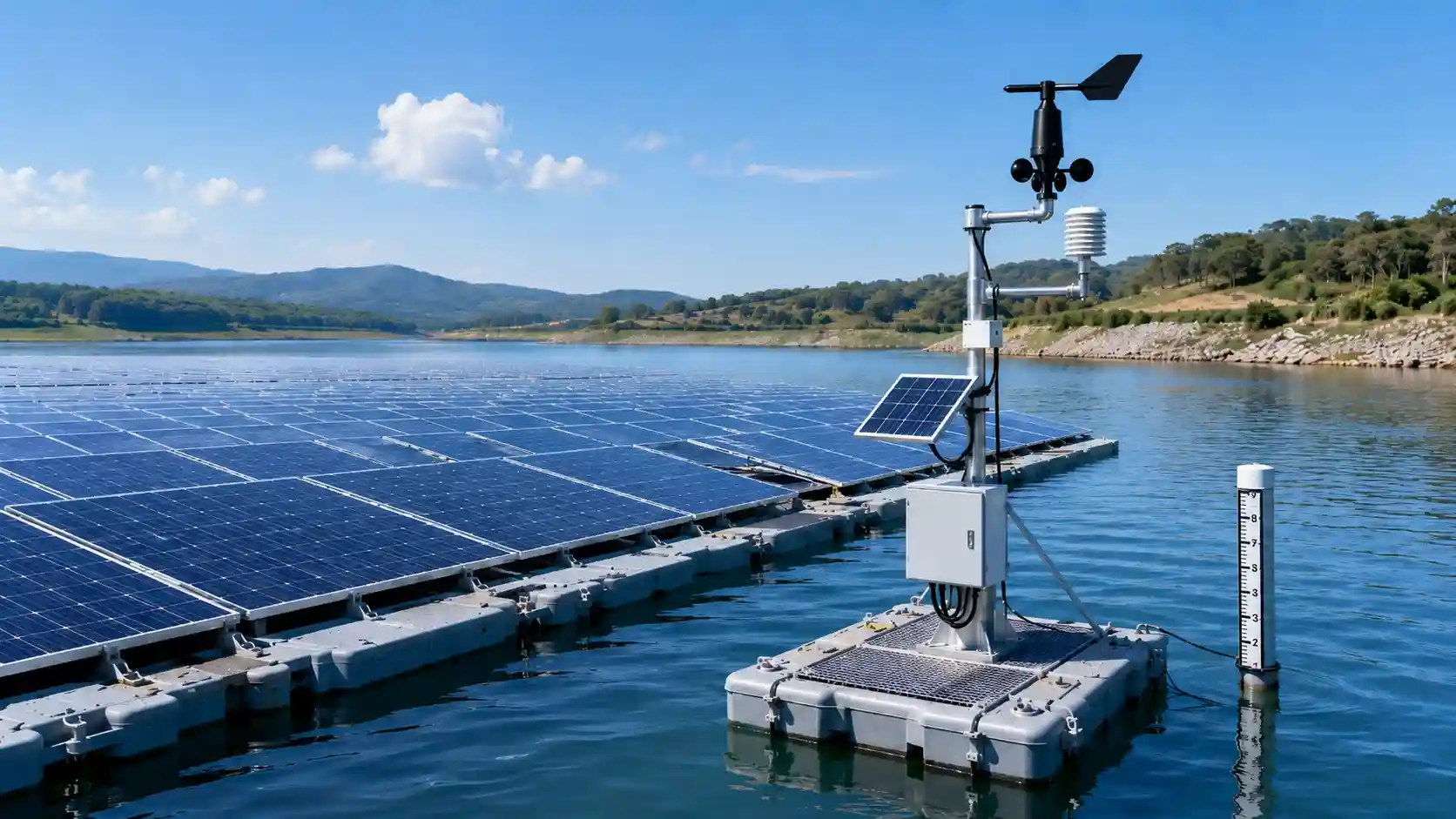
Floating solar PV (FPV) systems are rapidly expanding across reservoirs, lakes, irrigation ponds, and industrial water bodies. Compared with traditional land-based solar farms, floating PV introduces a new layer of environmental complexity—where water, wind, humidity, and corrosion risks directly influence energy yield, system safety, and long-term O&M costs.
This is where floating solar PV monitoring becomes essential: not only for tracking energy performance, but also for continuously observing the aquatic and atmospheric environment that directly impacts system stability.
1. What Is Floating Solar PV Monitoring?
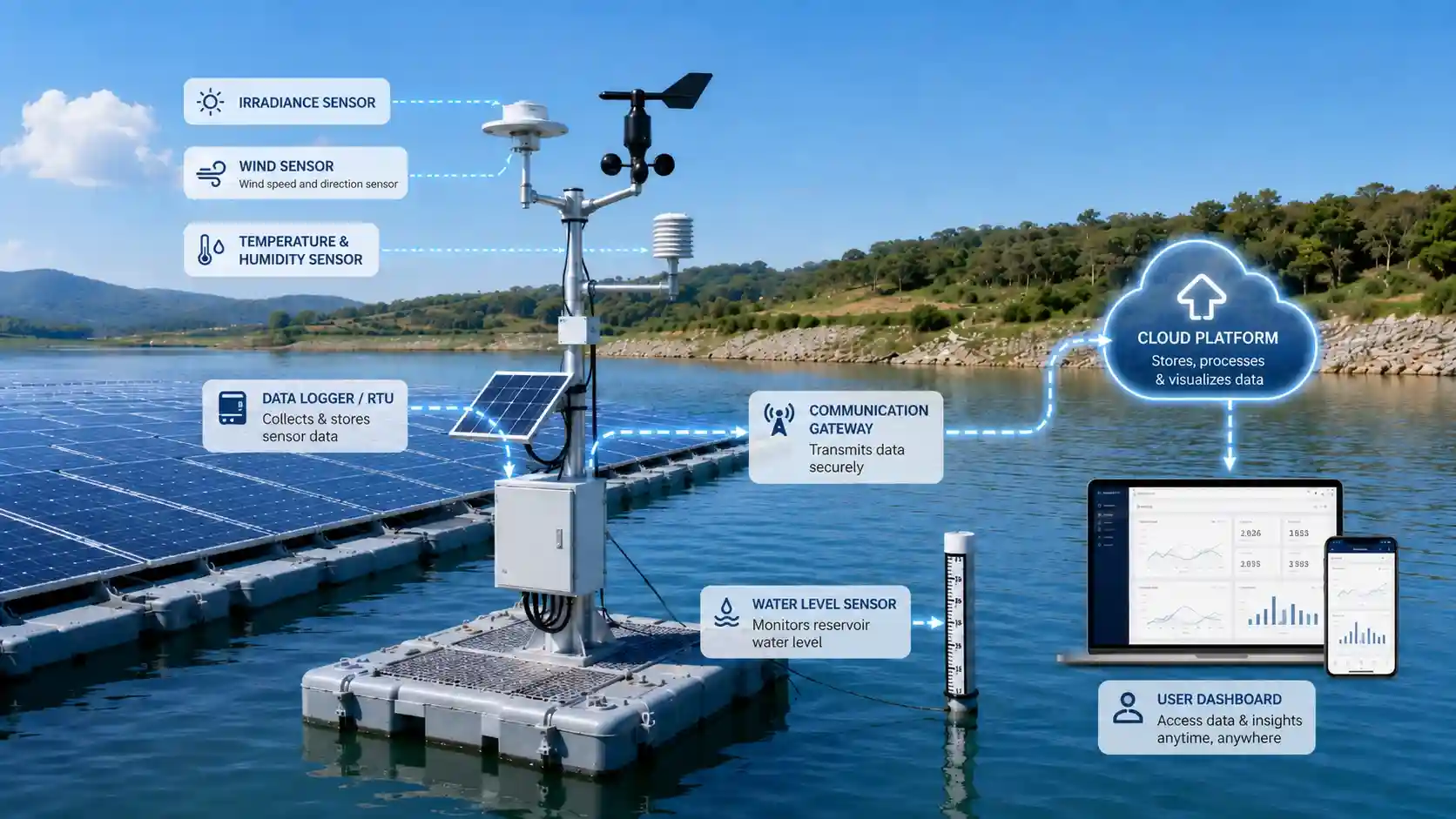
Floating solar PV monitoring is a real-time system that measures environmental conditions such as irradiance, wind, water level, humidity, and temperature to ensure safe and efficient operation of floating photovoltaic power plants.
2. How is Floating PV different from land-based solar systems?
Floating PV systems behave differently from ground-mounted solar farms in several critical ways:
2.1 Thermal Advantage and Instability
Water cooling improves panel efficiency, but temperature fluctuations are more dynamic due to evaporation and wind.
2.2 Higher Humidity Exposure
Constant evaporation increases humidity levels, accelerating connector aging and corrosion risks.
2.3 Structural Movement
Wind and waves cause micro-movements in floating platforms, affecting cable tension and long-term mechanical stability.
2.4 Maintenance Accessibility
Access is more complex, making remote monitoring and early fault detection significantly more important.
Key takeaway:
Floating PV systems require environment + structure + power output integrated monitoring, not just energy tracking.
3. What sensors are used in floating solar PV monitoring systems?
A reliable floating PV monitoring system depends on multi-layer sensor deployment.
3.1 Solar Irradiance Sensor
Measures incoming solar energy (GHI/POA), essential for performance ratio calculations.
3.2 Wind Speed and Wind Direction Sensor
Wind is a major factor affecting wave formation and floating platform stability.
3.3 Humidity & Temperature Sensor
Monitors microclimate conditions above the water surface.
3.4 Water Temperature Sensor
Water temperature affects panel cooling efficiency and algae growth conditions.
3.5 Water Level Monitoring Sensor
Critical for detecting seasonal changes, reservoir management, and platform safety.
3.6 Corrosion and Environmental Stress Indicators
Advanced systems may include conductivity and corrosion monitoring in high-salinity environments.
4. What environmental risks affect floating solar PV systems?
Floating PV systems operate in a highly dynamic environment where small environmental changes can escalate into operational risks.
4.1 Water Level Fluctuation
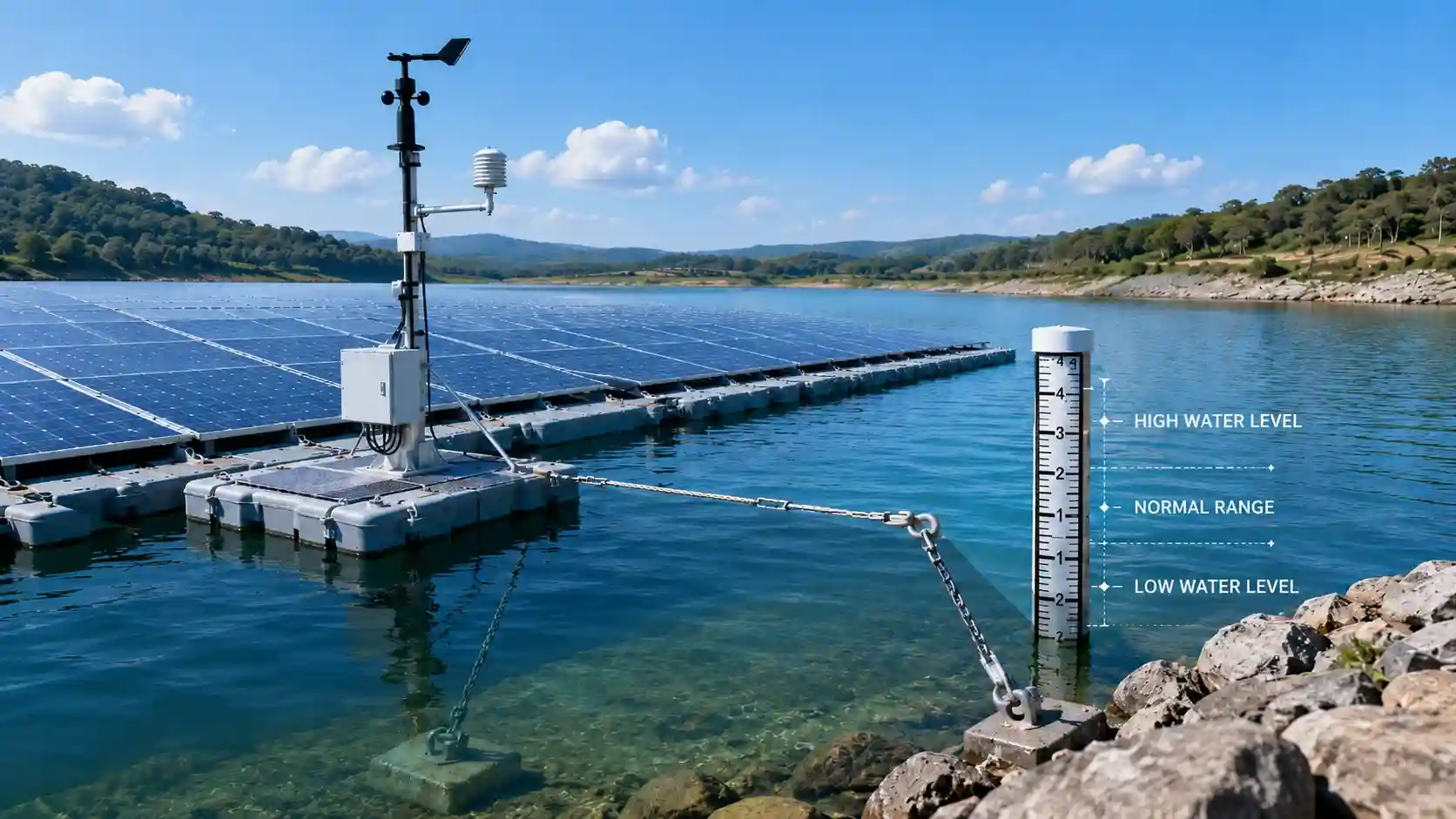
Sudden water level drops may:
- Expose anchoring systems
- Increase mechanical stress on floating modules
- Affect cable routing safety
4.2 Wind Load Risk
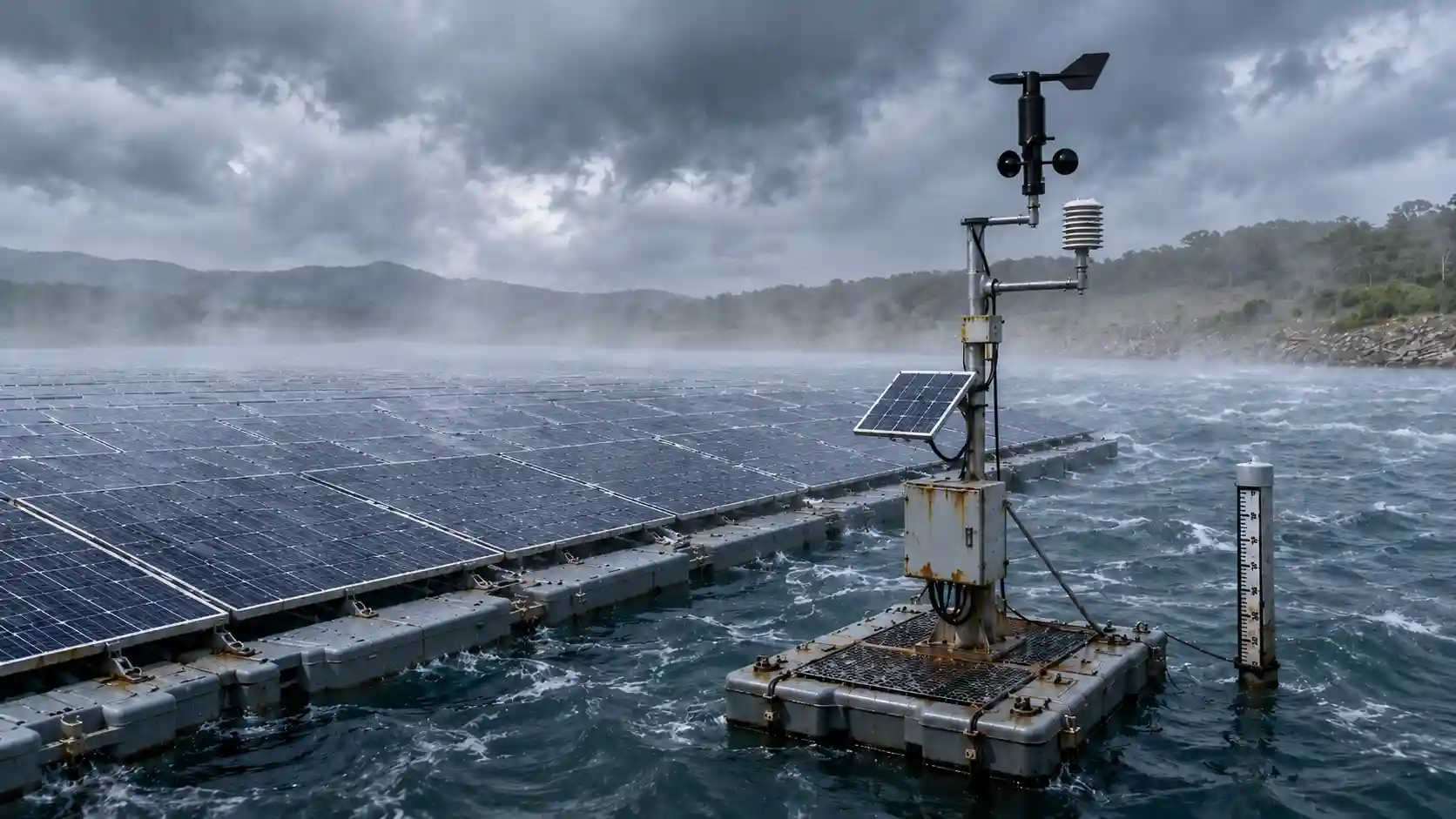
Strong wind can generate:
- Wave impact stress
- Structural oscillation
- Cable fatigue over time
4.3 High Humidity Degradation
Continuous humidity exposure leads to:
- Connector oxidation
- Insulation resistance decline
- Faster aging of junction boxes
4.4 Corrosion Acceleration
In reservoirs with industrial or agricultural runoff:
- Metal parts corrode faster
- Sensor drift increases
- Maintenance frequency rises
This makes environmental monitoring not optional—but essential for asset protection.
5. What communication systems are used in floating PV monitoring?
A floating PV monitoring system must ensure stable communication even in remote water-based environments.
Common communication methods:
LoRaWAN
- Low power consumption
- Long-range transmission over water surfaces
- Ideal for distributed sensor nodes
4G / LTE
- High reliability
- Suitable for real-time dashboards and alarms
RS485 / Modbus
- Stable wired communication for local sensor clusters
Hybrid Architecture
Most modern systems combine LoRaWAN + 4G backhaul for redundancy.
Related architecture reference:
PV Plant Weather Station
6. What is a typical floating PV monitoring system configuration?
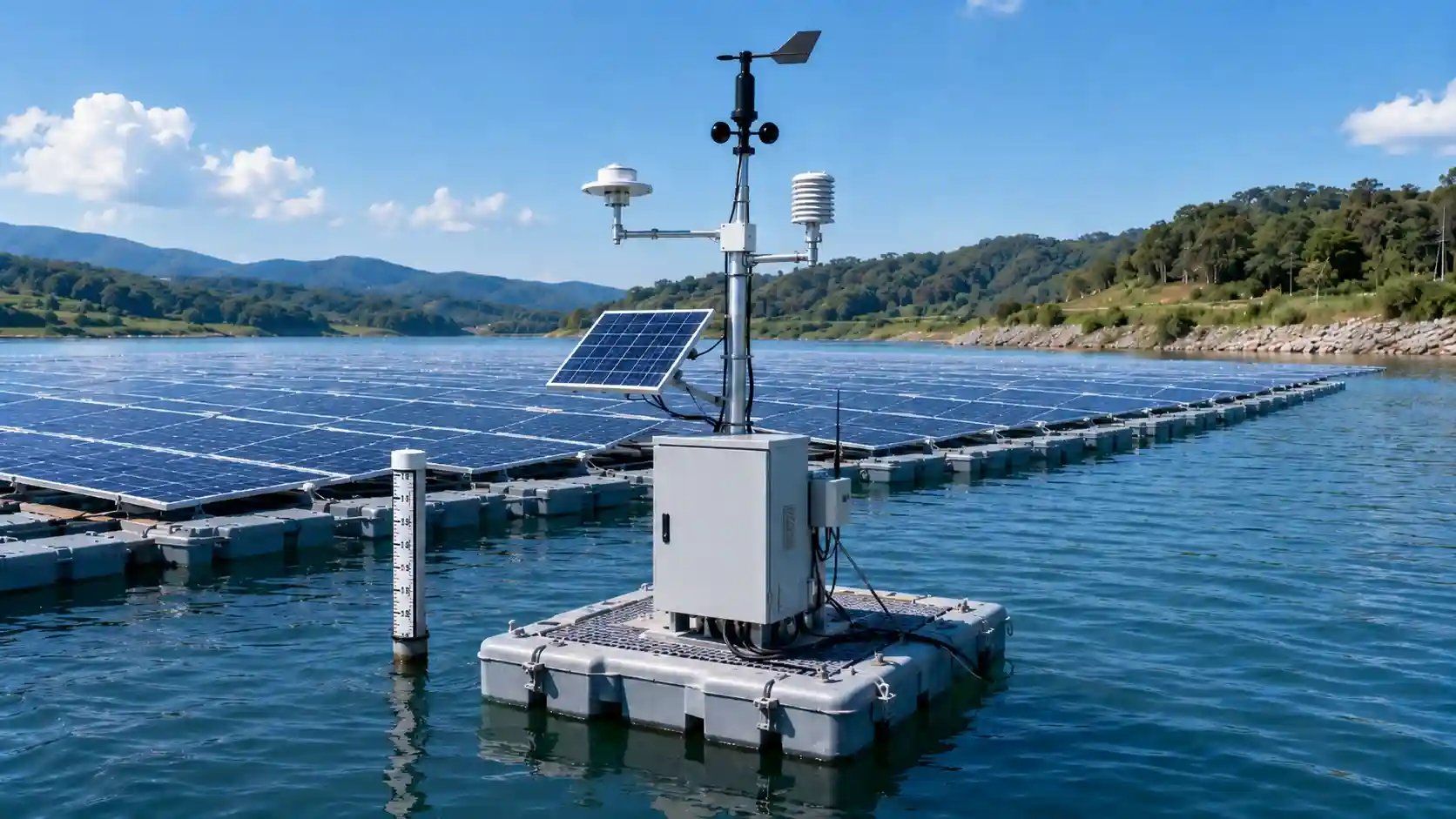
A typical floating solar monitoring station should include:
Core Sensor Package
- Solar irradiance sensor
- Air temperature & humidity sensor
- Wind speed/direction sensor
- Water temperature sensor
- Water level sensor
System Hardware
- Industrial IoT data logger (RTU)
- Solar-powered or hybrid power supply system
- Corrosion-resistant enclosure (IP66–IP68)
Communication Setup
- LoRaWAN sensor network
- 4G LTE gateway for cloud transmission
Cloud Platform Functions
- Real-time environmental dashboard
- Alarm threshold settings (wind, water level, temperature)
- Historical trend analysis
- PV efficiency correlation analytics
For full system integration, see:
Floating Solar Monitoring Station
7. Best Practices for Floating Solar Monitoring
To ensure long-term stability and accurate data collection, follow these engineering and operational best practices:
7.1 Sensor Placement Strategy
- Wind sensors installed above floating structure clearance height
- Water level sensors placed in wave-stable zones
- Irradiance sensors free from shading by panels or structures
7.2 Anti-Corrosion Design
- Use marine-grade stainless steel or coated brackets
- IP67+ enclosures for all field devices
- Regular connector inspection cycles
7.3 Redundant Data Transmission
- Combine LoRaWAN local mesh with 4G cloud uplink
- Ensure failover storage in edge devices
7.4 Calibration and Maintenance Schedule
- Irradiance sensor calibration every 12–24 months
- Water sensors cleaned quarterly
- Wind sensors inspected for mechanical wear
7.5 Data-Driven O&M Strategy
- Correlate environmental changes with power output
- Detect underperformance caused by soiling or cooling effects
- Predict maintenance needs using trend analytics
8. Why Floating PV Monitoring Matters Globally
Floating solar is expanding rapidly in regions such as:
- Southeast Asia (Indonesia, Vietnam, Thailand)
- China inland reservoirs
- India irrigation systems
- Middle East water conservation projects
- Europe hydroelectric reservoirs
Across these markets, operators face similar challenges:
- Water scarcity pressure
- Land availability limitations
- Grid decarbonization targets
- Extreme climate variability
In all cases, environmental monitoring becomes the foundation of safe and efficient FPV operation.
Conclusion
Floating solar PV systems introduce a complex interaction between solar energy generation and aquatic environmental dynamics. Without proper monitoring, operators risk reduced efficiency, structural degradation, and increased O&M costs.
A well-designed floating solar PV monitoring system integrates:
- Environmental sensing
- Water condition monitoring
- Real-time communication
- Cloud-based analytics
This ensures not only higher energy yield but also long-term asset protection.
CTA
Ready to design a reliable floating PV monitoring system for your project?
👉 Request Floating PV Monitoring Configuration
Contact JW-IoT
FAQ
What is floating PV monitoring used for?
It is used to monitor environmental and operational conditions of floating solar power plants to improve safety, efficiency, and maintenance planning.
Why is water level monitoring important in floating solar systems?
Because water level changes can affect platform stability, anchoring tension, and electrical safety of floating PV structures.
What sensors are needed for floating solar PV monitoring?
Common sensors include irradiance, wind speed, humidity, water temperature, and water level sensors.
Can floating PV systems be monitored remotely?
Yes, using LoRaWAN or 4G-based IoT systems with cloud platforms for real-time monitoring and alerts.
Does floating solar improve efficiency?
Yes, water cooling can improve PV efficiency, but requires stronger environmental monitoring due to higher humidity and corrosion risks.