+86 13520127780
 info@jingelway.com









How PV Soiling Sensors Improve Maintenance Scheduling
Release time: 2026-10-27
For solar farm operators, knowing when to clean photovoltaic modules is an important part of maintaining energy production and controlling operating costs.
Dust, sand, pollen, and other airborne contaminants can accumulate on solar panels, reducing the sunlight reaching photovoltaic cells. However, contamination does not develop at the same rate across every solar farm or throughout the year.
This makes fixed cleaning schedules difficult to optimize.
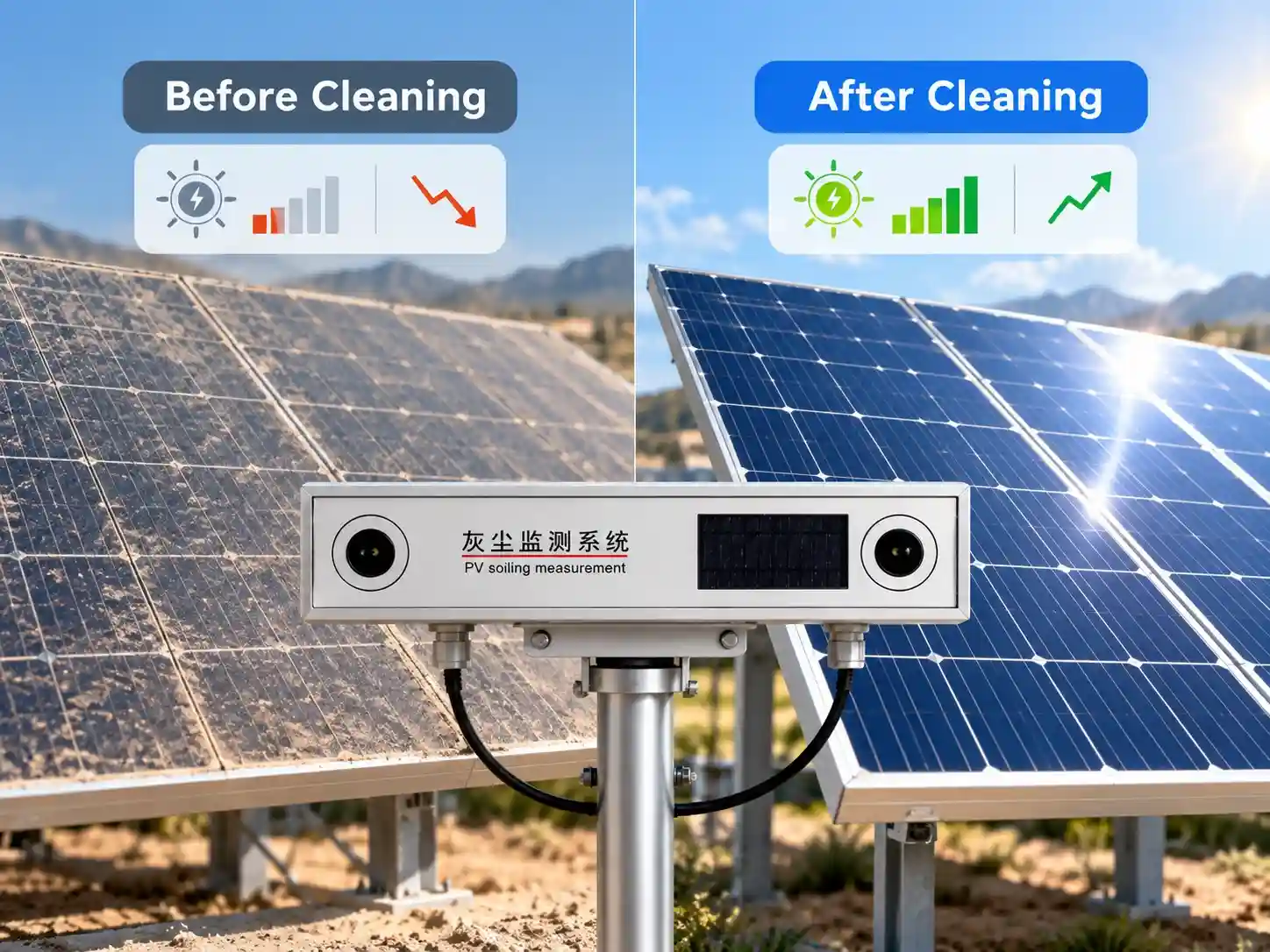
A PV soiling sensor provides measurement data that helps operations and maintenance (O&M) teams understand contamination trends and make better-informed cleaning decisions.
By combining PV soiling monitoring with solar irradiance, rainfall, wind, and module temperature data, solar farm operators can move toward condition-based maintenance rather than relying exclusively on calendar intervals.
1. What Is a PV Soiling Sensor?
A PV soiling sensor is a measurement device used to monitor or estimate the impact of dust and other deposits on photovoltaic module performance.
Depending on the measurement technology, soiling monitoring may involve comparing a naturally contaminated reference device with a clean reference device or using optical measurement techniques.
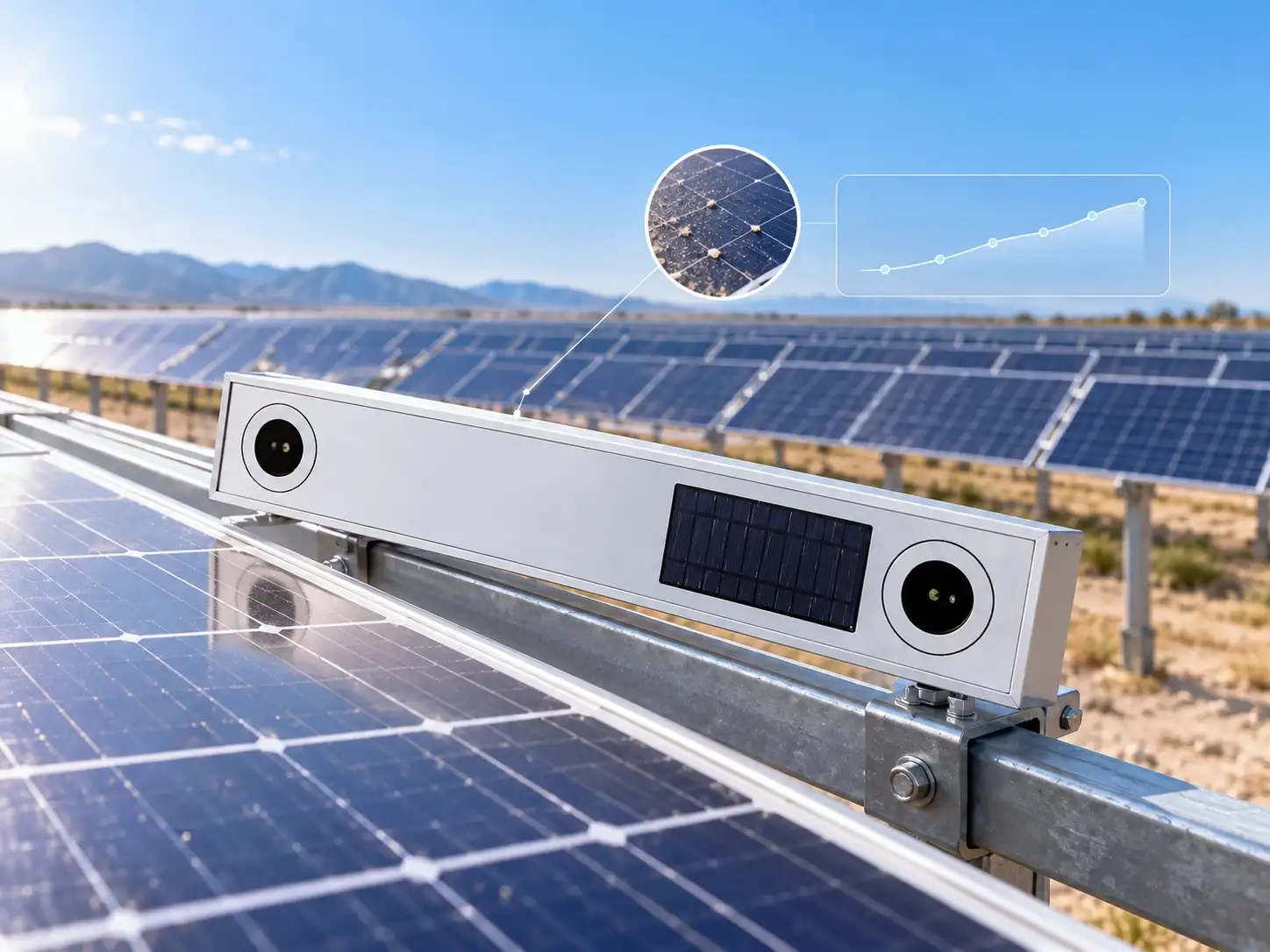
One important indicator is the soiling ratio (SR), which expresses the relationship between PV performance under actual soiling conditions and the expected performance under clean conditions.
The associated soiling loss can be expressed as:
Soiling Loss (%) = (1 − Soiling Ratio) × 100
For example, a soiling ratio of 0.97 corresponds to an estimated 3% soiling-related performance loss under the applicable measurement conditions.
This is an illustrative calculation, not a guaranteed loss for every module in a solar farm.
The international standard IEC 61724-1:2021 provides guidance on photovoltaic performance monitoring, including soiling measurement.
For a broader explanation of monitoring equipment and environmental conditions, read PV Soiling Monitoring for Desert Solar Farms.
2. Why Fixed Solar Panel Cleaning Schedules Are Often Inefficient
Traditional solar maintenance scheduling often follows predetermined intervals, such as weekly, monthly, or seasonal cleaning.
Although calendar-based maintenance is straightforward to organize, it does not necessarily reflect actual panel cleanliness.
2.1 Unnecessary Cleaning During Low-Soiling Periods
When rainfall or favorable site conditions keep modules relatively clean, additional washing may provide little improvement.
Unnecessary cleaning can increase:
- Labor and equipment costs
- Water consumption
- Vehicle and maintenance logistics
- Operational disruption
- Repeated handling of PV modules
For large utility-scale solar farms, these expenses can become significant.
2.2 Delayed Cleaning During High-Soiling Periods
The opposite problem occurs when dust accumulates faster than expected.
Sandstorms, construction activities, agricultural operations, or prolonged dry weather can increase contamination between scheduled cleaning visits.
Waiting for the next calendar date may allow avoidable energy losses to continue.
2.3 Different Zones May Need Different Cleaning Intervals
Large photovoltaic plants often include areas with different dust exposure, terrain, wind conditions, and surrounding land use.
A single cleaning schedule may not represent these differences.
PV soiling monitoring enables maintenance teams to evaluate actual contamination conditions and prioritize cleaning accordingly.
3. How Soiling Data Supports Condition-Based Maintenance
Condition-based maintenance uses measured equipment or environmental conditions to determine when maintenance should be performed.
For solar panel cleaning optimization, the objective is to identify when the expected benefit of cleaning justifies its operational cost.
Step 1: Establish a Reliable Clean Reference
A properly configured soiling monitoring system first establishes a reference condition representing clean PV performance.
For reference-device methods, the clean reference must be maintained according to the selected measurement procedure.
This baseline allows subsequent changes in soiling-related performance to be evaluated.
Step 2: Monitor Soiling Trends
A single measurement can indicate current contamination, but historical trends reveal how soiling develops.
O&M teams can examine:
- Current soiling ratio
- Changes in soiling ratio over time
- Estimated soiling accumulation rate
- Rainfall-related recovery
- Cleaning-related recovery
This helps distinguish gradual accumulation from sudden contamination events.
Step 3: Evaluate Cleaning Priorities
Measured soiling data should be considered alongside the economic and operational conditions of each solar plant.
| Monitoring Observation | Suggested O&M Action |
| Low and stable soiling loss | Continue monitoring |
| Gradually increasing soiling loss | Review cleaning priority and projected losses |
| Rapid deterioration after a dust event | Investigate affected areas and consider earlier cleaning |
| Rainfall followed by measurable recovery | Reassess whether manual cleaning is necessary |
| Limited recovery after cleaning | Inspect for remaining contamination or other performance problems |
These actions are general decision-support recommendations. They are not fixed sensor alarm thresholds.
Step 4: Estimate the Economic Value of Cleaning
An O&M team can compare the expected recoverable electricity production with the cost of washing the affected modules.
Important inputs include electricity value, expected irradiation, current soiling loss, projected accumulation, cleaning cost, and site accessibility.
Cleaning should be considered when its expected financial or operational benefit justifies the expense.
There is no universal soiling-loss percentage at which every solar plant must be cleaned.
For additional background, read How Solar PV Soiling Monitoring Saves Maintenance Costs.
Step 5: Verify Maintenance Results
After cleaning, compare the monitored soiling indicator with the previous value and the clean reference.
A measurable recovery supports an assessment of cleaning effectiveness.
If performance does not recover as expected, additional inspection may be necessary to identify persistent dirt, shading, sensor problems, or electrical faults.
This closes the maintenance feedback loop.
4. Combining Soiling, Rainfall, and Wind Data for Better Cleaning Decisions
A PV soiling sensor becomes more useful when integrated with a broader solar farm environmental monitoring system.
Rainfall Monitoring
Rainfall can remove accumulated contamination from PV modules, but cleaning effectiveness varies with rainfall intensity, module inclination, and contaminant characteristics.
Monitoring rainfall together with the soiling ratio helps operators determine whether natural cleaning has actually improved module conditions.
A rain event should not automatically be treated as a complete cleaning event.
Wind Speed and Direction
Wind influences the transportation, deposition, and removal of airborne particles.
High wind speeds may transport dust and sand toward photovoltaic arrays, while some conditions may resuspend loosely deposited particles.
Combining wind measurements with historical soiling data can help identify periods of elevated contamination risk.
Solar Irradiance and Module Temperature
Solar irradiance and module temperature are essential for interpreting photovoltaic performance.
Reduced generation can be caused by changing sunlight, high module temperatures, shading, electrical faults, or contamination.
Combining environmental measurements with direct soiling monitoring helps reduce uncertainty when investigating performance losses.
For an integrated environmental monitoring approach, explore the JW-IoT PV Plant Weather Station Solution.
5. Best Applications for PV Soiling Sensors
Desert and Arid Solar Farms
Desert photovoltaic projects experience dry conditions, windblown dust, and potentially limited natural cleaning.
Soiling measurements are particularly valuable where water supply and cleaning logistics are expensive.
Utility-Scale Solar Power Plants
Large solar farms may require several monitoring locations to represent differences across their arrays.
Zone-based information helps maintenance teams prioritize field inspections and cleaning resources.
Agricultural Solar Installations
Nearby agricultural operations can introduce soil particles, pollen, and seasonal airborne material.
Monitoring helps operators adapt maintenance schedules to changing local conditions.
Mining and Industrial Solar Projects
Industrial activities, mining operations, and unpaved roads can increase local airborne dust concentrations.
Soiling measurements help track site-specific contamination patterns.
Commercial Rooftop PV Systems
Rooftop installations near industrial facilities or busy roads may benefit from soiling monitoring when contamination creates significant maintenance or generation concerns.
However, the economic justification should be assessed individually, particularly for smaller systems.
6. Recommended PV Soiling Monitoring System Setup
A practical solar farm monitoring configuration should combine direct soiling measurements with the environmental and electrical data required for maintenance analysis.
Recommended Monitoring Components
| Component | Monitoring Purpose |
| PV soiling sensor or reference measurement system | Monitor soiling-related performance loss |
| Solar irradiance sensor | Measure available solar radiation |
| PV module temperature sensor | Support temperature-related performance analysis |
| Rain gauge | Record natural cleaning events |
| Wind speed and direction sensor | Provide dust transport and weather context |
| Data logger or RTU | Collect and store monitoring data |
| Communication gateway | Transmit data to a monitoring platform |
| SCADA or monitoring software | Visualize trends and support O&M decisions |
The recommended data architecture is:
Soiling and Environmental Sensors → Data Logger / RTU → Communication Network → SCADA or Monitoring Platform → Maintenance Planning
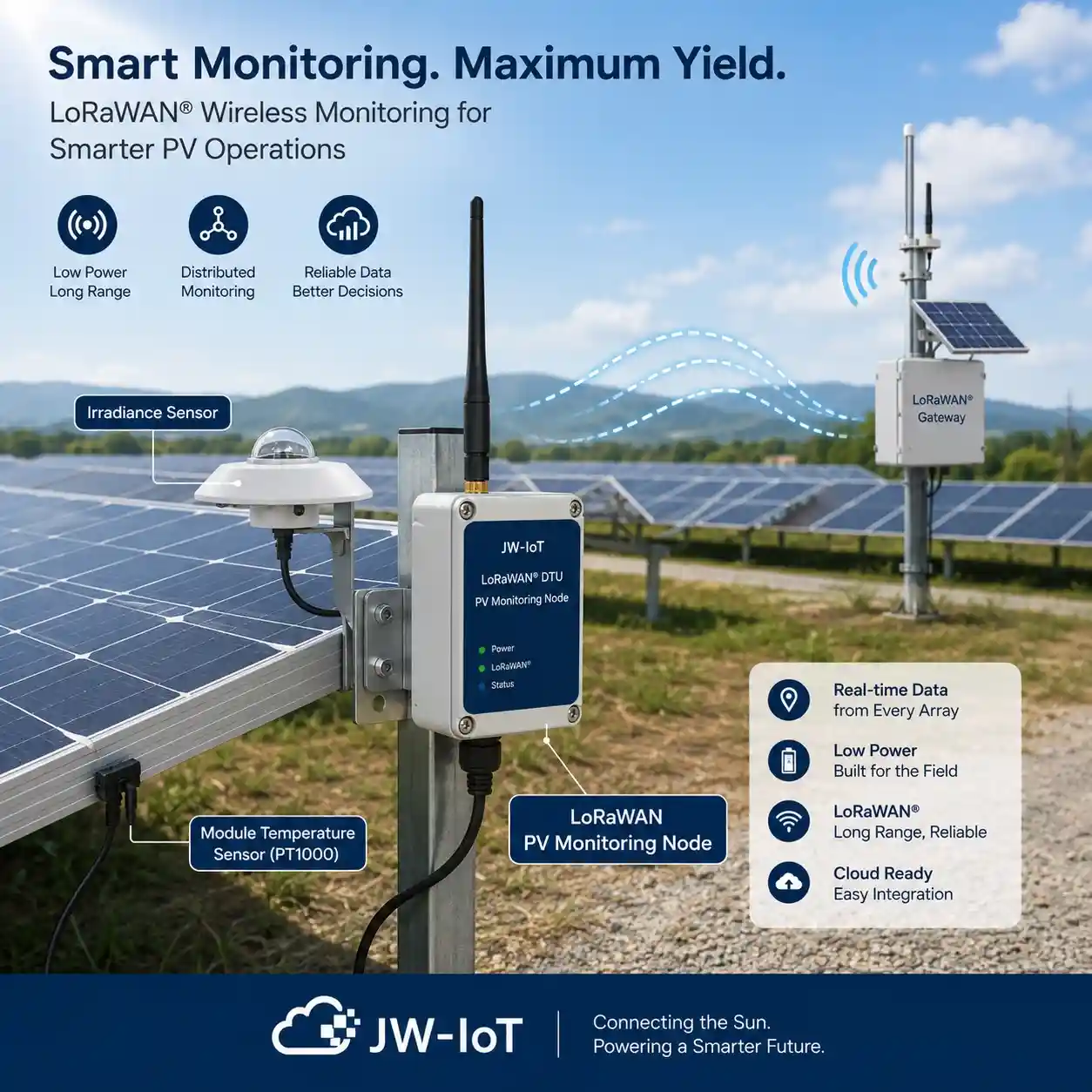
Depending on the selected equipment and plant infrastructure, communication may use RS485 Modbus, Ethernet, LoRaWAN, or 4G.
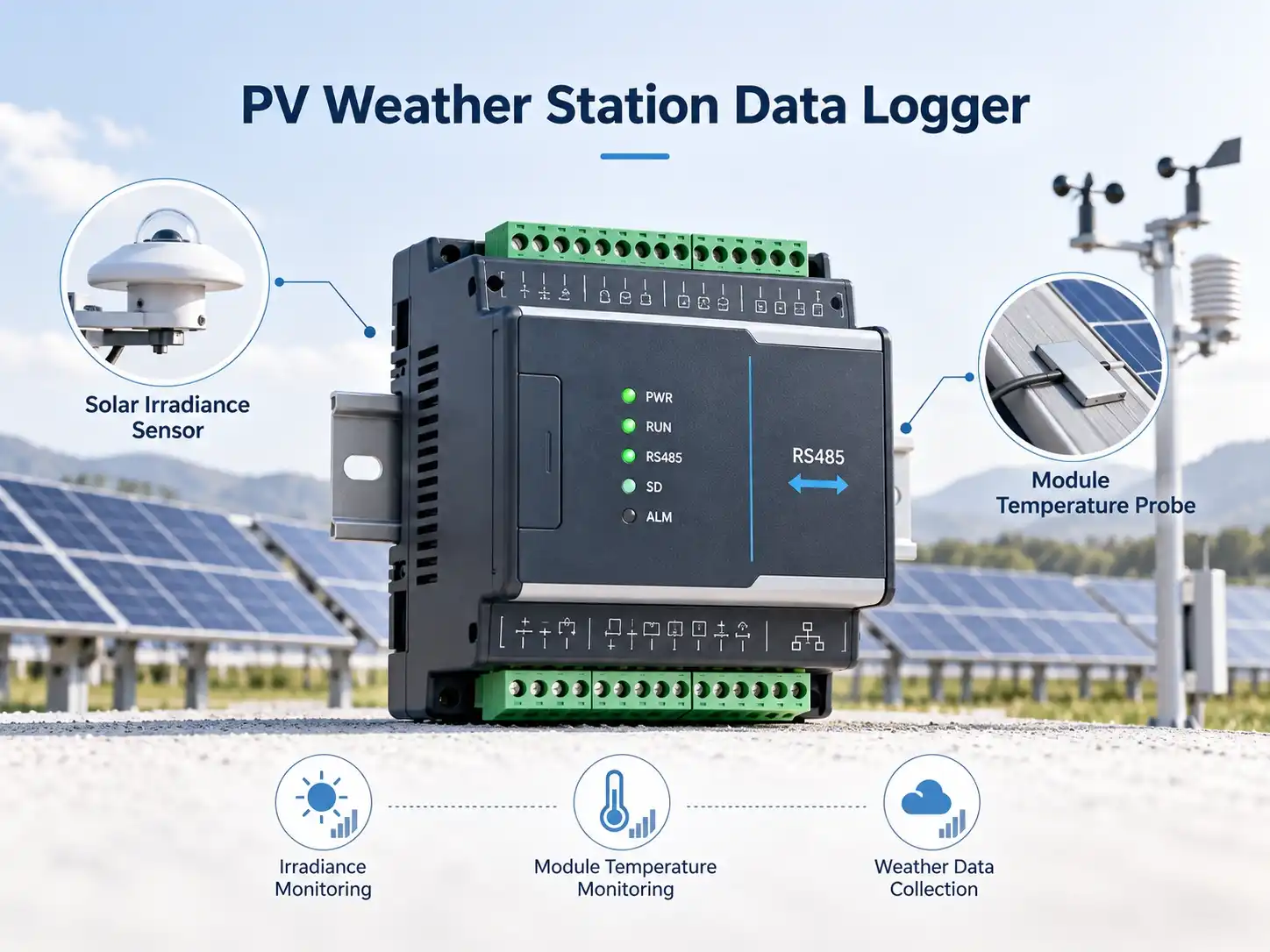
JW-IoT’s Solar PV Weather Station for Power Plant Monitoring supports irradiance, module temperature, and meteorological measurements with RS485 Modbus integration.
The PV Plant Weather Station Solution also provides an architecture for field data acquisition, remote communication, and centralized environmental monitoring.
Dedicated soiling measurement equipment should be selected and its compatibility confirmed separately.
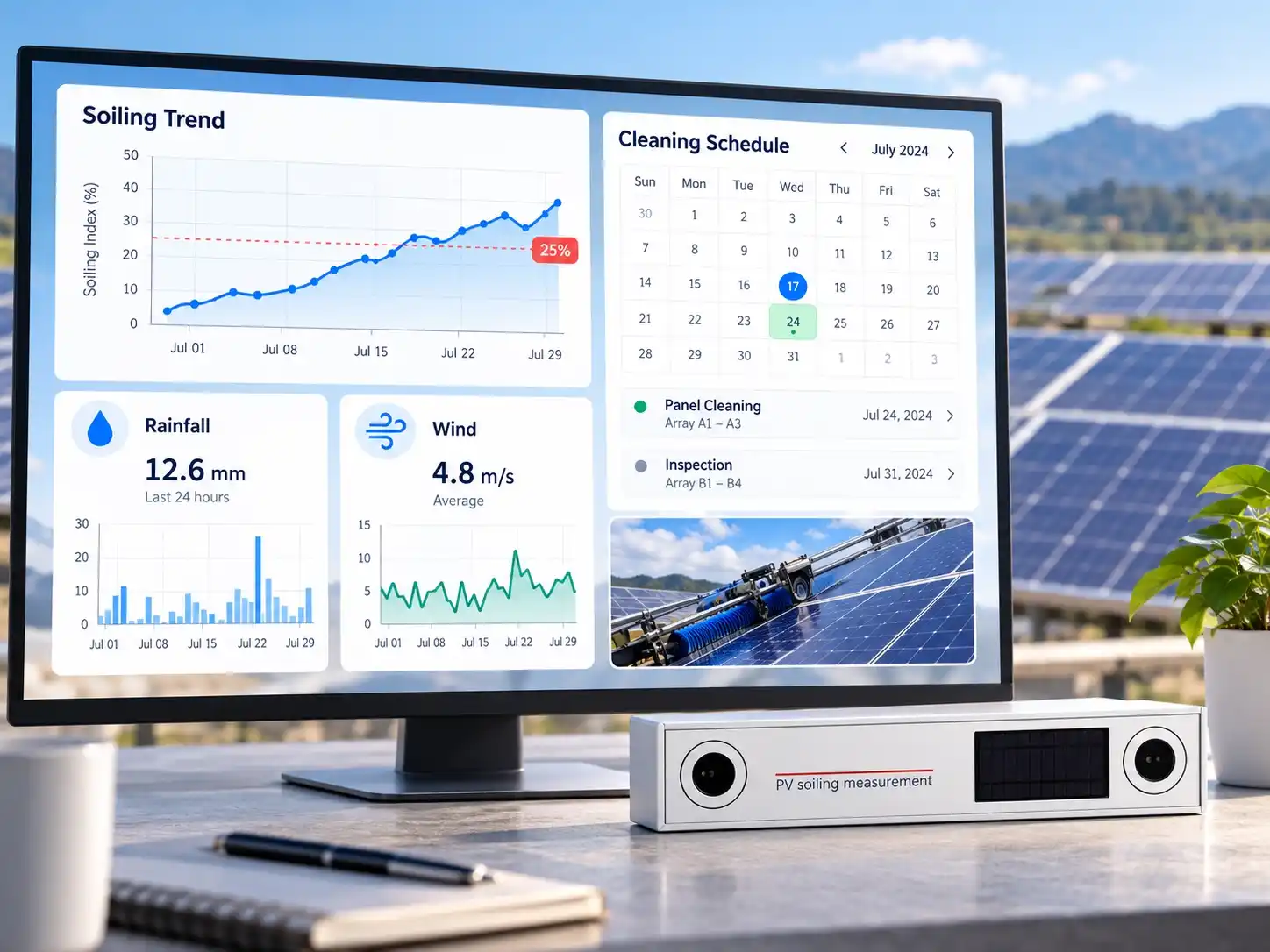
Recommended Cleaning Scheduling Dashboard
An effective dashboard can display:
- Current soiling ratio and historical trend
- Soiling-loss changes by monitoring zone
- Rainfall and wind records
- Planned and completed cleaning dates
- Cleaning-event performance comparisons
- Data quality and sensor status
The dashboard can support maintenance decisions, but automated cleaning recommendations require appropriate decision rules and integration with the selected O&M platform.
7. Frequently Asked Questions
Can a PV soiling sensor automatically determine the best cleaning date?
A soiling sensor supplies measurement data, but selecting an optimal cleaning date also requires weather forecasts, expected energy recovery, cleaning costs, and operational constraints. The decision can be automated only when suitable analysis and scheduling functions are implemented.
How is a PV soiling sensor different from a pyranometer?
A pyranometer measures solar irradiance. A PV soiling measurement system evaluates contamination-related losses using a suitable measurement method. The two serve different purposes and can provide complementary data.
Can rainfall eliminate the need for solar panel cleaning?
Rainfall may reduce soiling, but its effectiveness depends on local conditions. A measured improvement in soiling ratio provides stronger evidence of cleaning effectiveness than rainfall data alone.
How many PV soiling sensors does a solar farm need?
The number depends on plant size, array layout, terrain, environmental variation, and measurement objectives. Large sites with different dust-exposure zones may require multiple monitoring points.
Conclusion: Turn Soiling Measurements into Smarter Maintenance Decisions
Effective solar maintenance scheduling requires more than a fixed cleaning calendar.
PV soiling sensors provide important data for understanding contamination, tracking performance losses, evaluating natural cleaning events, and verifying maintenance effectiveness.
When combined with solar irradiance, rainfall, wind, and module temperature measurements, PV soiling monitoring helps O&M teams develop more targeted and economically informed panel cleaning schedules.
For utility-scale solar farms and dust-prone photovoltaic installations, integrating soiling measurements into an existing monitoring system can strengthen maintenance planning and long-term performance analysis.
Get Soiling Sensor Datasheet
Looking for PV soiling monitoring equipment for a new solar project or an existing photovoltaic plant?
JW-IoT provides solar environmental monitoring equipment, data acquisition devices, and communication solutions for photovoltaic applications.
Share your plant capacity, location, required soiling measurements, and communication requirements with our technical team.
Get Soiling Sensor Datasheet / Contact JW-IoT
The availability, measurement method, technical specifications, and system integration requirements of a dedicated PV soiling sensor should be confirmed before procurement.