+86 13520127780
  info@jingelway.com








PV Soiling Monitoring for Desert Solar Farms
Release time: 2026-06-27
Introduction
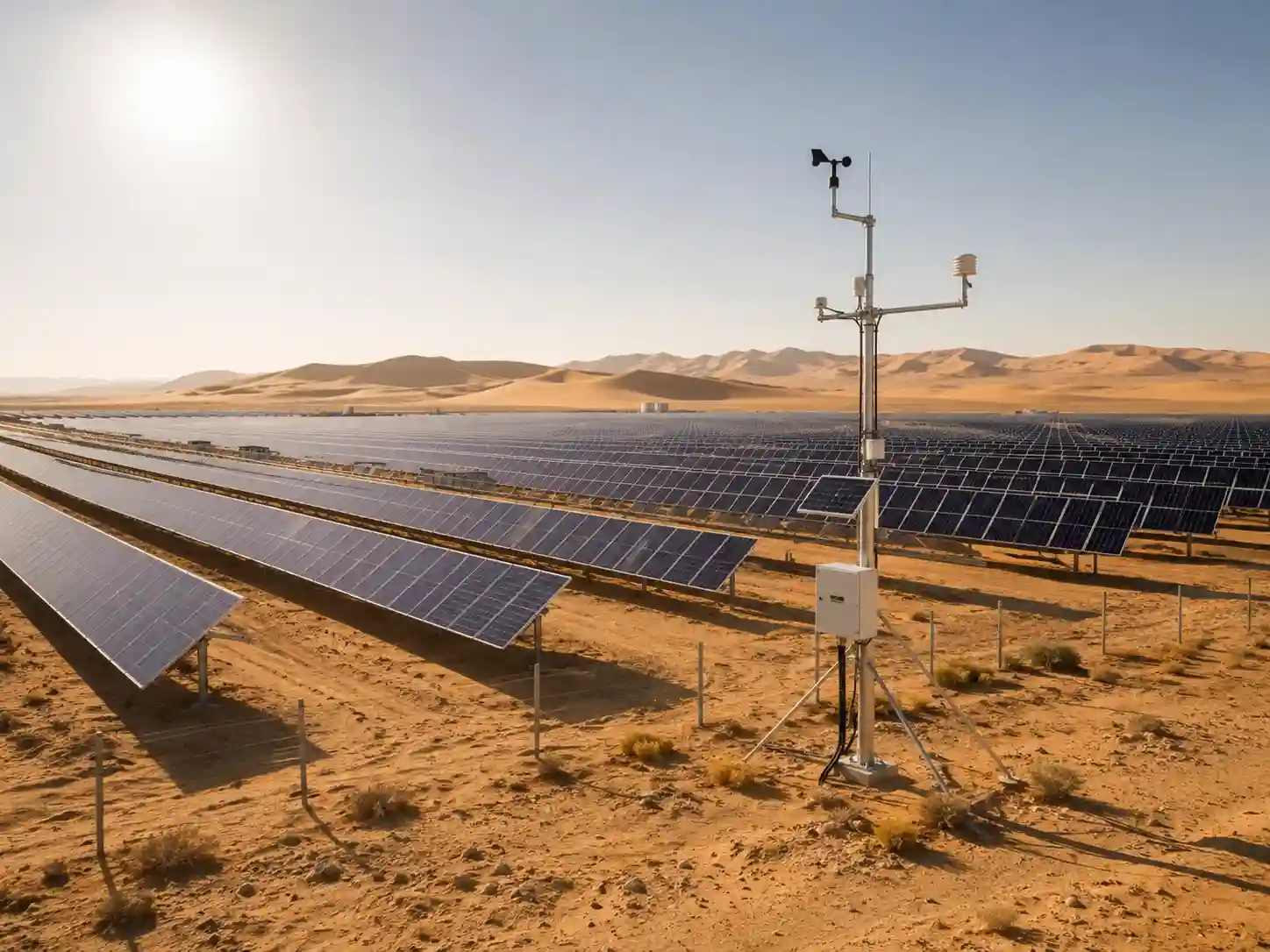
Desert regions are among the most attractive locations for large-scale solar power plants. They usually offer high solar irradiance, wide open land, long sunshine hours, and strong potential for utility-scale PV development. However, desert solar farms also face one of the most serious operational challenges in photovoltaic power generation: dust accumulation.
When sand, dust, and airborne particles settle on PV modules, they block sunlight from reaching the solar cells. This reduces energy output, affects performance ratio, increases cleaning costs, and makes plant operation less predictable. For solar farms located in dry and dusty environments, manual inspection alone is not enough to understand the real impact of soiling.
This is where PV soiling monitoring becomes valuable. By continuously measuring dust-related power loss, irradiance difference, module temperature, and site weather conditions, a PV soiling monitoring system helps operators make better cleaning decisions based on real data instead of fixed schedules.
For desert PV projects, JW-IoT provides a dedicated PV Soiling Monitoring System designed to support real-time dust monitoring, cleaning optimization, and solar farm performance management.
Why Dust Is a Major Challenge for Desert Solar Farms?
Desert solar farms are naturally exposed to harsh environmental conditions. Unlike rooftop solar systems in urban areas, desert PV plants often operate in open areas with limited vegetation, dry soil, high wind speed, and frequent sand movement.
Common dust-related challenges include:
- Fine sand covering PV module glass
- Wind-blown dust after dry weather
- Rapid soiling after sandstorms
- Uneven dust accumulation across different PV zones
- Reduced solar radiation reaching the module surface
- Higher cleaning frequency and water consumption
- Difficulty judging the best cleaning time
In many solar farms, cleaning is still performed based on a fixed weekly or monthly schedule. However, dust accumulation does not always follow a fixed pattern. A sandstorm may cause heavy soiling within one day, while a cleaner period may not require immediate washing.
Without a reliable solar panel dust monitoring system, operators may either clean too late and lose power generation, or clean too often and waste labor, water, and maintenance resources.
How Soiling Affects Solar Power Generation?
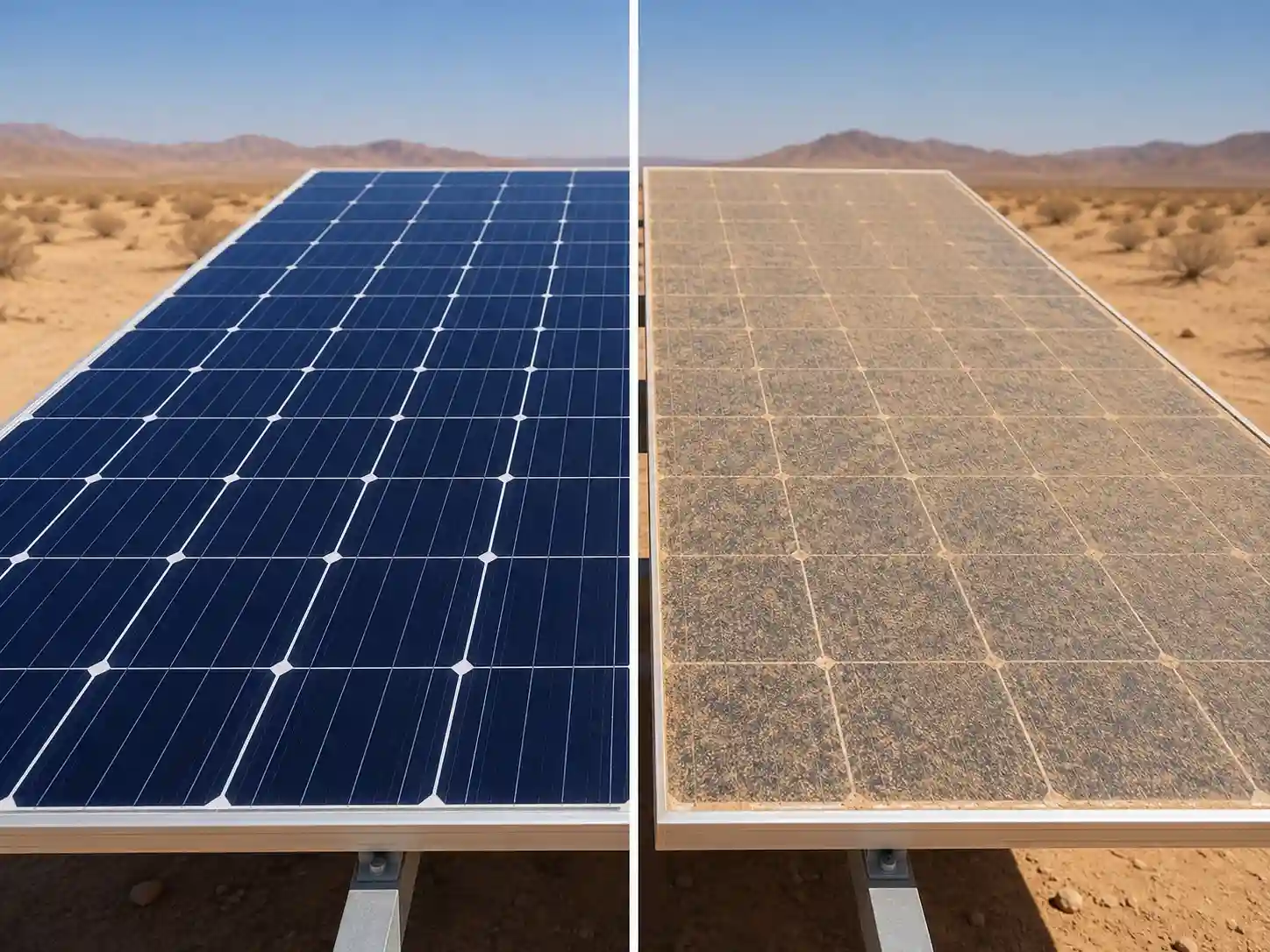
Soiling affects PV power generation mainly by reducing the amount of sunlight that reaches the solar cells. Even when solar irradiance is strong, dirty module surfaces can lower the actual energy output of the PV system.
The impact of soiling is usually reflected in several ways:
1. Lower Energy Yield
Dust blocks part of the incoming sunlight. As a result, the PV modules receive less effective radiation, leading to lower DC output and reduced energy generation.
2. Reduced Performance Ratio
Performance ratio is an important indicator for evaluating solar plant efficiency. If irradiance remains high but power output decreases, soiling may be one of the key reasons.
3. Uneven Module Output
Dust does not always accumulate evenly. Some PV arrays may be more affected by wind direction, terrain, road dust, or nearby construction. This can cause output differences between strings or zones.
4. Higher O&M Cost
Without accurate soiling data, operators may rely on unnecessary cleaning cycles. For large desert solar farms, cleaning requires labor, vehicles, water, or robotic cleaning systems. Poor cleaning decisions directly increase operational cost.
5. Delayed Fault Diagnosis
When PV output drops, operators need to know whether the cause is dust, equipment failure, shading, inverter problems, or weather variation. Soiling data helps distinguish environmental loss from electrical faults.
What Is a PV Soiling Monitoring System?
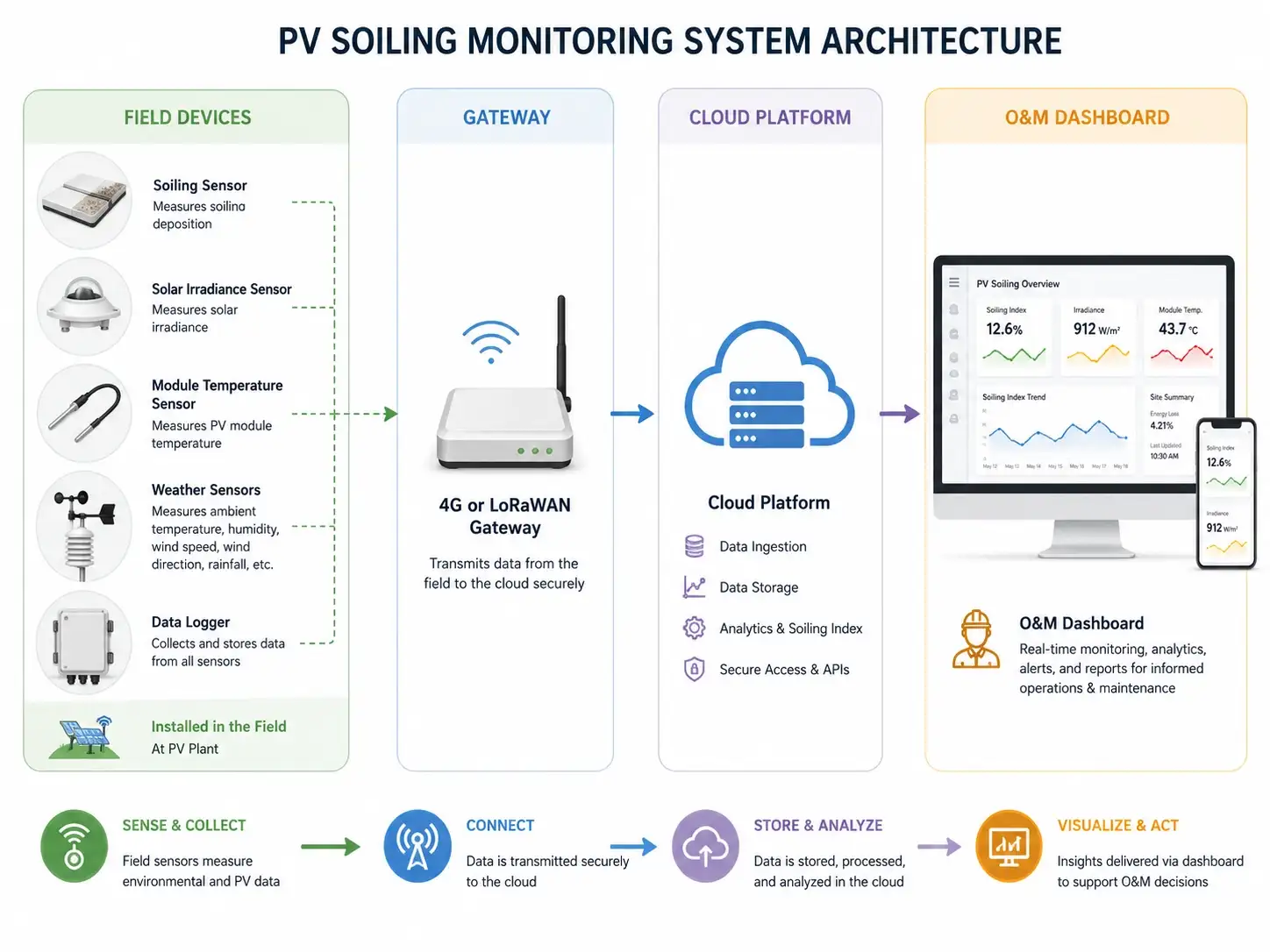
A PV soiling monitoring system is an environmental monitoring solution designed to measure the power loss caused by dust accumulation on solar panels.
A typical system compares the performance of a clean reference module and a soiled reference module. By monitoring the difference between the two modules, the system can estimate the soiling loss ratio and provide useful data for cleaning decisions.
A complete PV soiling monitoring system may include:
- Soiling monitoring sensor or reference PV module pair
- Solar irradiance sensor
- PV module temperature sensor
- Ambient temperature and humidity sensor
- Wind speed and wind direction sensor
- Rainfall sensor
- Data logger or IoT acquisition terminal
- LoRaWAN, 4G, RS485, or Ethernet communication
- Cloud monitoring platform
- Alarm and reporting functions
For projects that also need broader solar resource and performance analysis, the soiling system can be integrated with a Solar Irradiance Sensor and a Solar Farm Environmental Monitoring System.
Key Sensors for Desert PV Monitoring
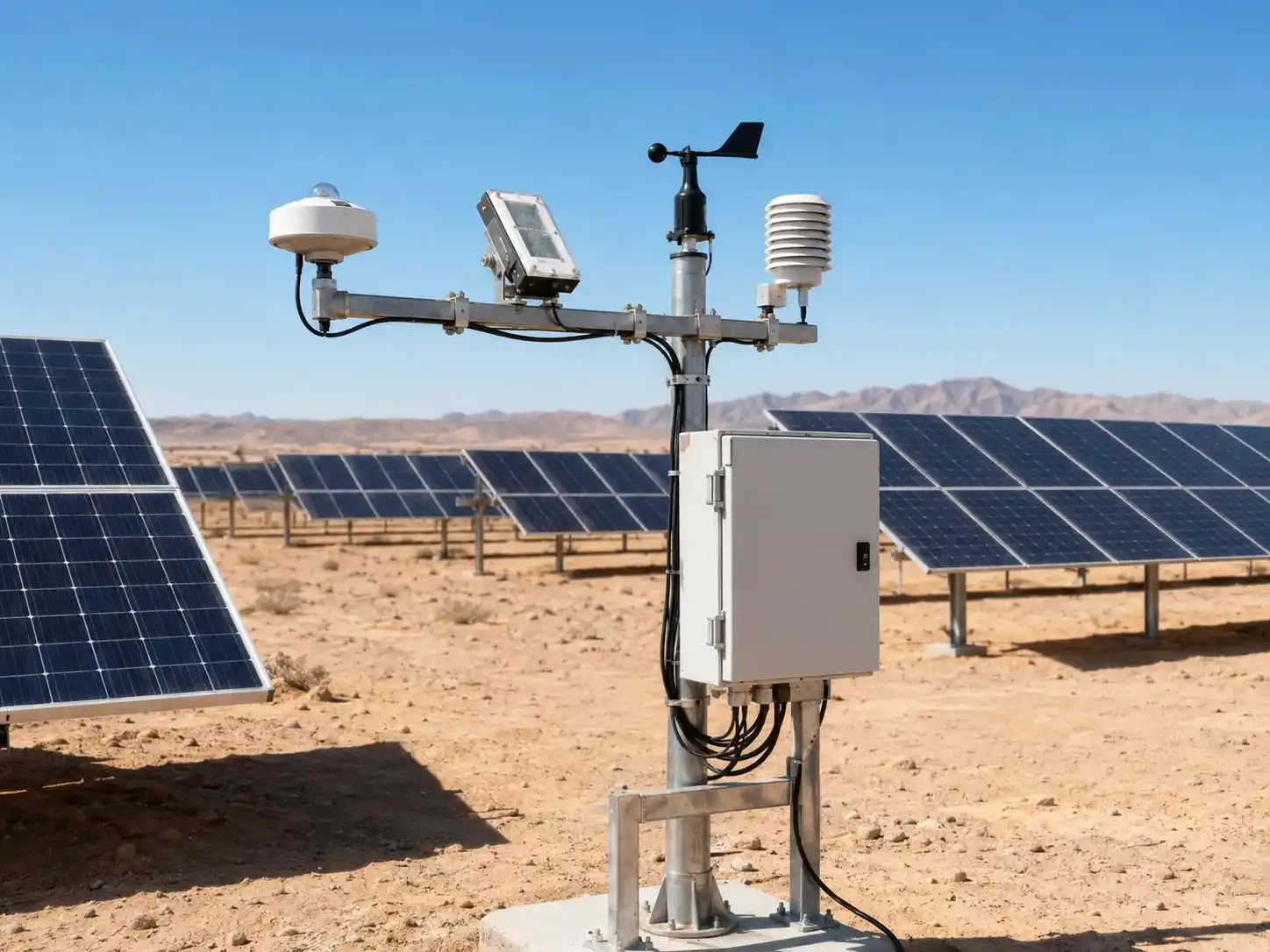
Desert PV monitoring is not limited to dust measurement. To understand the full operating environment of a solar farm, multiple sensor types are often needed.
1. Solar Soiling Sensor
A solar soiling sensor or soiling monitoring module is used to estimate the loss caused by dust accumulation. It helps determine whether cleaning is necessary and how serious the soiling impact is.
2. Solar Irradiance Sensor
Solar irradiance data is essential for comparing available sunlight with actual PV output. It supports performance ratio analysis, power generation evaluation, and abnormal output diagnosis.
Recommended internal link:
Solar Irradiance Sensor for PV Monitoring
3. PV Module Temperature Sensor
Module temperature affects PV efficiency. In desert environments, high module temperature can reduce output even when irradiance is strong. Temperature data helps separate heat-related losses from soiling losses.
4. Wind Speed and Wind Direction Sensor
Wind can both increase and reduce dust accumulation. Strong wind may bring sand to the PV surface, while some wind conditions may remove light dust. Wind data helps analyze soiling patterns across the site.
5. Ambient Temperature and Humidity Sensor
Dry air, high temperature, and low humidity are common in desert solar farms. These parameters help operators understand local environmental conditions and evaluate cleaning strategy.
6. Rainfall Sensor
Although rainfall is limited in desert regions, occasional rain may naturally clean part of the module surface. Rainfall data helps explain sudden changes in soiling loss.
7. Data Logger and Communication Gateway
Field sensors need stable data acquisition and transmission. A data logger or IoT gateway can collect sensor data and transmit it to the cloud platform through 4G, LoRaWAN, Ethernet, or other communication methods.
How Soiling Data Helps Optimize Cleaning?
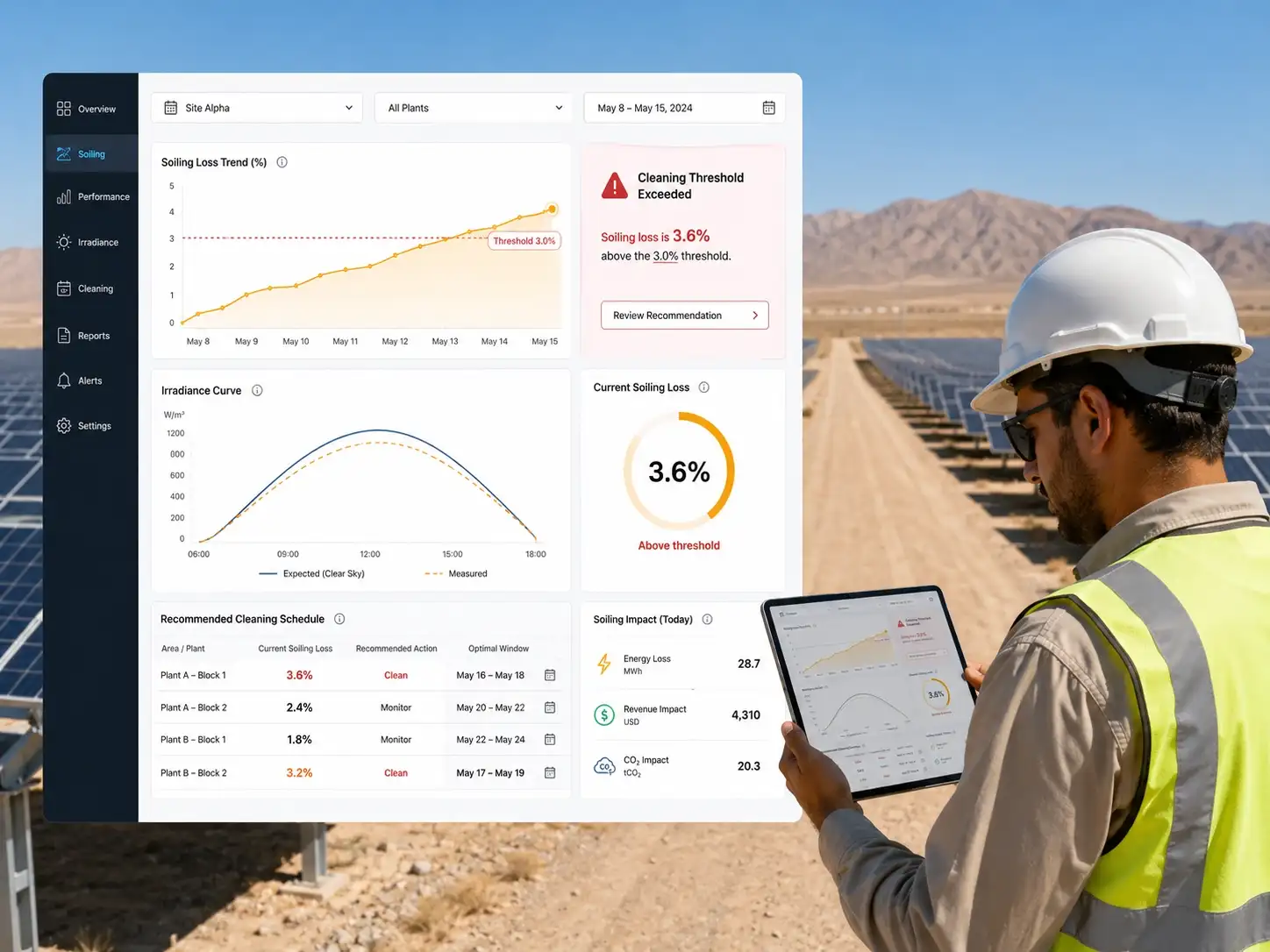
Cleaning optimization is one of the most important benefits of PV soiling monitoring.
For desert solar farms, cleaning decisions should not be based only on time intervals. A better approach is to combine soiling loss data, irradiance data, weather data, water availability, and O&M cost.
1. Identify the Best Cleaning Time
When soiling loss reaches a defined threshold, the system can trigger an alert and remind the O&M team to clean affected PV zones. This helps avoid unnecessary cleaning while reducing dust-related power loss.
2. Reduce Water and Labor Waste
In desert regions, water is often limited and expensive. Cleaning too frequently may increase operating costs. Soiling monitoring helps operators clean only when the loss justifies the cleaning cost.
3. Support Zone-Based Cleaning
Large solar farms may not experience the same dust level across the whole site. Monitoring data can help divide the plant into different zones and prioritize the most affected areas.
4. Improve Power Forecasting
When operators understand the relationship between dust accumulation and energy output, they can improve short-term and long-term power generation forecasting.
5. Evaluate Cleaning Effectiveness
After cleaning, soiling data can show whether module performance has recovered. This helps verify cleaning quality and compare different cleaning methods, such as manual washing, dry cleaning, robotic cleaning, or water-saving cleaning methods.
6. Support O&M Reports
Historical soiling data can be used for monthly O&M reports, performance analysis, and cleaning cost evaluation. This is especially useful for EPC contractors, asset owners, and third-party O&M service providers.
Example Application Scenario
A utility-scale desert solar farm operates in a dry area with frequent dust and sand movement. The plant previously used a fixed cleaning schedule every two weeks. However, energy output still dropped sharply after sandstorms, while some scheduled cleaning operations were unnecessary during cleaner weather periods.
After deploying a PV soiling monitoring system, the operator can monitor:
- Real-time soiling loss ratio
- Solar irradiance trends
- PV module temperature
- Wind speed and wind direction
- Rainfall events
- Cleaning recovery effect
- Abnormal environmental conditions
With these data points, the O&M team can adjust cleaning schedules based on actual dust conditions. When soiling loss is low, cleaning can be delayed. When soiling loss increases quickly after a sandstorm, cleaning can be arranged earlier.
This data-driven method helps reduce unnecessary cleaning, lower water usage, improve energy yield, and increase the overall efficiency of desert PV operation.
Best Regions for Soiling Monitoring Systems
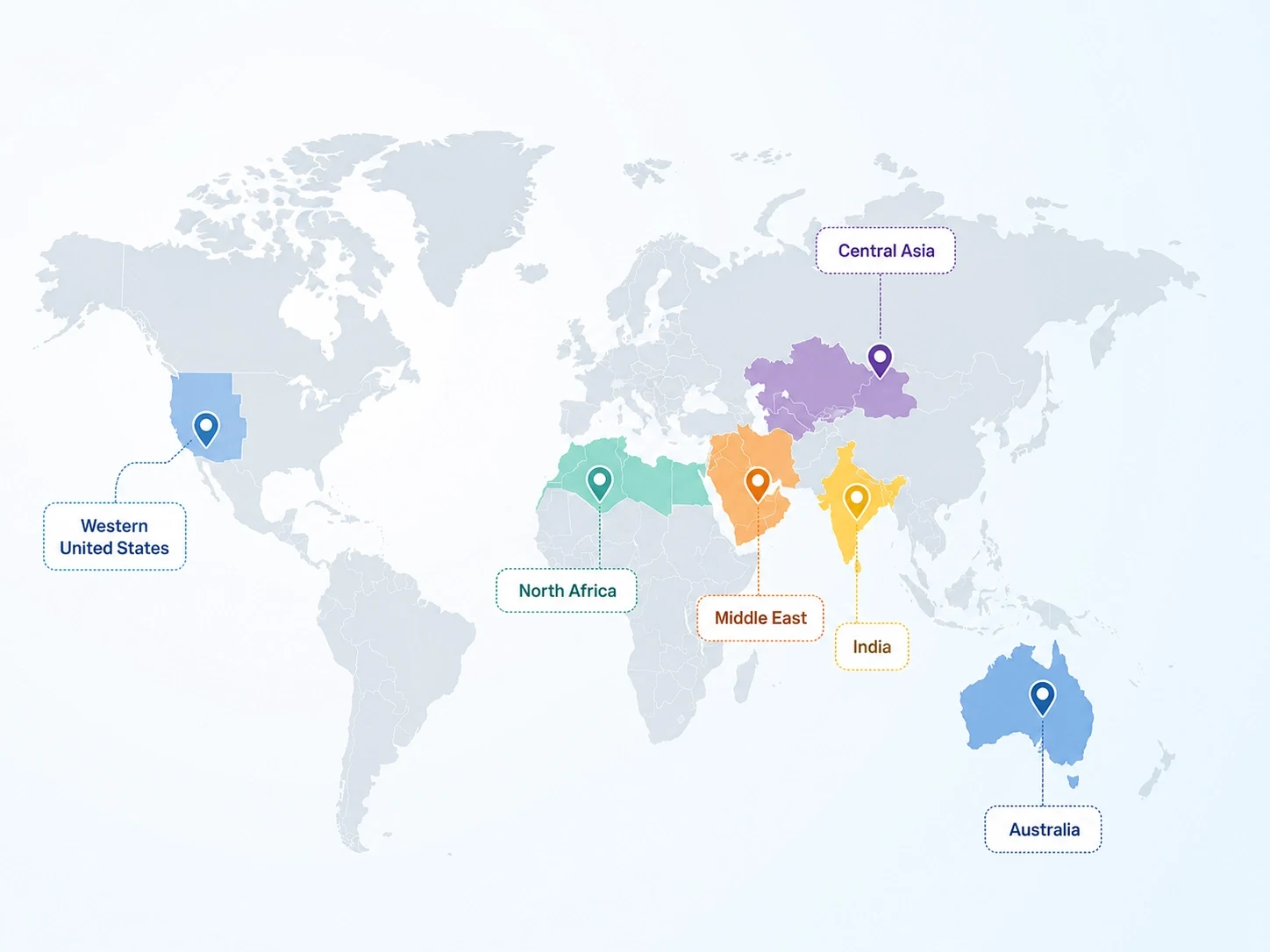
PV soiling monitoring is especially valuable in regions where solar farms are exposed to dust, dry air, sandstorms, and limited rainfall.
Typical application regions include:
Middle East
Countries such as Saudi Arabia, the United Arab Emirates, Oman, Qatar, and Kuwait have strong solar resources and large desert PV development potential. Dust accumulation and high temperatures make soiling monitoring highly important.
North Africa
Egypt, Morocco, Algeria, and Tunisia are suitable markets for desert solar farms. Large open land areas and strong sunlight support PV development, while dust and sand create operational challenges.
Central Asia
Kazakhstan, Uzbekistan, and other Central Asian markets are developing renewable energy projects. Dry climates and remote project locations increase the need for reliable solar farm environmental monitoring.
Australia
Many solar farms in Australia are located in dry inland areas. Dust, heat, and large site scale make automated monitoring useful for O&M optimization.
Western United States
Desert solar farms in areas such as California, Nevada, Arizona, and New Mexico may also benefit from solar panel dust monitoring and cleaning optimization systems.
India
Some solar power projects in India operate in dry and dusty regions. Soiling monitoring can help improve cleaning planning and reduce performance losses.
How to Choose a PV Soiling Monitoring Solution?
When selecting a PV soiling monitoring system for a desert solar farm, project owners and EPC teams should consider the following factors:
Measurement Requirements
The system should be able to measure or estimate soiling loss clearly and support comparison between clean and soiled conditions.
Sensor Integration
A good system should support integration with solar irradiance sensors, module temperature sensors, weather sensors, and PV monitoring platforms.
Communication Method
For remote desert sites, communication stability is important. Depending on site conditions, LoRaWAN, 4G, Ethernet, or RS485 Modbus may be used.
Power Supply
Many desert monitoring points are located far from grid power. Solar-powered monitoring cabinets or low-power data acquisition systems may be required.
Platform Functions
The cloud platform should support real-time dashboards, historical trends, alarms, data export, and multi-point monitoring.
Outdoor Reliability
Desert environments require strong resistance to heat, dust, UV exposure, wind, and outdoor installation conditions.
JW-IoT provides PV soiling monitoring, solar irradiance monitoring, weather monitoring, data acquisition, wireless communication, and cloud platform integration for solar energy projects.
Conclusion
Dust is one of the most important environmental challenges for desert solar farms. Without accurate soiling data, operators may lose energy output, clean panels at the wrong time, waste water, and increase O&M costs.
A reliable PV soiling monitoring system helps solar farms understand real dust-related losses, optimize cleaning schedules, improve performance ratio analysis, and support smarter operation decisions.
For desert PV plants, data-driven cleaning is no longer optional. It is becoming an essential part of efficient solar farm management.
Ask for a PV Soiling Monitoring Solution from JW-IoT:
Contact JW-IoT for PV Soiling Monitoring