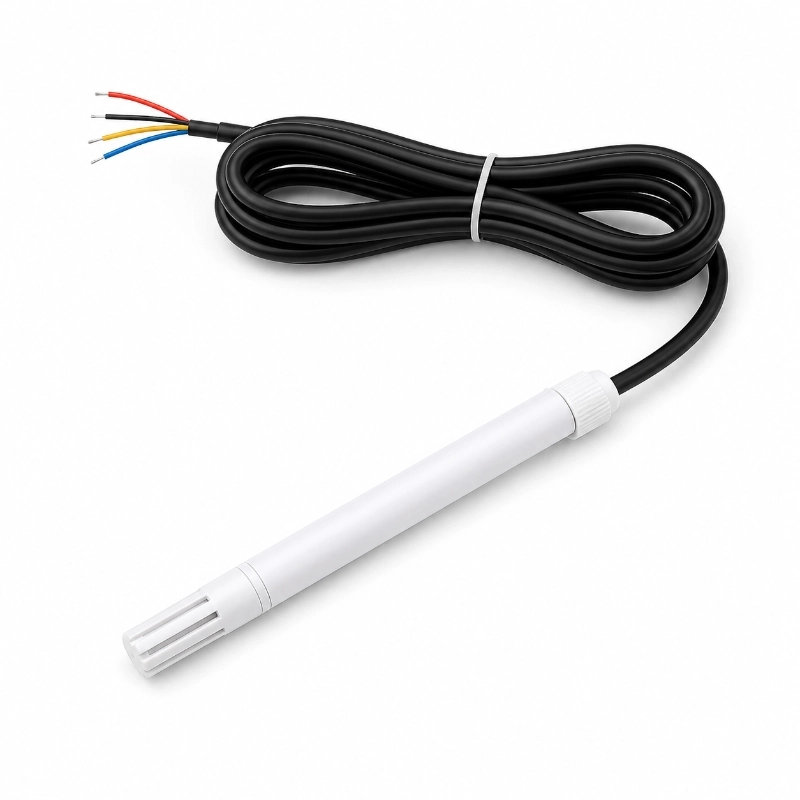
H2S Gas Sensor RS485 & 4-20mA for Continuous Monitoring
Key Features
Electrochemical H2S detection: Uses electrochemical sensing technology to detect hydrogen sulfide gas concentration accurately.
0 to 100ppm measurement range: Suitable for environmental gas monitoring, livestock farms, storage facilities, laboratories, and industrial safety applications.
High sensitivity and stable performance: Designed with high sensitivity, excellent repeatability, and stable long term measurement performance.
Wide linear range: Supports reliable gas concentration output across a wide linear detection range.
Strong anti interference capability: Helps reduce external signal disturbance and improves measurement reliability.
IP65 protected structure: Suitable for indoor and outdoor installation where dust and water resistance are required.
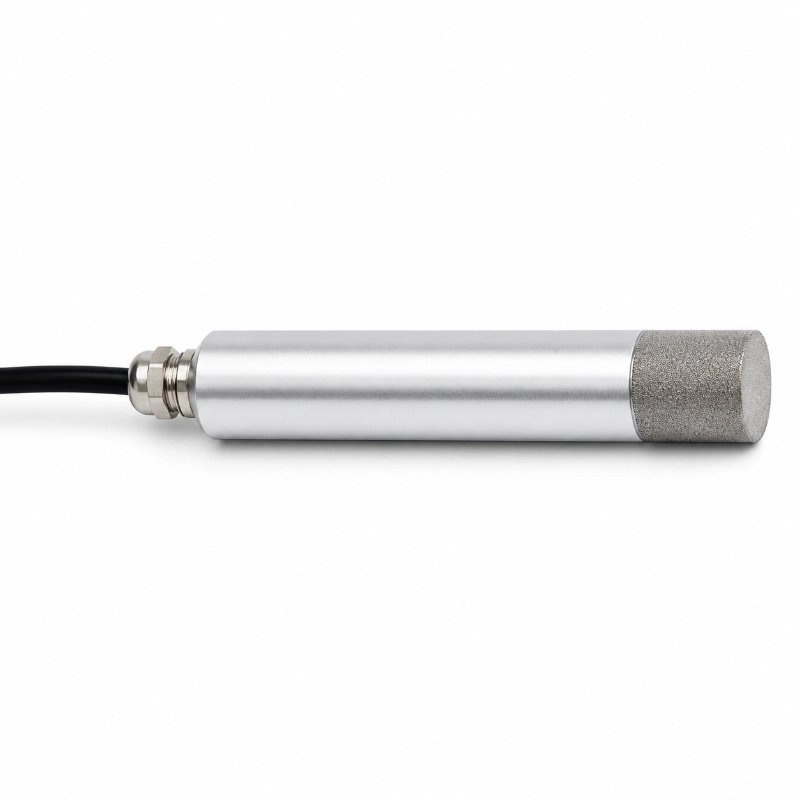
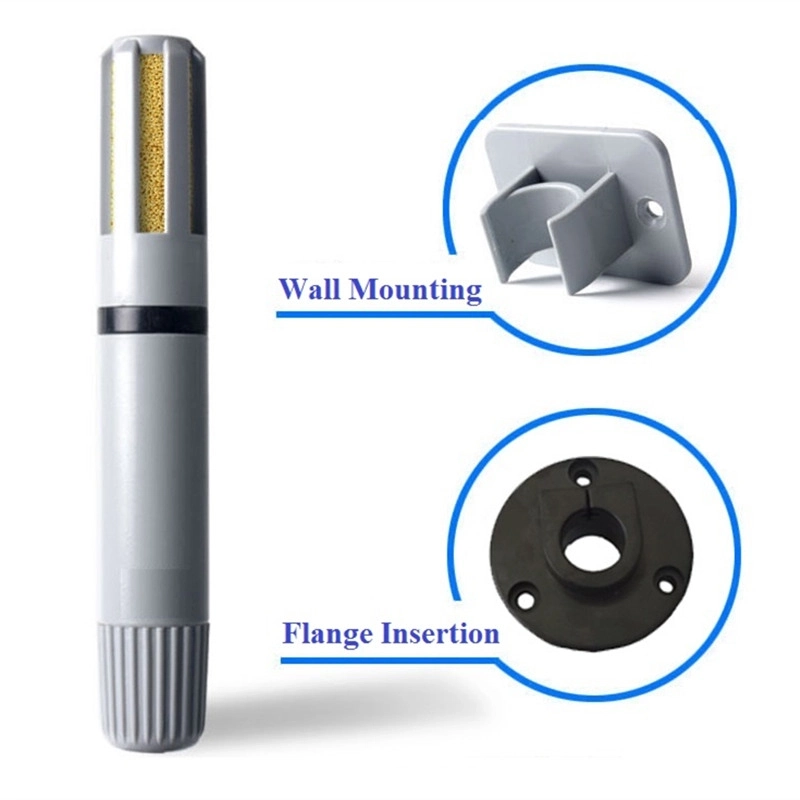
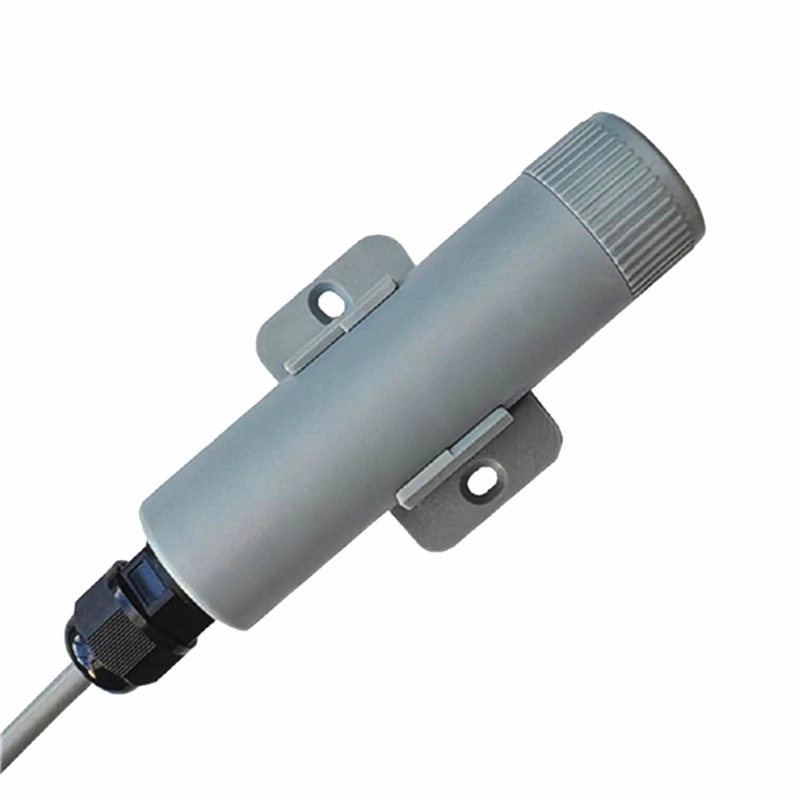
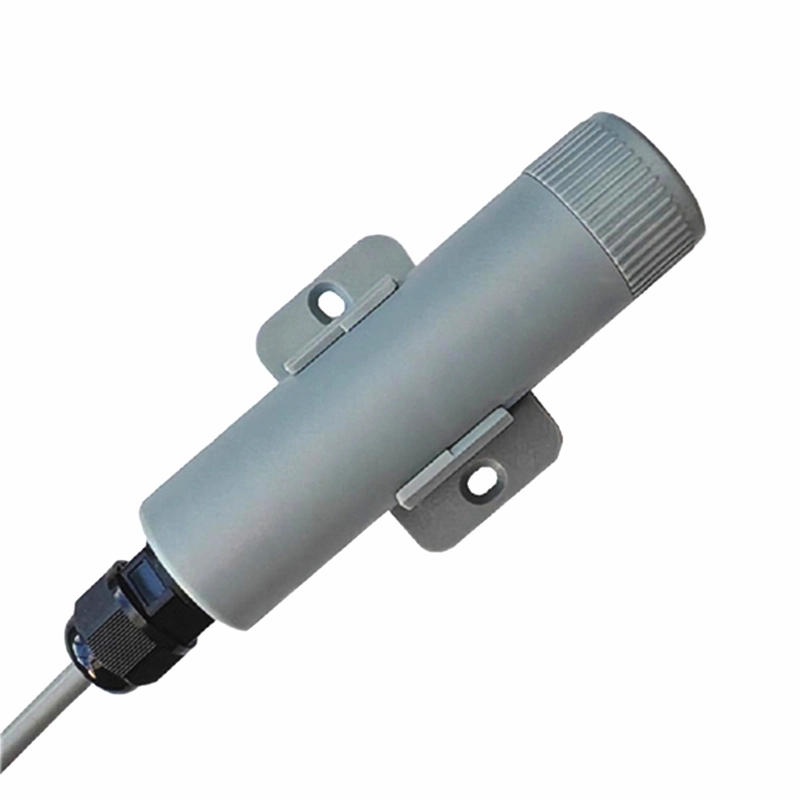
Aluminum tube housing: Metal aluminum tube design provides a compact appearance, easy installation, and durable field use.
Stainless steel sintered filter probe: The gas filter probe uses a stainless steel sintered structure with good waterproof performance and air permeability.
Flexible output options: Available with 4 to 20mA current output or RS485 Modbus RTU output for different system integration needs.
The JW-CH2S(YN05) H2S Gas Sensor is a fixed hydrogen sulfide monitoring sensor designed for continuous environmental and process gas measurement.
Using electrochemical sensing technology, the sensor measures hydrogen sulfide concentrations from 0 to 100 ppm and provides either RS485 Modbus RTU or 4–20mA output. It can be integrated with data loggers, PLCs, RTUs, gateways, gas alarm controllers and remote IoT platforms.
The compact aluminum tube housing, stainless steel sintered filter and IP65 protected structure make the sensor suitable for properly installed indoor and outdoor monitoring points.
Contact JW-IoT for product selection, communication integration, Modbus information or project-based H2S monitoring support.
What Is an H2S Gas Sensor?
An H2S gas sensor measures the concentration of hydrogen sulfide in the surrounding air.
Hydrogen sulfide may be generated during the decomposition of organic material and in processes involving wastewater, sewage, sludge, manure, animal waste and certain industrial materials. Continuous H2S monitoring helps operators observe concentration trends, identify abnormal gas accumulation and transmit data to an alarm or management system.
The JW-CH2S(YN05) is intended for fixed-point environmental and process monitoring. It converts the measured H2S concentration into an RS485 Modbus RTU or 4–20mA signal for integration with external monitoring equipment.
Product Overview
The JW-CH2S(YN05) is a tube-type hydrogen sulfide sensor developed for continuous H2S concentration monitoring in agricultural, environmental, research and industrial applications.
Its electrochemical sensing principle provides a direct electrical response to the target gas. The integrated electronics process this response and output a concentration value through the selected communication interface.
The product can operate as one sensing component in a larger monitoring system consisting of:
H2S gas sensor
RS485 data logger, PLC, RTU or analog input module
4G, Ethernet, Wi-Fi or LoRaWAN communication gateway
Cloud platform or local supervisory software
Optional audible, visual or relay alarm equipment
For multi-parameter projects, the H2S sensor can be combined with temperature, humidity, ammonia, carbon dioxide, particulate matter and other ambient environmental sensors.
Technical Specifications
Item
Specification
Product Type
Tube type hydrogen sulfide gas sensor
Gas Detected
Hydrogen sulfide H2S
Detection Principle
Electrochemical
Measurement Range
0 to 100ppm
Resolution
1ppm
Accuracy
5% to 8% of current reading
Power Supply
DC 12V to 24V
Output Options
4 to 20mA or RS485 Modbus RTU
Current Output Load
≤500Ω
Standard Cable Length
3 m
Operating Temperature
0°C to 50°C
Operating Humidity
0 to 85%RH non condensing
Protection Rating
IP65
Product Weight
≤400 g
Housing Size
140 mm × 30 mm diameter
Mounting Method
U shaped clamp
Communication settings, wiring definitions, Modbus registers and integration documentation can be provided according to the selected output version.
RS485 Modbus RTU or 4–20mA: Which Output Should You Choose?
Both output versions measure the same target gas, but they are designed for different system architectures.
Selection factor
RS485 Modbus RTU
4–20mA
Signal type
Digital
Analog current
Typical integration
Data logger, gateway, PLC or RTU
PLC analog input, controller or acquisition module
Multi-sensor network
Suitable for multiple addressed devices on one bus
Normally requires one analog input channel per sensor
Data handling
Direct digital concentration value
Controller converts current into a concentration value
Remote IoT platform
Convenient through an RS485 gateway or RTU
Requires an analog acquisition device
Best suited for
Distributed digital monitoring systems
Traditional industrial control and analog instrumentation
Choose RS485 Modbus RTU when the project requires multiple sensors, digital communication or direct integration with an IoT gateway.
Choose 4–20mA when the existing control system uses analog current inputs or when compatibility with conventional industrial instrumentation is required.
Main Application Scenarios
Wastewater Treatment H2S Monitoring
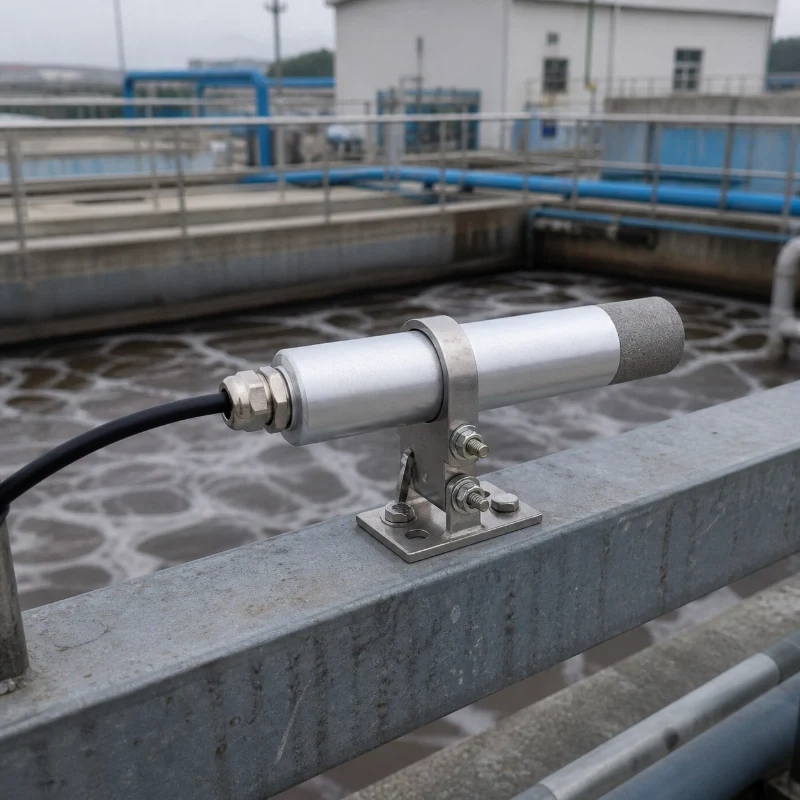
Hydrogen sulfide may occur near sewage inlets, equalization tanks, sludge tanks, anaerobic treatment areas, pump stations and enclosed wastewater facilities.
A fixed H2S sensor can continuously transmit concentration data to a local controller or remote monitoring platform. The data can support trend analysis, ventilation control and external alarm logic.
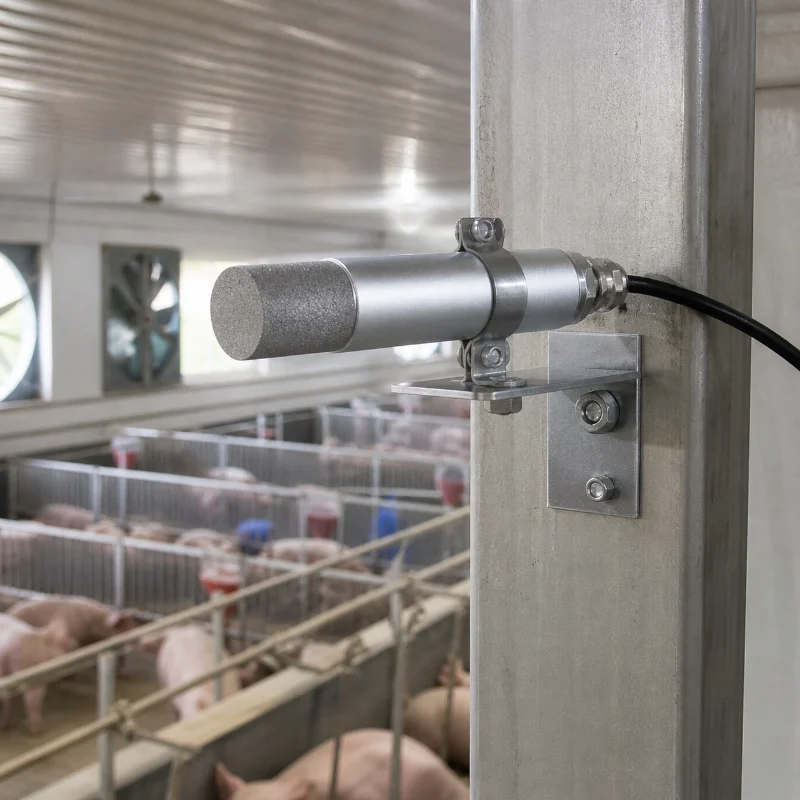
Organic waste and manure decomposition may generate hydrogen sulfide in pig houses, poultry houses, manure channels, waste pits and storage facilities.
H2S concentration data can be monitored together with:
Ammonia
Carbon dioxide
Air temperature
Relative humidity
Ventilation status
Particulate matter
Projects that also require ammonia measurement can use the related ammonia gas sensor.
Manure Storage and Organic Waste Areas
Manure pits, slurry tanks, organic waste storage zones and composting-related facilities may experience changing gas conditions.
Fixed-point monitoring can help identify concentration increases and provide data to an external controller, ventilation system or alarm device.
Sewage Pump Stations
Hydrogen sulfide monitoring can be applied near wet wells, pump chambers and other sewage-handling areas.
Because gas distribution is affected by airflow, structure and operating conditions, monitoring points should be selected according to a site-specific risk assessment.
Sludge Treatment Facilities
H2S sensors can be installed around sludge storage, sludge dewatering, digestion-related areas and other treatment processes where hydrogen sulfide may occur.
Continuous data helps operators compare gas concentration with equipment operation, ventilation status and treatment conditions.
Warehouse and Storage Monitoring
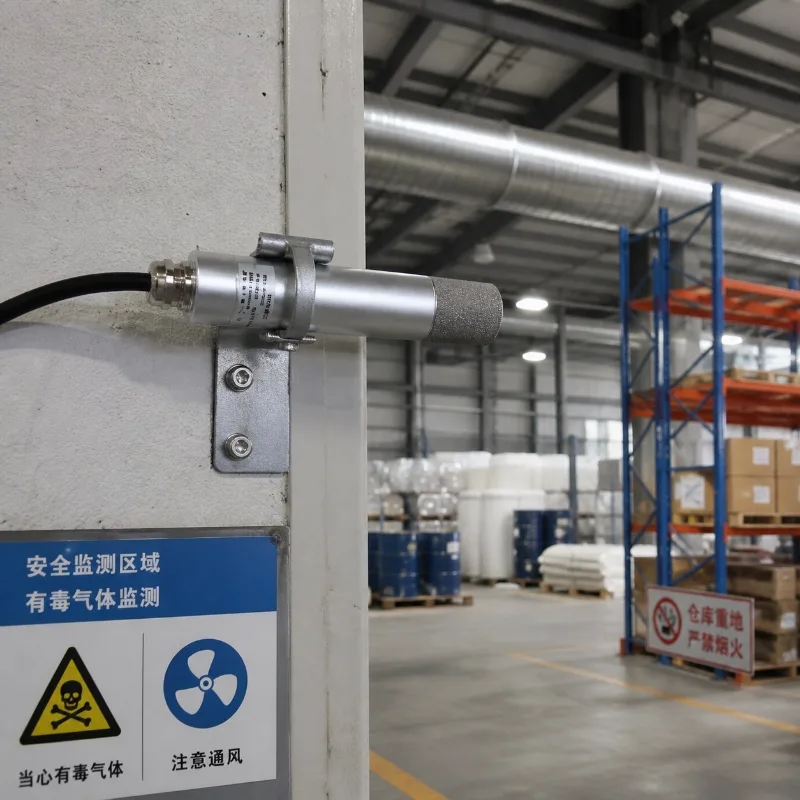
The sensor may be used in storage or process areas where H2S-producing materials are handled.
Before installation, confirm whether the application requires explosion-proof equipment, certified gas detection equipment or personal safety instruments.
Laboratories and Research Projects
The RS485 output version can be connected to data acquisition equipment for long-term concentration recording, environmental experiments and controlled research projects.
Industrial IoT Monitoring
The sensor can be incorporated into an Industrial IoT Monitoring system together with a PLC, RTU, industrial gateway and remote platform.
This architecture supports centralized monitoring of multiple gas and environmental parameters across distributed facilities.
Recommended Installation Position
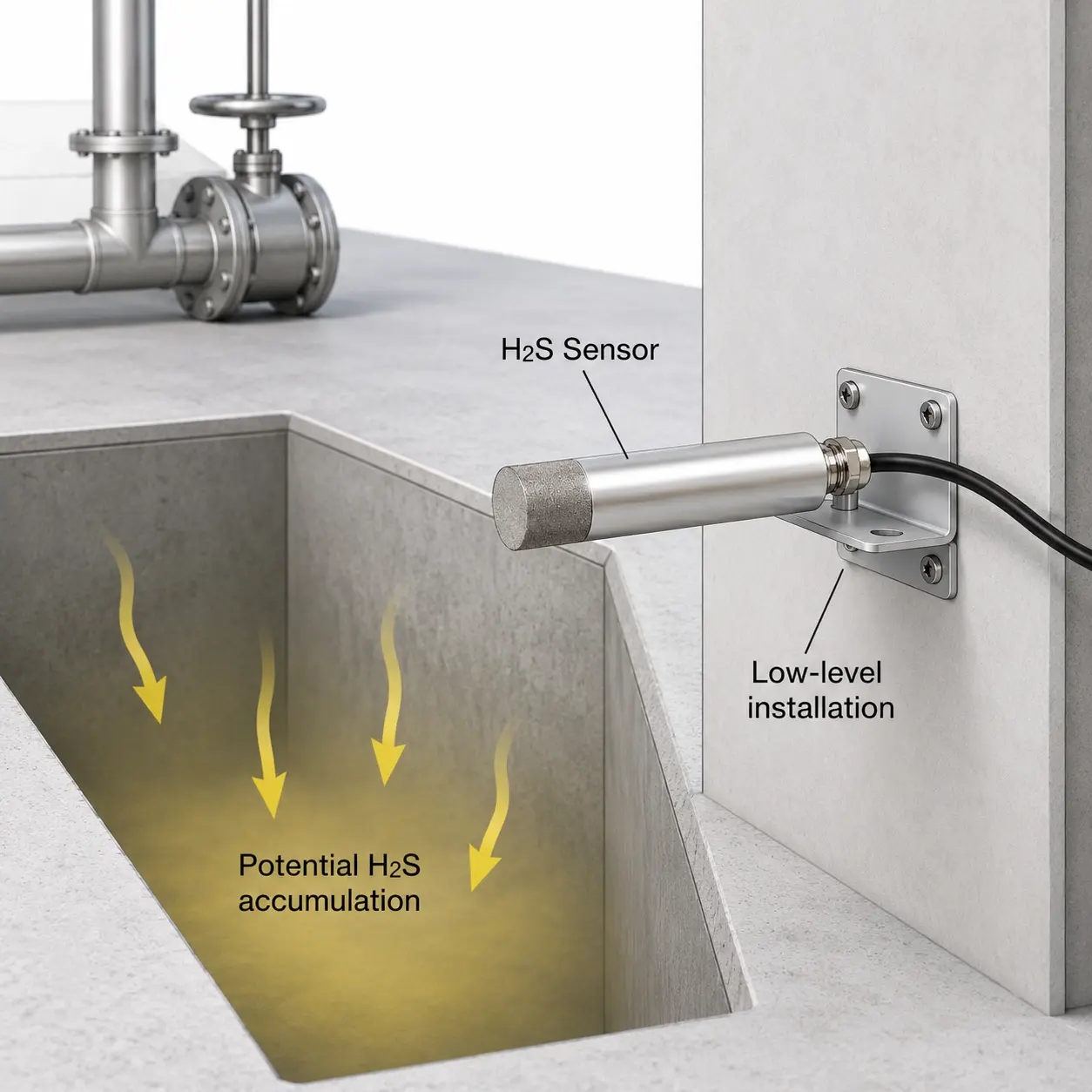
Hydrogen sulfide is denser than normal air. In many relatively still environments, it may accumulate in low areas, pits, channels, trenches, sumps or poorly ventilated spaces.
However, sensor placement should not be determined by gas density alone. Airflow, ventilation equipment, process emission points, temperature, building structure and operational activities can significantly change gas distribution.
For a representative monitoring point:
Install the sensor near the expected gas source or potential accumulation area.
Consider low-level installation where appropriate for the specific site.
Avoid positions directly exposed to strong fans or ventilation outlets.
Avoid dead corners that do not represent the monitored area unless the dead corner itself is the risk point.
Keep the sensing probe unobstructed.
Do not cover, seal or paint the stainless steel gas filter.
Avoid direct water jets and long-term condensation.
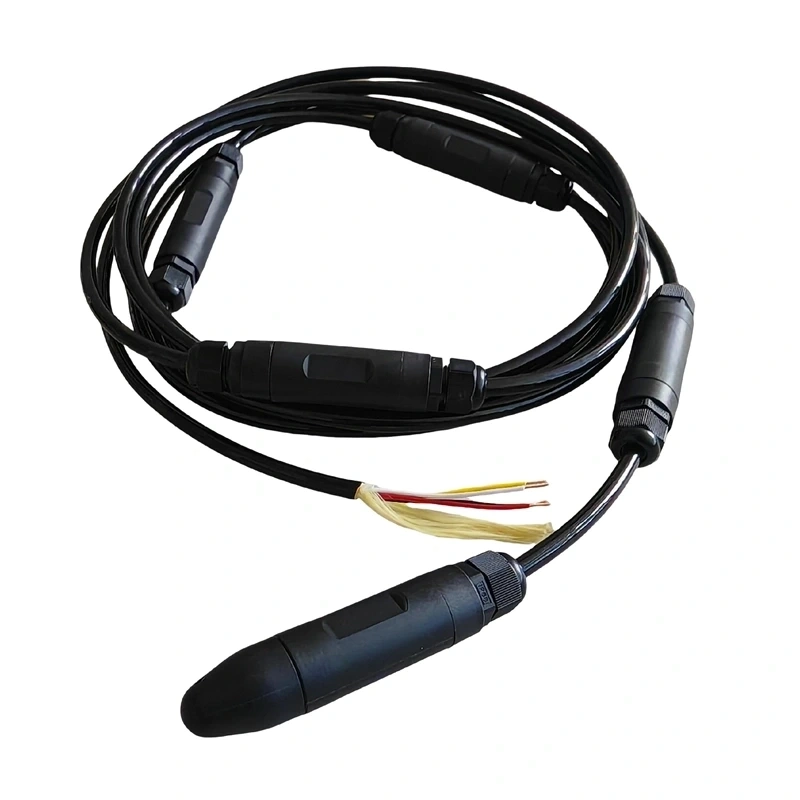
Keep the cable and connector protected from water ingress.
Keep the sensor away from high-power equipment and strong electromagnetic interference.
Use multiple monitoring points in large, divided or poorly ventilated facilities.
Confirm the final location through a site-specific gas risk assessment.
Installation Procedure
Select a monitoring point based on the possible H2S source, airflow and site structure.
Fix the sensor to a wall, bracket or mounting structure using the U-shaped clamp.
Keep the gas diffusion end exposed to the monitored air.
Connect the DC 12–24 V power supply.
Connect the RS485 or 4–20mA signal cable according to the wiring instructions.
Configure the data logger, PLC, RTU or gateway.
Power on the system and confirm that the sensor output is stable.
Verify communication, concentration display and alarm logic.
Record the installation location, sensor model, output type and commissioning date.
Establish a routine inspection and calibration plan according to the project requirements.
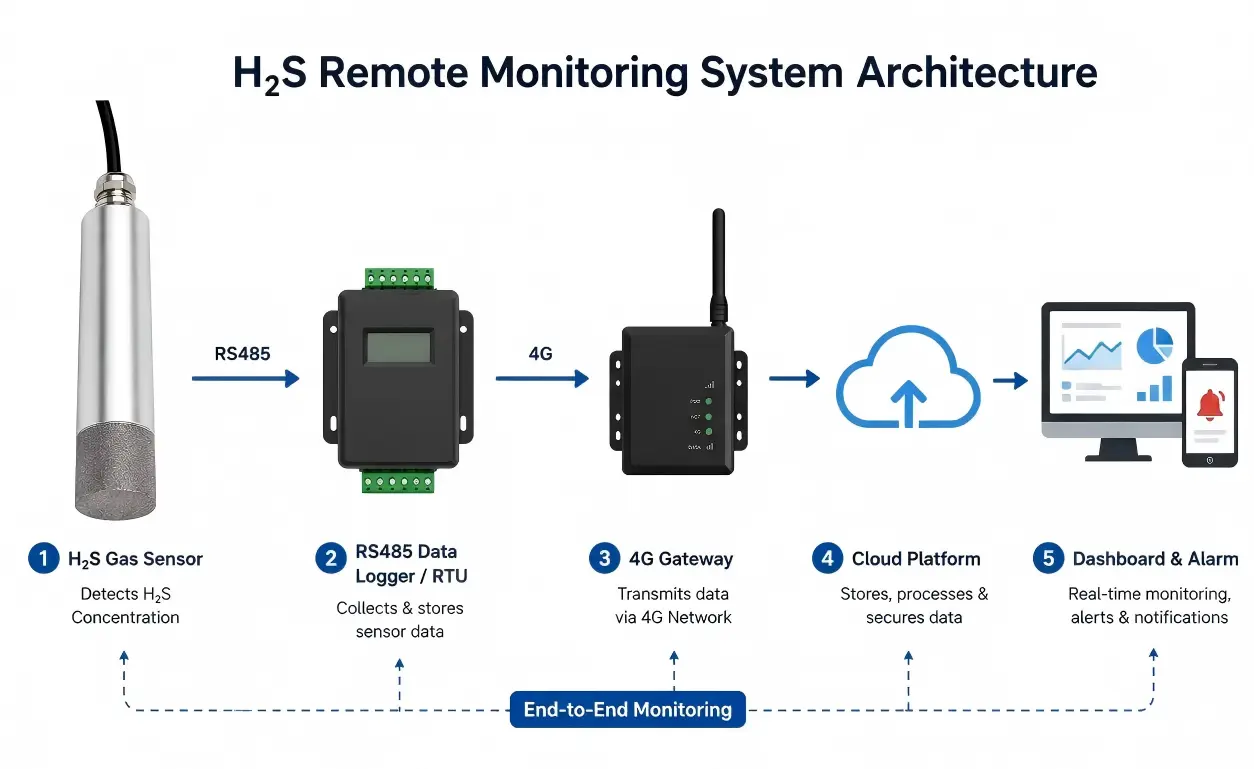
H2S Monitoring System Architecture
A typical remote hydrogen sulfide monitoring system can use the following data path:
H2S Sensor → RS485 Data Logger or RTU → 4G/LoRaWAN/Ethernet Gateway → Cloud Platform → Data Dashboard and Alarm Notification
The platform may display:
Real-time H2S concentration
Historical concentration curves
Maximum and minimum values
Multi-point comparison
Device communication status
Power supply status
User-defined alarm thresholds
Alarm records
Data export reports
Alarm actions are normally executed by the connected controller, RTU, gateway, platform or gas alarm unit rather than by the sensing probe alone.
Continuous Monitoring vs Portable H2S Detection
A fixed H2S sensor and a portable gas detector serve different purposes.
Fixed H2S monitoring sensor
Portable personal gas detector
Installed at a permanent monitoring point
Carried or worn by personnel
Provides continuous site data
Measures gas near the user
Integrates with PLC, RTU or cloud platforms
Usually includes local audible, visual and vibration alarms
Used for process, environmental or facility monitoring
Used for personal exposure and entry safety
Does not follow a worker through the site
Moves with the worker
The JW-CH2S(YN05) is intended for fixed environmental and process monitoring. It should not be used as the sole personal safety device or as a substitute for a certified portable gas detector.
Important Application Notes
Confirm whether the installation requires explosion-proof certification.
Do not install a non-certified product in a hazardous classified area.
Do not use the sensor as the only protection for confined-space entry.
Do not rely on a single fixed point to represent a large or complex facility.
Avoid continuous exposure above the specified measurement range.
Condensation, contamination and unsuitable environmental conditions may affect measurement.
Electrochemical sensing elements require periodic inspection and calibration.
Cross-sensitive gases may influence electrochemical sensor readings.
Final alarm thresholds must be established by the responsible safety or engineering team.
Product selection and installation should comply with applicable local regulations and project requirements.
System Integration Options
The H2S sensor can be connected to:
RS485 data loggers
Modbus RTU gateways
PLC systems
RTU controllers
Analog input modules
Gas alarm controllers
4G remote monitoring terminals
LoRaWAN field nodes
Local SCADA systems
IoT cloud platforms
Livestock environmental control systems
Wastewater monitoring systems
JW-IoT can support project-based configuration, communication matching, platform connectivity and multi-parameter monitoring system integration.
Maintenance Recommendations
To support reliable long-term measurement:
Inspect the housing, cable and connector regularly.
Keep the stainless steel filter free from dust, oil and blockage.
Do not clean the sensing end with solvents or aggressive chemicals.
Check for condensation or water accumulation.
Compare the sensor response with a reference gas or calibrated instrument according to the maintenance plan.
Recalibrate the sensor according to site conditions and project requirements.
Record calibration, maintenance and replacement dates.
Replace the electrochemical sensing element when it reaches the end of its usable service life or no longer meets performance requirements.
Calibration interval and sensor life depend on gas exposure, environmental conditions, storage, operating time and maintenance practices. Contact JW-IoT for model-specific recommendations.
Request a Quote
Please provide the following information when requesting a quotation:
Application environment
Expected H2S concentration range
Number of monitoring points
RS485 or 4–20mA output requirement
Cable length
Power supply
Indoor or outdoor installation
Required communication method
Local display or alarm requirement
Cloud platform or API requirement
Required certification
Project country and installation location
Contact JW-IoT for a product quotation or complete hydrogen sulfide monitoring solution.
FAQ
Q
1. What gas does this sensor detect?
A
This sensor detects hydrogen sulfide gas, also known as H2S.
Q
2. What is the measurement range of the Hydrogen Sulfide Gas Sensor?
A
The measurement range is 0 to 100ppm, with 1ppm resolution.
Q
3. What output signals are available?
A
The sensor is available with 4 to 20mA current output or RS485 Modbus RTU output.
Q
4. Can JW-IoT integrate this H2S sensor into a livestock monitoring system?
A
Yes. JW-IoT can integrate this hydrogen sulfide sensor with air quality monitoring terminals, data loggers, alarm devices, and cloud platforms for livestock farm monitoring.
Q
5. Is this sensor suitable for outdoor installation?
A
Yes. The sensor has an IP65 protection rating and can be used indoors or outdoors when installed correctly.
Q
6. What power supply does the sensor require?
A
The sensor works with DC 12V to 24V power supply.
Q
7. Can JW-IoT provide this sensor for warehouse safety monitoring?
A
Yes. JW-IoT can provide H2S monitoring solutions for warehouses, storage facilities, enclosed spaces, and environmental safety projects.
Q
8. How is the sensor installed?
A
The sensor can be fixed on an installation bracket or indoor wall using a U shaped clamp.
Q
9. Can JW-IoT support RS485 platform integration?
A
Yes. JW-IoT can support RS485 Modbus RTU integration with gateways, RTUs, PLCs, and IoT monitoring platforms.
 +86 13520127780
  info@jingelway.com