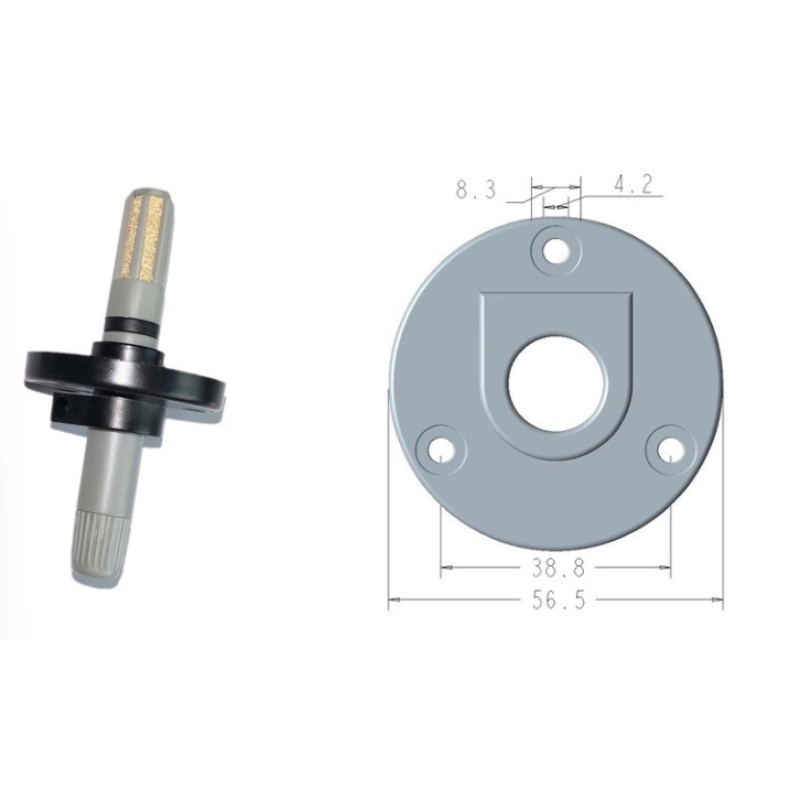
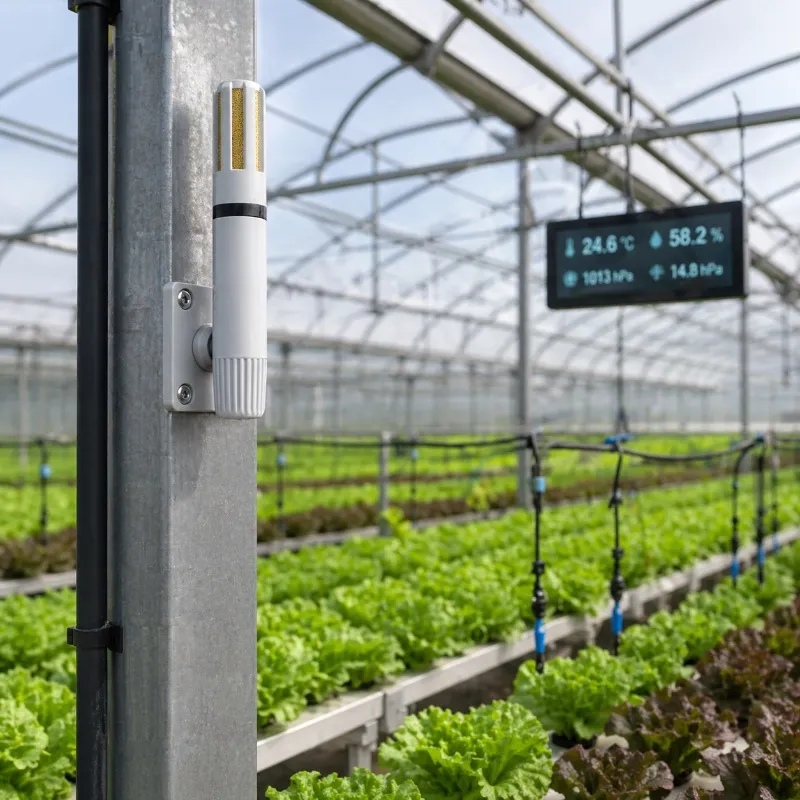
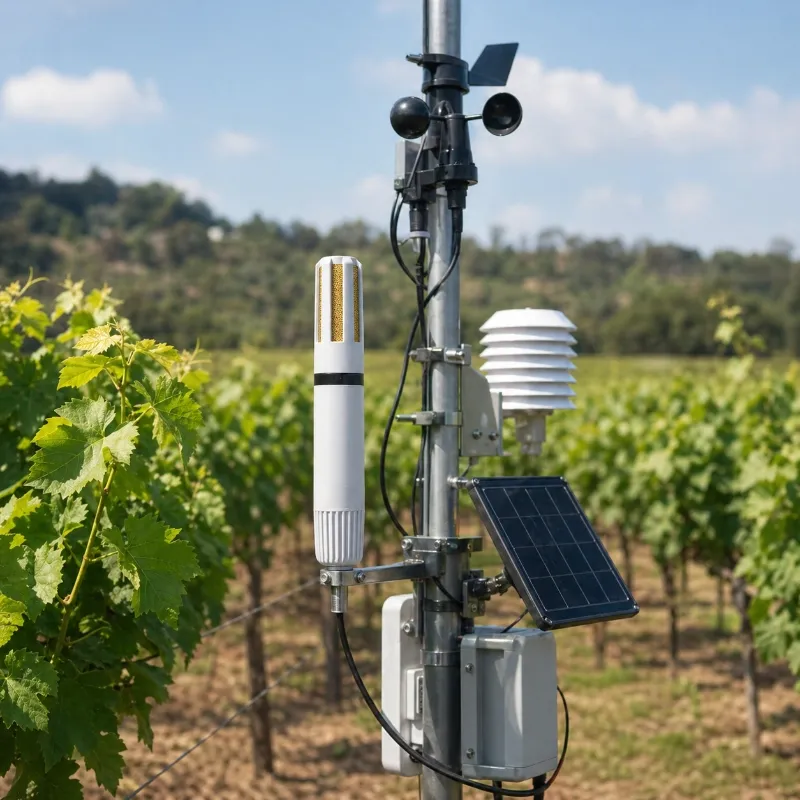
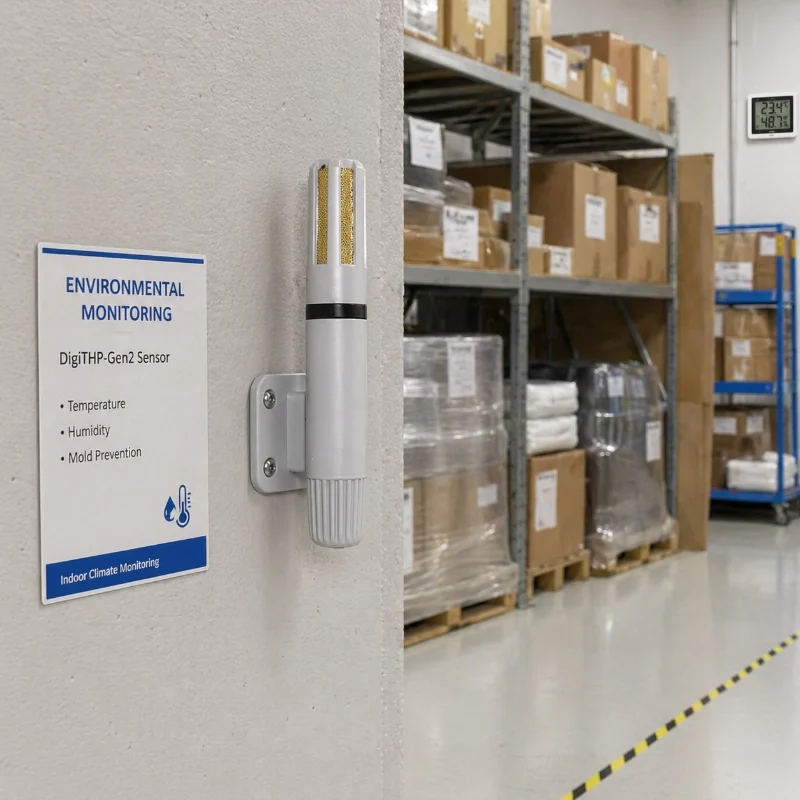
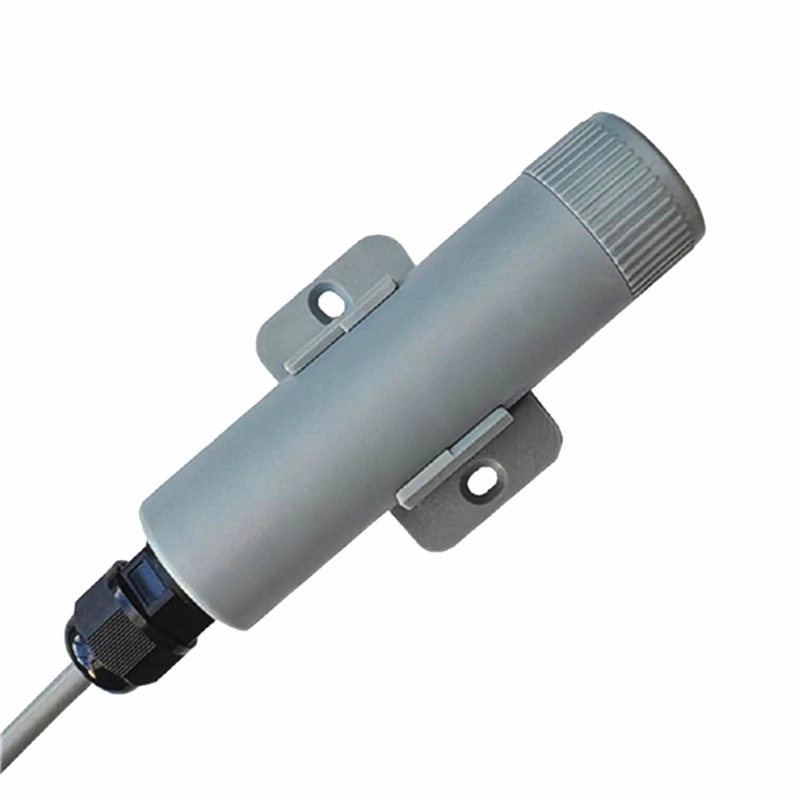
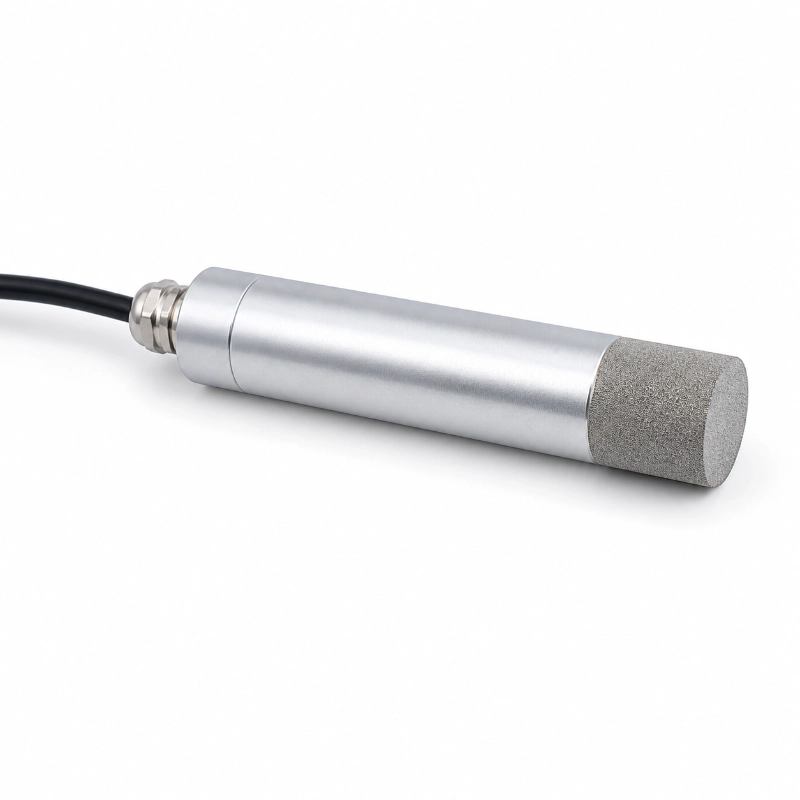
JW-THP(Z28) Temperature Humidity Pressure Sensor is designed for accurate air temperature, relative humidity and atmospheric pressure monitoring in weather stations, smart agriculture, greenhouse control, canopy monitoring, evapotranspiration calculation and mold prevention systems. With SDI-12 or RS485 Modbus RTU output, low power consumption and multiple derived meteorological parameters, it is suitable for long-term environmental monitoring and IoT data acquisition projects.
2. Product Overview
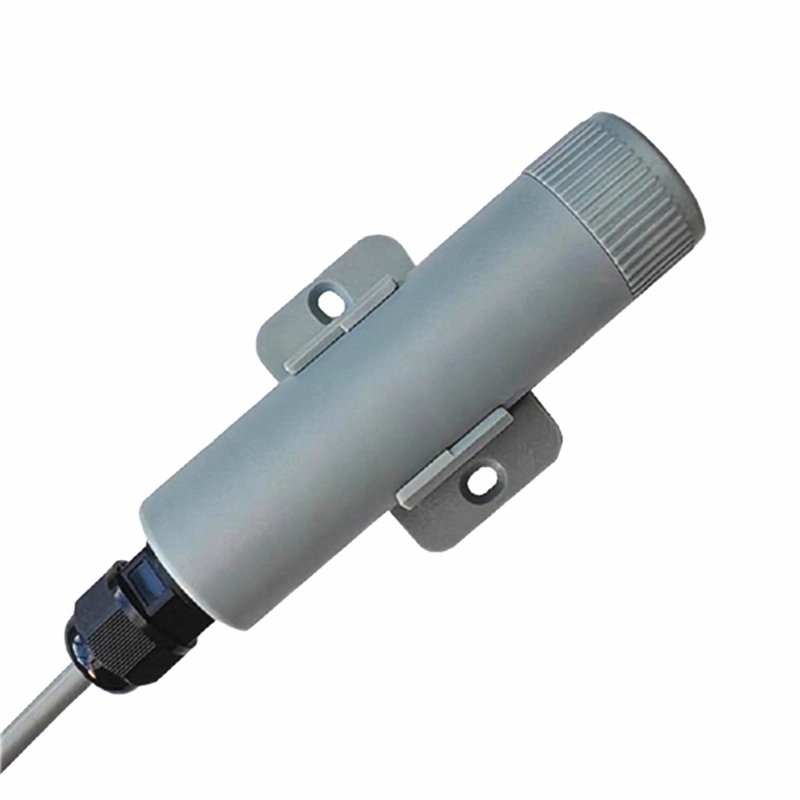
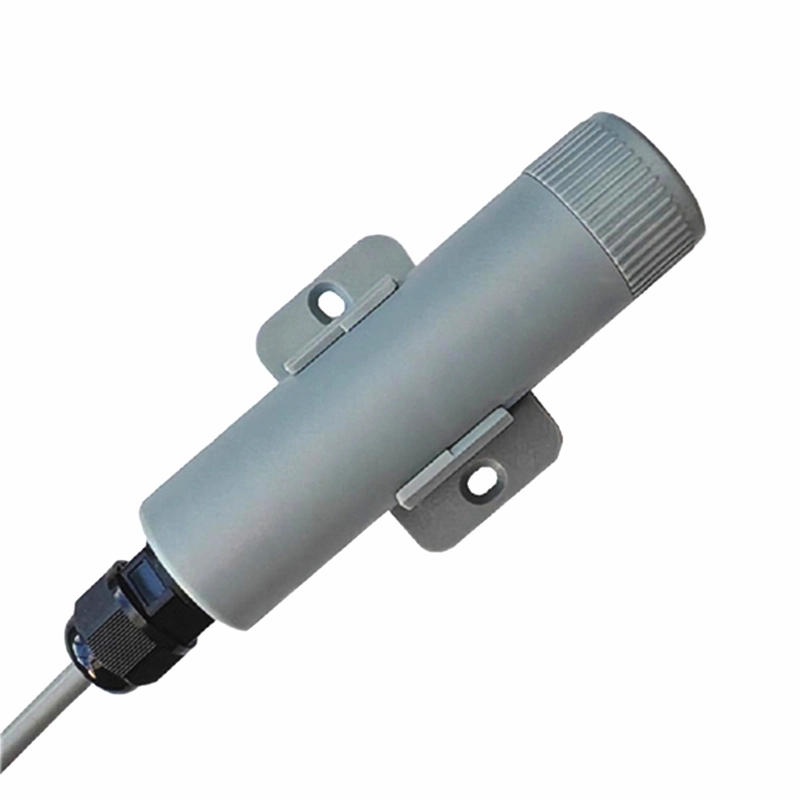
JW-THP(Z28)Temperature Humidity Pressure Sensor is a compact digital environmental sensor designed for accurate air temperature, humidity and barometric pressure measurement. It combines a high-precision SENSIRION temperature and humidity sensing element with a BOSCH pressure sensor to provide stable and repeatable data for weather, agriculture and environmental applications.
In addition to basic temperature, humidity and pressure readings, the sensor can output multiple calculated parameters, including dew point, frost point, vapor pressure, vapor concentration, cloud base estimation and elevation estimation. These parameters are useful for evapotranspiration calculation, mold prevention, greenhouse climate control and environmental modeling.
The sensor supports SDI-12 and RS485 Modbus RTU interfaces, making it easy to integrate with data loggers, weather stations, IoT gateways, greenhouse controllers and cloud monitoring platforms.
Parameter
Model No.
JW-THP(Z28)
Measured Parameters
Air temperature, relative humidity, atmospheric pressure
Derived Parameters
Dew point, frost point, vapor pressure, vapor concentration, cloud3. Does this sensor support RS485 output? base estimation, elevation estimation
Output Options
SDI-12 V1.3 or RS485 Modbus RTU
Power Supply
4.5–18V DC or customized
SDI-12 Static Current
<10 μA
RS485 Static Current
<600 μA
Measuring Current
10 mA within 50 ms during measurement then returns to sleep mode
The RS485 version is suitable for IoT gateways, PLC systems, greenhouse controllers, weather station networks and multi-point environmental monitoring projects. The default communication setting is 9600 bps, 8 data bits, no parity and 1 stop bit.
SDI-12 Output
The SDI-12 version is suitable for meteorological, hydrological and agricultural data loggers. Its low power consumption makes it suitable for battery-powered field monitoring stations.
ADI Active Digital Output
For SDI-12 versions, when the sensor address is set to 0, the sensor can output one active ADI data frame after power-up before switching to SDI-12 communication. This can be useful for specific low-power or one-shot data acquisition applications.
5. Application Scenarios
Smart agriculture monitoring
Greenhouse climate monitoring
Weather station air monitoring
Canopy temperature and humidity monitoring
Reference evapotranspiration calculation
Dew point and vapor pressure monitoring
Mold prevention and humidity control
Indoor and outdoor environmental monitoring
Agricultural meteorological stations
HVAC and ventilation monitoring
Environmental modeling affected by humidity or vapor pressure
IoT weather and climate data acquisition systems
6.Installation and Maintenance
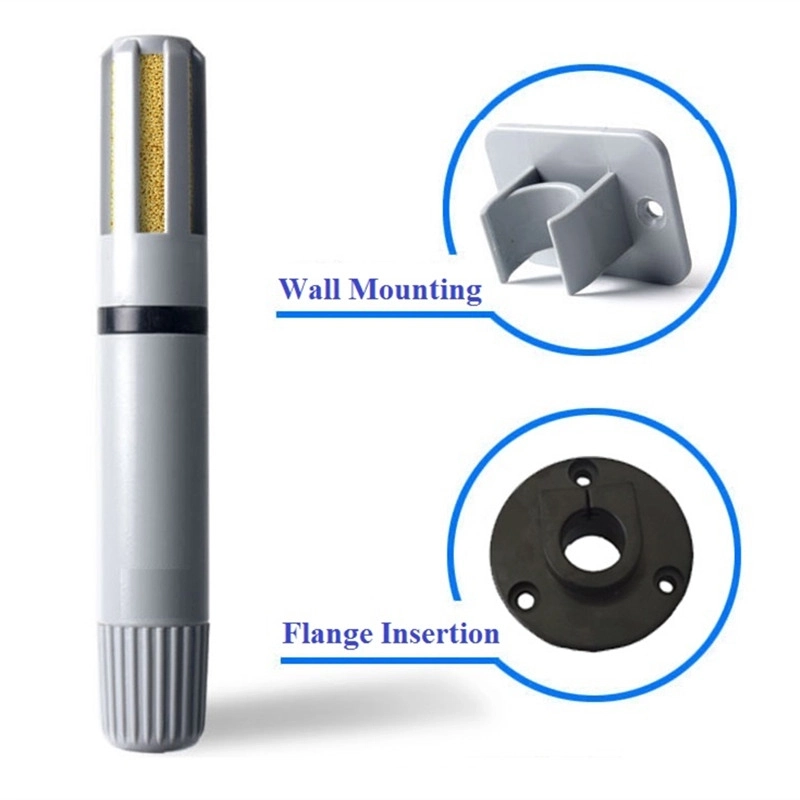
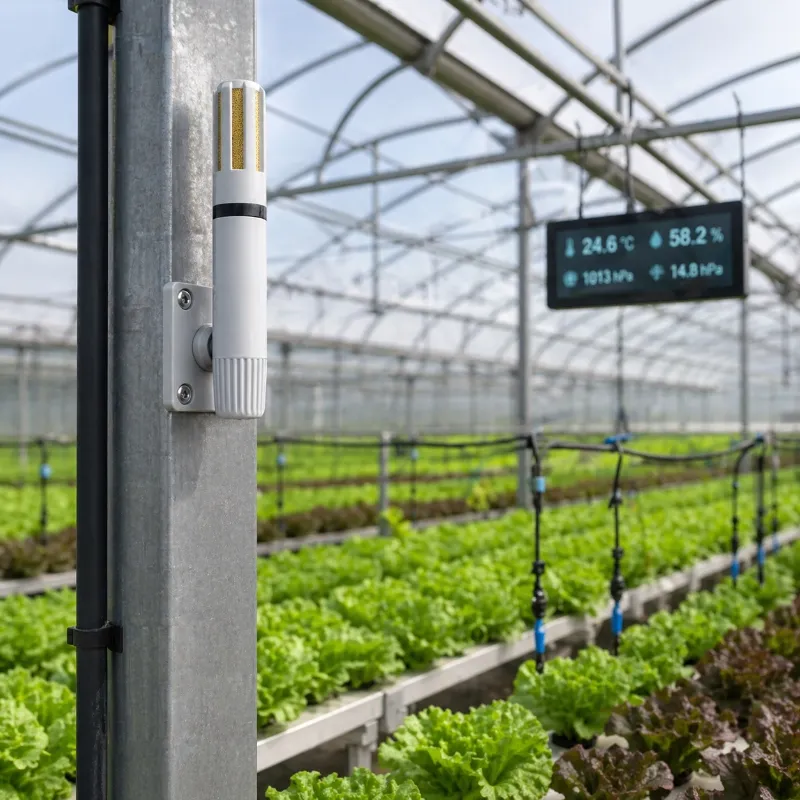
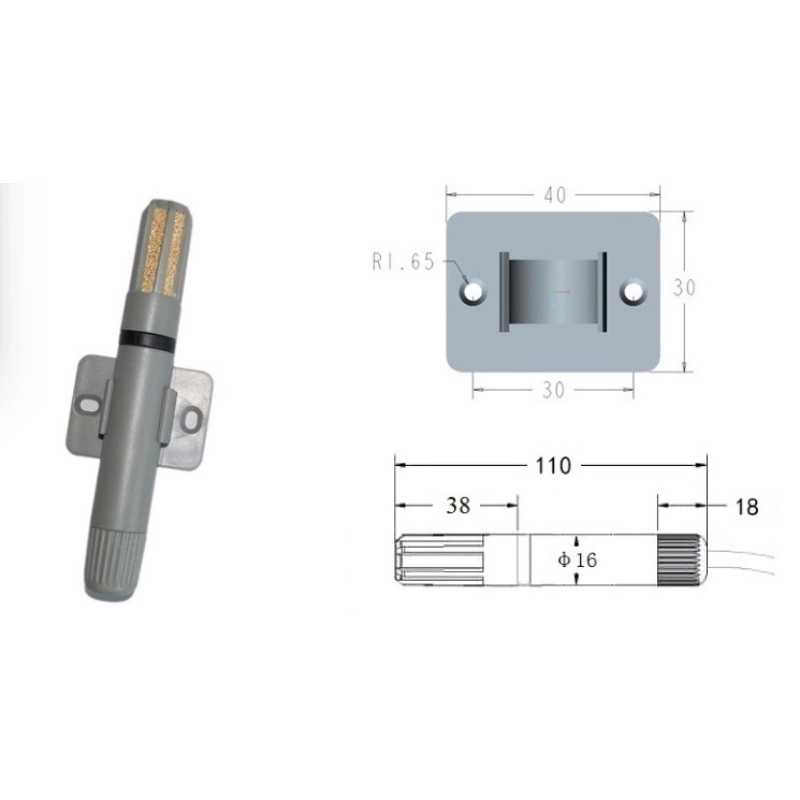
The sensor supports wall-mounted installation or duct flange installation. For outdoor or greenhouse applications, it should be installed in a well-ventilated position that represents the actual air environment. Avoid direct water condensation, strong radiant heat sources, blocked airflow and direct contamination of the sensing filter.
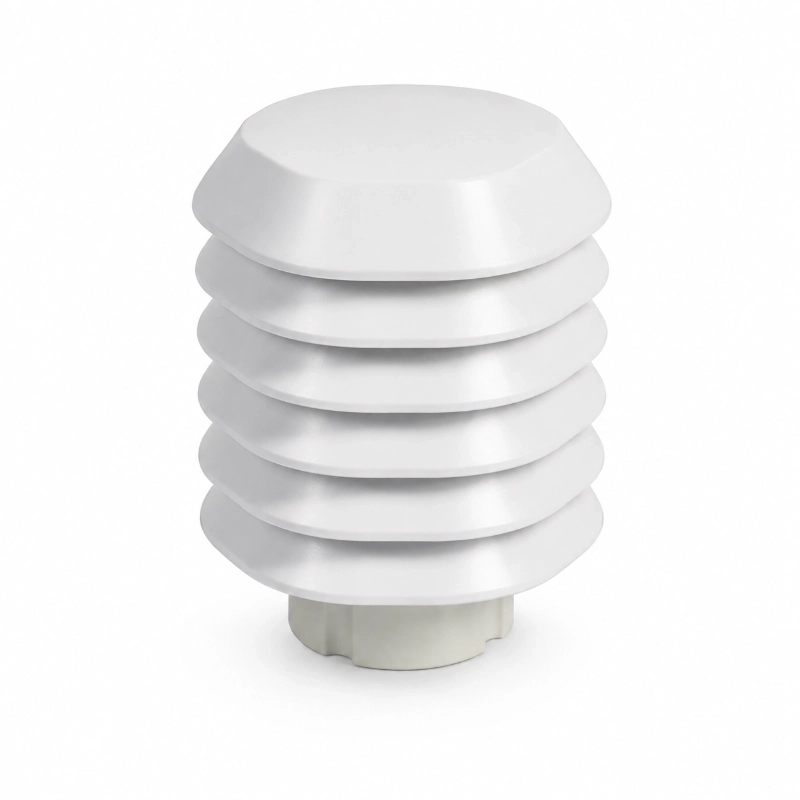
For weather station applications, it is recommended to install the sensor inside a radiation shield to reduce solar radiation error and improve air temperature measurement accuracy.
The sensing end should be kept clean and well ventilated. Avoid dust accumulation, chemical corrosion, water condensation or direct contact with liquid water. For long-term agricultural or outdoor use, the filter and mounting structure should be inspected regularly to ensure stable airflow and reliable measurement.
FAQ
Q
1. What does this temperature humidity pressure sensor measure?
A
It measures air temperature, relative humidity and atmospheric pressure. It can also output calculated parameters such as dew point, frost point, vapor pressure, vapor concentration, cloud base estimation and elevation estimation.
Q
2. What applications is this sensor suitable for?
A
It is suitable for smart agriculture, greenhouse climate monitoring, weather stations, canopy monitoring, evapotranspiration calculation, environmental modeling and mold prevention systems.
Q
3. Does this sensor support RS485 output?
A
Yes. The sensor can support RS485 Modbus RTU output for IoT gateways, PLCs, data acquisition systems and cloud monitoring platforms.
Q
4. Does this sensor support SDI-12 output?
A
Yes. SDI-12 output is available for meteorological, hydrological and agricultural data loggers, especially in low-power field stations.
Q
5. What is the temperature measurement range?
A
The sensor supports a temperature range of -40 to 125°C, with a long-term operating environment range of -40 to 80°C.
Q
6. Can JW-IoT provide this sensor for greenhouse monitoring?
A
Yes. JW-IoT can supply this temperature humidity pressure sensor for greenhouse climate monitoring, plant growth environment control and smart agriculture systems.
Q
7. Can JW-IoT integrate this sensor with a weather station platform?
A
Yes. JW-IoT can integrate the RS485 or SDI-12 version with weather station data loggers, LoRaWAN gateways, 4G gateways and cloud monitoring platforms.
Q
8. Can JW-IoT provide high-accuracy versions?
A
Yes. JW-IoT can provide accuracy options based on SHT40 or SHT45 configurations, including higher accuracy versions up to ±0.1°C and ±1.0% RH.
Q
9. Can JW-IoT customize cable length or output interface?
A
Yes. JW-IoT can provide standard 2 m cable length or customized cable length. RS485 Modbus RTU and SDI-12 output options are available.
Q
10. Is this sensor suitable for evapotranspiration calculation?
A
Yes. The sensor is suitable for reference evapotranspiration calculation because it provides temperature, humidity, atmospheric pressure and vapor-pressure-related data.
Q
11. How should the sensor be installed outdoors?
A
For outdoor weather monitoring, it should be installed in a ventilated radiation shield to reduce solar radiation error and protect the sensing element.
Q
12. Can this sensor be used for mold prevention?
A
Yes. The sensor provides humidity, dew point and vapor pressure data, which are useful for mold risk assessment and humidity control systems.
 +86 13520127780
  info@jingelway.com