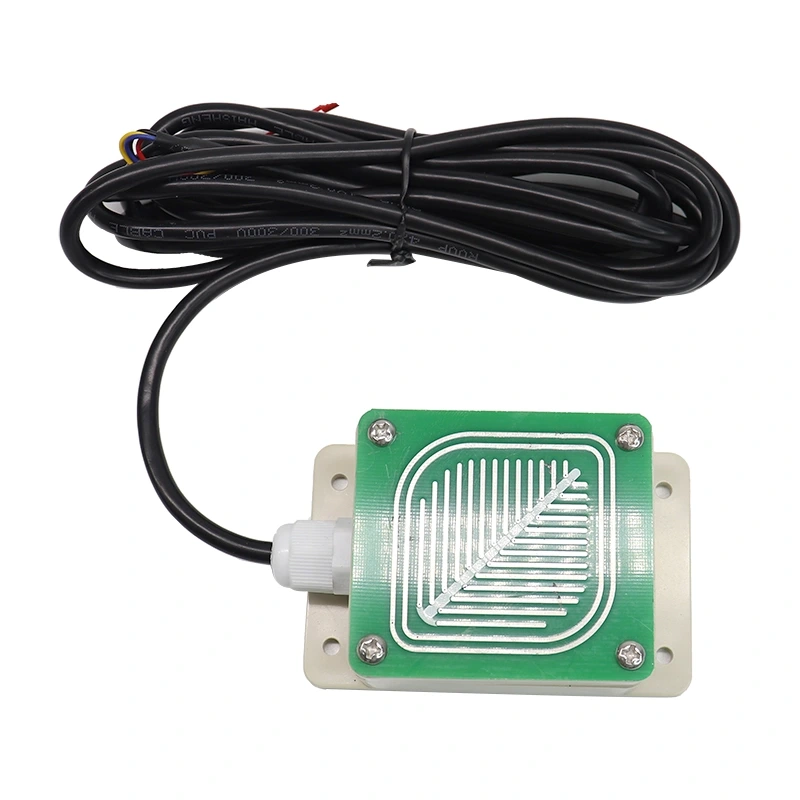
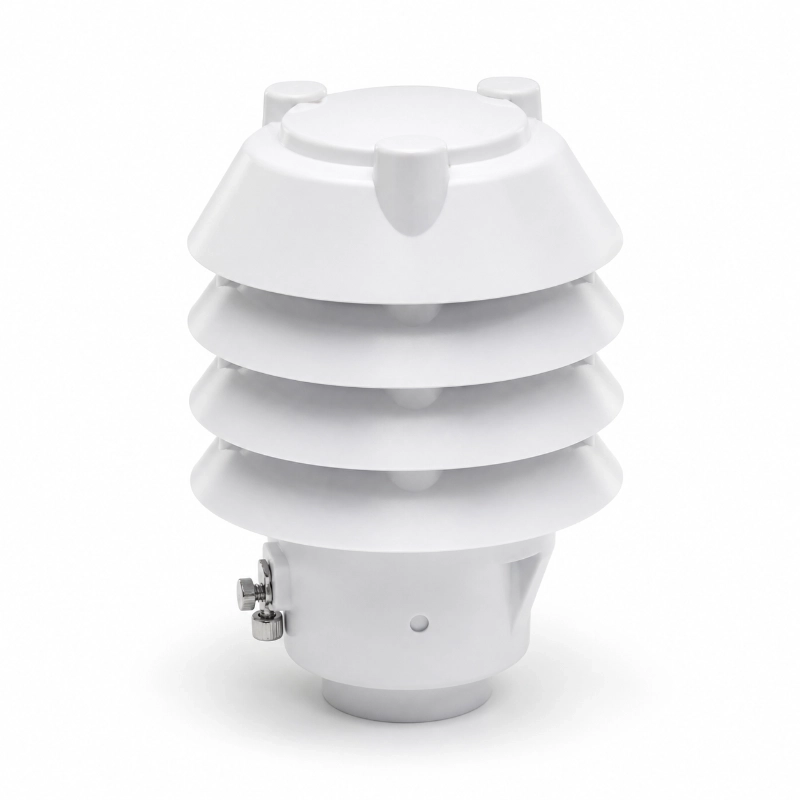
The JW-CQ11(YN10) Rain Snow Sensor is an outdoor precipitation detection device designed to detect the presence of rain or snow in automatic weather stations, road weather monitoring systems, agricultural facilities, and industrial weather alarm applications.
Using a corrosion-resistant gold-plated conductive grid electrode, the sensor provides rapid rain and snow presence detection with a response time of less than 1 second.
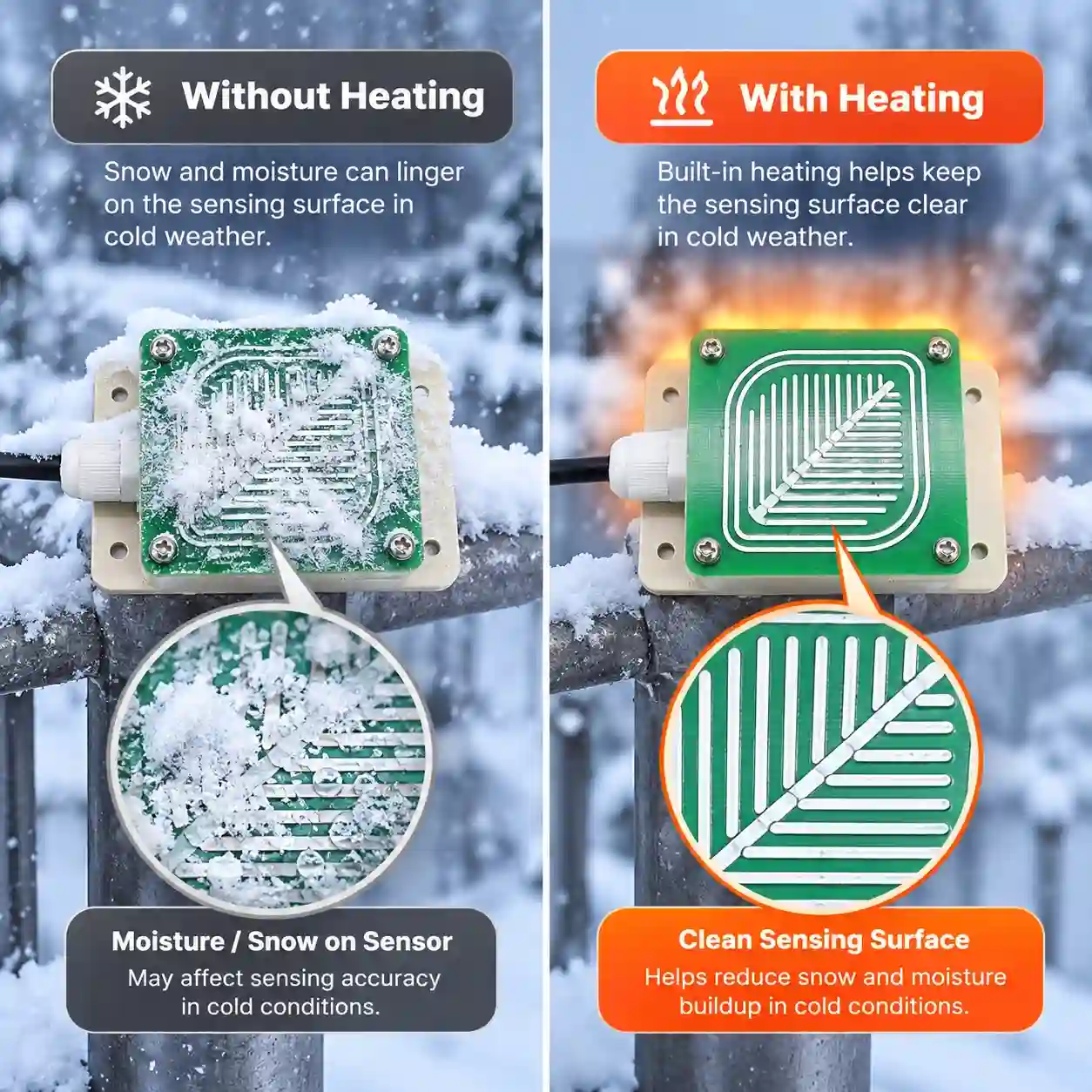
Optional automatic heating helps reduce moisture and snow accumulation on the sensing surface in cold environments, supporting more reliable monitoring and recovery between precipitation events.
With RS485 Modbus RTU, relay, analog, NPN, and optional wireless output configurations, the JW-CQ11(YN10) can be integrated into PLCs, RTUs, weather station data loggers, and IoT monitoring platforms.
1. What Is a Rain Snow Sensor?
A rain snow sensor, also called a rain and snow detector or precipitation presence sensor, is used to determine whether precipitation is occurring at a monitoring location.
Unlike a rain gauge, which measures accumulated rainfall or precipitation intensity, a rain and snow presence sensor provides a qualitative indication of precipitation conditions.
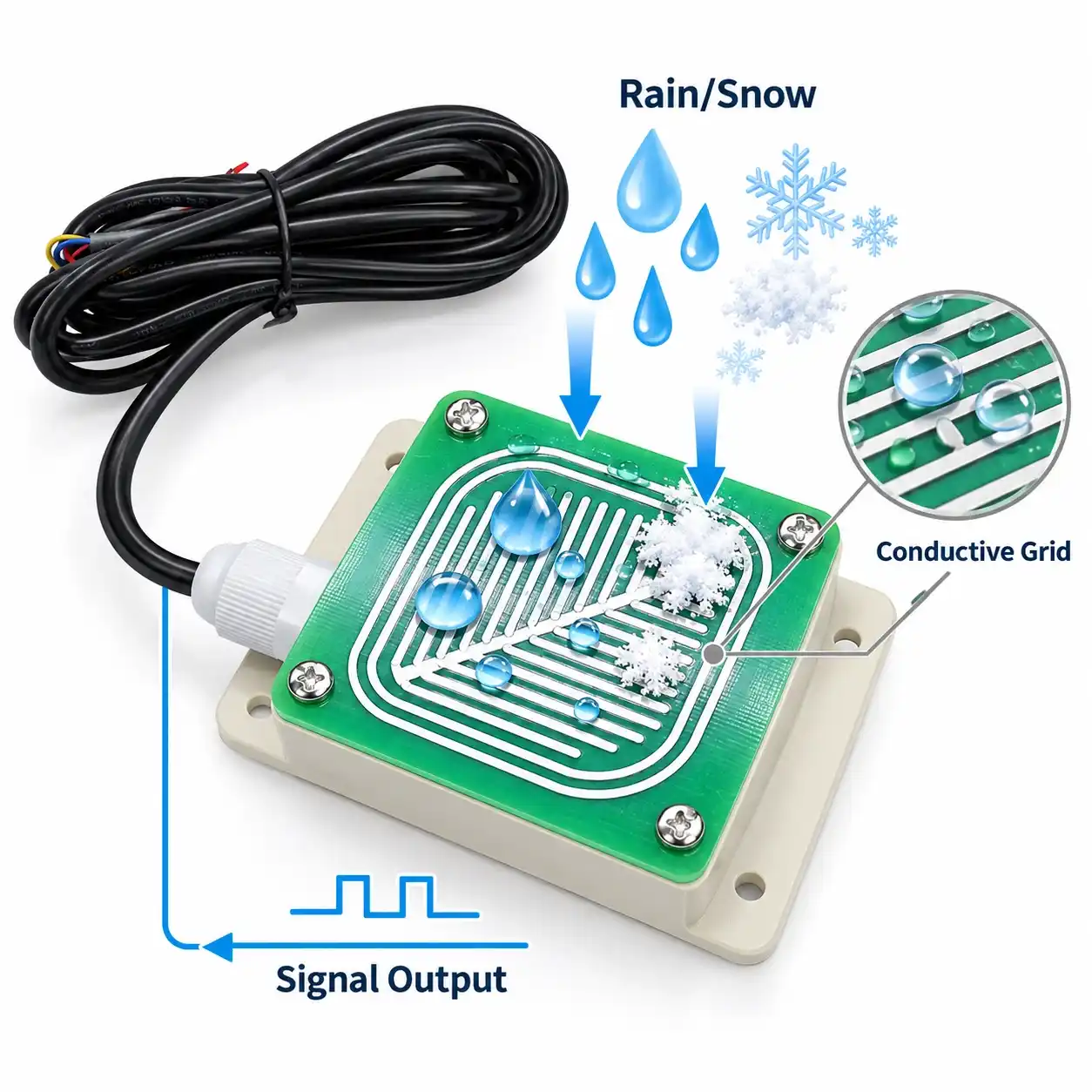
The JW-CQ11(YN10) uses a conductive sensing grid to detect water-related changes on its sensing surface and generate a corresponding electrical signal.
Its main function is to support applications that need an indication of precipitation presence for monitoring, alarms, or external automated control.
Typical applications include automatic weather stations, road weather information systems, airport and port monitoring facilities, greenhouse automation, and industrial outdoor safety monitoring.
The JW-CQ11(YN10) uses a conductive grid electrode combined with electronic detection circuitry.
When rainwater or melted snow contacts the electrode, the electrical characteristics of the sensing surface change.
The detection circuit processes this change and generates a precipitation presence signal.
2.1 Gold-Plated Conductive Grid
The sensing surface uses a gold-plated grid electrode.
Gold plating improves resistance to corrosion and helps protect the sensing surface during outdoor use.
The electrode detects conductive moisture contact rather than measuring precipitation depth or accumulated water volume.
2.2 Precipitation Detection and Signal Processing
When moisture establishes an electrical path across the sensing grid, the circuit can identify the change and produce a corresponding output signal.
The sensor has a published response time of less than 1 second and a stabilization time of less than 1 second.
Actual detection behavior may be affected by precipitation conditions, surface contamination, water conductivity, and the selected configuration.
2.3 Does It Distinguish Rain from Snow?
The published specification identifies rain and snow presence detection but does not establish a separate classification accuracy for rain versus snow.
Therefore, the JW-CQ11(YN10) should primarily be treated as a precipitation presence detector, unless the selected output protocol and supporting documentation explicitly confirm separate rain and snow status codes.
For more detailed weather classification, the monitoring system may need additional temperature, humidity, or specialized precipitation sensors.
3. Optional Heating for Cold Weather Monitoring
Why Is Heating Important?
Cold environments create additional challenges for precipitation sensors.
Snow, frost, and residual water may remain on the sensing surface after precipitation has stopped.
If moisture remains in contact with the conductive electrode, the system may continue indicating wet conditions even after the event has ended.
An optional heating function helps reduce accumulation and supports drying of the sensing surface.
How Heating Supports Sensor Operation
Heating can help:
Reduce snow and ice accumulation on the detection surface.
Accelerate drying after rain or snow events.
Reduce prolonged wet-state signals caused by residual moisture.
Improve measurement availability during cold weather.
Support unattended precipitation monitoring installations.
The function is especially useful for winter weather stations, road monitoring networks, and remote environmental sensing systems.
Important: Heating is an optional configuration, not a guaranteed standard feature.
The published product page does not specify heater power consumption, switching temperature, heating control thresholds, or ice-melting capacity. These details should be confirmed for the selected product version.
For solar-powered monitoring stations, heater energy requirements must be considered when sizing the battery and power system.
4. Technical Specifications
Parameter
Specification
Model
JW-CQ11(YN10)
Sensor Type
Rain / Snow Presence Detection Sensor
Detection Principle
Conductive Grid Electrode
Electrode Material
Gold-Plated Grid
Measurement Parameter
Rain and Snow Presence
Response Time
Less than 1 second
Stabilization Time
Less than 1 second
Power Supply
12–24V DC
Heating Function
Optional
Operating Temperature
-30°C to +70°C
Operating Humidity
10–90% RH
Storage Temperature
-40°C to +80°C
Storage Humidity
10–90% RH
Protection Rating
IP67
Recommended Installation Angle
15° from Horizontal
Digital Output
RS485 Modbus RTU
Relay Output
Normally Open
Current Output
4–20mA
Voltage Output
0–2V / 0–5V / 0–10V
Transistor Output
NPN Optional
Combined Output
Multiple Outputs Available
Wireless Options
LoRa, Bluetooth, WiFi, GPRS, 4G, NB-IoT, CAT-1
5. Rain Snow Sensor Output and Communication Options
Different industrial systems require different electrical interfaces. The JW-CQ11(YN10) offers several output configurations for integration into existing monitoring infrastructure.
5.1 RS485 Modbus RTU Rain Snow Sensor
The RS485 Modbus RTU version is suitable for data loggers, PLCs, RTUs, and industrial IoT gateways.
In a typical monitoring system, the controller reads the sensor’s precipitation status through a compatible RS485 interface.
Possible system functions include:
Precipitation presence monitoring
Status recording
Rain or snow event alerts
Remote equipment supervision
Integration with environmental data
Cloud-based monitoring through an external gateway
For successful integration, confirm the Modbus address, serial settings, register definitions, status encoding, and wiring diagram.
5.2 Relay Output for Weather Alarm Systems
The normally open relay output is suitable for compatible alarm and control circuits.
A PLC or weather monitoring controller can read the relay state and execute project-defined actions.
For example, the controller may generate a precipitation warning or temporarily stop a weather-sensitive operation.
Relay contact ratings and permissible switching loads must be confirmed before connecting external equipment.
5.3 Analog and NPN Output
The listed analog output options include 4–20mA and selectable voltage signals.
An optional NPN output is also available.
These interfaces allow the sensor to connect with different types of industrial acquisition equipment.
For analog configurations, engineers should confirm the mapping between the precipitation status and the electrical output value.
5.4 Wireless Integration Options
Optional communication configurations listed for the product include LoRa, Bluetooth, WiFi, GPRS, 4G, NB-IoT, and CAT-1.
Availability and technical configuration may differ between versions.
For remote installations, the communication method should be selected according to network coverage, power availability, reporting requirements, and platform compatibility.
6. Rain Snow Sensor Applications
6.1 Automatic Weather Stations
Automatic weather stations often collect air temperature, relative humidity, atmospheric pressure, wind, rainfall, and other environmental measurements.
A rain snow presence sensor adds a fast precipitation status signal to this monitoring network.
It can help indicate when precipitation begins or when moisture remains on the sensing surface.
For weather stations requiring rainfall quantity, a dedicated rain gauge should be used alongside the rain snow sensor.
Road weather monitoring systems require information about changing environmental conditions.
Rain and snow detection can contribute to monitoring precipitation events affecting roads, bridges, expressways, and other transport infrastructure.
The JW-CQ11(YN10) can provide a precipitation presence signal to a roadside monitoring controller.
The controller may combine this information with air temperature, humidity, pavement temperature, visibility, and road surface condition measurements.
For direct pavement classification, such as dry, wet, icy, or snowy road conditions, a dedicated Road Surface Condition Sensor is more appropriate.
A rain snow sensor should not be treated as a replacement for road ice detection equipment.
6.3 Airport and Port Weather Monitoring
Airport and port operations can be affected by rain, snow, and changing surface conditions.
Precipitation detection signals may be integrated into local environmental monitoring systems to improve awareness of current weather conditions.
For critical operational decisions, the sensor should be used as part of a broader monitoring system designed according to applicable operational requirements.
6.4 Smart Agriculture and Greenhouse Automation
Agricultural systems may use precipitation presence detection for outdoor irrigation supervision, greenhouse environmental monitoring, or weather-related control functions.
For example, a controller can use a precipitation status input to suspend scheduled outdoor irrigation when rain is detected, subject to the configured control strategy.
In greenhouse projects, the sensor may be installed outside the growing structure as part of a wider environmental monitoring system.
Industrial sites may need to monitor weather conditions affecting exposed equipment.
A precipitation presence sensor can provide a signal for external weather alarms and equipment supervision systems.
Applications may include outdoor handling areas, exposed automation equipment, industrial facilities, and remote infrastructure.
Any shutdown or protective response must be implemented and validated by the external control system.
7. Rain Snow Sensor vs Rain Gauge vs Road Surface Sensor
These instruments provide different measurements and should be selected according to the project objective.
Sensor Type
Primary Function
Typical Output
Rain Snow Sensor
Detect precipitation presence
Wet/dry or precipitation status
Tipping Bucket Rain Gauge
Measure accumulated rainfall
Rainfall amount
Optical Rain Gauge
Measure rainfall using optical detection
Rainfall-related measurement
Road Surface Condition Sensor
Identify road surface conditions
Surface condition classification
When Should You Use a Rain Snow Sensor?
Choose a rain snow detector when the main requirement is to determine whether precipitation is present and provide an input to monitoring or automated control systems.
When Is a Rain Gauge More Suitable?
A rain gauge is appropriate when the project requires rainfall depth, event accumulation, or precipitation intensity.
When Is a Road Surface Sensor Necessary?
A specialized road surface sensor is required when the application needs to distinguish pavement states such as wet, icy, snowy, or dry.
These devices can be combined in a more comprehensive winter weather monitoring network.
8. Integration into an IoT Weather Monitoring System
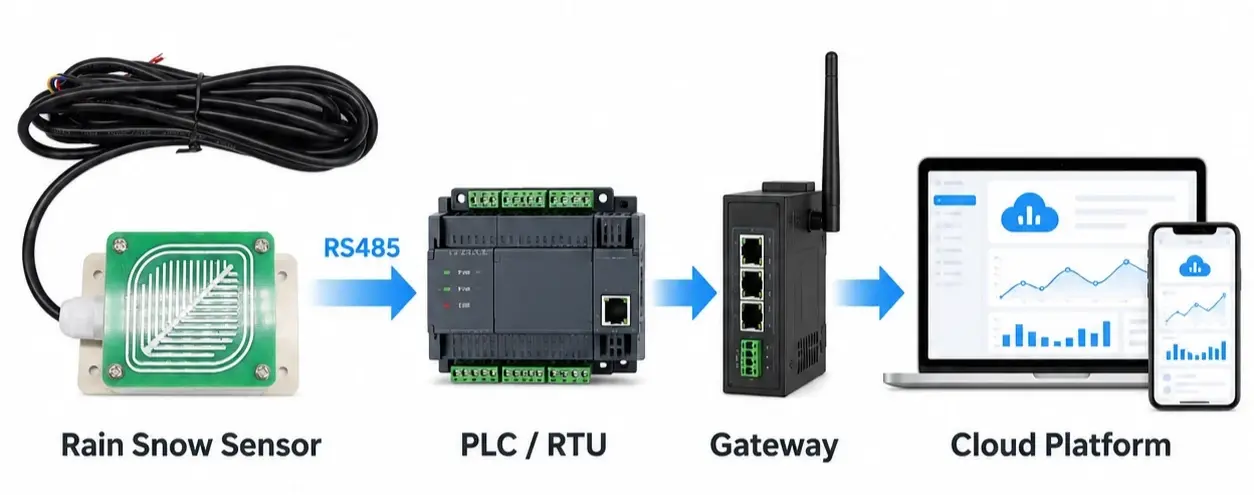
The JW-CQ11(YN10) can be integrated with compatible monitoring hardware to support centralized precipitation status monitoring.
A typical architecture is:
Rain Snow Sensor → RS485 / Relay Input → PLC or RTU → Communication Gateway → Cloud Monitoring Platform
Step 1: Detect Precipitation
The conductive electrode detects the presence of moisture on the sensing surface.
Step 2: Acquire the Sensor Signal
A compatible PLC, RTU, or data logger reads the digital, analog, or switching signal.
Step 3: Process Weather Status
The control system interprets the acquired data according to the selected sensor configuration.
Project-specific logic may include alarm delays, status confirmation, and event logging.
Step 4: Transmit Monitoring Data
A communication gateway can forward precipitation status information through a suitable communication network.
Step 5: Display and Respond
A monitoring platform can display weather status, store event records, and generate notifications according to the configured rules.
Cloud services, communication hardware, and alarm functions are components of the wider system rather than guaranteed standalone sensor capabilities.
9. Installation Guidelines
Correct installation helps reduce false detections caused by accumulated water, contamination, or inappropriate mounting.
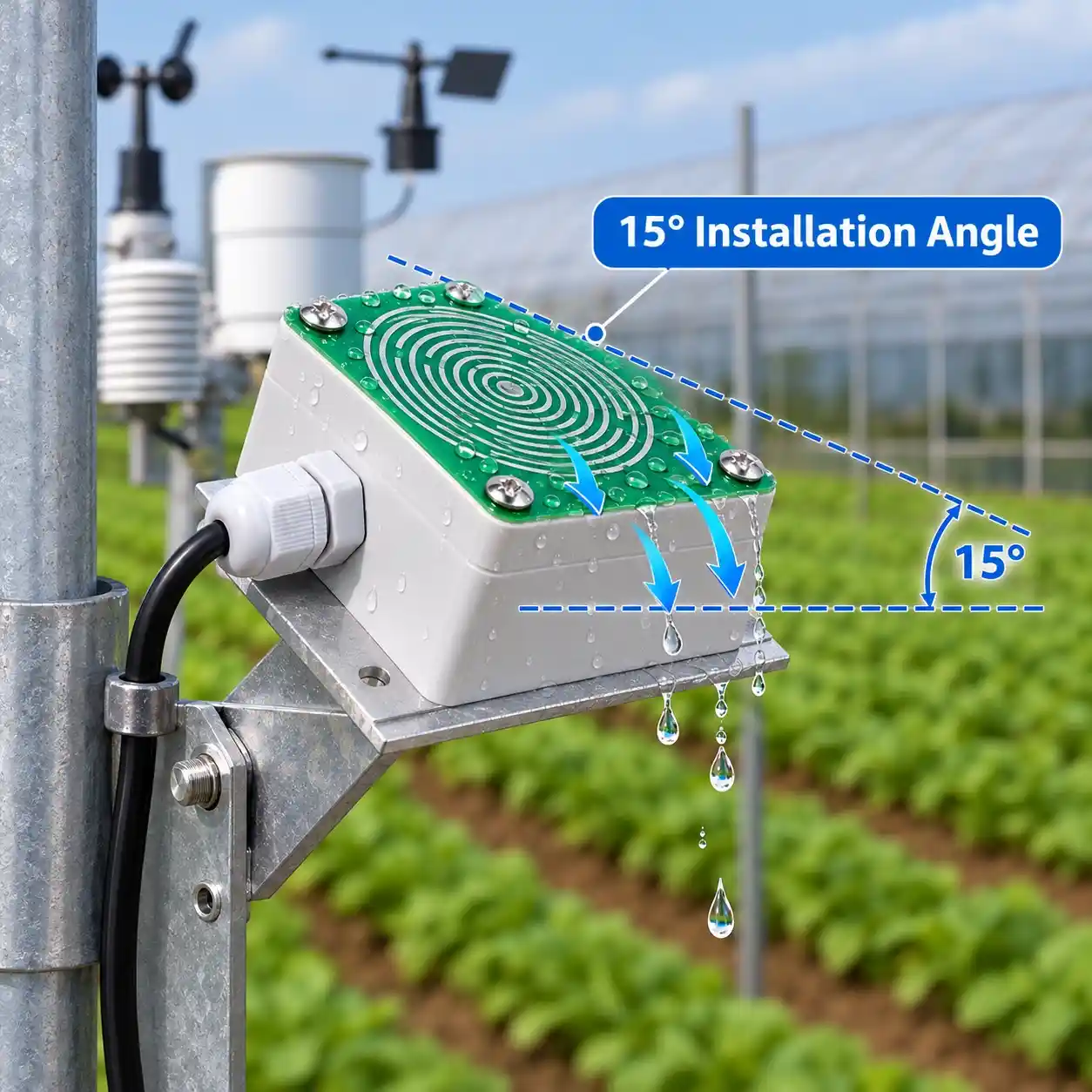
9.1 Maintain the Recommended 15° Angle
Install the sensing surface at approximately 15° from the horizontal plane, as specified in the product instructions.
This helps rainwater drain from the conductive grid and reduces unnecessary moisture accumulation.
9.2 Select an Open Monitoring Position
Choose a location that allows precipitation to reach the sensing surface without major obstruction.
Avoid locations directly beneath roof edges, water discharge pipes, or structures that create misleading water runoff.
9.3 Avoid Environmental Interference
The manufacturer’s installation notes recommend keeping the sensor away from:
Chemical corrosion sources
Strong external heat sources
High-voltage equipment
Falling objects
Heavy surface contamination
9.4 Protect Power and Signal Wiring
Use appropriate waterproof connectors, cable supports, grounding, and surge protection according to the installation environment.
Confirm the supply voltage and output wiring before energizing the device.
9.5 Check the Heating Configuration
For heated versions, verify the selected heater configuration and total power requirement.
Do not assume that the sensor’s general operating voltage specification alone establishes heater power consumption.
10. Maintenance Recommendations
Routine inspection is important for conductive precipitation sensors because dirt, corrosion, and moisture residue may affect electrical detection.
Recommended maintenance includes:
Inspecting the conductive grid for dirt and deposits.
Cleaning the surface using manufacturer-approved methods.
Checking that the sensing surface remains correctly inclined.
Inspecting cable connections and seals.
Checking the sensor status under suitable test conditions.
Verifying heater operation when the heating option is installed.
Avoid abrasive cleaning methods that could damage the gold-plated sensing grid.
For remote monitoring stations, maintenance intervals should be selected according to local environmental conditions and operational requirements.
11. How to Select the Right Rain Snow Detector
Before purchasing a rain snow sensor, system integrators should confirm the following project requirements.
Detection objective: Is the system intended to identify precipitation presence, rainfall amount, snow depth, or road icing?
Output interface: Does the controller require RS485 Modbus RTU, relay, 4–20mA, voltage, or NPN output?
Heating requirement: Will the sensor operate in conditions where frost, snowfall, or residual moisture may affect detection?
Power supply: Is 12–24V DC available, and is sufficient power provided for the selected heating option?
Communication architecture: Will the sensor be connected directly to a PLC or through an RTU and remote gateway?
Installation environment: What are the minimum temperature, contamination exposure, mounting constraints, and maintenance requirements?
Configuration: Are wired, combined, or wireless output options necessary?
For complete environmental monitoring projects, the JW-IoT Ambient Sensor Product Category provides other sensing options that can complement precipitation detection.
12. Request a Rain Snow Sensor for Your Project
The JW-CQ11(YN10) Rain Snow Sensor with Optional Heating is a precipitation presence detection solution for automatic weather stations, smart transportation, agricultural monitoring, and industrial environmental automation.
With fast response, an IP67 housing, and multiple signal output options, the sensor can be configured for integration into different weather monitoring architectures.
JW-IoT can help customers review sensor selection, electrical interface requirements, and system integration needs.
Looking for an RS485 rain snow sensor or a heated precipitation detector for your next project?
1. What does the JW-CQ11(YN10) rain snow sensor measure?
A
It detects the presence of rain or snow using a conductive grid electrode. It is primarily intended for qualitative precipitation status detection.
Q
2. Does this rain snow detector measure rainfall in millimeters?
A
No rainfall accumulation or intensity measurement is specified. A dedicated rain gauge is required for quantitative rainfall measurement.
Q
3. Is the heating function included as standard?
A
No. Heating is listed as an optional function and should be specified when ordering.
Q
4. What is the response time?
A
The published response time and stabilization time are both less than 1 second.
Q
5. Does the sensor support RS485 Modbus RTU?
A
Yes. RS485 Modbus RTU is one of the available output configurations.
Q
6. Can it connect to a PLC?
A
Yes. The sensor can be integrated with a compatible PLC using the selected RS485, relay, analog, or NPN output interface.
Q
7. Is the sensor suitable for outdoor installation?
A
The product has a published IP67 protection rating and an operating temperature range of -30°C to +70°C.
Q
8. What is the recommended installation angle?
A
The sensing surface should be installed at approximately 15° from horizontal.
Q
9. Can the sensor connect to a cloud platform?
A
Yes, through an appropriate controller, data logger, communication gateway, or supported wireless configuration.
Q
10. Can heating prevent false alarms?
A
Heating can help reduce moisture and snow accumulation that may prolong wet-state detection. However, it does not guarantee the elimination of all false alarms.
Q
11. What information is required when requesting a quotation?
A
Please specify the required quantity, output interface, heating requirement, power supply arrangement, installation environment, communication preferences, and destination country.
 +86 13520127780
 info@jingelway.com