+86 13520127780
  info@jingelway.com








How to Choose the Right Industrial Wind Sensor
Release time: 2026-07-27
Wind sensors are used for weather monitoring, factory safety systems, cranes, ports, solar and wind-power stations, environmental monitoring, ventilation ducts, bridges, tunnels, mines and smart-city infrastructure.
However, not all products perform equally well in light wind, gusty or rapidly changing wind conditions. Dust, vibration, salt spray, heavy rain, icing conditions, and electromagnetic interference can all affect measurement accuracy.
Wind sensor selection requires careful evaluation of the application, airflow conditions, measurement range, starting threshold, accuracy requirements, response time or distance constant, environmental conditions, output signal and interface, power supply limitations, mounting and siting concerns, and maintenance capabilities.
Devices used outdoors do not necessarily make the best choice for confined spaces or ventilation ducts, while laboratory airflow sensors might not withstand harsh long-term conditions found at ports and offshore platforms.
Wind sensor Buying Guide
Start With the Application
There are many types of airflow applications. Before considering sensor accuracy, range, response time or available technology, first consider why wind data is required.
- Meteorological monitoring
Continuous outdoor weather stations normally measure both wind speed and wind direction. Consider:
* Starting threshold
* Measurement range
* Wind-direction accuracy
* Survival wind speed
* Long-term stability
* Mounting height and siting
* Environmental exposure requirements
* Industry standards for siting and measurement
- Crane and lifting machinery safety
Crane sensors provide wind-speed information to warn operators if wind conditions approach predefined unsafe levels. Important factors include:
* Response speed of alarm
* Reliable sensor operation
* Survival wind speed
* Local display or relay output required
* RS485 or industrial communication protocol
* Strong mount to structure
* Alarm and safety system logic
Crane manufacturers typically publish operating limits and this safety sensor should not replace them.
- Industrial ventilation systems and ducts
Industrial airflow sensors may be used to measure relatively low air velocity in ductwork. Factors include:
* Low-speed sensitivity and accuracy
* Sensor insertion depth or duct placement
* Internal duct dimensions
* Supply air temperature
* Dust, mist and oil content
* Response time and minimum sampling rate
* Analog or digital output
* Flow-profile and straight-duct requirements
- Ports, offshore and marine environments
Salt spray, high humidity, strong wind, corrosion, rain, bird fouling, vibration and difficult access are common problems for marine wind speed sensors. Sensor material selection, sealing, corrosion resistance and mounting design may be just as important as stated measurement accuracy.
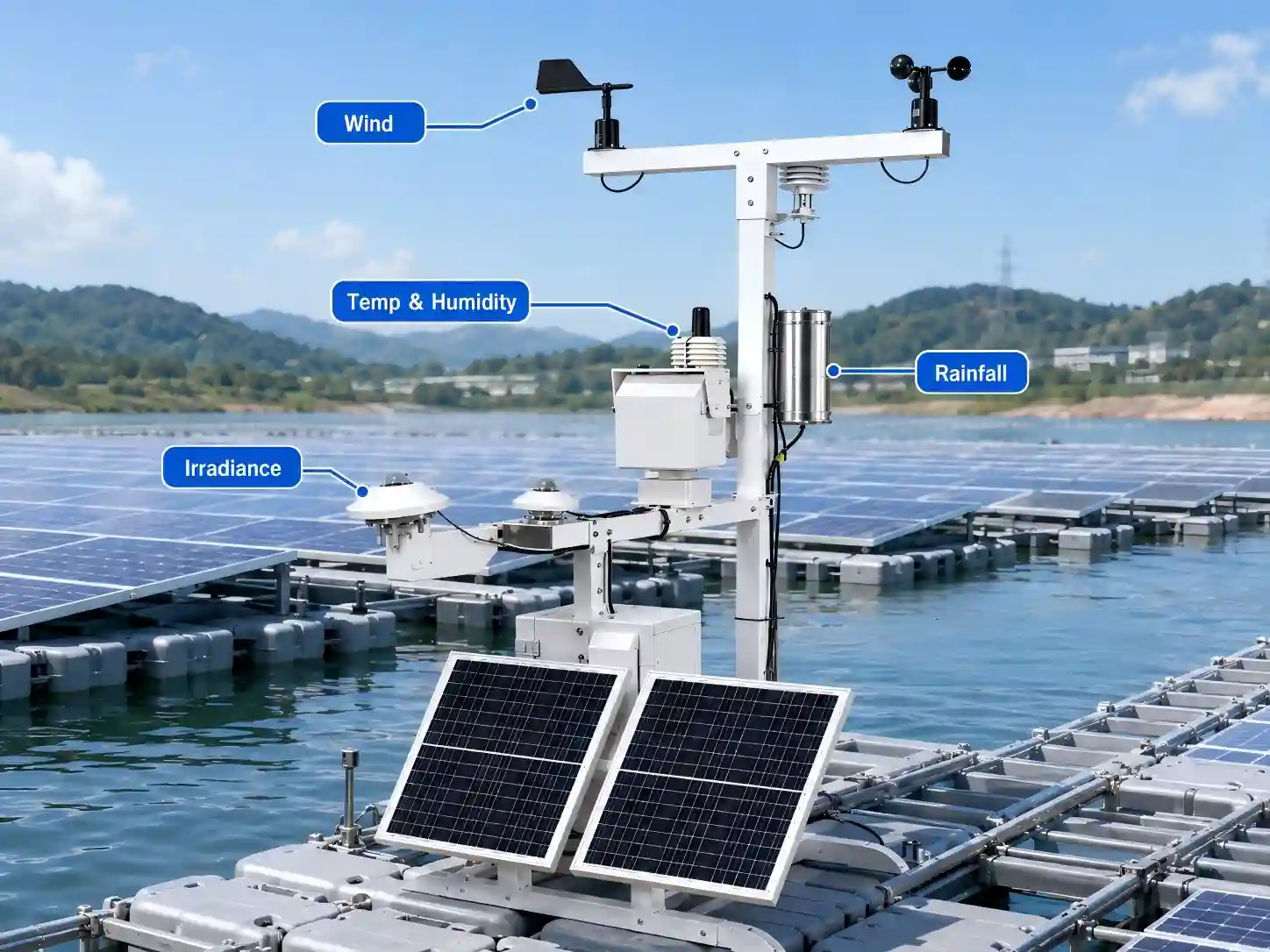
- Solar PV arrays and wind-power monitoring
Renewable-energy applications often monitor wind data to:
* Analyze PV module cooling conditions
* Measure outdoor conditions
* Energy-production analysis
* Monitor operating safety
* Control wind turbines
* Verify resources during wind-turbine assessment or weather monitoring
* Track emissions for environmental reports
The type of sensor used depends on whether wind data is used for remote weather monitoring, detailed production analysis, turbine control, or bankable wind resource assessment.
Main Industrial Wind Sensor Types
- Cup Anemometers
A cup anemometer uses rotating cups to measure wind speed. Airflow causes the rotor to spin at a rate which is converted into wind speed by the sensor electronics.
Advantages
* Tried and tested outdoor technology
* Easy to understand operating principle
* Used for continuous outdoor wind-speed monitoring
* Wide range of industrial, weather monitoring and meteorological models
* Can provide pulse, analog or digital outputs
* Easy to troubleshoot
Limitations
* Bearings and moving parts will wear over time
* Some sensor have a starting threshold before rotation occurs
* Dust, ice, corrosion and contamination can inhibit rotation
* Usually measures wind speed only. Additional sensor needed for wind direction.
* Periodic inspection and maintenance is required
Bearings will wear over time in all outdoor mechanical sensors. As sensor accuracy may change, periodic inspection and replacement are important. Depending on sensor quality and maintenance procedures, a mechanical wind sensor should not be considered inaccurate or “slow” by default.
For open-air weather stations, cup sensors remain popular because of their simple design, low power consumption, robust industrial electronics, and high survival wind speeds.
- Propeller and Wind-Vane Sensors
Propeller sensors use a rotating propeller to measure wind speed. Wind direction is measured using a vane that physically aligns the sensor with the wind.
Advantages
* Measures wind speed and direction
* Good sensitivity when airflow is aligned with propeller
* Used commonly in weather monitoring and industrial applications
* Simple output and maintenance procedure
Limitations
* Moving parts will wear overtime
* May be directional dead band before the sensor starts to rotate
* Sensor mounting direction is important
* Bearings and vane assembly will require inspection and maintenance
* Wind direction could be affected by icing or contamination
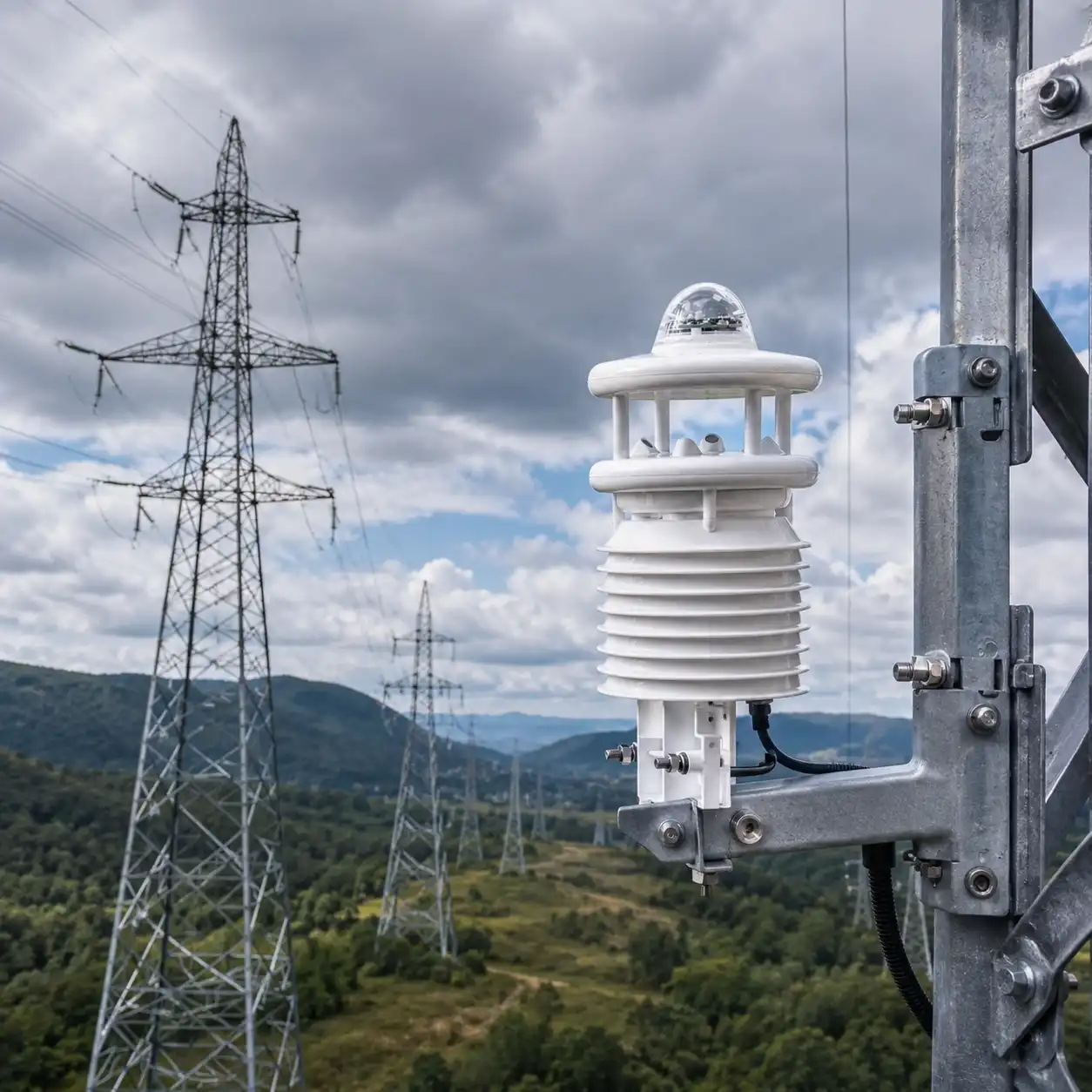
- Ultrasonic Wind Sensors
An ultrasonic wind sensor uses the timing of ultrasonic signals between pairs of transducers to determine wind speed and direction. The main advantage is the lack of moving parts commonly found in anemometers and wind vanes.
Advantages
* No conventional moving parts
* Measures wind speed and direction in the same device
* Faster measurement response than mechanical sensors
* Low starting threshold
* Compact and rugged design
* Suitable for automatic or unattended weather monitoring
* Digital communication commonly available
Limitations
* Higher initial cost than many mechanical sensors
* Rain, ice, snow, dirt, salt spray and bird fouling can block the measurement path between transducers
* Mounting bolts may disturb airflow if not oriented correctly
* Requires sensor heating capability in icing conditions
* May consume more power
* Sensor-specific algorithms for compensation and filtering applies
Ultrasonic sensors require a certain degree of mounting discipline to ensure airflow is not disturbed by sensor mounting hardware. Data compensation algorithms are used to improve wind-speed accuracy and vary between products.
JW-IOT offers omnidirectional ultrasonic wind sensors in compact 2D units, stainless steel designs and UAV versions. Models with RS485 communication support are ideal for monitoring both wind speed and wind direction without rotating cups or a wind vane.
- Thermal Airflow Sensors
A thermal airflow sensor determines air velocity by measuring how quickly moving air can cool the sensor element.
Advantages
* Good low-speed sensitivity
* Fast sensor response
* Compact sensing element
* Indoor HVAC monitoring, clean rooms, laboratories and process ventilation
* Control of air velocity in automated processes
Limitations
* Dust, oil and other liquids can contaminate sensor element
* Humidity and condensation can affect performance
* Heat transfer is affected by gas composition
* Temperature compensation required
* Not ideal for exposure in outdoor weather monitoring applications
Mechanical bearings are not the only component affected by dust and debris. Sensor surface fouling can affect thermal airflow sensors leading some customers to incorrectly assume these devices have better durability in dusty or dirty conditions. Review mounting, housing design and any environmental compensation prior to buying.
- Pressure-Based Wind Sensors
Pressure or differential pressure sensors estimate air velocity based on pressure changes across the sensor.
Suitable for specialized high-speed applications, duct monitoring and some forms of process airflow measurement. Pressure sensor performance will vary based on:
* Probe geometry
* Air density
* Temperature compensation
* Alignment to airflow
* Straight pipe installation distances
* Cleanliness of pressure ports
Measurement Range
The wind-speed range should match both normal operating conditions and any expected extremes.
If conditions exceed the maximum wind speed then the sensor may saturate or even become damaged. Devices with a very high maximum range may provide poorer resolution at lower wind speeds depending on scaling methods used.
Questions to consider:
* What wind-speed range is normal for the application?
* What is the highest expected wind speed?
* Is the sensor needed for control, alarms or general reporting?
* Is accurate low-speed measurement important?
* What is the minimum survival wind speed of the sensor housing?
* Will gusts or storm conditions exceed the normal measurement range?
Measurement range vs survival wind speed
Measurement range and survival wind speed are two different specifications.
Measurement range is the range over which the sensor can provide valid data.
Survival wind speed is the maximum wind speed the sensor housing can withstand before failure.
Most sensors can withstand stronger winds than they are designed to measure. For example, a sensor may have a measurement range up to 70 meters per second but a survival wind speed of 80 m/s.
Starting Threshold
Starting threshold is commonly used with mechanical sensors.
The starting threshold indicates the wind speed required for the rotor or vane to start rotating reliably.
If the starting threshold is too high then the sensor may:
* Report zero or near-zero wind speeds during light winds
* Response may be slow to start
* Poor low-wind statistics and data logs
* Give inaccurate airflow readings for ventilation or microclimate monitoring
Ultrasonic sensors do not have a mechanical starting threshold. However, they will have a minimum measurable speed and quantization resolution.
Accuracy and Resolution
1.Accuracy
Accuracy is the allowable difference between the measured wind speed and a reference measurement under specified conditions.
Accuracy may be expressed as a fixed value, percentage of reading, or a combination.
Example: “±3%” is not the same as “±3% plus 0.02 m/s”.
Read the complete specification. Manufacturer’s may list accuracy in different ways.
- Resolution
Resolution is the smallest amount of change a sensor can display or transmit.
A resolution of 0.1 meters per second does not automatically mean the sensor has an accuracy of ±0.1 m/s.
- Wind-Direction Accuracy
When checking wind-direction sensors verify:
* Measurement range, typically 0-360 degrees
* Direction resolution
* Direction accuracy
* Dead band around north reference point
* Mechanical or magnetic north reference point
* Output values when wind speed is near zero
Response Time and Distance Constant
Response time describes how quickly the sensor output responds to a change in airflow.
Distance constant is commonly used to describe the response speed of mechanical anemometers. The distance constant describes how much air needs to pass the sensor before it responds to a certain percentage of a step change in wind speed.
Both response time and distance constant are important when monitoring gusts of wind, controlling ventilation equipment, turbulence monitoring, wind-turbine power and yaw control, and sudden weather changes.
Fast response time is not always desirable. Response can often be too fast and require software filtering or averaging to make operational decisions.
Environmental Protection
1.IP Rating
IP stands for ingress protection and describes resistance to solid objects and water.
Waterproof connectors, sealed cable glands, UV-resistant cables, adequate drainage, condensation mitigation, and the enclosure itself should be considered when specifying outdoor sensors.
Salt spray corrosion, chemicals, ice formation, and UV light exposure can affect long-term reliability but are not covered by the IP rating alone.
- Operating Temperature
Check both the operating temperature and storage temperature.
Cold temperatures may require heated ultrasonic transducers or other anti-icing measures. High temperatures may require remote sensor mounting or alternative materials.
- Corrosion Resistance
Salt spray corrosion should be evaluated when sensors are used at ports, offshore oil rigs, chemical plants, wastewater facilities and coastal monitoring stations.
Things to check include stainless steel grade, aluminum coatings, UV resistance, salt-spray test results, screw material, connector material, cable jacket and any additional protective treatment.
- Dust and Other Forms of Contamination
Bearings will be affected by dust but solid-state sensors are not maintenance-free. Ultrasonic transducers or thermal elements fouled with dirt, salt or oil may provide inaccurate measurements.
Selecting the right sensor depends on the type of contamination and if the sensor can be inspected during the expected maintenance period.
- Icing
Icing can prevent cups and vanes from spinning. Icing may also block the ultrasonic path between transducers.
Consider the following when specifying sensors for freezing temperatures:
* Integrated sensor heating
* Heater power requirements
* Ice detection and frequency of monitoring
* Temperature control capabilities
* Current draw and power-system capacity
* Ability to access the sensor for maintenance
Output and System Integration
Wind sensors need to send useful information to a control system or datalogger.
- Pulse Output
Wind speed is typically calculated from the rotation frequency of cup anemometers. Check the following details when using pulse output:
* Type of pulse (open/closed)
* Frequency-to-speed relationship
* Maximum load rating of contacts
* Maximum cable length
* Input compatibility of connected equipment
- Analog Output
Common analog outputs include:
* 4-20 mA
* 0-5 volts
* 0-10 volts
4-20 mA is very common in industrial environments. Longer cable runs and simple open/circuit fault detection makes 4-20mA a popular choice.
Check the following details for analog inputs:
* Sensor output scaling
* Supply voltage or loop power
* Input impedance
* Isolation and grounding
* Cable shielding
- RS485 Modbus RTU
RS485 Modbus RTU is common for connecting wind sensors to PLCs, SCADA systems, RTUs, integrated weather stations, and IoT devices.
Confirm the following before purchase:
* Baud rate
* Device address
* Parity and stop bits
* Register map and data types
* Output scaling and scaling factors
* Byte order and word order
* Maximum cable distance
* Termination and bias resistors required
* Surge protection recommended
* Will other RS485 devices share the same bus?
JW-IOT offers wind sensors and weather-monitoring devices with industrial digital output options. Devices with RS485 interfaces are compatible with many data loggers and monitoring platforms.
- Relay Output
Some applications may require a local relay to:
* Sound alarms
* Flash warning lights
* Automatically shut-down equipment
* Control ventilation
* Restrict crane operation
Check and clearly define the following when using relays:
* Setpoint of relay
* Hysteresis of relay
* Delay time on relay
* Relay fail-safe state
Power Supply and Energy Consumption
Common power inputs for industrial sensors include:
* 5 VDC
* 12 VDC
* 24 VDC
* 9-30 VDC
* Solar powered
Solar power must be correctly sized for remote stations. Calculate the following:
* Sensor operating current
* Heater current if applicable
* Data logger power consumption
* Communications device power consumption
* Data transmission frequency
* Battery capacity
* Solar-panel capacity in watts
* Winter solar conditions for autonomous setup
* Minimum autonomy during cloudy conditions
Solar power can greatly reduce lifetime power consumption but may require battery backup for data-logging during continuous cloudy weather. A low power mechanical sensor may be better for some remote applications while an ultrasonic sensor will require more power but less maintenance.
Mounting and Siting
Installing a sensor in the wrong location can invalidate the best specifications.
- Avoid Airflow Obstruction
Mounting poles, boom masts, buildings, solar panels, other towers, trees and equipment will distort airflow around the sensor.
Mount the sensor where it will sense the airflow of interest. Winds measured at 10 meters above-ground will be different from winds closer to buildings or structures.
- Use a Suitable Mounting Boom
Mounting sensor away from the main mast using a horizontal pole can improve accuracy. Direction of the boom should be selected to minimize any obstructions caused by prevailing winds or the installation structure.
- Align Wind Direction Correctly
Follow the installation instructions to make sure wind direction is aligned with true north or the required north-reference for your project.
- Keep the Structure Rigid
Movement and vibration can impact sensor measurements. This is often a larger issue with ultrasonic sensors or sensitive industrial equipment.
- Consider Maintenance Access
Ideally the sensor should be easily inspected, cleaned, calibrated, or replaced. This should be possible without excessive safety risks to maintenance personnel.
Maintenance and inspection not possible for the installer might not be possible for others. Reviewing wind-monitoring guidelines from organizations such as the World Meteorological Organization (WMO) can provide helpful advice during the planning stages.
The WMO Guide to Instruments and Methods of Observation includes a chapter dedicated to surface wind measurement.
Calibration and Maintenance
Wind sensors can experience accuracy drift due to:
* Bearing or bushing wear
* Damaged cups or propeller
* Corrosion
* Dirt accumulating on sensor
* Physical damage to transducers
* Cable damage
* Electronic component aging
* Mechanical misalignment
Periodic maintenance should include visual inspection, cleaning, checking free-rotation on mechanical sensors, inspecting fasteners and mounting hardware, reviewing cable entries and connectors, ensuring wind direction is properly aligned, comparing measured values with a known reference and calibration at the defined interval.
Sensor inspection can be made difficult by mounted height, surroundings, environmental conditions and safety restrictions. Unattended monitoring sites should have data-quality alarms to identify:
* Constant zero wind speeds
* Fixed wind direction
* Physically impossible wind-speed spikes
* Sudden sensor offsets
* Loss of communication
* Values that differ greatly compared to nearby sensors
Selection by Application
| Application | Recommended starting point | Main specifications |
| Automatic weather station | Cup/vane or ultrasonic | Starting threshold, accuracy, direction, exposure |
| Smart agriculture | Mechanical or compact ultrasonic | Low power, RS485, outdoor protection |
| Crane safety | Rugged mechanical or ultrasonic | Response, survival speed, relay or RS485 |
| Industrial ventilation | Thermal, vane, or differential pressure | Low-speed accuracy, response, contamination |
| Solar PV plant | Mechanical or ultrasonic | RS485, weather-station integration, reliability |
| Wind farm monitoring | Application-specific calibrated sensor | Dynamic response, icing, data quality |
| Port and marine station | Corrosion-resistant ultrasonic or mechanical | Salt resistance, IP rating, materials |
| Mine or tunnel ventilation | Thermal, vane, or certified industrial sensor | Low-speed range, dust, certification |
| Chemical or hazardous area | Certified sensor | ATEX, IECEx, or required local certification |
| UAV monitoring | Lightweight ultrasonic sensor | Weight, power, sampling rate, vibration |
| Research and turbulence | 2D or 3D ultrasonic sensor | Sampling frequency, U/V/W components |
Questions to Ask a Wind Sensor Supplier
Important factors to share with a supplier before ordering include:
1. Application and industry
2. Indoor or outdoor installation?
3. Wind-speed range required
4. Wind direction needed?
5. Accuracy requirements
6. Required response or sampling rate
7. Normal operating temperature range
8. Will dust, rain, snow, ice, salt or corrosive chemicals be present?
9. Power supply details
10. Output signal and protocol
11. Name of PLC, SCADA, RTU or monitoring platform
12. Estimated cable length
13. Mounting distance or special requirements
14. Sensor certification requirements or industry
15. Expected maintenance interval or accessibility
Providing this information allows a supplier to recommend a sensor based on total system compatibility rather than one specification.
JW-IOT Industrial Wind Monitoring Solutions
JW-IOT provides industrial wind sensors and weather monitoring systems for use in agriculture, meteorology, solar power monitoring, offshore and marine conditions, industrial safety equipment, environmental monitoring stations, smart cities and unmanned platforms.
Options include:
* Mechanical wind-speed and direction sensors
* Compact ultrasonic wind sensors
* Stainless steel ultrasonic wind speed sensor
* 2D ultrasonic wind sensor with RS485 output
* 3D ultrasonic wind sensor
* UAV Ultrasonic wind speed direction sensor
* Integrated weather stations for IoT nodes and offline logging
* Split- type weather stations with wired connection options
* RS485 wind sensor data acquisition
* IoT communication device with satellite, LoRaWAN, NB-IoT and more
* Sensor monitoring integration through cloud platforms
JW-IOT can help with sensor selection, communication protocols, Modbus integration, customized OEM requirements, and complete industrial monitoring system design.
FAQ
1. Which industrial wind sensor is the best?
No single sensor is ideal for every application. Weather stations and outdoor monitoring projects commonly use cup or vane style sensors. Ultrasonic sensors minimize mechanical wear while thermal sensors are often ideal for controlled indoor airflow monitoring at low speeds.
2. Is an ultrasonic wind sensor better than a mechanical sensor?
Ultrasonic wind sensors have no rotating cups or wind vane. They provide both wind speed and direction measurement quickly with no waiting for the rotor to accelerate. However, they are more expensive than many mechanical alternatives. Ultrasonic sensors can still be affected by icing conditions, contamination on the transducers, mounting angle, and heavier power consumption.
3. Which wind sensor is suitable for dusty environments?
Many factors determine the best sensor for dusty environments. Will the dust be oily? abrasive? Easily blown away? All devices have weaknesses outdoors. Mechanical bearings, solid-state thermal elements, and ultrasonic transducers can all be negatively impacted by dirt, debris, and dust.
Poor sensor selection is often based on the sensing principle alone. Ultrasonic sensors have no physical parts and someone may quickly assume they are immune to dust. Evaluate sensor enclosure design, expected contamination, cleaning schedules, and realistic maintenance intervals.
4. What is the difference between range and survival wind speed?
Measurement range is the range where the sensor can provide valid data.
Survival wind speed is the maximum wind speed the sensor can withstand before the sensor is damaged.
A sensor may survive 150 miles per hour wind but only provide accurate measurements up to 40 mph.
5. Is RS485 better than 4-20mA?
RS485 Modbus allows multiple digital values and parameters to be sent over one pair of wires. A 4-20 mA sensor is simple and very robust. It is also easy to detect an open circuit condition on 4-20mA.
Both protocols have advantages and disadvantages depending on cable distances, control system compatibility, and existing industrial infrastructure.
6. Do I need wind-direction measurement?
Wind direction matters for pollution monitoring stations, airports, ports, weather stations and many renewable-energy applications. Crane sensors and some safety applications only require wind-speed information.
7. Can I connect a wind sensor directly to a PLC?
Any sensor can be connected to a PLC if the output matches the PLC input. Options include pulse outputs, 4-20 mA, 0-10 V outputs and RS485 Modbus communication.
8. Does JW-IOT provide Modbus documentation?
Yes. Digital wind sensors and JW-IOT weather stations compatible with RS485 Modbus provide registers and identification details to support system integration. Confirm required Modbus protocol and control system before ordering.
9. Can JW-IOT customize a weather monitoring solution?
Yes. JW-IOT can configure sensors, monitored parameters, dataloggers, communications options, power systems, mounting hardware, cloud integration, and OEM white-label requirements to meet project needs.
Conclusion
Industrial wind sensor selection should be based on airflow conditions, measurement range, expected starting winds, accuracy requirements, dynamic response needs, environment where the sensor will be mounted, output compatibility with existing equipment, available power supply limitations, mounting requirements, exposure, and finally how often the sensor will be maintained or inspected.
Mechanical or rotating-cup sensors are still very useful and reliable for outdoor weather monitoring stations. Ultrasonic sensors offer low maintenance wind-speed and direction monitoring without rotating parts. Thermal sensors can accurately measure low airflow in ducts, laboratories, clean rooms and industrial environments where air velocity is controlled.
Avoid choosing sensors based on one specification alone. Thermal sensors are not automatically better for dusty or dirty locations due to their solid-state electronics. Review complete device specifications, mounting and exposure before buying.
CTA: Get Recommended for an Industrial Wind Sensor
Send JW-IOT your measurement range, application description, installation environment, accuracy target, response or sampling rate requirement, output signal type, desired communication protocol, available power supply, estimated cable length, mounting height and compatible PLC or cloud-platform information. We can recommend an appropriate sensor and help with system integration.