+86 13520127780
  info@jingelway.com








Greenhouse Monitoring System for Smart Farming and Climate Control
Release time: 2026-06-26
Introduction
Modern greenhouse farming is no longer only about building a protected growing space. To achieve stable yield, better crop quality, and lower operating costs, growers need to understand what is happening inside the greenhouse in real time.
Temperature, humidity, CO₂ concentration, light intensity, soil moisture, substrate EC, irrigation status, and leaf wetness can all affect crop growth. When these conditions are monitored manually or only checked occasionally, problems may not be discovered until they already affect plant health.
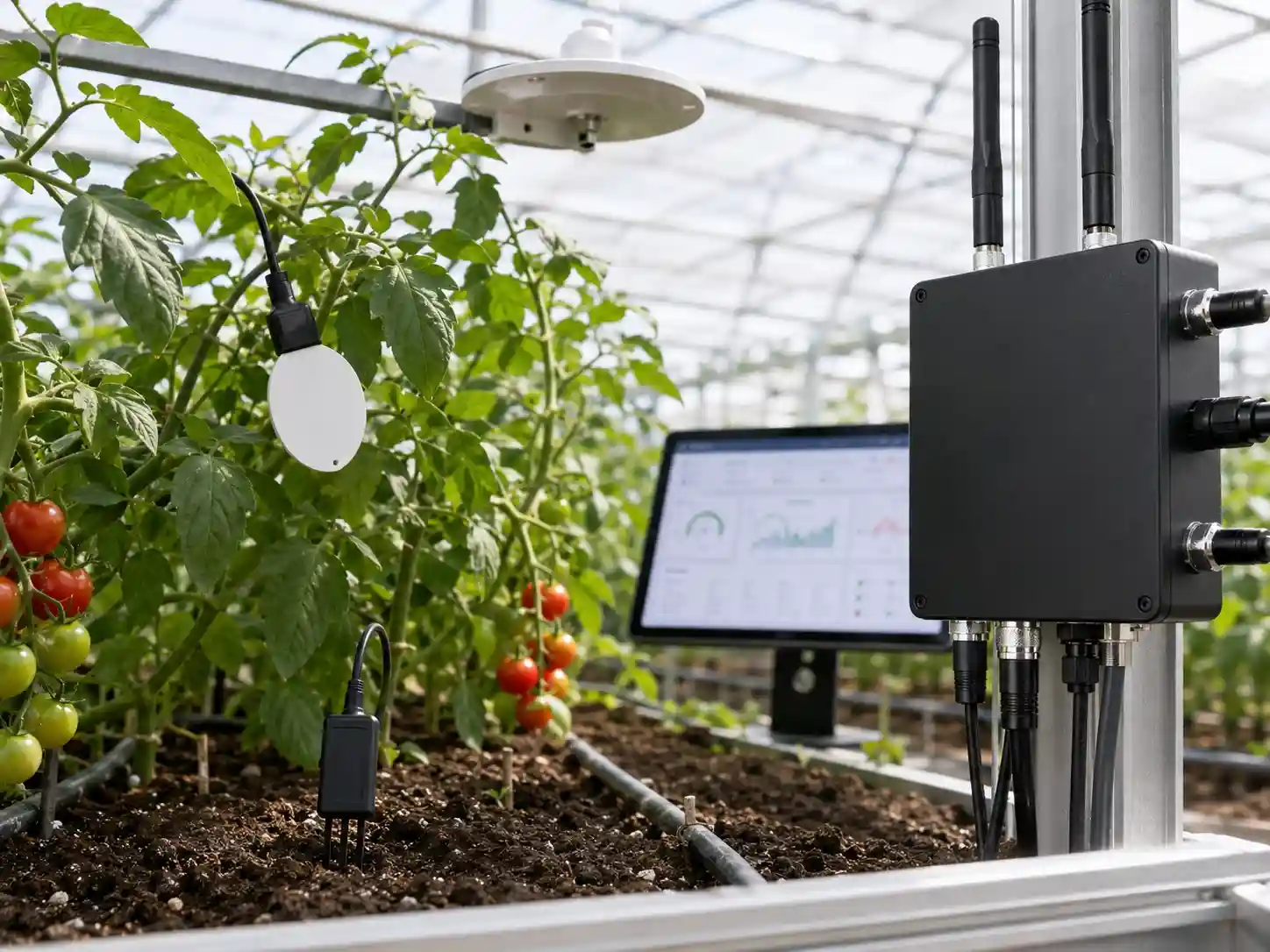
A greenhouse monitoring system helps solve this problem by using sensors, data loggers, controllers, communication networks, and cloud platforms to collect real-time environmental and crop-related data. With reliable monitoring, greenhouse managers can make faster decisions, automate key processes, and reduce the risk of crop stress.
For growers planning to upgrade from manual observation to data-driven management, JW-IoT provides an integrated Greenhouse Monitoring System designed for real-time remote monitoring and intelligent control of soil, air, and crop conditions.
What Is a Greenhouse Monitoring System?
A greenhouse monitoring system is an IoT-based solution that collects, transmits, analyzes, and displays key environmental and growing data inside a greenhouse.
A typical system may include:
- Air temperature and humidity sensors
- CO₂ sensors
- Light intensity sensors
- Soil moisture sensors
- Soil temperature sensors
- Soil EC and pH sensors
- Leaf wetness sensors
- Irrigation controllers
- Ventilation and shading control units
- Data loggers or IoT gateways
- Cloud monitoring platform
- Alarm and notification functions
Instead of relying only on manual inspection, growers can view real-time greenhouse data through a dashboard or mobile device. This makes it easier to detect abnormal conditions, compare data trends, and manage multiple greenhouse zones from one platform.
JW-IoT’s Smart Agriculture IoT Solutions include greenhouse monitoring, smart irrigation, hydroponics monitoring, and other precision agriculture applications, making it suitable for farms, nurseries, research greenhouses, and commercial growing facilities.
Key Parameters Monitored in a Smart Greenhouse
1. Air Temperature and Humidity
Temperature and humidity are two of the most important greenhouse climate parameters. They directly affect transpiration, photosynthesis, flowering, fruit development, and disease risk.
High temperature may cause heat stress, while low temperature may slow plant growth. High humidity can increase the risk of fungal diseases, while low humidity can increase plant water stress.
By monitoring air temperature and humidity continuously, greenhouse managers can make better decisions about ventilation, heating, cooling, fogging, and shading.
2. CO₂ Concentration
CO₂ is essential for photosynthesis. In enclosed greenhouse environments, CO₂ levels may fall when plants are actively growing, especially during the daytime.
CO₂ monitoring helps growers understand whether the greenhouse environment supports efficient photosynthesis. In high-value greenhouse production, CO₂ data can also support CO₂ enrichment control and ventilation strategy.
3. Light Intensity
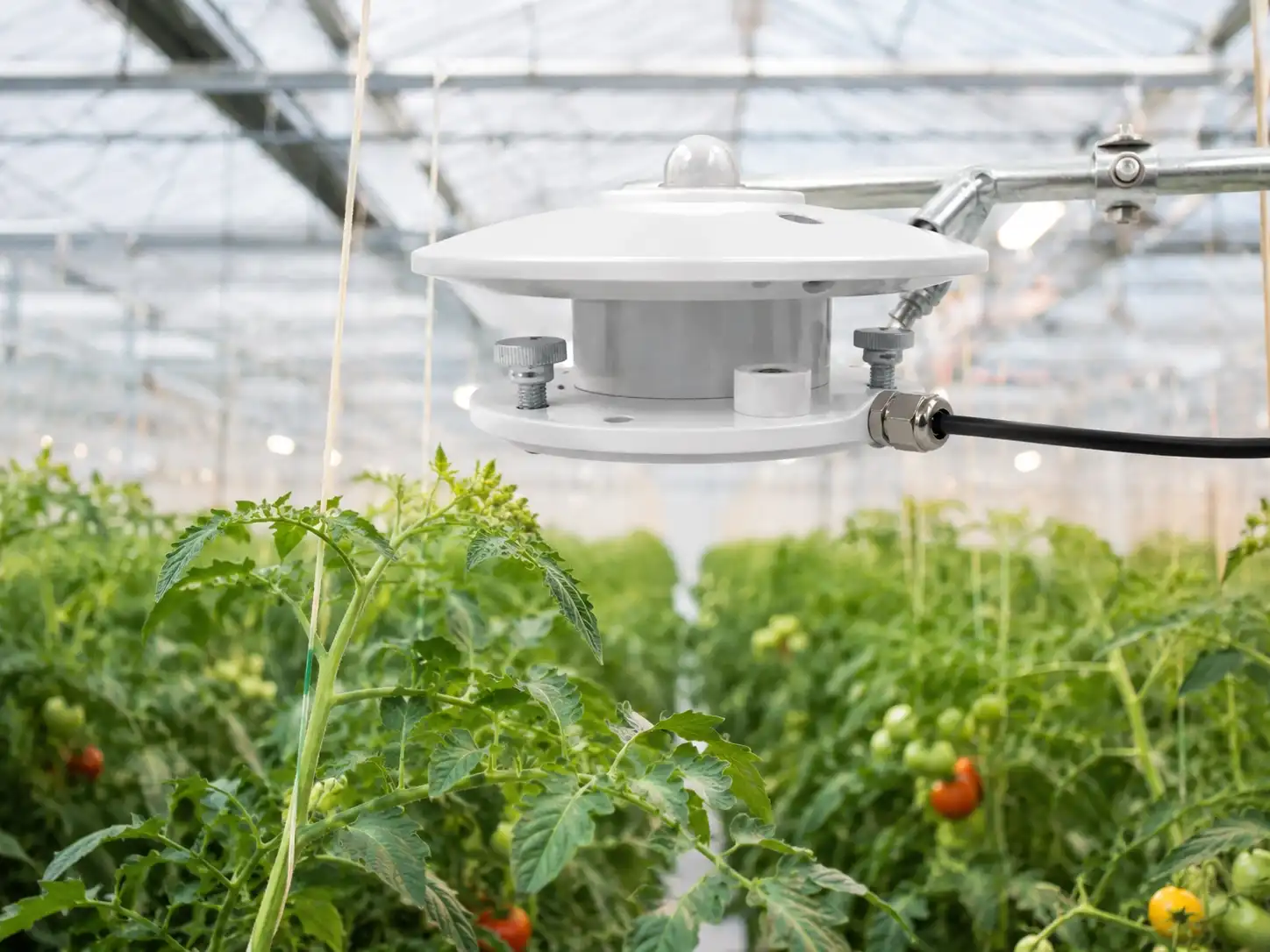
Light is one of the main drivers of crop growth. Insufficient light may reduce photosynthesis, while excessive light and heat can stress plants.
A greenhouse light sensor helps monitor natural sunlight and artificial lighting levels. JW-IoT provides a Light Intensity Sensor for Greenhouse Monitoring with a wide measurement range and RS485 output, which can be integrated into greenhouse monitoring and automation systems.
Light intensity data can support:
- Supplemental lighting control
- Shading curtain operation
- Crop growth analysis
- Daylight comparison between greenhouse zones
- Energy-saving lighting strategies
4. Soil Moisture and Soil Temperature
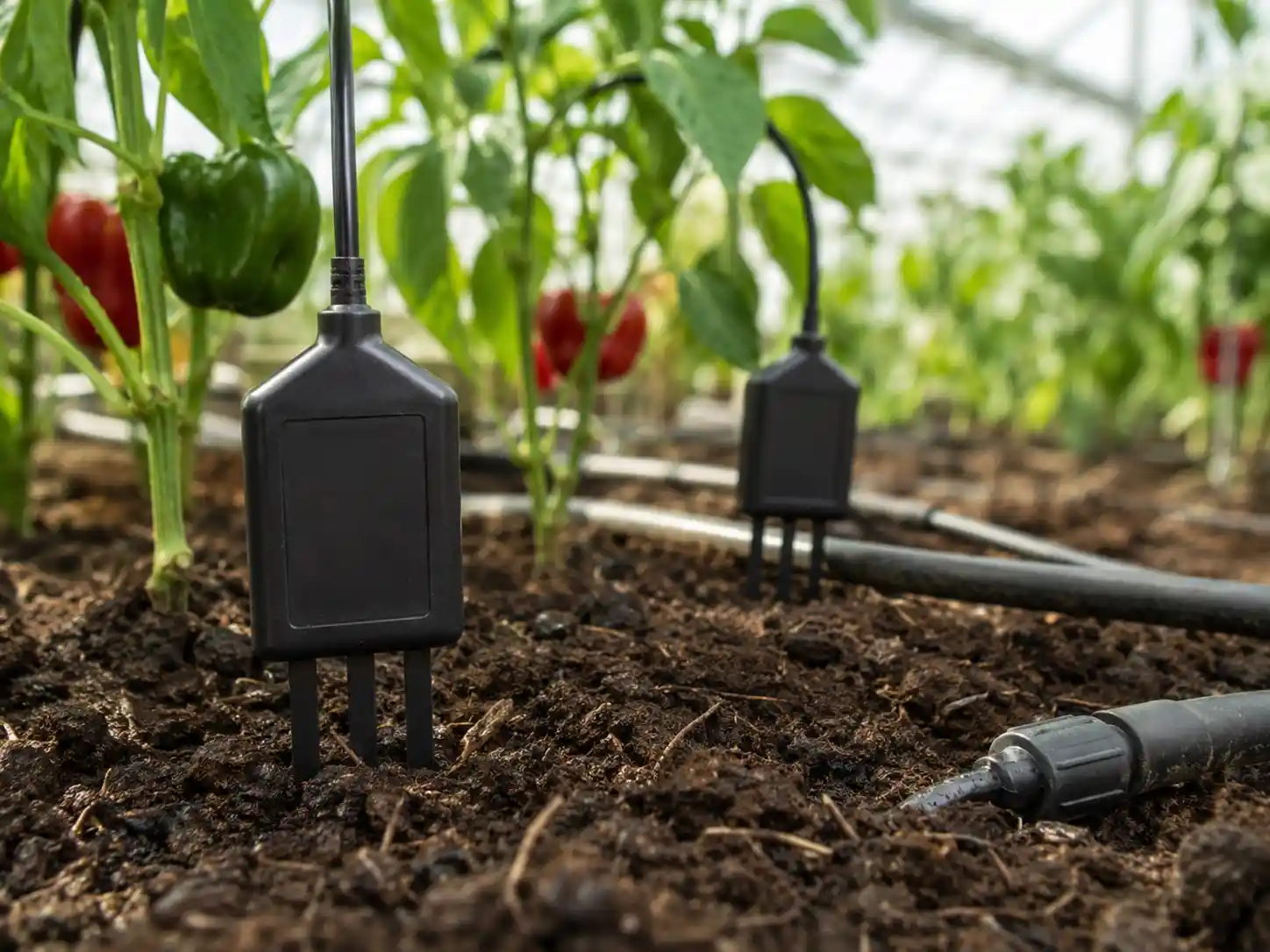
Root zone conditions are just as important as air conditions. Soil moisture and soil temperature influence water absorption, nutrient uptake, root activity, and crop stress.
A smart greenhouse monitoring system can use soil sensors to measure root zone water status and temperature in real time. JW-IoT’s Soil Sensors support monitoring of soil moisture, temperature, EC, salinity, and nutrients for smart agriculture, irrigation, and greenhouse applications.
Soil moisture monitoring helps growers avoid both over-irrigation and water stress. Soil temperature monitoring helps determine whether root zone conditions are suitable for seedling growth, flowering, and nutrient absorption.
For greenhouse projects that need long-term root zone monitoring, soil moisture and temperature sensors can be installed at different depths or locations to compare crop zones more accurately.
5. Soil EC and pH
Electrical conductivity, or EC, reflects the concentration of dissolved salts and nutrients in the root zone. In greenhouse cultivation, EC monitoring is especially important for fertigation and hydroponic-related management.
If EC is too high, crops may experience salt stress. If EC is too low, plants may not receive enough nutrients. Soil or substrate pH also affects nutrient availability.
By monitoring EC and pH, growers can adjust fertilizer concentration, irrigation frequency, and flushing schedules more scientifically.
6. Leaf Wetness
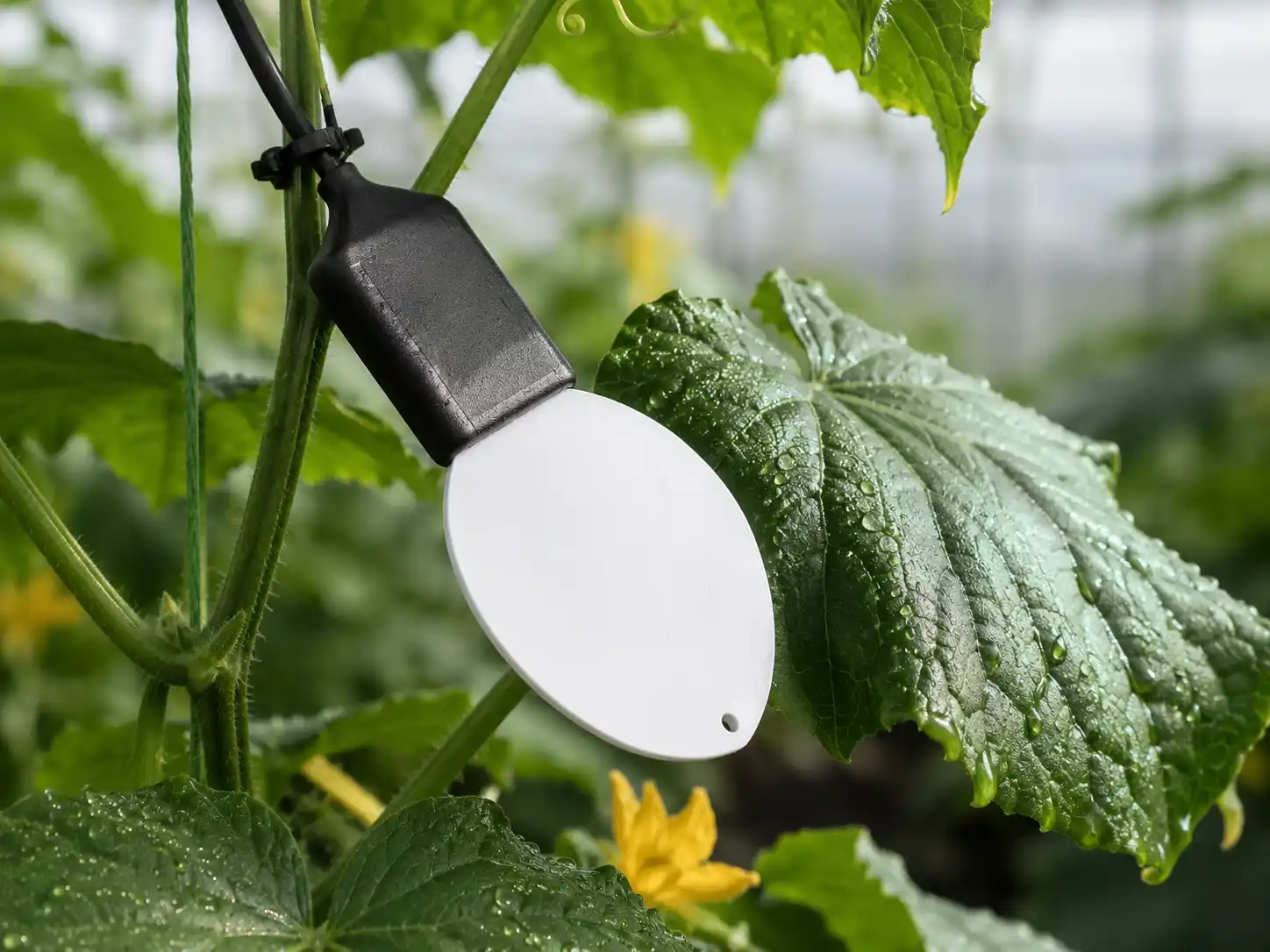
Leaf wetness monitoring helps growers understand moisture conditions on the crop canopy. Wet leaves for long periods can increase the risk of fungal diseases.
JW-IoT’s Leaf Wetness Sensor for Greenhouse Disease Prevention is designed to monitor moisture presence and duration on plant leaf surfaces. This data can support disease prevention, irrigation evaluation, spraying management, and crop protection research.
For greenhouses growing tomatoes, cucumbers, strawberries, flowers, and leafy vegetables, leaf wetness data can be valuable for disease risk management.
How a Greenhouse Monitoring System Works?
A greenhouse monitoring system usually includes four main layers.
1. Sensor Layer
The sensor layer collects real-time data from the greenhouse environment and crop root zone. Sensors may be installed in different greenhouse zones, at crop canopy height, near the root zone, or close to irrigation points.
Common devices include:
- Temperature and humidity sensors
- CO₂ sensors
- Light intensity sensors
- Soil moisture sensors
- Soil EC sensors
- Soil pH sensors
- Leaf wetness sensors
- Weather sensors outside the greenhouse
- Water flow and irrigation sensors
For projects that also need outdoor weather comparison, a Smart Agriculture Weather Station can monitor meteorological and soil data for farms, greenhouses, plantations, and agricultural research sites.
2. Data Acquisition Layer
Sensor data needs to be collected by a data logger, controller, or IoT gateway. This layer handles data acquisition, protocol conversion, local storage, threshold settings, and sometimes edge control.
In many greenhouse projects, RS485 Modbus is commonly used because it is stable, practical, and suitable for multiple sensors. Analog signals, pulse signals, and wireless data can also be supported depending on the project design.
3. Communication Layer
After data is collected, it needs to be transmitted to a local server or cloud platform. Communication methods may include:
- 4G LTE
- Wi-Fi
- Ethernet
- LoRaWAN
- RS485 wired network
- Private local network
For large greenhouse bases or distributed agricultural parks, wireless communication can reduce wiring difficulty and support multi-zone monitoring.
4. Platform and Control Layer
The platform displays real-time data, historical trends, alarm records, device status, and control logic.
A greenhouse monitoring platform may support:
- Real-time dashboard
- Mobile access
- Historical data analysis
- Alarm notification
- Multi-greenhouse management
- Irrigation control
- Ventilation control
- Shading control
- Data export
- API integration
This layer turns raw sensor data into useful decisions. For example, if soil moisture drops below a preset threshold, the system can trigger irrigation. If humidity is too high, the system can remind managers to improve ventilation or activate control equipment.
Greenhouse Monitoring and Smart Irrigation
Irrigation is one of the most important use cases for greenhouse monitoring. Traditional irrigation is often based on fixed schedules, but plant water demand changes with weather, crop stage, soil type, light intensity, and greenhouse climate.
With real-time soil moisture and climate data, irrigation can be controlled more precisely.
A smart greenhouse irrigation strategy may consider:
- Soil moisture threshold
- Crop growth stage
- Root zone temperature
- Greenhouse humidity
- Light intensity
- Irrigation frequency
- Water flow data
- Fertigation EC and pH
JW-IoT’s Wireless Smart Irrigation System can be connected with soil sensors, controllers, and remote communication devices to improve irrigation efficiency and reduce water waste.
This is especially useful for commercial greenhouses, seedling nurseries, vegetable production bases, and high-value crop cultivation.
Greenhouse Monitoring and Smart Irrigation
Irrigation is one of the most important use cases for greenhouse monitoring. Traditional irrigation is often based on fixed schedules, but plant water demand changes with weather, crop stage, soil type, light intensity, and greenhouse climate.
With real-time soil moisture and climate data, irrigation can be controlled more precisely.
A smart greenhouse irrigation strategy may consider:
- Soil moisture threshold
- Crop growth stage
- Root zone temperature
- Greenhouse humidity
- Light intensity
- Irrigation frequency
- Water flow data
- Fertigation EC and pH
JW-IoT’s Wireless Smart Irrigation System can be connected with soil sensors, controllers, and remote communication devices to improve irrigation efficiency and reduce water waste.
This is especially useful for commercial greenhouses, seedling nurseries, vegetable production bases, and high-value crop cultivation.
Benefits of Using a Greenhouse Monitoring System
1. Better Crop Growth Visibility
Real-time data helps growers understand whether the greenhouse environment is suitable for crop growth. Instead of guessing, managers can use data to evaluate temperature, humidity, light, irrigation, and root zone conditions.
2. Faster Problem Detection
When abnormal data appears, the system can send alarms. This allows growers to respond before problems become serious.
Examples include:
- Sudden temperature rise
- Excessive humidity
- Low soil moisture
- Abnormal EC value
- Sensor failure
- Communication interruption
- Irrigation system abnormality
3. Improved Irrigation and Fertilizer Management
Soil moisture, EC, pH, and temperature data help growers optimize irrigation and fertigation. This can reduce water waste, fertilizer loss, and root zone stress.
4. Lower Labor Cost
Manual greenhouse inspection takes time and may not capture rapid changes. Remote monitoring helps reduce repetitive inspection work and allows managers to supervise multiple greenhouses more efficiently.
5. Better Disease Risk Management
Humidity and leaf wetness data can support early warning for disease-prone conditions. Growers can improve ventilation, adjust irrigation timing, and reduce unnecessary spraying.
6. Data-Driven Greenhouse Automation
When sensors, controllers, and platforms are integrated, greenhouse systems can move from monitoring to automation. Irrigation, ventilation, shading, lighting, and alarms can be managed based on real-time data.
Recommended Greenhouse Monitoring Configuration
A practical greenhouse monitoring system can be configured according to crop type, greenhouse size, budget, and automation level.
Basic Configuration
Suitable for small greenhouses, demonstration farms, and entry-level monitoring.
Recommended devices:
- Air temperature and humidity sensor
- Soil moisture and temperature sensor
- Light intensity sensor
- Data logger or controller
- 4G or Wi-Fi communication
- Cloud dashboard
Standard Configuration
Suitable for commercial greenhouses and smart agriculture projects.
Recommended devices:
- Temperature and humidity sensors
- CO₂ sensor
- Light intensity sensor
- Soil moisture temperature EC sensor
- Leaf wetness sensor
- Irrigation controller
- IoT gateway
- Cloud platform with alarm function
Advanced Configuration
Suitable for large greenhouse bases, hydroponics, high-value crops, and automated greenhouse management.
Recommended devices:
- Multi-zone climate sensors
- Soil or substrate moisture EC pH sensors
- CO₂ monitoring and control
- Light monitoring and shading control
- Leaf wetness monitoring
- Water flow monitoring
- Fertigation monitoring
- Ventilation and irrigation control
- Multi-greenhouse cloud platform
- API integration with farm management systems
How to Choose the Right Greenhouse Monitoring System
Before selecting a greenhouse monitoring system, growers should define the real management objective.
Key questions include:
- What crops are grown in the greenhouse?
- Is the main goal monitoring, alarm, or automation?
- How many greenhouse zones need to be monitored?
- Are soil, substrate, or hydroponic systems used?
- Which parameters are most important for crop growth?
- Is remote mobile access required?
- Is irrigation or ventilation control required?
- What communication method is available on site?
- Does the system need to integrate with an existing platform?
For example, a tomato greenhouse may need temperature, humidity, CO₂, light, soil moisture, EC, and leaf wetness monitoring. A seedling greenhouse may focus more on temperature, humidity, light, and irrigation stability. A hydroponic greenhouse may require nutrient solution monitoring in addition to climate monitoring.
Application Scenarios
A greenhouse monitoring system can be used in many types of controlled-environment agriculture, including:
- Vegetable greenhouses
- Tomato and cucumber greenhouses
- Strawberry greenhouses
- Flower and ornamental plant greenhouses
- Seedling nurseries
- Hydroponic growing facilities
- Research greenhouses
- Smart agriculture demonstration parks
- Commercial greenhouse bases
- Agricultural IoT projects
For projects that combine greenhouse monitoring with broader farm-level sensing, JW-IoT also provides smart agriculture sensors, weather stations, soil monitoring solutions, and irrigation monitoring systems.
Fully enclosed indoor farms require more granular monitoring than conventional greenhouses, especially when light, airflow, temperature, and irrigation must be controlled separately across multiple growing levels. Learn more about our vertical farming monitoring system.
Why Choose JW-IoT for Greenhouse Monitoring?
JW-IoT focuses on IoT sensing technologies and integrated monitoring systems for smart agriculture, environmental monitoring, smart water management, and industrial IoT applications.
For greenhouse monitoring projects, JW-IoT can provide:
- Flexible sensor configuration
- Soil, climate, light, and leaf wetness monitoring
- RS485 Modbus and IoT communication options
- Data logger and controller integration
- Cloud-based remote monitoring
- Alarm and notification support
- Multi-greenhouse management
- Support for smart irrigation and automation
Whether the project is a small greenhouse, a commercial farm, or a large smart agriculture demonstration base, JW-IoT can help design a practical monitoring system based on real field requirements.
Learn more about the JW-IoT Greenhouse Monitoring System or explore more Smart Agriculture IoT Solutions.
FAQ
1. What is a greenhouse monitoring system?
A greenhouse monitoring system is an IoT-based solution that uses sensors, data loggers, communication devices, and software platforms to monitor greenhouse climate, soil conditions, irrigation, and crop-related data in real time.
2. What parameters should be monitored in a greenhouse?
Common greenhouse monitoring parameters include air temperature, humidity, CO₂, light intensity, soil moisture, soil temperature, soil EC, pH, leaf wetness, irrigation flow, and outdoor weather conditions.
3. How does JW-IoT help with greenhouse monitoring?
JW-IoT provides greenhouse monitoring sensors, smart agriculture weather stations, soil sensors, data acquisition devices, communication gateways, and cloud-based monitoring solutions for real-time greenhouse management.
4. Can a greenhouse monitoring system control irrigation?
Yes. When connected with soil moisture sensors, controllers, valves, and irrigation equipment, a greenhouse monitoring system can support automatic irrigation control based on real-time soil and crop water demand.
5. Why is soil moisture monitoring important in greenhouses?
Soil moisture monitoring helps prevent over-irrigation and under-irrigation. It supports better root zone management, improves water use efficiency, and helps crops maintain stable growth.
6. Does JW-IoT support RS485 Modbus greenhouse sensors?
Yes. Many JW-IoT sensors support RS485 Modbus output, which is suitable for greenhouse monitoring systems, data loggers, controllers, and industrial IoT integration.
7. What is the role of light sensors in greenhouse farming?
Light sensors measure sunlight or artificial light intensity. This data helps growers manage shading, supplemental lighting, crop growth conditions, and energy-saving lighting strategies.
8. Can greenhouse monitoring reduce disease risk?
Yes. Monitoring humidity and leaf wetness helps identify conditions that may increase disease risk. Growers can improve ventilation, adjust irrigation timing, and take preventive action earlier.
9. Is a greenhouse monitoring system suitable for large greenhouse bases?
Yes. A greenhouse monitoring system can be expanded for multi-zone and multi-greenhouse management using distributed sensors, IoT gateways, and cloud platforms.
Conclusion
A greenhouse monitoring system gives growers the data needed to manage crops more scientifically. By monitoring climate, soil, light, irrigation, and crop-related conditions in real time, greenhouse managers can improve crop growth, reduce labor, optimize water and fertilizer use, and respond faster to abnormal conditions.
For modern greenhouse farming, real-time data is no longer optional. It is the foundation of smart greenhouse management and precision agriculture.
To build a reliable monitoring system for your greenhouse project, visit JW-IoT’s Greenhouse Monitoring System page or explore the full range of Smart Agriculture IoT Solutions.