+86 13520127780
  info@jingelway.com







Which Type of Rain Gauge Is Most Accurate? Complete Guide to Choosing a Rainfall Sensor
Release time: 2026-07-16
Tipping Bucket vs Optical vs Weighing Rain Gauge for Weather Monitoring
Choosing the most accurate rain gauge depends on the monitoring purpose, rainfall conditions, installation environment and data requirements.
Different rain gauge technologies use different measurement principles:
- Tipping bucket rain gauges measure rainfall by counting calibrated bucket movements.
- Weighing rain gauges measure precipitation based on collected water weight.
- Optical rain gauges detect raindrops using optical sensing technology.
- Piezoelectric rain gauges measure rainfall impact energy.
For professional applications such as weather stations, hydrology monitoring, flood warning systems, smart agriculture and IoT environmental monitoring, selecting the right rainfall sensor is essential for obtaining reliable precipitation data.
JW-IoT provides automatic rainfall monitoring solutions including rain gauges, weather stations, data loggers and IoT communication systems.
Explore JW-IoT rain gauge solutions:
https://www.jw-iot.com/category/products/rain-gauge
What Is the Most Accurate Type of Rain Gauge?
There is no single rain gauge that is the most accurate for every application.
The most suitable rain gauge depends on:
- Required measurement accuracy
- Rainfall intensity range
- Monitoring duration
- Maintenance requirements
- Communication method
- Deployment environment
For scientific precipitation measurement, weighing rain gauges are often selected because they directly measure collected precipitation mass.
For automatic weather stations and remote monitoring systems, tipping bucket rain gauges are widely used because they provide a good balance between accuracy, reliability and cost.
For unattended IoT monitoring stations, optical rain gauges can provide advantages because they have no mechanical moving parts and require less maintenance.
Therefore, the “best” rain gauge is the one that matches the project requirements.
Comparison of Different Rain Gauge Types、
| Rain Gauge Type | Measurement Principle | Accuracy Level | Advantages | Typical Applications |
| Tipping Bucket Rain Gauge | Counts calibrated bucket tipping events | High | Reliable, mature technology, cost-effective | Weather stations, agriculture, hydrology |
| Weighing Rain Gauge | Measures collected precipitation weight | Very High | Excellent measurement capability | Research stations, professional meteorology |
| Optical Rain Gauge | Detects raindrop characteristics using optical sensors | High | No moving parts, low maintenance | Smart city, IoT monitoring |
| Piezoelectric Rain Gauge | Measures raindrop impact force | High | Compact structure | Remote sensor networks |
1. Tipping Bucket Rain Gauge: The Most Common Automatic Rainfall Sensor
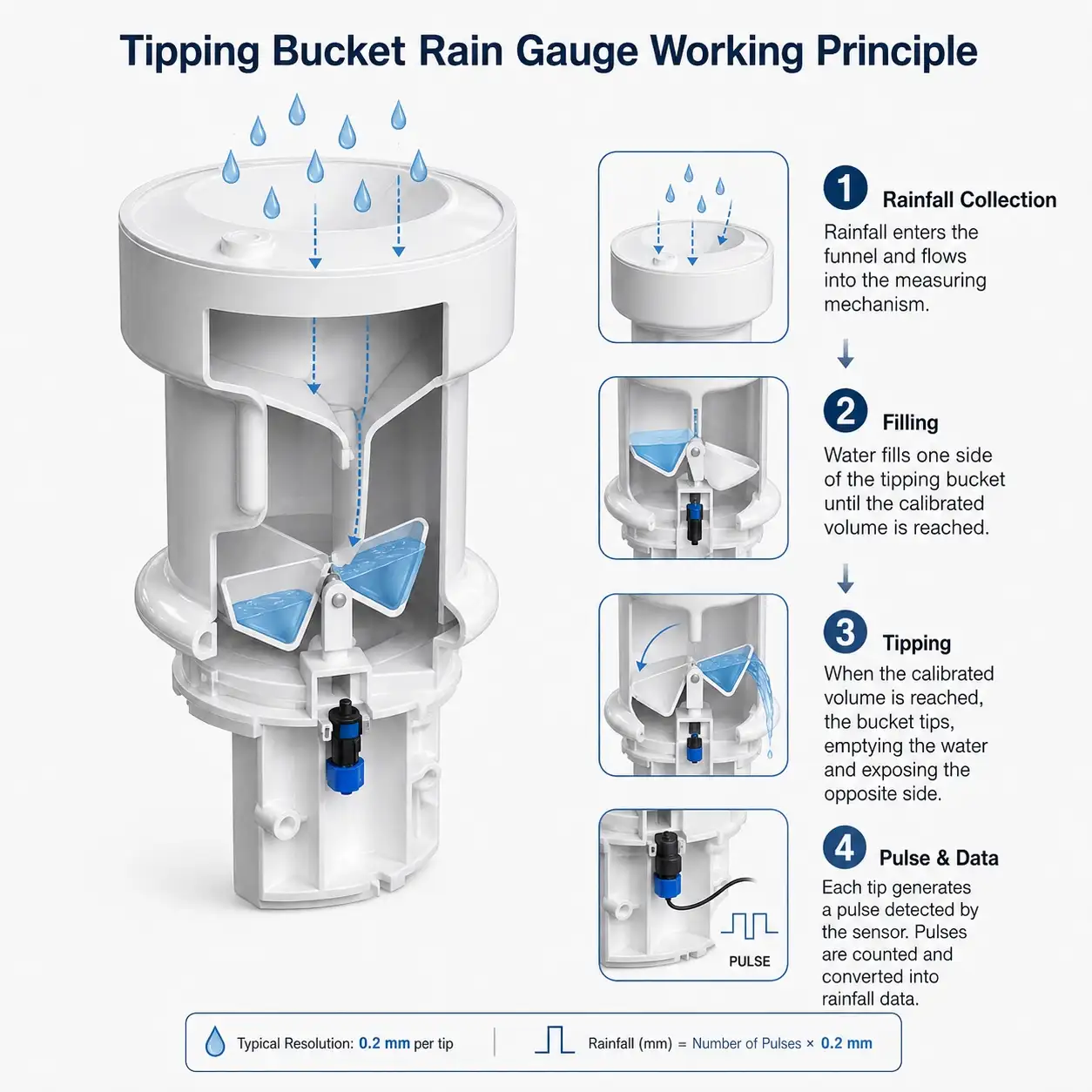
A tipping bucket rain gauge is one of the most widely used automatic rainfall measurement technologies.
The working principle is simple:
- Rain enters through the collection funnel.
- Water flows into a calibrated tipping bucket.
- When the bucket reaches a specific volume, it tips.
- Each tipping action represents a fixed amount of rainfall.
The system converts tipping frequency into rainfall data.
Advantages of Tipping Bucket Rain Gauges
✔ Proven technology used worldwide
✔ Good rainfall measurement accuracy
✔ Real-time rainfall monitoring capability
✔ Easy integration with weather stations
✔ Suitable for long-term outdoor deployment
Limitations
Because tipping bucket rain gauges contain mechanical components:
- Regular cleaning is recommended
- Calibration should be checked periodically
- Extremely intense rainfall may affect measurement accuracy
JW-IoT tipping bucket rain gauges are designed for automatic weather monitoring applications with RS485 Modbus output and IoT integration capability.
Product link:https://www.jw-iot.com/tipping-bucket-rain-gauge-for-weather-monitoring/
2. Weighing Rain Gauge: Highest Measurement Accuracy
A weighing rain gauge measures rainfall by continuously calculating the weight of collected precipitation.
Unlike tipping bucket systems, it does not divide rainfall into fixed bucket increments.
Advantages
✔ Very high measurement accuracy
✔ Continuous precipitation measurement
✔ Suitable for scientific applications
✔ Can measure different precipitation forms
Limitations
- Higher equipment cost
- More complex structure
- Requires more installation consideration
Typical applications include:
- Meteorological research
- Climate observation stations
- Professional hydrological monitoring networks
3. Optical Rain Gauge: Low Maintenance Rainfall Monitoring
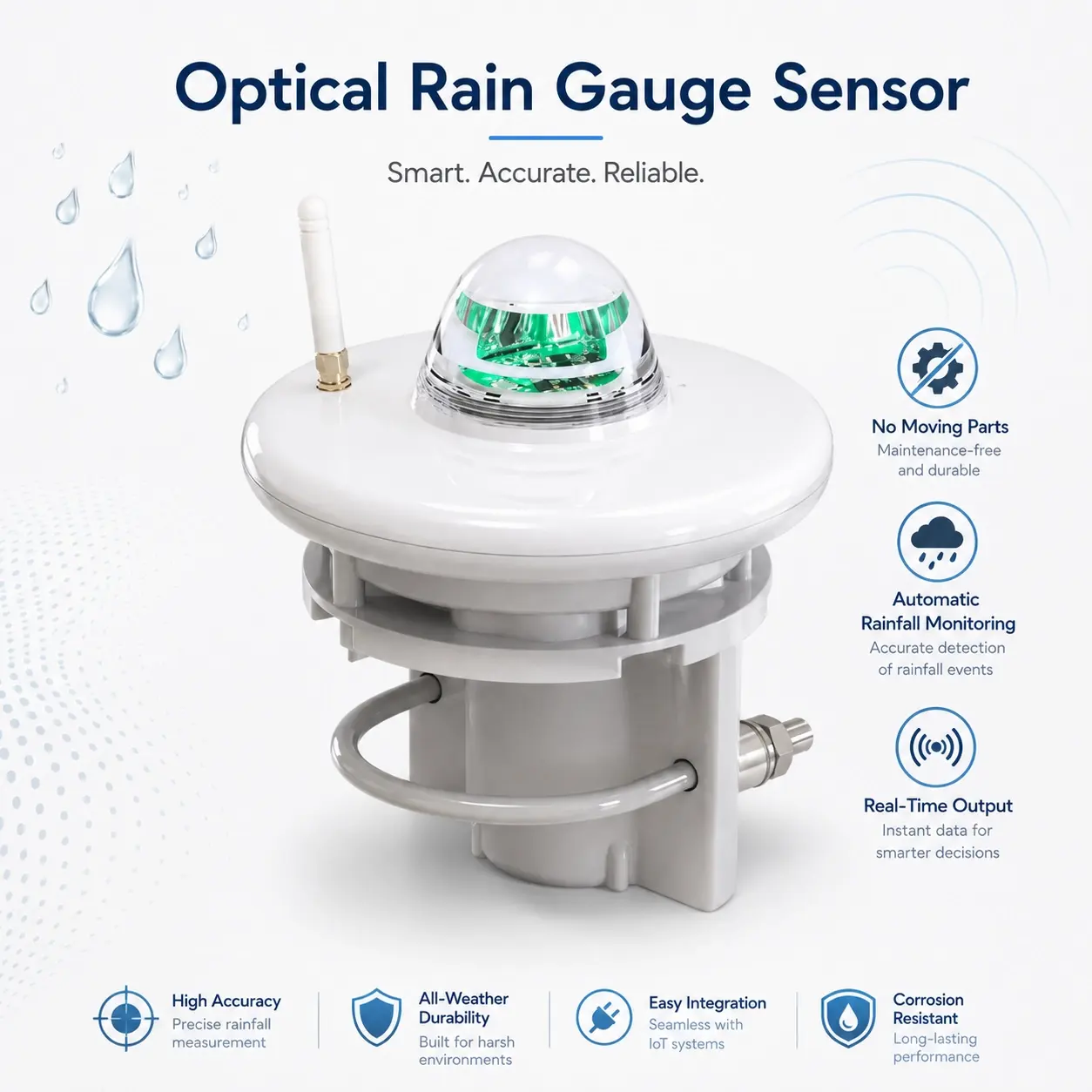
Optical rain gauges use light-based sensing technology to detect falling raindrops.
The sensor analyzes characteristics such as:
- Raindrop size
- Drop frequency
- Rainfall intensity
Advantages
✔ No moving mechanical parts
✔ Reduced maintenance requirements
✔ Fast response
✔ Suitable for remote monitoring
Optical rain gauges are suitable for:
- Smart cities
- Road weather monitoring
- Environmental monitoring stations
- IoT weather networks
4. Piezoelectric Rain Gauge: Compact IoT Rainfall Sensor
Piezoelectric rain gauges measure the impact force generated when raindrops hit the sensing surface.
Advantages
✔ Compact design
✔ Low maintenance
✔ Easy integration into sensor networks
✔ Suitable for distributed monitoring
Applications include:
- Smart agriculture
- Remote weather monitoring
- Environmental IoT systems
Which Rain Gauge Is Best for a Weather Station?
For automatic weather stations, the choice depends on the monitoring objective.
Weather Station Rainfall Monitoring
Recommended:
Tipping Bucket Rain Gauge
Reasons:
- Reliable measurement
- Mature technology
- Easy integration
- Cost-effective
Remote IoT Weather Monitoring
Recommended:
Optical Rain Gauge
Reasons:
- Less maintenance
- No mechanical wear
- Suitable for unattended stations
Professional Meteorological Research
Recommended:
Weighing Rain Gauge
Reasons:
- Excellent accuracy
- Continuous measurement capability
Factors Affecting Rain Gauge Accuracy
The accuracy of rainfall measurement depends not only on the sensor type.
Installation and maintenance also have significant impacts.
1. Installation Location
A rain gauge should be installed in an open area.
Avoid:
- Trees nearby
- Buildings blocking rainfall
- Strong wind turbulence areas
2. Sensor Leveling
The rain gauge must be installed horizontally.
Incorrect installation angles may affect rainfall collection and measurement results.
3. Regular Maintenance
Important maintenance tasks include:
- Cleaning the collection funnel
- Removing leaves and insects
- Checking drainage channels
- Verifying calibration
4. Communication Reliability
For modern rainfall monitoring systems, measurement data must be transmitted reliably.
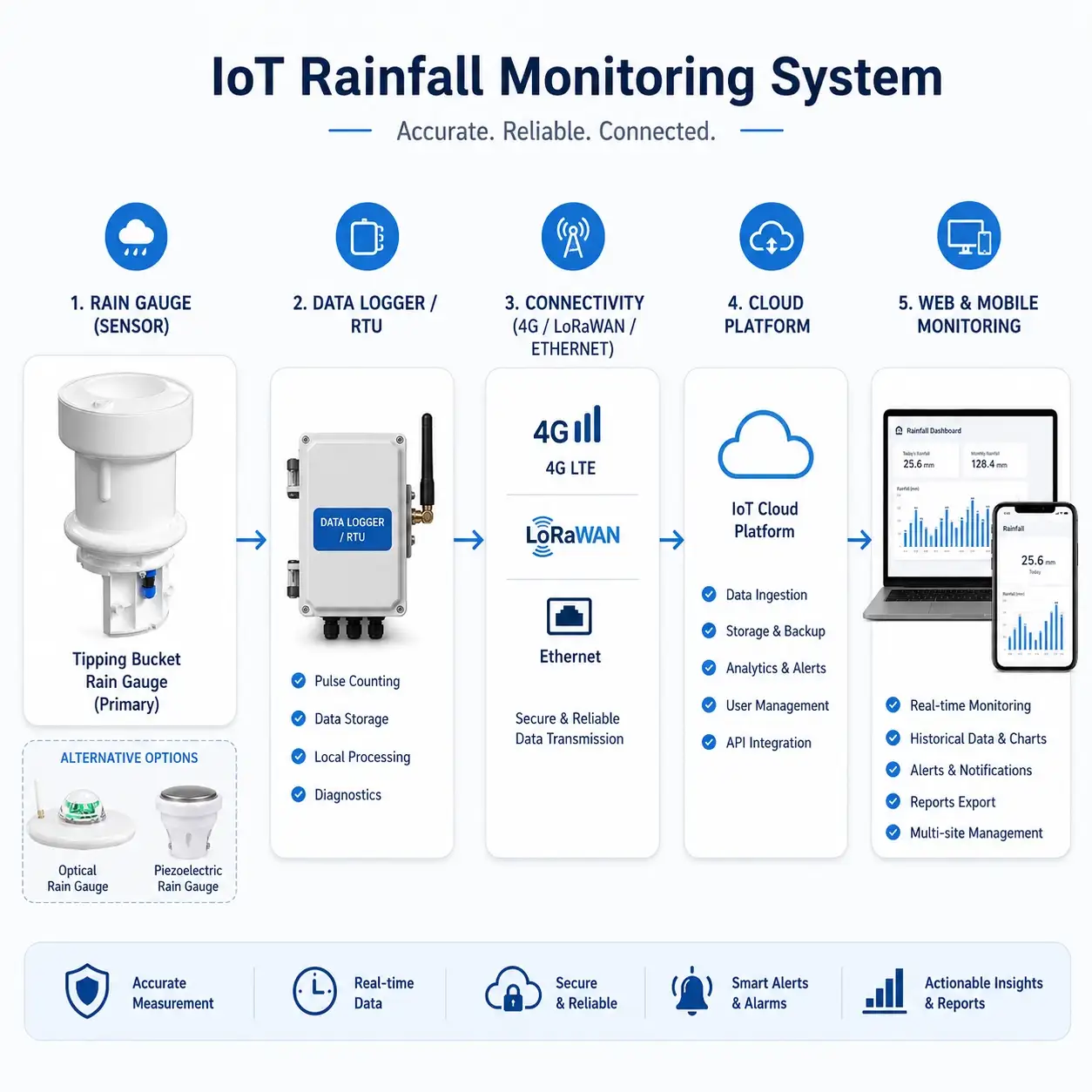
A complete system usually includes:
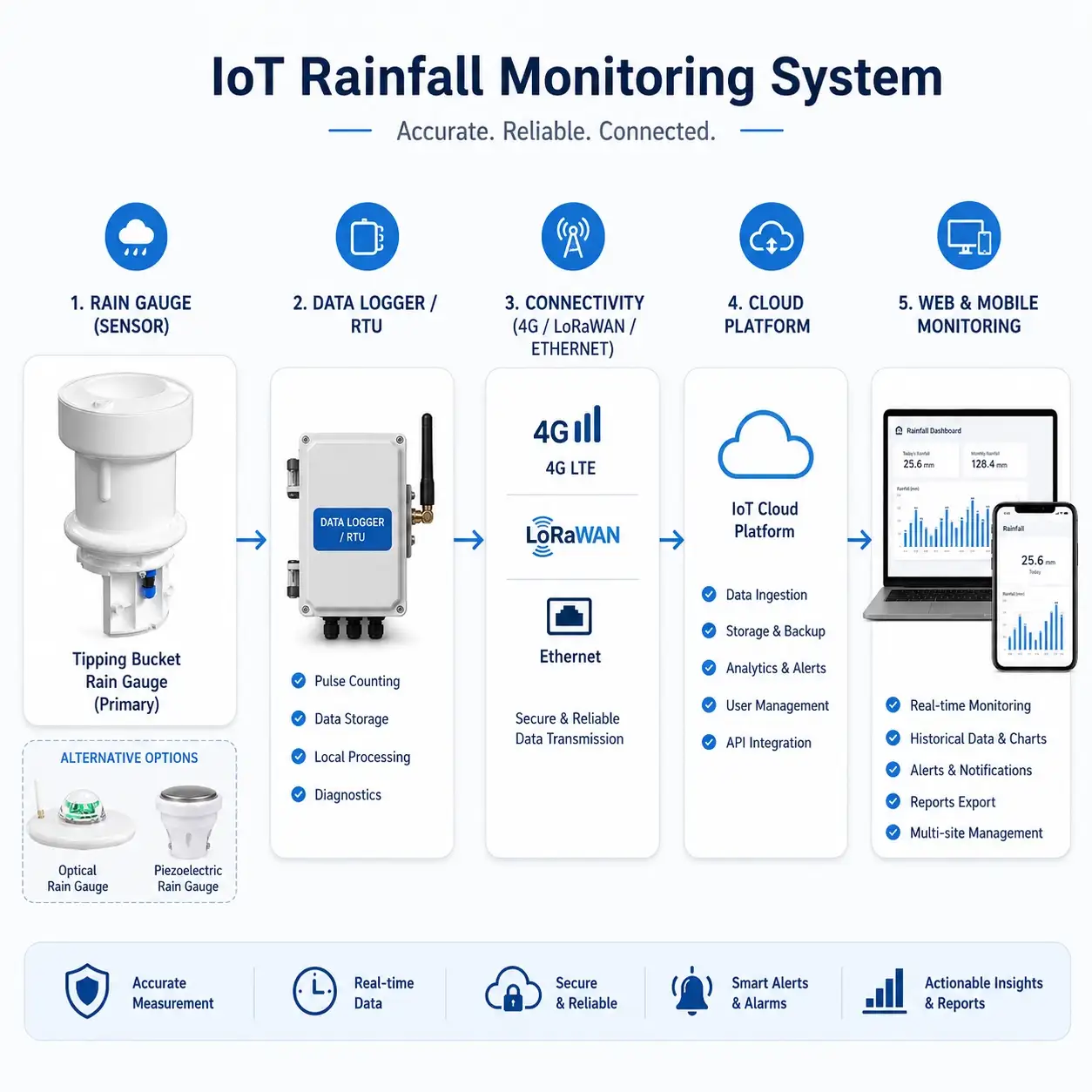
Rain Gauge Sensor

↓

Data Logger / RTU

↓

4G / LoRaWAN / Ethernet

↓

Cloud Monitoring Platform

↓

Remote Data Access
Rain Gauge Applications
Smart Agriculture Rainfall Monitoring
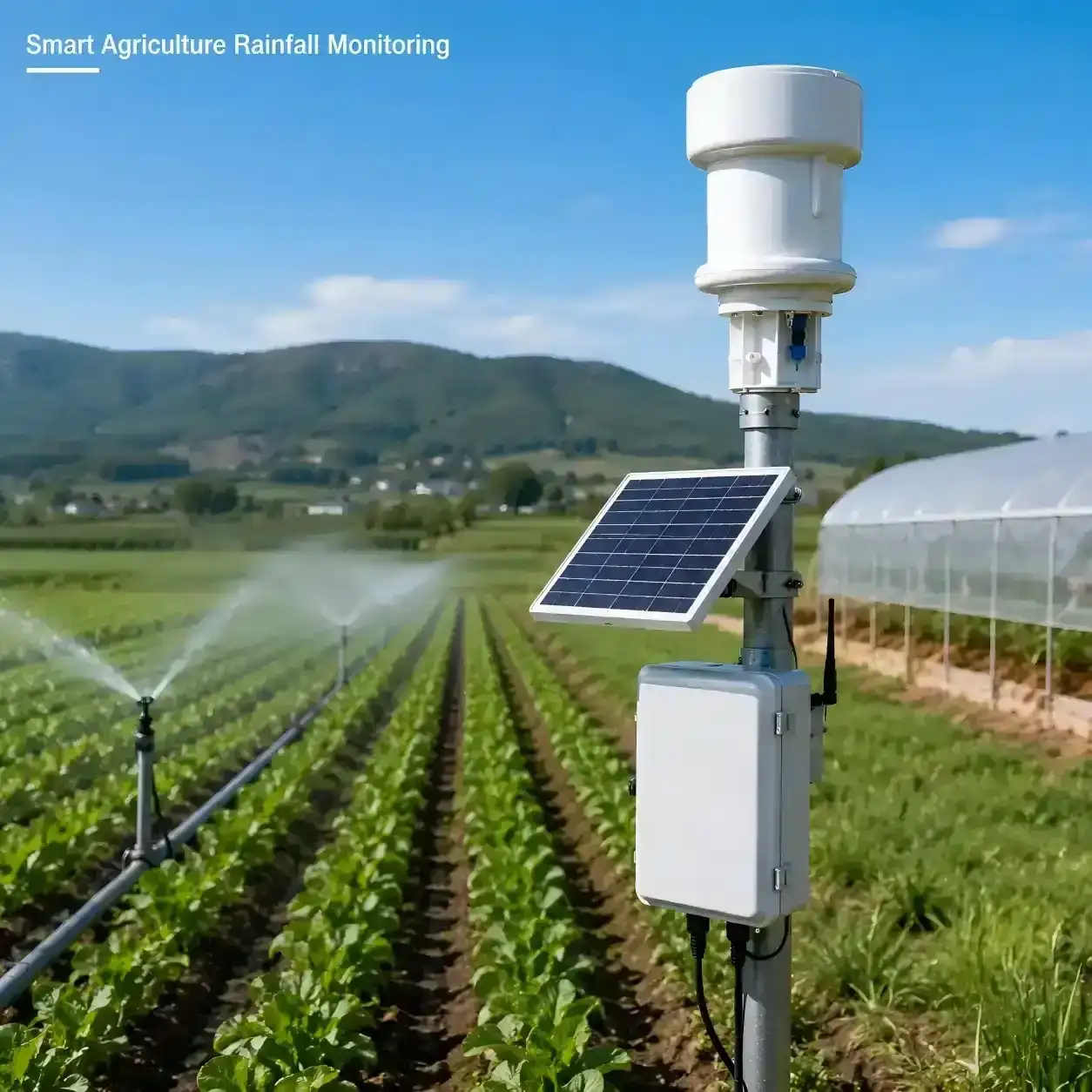
Rainfall data helps farmers improve:
- Irrigation planning
- Water resource management
- Crop growth analysis
- Smart farming decisions
Combined with soil moisture sensors, weather stations and IoT platforms, rainfall monitoring can support precision agriculture.
Explore JW-IoT smart agriculture solutions:
https://www.jw-iot.com/category/solutions/smart-agriculture-iot-solutions
Hydrology and Flood Warning Systems
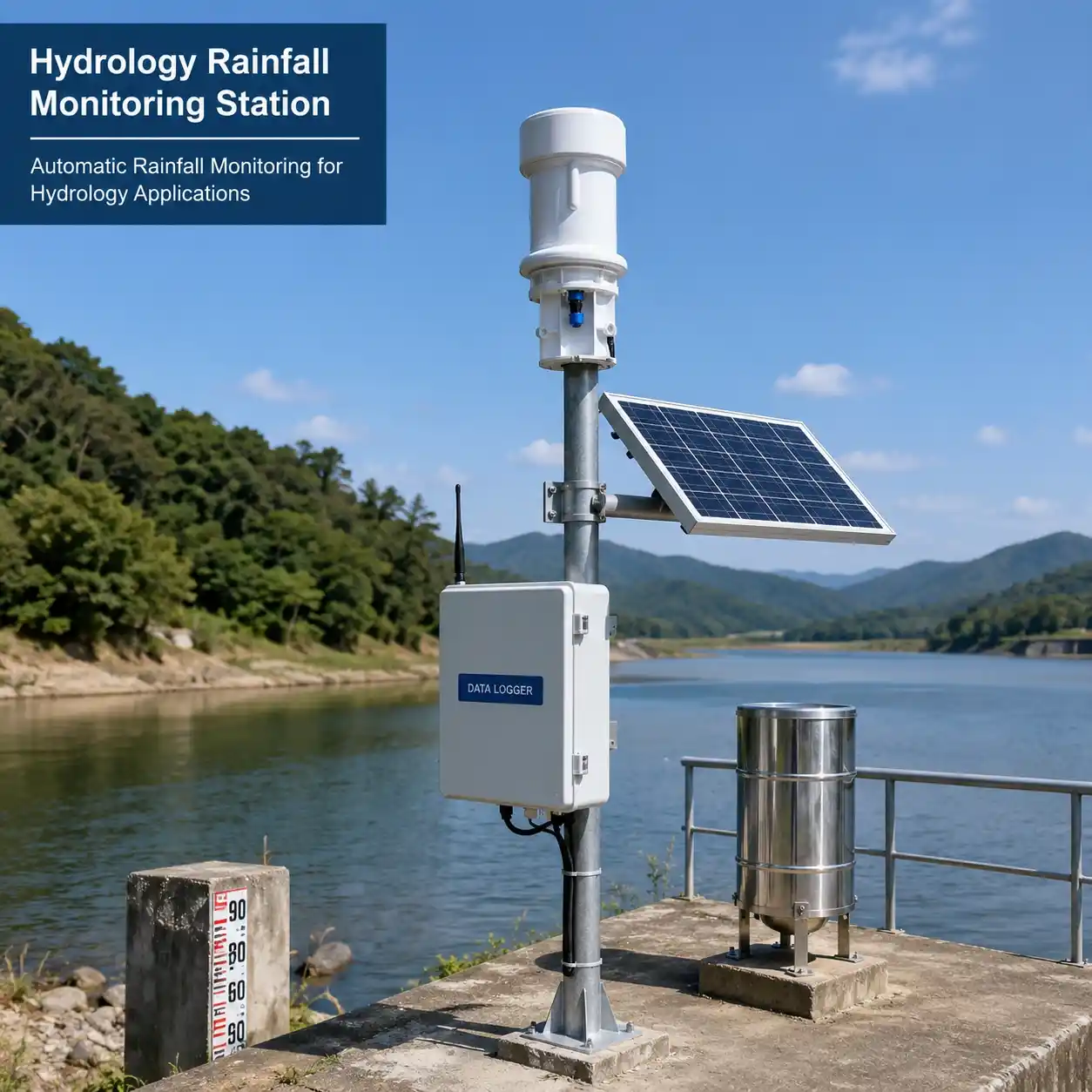
Accurate rainfall measurement is essential for:
- River monitoring
- Reservoir management
- Flood forecasting
- Watershed analysis
Rain gauges can be integrated with:
- Water level sensors
- Data loggers
- Communication terminals
- Remote monitoring platforms
Smart City Rainfall Monitoring
Urban rainfall monitoring helps cities understand:
- Rainfall distribution
- Drainage capacity
- Flood risk
- Extreme weather events
Rainfall sensors can be installed in:
- Roads
- Drainage systems
- Parks
- Public infrastructure
How to Select the Right Rain Gauge?
Before choosing a rainfall sensor, consider the following:
1. Measurement Requirement
Determine:
- Required rainfall resolution
- Measurement frequency
- Expected rainfall intensity
2. Application Environment
Consider:
- Outdoor exposure
- Temperature range
- Maintenance availability
- Installation location
3. Communication Method
Common communication options include:
- RS485 Modbus
- SDI-12
- 4G
- LoRaWAN
- Ethernet
4. System Integration
For IoT projects, confirm compatibility with:
- Data loggers
- RTUs
- Cloud platforms
- Weather monitoring systems
Why Choose JW-IoT Rainfall Monitoring Solutions?
JW-IoT provides professional environmental monitoring products and IoT solutions for:
- Weather monitoring
- Smart agriculture
- Hydrology projects
- Flood warning systems
- Smart cities
- Industrial environmental monitoring
Our solutions include:
✔ Rain gauges
✔ Weather stations
✔ Data loggers
✔ IoT gateways
✔ Cloud monitoring platforms
We support:
- RS485 Modbus integration
- 4G communication
- LoRaWAN networks
- Customized monitoring systems
- OEM and project-based solutions
FAQ
1. Which type of rain gauge is most accurate?
A weighing rain gauge generally provides the highest measurement accuracy. However, tipping bucket rain gauges are widely used for automatic monitoring because they offer reliable accuracy, simple installation and good cost performance.
2. Are tipping bucket rain gauges accurate?
Yes. Properly installed and calibrated tipping bucket rain gauges provide accurate rainfall measurement for weather stations, agriculture and hydrology monitoring.
3. What rain gauge is best for an IoT weather station?
For IoT weather stations, RS485 tipping bucket rain gauges and optical rain gauges are commonly selected because they can connect with data loggers and remote monitoring platforms.
4. Can a rain gauge connect to a cloud platform?
Yes. A rain gauge can transmit data through data loggers, RTUs, 4G, LoRaWAN or Ethernet communication systems.
5. How often should a rain gauge be maintained?
Maintenance frequency depends on the environment. Regular cleaning and calibration checks are recommended for long-term outdoor deployment.
6. What rain gauge does JW-IoT provide?
JW-IoT provides automatic rain gauges and rainfall monitoring solutions for weather stations, agriculture, hydrology and environmental IoT projects.
Request a Rainfall Monitoring Solution
Looking for an accurate rain gauge for your project?
Send JW-IoT your requirements:
- Application scenario
- Required accuracy
- Installation environment
- Communication method
- Quantity requirement
Our engineering team can recommend a suitable rainfall monitoring solution.
Contact JW-IoT: