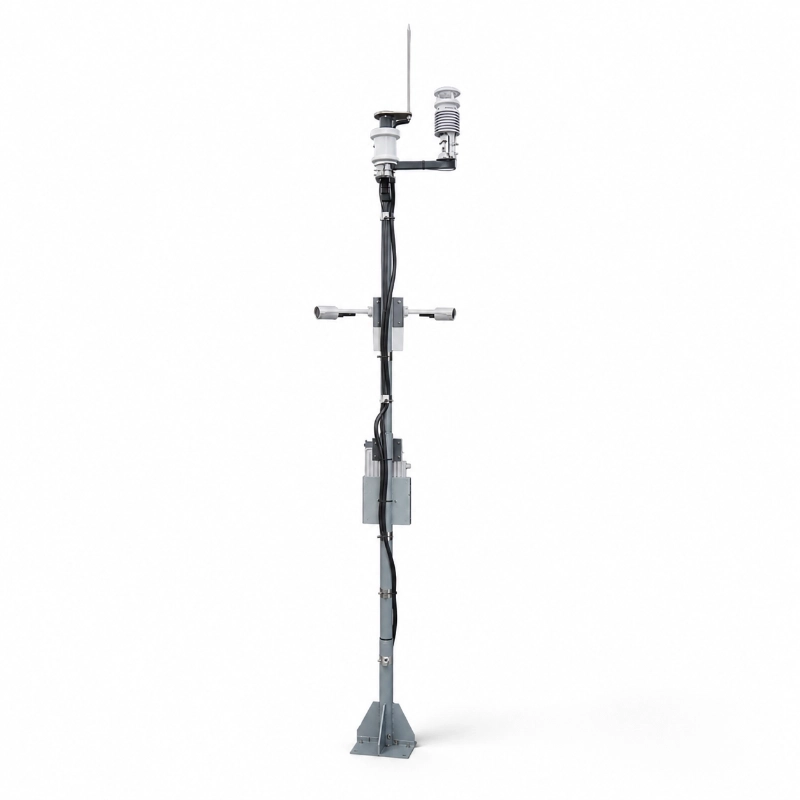
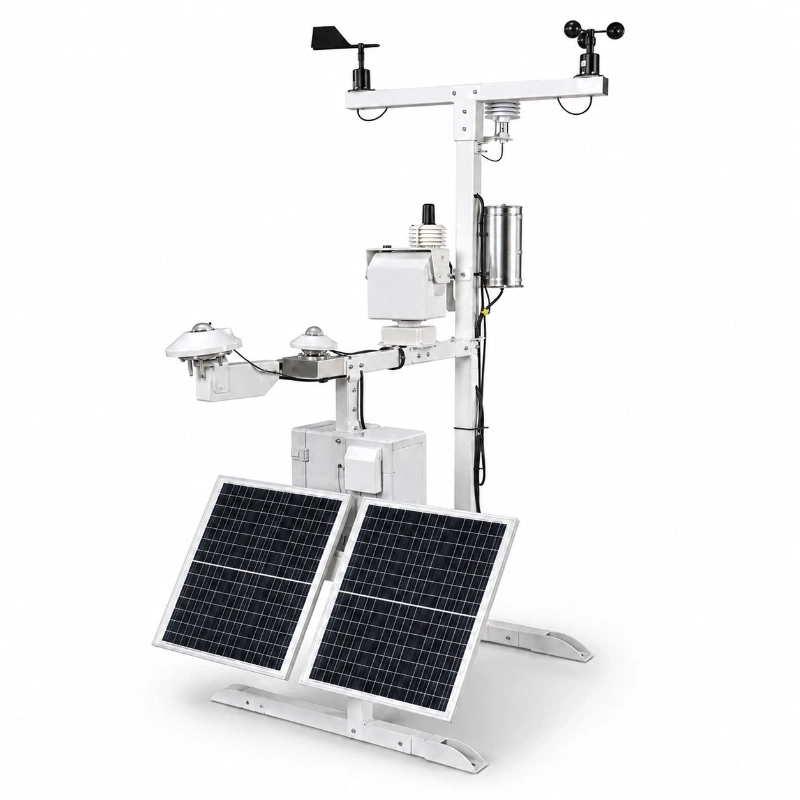
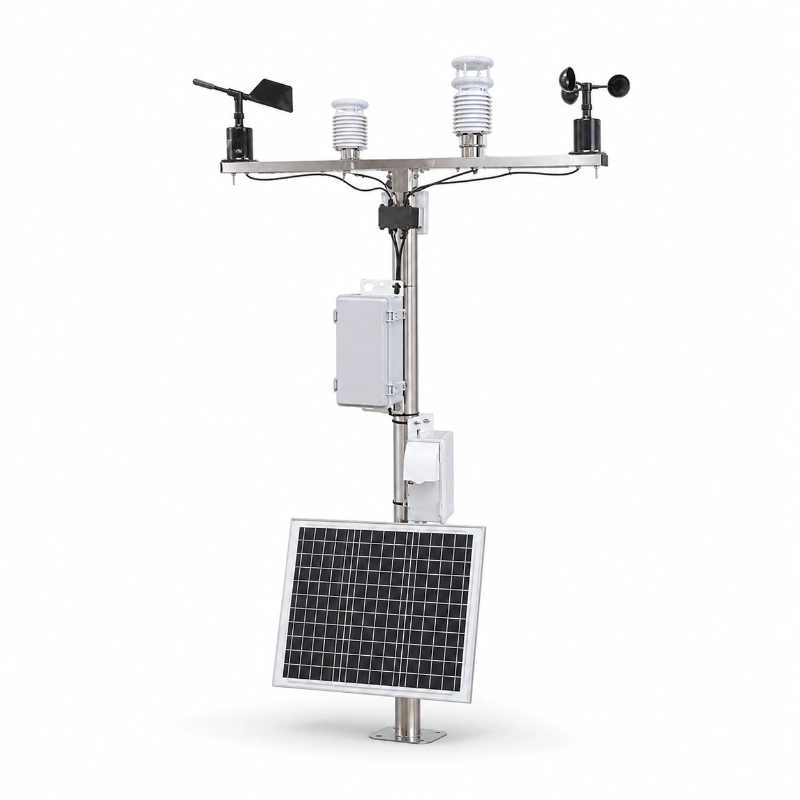
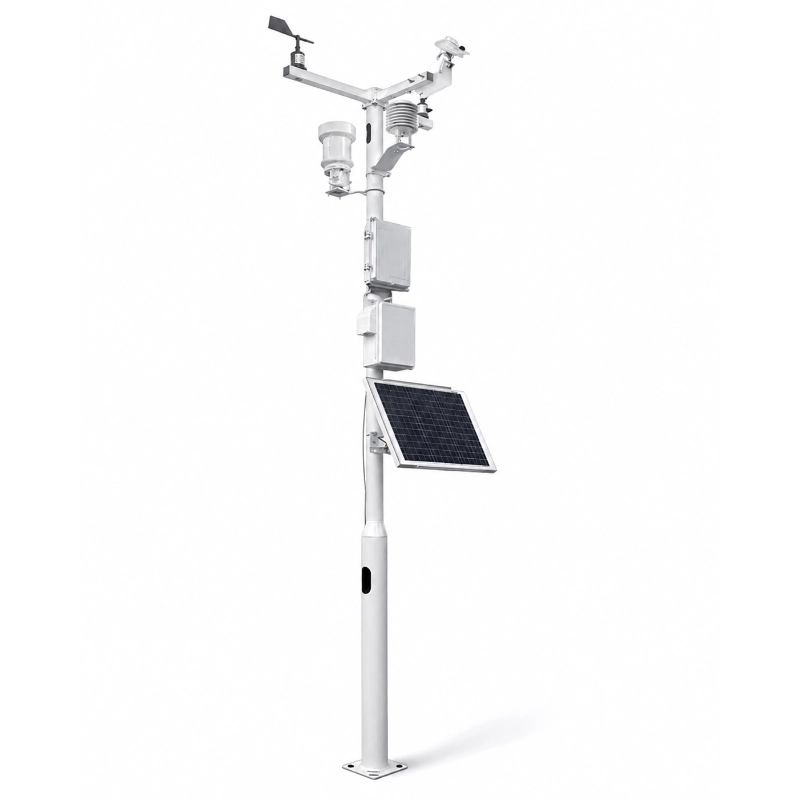
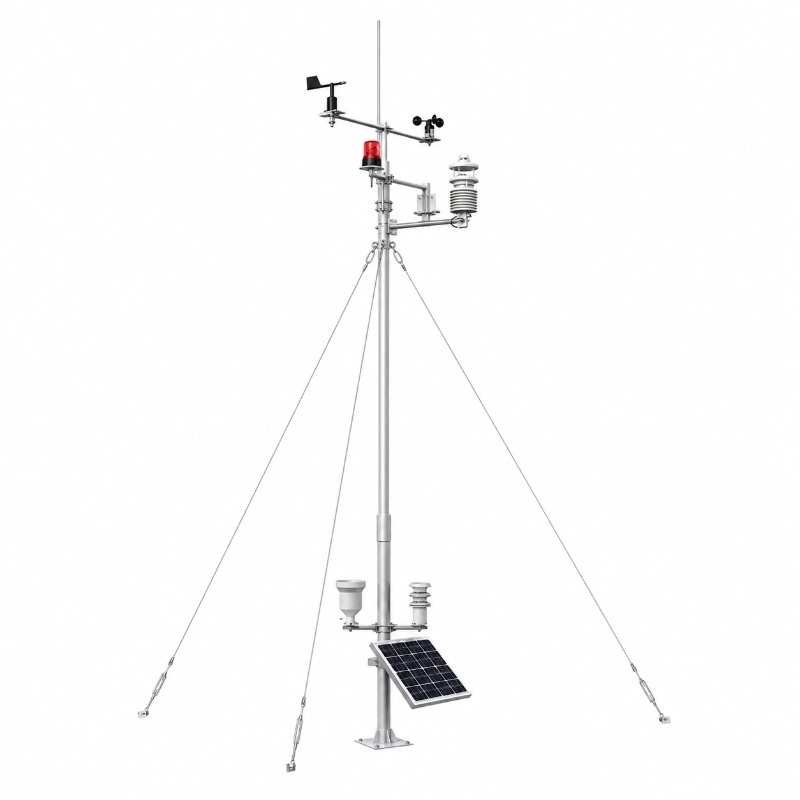
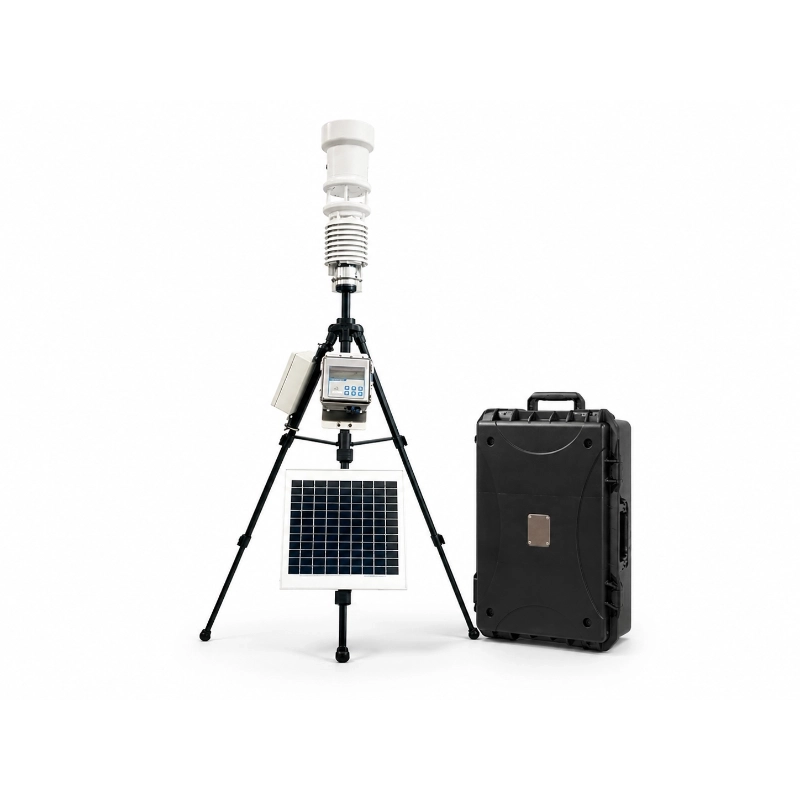
Designed for marine environments: Built with marine-grade materials and a high protection rating to resist salt fog, corrosion and harsh offshore weather.
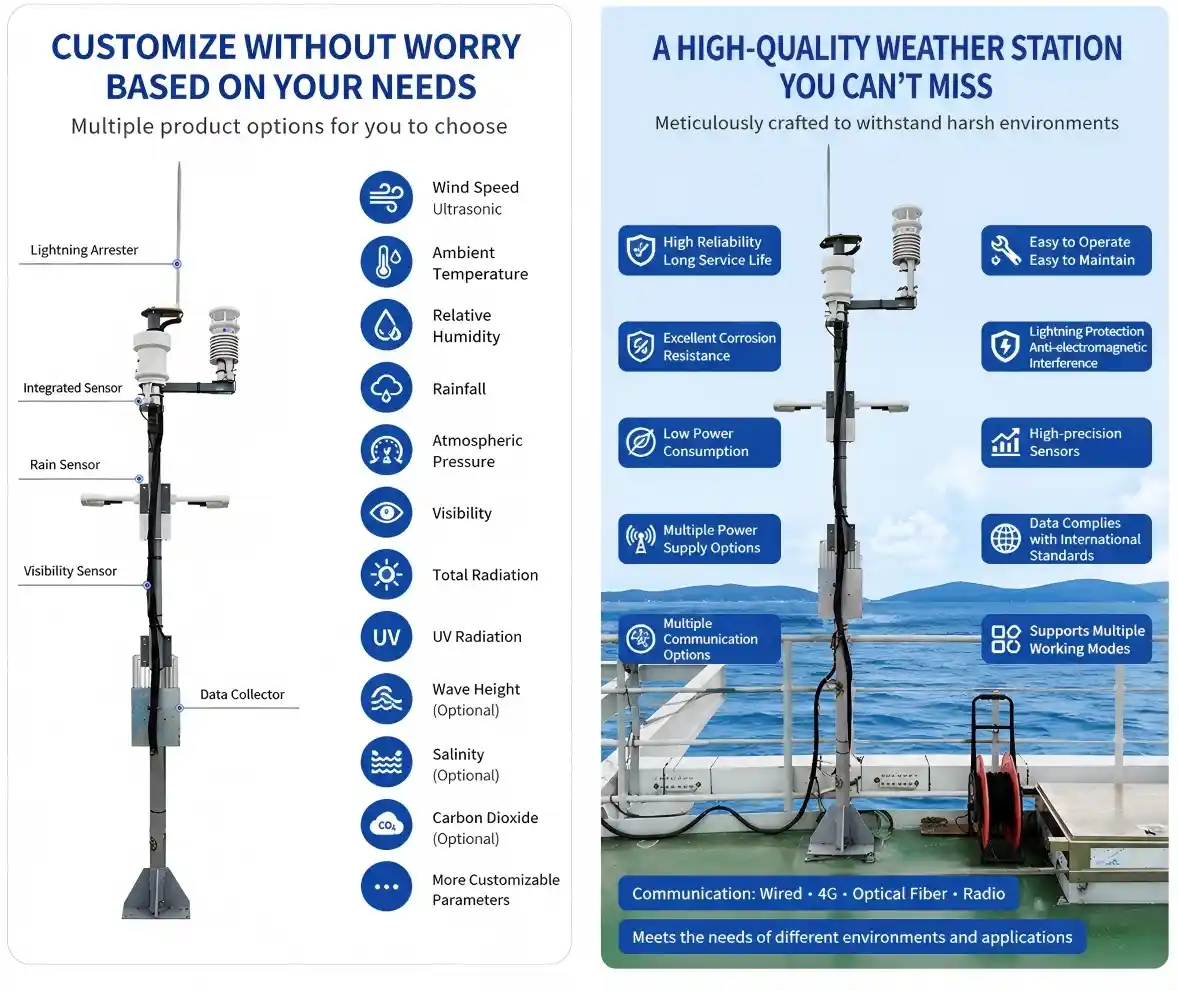
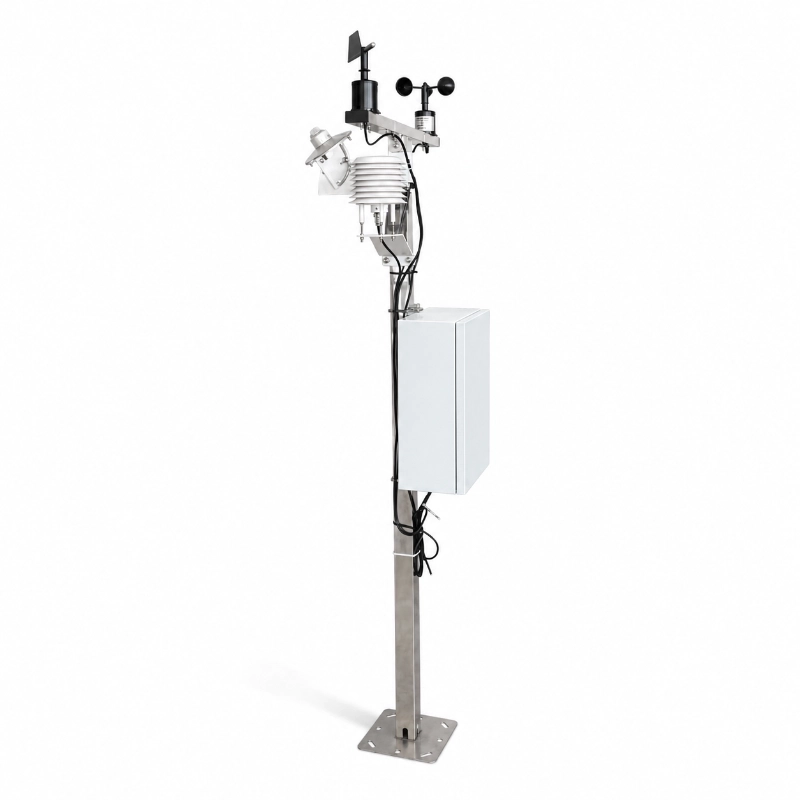
Integrated multi-parameter monitoring: Measures key meteorological parameters such as ambient temperature, relative humidity, dew point, ultrasonic wind speed, ultrasonic wind direction, rainfall, atmospheric pressure, visibility, total radiation and UV radiation.
Customizable sensor configuration: Optional parameters and accessories can be added based on project needs, including wave monitoring, swell monitoring, salinity, carbon dioxide and other special marine measurements.
High-accuracy real-time data collection: Uses precision sensors and a professional data collector to deliver stable and accurate environmental data for offshore operations.
Remote monitoring and control: Supports data viewing and system management through PC, tablet and smartphone for convenient remote access.
Alarm and warning functions: Threshold alarms can be configured for instant alerts through platform notifications, mobile viewing, LED displays or audible warning devices.
Multiple communication options: Supports wired communication, 4G, optical fiber and radio transmission for flexible deployment.
Low power consumption: Energy-efficient design supports long-term field operation and can work with optional solar power supply systems.
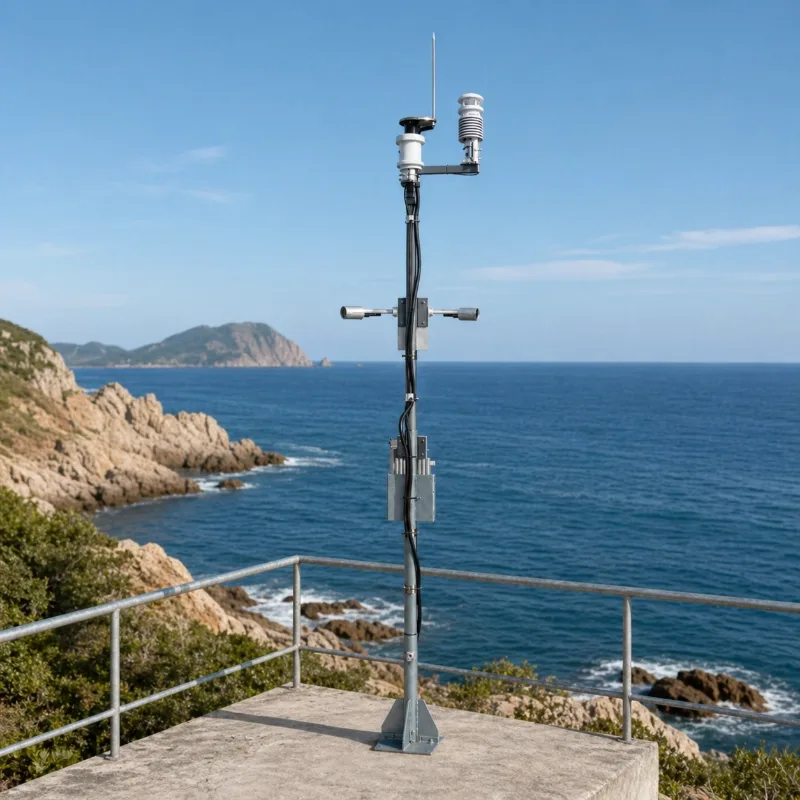
Easy installation and maintenance: Suitable for fixed or mobile deployment on ships, ports and offshore structures, with simple operation and convenient maintenance.
Lightning protection support: Can be equipped with a lightning arrester and lightning protection system to reduce electrical interference and improve reliability.
JW-SWS-S(LC49) marine weather station is specially designed for offshore and coastal environments. Built with corrosion-resistant materials and a high-protection structure, it provides reliable real-time monitoring of wind speed, wind direction, temperature, humidity, dew point, rainfall, atmospheric pressure, visibility, solar radiation and other marine meteorological parameters.
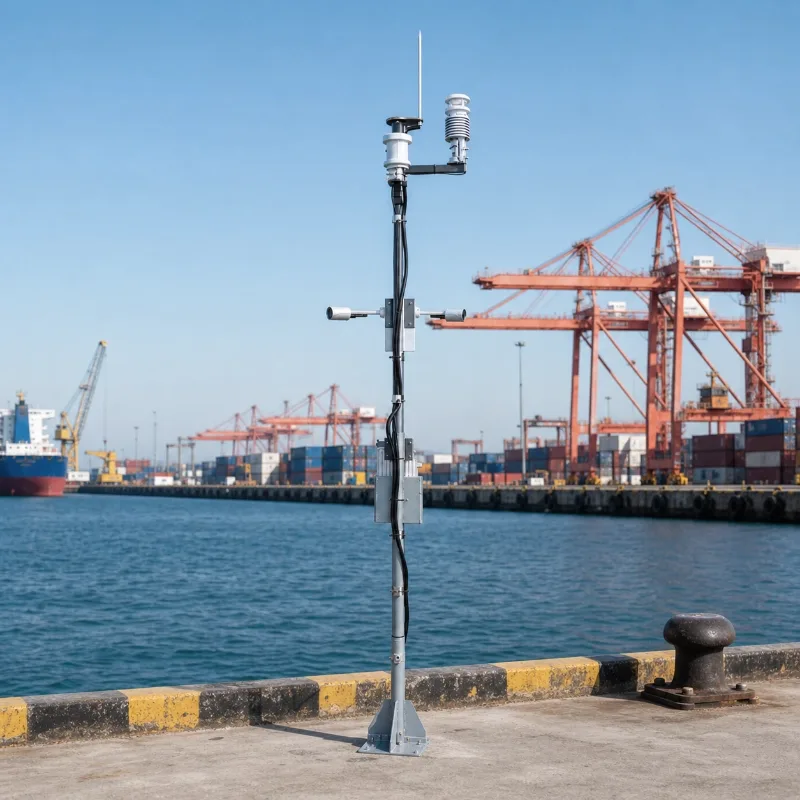
Suitable for ships, ports, islands, offshore platforms and coastal infrastructure, the system supports remote monitoring, alarm notification and flexible communication options such as wired transmission, 4G, optical fiber and radio.
2. Product Overview
JW-SWS-S(LC49) marine weather station is a professional environmental monitoring system developed for harsh marine conditions such as salt spray, strong wind, humidity and corrosion. This integrated solution helps users collect accurate meteorological and ocean-related data for navigation safety, offshore operation planning, environmental observation and marine engineering management.
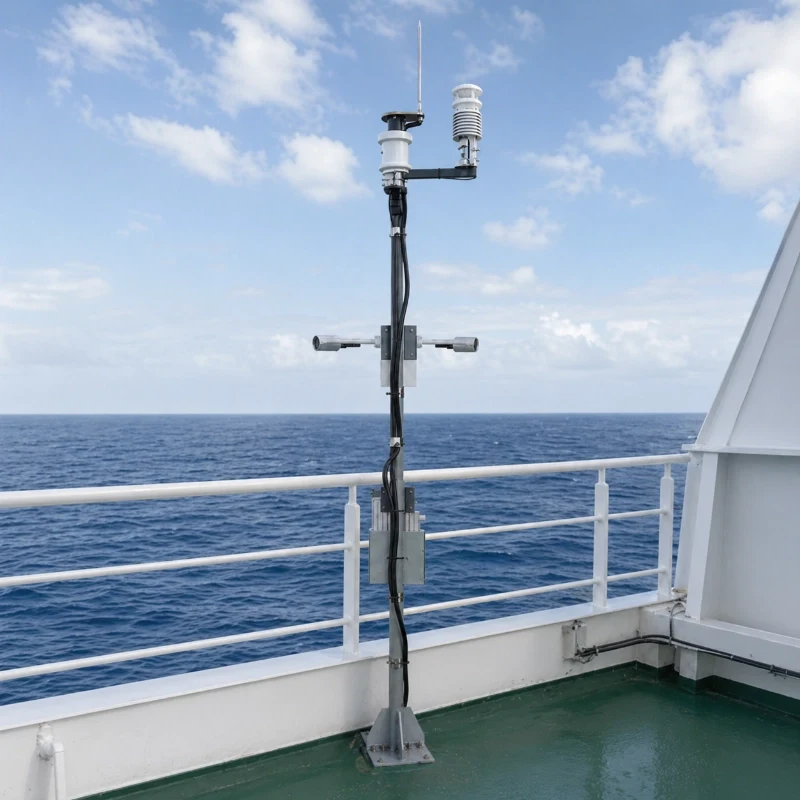
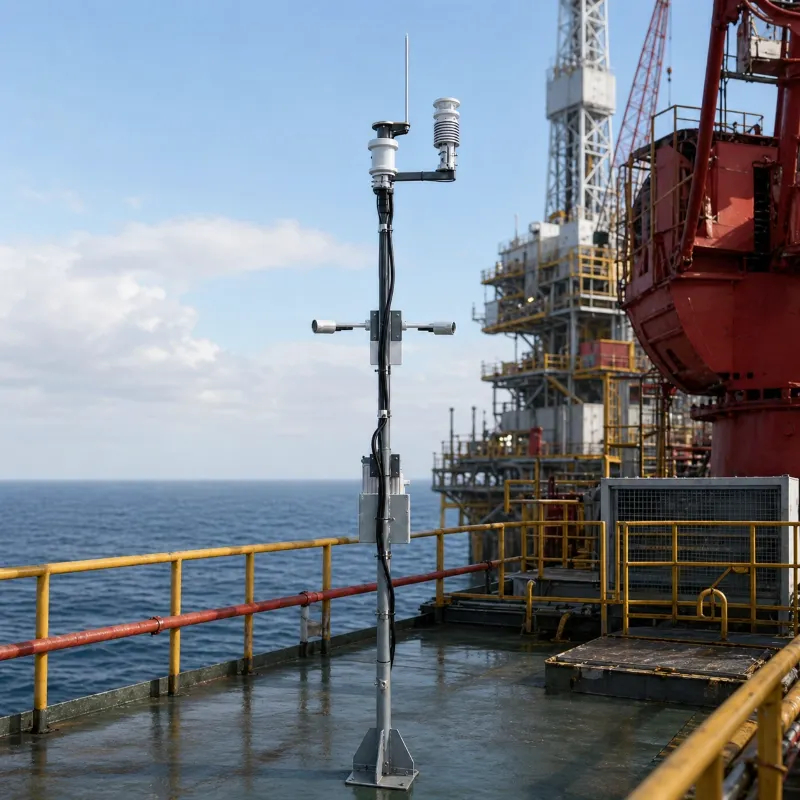
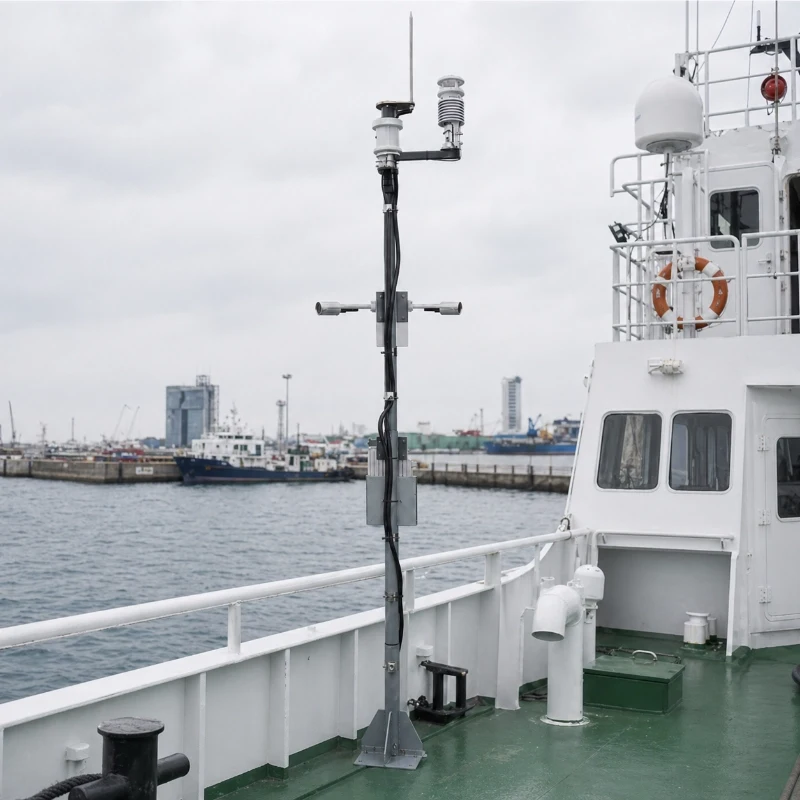
The station can be installed on ships, offshore drilling platforms, island stations, ports, docks and offshore booster platforms. It supports continuous monitoring and remote data access through PC, tablet and mobile devices, helping users respond quickly to changing weather and sea conditions.
With its expandable design, the marine meteorological station can be customized to match different project requirements, including marine transportation, offshore oil and gas, fishery operations, coastal weather monitoring and emergency response.
Parameter
Measurement Range
Resolution
Accuracy
Ambient Temperature
-50 to 90°C
0.1°C
±0.3°C
Relative Humidity
0 to 100% RH
0.05% RH
±2% RH
Dew Point
-50 to 50°C
0.1°C
±0.3°C
Ultrasonic Wind Speed
0 to 60 m/s
0.1 m/s
2% ±0.02 V m/s
Ultrasonic Wind Direction
0 to 360°
1°
2°
Rainfall
0 to 999.9 mm
0.1 or 0.2 mm
±2%
Atmospheric Pressure
300 to 1100 hPa
0.1 hPa
±0.3 hPa
Visibility
10 to 50000 m
10 m
±10%
Total Radiation
0 to 2500 W/m²
1 W/m²
≤5%
UV Radiation
0 to 1000 W/m²
1 W/m²
≤5%
Sunshine Duration
0 to 24 h
0.1 h
±0.1 h
Expandable Parameters
Customizable
—
—
3. System Components
4. Communication and Platform Functions
This marine weather station supports flexible integration into monitoring networks and smart data platforms.
Communication options include:
Wired communication
4G transmission
Optical fiber transmission
Radio transmission
Data access options include:
Cloud data center
PC dashboard
Tablet viewing
Mobile phone viewing
Automatic data storage
Standard meteorological reports
Statistical analysis charts
Visual management platform
5. Application Scenarios
Shipboard Weather Monitoring: Installed on vessels to monitor wind, rainfall, humidity, pressure and visibility for safer marine navigation and onboard weather observation.
Offshore Drilling Platforms: Provides reliable marine meteorological data for offshore engineering operations, equipment scheduling and safety management.
Ports and Harbors: Used in ports, terminals and docks to support vessel dispatching, loading operations and weather risk management.
Island Monitoring Stations: Suitable for island weather stations and remote coastal meteorological observation sites.
Offshore Booster Stations: Can be deployed on offshore industrial facilities that require continuous environmental monitoring.
Coastal Research and Marine Projects: Supports environmental monitoring, marine scientific observation and coastal engineering studies.
FAQ
Q
1. What does this marine weather station measure?
A
This marine weather station can measure ambient temperature, relative humidity, dew point, ultrasonic wind speed, ultrasonic wind direction, rainfall, atmospheric pressure, visibility, total radiation, UV radiation and sunshine duration. Optional parameters can also be customized.
Q
2. Where can this offshore weather station be installed?
A
It is suitable for ships, ports, docks, islands, offshore drilling platforms, offshore booster stations and other coastal or marine monitoring locations.
Q
3. Does JW-IoT support customized marine weather station configurations?
A
Yes. JW-IoT can customize the marine weather station according to your application needs, including sensor combinations, communication methods and optional accessories.
Q
4. Can the system send data remotely?
A
Yes. The system supports remote data transmission via wired communication, 4G, optical fiber and radio, depending on project requirements.
Q
5. Is this product suitable for harsh marine environments?
A
Yes. The station is designed for marine use with corrosion-resistant materials and a robust structure suitable for salty, humid and windy offshore conditions.
Q
6. Can JW-IoT provide remote platform access for the marine weather station?
A
Yes. JW-IoT can provide remote monitoring solutions that allow users to view data on PCs, tablets and mobile phones, and support cloud-based data management.
Q
7. Does the marine weather station support alarm functions?
A
Yes. Users can set threshold alarms so the system can provide timely warnings when monitored values exceed preset limits.
Q
8. What communication methods are available?
A
Available communication methods include wired transmission, 4G, optical fiber and radio transmission.
Q
9. Can JW-IoT integrate this system with a cloud platform?
A
Yes. JW-IoT can help integrate the marine weather station with cloud platforms for visual management, historical data storage, report generation and remote device management.
Q
10. What optional accessories can be added?
A
Optional accessories include a solar power supply system, mounting brackets, storage card, wireless transmission module, water level and wave sensor, acoustic wave instrument, current meter and lightning protection system.
Q
11. Is this marine weather station easy to maintain?
A
Yes. The product is designed for simple operation and convenient installation and maintenance, making it suitable for both fixed and mobile offshore deployments.
Q
12. Why choose JW-IoT marine weather station solutions?
A
JW-IoT marine weather station solutions are built for stable offshore operation, flexible customization, precise measurement and smart remote monitoring, helping customers improve marine safety, weather awareness and operational efficiency.
 +86 13520127780
  info@jingelway.com