+86 13520127780
 info@jingelway.com









How Leaf Wetness Sensors Support Greenhouse Disease Prevention
Release time: 2026-09-24
A leaf wetness sensor helps greenhouse growers track surface moisture and identify conditions that may favor disease. Its value comes from combining wetness records with temperature, crop observations, and disease-specific guidance—not from diagnosing an infection.
For greenhouse teams, the practical question is simple: How long does the crop canopy stay wet, and what should happen when it takes too long to dry?
What Is Leaf Wetness Duration?
Leaf wetness duration, or LWD, is the length of time that free water remains on plant surfaces. Dew, overhead irrigation, and other wetting events can create these conditions.
LWD matters because temperature and wetness together influence infection risk for many plant diseases. The relevant conditions vary by crop and pathogen, so one universal alarm threshold cannot suit every greenhouse. The University of Florida explains these relationships in its guide to leaf wetness sensor installation and maintenance.
Why Relative Humidity Alone Is Not Enough
Relative humidity describes moisture in the air. Leaf wetness describes water on a surface. These measurements are related, but they are not interchangeable.
Research published in Agricultural and Forest Meteorology found that humidity-based estimates of leaf wetness performed differently across locations, with local calibration improving accuracy. This supports using humidity estimates carefully rather than assuming a fixed humidity threshold always identifies wet leaves. See the study on relative humidity and leaf wetness duration.
A practical monitoring setup can therefore combine surface wetness, air temperature, and relative humidity to provide a fuller picture of canopy conditions.
How Monitoring Supports Botrytis Management
Botrytis, or gray mold, illustrates why moisture management matters. Penn State Extension identifies cool, humid conditions as a concern for susceptible bedding plants and recommends sanitation, ventilation, and heating to help manage the disease. Read its guidance on greenhouse bedding plant diseases.
Leaf wetness records can help growers investigate operational questions:
- Does foliage remain wet after irrigation?
- Which monitored area takes longest to dry?
- Do changes to ventilation coincide with shorter wet periods?
These are useful management observations. A wetness reading does not confirm that Botrytis is present, and environmental monitoring should remain part of a broader crop protection program.
Selecting a Leaf Wetness Sensor for Your Greenhouse
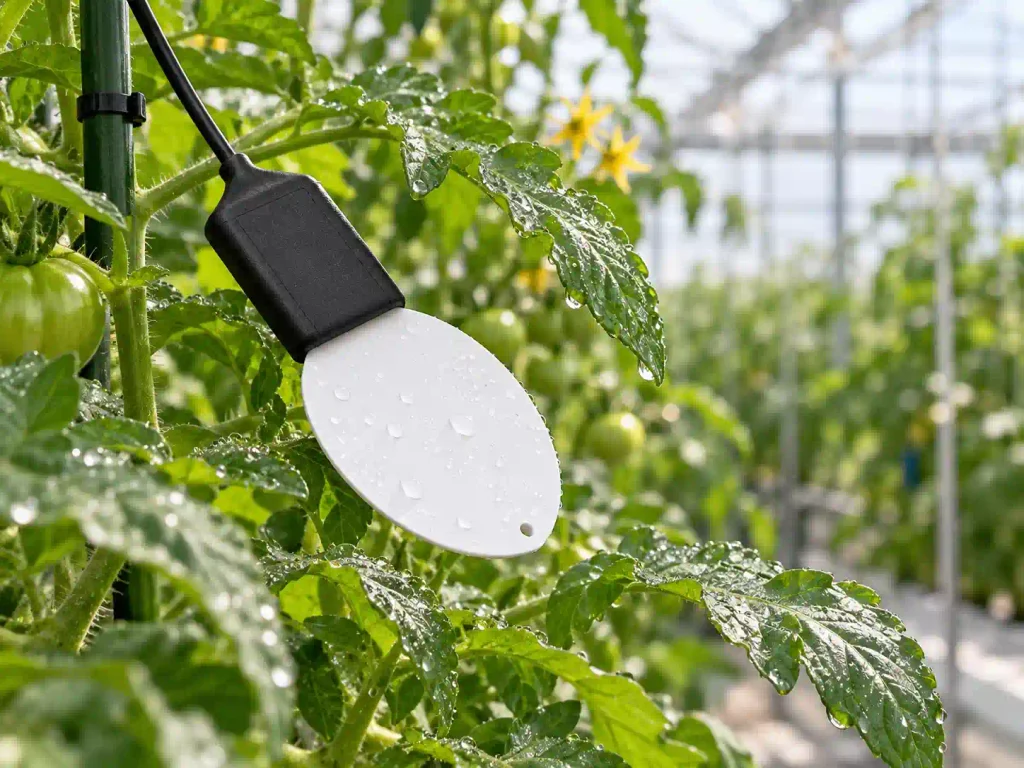
JW-LWS(Z21) uses a leaf-shaped sensing surface to monitor wetness conditions.
| Parameter | Published specification |
| Wetness range | 0–100% |
| Wetness accuracy | ±5% |
| Temperature measurement range | −40°C to 80°C |
| Temperature accuracy | ±0.5°C |
| Output options | 0–2V, 4–20mA, RS485 Modbus; optional SDI-12 |
| Protection rating | IP65 |
Select the output version that matches your controller or data logger. Confirm power requirements, wiring, and communication settings for the selected configuration before installation.
Treat the wetness percentage as a sensor reading. It should not be interpreted as the percentage of plants infected or the probability of a disease outbreak.
Where Should a Leaf Wetness Sensor Be Installed?
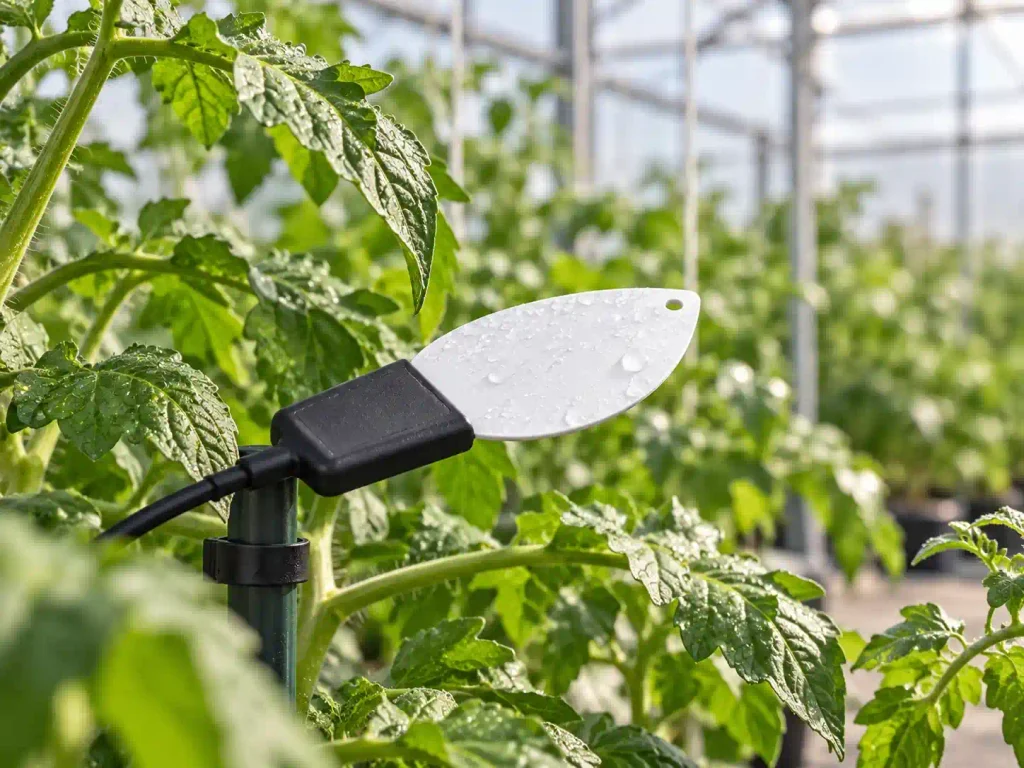
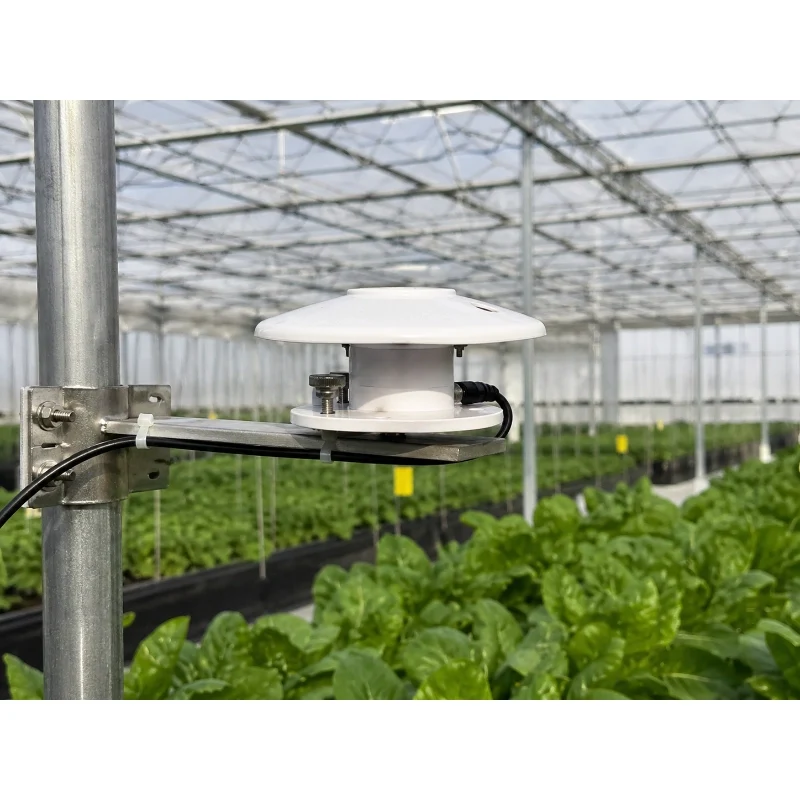
JW-IoT recommends positioning the sensor near the crop canopy, with its sensing surface facing upward at an angle similar to surrounding leaves.
Placement should reflect the area you want to monitor. A sensor positioned in an unusually exposed location may not represent a dense section of the crop. For larger installations, consider whether different growing zones need separate measurements.
Installation quality and maintenance also matter. The University of Florida’s guidance warns that incorrect installation or inadequate maintenance can compromise disease-risk monitoring. Follow the manufacturer’s instructions and periodically compare recorded wetting and drying events with crop observations.
Turning Measurements into Practical Decisions
A useful starting workflow is:
- Establish a baseline. Record wetness alongside irrigation timing and climate conditions.
- Select appropriate guidance. Choose disease-risk rules suitable for the crop, pathogen, and production environment.
- Define a response. Decide when an alert should trigger inspection or review of irrigation and ventilation.
- Review the outcome. Compare subsequent drying patterns and crop observations.
JW-IoT’s greenhouse monitoring system lists leaf wetness monitoring, climate sensors, and platform alarms among its capabilities. Confirm the required sensors, gateway, and control functions when planning a project; these capabilities belong to the configured system.
FAQ
1. Can a leaf wetness sensor prevent plant disease?
It supports prevention by supplying environmental data for management decisions. Disease control still depends on crop susceptibility, pathogen presence, sanitation, and appropriate interventions.
2. How many hours of leaf wetness are dangerous?
There is no single threshold for every crop and disease. Interpret duration together with temperature and a suitable disease model or local agronomic guidance.
3. Does the sensor measure every leaf directly?
The JW-LWS(Z21) measures conditions on a simulated leaf surface. Representative placement and comparison with crop conditions are therefore important.
4. What information should I provide when requesting a system?
Share your crop, greenhouse layout, existing controller, preferred output signal, and monitoring objectives. Explore the JW-LWS(Z21) specifications and discuss your application with JW-IoT